A year after the highlight, the NFT is in chaos
 Pursuing profit is a completely normal thing, but excessive profit-seeking can jeopardize the healthy development of the industry.
Author: 0x2333, Rhythm
The NFT space can be said to be the most vibrant area in the current Crypto circle, with various celebrities promoting products and major brands listing NFTs as a new battleground for brand promotion. More and more people are beginning to understand the vigorous vitality of NFTs and are starting to collect their first NFTs. According to statistics, OpenSea currently has as many as 1.24 million users, soaring 40 times in just one year. In January 2022, OpenSea's monthly trading volume reached as high as $4.9 billion.
This is a fertile ground where countless Builders hope to achieve great things; the frequent emergence of wealth effects has become the biggest billboard for NFTs, attracting countless profit-seekers.
Seeking profit is a perfectly normal thing; the accumulation and growth of personal wealth is something everyone enjoys. However, excessive profit-seeking can jeopardize the healthy development of this industry. Rhythm BlockBeats writes this article to summarize the four major chaos in the NFT field recently and deeply analyze the harms these behaviors may bring to industry development, hoping that investors and project parties can take warning.
Endless New Projects, Endless Rug Pulls
On February 10, Twitter user @NFTethics issued a Rug Pull warning about the popular project "Squiggles" and uploaded a 57-page PDF document to explain the risks associated with the Squiggles NFT project. The document mentioned that the project team had previously operated more than five NFT scam projects, all of which created a false sense of prosperity through purchasing followers, lottery activities, buying advertising space, etc. While strictly controlling the number of whitelist allocations, team members internally hyped the whitelist prices, and after the public sale of the project, they immediately transferred all income and ran away.
Similarly, @NFTethics also exposed the recently highly publicized NFT project "Cereal Club NFT." It was discovered that this project was linked to another Rug Pull project, HolyCowsNFT, as careful users found that they used the same code contract. Additionally, they found common founders in two supposedly unrelated NFT projects and identified anomalies through data cross-checking, revealing that this team had previously launched multiple Rug Pull projects named MonaLisa, Baby Ape Club, Crypto Wolf Club, etc. Due to @NFTethics's exposure, the Squiggles project team attempted to manipulate trades to deceive more income and was delisted by OpenSea for suspected fraud.
There are numerous NFT projects that "mass-produce" in the same way as Squiggles and Cereal to defraud funds. However, in this data-driven era, only data can deceive most NFT players. Hundreds of thousands of Twitter followers, with each tweet easily garnering tens of thousands of retweets, inevitably attract the attention of NFT players and other project parties. The project team continuously reassures community members through "showing off wealth," leading the community to compete fiercely for whitelist spots.
This assembly line-style promotion can attract traffic comparable to top projects, even surpassing them. However, with so many projects in the current NFT market, numerous project launches have diverted funds that should circulate in the secondary market. Many project teams invest significant effort in operating secondary market revenues, which are far less than the income generated from primary market sales, leading these project teams to choose Rug Pulls.
Currently, most NFT projects have three common revenue channels: primary market revenue, secondary market royalty revenue, and NFT derivative revenue.
Primary market revenue refers to income obtained through pre-sales and public sales. For example, a profile project with a total of 10,000 NFTs sold at a price of 0.05 would yield a total income of around 500 ETH. This portion of revenue is also the largest.
Secondary market royalty revenue is much lower. When NFT projects circulate in the secondary market, they generate royalty income, typically ranging from 5% to 10%. Taking 5% as an example, to achieve a public sale income of 500 ETH, the total trading volume would need to exceed 10,000 ETH, which is difficult for most projects to reach today.
Finally, NFT derivative revenue requires the NFT project to launch derivative NFT products based on an already high level of popularity. For example, after airdropping potions (equivalent to giving holders a mutated monkey) for BAYC, the remaining 10,000 mutated monkeys are sold through a Dutch auction.
Compared to primary market income, secondary market and derivative income are filled with uncertainty. Project teams must maintain community enthusiasm, keep the floor price steadily rising, and deliver on their roadmap. However, with the popularity of Cereal Club NFT, even if sold out at the lowest price through a Dutch auction, the project team could still earn at least $11 million. In comparison, the secondary market income generated through community building is merely a drop in the bucket.
With @NFTethics taking the lead, more and more NFT players are joining the fight against "assembly line" NFT projects. Well-known crypto community YouTuber The Bitcoin Express also summarized how to help investors effectively avoid scams in the NFT market through the information released by NFT project teams in the video "4 Major NFT Red Flags To Avoid."
Web2's National Emoji, Web3's Mess
After the domestic emoji brand Cold Rabbit issued its own NFT avatars, another domestic emoji IP, Ali, also announced its entry into the NFT space, launching its own NFT avatar series. However, compared to Cold Rabbit, Ali's operations fully demonstrate that it is not yet prepared to enter the Web3 era.
Ali's community is quite lively, but liveliness does not equate to prosperity. Due to the high public recognition of the original IP, the whitelist for Ali's NFTs was initially very sought after, with off-market trading prices reaching as high as $1,000. However, due to issues with the whitelist mechanism design and team decision-making, numerous bots and studios tirelessly spammed the chat area to increase their levels. Community members changed their names to ALI and their avatars to Ali, appearing uniform but lacking any real cohesion.
During the pre-sale, community feedback indicated that Ali had various loopholes, including basic spelling errors, with some even bluntly stating that Ali, which aims to sell products in Web3, was using "Web1.5" technology.
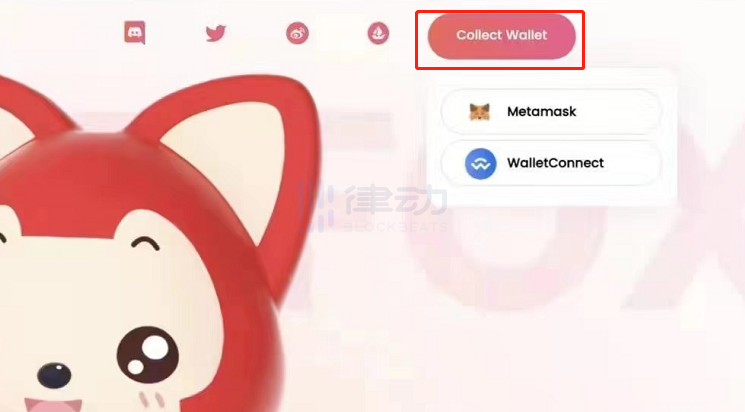
As for copyright issues, Ali NFTs are authorized by the original IP holder, meaning that these NFTs are not officially released products by Ali but are merely authorized for a certain issuer to create and sell NFTs, similar to how Marvel can authorize multiple toy companies to produce and sell figures. Perhaps in the future, Ali's original IP holder will authorize a new issuer to re-release a set of NFTs, but in the Web3 era, will there still be fans willing to pay for such Web2 behavior?
As of the time of writing, Ali's official account has deleted the previously published Weibo post promoting this version of Ali NFTs. The public sale of Ali NFTs has also been canceled, and an additional 1,000 whitelist spots have been temporarily issued.
In the Web3 era, the most scarce resource is attention. Therefore, IPs that naturally attract traffic in the Web2 era will have inherent advantages when entering the Web3 era to issue NFTs. This is why many celebrities, trendy brands, and even emoji production teams from outside the circle choose to release their own NFTs.
Compared to native IPs, the only advantage of external IPs is their built-in traffic. However, how to convert that traffic into a community and how to develop together with the community are issues that both external and native IPs face from the same starting line. Many external IPs, after entering the Web3 world, still view the broader environment through traditional lenses, attempting to apply Web2 methodologies to Web3, which is clearly unworkable.
In the Web3 era, brands are no longer just IPs; they also encompass the community behind the brand. The relationship between the community and the brand is no longer one of dependency but has truly merged into one. IPs that already have a certain fan base can easily make quick money by issuing NFTs, but whether they consider the community and care for their community determines whether this quick money is a monetization of their traffic or a depletion of their credibility.
One of the great charms of Web3 lies in the mutual companionship of native brands and communities. This kind of accompanying growth may not allow brands to grow rapidly in a short time, and currently, no Web3 brand can compare with the giant brands of Web2. However, "Skin In The Game" will make the bond between brands and communities even more unbreakable.
When entering a new field, one must abide by the rules of that field. In the Web2 circle, selling products to fans may be seen as "providing benefits" or "selling small souvenirs," but in the Web3 world, this represents a responsibility. If the community is willing to spend money to support the brand, the brand must earnestly create value for the entire community. From initially accumulating value and then gradually consuming it, to continuously creating value together with the community, Web3 has brought unprecedented changes to the brand's lifecycle. Every major brand attempting to enter Web3 should face this reality and set aside their arrogance from Web2.
The Emerging "1.5 Level Market," Overhyped "Whitelist"
"Tasty Bones" is undoubtedly the most talked-about NFT project in the past two months, with both its overall art style and promotional materials being described as exquisite. The whitelist for Tasty Bones is "hard to come by."
The project team's whitelist uses a Mint Pass mechanism, allowing players who obtain the whitelist to trade freely in the secondary market. As player enthusiasm for Tasty Bones continues to rise, the price of the Mint Pass has also soared, reaching as high as 4 ETH. Just as everyone anticipated that Tasty Bones could become the next "blue-chip" project, the price of opening blind boxes was shocking; as of the time of writing, the floor price was barely below 1 ETH. Although this represents a several-fold increase compared to the sale price, for most people who purchased the Mint Pass in the secondary market, it has already "broken."
Faced with the high whitelist prices, ordinary community members find it hard to resist temptation. Originally, players who were the main purchasing power in the secondary market chose to buy Mint Passes in advance for safety, leading to excessive overspending that turned the whitelist into a tool for the project team to hype up, rendering the whitelist mechanism worthless.
The whitelist mechanism was originally established to filter out "family" members willing to contribute to the community and grow together, but it has now become a stable low-cost arbitrage tool. In the current situation of numerous NFT project launches, people do not have time to participate in the construction of every community, and the methods for obtaining whitelists for most projects are almost zero-cost; one only needs to "put in the effort" to win a whitelist, which can either be sold off-market or used to purchase NFTs in the primary market at a very low cost and then arbitrage in the secondary market.
This poses a severe test for both project teams and communities.
Rhythm previously published an article titled "To Buy an NFT, I Learned English and Drawing" describing the current state of the whitelist acquisition mechanism, which has long deviated from its original intention. In fact, various forms such as chat levels, number of invitations, and secondary creations can effectively filter out the most passionate community members. However, where there is a wealth effect, there will be speculators, especially since participation is cost-free.
Although some project teams currently choose to build communities through methods like decrypting or singing while selecting actively participating members, there are always ways for people to find loopholes; answers can be sold for decryption, and someone can find a substitute singer, obtaining potentially high-profit whitelists at a low cost, while the community can only continue to face the thorny issues.
Conscientious project teams will find ways to distribute whitelists to members genuinely willing to participate in community building, while some project teams completely use the whitelist incentive mechanism as a tool for hype. Many project teams have set up off-market trading for whitelists or sold whitelists officially to raise the floor price before the sale. Perhaps they can create anxiety around whitelists before the project launch to attract attention. Little do they know, this is the project team preemptively depleting their "value."
As mentioned above, through various marketing tactics like hunger marketing and whitelist acquisition mechanisms, they make their Twitter data look good and their Discord appear bustling. This false prosperity can lead many to mistakenly believe that the project has enormous potential, when in reality, it may just be a mess.
Perhaps we should all reflect; although the original intention of the whitelist model is good, the current situation shows that whitelists cannot fulfill their mission well. How to incentivize loyal community members is a question that all practitioners need to rethink.
A Whole Night of Twitter Space: Where Did the Whitelists Go?
Last week, the biggest hot topic in the NFT circle was the dispute within Club721.
On February 12, the largest Chinese NFT community, Club721, faced a dispute that spread across various communities due to internal administrators embezzling whitelists and the loose management of team leadership. That night, the parties involved argued their cases on Twitter Space for over 7 hours, with more than 1,000 people listening online at one point, causing the Twitter Space server to crash. One side accused the other of embezzling whitelists, while the other side accused the former of not providing deserved incentives. After that night, more insider information about Club721 and the founder of Open Dao continued to ferment.
This is yet another dispute arising from whitelists, which precisely reflects the challenges faced by distributed company structures and DAO organizations: governance models and incentive models.
Since the outbreak of COVID-19 globally, more and more enterprises and companies have begun to adopt more loosely governed distributed work; DAOs have long been regarded by Web3 residents as a new organizational structure that can replace traditional corporate systems, attracting the attention of top investment institutions like a16z. However, both face challenges.
The first challenge is management and governance.
Currently, the most commonly used governance method in DAO organizations is voting, and most voting weights are assigned based on the amount of tokens or NFTs held. This simple and crude method does not consider the experiences and expertise of each DAO member, and the results of such voting are likely to lead to incorrect directions or extremely inefficient outcomes. There have been cases where an investment DAO lost all its principal because all speculative decisions were made by community member votes.
The reason why DAO organizations like FWB can succeed is that they do not have a clear, tangible purpose; they are more like a club, and most of their activities are unrelated to efficiency, allowing them to lay a solid foundation and gradually grow. There are reasons why people have adopted centralized corporate systems for years, primarily due to considerations for improving efficiency. In the Web2 world, many companies also adopt a flatter management style to achieve "semi-decentralization." In the Web3 era, DAOs also need to find a more suitable governance model to better balance decentralization and efficiency.
Distributed companies can establish a complete set of strict rules, but a relatively loose management model still has loopholes. Gaps in internal control can lead to issues like embezzlement and corruption, and no one may notice.
Another focal point of this incident is the incentive issue.
Corporate systems should handle matters in a corporate manner, setting salaries and paying them as promised. In contrast, DAOs need to establish incentive plans that everyone can be satisfied with. The formulation of incentive mechanisms first encounters obstacles from the aforementioned governance mechanism issues; efficiently creating a plan that satisfies all parties is inherently difficult, and implementation also faces efficiency problems.
Whether in a company or a DAO, incentives are the fuel that ensures employees and DAO members continue to contribute. The distributed and DAO management structures are inherently loose; if long-term contributions do not receive the incentives they deserve, members may be unwilling to continue contributing, and the gaps in internal control may widen. Knowing which money can be earned is not difficult; the challenge lies in understanding which money cannot be earned. In the face of enormous profit temptations and lax internal review mechanisms, who can guarantee to stay true to their original intentions?
NFTs represent a brand new fertile ground, and as practitioners, we all have the obligation to maintain its environment for sustainable development. We should face the issues encountered on the development path and resolve various chaos one by one, collectively protecting the industry as it strides forward in the right direction.
 Risk warning
 Risk warning