






Project Galaxy: Have Your Own Web3 Resume
 When we are in the world of Web3, what ways are there to prove what we have experienced?
Author: Crescent, Rhythm BlockBeats
Graduation certificates can prove the schools we attended, award certificates can prove the honors we received, and professional skill certificates can prove our work abilities. These labels together can depict our life trajectory. Moreover, in games, we have rank proofs; in work, we have experience proofs; even when watching videos, we are pushed content that matches our interests by big data, all hidden behind our marking proofs.
The life trajectories of millions of people form a series of data credentials belonging to us, but these credentials are isolated in relatively closed databases. Our educational credentials exist in official institutions, credit records exist in financial institutions, and habits in one app are only reflected in related contexts.
In addition to these scenarios present in our daily lives, we also need such credentials on-chain. When users engage in collateral loans in some lending projects (like AAVE or Compound) and repay them on time without being liquidated or having any negative records, the generated credentials record and prove the user's good credit. Other platforms or lenders can use this proof to assess loan amounts, risks, and other factors. When a new project is launched, users' participation, contributions, and voting history can also generate credentials, allowing the community to proportionally reward contributors based on these proofs.
However, the current closed nature between institutions means that this information is not open to individuals who should have access to it or applications that need it, resulting in a fragmented situation.
Project Galaxy aims to help users solve the current problem by establishing an open credential data network.
What Project Galaxy Is Doing
Project Galaxy intends to collect credential data from multiple data sources across both on-chain and off-chain dimensions for network management. It points out that for on-chain credentials, curators can provide subgraph queries or static snapshots. Off-chain, it has integrated with data sources like Snapshot.org, Twitter, and Github.
Using this credential data, Project Galaxy has built a Web3 DID (Decentralized ID) system. As mentioned above, our current identity system is fragmented, with different centralized websites having different identity systems. Users need to register an account (like WeChat, Taobao) every time they use a new website, and as identities increase, it brings many inconveniences. However, many websites have evolved to offer third-party logins, but our identity system has not yet been unified, meaning we cannot log into all websites with a single account and gather all traces.
What Galaxy ID Represents
What Project Galaxy wants to build is such a system where the Galaxy ID owned by users serves as a universal username, linking credentials together to form a credential data network. Users can generate a Galaxy ID by linking their wallet to the official website, which will automatically display labels like "Uniswap V3 Trader" and "OpenSea Trader" based on the user's historical behavior. Users can also showcase credentials collected in the Web3 world, such as NFT badges, highlighting their historical achievements.
Users control their own identities, allowing them to authenticate and authorize themselves rather than being controlled by authoritative institutions. The goal is akin to becoming the LinkedIn of the blockchain.
Every time users interact with the Galaxy Protocol, they will incur platform fees, but currently, it is free during the Beta testing phase. Generally, users need to pay gas fees to claim and mint NFTs, but Galaxy also supports event issuers paying transaction fees on behalf of users, enabling gasless minting.
When credentials are used in Galaxy's application modules, credential Oracle engine, and credential API, meaning the data is utilized by users, curators will also receive certain rewards.
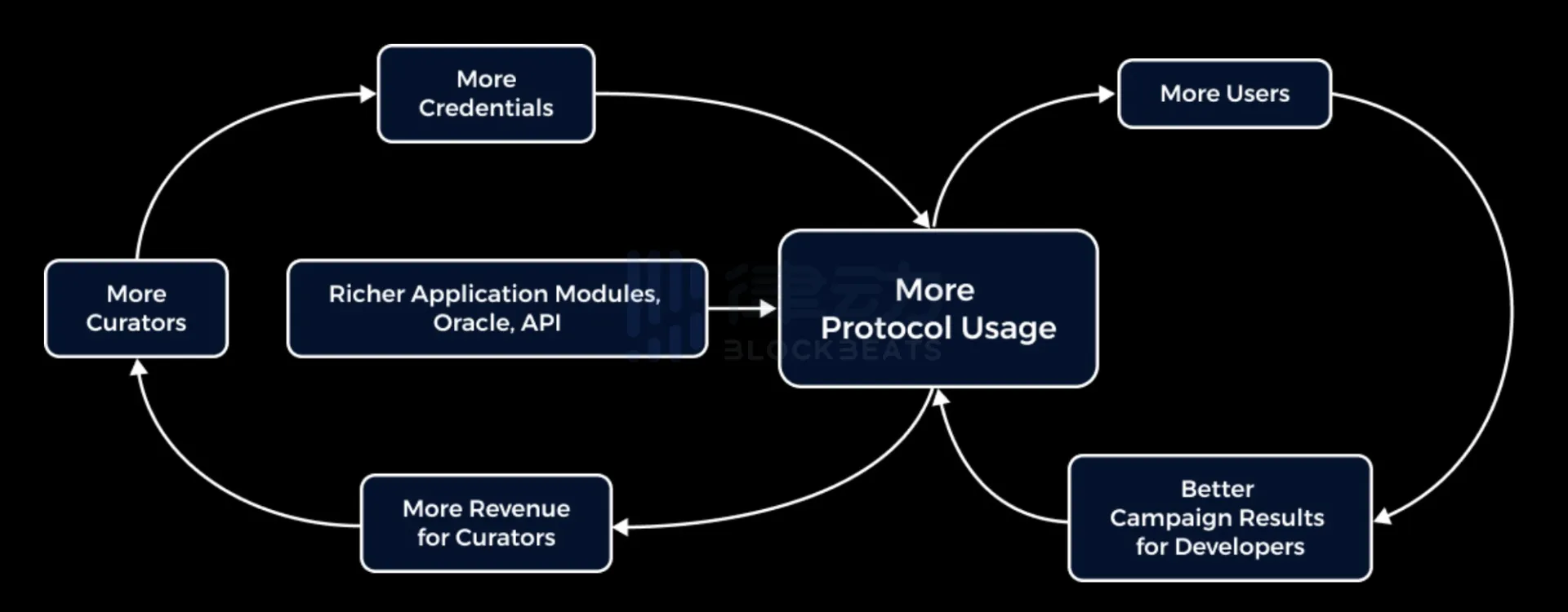
Developers can integrate the Galaxy ID toolkit and provide customized features for users based on their on-chain credentials. Currently, projects like Cyberconnect, Unipass, and Salad Venture have already implemented it in their products.
Build and Distribute NFT Badges Through This Platform
Project Galaxy can provide developers with application modules, credential Oracle engines, and credential APIs, allowing developers to utilize credential data to build better products and communities.
In simple terms, other project parties can build and distribute NFT badges through Project Galaxy's NFT infrastructure and on-chain credential data network to manage community members. The official term for this is Galaxy OAT (On-chain Achievement Token), which records all of a user's achievements.
As mentioned in my "Salad Ventures Project Introduction," Salad Ventures collaborates with Project Galaxy to allow Scholars to mint corresponding NFT badges for each achievement, showcasing them through Galaxy ID, integrating them into their entire career in the Gamefi universe. Here, every achievement of the user can be minted into NFT badges. For example, if a user achieves a certain win rate in a game, they can mint a badge; in trading, they can mint a badge as a Uniswap V3 trader; or in life, they can mint badges for attending certain concerts or events. Galaxy states that Galaxy OAT is a digital record of all achievements in a user's life.
The overall creation process is relatively simple; event organizers only need to submit parameters and badge designs to create events and credentials for user participation. All OAT NFT metadata will be stored on NFT.Storage, supported by IPFS and Filecoin.
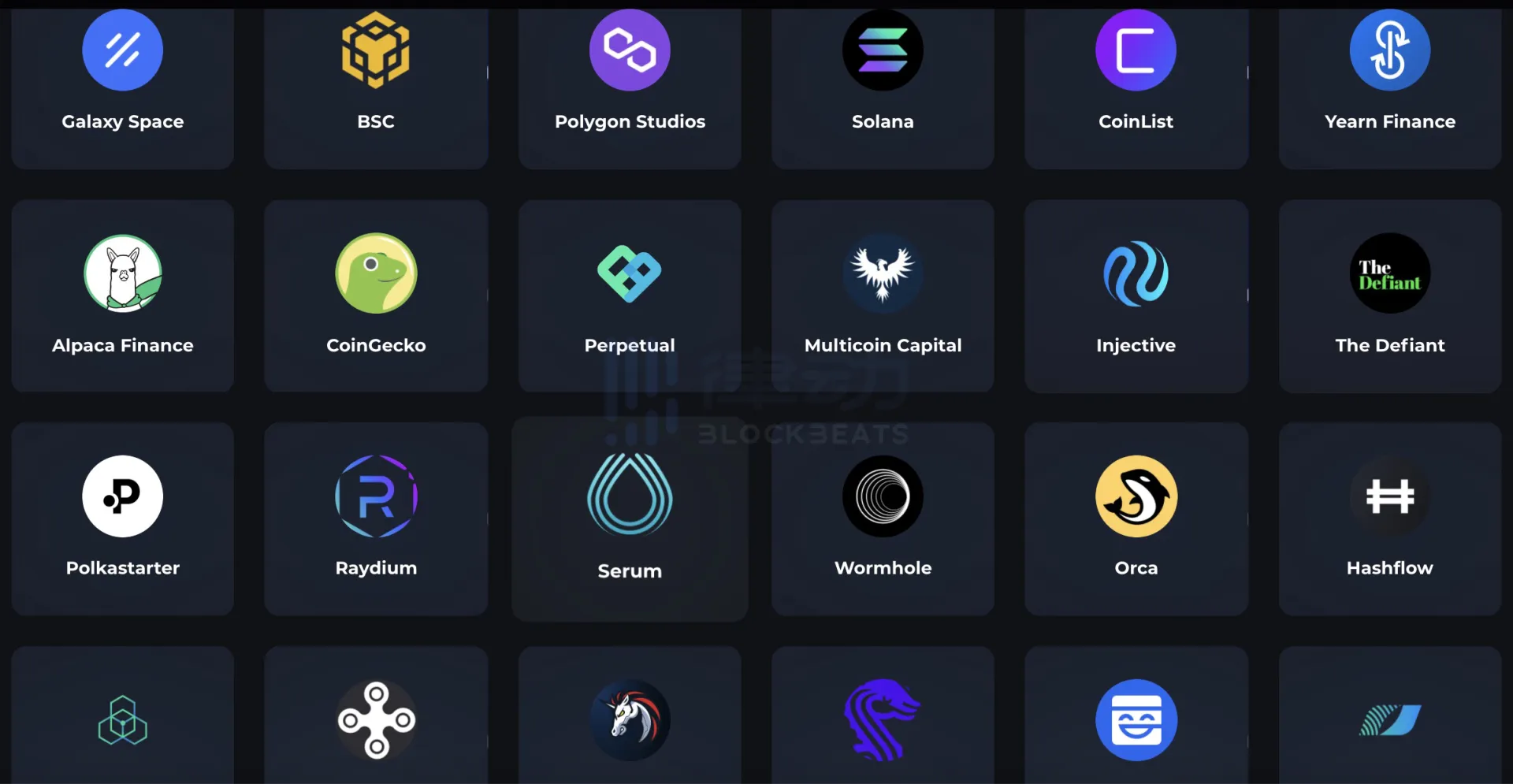
The official statement indicates that so far, over 100 partners have launched more than 500 events on Project Galaxy.
Economic Model
GAL is the native token of the project, with a total supply of 200 million.
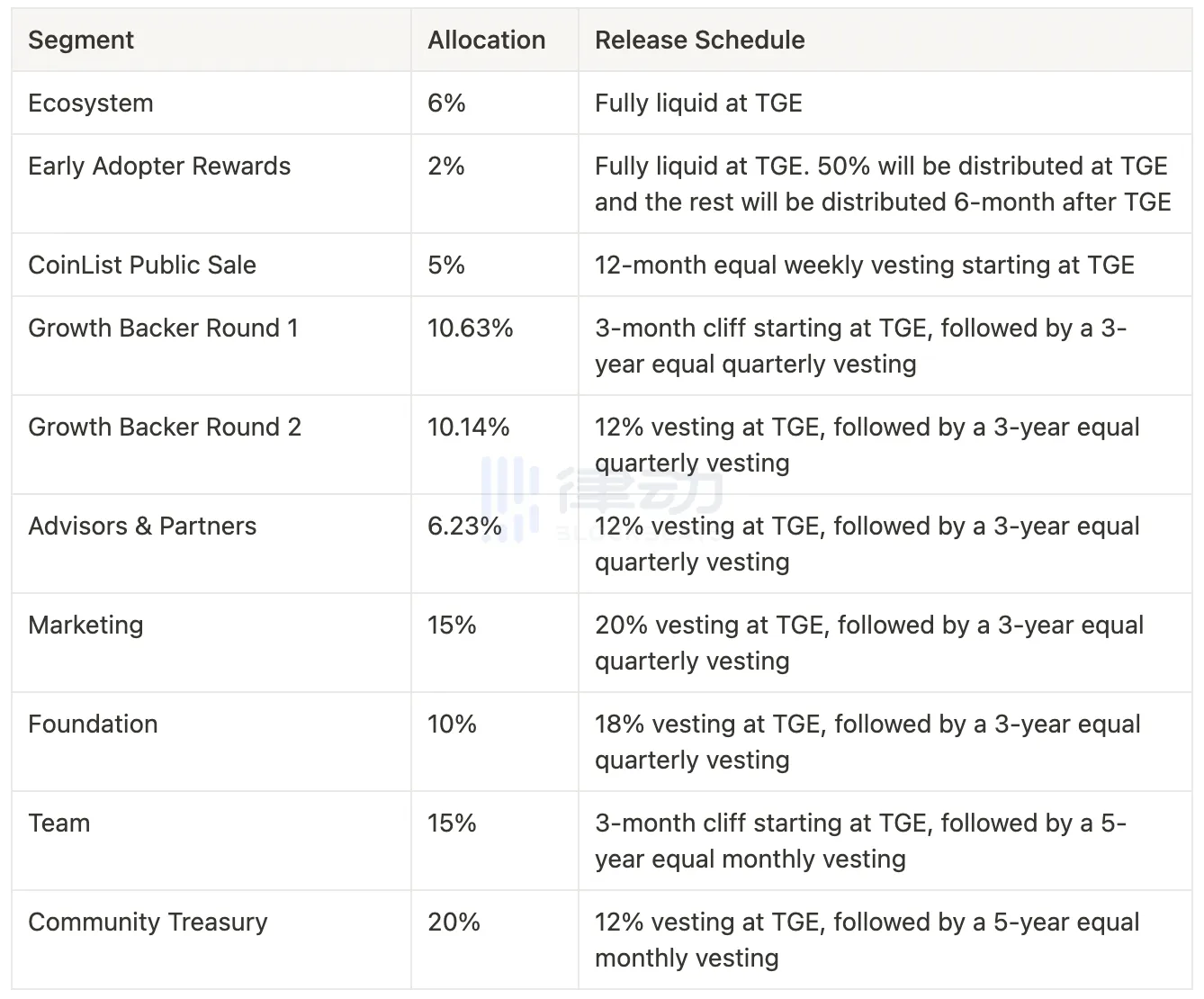
In its token distribution:
Ecosystem share: 6%
Early participants share: 2%
CoinList public offering share: 5%
First round growth supporters share: 10.63%
Second round growth supporters share: 10.14%
Investment advisors and partners share: 6.23%
Marketing share: 15%
Foundation share: 10%
Team share: 15%
Community treasury share: 20%
The following diagram shows its release path:
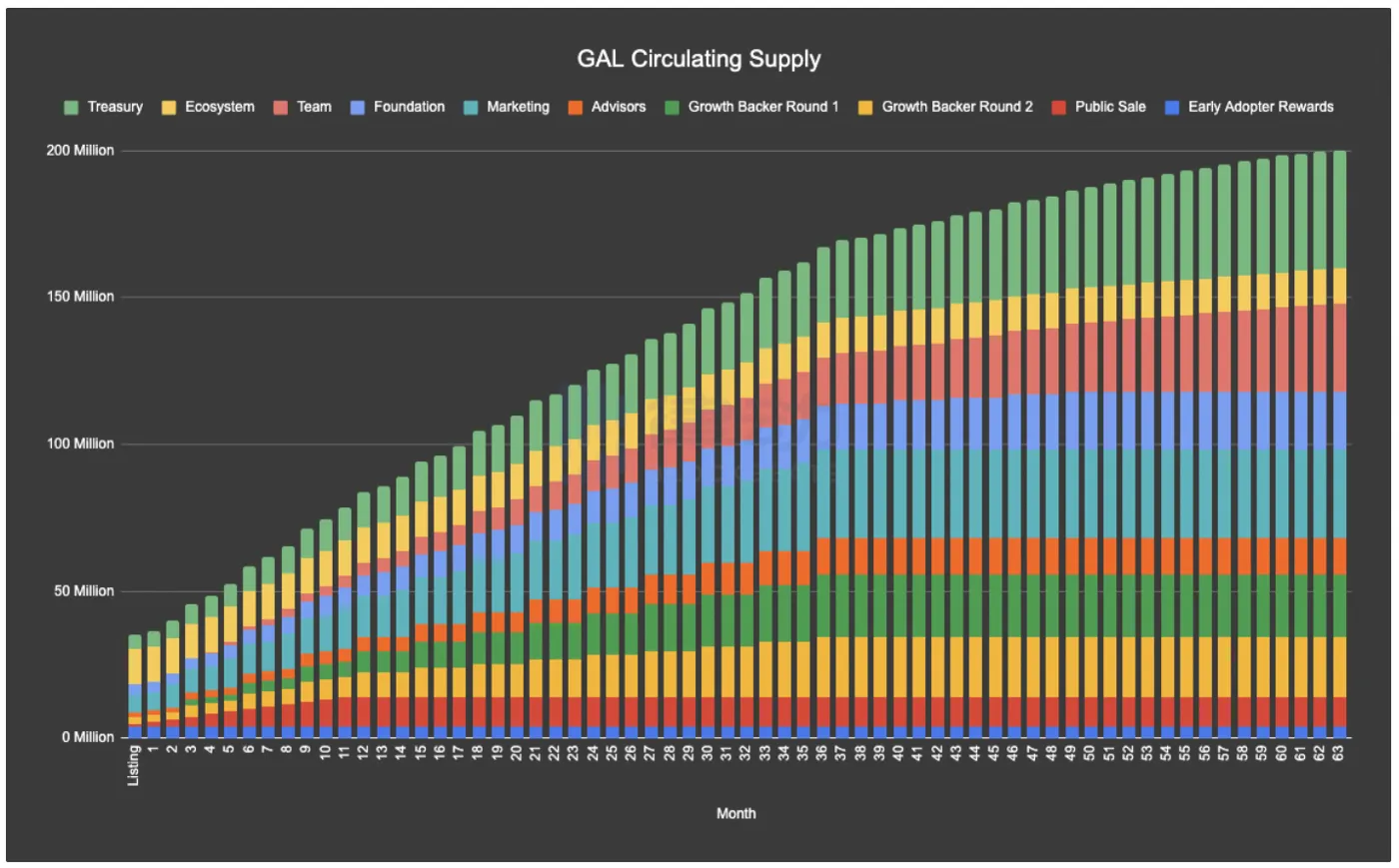
GAL can not only be used for voting and governance in the Galaxy DAO project but also serves as the main payment token in the Project Galaxy ecosystem. For example, in governance, token holders can control the fees charged by the platform and the funds in the community treasury. In payments, developers need to use GAL as a fee when utilizing application modules and Galaxy credential data. Most fees will go to curators, while the remaining portion will be allocated to the community treasury. Developers will also need to pay with GAL when querying our credential data through the Galaxy Oracle Engine and Galaxy Credential API.
Project Background
Recently, Project Galaxy announced the completion of a $10 million funding round, with many well-known investors, led by Multicoin Capital and Dragonfly Capital, with participation from Spartan Group, Sky9 Capital, Coinbase Ventures, Binance Smart Chain Growth Fund, C-Squared Ventures, Lattice Capital, Mirana Ventures, Folius Ventures, Solana Ventures, Jump Capital, and Alameda Research. The funds will be used to expand support for multiple data sources, continue building application modules, and develop the credential data network.
Project Galaxy was co-founded by Harry and Charles, who served as presidents of the Berkeley Chinese Entrepreneurs Association (ACE) in 2016-2017 and 2017-2018, respectively.

Harry Zhang is the co-founder and project lead of this project. Harry was the head of data products at Club Factory (then the third-largest e-commerce platform in India).
After entering the blockchain field, Harry served as co-founder and COO of Lino Network and co-founder of DLive.tv, leading the team to create products that serve over 10 million active users monthly.

Charles Wayn is the co-founder and strategic head of Project Galaxy. Charles was a co-founder and CEO of DLive.tv. After DLive merged with BitTorrent in 2019, Charles became the Vice President of Interactive Entertainment at BitTorrent, managing multiple streaming business units, including DLive.tv, DLive Protocol, and Two App.
Conclusion
Currently, the project supports seven public chains: Ethereum, Polygon, Fantom, Solana, BNB Chain, Arbitrum, and Avalanche.
The credential data formed by these user behavior data is very useful, serving as a personal resume marking the achievements one has obtained. For ordinary users, it allows others to understand them better through their past achievements. For developers, in addition to the examples mentioned above, such as assessing credit for issuing loans and guilds recruiting talent based on credentials, it can also reward community contributors. Moreover, based on users' specific behaviors, it provides a foundational judgment of users, allowing for accurate targeting of potential customers.
Web3 credential data networks and DID systems are not common in blockchain development projects, but there is still a demand for such systems. The emergence of such a system is undoubtedly very convenient for developers and users.
Current DID projects like Civic and uPort (now evolved into Veramo and Serto) focus more on anonymous verification and security, with application scenarios mostly in the physical world, such as anonymous age verification for vending machines or KYC verification for users. In contrast, Project Galaxy leans towards the combination of identity verification and NFTs, along with its many application modules, providing a certain infrastructure for the on-chain world, enabling developers to implement Galaxy OATs, NFT loyalty programs, customized governance, etc., making it more suitable for community management.
Using data provided by curators allows curators to receive rewards, which can incentivize more curators to participate, thereby increasing Project Galaxy's information coverage and strengthening its Web3 credential data network, attracting more developers to use the network data and forming a positive cycle.
However, it is also necessary to consider that there are currently many blockchain projects, and the current credential data network is undoubtedly in its infancy within the Web3 ecosystem. For this system to achieve its stated goals and store more data for broader coverage, more curator participation is needed to explore valuable application modules, thus bringing vast development space.
 Risk warning
 Risk warning