



Where does the value of NFTs come from, and how should it be assessed?

 The value of NFTs is based on four different variables: subjective sentiment, utility, provenance, and scarcity.
Original Title: "Emotions? Scarcity? Applications? An Analysis of Where the Value of NFTs Comes From"
Author: NFT Labs
Globally, NFTs are increasingly entering everyday use. Since February 2021, NFTs have experienced explosive growth, with weekly trading volumes exceeding $2 million, and the total market capitalization of large NFT projects has increased by as much as 2000% in just a few months.
Naturally, as the market for such items is rapidly growing and can become a quite profitable source of income, many investors are seeking to profit from this craze. For many, this is also an alternative investment, with many different projects to choose from. The rules of the game are vastly different from traditional ways of doing things.
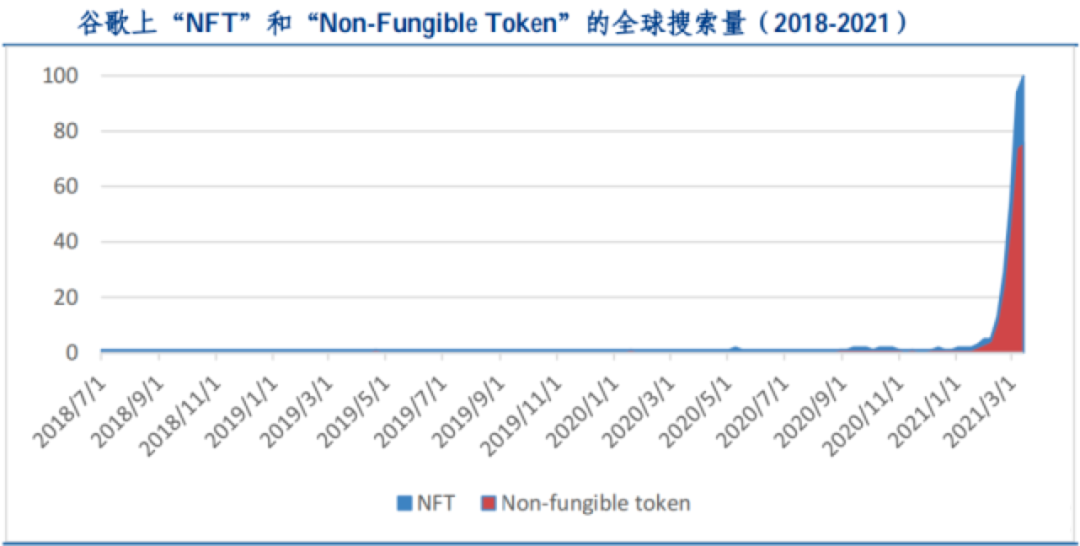
We do not rule out FOMO emotions, but perhaps part of the reason for the craze taking off is that the use cases of NFTs have been realized.
For artists, NFTs bring freedom of expression. Since they do not follow the same conventions as physical art, works created digitally by artists may more easily realize their visions, making them more appealing.
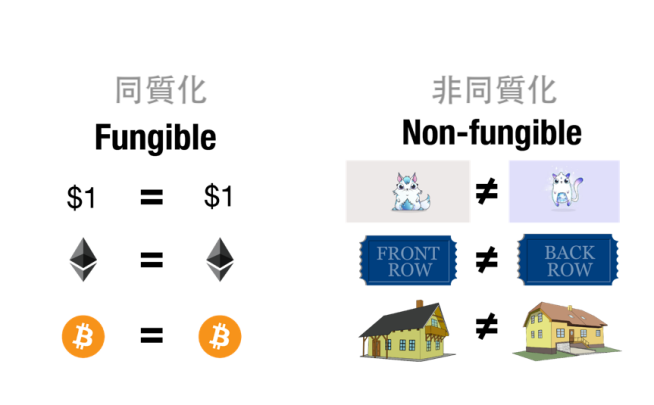
Fungible refers to any unit that can be exchanged, such as currency.
A $10 bill can be seen as equivalent to two $5 bills or five $2 bills. In our daily lives, non-fungible items cannot be exchanged for something of similar value. Just as everyone would agree that the Mona Lisa is priceless.
The "value" of any object is not defined by the quantity of resources and the labor time spent creating and producing it, but rather varies according to its context and the fundamental principles or perspectives of the users. In simple terms, the value of any item depends on the individual who buys or sells it.
NFTs, which were initially just a fringe activity, have now leaped into mainstream blockchain applications, becoming another playground for whales. These NFTs can be digitally transferred via blockchain networks, each one being a unique and distinct item.
NFTs are popular among artists and art collectors, gamers, and major commercial brands, and can be anything from art pieces, game characters or equipment, music, videos, social media posts, or GIFs. The possibilities and scope are endless.
They give new meaning and purpose to those exquisite digital artworks and open many new paths for artists and investors—many of which have costs comparable to physical artworks in galleries or museums.
So, what exactly makes these digital items so valuable?
What is Value?
Value has two main definitions.
First, value is a principle or standard that is important or desirable in terms of behavior; secondly, it is the evaluation or assessment of something based on relative estimates of value or desirability. Particularly in economics, the value of an object or service is often defined as the price it would bring in an open, fair, and competitive market.
The determination of market price is generally based on the relative supply and demand of the object in society.
How to Assess the Value of NFTs?
The value of NFTs is based on four different variables, known as subjective sentiment, utility, provenance, and scarcity.
1. Subjective Sentiment
Typically, value is defined based on the subjective or objective value of a project.
Objective value refers to aspects that are not influenced by someone's opinions, views, or preferences. Objectively speaking, regardless of what you say or do, value remains value; the Mona Lisa will not lose its value due to the criticism of a few.
In contrast, subjective value can change and fluctuate based on an individual's whims. Subjective refers to the fact that the value of an item entirely depends on a person's beliefs, preferences, choices, or thoughts.
For example, a person watching a football match may spend thousands of dollars on front-row seats because they are a fan and believe the match is worth it. For those who are not football fans, spending thousands of dollars on front-row seats is a tremendous waste and holds no value for them. Sneaker enthusiasts may be willing to spend tens of thousands on a pair of limited-edition sneakers, even displaying them in a cabinet rather than wearing them; but for most non-sneaker enthusiasts, this may be incomprehensible.
In any market, whether online or offline, all items and goods are assigned a value based on target consumers, consumption preferences, and consumption goals. This value is subjective, just as some people entering an art museum may be impressed by certain artworks and subjectively evaluate them, while others may not feel the same.
This is the same for NFT art and items.
Christie's $69 million auction of Beeple's NFT, "Everydays: The First 5000 Days NFT," is one of the most expensive NFTs in history. The buyer recognized the work's value of $69 million and was willing to pay for it, driven by the logic that there was a customer who understood and could perceive the subjective value of the piece.
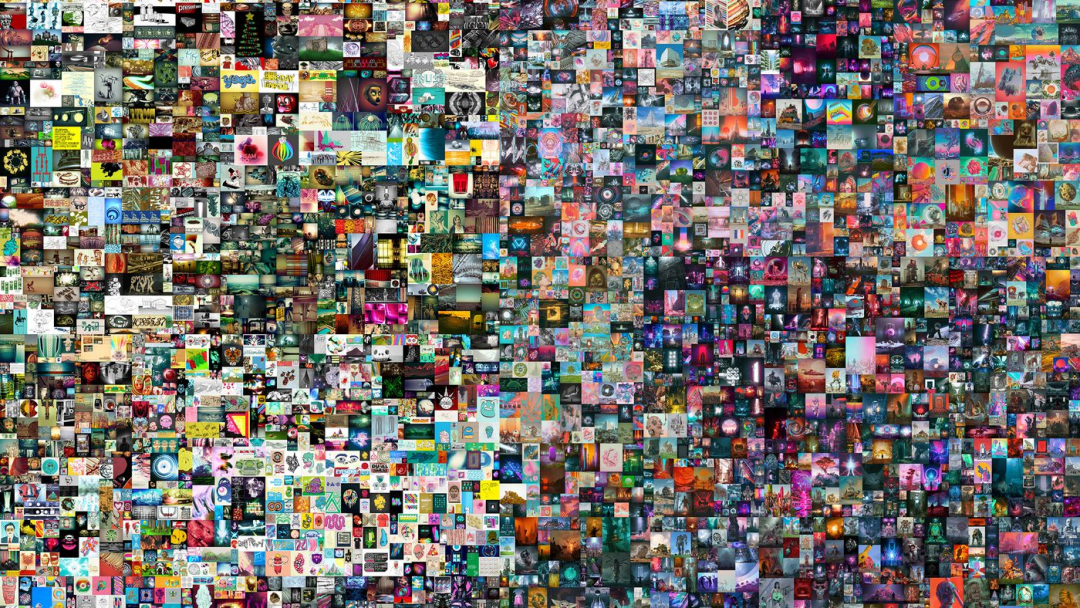
Thus, this subjectivity and subjective value form the basis for defining the actual value that NFTs possess. Each person's perception of value is different; what you may consider worthless, someone else may treasure.
2. Provenance
Another frequently raised question regarding NFTs is the issue of provenance.
Most NFTs exist in digital and online forms, which makes it quite difficult to compare them to tangible items like houses. Of course, this does not refer to circulation and transaction records, but rather to who it originated from; although applications like OpenSea have tagging functions, most NFTs still lack clear provenance.
Provenance is important because it can ultimately prove the authenticity of an artwork, significantly increasing its value. Historically, provenance has been regarded as the best method for verifying the authenticity of items. Provenance has always been the basis for anchoring value in the market for expensive items, applicable to the art, luxury goods, and collectibles markets. Similarly, provenance applies to NFTs.
In the world of NFTs, the value of digital items, artworks, or collectibles is directly related to who the creator or initiator is, whether it be individual artists, major luxury brands, or leading sports brands—much of Moonbirds' success is attributed to its founders' strong VC backgrounds.
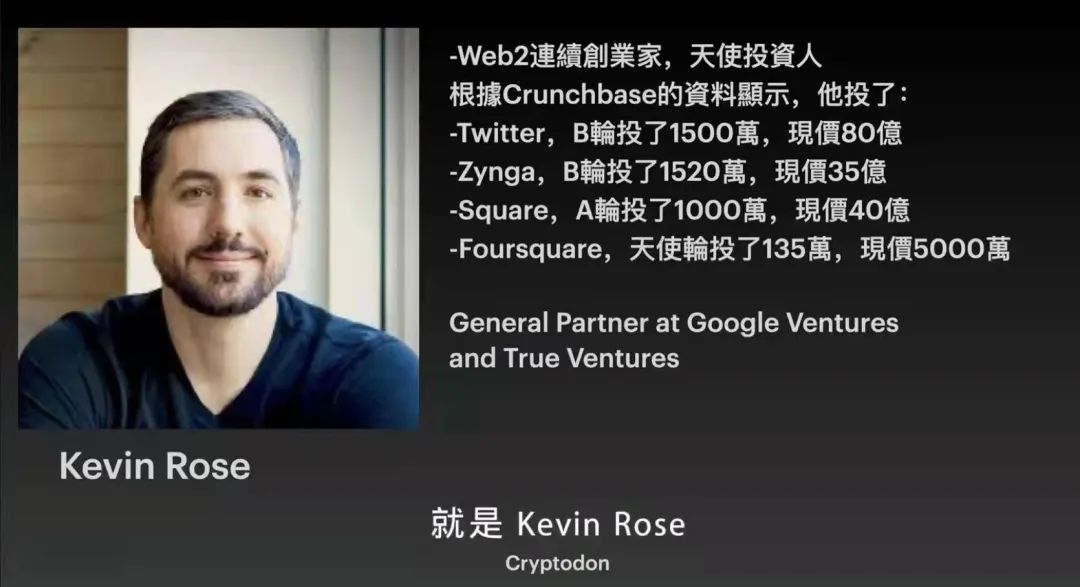
Those familiar with the NFT market can see many artists collaborating with global brand companies to create and issue NFT artworks; as well as some very influential celebrities and sports stars creating entirely new categories of wealth through NFTs.
Based on blockchain technology, the provenance, brand, and KOLs associated with all these digital items can be accurately located and tracked; the blockchain certificates accompanying digital items on blockchain technology guarantee their provenance, previous ownership, and complete authenticity as sellable items.
They can be distributed without losing ownership of the design or artwork, and their value is guaranteed.
3. Practical Application
The utility value of NFTs entirely depends on their practical applications.
GameFi platforms, the metaverse, and the combination of physical and digital are examples of the practical and real use of NFTs. Throughout the NFT market, there are numerous use cases for NFTs, ranging from gaming to digital property ownership to avatar ownership, with endless choices.
We have previously detailed this in another article, so we won't elaborate further here. You can refer back to "The Top Ten Social Use Cases of NFTs."
4. Digital Scarcity
We must acknowledge that for many people who publish their work on the internet today, anyone with access to a computer or phone can freely access their works. However, the advent of NFTs (blockchain) may change our concept and understanding of the open internet.
The idea of an open internet has a profound impact on us. In a sense, NFTs do bring scarcity to things that are inherently not scarce.
One might immediately counter that if people want something, why would they want to make it scarcer? Nobel laureate Elinor Ostrom once conducted an interesting experiment studying how people manage their assets with or without government intervention, concluding with the tragedy of the commons—overconsumption harms everyone in society.
The freedom brought by the internet and social media may deplete the inventory and value of content. Any work—after spending a significant amount of time and effort—once placed on the internet, has a marginal cost of copying that is zero, and the price of the work is essentially zero. This means that regardless of how much effort is put in, no one will pay for that work. Given this situation, more scarcity can indeed bring benefits.
The duality inherent in NFTs provides a solution to this issue. Some are willing to pay large sums of money to establish a connection with a piece of art or music, while the work can still be publicly viewed for free (just as some people are willing to pay for an album even if they can listen to the song for free). This duality preserves the openness of the internet while providing material rewards to the original creators. In the future, this may disrupt people's perceptions of traditional internet openness and build greater demand for digital scarcity.
Conclusion
As we have seen, NFTs are truly valuable commodities. They impose scarcity on items that are essentially not scarce, thus achieving incredible value in the market. Like many items, the pricing of NFTs is highly subjective; their prices depend on the individuals who purchase them.
The provenance of these items is easily traceable, allowing for the identification of previous owners and better enhancing the value of these items. For all NFTs, their utility will only increase their value; as artworks, design products, game items, proof of rights, or even digital identities, NFTs will become a part of all future crypto ecosystems.
Of course, the use cases for NFTs extend far beyond this; what their ultimate form will be is perhaps a question only time can answer.
 Risk warning
 Risk warning