Bankless: Four Types of Investment Opportunities Under the Ethereum Merge

 Focus on risks and conduct thorough research.
Written by: Bankless, Ben Giove
Compiled by: Moni, Odaily Planet Daily
The merge may be one of the most significant "catalysts" for the Ethereum network upgrade to date, and it will impact the network in several ways, such as:
Significantly reducing Ethereum's energy consumption, alleviating critics' concerns about its environmental impact;
Clearing the way for protocol-level optimizations for the Ethereum network, including separating "proposer-builder," which separates block production from block validation;
Greatly increasing the attractiveness of the asset ETH, as the issuance of ETH will decrease by about 90%, potentially leading to deflation, while stakers can also earn rewards.
So, are there any other investment opportunities for broader investors to take advantage of the Ethereum merge? Here we present four investment strategies utilizing the Ethereum merge------
1️. Liquid Staking Tokens
Examples: LDO, RPL, SWISE
Liquid staking services will be the most direct beneficiaries of the Ethereum merge, with non-custodial protocols expected to experience significant growth in the months following Ethereum's transition to proof of stake.
In fact, the concept of liquid staking is quite simple; it allows users to simultaneously perform all three of the following actions: continuously custody collateral, earn staking rewards, and deploy DeFi assets through the issuance of liquid staking derivatives (LSD).
As Ethereum can eliminate previous technical and execution risks through the merge, the staking risk is greatly reduced, which will correspondingly drive a wave of protocol development.
Additionally, after the merge, Ethereum will help reduce the discounts associated with LSD trading and ETH. Currently, the price of stETH on DeFi liquidity giant Lido is about 0.963 ETH, but in June, when Cessius began to implode, the price of stETH once decoupled, reaching a low of 0.933 ETH.
It is expected that the beacon chain will not retract before the "Shanghai" network upgrade but will wait for 6-12 months after the merge. However, the impact of the merge is significant; as discounts will further decrease, the price risk borne by stakers will also be smaller, making these staking protocols more attractive.
Moreover, as staking yields are expected to increase, the collateral in liquid staking protocols may also increase. Currently, beacon chain validators can only earn block rewards, but after the merge, stakers can earn transaction fees and other income through MEV strategies (the maximum value extracted from transaction blocks based on the ability of miners or validators to determine the order of transactions on the Ethereum blockchain). This shift is expected to significantly increase staking yields from the current level of around 4% to 6-12%.
With higher yields and a higher ETH price, the returns from liquid staking protocols will continue to increase, and stakers' income will further improve.
So far, there are three liquid staking protocols that support publicly traded tokens: Lido (LDO), Rocket Pool (RPL), and Stakewise (SWISE).
Among them, different tokens play different roles in the investment portfolio:
If investors seek blue-chip exposure, they can choose LDO, as it is the largest staking entity on the beacon chain, holding 31.2% of the staking share. Additionally, Lido has the largest control in the liquid staking industry, accounting for 90.3% of the market share. Currently, the market cap (MC) of this token is $1.48 billion, with a fully diluted valuation (FDV) of $2.7 billion.
If investors place more importance on token economics, they can pay attention to the second-largest liquid staking protocol, Rocket Pool (RPL), which holds a 1.6% share in beacon chain staking and a 4.5% share in the liquid staking industry, with a market cap of $467.52 million and a fully diluted valuation of $519.73 million. In fact, RPL contains unique token economics, as mini-pool operators or entities validating through Rocket Pool need to purchase RPL worth 1.6 ETH for each new validator, thus closely linking token demand with RPL growth.
If investors want to maximize risk and optimize the beta coefficient, they can choose StakeWise (SWISE), which has a market cap of $26.66 million and a fully diluted valuation of $198.45 million. Although this protocol's shares in the beacon chain and liquid staking are only 0.4% and 1.3%, respectively, due to its smaller scale and lower volatility, SWISE may have the highest beta coefficient among the three.
2️. DeFi Investment
Of course, buying tokens is not the only way to profit from the merge. Savvy market participants can invest through DeFi in various ways to reflect how different markets react before, during, and after the Ethereum merge.
One method is to lend ETH on money markets like Aave, Compound, and Euler. This is because investors hope to accumulate as many assets as possible to gain a chance at an "airdrop" in the proof-of-stake Ethereum fork (ETHPOW), so the demand for borrowing ETH may significantly increase during the Ethereum merge.
Since the interest rates of these protocols are based on utilization efficiency (e.g., how much asset is borrowed), a significant surge in borrowing demand will lead to very high deposit rates for lenders. We see that the interest rate curve for ETH on Aave V2 has begun to rise rapidly. Currently, the market's utilization rate is 61.56%, but it has started to surge significantly since August 8, with a continuing trend.
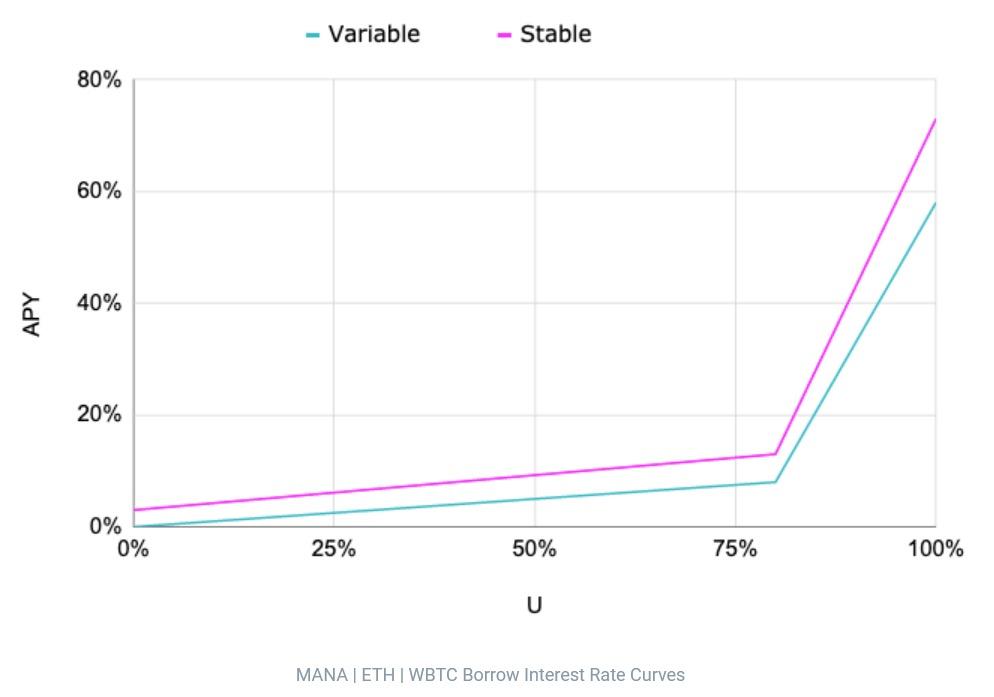
Image source: Aave docs
Of course, this strategy is not without risks. In extreme cases of very high borrowing demand, this means there is almost no ETH liquidity in Aave, and lenders may temporarily be unable to withdraw assets until borrowers repay or more deposits flow into the protocol.
Another method is to use the Voltz protocol, which is an AMM for interest rate swaps designed to bet on LSD staking yields. As staking returns may increase after the merge, market participants can use Voltz by using ETH as collateral and purchasing variable rate stETH or rETH tokens. Users can amplify their returns through leverage, but it is important to note that this comes with greater liquidation risk, and any form of leverage should be approached with caution!
3. PoW Airdrop Yield Farming
There are billions of dollars in "staking opportunities" hidden in liquidity mining, and it is almost certain that some PoW instances will still exist after the merge. Many well-known industry figures, such as Justin Sun and the exchange Poloniex, have already pledged support for this hard fork and plan to list ETHPOW tokens.
While it is currently unclear whether the fork chain has any long-term viability or how much value ETHPOW may have in the future, users do not have to give up this "fork opportunity." At the very least, there are various ways to earn what seems to be a high-probability airdrop (tip: the simplest way to qualify for an airdrop is to keep ETH in a non-custodial wallet, such as Metamask or Coinbase).
If you are looking for higher-risk investment opportunities, here is one method: borrow ETH on the money market. If the value of the airdrop exceeds the cost of borrowing ETH, it may be profitable. However, this strategy comes with considerable risk. Borrowing rates may not only exceed airdrop returns, but if the price of ETH skyrockets or the value of collateral drops, borrowers will be liquidated. Given that significant volatility is likely to occur on the day of the merge, investors need to be very cautious with this choice.
If you are afraid of high risk, you can also create an ETH position in perpetual futures. In this case, users can buy spot ETH while shorting an equal amount of ETH using perpetual contracts on CEX or DEX. This way, users can gain ETH investment exposure while also receiving the airdrop, without bearing the price risk of holding the asset. If the value of the airdrop exceeds the capital (the cost of maintaining the position), this strategy will be profitable.
However, there is no free lunch. The risks of this strategy are also significant, as financing yields (such as borrowing rates) may spike around the merge event. Any leveraged strategy, combined with volatility, will expose users to a substantial risk of liquidation.
So, please proceed with caution.
4️. Other Beneficial Opportunities
In fact, the post-merge Ethereum is expected to have a transformative impact on other areas of the ecological economy.
The first beneficiaries should be Layer 2. After the PoS transition, it will essentially pave the way for Ethereum network scalability upgrades (e.g., EIP-4844), significantly reducing on-chain aggregation transaction fees for end users. This means more users will be attracted to the network for transactions, and it will also drive more Dapp innovation—lower fees help "stimulate" the widespread application of Layer 2.
In the context of the merge, investors can (and have already begun to) invest in the entire Layer 2 ecosystem, such as Layer 2 base layers (OP), as well as Layer 2 native DeFi projects like Synthetix (SNX) and GMX (GMX), along with some infrastructure supporting Layer 2, such as Synapse (SYN) and Hop Protocol (HOP) for fast bridging services.
Another area that will change after the merge is MEV. As "proposer-builder" gradually separates, the competitive dynamics of MEV will undergo significant changes, which will separate Ethereum block production (determining which transactions enter blocks) from block validation. There are also some noteworthy projects in the MEV space that are expected to make breakthroughs during the merge, such as Manifold Finance (FOLD), Rook Protocol (ROOK), and Cow Protocol (COW). These tokens have performed quite well in recent weeks and are expected to become long-term beneficiaries of PoS Ethereum.
Conclusion: Focus on Risk, Do Your Research, Choose Wisely
The merge is approaching, and undoubtedly, it will be an important milestone in Ethereum's development path, bringing significant changes to the Ethereum economy.
If you are concerned about risk, a relatively safe approach is to invest directly in ETH. However, the current situation is very different from the bear market of 2018; we live in a DeFi world, so investors can participate in the merge through various other means, whether by investing in/trading liquid staking protocols, exploring Layer 2 and MEV, or using DeFi to earn yields.
But whatever method you choose, please pay attention to the risks, do your research, and then choose wisely.
 Risk warning
 Risk warning