NEAR Releases 2023-2024 Protocol Roadmap

 This article will introduce users to NEAR's development roadmap for the next two years and some technical highlights.
Author: Pagoda, NEAR Protocol
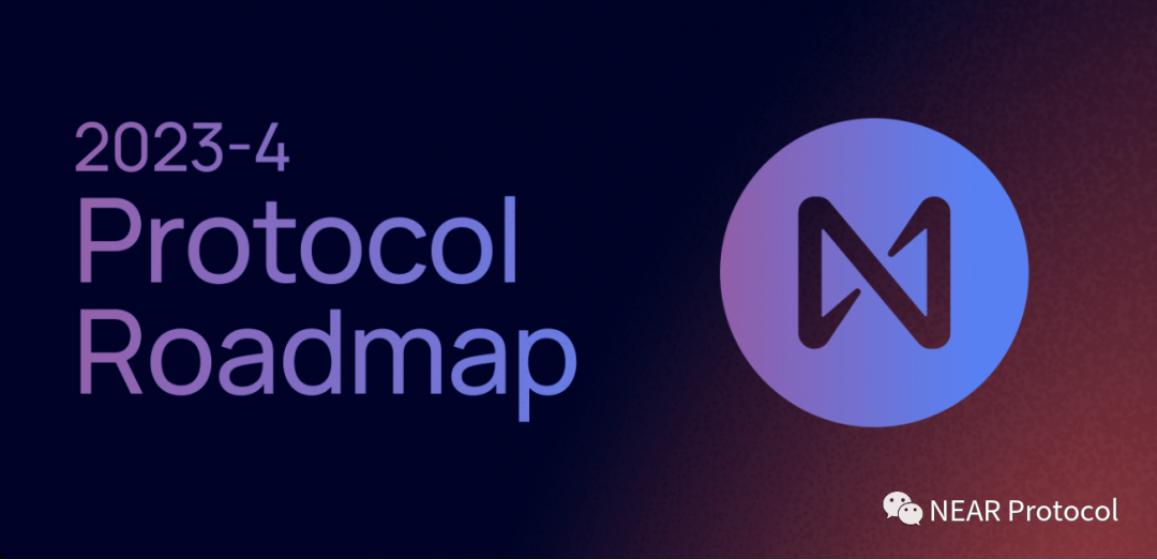
It has been two years since the mainnet was launched in October 2020, and NEAR has experienced rapid growth during this period. NEAR has completed over 20 protocol upgrades online, including the recently released Phase 1 sharding. In the next two years, NEAR will also release two phases of sharding and some important features.
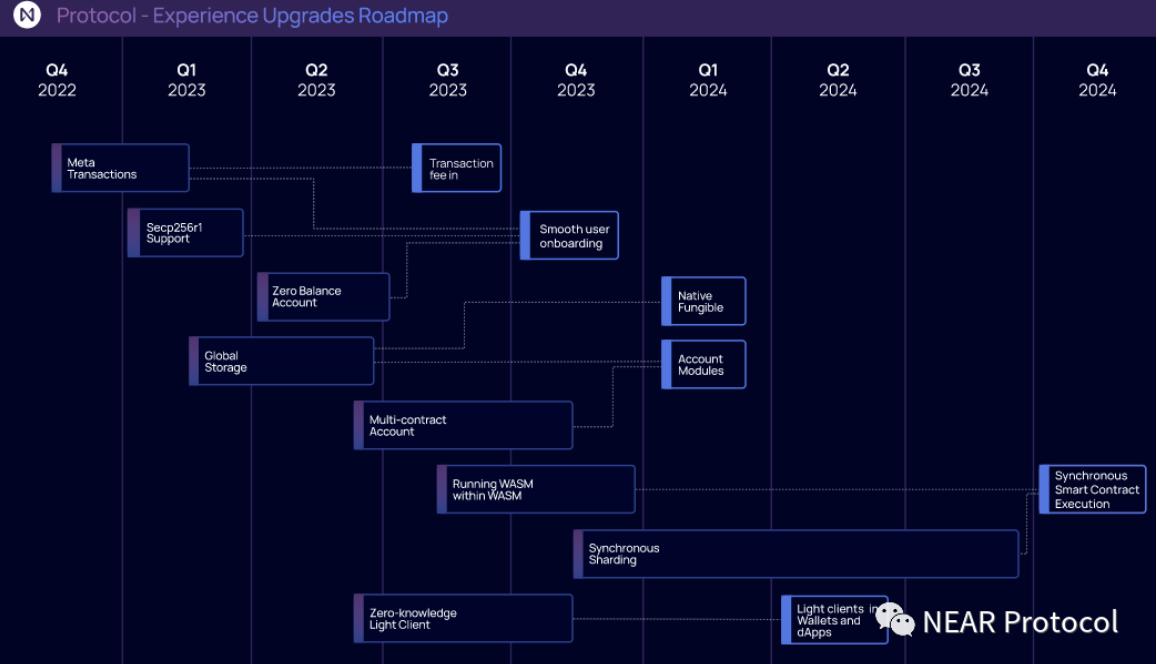
This article will introduce users to NEAR's development roadmap for the next two years and some technical highlights. The roadmap mainly consists of two parts: experience and core. The experience part will include user/developer experience and the protocol features needed to achieve these experiences. For example, if we have meta-transactions and support for Secp256r1 keys, iPhone users can freely use NEAR applications without needing to register an account.
The core part will introduce some major efforts to enhance scalability and promote protocol decentralization, among which the release of Phase 2 sharding is particularly important. This upgrade will increase the number of shards to 100, allowing validators not to track all shards. Phase 2 is planned for release in 2023, and Phase 3 sharding will be delivered in 2024, at which point the system will dynamically adjust the number of shards based on demand.
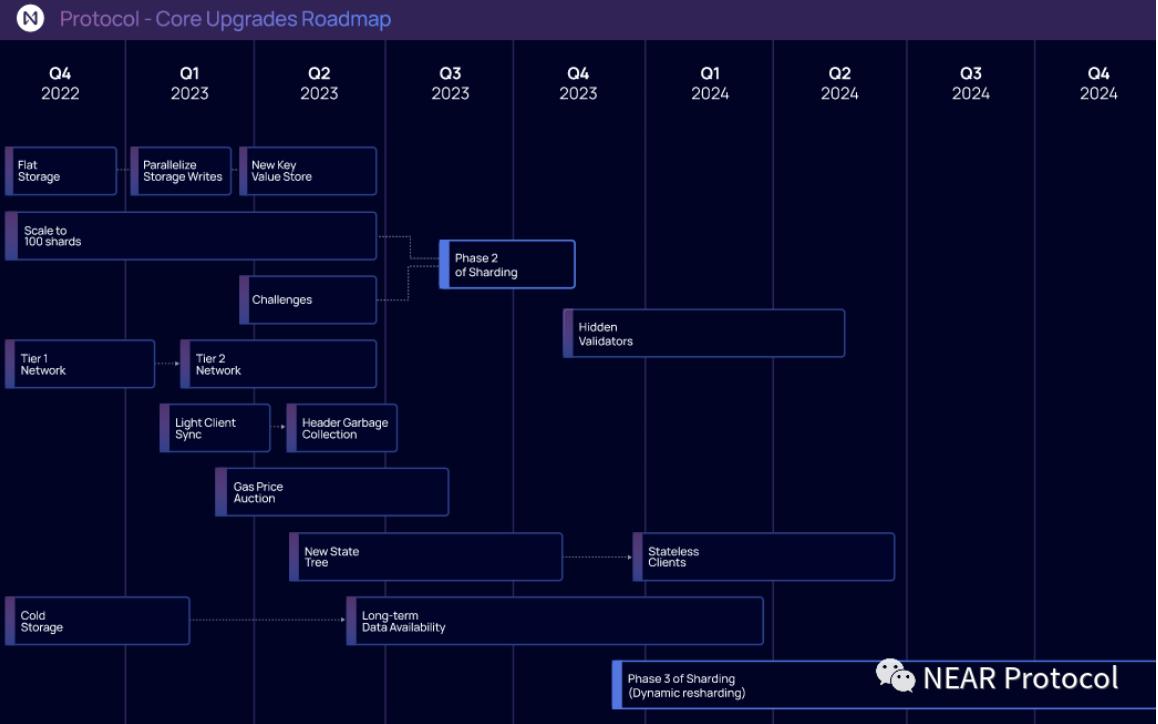
In the next two years, NEAR will launch a large number of exciting new features, and the core protocol team will prioritize these features based on the following points: the ecosystem-level strategy of the NEAR Foundation and Pagoda; feedback from project founders and developers; and surveys conducted on NEAR application users.
Here is an overview of some of the features involved in the roadmap:
Meta-transactions: Meta-transactions allow third parties to pay the transaction costs for any account, meaning users can access NEAR applications without needing to have NEAR tokens in advance.
Zero-balance accounts: Allowing zero-balance accounts to exist enables applications and wallets to easily create accounts for new users.
Secp256r1 keys: Support for Secp256r1 keys allows iPhone users to have an implicit on-chain account, so iPhone users will not need to create accounts through certain wallets, further lowering the entry barrier for users.
Global storage: Under the current storage paradigm, if a widely used smart contract is deployed multiple times, staff must pay the same amount of storage staking costs each time. For example, even if all accounts use the same contract and do not consume more physical storage at the implementation layer, each account deploying a multi-signature contract still has to pay about 3N in storage costs. Global storage allows developers to destroy tokens to deploy a contract once, after which every account can use it without paying storage staking costs.
Running wasm within wasm: Currently, smart contracts deployed on Aurora interact with each other in a synchronous manner. If we allow dynamic loading and execution of other smart contracts within the execution of a contract, then the above operation will also apply to native NEAR contracts.
The purpose of all the above features is singular: to make NEAR a better technical platform for developing simple and user-friendly applications. It is worth mentioning that many features even exceed the best user onboarding standards of Web2, allowing developers and entrepreneurs to freely develop based on NEAR without being subject to many restrictions.
 Risk warning Risk warning