Bankless: After the FTX collapse, inferring future crypto trends from these 5 soaring DeFi indicators

 In the post-FTX era, where is the capital flowing? Which projects have benefited from the FTX collapse? Can we find light in the depths of the cryptocurrency's misfortune and gloom?
Original source: Jack Inabinet, Bankless
Original compilation: The Way of DeFi
This week, we will look at the DeFi metrics that have been rising since the FTX implosion and infer what these trends mean for cryptocurrency and your future strategies.
5 DeFi Metrics Surging Post-FTX Collapse
Where is capital flowing in the post-FTX era? Which projects are benefiting from the FTX collapse? Can we find light in the depths of cryptocurrency's doom and gloom? Let's explore.
01 CEX Capital Outflow
Rule #1: Not your keys, not your cryptocurrency!
It is surprising how many people have finally grasped the value of this core crypto principle after a major disaster. However, it is unfortunate that there is no readily available data on Ledger Nano (hardware wallet) sales, but it is certain that they are on the rise!
Since November 4, there has been a net outflow of $4.675 billion in stablecoins from exchanges, with exchange stablecoin balances decreasing by 11.4%.
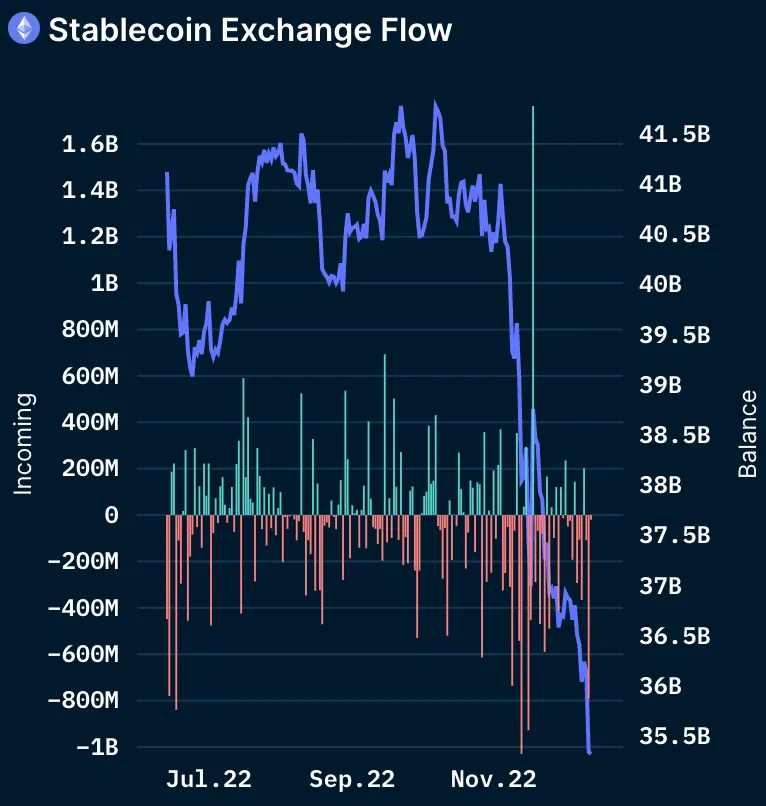
Source: Nansen
Additionally, during the same period, the total net outflow of ETH from exchanges was $5.125 billion, accounting for 13.1% of the total ETH previously held by CEXs.
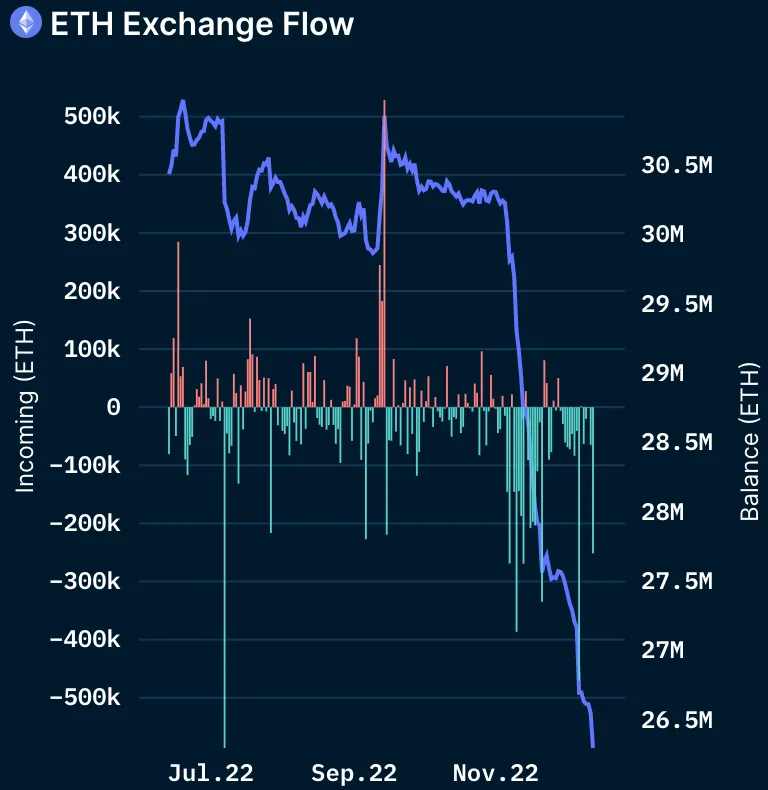
Source: Nansen
Since November 4, a total of $9.8 billion in stablecoins and Ethereum has been withdrawn from CEXs. With widespread concerns about Binance's bankruptcy spreading across CT, this withdrawal trend is unlikely to reverse in the short term.
Today's most advanced auditing solutions hardly reassure users about the safety of their assets on CEXs:
Proof of reserves audits can only capture assets at a specific moment, users are unaware of liabilities, balances are not updated in real-time, the quality of cryptocurrency exchange auditors is questioned, and complex crypto operations seem to shift towards smaller companies that may lack resources for thorough audits.
Reversing capital flight will require exchanges to regain customer trust, which may be a daunting task as cryptocurrency market participants are (rightfully) more skeptical of centralized custodians than ever before.
02 GMX TVL
Just because FTX collapsed doesn't mean the appetite for leverage in cryptocurrency has been satisfied: GMX is a major beneficiary of the capital outflow from CEXs, coming from DeFi users seeking a trustless trading experience.
GMX offers users up to 30x leverage, far exceeding many DeFi protocols.
Today, few mature crypto projects have a higher total value locked (TVL) than at the beginning of November. GMX's TVL in USD has increased by 9.9% since November 5.
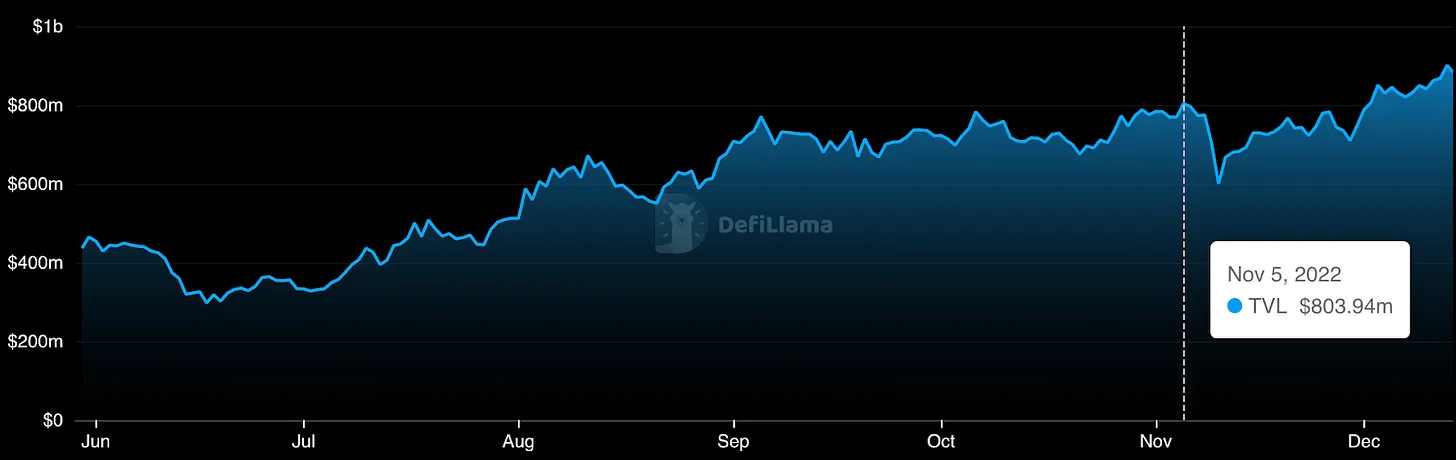
Source: DeFi Llama
When measured in ETH, GMX's TVL has risen by 41.0% since November 5!
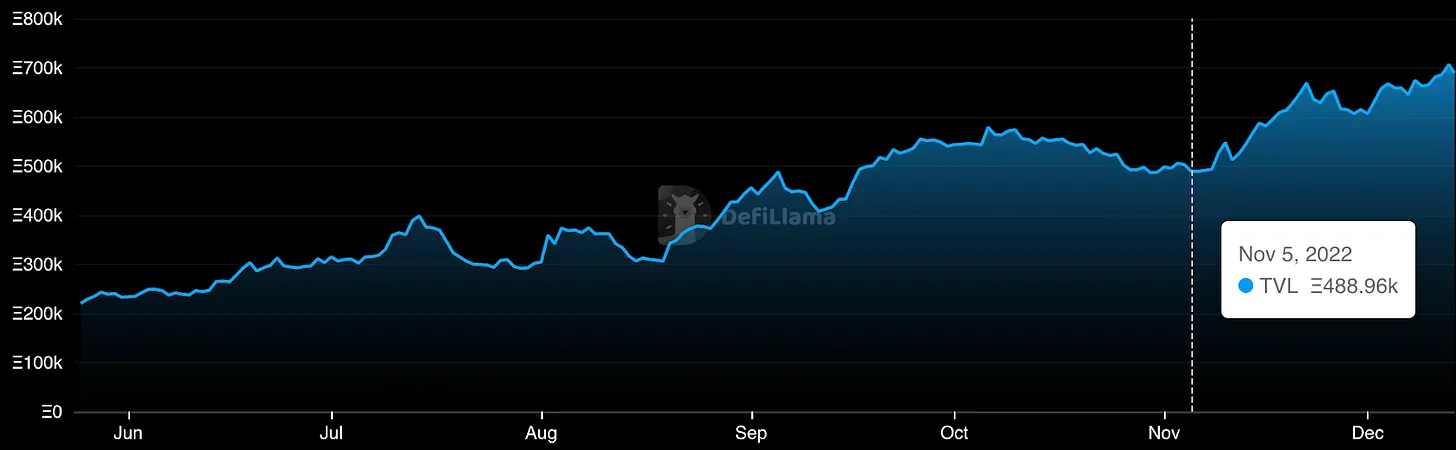
Source: DeFi Llama
The chaos following FTX's downfall and a series of bankruptcies wiped out the value of the entire cryptocurrency ecosystem. For this reason, viewing TVL in ETH can more accurately represent the growth of a given protocol's market share in cryptocurrency.
For example, GMX's TVL in USD fell by 25.3% from November 5 to 10, while its TVL in ETH increased by 12.1%!
The temporary decline in GMX's TVL in USD is a direct result of systemic inevitable factors (i.e., risks not unique to the protocol). The increase in TVL measured in ETH indicates that a larger proportion of crypto assets entered the platform during this period, thereby increasing market share.
Currently, both GMX's TVL in USD and Ethereum are on the rise, indicating that the platform has become the preferred choice for traders seeking decentralized alternatives to centralized exchanges.
03 Arbitrum TVL
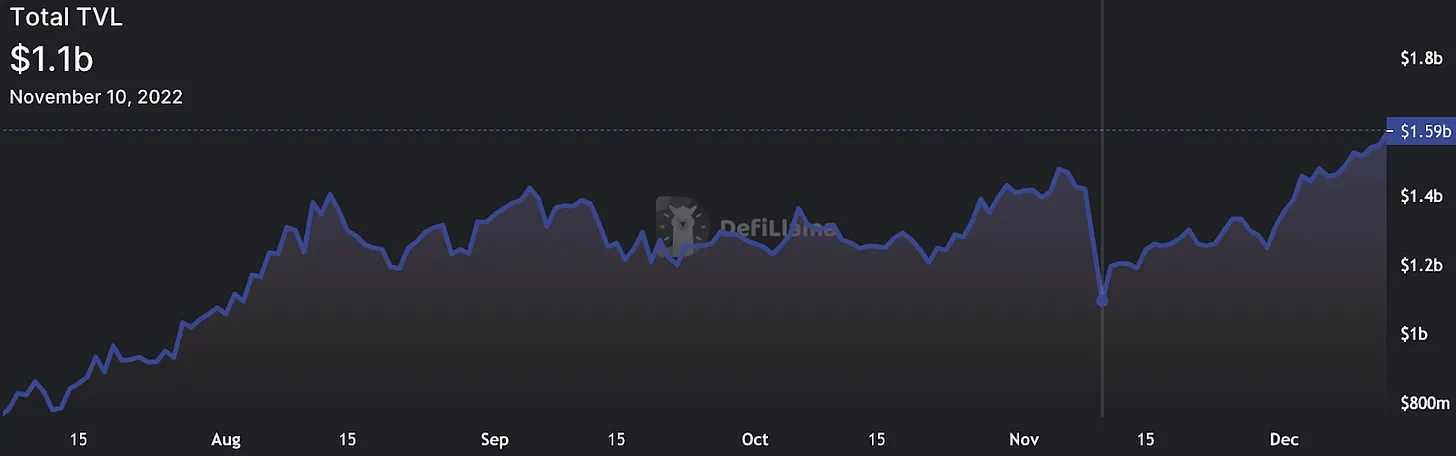
GMX accounts for more than half of Arbitrum's TVL. Given this framework, it is not surprising that Arbitrum's TVL has risen after the FTX incident.
Source: DeFi Llama
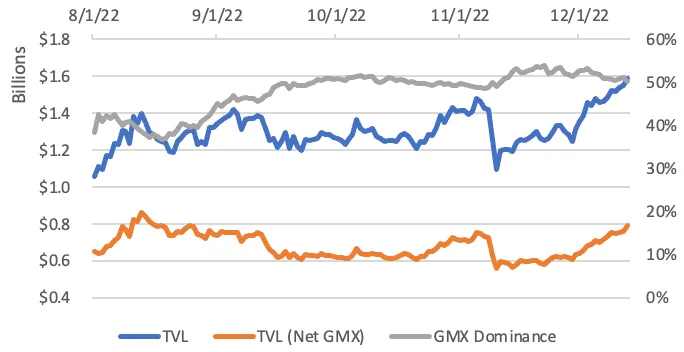
Shockingly, Arbitrum's TVL (excluding GMX) has increased by 7.6% compared to the peak level before the FTX incident on November 5.
Source: DeFi Llama (data download)
Why is this shocking?
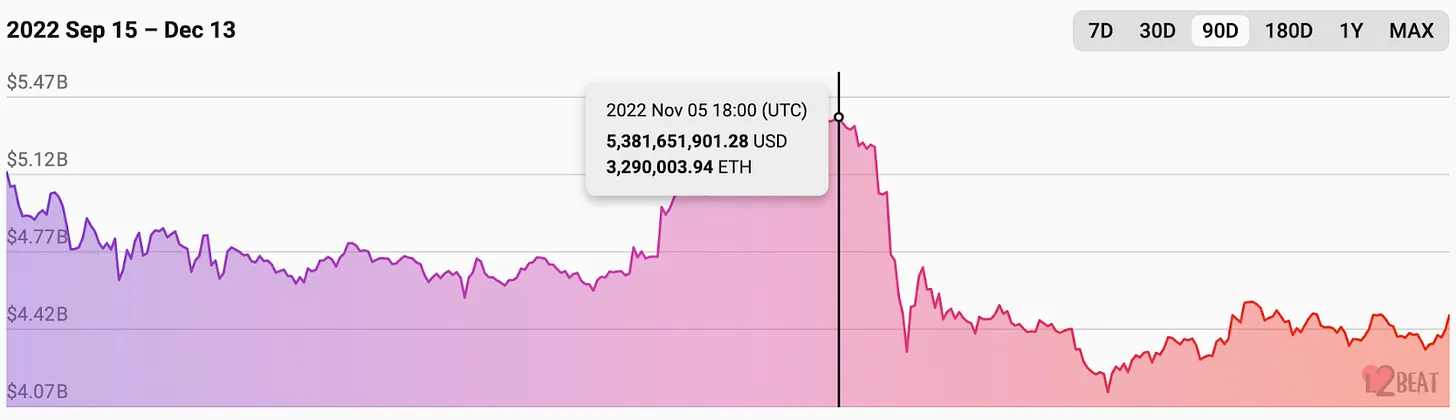
Because the recovery of Layer 2 TVL compared to Arbitrum is not optimistic: the L2 TVL in USD is 16.6% lower than the peak on November 5.
Source: L2Beat
High fee income from GLP drives the Arbitrum ecosystem, boosting TVL. The yield generated by the fee structure of this asset is the economic pillar of the blockchain network.
Arbitrum developers rely on high GLP yields!
For example, Umami Finance is working to launch a vault that can hedge GLP price risk while continuing to provide users with relevant high yields. Higher yields from GLP make this vault and dApps more attractive to DeFi users. When GMX yields are attractive, projects on Arbitrum benefit from deeper liquidity and higher valuations.
04 Leveraged Farming TVL
Sentiment and Gearbox launched on October 21 and 23, respectively, and seem ready to prove that this bear market is a building market!
Both protocols allow users to earn substantial yields from whitelisted DeFi protocols through under-collateralized leverage (for more information on these protocols, check out the Ultimate Guide to Undercollateralized Loans in DeFi------compiled by The Way of DeFi, click here).
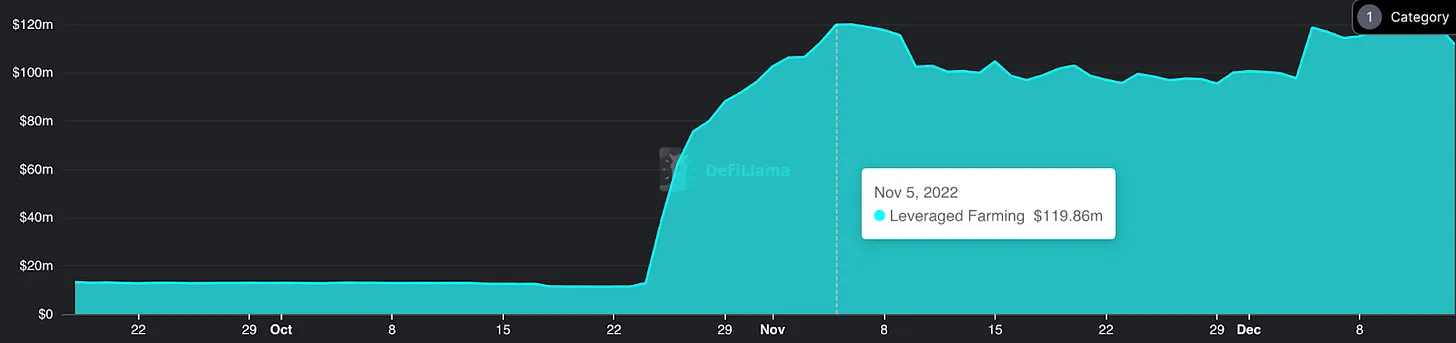
The launch of these protocols, especially Gearbox, has been a positive catalyst for the industry's TVL, which grew from $11.4 million on October 23 to $119.9 million on November 5, an increase of 952%!
Source: DeFi Llama
Unfortunately, the collapse of FTX severely hindered the rapid growth of TVL in the leveraged farming space, leading to a reduction of 20.3% from peak to trough in observed TVL in this sector. While the industry has not yet reached the ATH value of November 6 during the analysis, as of December 13, the gap in this sector is within 1%, with a TVL of $118.9 million.
In the long run, high TVL in the leveraged farming sector may be unsustainable. Gearbox accounts for 94% of the industry's TVL and has heavily subsidized its yields.
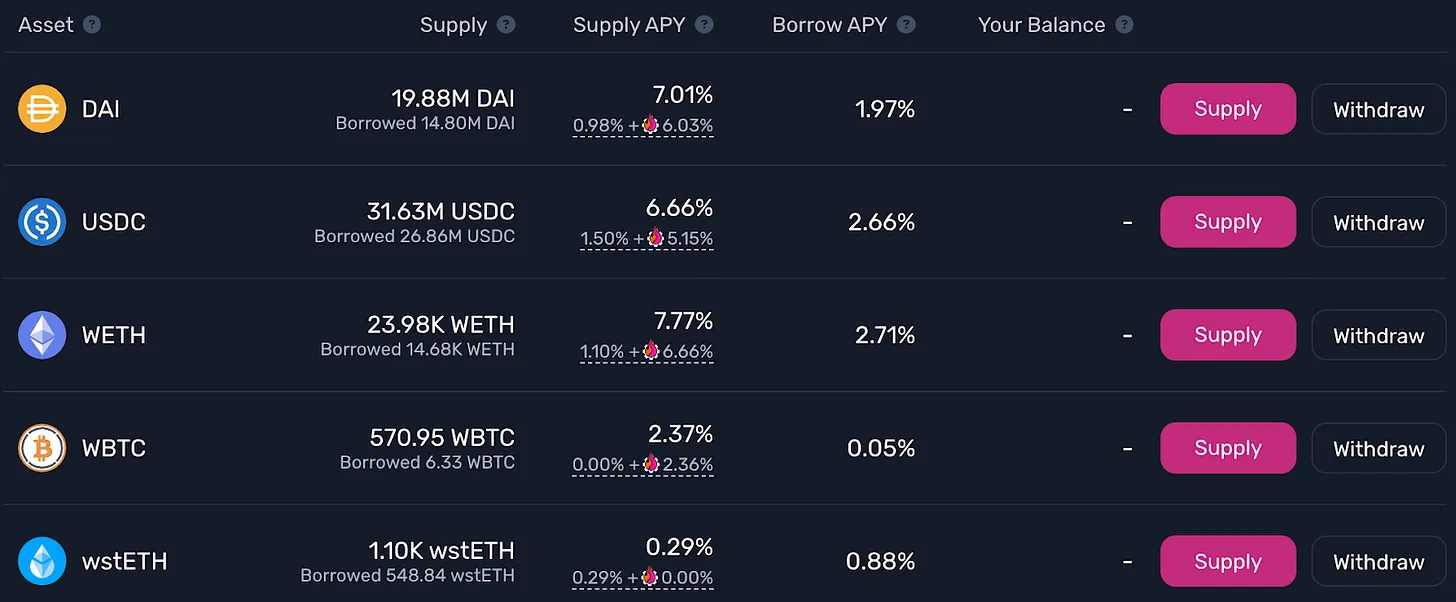
Source: Gearbox
The protocol rewards lenders with GEAR rewards of up to 6.66% annual percentage yield (APY) in selected funding pools to incentivize deposits.
However, diluting holders through token incentives is not a viable long-term strategy. While acquiring new users is crucial for the protocol's success, failing to retain existing users will weaken the protocol's community and potentially jeopardize the project's future.
Currently, capital has flowed into the leveraged farming space, especially Gearbox, which is a shiny new toy with token incentives. Unwinding these projects could lead to a reduction in TVL in this sector.
05 Polygon NFTs
Speaking of collectible value, Starbucks has just launched its blockchain-based loyalty program and NFT community Odyssey to its beta testers.
The same goes for Reddit. Since November 5, the number of unique Reddit Collectible Avatar holders has increased by 50%. (Note, Reddit Collectible Avatar is an NFT series issued by Reddit on the Polygon network.)
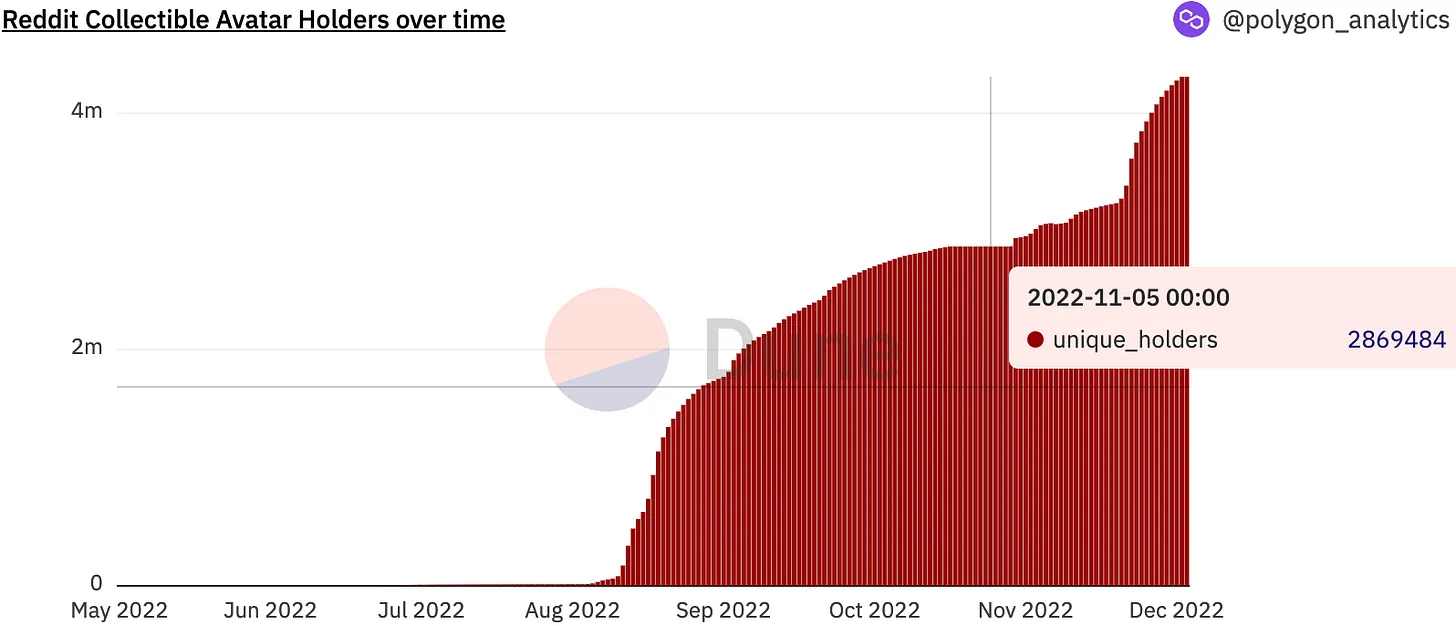
Source: Dune Analytics
Despite a decline in user numbers and on-chain activity levels, Polygon has achieved remarkable success in expanding into the branded collectibles market. The minting, transferring, and selling of these low-value collectibles have stalled the remaining NFT activity on Polygon.
On December 12, over 84,000 returning users purchased Polygon NFTs on OpenSea, an increase of over 630% since November 5!
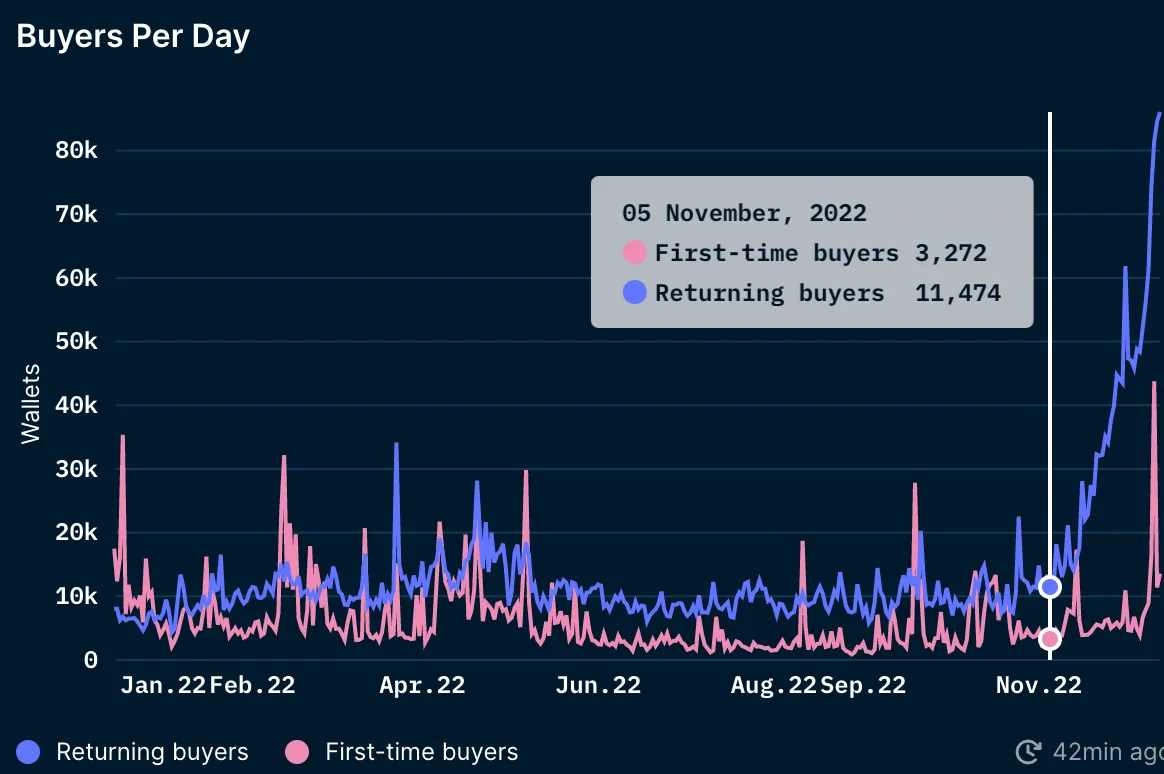
Source: Nansen
Additionally, compared to the week ending November 7, the number of weekly OpenSea users and NFT minters increased by 178%: nearly 245,000 Polygon addresses executed one of these actions in the past week.
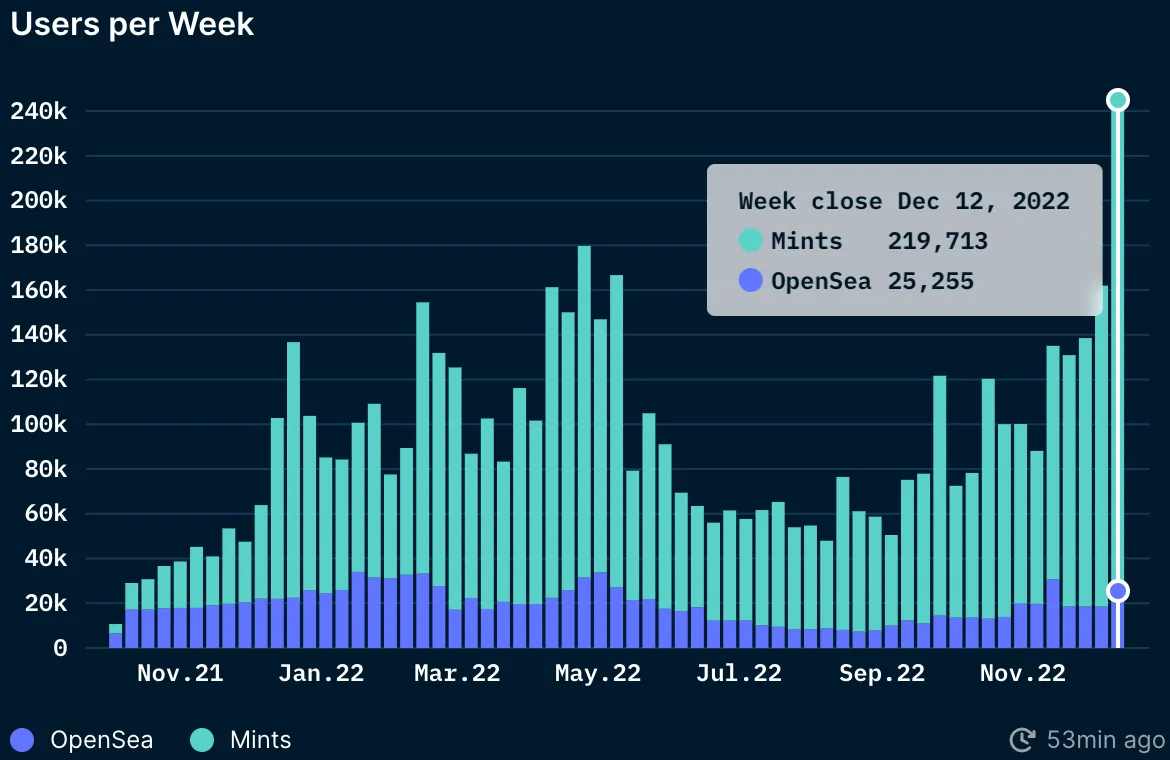
Source: Nansen
Although these NFT projects disguise themselves as "collectibles," attempting to sever ties with the toxic culture of cryptocurrency, their success still proves the viability of NFTs and encourages businesses to adopt and integrate blockchain technology into their business models and loyalty programs.
Hang in there…
In fact, everything is pretty bad right now.
Almost everything collapsed after the 3AC explosion. After the Fed raised interest rates, everything started to decline after COVID got serious…
Despite the ups and downs in the numbers on the screen, the primitives being built in cryptocurrency will remain. We are building for the future we want. Generating alpha and preparing for the next narrative.
Will self-custody, DeFi, innovative fee structures, and branded communities reduce costs? How will yields intersect with the growth of cryptocurrency? Stay tuned to find out.
 Risk warning
 Risk warning