Messari: Overview of the Solana Ecosystem After SBF

 The Solana ecosystem is not without its problems, but it is also not without hope.
Original Title: 《 The Solana Ecosystem Overview》
Written by: kelxyz, James Trautman
Compiled by: BlockTurbo
Let's address the elephant in the room from the start: SBF and FTX indeed played an indispensable role in the early development of the Solana ecosystem.
They are no longer here.
However, it is also true that many other builders have been and continue to be dedicated to expanding the ecosystem.
This report aims to provide background information on the status of individuals and teams still building the Solana ecosystem.
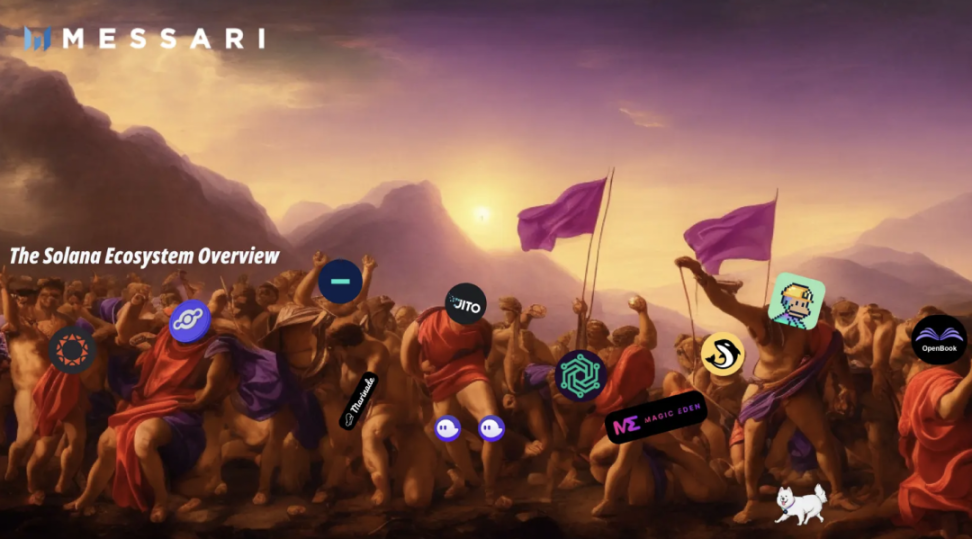
The report is divided into two parts: protocol layer analysis and application layer analysis.
Part One - Protocol Level Solana
Technical Initiatives
The theme of upgrading performance is the foundation of Solana's recently completed short-term and mid-term technical plans. Firedancer, Jito-Solana, and Multiple Leaders per Slot are some of the most anticipated initiatives within the developer community.
Network Health and Developer Landscape
Despite issues with Hetzner's terms of service and the collapse of FTX, Solana's network health and infrastructure remain relatively stable. Smaller, unprofitable validators faced some pressure before FTX, but most validators can still profit easily. For more details on staking, geography, and data center distribution, see below.
The developer ecosystem appears robust. It is important to note that the amount of data collected on this topic is too limited to rely on completely.
Protocol Infrastructure
These projects build or expand components of Solana's infrastructure that are not directly tied to the protocol itself—developer tools, deployment tools, experiments with different virtual machines, DAO tools, and more.
The Future Path of Solana - Top Technical Initiatives
Solana does not have a clear roadmap, but many initiatives have already captured the attention of developers. Examining these initiatives provides the context needed to understand Solana's technological development direction.
Firedancer (in testing)
Firedancer is an independent, C++-based validator client led by Jump Crypto. Once online, it will make Solana the second chain to have multiple clients (after Ethereum). Having multiple sets of code that can "run" the chain from scratch reduces the likelihood of significant damage to the network from errors. If one implementation has issues, a completely independent second implementation is unlikely to have the same errors at the same time—ultimately benefiting the network.
Firedancer also has the potential to significantly improve performance (600k TPS has been demonstrated live). Expect Firedancer to be gradually deployed in 2023.
Jito-Solana (deployed)
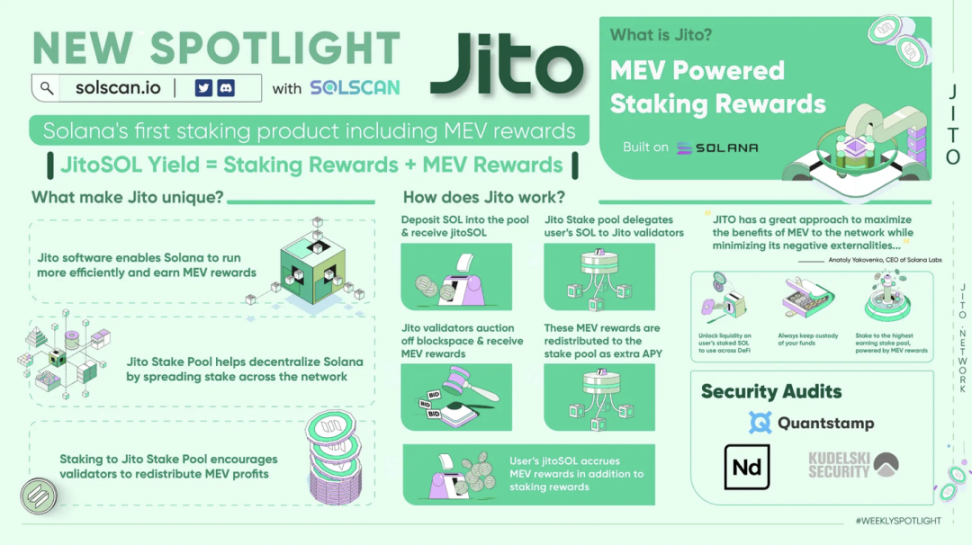
Jito-Solana is an improved validator client from Jito Labs that optimizes to facilitate MEV in a manner similar to Flashbots' MEV-boost on Ethereum. Clients create a more efficient market for MEV by introducing specific markets for block space affected by MEV. Used alongside Jito-Solana is the JitoSOL liquid staking derivative, which allows validators running Jito-Solana to optionally (but not mandatorily) automatically allocate MEV profits to the JitoSOL pool on top of staking rewards.
QUIC (deployed on mainnet)
Solana has replaced its old data transmission protocol, the User Datagram Protocol (UDP), with QUIC, a similar data transmission protocol that also allows for better control of data flow. This allows validators to exercise more discretion when sending and receiving transaction data to and from slot leaders. In other words, validators will be able to more easily filter out junk transaction data that previously disrupted the chain.
Local Fee Markets (partially deployed)
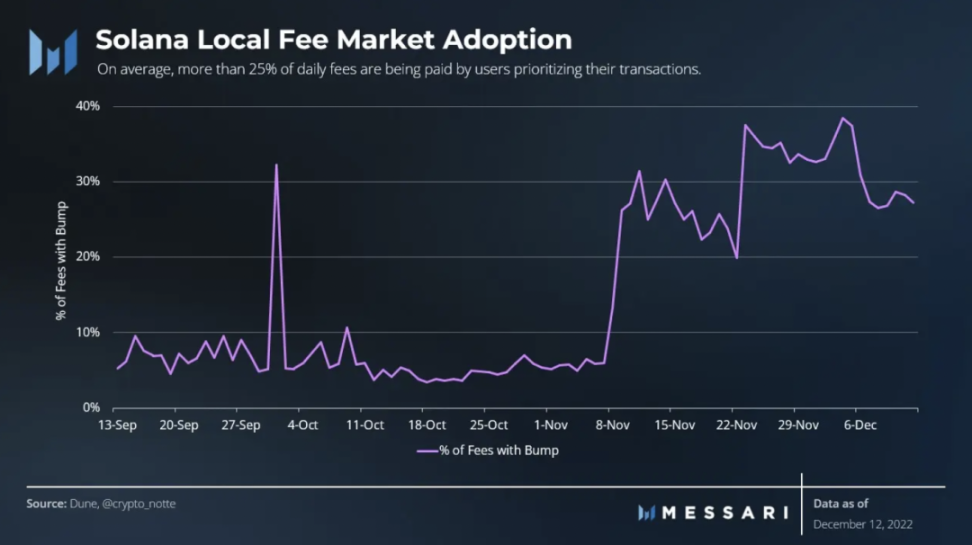
Solana accounts have hard limits on computational constraints—once reached, subsequent transactions cannot modify the state of that account within a given block. Local fee markets allow users to send priority fees to validators to express the urgency of modifying the state of specific accounts after that account has reached its computational limit.
The result is less spam (as it may be outbid) and higher efficiency in the block space market (as users can now bid specifically for account states rather than trying to overload the block with bids).
Stake-weighted Quality of Service (QOS) (deployed)
Unlike validators indiscriminately accepting and transmitting transactions regardless of their source, stake-weighted guarantees that a validator with, for example, 0.1% stake always has the right to transmit 0.1% of transaction packets to the leader. The previous indiscriminate approach made it easy for validators to be eliminated—that is, the total number of packets transmitted was less than their stake weight. This is problematic—launching smaller validators directly leads to greater centralization.
Concurrent Merkle Trees / Account Compression (in testing)
Concurrent Merkle Trees is a new method developed by Solana Labs that allows for the compression of account data while maintaining the ability to modify the state of that data.
Account compression will significantly reduce costs and storage requirements. Before compression, storing data for 10 million assets would cost $1.14 million and occupy 3.8 GB of space. With compression, storing the same 10 million assets would only cost $250 and occupy 828 KB of space. Metaplex plans to use it to dramatically reduce the minting costs of NFTs on the platform.
"Solving Interesting Problems" - Mid-term Plans
These are prominent initiatives derived from a thread released earlier by Anatoly. Several other developers have also emphasized that these are the most important factors driving Solana's success.
Asynchronous Block Production
Asynchronous block production reduces the workload of the slot leader (validators competing to validate the latest block) in packaging blocks. Initially, the leader had to perform two loads (querying stored on-chain data, such as transactions in the latest block) and two stores (storing instances of on-chain data). After implementation, this work will be reduced to just one load.
The main benefit of this approach is the reduction of redundancy. By delegating tasks more efficiently among validators, the time to generate blocks could be shortened by a few milliseconds. When you are racing against the speed of light, a few milliseconds matter.
Light Clients
Light clients sample fragments (small transaction units) instead of downloading the entire blockchain state. They rely on the honest assumption that the set of nodes they sample is honest. If the honest assumption holds, light clients allow validators to contribute to network security by ensuring that honest nodes are not obscured by a dishonest majority.
Multiple Leaders per Slot
Typically, a validator completes the work of validating each slot or block. The validator fortunate enough to occupy that position will receive about 400 milliseconds of glory as the "slot leader." Multiple leaders is a design change that increases the bandwidth of block production, allowing multiple validators to occupy leader positions.
Each leader proposes its own transaction flow (essentially a list of transaction trees), and the final order becomes a combination of these flows. This will increase competition and efficiency in the MEV market as multiple leaders compete to include MEV-related transactions in the final block.
Formal Verification
Formal verification utilizes Rust-based code verifiers (such as Kani and Prusti) to verify programs in the Solana libraries and other important, widely used libraries (such as those in Anchor).
The ultimate goal is to improve the security of Solana programs. Code verifiers can automatically check for any issues or errors in a given program. Strictly using them—especially on core contracts—should enhance the security of these contracts.
Other Smart Contract Languages
Solana is launching support for the smart contract language Move. This language is designed to be platform-agnostic, and once fully implemented, it may attract developers to use Solana's LLVM-compatible smart contract language library.
About Solana Mobile
The short-term roadmap for Solana Mobile includes three initiatives:
- The Saga development kit is scheduled to start shipping in mid-December 2022;
- The Solana mobile dapp store application will open in January 2023;
- The Saga phone will be publicly available in early 2023.
After this, the mobile team may continue to iterate on the features and design of the Saga phone and mobile software development kit (SDK). To date, Mobile remains an outsider, more like a moonshot than a certainty. But the scale of opportunity should not be underestimated.
A complete history of implemented proposals and a list of accepted but not fully implemented proposals provide more background and insights. Additionally, check the network upgrade page for the latest proposal implementations.
Network Health
As of December 8, the Solana network has a total of 2,306 validators, with a total stake of approximately 370 million SOL. Validators are distributed across more than 35 geographic locations and over 138 unique data centers. Overall, Solana's Nakamoto coefficient (definition) is higher than the industry average of 28.
The Solana Foundation released a network health report in August 2022 that goes beyond the Nakamoto coefficient to assess various aspects of decentralization. The report considers metrics such as geographic diversity, data center ownership, and entity control over validators to ensure a more comprehensive view of network health. While a high Nakamoto coefficient and a growing validator set are beneficial, they are not sufficient to guarantee immunity from centralization risks.
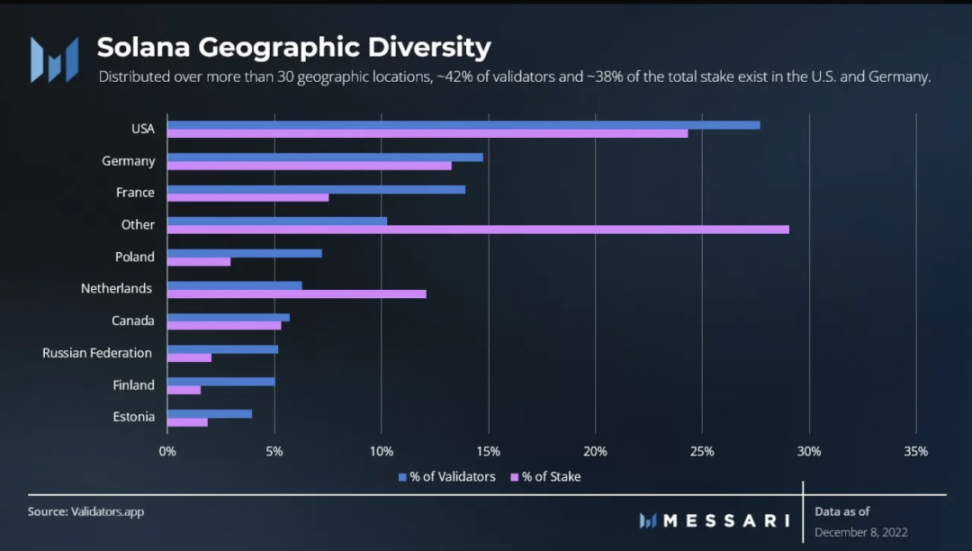
Although distributed across more than 35 geographic locations, about 42% of Solana validators and approximately 38% of total staking are located in the United States and Germany. "Other" locations account for less than 30% of total staking but consist of over 25 different countries/regions.
Geographic concentration is a typical characteristic of Layer 1 networks and is a problem Solana aims to address. Too many validators in the same location could jeopardize the health of the network due to geopolitical risks, regulations, and natural disasters.
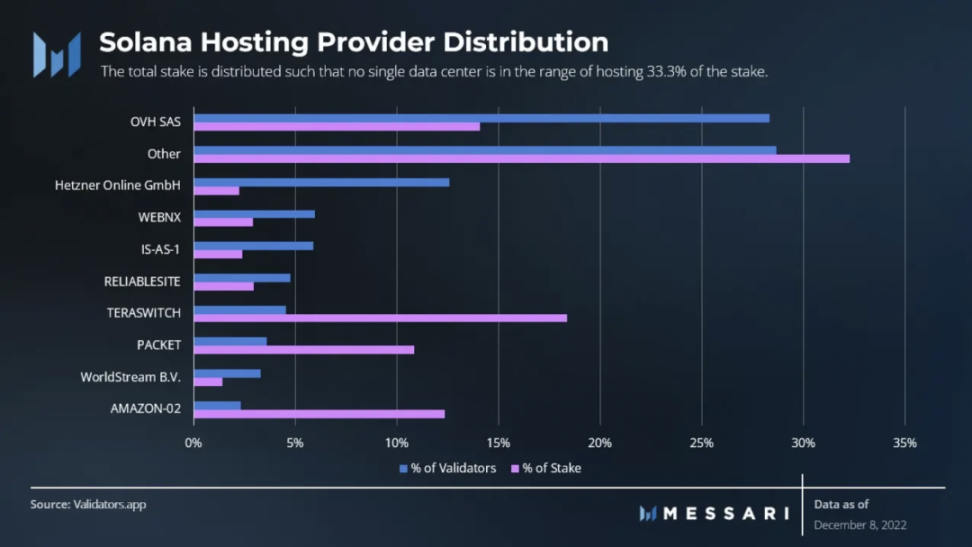
Data center concentration is another area of concern regarding decentralization. Using private data centers like AWS to run validators could give disproportionate power to the owners of those data centers on the network. As of December 15, Solana's total stake is distributed without any single data center hosting within the 33.3% range. The "Other" category, accounting for over 30% of total staking, includes more than 125 unique data centers.
However, at the end of September, the Solana network concentrated validators and staking in Germany and the United States with the German hosting company Hetzner Online. Hetzner hosted over 40% of the network's validators and over 20% of the staking. This relationship led to a high concentration of the network in Germany, with particular focus on one data center.
In early November, Hetzner removed all Solana-related activities from its servers and stated that its policy prohibits using its servers for crypto-related activities. Fortunately, the concentration was not enough to disrupt the network. Nevertheless, the incident highlighted the potential risks of the network being too concentrated in a single geographic location and data center.
As a result, the Solana network is now more decentralized. Hundreds of validators and millions of staked SOL have migrated from Germany and Hetzner to other countries such as France and Finland, as well as hosting providers like OVH SAS.
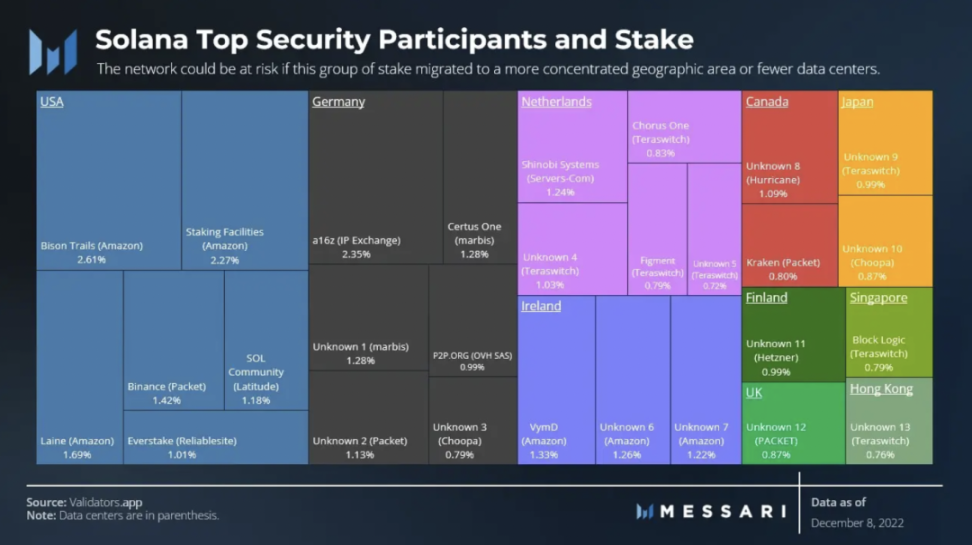
When assessing the top 28 validators that constitute the Nakamoto coefficient, the situation is slightly different compared to the apparent concentration after the migration from Hetzner in Germany, Hetzner, and even OVH SAS.
Looking at the number of validators controlling over 33% of the network stake, more than half are hosted by Amazon and Terraswitch. Additionally, one-third of them are staked in the United States. While these are not enough to collude against the network, assessing the stake composition of top validators is crucial. In this case, if this group of stakes were to migrate to more concentrated geographic areas like the United States or to a few data centers like Amazon or Terraswitch, the network could be at risk.
Ultimately, the decentralization and health of the Solana network remain intact, and it is in a better position after validators and stakes have migrated from Hetzner to dozens of other geographic locations and data centers.
Developer Profile
There are two main points:
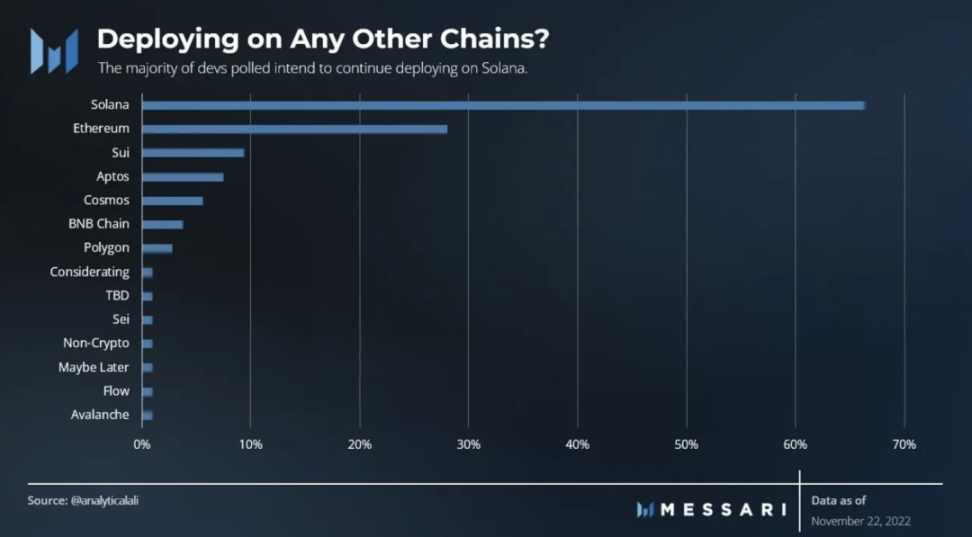
A large number of developers are deploying on other chains, especially Ethereum. However, most (66%) of the surveyed developers insist on using Solana.
About 72% of developers report that their teams were not affected by FTX at all. About 20% invested personal or project funds in FTX.
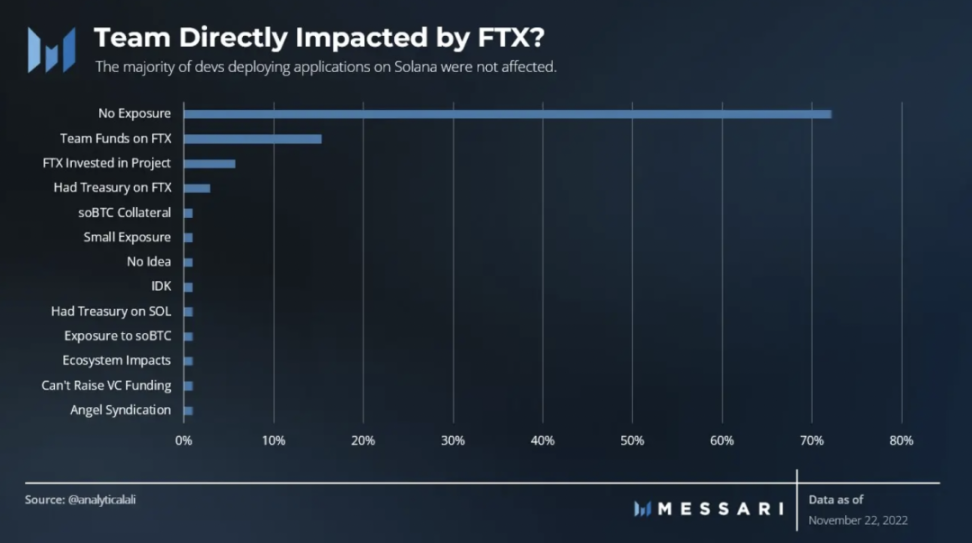
While surveys like this are not rigorous enough to be published in Science, they do provide some much-needed data to better understand the broader reality of the situation.
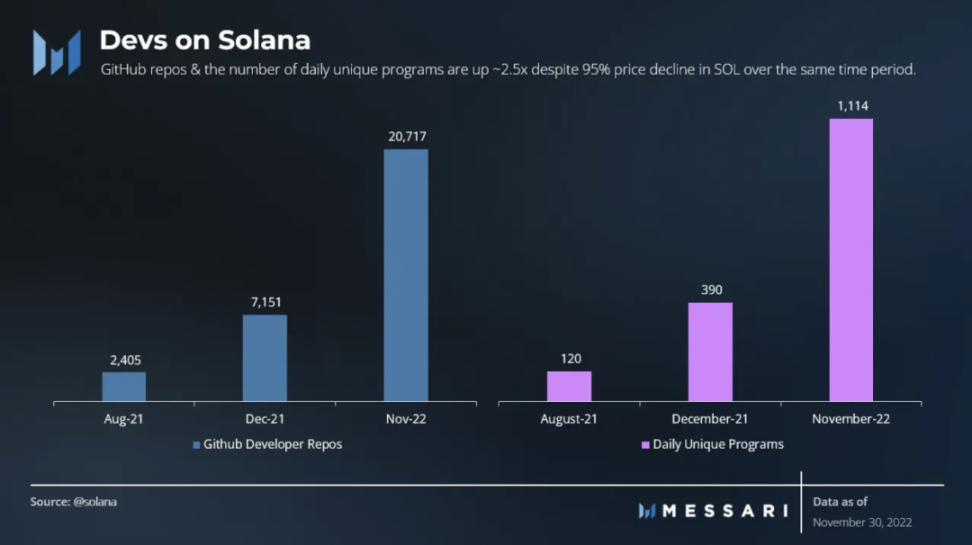
Turning to some other statistics, despite the SOL price dropping by -95% during the same period, the number of GitHub developers and the number of daily unique programs have both increased by about 2.5 times year-on-year. Note that since May 2022, the daily unique programs have stagnated, hovering between 1,000 and 1,150 daily.
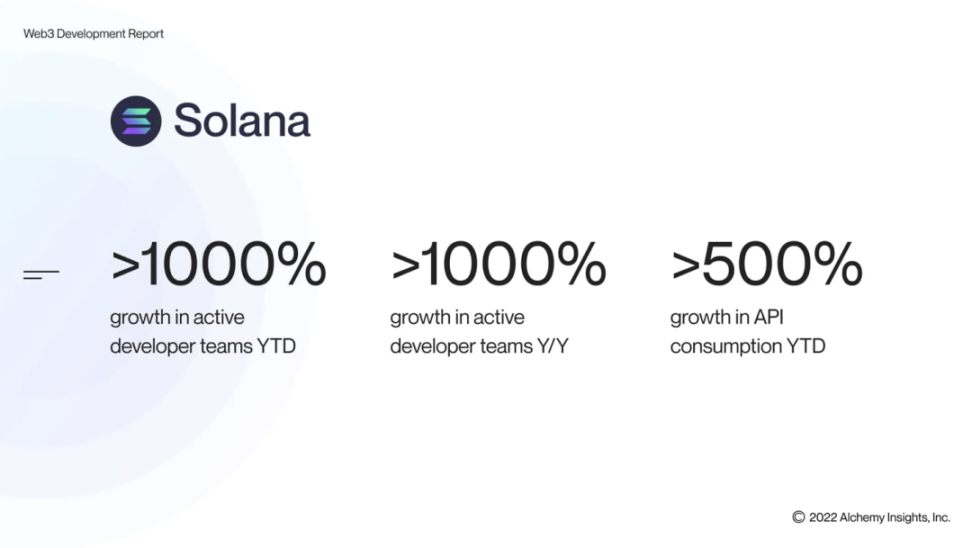
Alchemy released a Web3 developer report reflecting a similar growth story. According to the report, Solana's active development teams have grown more than tenfold this year, and API consumption has increased more than fivefold.
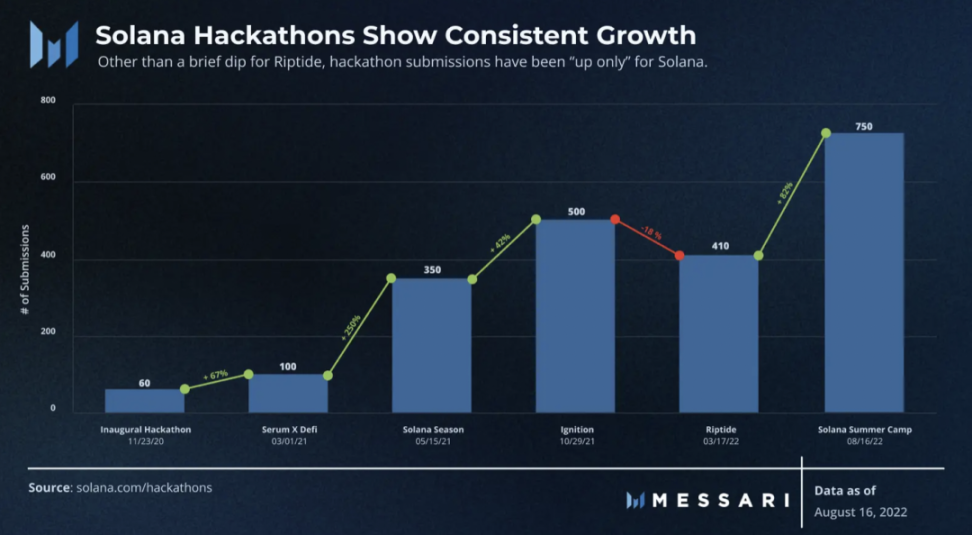
To understand what these new teams are building, watching hackathon events and Solana hack houses is the best choice. The 2023 lineup has been released, including multiple locations such as Mumbai, Austin, Istanbul, and New York. So far, hackathons have been a tremendous success for Solana.
Protocol Infrastructure
These are some of the top projects building or expanding components of Solana's infrastructure that are not directly associated with the protocol itself—think developer tools, onboarding tools, experiments with different virtual machines, DAO tools, and more.
Exploring MEV: Jito Labs
As mentioned above, Jito Labs created validator software for efficiently transmitting MEV between validators, searchers, and stakers. The development of similar software on Ethereum (Flashbots) has reduced network congestion and increased staker yields, especially during high network utilization. The Jito client should have a similar impact on Solana.
Developer Tools: Coral, Helius, GenesysGo, Clockwork
Coral is the company behind two developer tool infrastructures:
- Anchor Lang: Anchor is the preferred framework for writing programs (smart contracts) on Solana. Anchor simplifies the program building process by handling more baseline tasks, allowing developers to focus primarily on business logic. Seahorse Lang is a community-led project built on Anchor that enables programmers to build smart contracts in Python. Other development projects allow for the creation of Solana programs using another popular coding language, Typescript.
- xNFT: xNFT is the standard for "executable NFTs," giving users the right to execute code. Backpack is the application for xNFT, creating a new type of wallet where applications run natively through one interface instead of interacting with applications through a browser view.
Helius provides RPC node management specifically for Solana, allowing developers to trigger actions in response to on-chain events via webhooks, and a set of APIs for decoding on-chain data, making it more accessible than standard block explorers. In just two months of mainnet operation, Helius has gained over 1,200 users.
GenesysGo also offers RPC services along with storage and computing services. According to Step Data Insights, as of October 2022, GenesysGo's Shadow Drive storage solution has stored 3.5 TB of data.
Clockwork is another developer tool infrastructure specifically for transaction scheduling and smart contract automation. Since launching at Solana Breakpoint in early November, they have rapidly scaled to 60,000 automated instructions per week.
Experimental Virtual Machines: Neon, Eclipse, and Nitro
Some projects are experimenting with importing and exporting different virtual machines from Solana. Neon Labs will launch a smart contract program that ports the Ethereum Virtual Machine (EVM) to Solana. This will allow EVM developers to deploy on Solana with minimal changes to their original code. Look for them to deploy on the mainnet in January 2023.
Eclipse and Nitro are exporting the Solana Virtual Machine (SVM) to Celestia and Cosmos, respectively. These projects seek to leverage the speed of SVM and the modularity of chains like Celestia and Cosmos for a win-win situation. Projects on Solana will be able to deploy code to Eclipse or Nitro as easily as Ethereum projects deployed on other EVM chains like Avalanche or Polygon.
DAO Tools, Wallets, and Fiat Onramps
Realms and Squads are leading DAO governance and multi-signature solutions, respectively. Finally, Phantom continues to dominate the wallet space—it is one of the teams hoping to leverage its early success for multi-chain expansion to Ethereum and Polygon.
The aforementioned Coral backpack standard is also designed to expand the market and gain market share. Solflare, Glow, Spot, Ultimate, and Cashmere are just a few among many other wallet competitors. Dialect is a protocol dedicated to providing messaging infrastructure for all of the above.
In payments, all eyes are on two teams in this ecosystem: Solana Pay and Stripe. Solana Pay recently made headlines by partnering with STEPN and Asics, but the game here is really about point-of-sale level integration.
Stripe's fiat-to-crypto onramp showcases 16 projects, 11 of which are based on Solana. One of the mentioned projects is Ottr Finance—a Solana-based alternative to Venmo. Tiplink is another protocol taking a different approach.
In the privacy space, Light Protocol is leveraging zero-knowledge proofs (ZKP) to enable privacy-preserving on-chain payments and transfers. Otter Cash is another privacy solution available for Solana users.
Summary of Part One - Protocol Layer of Solana
Historically, one of the biggest criticisms Solana has faced is the gap in ecosystem maturity compared to Ethereum. This gap still exists, but the projects shown above indicate that it is narrowing. The closure rate remains to be explained, but it is undeniable that Solana has an ecosystem dedicated to improving its core infrastructure and functionality.
Describing Solana as merely a "SBF chain" seems largely unfounded.
Part Two - Application Layer of Solana
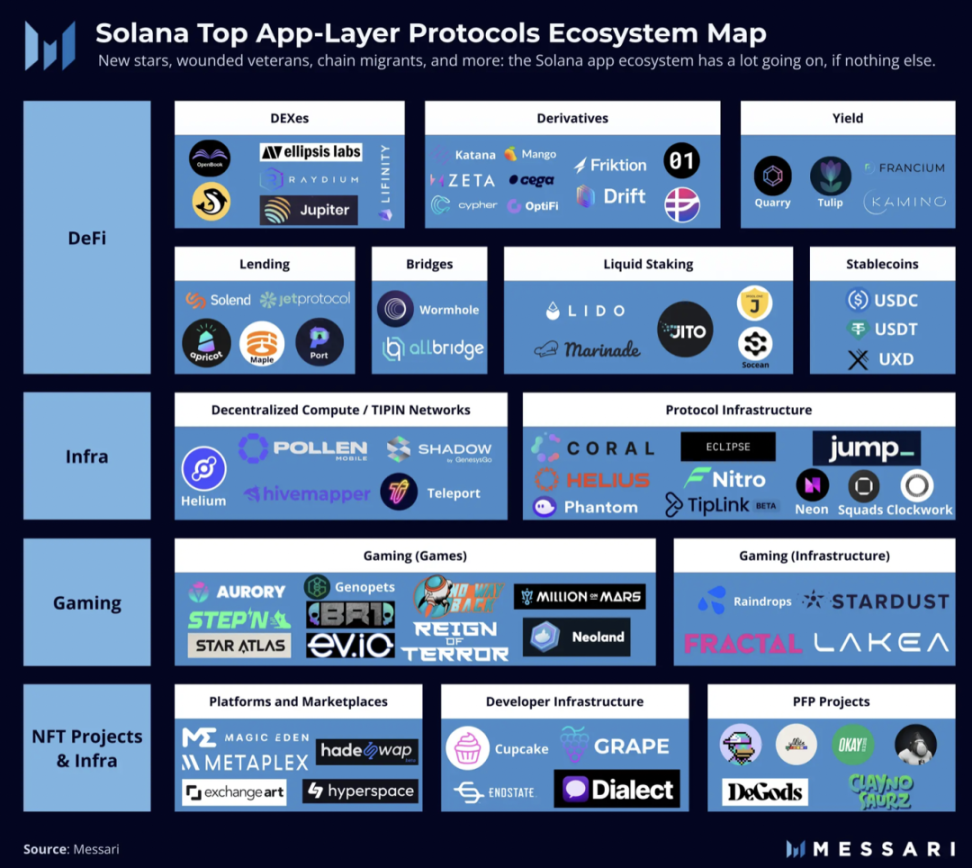
Without the applications built on top of it, even the best technology is insignificant. Solana has a wide array of applications in DeFi, Web3 infrastructure, NFTs, and gaming—too many to highlight every project in this report. Instead, we have created an ecosystem map covering most names in each subfield, along with highlights of top projects and narratives in each subfield.
DeFi Applications
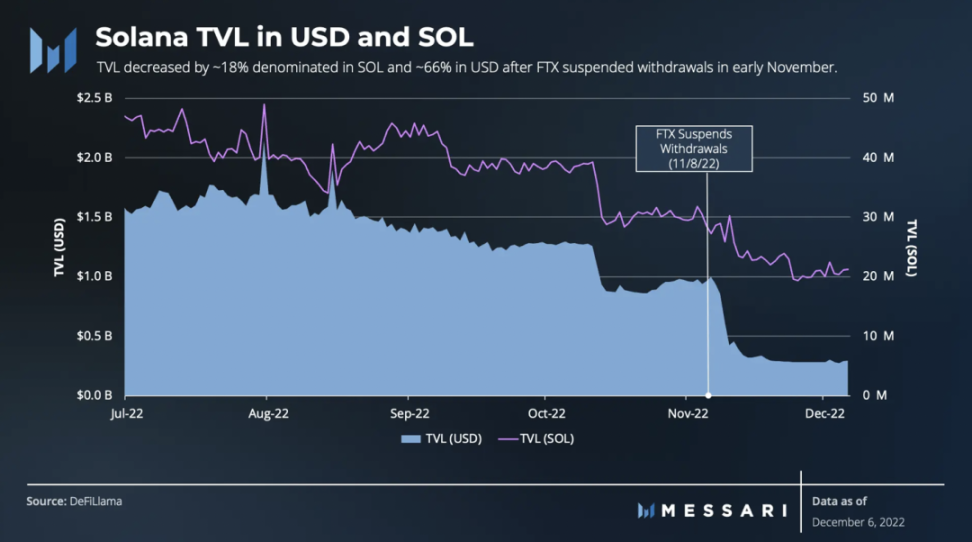
It can be fairly said that Solana DeFi is the sub-industry most severely impacted by FTX. With Alameda's on-chain activities canceled, Solana DeFi's TVL took a massive hit, and the price of SOL dropped by 67%.
That said, there are still innovators building for the future. Here are some highlights.
Spot DEX
Three names to note regarding spot decentralized exchanges are OpenBook, Ellipsis Labs, and Lifinity. OpenBook is a community-run fork of Serum V3 that launched after Serum's upgrade key may have been compromised. Serum's public Twitter handle has publicly acknowledged the new fork.
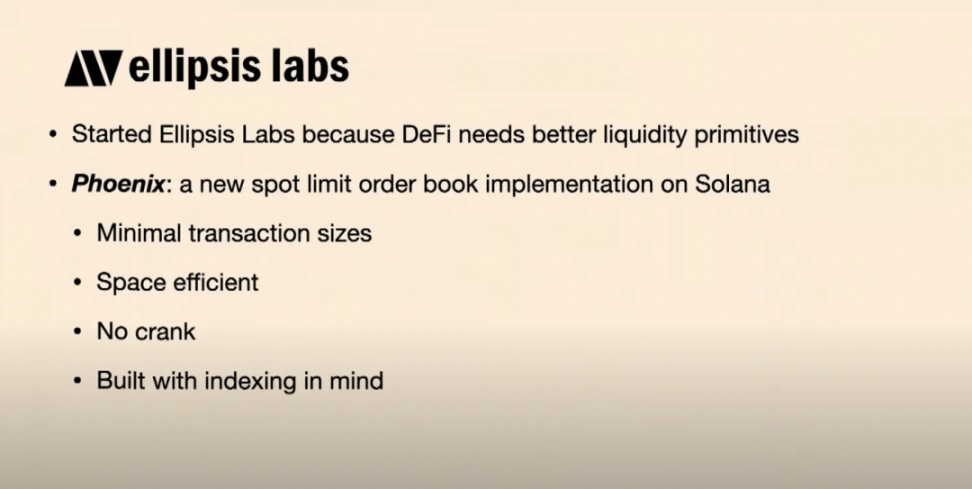
Ellipsis Labs' Phoenix order book expands on Serum's original vision of a centralized limit order book (CLOB) with a series of design decisions aimed at improving efficiency, such as removing operationally intensive "launches" from DEX design.
Lifinity leverages concentrated liquidity and an active market maker model (actively adjusting prices with oracle delays of less than 1 second) to eliminate reliance on arbitrageurs, reduce impermanent loss by limiting trades against stale prices, and more.
Derivatives and Structured Products
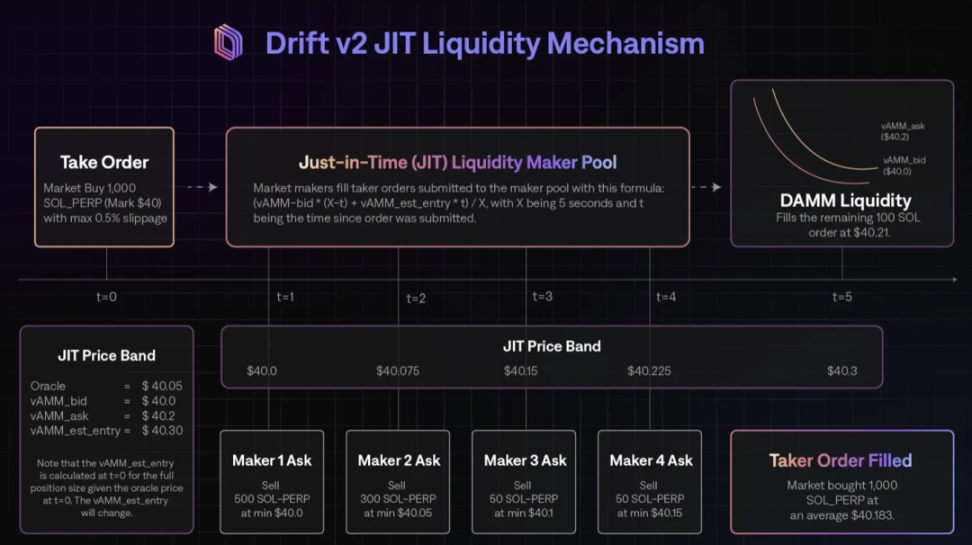
Many teams are building in the derivatives, options, and structured products space: Drift, Zeta Markets, Mango Markets, Friktion, PsyOptions, 01, and Cega are just a few. Teams have been working to address key issues such as sourcing liquidity, new asset backing, cross-margining, and user experience.
Liquid Staking Derivatives (LSD)
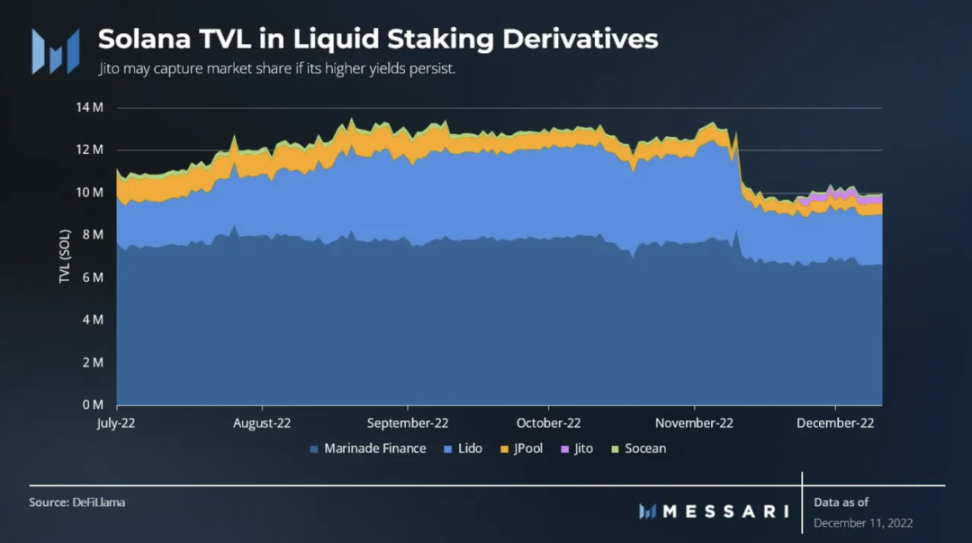
Jito Labs' JitoSOL may be grabbing all the headlines, but Marinade and Lido still lead in market share. If JitoSOL's higher yields (as of December 7, Lido at 9.10%, Lido at 8.80%, Marinade at 8.08%) persist, this situation may change.
Look for integration across the entire Solana DeFi as a potential catalyst for additional demand.
TIPIN Project
TIPIN, or Token Incentivized Physical Infrastructure Networks, is a lesser-known field. Helium was the first protocol to use token rewards to incentivize individuals to complete real-world activities, recently making headlines by voting to migrate its network from its own blockchain to Solana. This move aims to address the network's scalability and throughput issues and allows the community access to Solana's developer and infrastructure ecosystem, including wallets, DeFi applications, and the Solana Mobile Stack. Other TIPIN networks to watch on Solana include:
- Pollen Mobile -- A competitor to Helium in the 5G space. They offer coverage cheaper than traditional competitors—sometimes up to 90% cheaper.
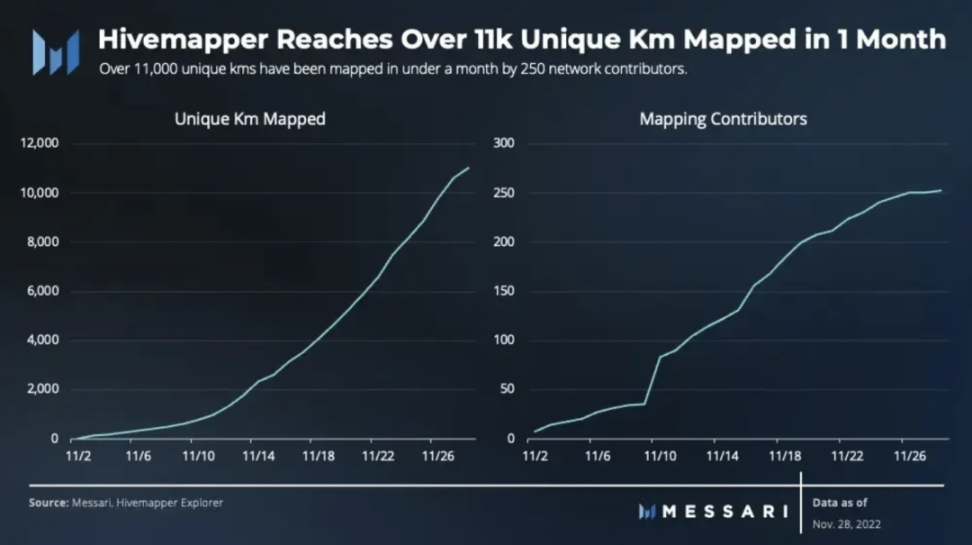
- Hivemapper -- A monetization network incentivizing users to provide high-quality street map data to the network.
- Teleport -- A ride-hailing app similar to Uber that incentivizes drivers and passengers to join the network.
NFT Projects and Infrastructure
Amid the chaos, "JPEGs" remain relatively and surprisingly resilient. In November, daily sales priced in SOL nearly reached an all-time high as holders and traders rushed to adjust the valuations of their NFTs to accommodate the plummeting SOL price.
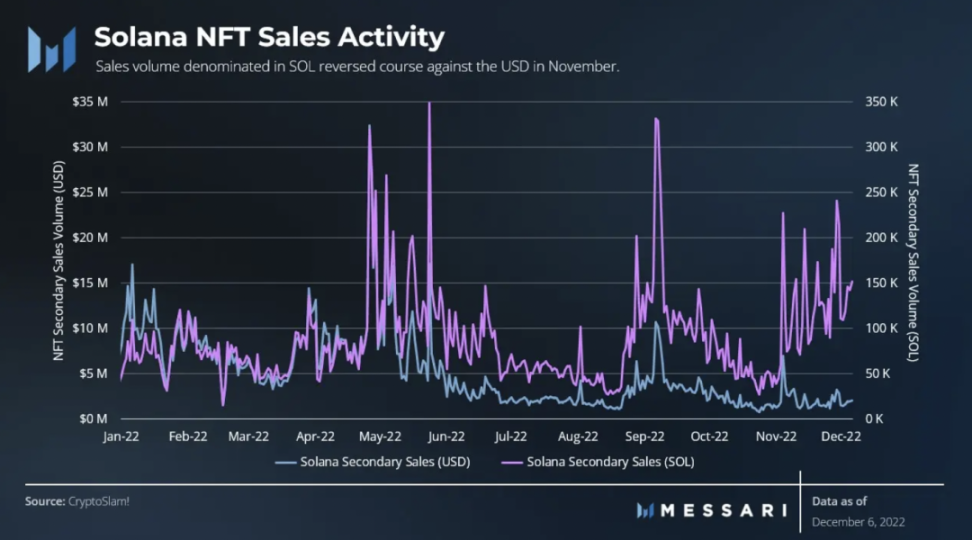
The royalty debate has dominated the narrative in the JPEG space. Initially, the adoption of aggregators allowed for the evasion of royalties as much as possible.
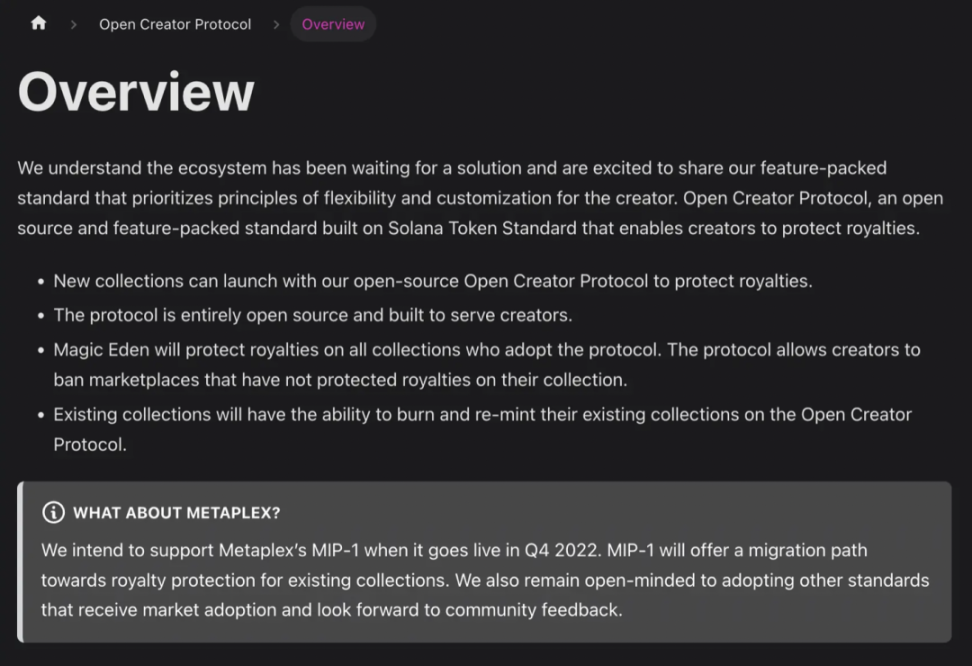
Now, leading platforms Magic Eden, Metaplex, and Cardinal have announced a form of protocol-level creator royalty protection. The pendulum has swung to the other end, with several designs enabling creators to prohibit markets that do not enforce usage fees. Time will tell which design prevails in the long run.
Additionally, Solana's NFT ecosystem is driven by the ongoing optimization of the Metaplex digital asset standard, which is the foundational token standard for all NFTs on Solana. Metaplex continues to iterate on its popular open-source minting solution, such as Candy Machine, recently announcing a no-code solution for less technical creators. Together, Solana and Metaplex provide creators with an efficient venue for publishing NFTs.
Metaplex's compression of NFTs may also support the NFT ecosystem. Compression will lower the on-chain storage costs of NFTs, enabling enterprise users like airlines and live events to store on-chain tickets and scale up. Compression will allow for minting up to 1 million NFTs simultaneously for about 6 SOL ($204) and up to 100 million NFTs simultaneously for about 50 SOL ($1,700).
Moreover, recently launched NFT minting solutions, other marketplaces, and enhanced user experience applications may evolve the NFT ecosystem. Phantom allows users of its browser extension to list their NFTs directly on Magic Eden. Atomic Wallet has launched support for Solana NFTs on its desktop and mobile versions. Solana NFTs are also starting to trade on other NFT marketplaces like Rarible.
Despite the bear market and recent macro events, Solana's strategy and position in the NFT space remain strong. In terms of secondary sales, Solana is still the second-largest network and is narrowing the gap with Ethereum.
Gaming Ecosystem
As the crypto space positions itself to support GameFi, Solana Ventures is at the forefront. Their $150 million fund to promote the network's gaming ecosystem has attracted additional investment capital and sparked interest in gaming.
Subsequent efforts include more investors, such as Magic Eden's Magic Ventures, Ancient8's DoJo (a gaming launchpad), and builders like Eternal Dragons.
Developments like these place GameFi at the forefront of catalyzing a wave of activity across the entire crypto space, and Solana is poised to grow its GameFi ecosystem.
Most of the larger games in the Solana ecosystem are either not yet launched or in early stages. Some top games to watch include ev.io, BR1: Infinite, No Way Back, Aurory, and Star Atlas.
If some of these succeed, take note—games have historically proven to generate exceptionally high usage rates and revenue.
Investors in Solana
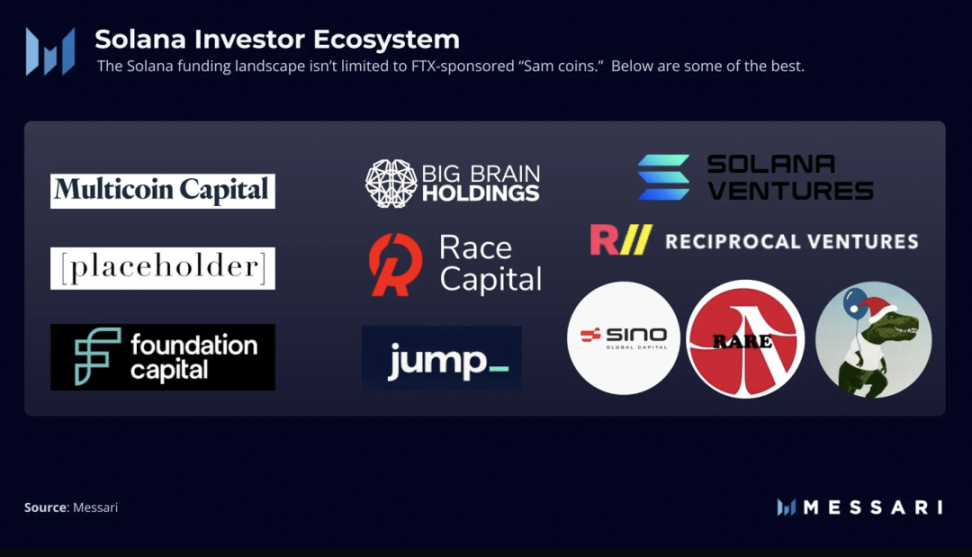
A common criticism from outsiders of the ecosystem is that FTX was just a small group of investors looking to extract value from Solana-based projects. "Sam coins"—especially Serum, Oxygen, MAPS, etc.—are often cited as examples.
Non-FTX investors associated with this group—namely Jump, CMS, Sino, and Multicoin—have been and continue to be an indispensable part of supporting the Solana ecosystem, excluding Sam tokens. However, the range of investors from venture capital firms is broader than this group—investors like Foundation Capital and Race Capital were already investors before FTX emerged.
Newer investors like Chris Burniske of Placeholder and Twitter personality R89 Capital have publicly offered new perspectives on Solana in the wake of the FTX collapse. If these and more names can come together to address some of the long-standing issues in this ecosystem—especially in terms of token economics—the landscape for private and public market venture capital on Solana may emerge stronger than ever from the implosion of FTX.
Conclusion
The Solana ecosystem is not without its problems. One of its once-core figures, SBF, may be a complete fraud. The technology is not finished. And yes, prices have dropped.
However, the ecosystem is not without hope. New applications may reinvigorate usage. Potential new winners can exceed SBF in their positive contributions to the network. Actively developed technical upgrades may continue to alleviate network issues and enhance performance.
As for the price?
That is up to all of you.
 Risk warning
 Risk warning