Grayscale: How should Ethereum be valued?

 In terms of Ethereum, the decline in the supply schedule combined with the growth of DApp applications suggests that the token may be undervalued due to a broader macro-driven sell-off.
Author: Grayscale
Compiled by: Daring Think Tank
Smart contract platforms (SCP) like Ethereum (ETH) are often referred to as decentralized computers, while payment-oriented crypto assets like Bitcoin are simpler decentralized ledgers. In this article, we will analyze the unique characteristics of smart contract platforms, discuss how their native tokens differ from traditional payment crypto assets like Bitcoin, and propose a valuation framework by examining supply and demand factors.
What is a Smart Contract Platform
"The biggest difference between Ethereum and Bitcoin is that Bitcoin is a platform whose ecosystem value comes from its monetary value. But in Ethereum, the value of the currency comes from the value of the ecosystem." ------ Vitalik Buterin (Founder of Ethereum)
While payment assets like Bitcoin can track interaction data between addresses, smart contract platforms like Ethereum also allow for the storage, retrieval, and computation of arbitrary data. Smart contract platforms enable developers to write code for smart contracts to perform on-chain computational operations. This allows developers to create decentralized applications (DApps) that can automate parts of processes that traditionally require human intervention. For example, smart contracts enable users to instantly deposit collateral and borrow assets within seconds without human operation, as opposed to undergoing a lengthy process in traditional banks to obtain a loan. The benefits of using smart contracts are numerous: many processes can become cheaper, faster, and more transparent through interactions with neutral code snippets rather than human intervention.
In this article, we will primarily use Ethereum as a case study, as it is the most active smart contract platform in terms of users, transaction volume, total transfer value, and total projects established.
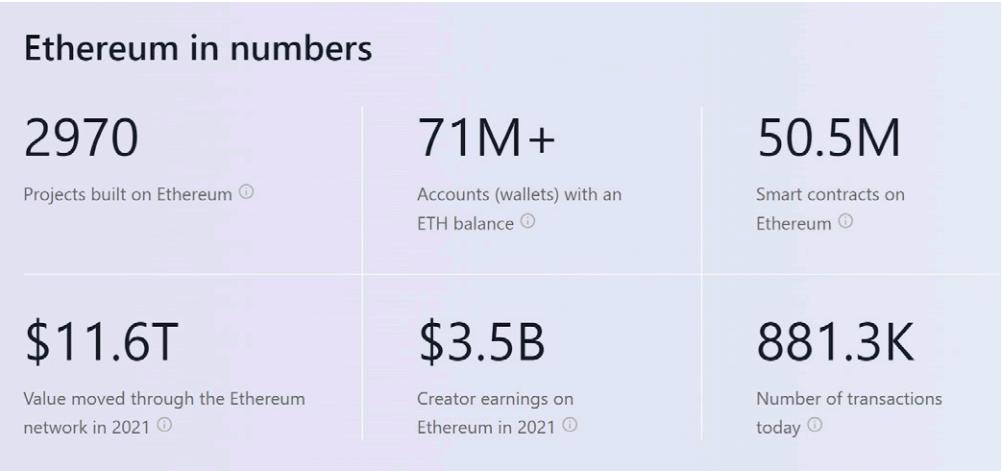 Figure: Ethereum Metrics
Basic Principles
The framework for evaluating smart contract platforms is similar to that of a commodity—it's a consumable resource platform. As demand for the commodity increases, the price people are willing to pay typically rises as well. Similarly, given that many SCPs require users to burn native tokens (commonly referred to as gas fees) to conduct transactions, the price of native SCP tokens like ETH is often related to the utility of the network: as the number of transactions on the network increases, the number of tokens burned also increases, leading to a reduction in the available supply in the market, potentially increasing the token's value. As more useful decentralized applications (DApps) are deployed on SCPs, the demand for the local token used to pay transaction fees may increase.
Supply/Economic Model
Like Bitcoin, Ethereum's supply mechanism is also pre-programmed. However, unlike Bitcoin, Ethereum's supply mechanism has undergone several changes. Let’s review two major milestones. Key Milestones in Ethereum Supply Dynamics
- August 2021 - Implementation of base fee burn. When Ethereum was initially created, ETH supply was allocated to miners at 2 ETH per block, and 100% of transaction fees went to miners.
With the launch of the London upgrade, a fee burn mechanism was implemented, which included Ethereum Improvement Proposal 1559 (EIP-1559), resulting in the base transaction fees being burned rather than allocated to miners. As more transaction fees were burned, Ethereum's inflation rate decreased.
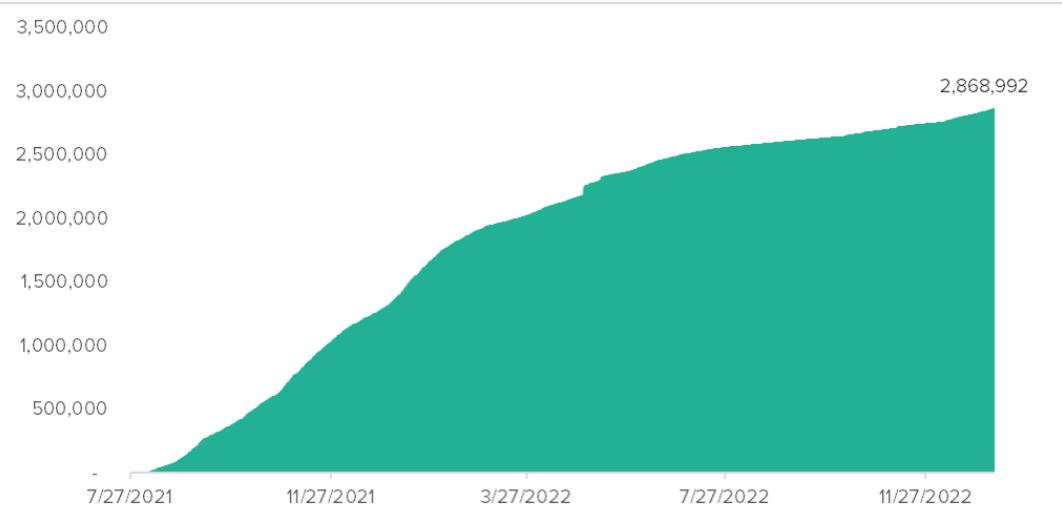 Figure: Total ETH Burned Since EIP-1559
- September 2022 - The Merge + Elimination of miner rewards. After the Merge, miners no longer received block rewards. Instead, validators received staking rewards as a reward for locking up their Ethereum to validate transactions. Unlike mining, where they received a fixed reward of 2 ETH per block if they successfully mined a block, staking provides all stakers with a variable staking rate that depends on the total amount of ETH staked across the ecosystem. A higher amount of ETH staked results in a lower annual percentage rate (APR) for each staker, and vice versa. As of December 2022, an ETH investor's annualized rate was 4%, with a total investment of 15.9 million ETH.
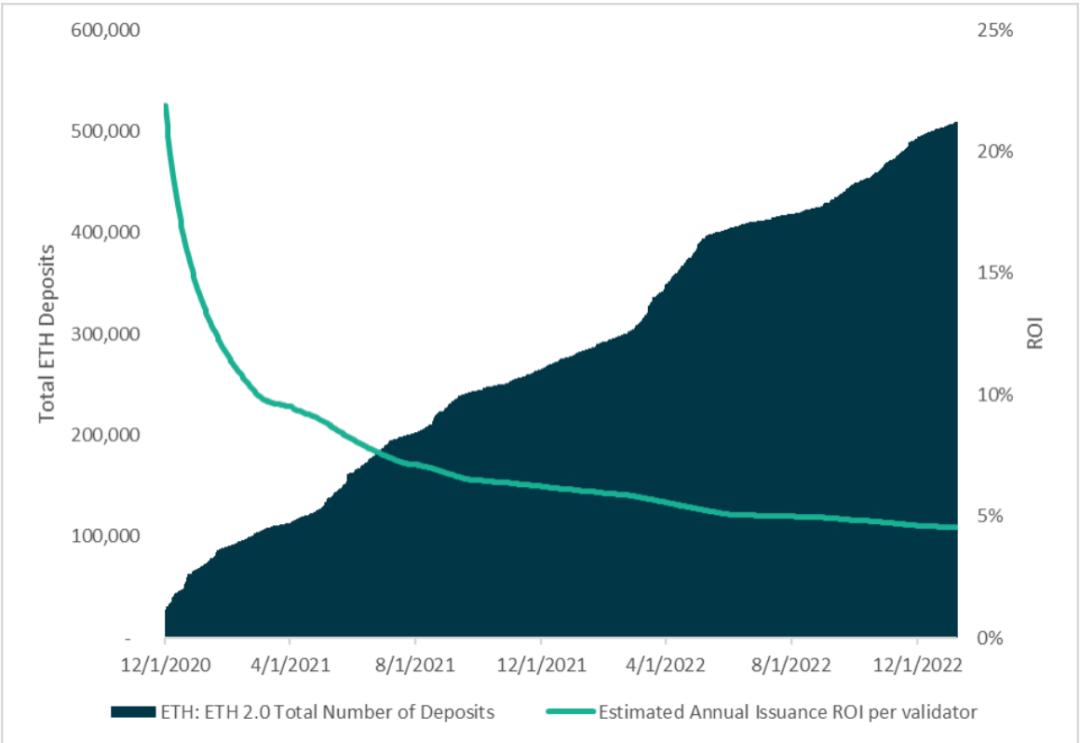 Figure: ETH Staking Annualized Rate vs. Total ETH Staked
Simple Supply Dynamics Change Model Exercise Considering these two events, investors can form a model regarding supply dynamics changes.
Framework: First, create two columns: before the Merge and after the Merge. This is to compare inflation before and after the Merge.
Supply: Create a supply section and break down inflation through staking rewards and mining rewards.
Staking rewards: Staking opened in December 2020, with a yield of about 4%. With approximately 15.9 million ETH locked in staking contracts, the total annual staking rewards amount to 15.9 million ETH * 4%, which is about 636,000 ETH per year.
Mining rewards: Mining rewards only existed before the Merge, providing 2 ETH per block. Given that there are approximately 6,250 blocks mined daily and 365 days in a year, 2 ETH/block * 6,250 blocks/day * 365 days/year = approximately 4.6 million ETH/year. Mining rewards disappeared after the Merge.
- Demand: This can be calculated by estimating the average number of ETH burned daily. We can use 1,500 ETH/day as a baseline assumption, leading to 4/1,500 ETH/day * 365 days/year = approximately 550,000 ETH burned annually.
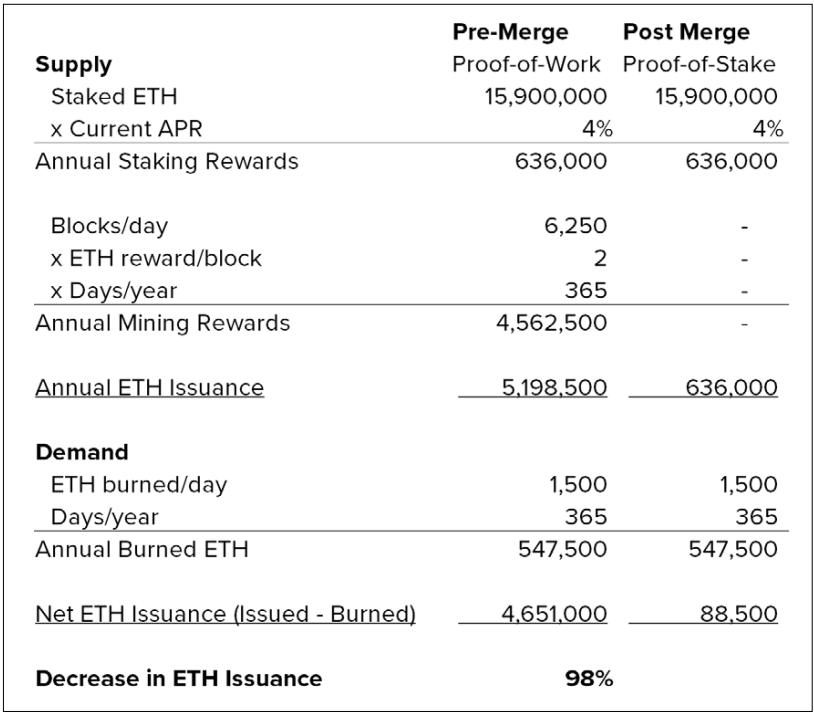 Figure: ETH Issuance Model
By comparing the issuance of the previous proof-of-work model with the issuance of proof-of-stake, we can apply the model's assumptions to see that the total issuance has annualized down by over 98%.
Figure: ETH Issuance Model
By comparing the issuance of the previous proof-of-work model with the issuance of proof-of-stake, we can apply the model's assumptions to see that the total issuance has annualized down by over 98%.
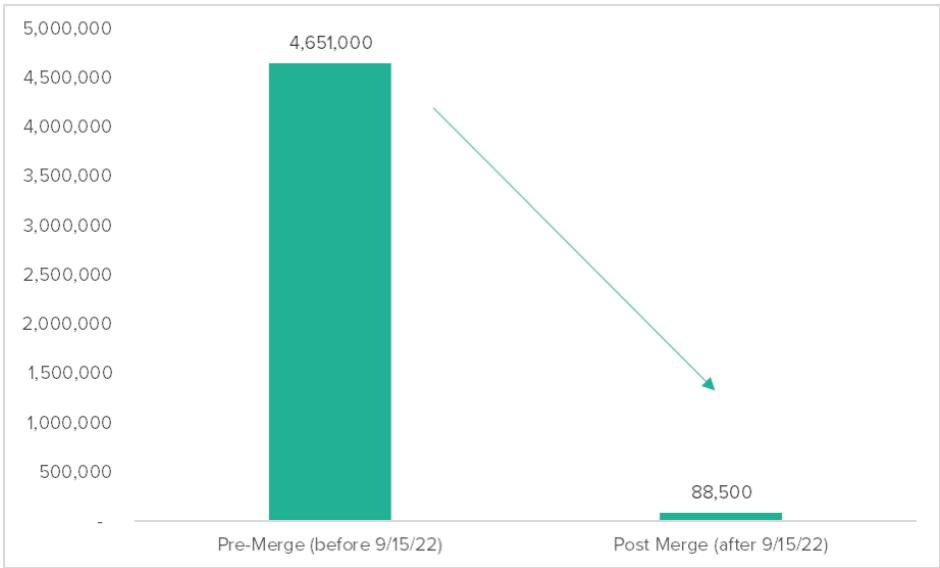 Figure 5: Changes in ETH Annual Issuance
The change in ETH issuance is equivalent to more than three Bitcoin halvings. Assuming the Ethereum ecosystem develops in the future, the ETH burned due to increased transaction fees may exceed the issuance, potentially leading ETH to become a deflationary asset. Tracking the upcoming changes in the Ethereum protocol and understanding their impact on total supply is crucial for any potential investor.
Unlike most payment crypto assets (like Bitcoin), which have not undergone significant changes in supply dynamics, SCPs seem to have made more substantial changes to their codebase due to working on more complex infrastructure. Therefore, certain structural dynamics like supply can occasionally undergo drastic changes. As an investor, understanding the second-order effects of significant changes in supply dynamics is essential. For example, after a substantial decrease in token inflation (such as after EIP-1559 and the Merge), imagine a scenario where people believe Ethereum's intrinsic value is relatively stable. Given that the annual sell pressure of approximately 4.5 million ETH from miners has been reduced to zero (as miners no longer receive block rewards), and assuming market prices remain relatively stable in the short term, people may pose the following questions:
"What would happen to the price if there were no sell pressure of 4.5 million ETH for a year, assuming demand remains unchanged?"
"What would happen to the price if demand remains unchanged but ETH becomes deflationary?"
If investors believe that the market has not fully priced in the effects of the lower token inflation rate and that the impact is bullish, they may choose to buy the asset.
While the first two changes (EIP-1559 and the Merge) represent the most apparent changes in supply-demand dynamics, they are not exhaustive. Other changes that may affect these dynamics include:
Changes in monetary policy: If the Ethereum network alters its method of creating new ETH, this is likely to impact ETH supply and, consequently, its price. As more individuals and organizations seek to use Ethereum, this may increase demand for the ETH network.
Changes in use cases: If the Ethereum codebase is modified to expand the range of applications that can be built on the platform, this may increase demand for ETH as more individuals and organizations wish to use the Ethereum network.
Changes in network scalability: If the Ethereum codebase is modified to improve network scalability, this may increase demand for ETH as more individuals and organizations can utilize the Ethereum network for decentralized applications.
Token Allocation
When understanding supply dynamics, it is also important to consider the allocation of native tokens and the unlocking period. For most SCPs, the founding team typically allocates a portion of tokens to themselves and other insiders to fund the project's early stages. These tokens are usually released over several years, but there can be significant variations among different teams. If one intends to purchase a certain token for long-term considerations, entering a token position after the waiting period (during which the founding team may face higher sell pressure) may prove to be a favorable entry point for investors. The table below outlines the private token allocations and economic models of various SCPs.
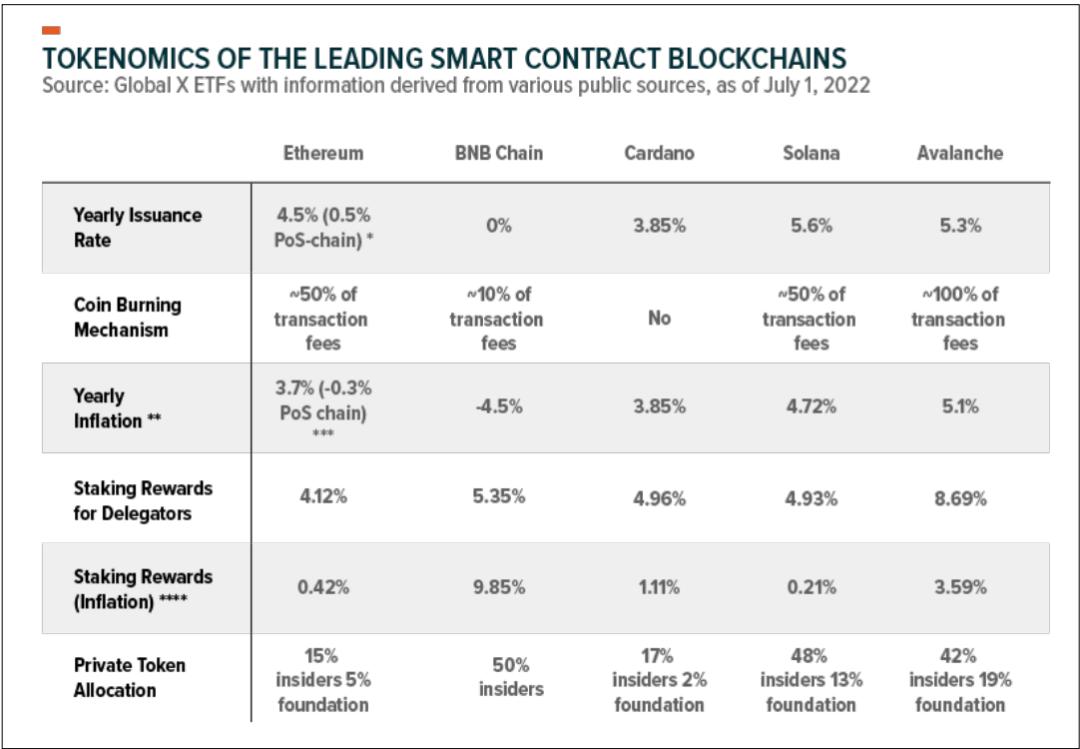 Figure: High-Level Token Economics of Various SCPs
Demand
Quantitative Indicators We used a daily burn of 1,500 ETH as a representation of demand in the issuance model above, but what are some fundamental factors of this demand? Below we explore some quantitative indicators that can be used to determine demand.
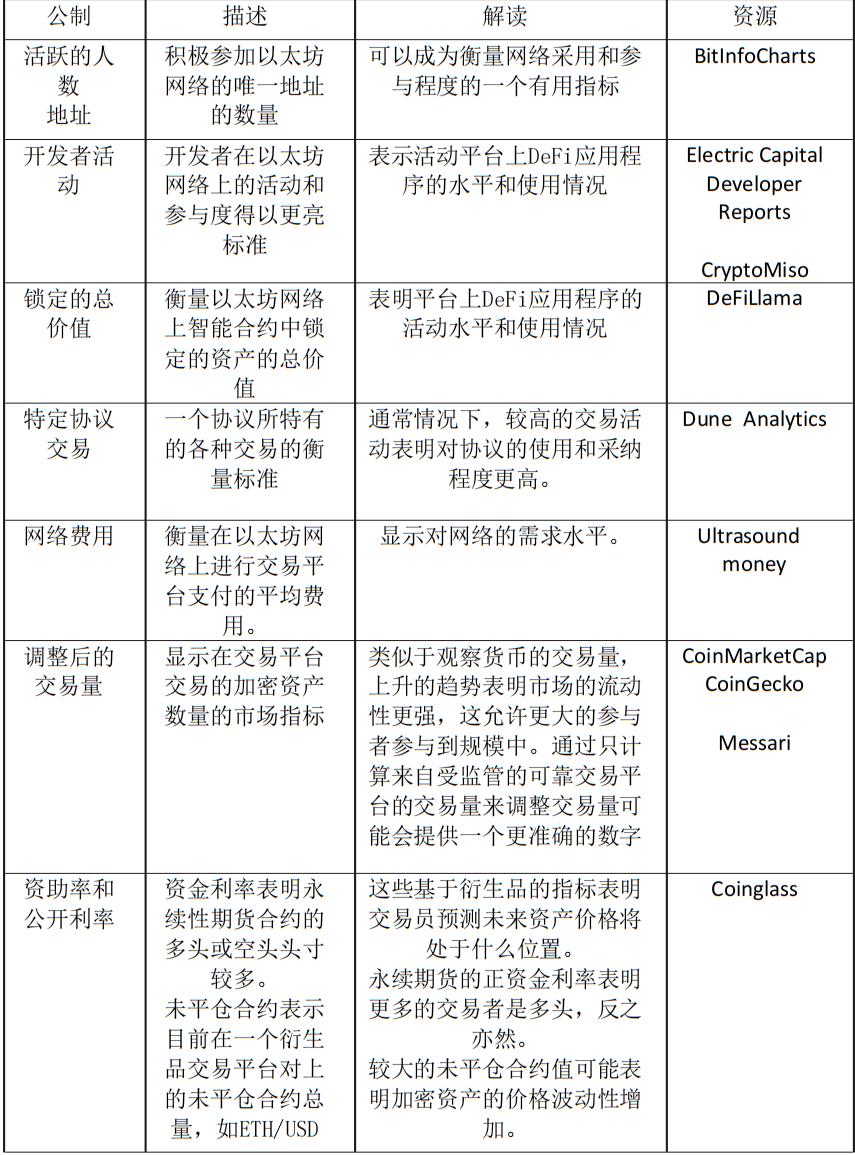
Some quantitative indicators to monitor include:
Development roadmap: The development roadmap of a blockchain network can provide insights into the project's long-term vision and direction. It is important to understand the development focus and goals of the Ethereum network and how they may evolve over time.
Community engagement: The strength and engagement of a blockchain network's community can serve as an indicator of its health and long-term prospects.
Regulatory environment: The regulatory environment in which a blockchain network operates can significantly impact its development and adoption. Understanding the regulatory environment surrounding Ethereum and its potential future impact on the network is crucial.
Institutional adoption: Announcements from large or existing financial institutions planning to offer certain services may be favorable for prices in the long run, as these platforms have large user bases that may be incremental net buyers.
Case Studies
Since the value of Ethereum is related to the use of DApps, it is very useful to understand which use cases have found a niche within the user ecosystem. Understanding the range of applications that have succeeded on Ethereum can help us identify areas where demand may grow with broader future usage.
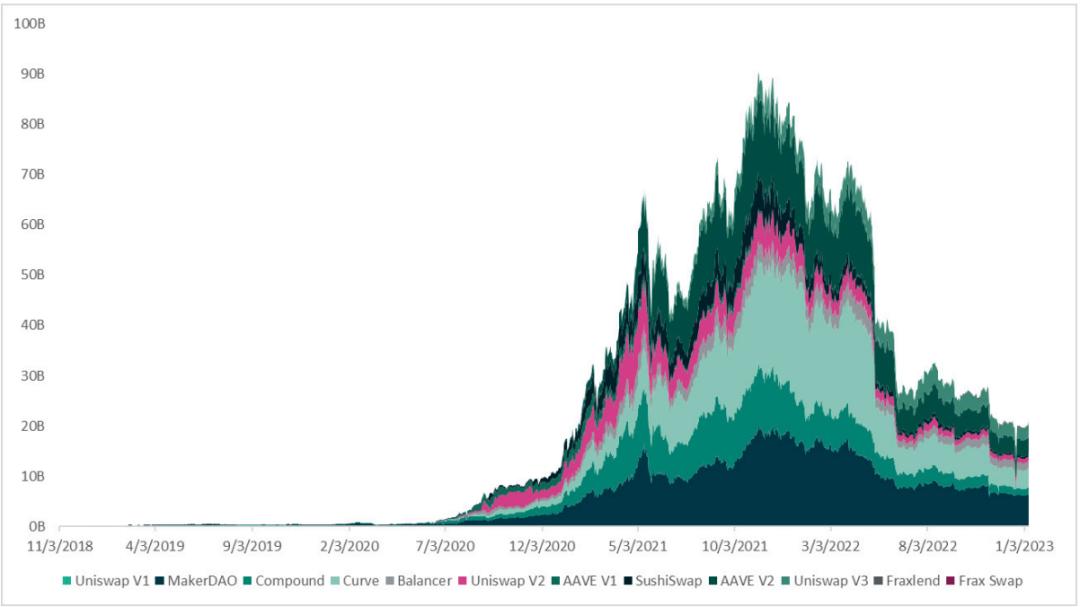 Figure: Total Locked Value of Leading Ethereum DeFi DApps
Decentralized Exchanges/Automated Market Makers (DEX)
Imagine Alice and Bob want to trade some digital assets, but they do not want to use traditional trading platforms and prefer to avoid the risks that may arise with centralized entities. Instead, they decide to use a decentralized exchange (DEX), a platform that allows them to trade assets with each other without the need for a centralized trading platform. DEXs have some advantages over traditional trading platforms.
Given that this is a technology that allows permissionless asset trading, as shown in the figure below, its popularity has significantly increased.
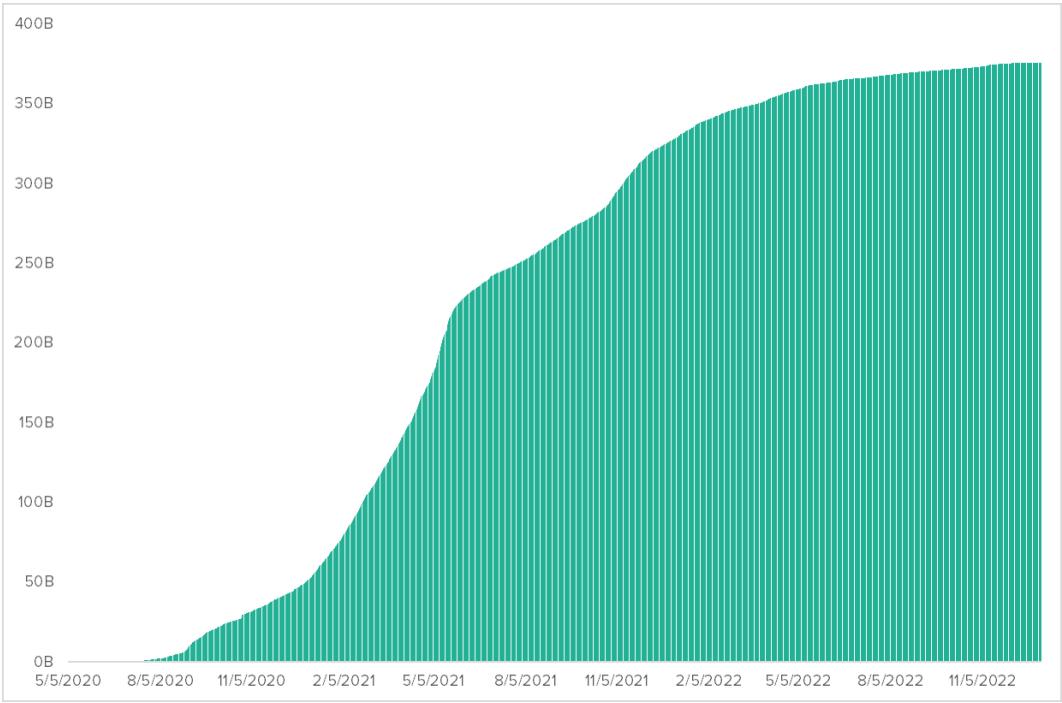 Figure: Cumulative Dollar Trading Volume of Uniswap
Although DEXs are still in their infancy and lack some functionalities and user experience compared to centralized trading platforms, the total volume of DEXs like Uniswap on Ethereum exceeded $350 billion in May 2022, indicating a strong market fit. As DEXs continue to evolve and improve, they will capture more market share from centralized trading platforms.
Lending Protocols Imagine a scenario where Alice wants to borrow XYZ from Bob but does not want to sell her ETH. Alice sends some ETH to the protocol as collateral, which serves as a security deposit that Bob can use to cover any losses if Alice does not repay the loan. Bob agrees to lend Alice XYZ, while the lending protocol uses smart contracts to handle the loan terms and repayment schedule. The smart contract automatically tracks the loan, including how much Alice owes, the interest rate, and the repayment schedule. When Alice repays the loan, the smart contract automatically returns the collateral to her. Once the loan is fully repaid, the smart contract marks the loan as complete, and the entire process ends.
In the figure below, protocols like Aave use smart contracts to provide users with various financial tools, including fixed-rate loans, variable-rate loans, and interest-bearing loans. Through smart contracts, lending protocols like Aave offer users an automated way to access various financial services that were previously only provided by traditional banks, as well as flash loans that do not exist in traditional finance.
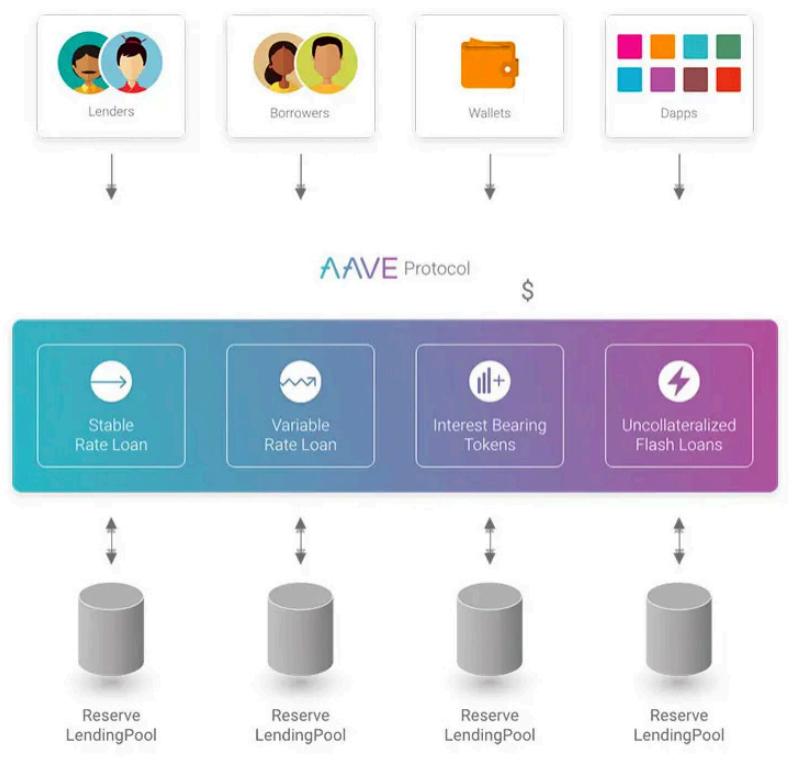 Figure: Aave Lending Protocol
Like DEXs, lending protocols are also becoming increasingly popular, with billions of dollars worth of tokens deposited using Aave as an intermediary over the past two years:
Figure: Aave Lending Protocol
Like DEXs, lending protocols are also becoming increasingly popular, with billions of dollars worth of tokens deposited using Aave as an intermediary over the past two years:
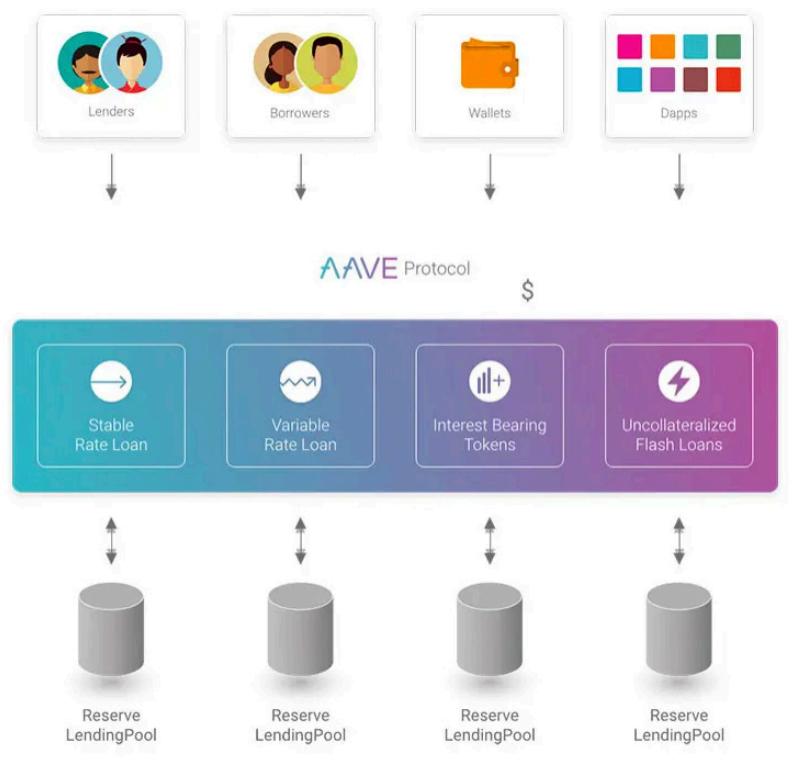 Figure: Total Locked Value in Aave
Lending protocols also offer advantages such as decentralization, privacy, and accessibility. Additionally, other advantages of lending protocols compared to traditional lenders include:
Speed: Loans are instantly collateralized, allowing users to borrow immediately without delays, unlike dealing with traditional lenders.
Automation: Repayment schedules, interest payments, and liquidations are all automatically handled by the protocol's smart contracts.
Yield: Lending out crypto assets for interest allows users to earn returns from lending demand.
Transparency: Loan liquidation prices, collateral amounts, borrowing rates, and interest rates are fully transparent to users, and anyone can verify balances on-chain.
However, these come with risks. One example is that assets need to be scrutinized for liquidity before being accepted as collateral. Allowing assets with low trading volumes to be used as collateral may be detrimental to borrowers' assets.
DApp Research Various DApps serve different purposes; there is no one-size-fits-all approach to measuring demand when researching projects. However, using free data resources like Dune Analytics can help investors focus on specific metrics unique to the DApp industry. For example, if someone wants to see the total size of the unsecured credit protocol market on Ethereum, they can search for "unsecured credit protocols" on Dune.com and find various dashboards to track metrics related to unsecured credit protocols, such as total loans created, active loans, etc.
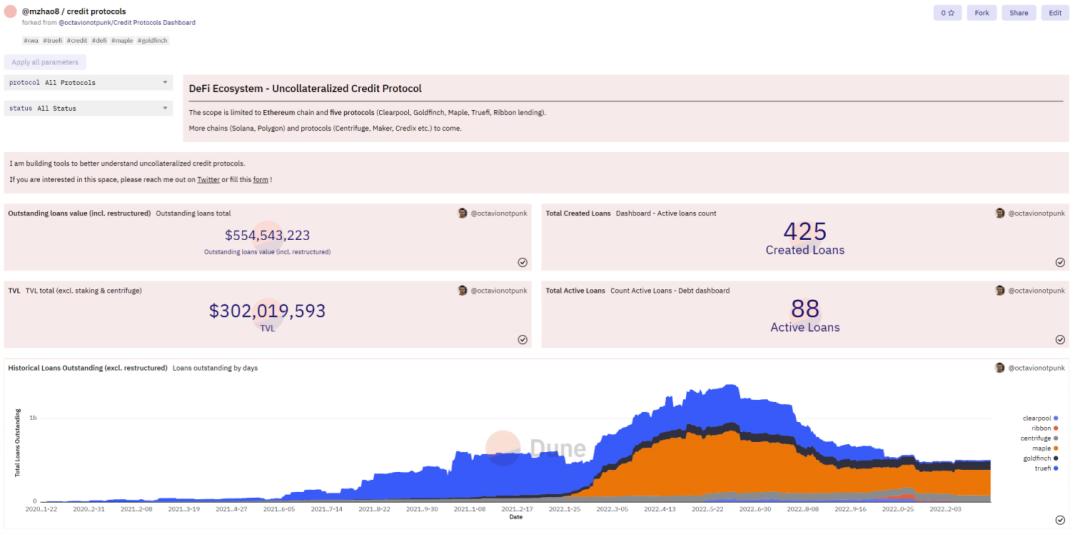 Figure: Screenshot of Dune Dashboard
If investors want to determine whether the potential demand for SCPs is sticky, using tools like Dune allows users to plot various types of charts to measure the usage of different protocols. Assuming overall data shows high stickiness and usage rates for consumer DApps, it can serve as a factor supporting long-term investment in SCPs.
Forms of Competition While Ethereum occupies a significant portion of market capitalization and total locked value, there are other smart contract platforms that directly compete with Ethereum:
Solana is a smart contract platform designed for speed and low transaction fees. The Solana Foundation claims it can handle 65,000 transactions per second, faster than many other smart contract platforms.
Avalanche, focused on decentralized finance and gaming, claims to process thousands of transactions per second and is fully compatible with Ethereum. Developers can easily port applications from Ethereum to Avalanche. The Avalanche blockchain architecture includes subnets, which are independent networks that can run different types of DApps. Each subnet is independent, with its own set of validators, consensus rules, and governance structures, and can leverage the security and decentralized features of the main network.
Polygon utilizes a sidechain architecture compatible with the Ethereum main chain. Due to its compatibility with Ethereum, Ethereum developers can more easily port their DApps to Polygon, allowing the Polygon ecosystem to grow rapidly. Additionally, compared to Ethereum, the Polygon network allows for faster transaction speeds and lower transaction fees.
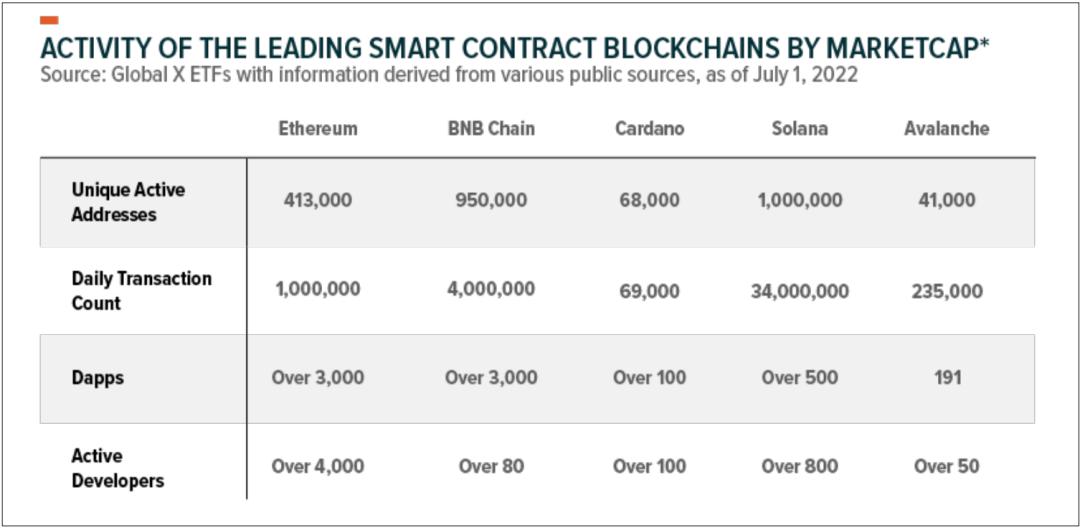 Figure: Activity of Leading Smart Contract Blockchains
Investor Checklist
General Information
Market demand and adoption: Platforms with strong market demand and adoption may be more attractive to investors, as this indicates a robust user base and developer community using the platform.
Performance and scalability: The performance and scalability of the platform may need to be considered, as this affects user experience and the platform's ability to handle large volumes of transactions and users.
Security: Security should be a consideration for any smart contract platform, as vulnerabilities or hacks can have significant consequences for users and investors.
Regulatory environment: Understanding the regulatory environment in which the platform operates is important, as this affects the legal and compliance risks associated with the platform.
Team and governance: The platform's team and governance structure are also factors to consider, as the leadership and decision-making processes of the platform can influence its direction and success.
Ecosystem and partnerships: The strength of the platform's ecosystem and its partnerships with other companies and organizations are also key factors for its success.
Economic Model
Token issuance and allocation: How are tokens issued and allocated? Are they pre-mined, or are they mined through proof-of-work or proof-of-stake mechanisms? How are tokens distributed to early supporters and developers, and how are they made available to the broader market?
Token use cases: What are the primary use cases for the token? Is it used to pay transaction fees, or is it a governance token allowing holders to vote on platform decisions? Is the token used to incentivize certain behaviors, such as staking or contributing to the network?
Token supply: What is the total supply of the token, and how is it expected to change over time? Is there a maximum supply, or will the token have an unlimited supply?
Token demand and adoption: What is the current demand for the token, and what factors drive this demand? Is the token widely adopted and used within the platform's ecosystem, or is it primarily held by speculators?
Conclusion
The supply and demand dynamics of smart contract platforms are driven by a range of factors, including market demand and adoption, performance and scalability, security, regulatory environment, team and governance, and ecosystem and partnerships.
On the supply side, understanding the economic model and potential upgrades can provide context for major structural shifts, such as analyzing Ethereum's supply dynamics post-EIP-1559 and the Merge. On the demand side, focusing on fundamental indicators, such as market fit of DApp products through sources like Defi Llama and Dune Analytics, can provide investors with concrete factors driving usage.
Understanding these factors and how they interact is crucial for investors looking to assess the investment potential of different platforms. In the case of Ethereum, the combination of a declining supply schedule and growing DApp applications suggests that the token may be undervalued due to broader macro-driven sell-offs. As the smart contract platform market continues to evolve, investors must stay informed about the latest developments and trends to make informed investment decisions.
 Risk warning
 Risk warning