After two years of silence, what new positioning does Worldcoin, the cryptocurrency project by the founder of ChatGPT, have?

 Starting from Sam Altman's vision of future technology, understand the grand narrative of Worldcoin: "where it comes from" and "where it is headed."
Author: flowie, ChainCatcher
With the rise of ChatGPT, the crypto project Worldcoin, founded by ChatGPT's creator Sam Altman, has returned to the public eye after two years of silence.
Although Worldcoin has announced a series of new developments, including the launch of the identity protocol World ID and the initiation of its mainnet, it still faces skepticism compared to the stunning success and acclaim of ChatGPT. On one hand, Worldcoin's grand vision of becoming a global financial and identity network seems somewhat fanciful; on the other hand, in the fast-paced crypto world where "a day is like ten years," Worldcoin has not only progressed slowly since its establishment in 2021 but has also faced accusations regarding privacy issues.

Looking back, OpenAI also spent nearly a decade in obscurity amid skepticism before achieving a turnaround with ChatGPT. While Worldcoin's current development is modest, whether it can bring a spark of surprise to the crypto field in the future remains to be seen. After all, a very key factor in its development is that Worldcoin is backed by the same leader as OpenAI, Sam Altman. At least institutions like a16z and Coinbase Ventures invested over $100 million in Sam Altman's crypto endeavors from the start.
From co-founding OpenAI and Worldcoin to making significant investments in fusion startup Helion and biotech company ReviBio, Sam Altman and Silicon Valley moguls like Elon Musk can be seen as kindred spirits. Their visions and bets on the future have always seemed bold, even absurd, from the present perspective. However, viewed through a longer time horizon, as Sam Altman wrote in his blog, "If you're right, being misunderstood by most people is an advantage, not a weakness."
For an early-stage and futuristic project, it is difficult to grasp its logic simply through the official website and a few project interviews. Perhaps we can start from Sam Altman's own vision of future technology to understand where Worldcoin's grand narrative "comes from" and "is headed." After ChatGPT's global sweep, has Sam Altman gained new insights into Worldcoin? What connections exist between AI and crypto?
Sam Altman's Future Quartet: OpenAI, Helion, ReviBio, Worldcoin
With the fame of ChatGPT, Sam Altman is seen as the next Silicon Valley star CEO after Elon Musk.
From his resume, Sam Altman's career experience and imaginative thinking indeed share many similarities with Elon Musk. After dropping out of Stanford University at 19, Sam Altman founded the location service provider Loopt and made a fortune by selling it. After that, he was selected by Y Combinator to serve as CEO, participating in investments in a large number of internet unicorns such as Airbnb, Stripe, Reddit, Asana, and Pinterest.
However, the labels of "dropping out of a prestigious school to start a business" and "young CEO" do not seem particularly impressive in the circle of Silicon Valley elites. It was not until Sam Altman ventured into AI that he began to stand out in defining the direction of technological innovation.
In 2015, Sam Altman co-founded OpenAI with Musk and others. After leaving YC in 2019, he officially became the CEO of OpenAI. Initially, OpenAI was viewed as a plaything for the elites, but it was not until the emergence of ChatGPT that people truly saw the infinite possibilities of AGI (Artificial General Intelligence). Thus, AI became the most important and widely recognized association for Sam Altman.
However, in his understanding of the future direction of technological innovation, Sam Altman is not just betting on AI alone. Looking back at Sam Altman's blog, you will find that he initially and most frequently proposed energy as a direction for technological innovation. In 2014, Sam Altman listed the technology fields favored by Y Combinator, with energy at the top, followed by AI, biotechnology, and others.
Therefore, after officially diving into OpenAI, Sam Altman also bets on some energy and biotech companies through investments. In 2021, Sam Altman led a $375 million investment in the fusion company Helion's Series E funding, which is his largest investment to date. In March of this year, Sam Altman made a significant investment of $180 million in ReviBio, a company focused on anti-aging and extending human lifespan.
On the surface, the crypto project Worldcoin, founded by Sam Altman in 2021, does not seem prominent in his past technological landscape. Sam Altman does not serve as the CEO of Worldcoin and rarely mentions the project directly on his Twitter or blog.
In reality, Sam Altman is very concerned about world order, wealth distribution, and government governance. In his blog, he discusses issues of wealth disparity and governance extensively, and he has his insights on digital currency: "From a national perspective, the current system does have problems, especially regarding pseudo-anonymity, the ability to operate as actual currency, and taxation."
Recently, in an interview with Forbes, Sam Altman also addressed the connections between OpenAI and the companies he co-founded or invested in, including Worldcoin. Sam Altman mentioned that his goal is to achieve a prosperous world, and AGI (Artificial General Intelligence) is the driving force behind all its actions.
Under the goal of achieving a prosperous world, it seems to clarify Sam Altman's future quartet: If OpenAI, Helion, and ReviBio are addressing the limits of humanity, then Worldcoin aims to solve the issues of human identification and resource distribution in the future world.
As ChatGPT Gains Popularity, Altman's New Understanding of Worldcoin
After founding the AI company OpenAI, why is there still a need for a crypto project like Worldcoin? Sam Altman's understanding has also evolved.
Shortly after Altman established Worldcoin in 2020, he mentioned in an interview with Bloomberg that he had begun to conceive of using cryptocurrency for fair distribution as early as 2019, inspired by the economist's theory of "Universal Basic Income (UBI)."
In 2021, ChainCatcher also provided an analysis of Worldcoin. At that stage, Altman envisioned achieving the goal of "Free coin to everyone" through Worldcoin, focusing on becoming a universal, zero-threshold cryptocurrency to practice the so-called "Universal Basic Income" social experiment.
The initial means of implementation was to distribute no more than 80% of the token supply to users and operators certified by the iris-scanning hardware Orb through "iris mining," where users only needed to scan their irises to receive tokens for free.
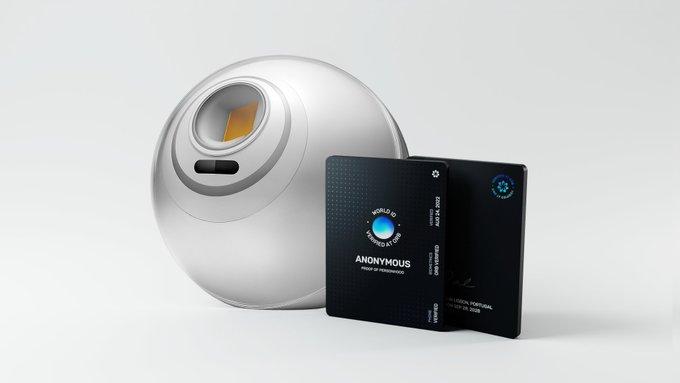
However, with the explosive popularity of ChatGPT earlier this year, Altman has gained new insights into this issue. He believes that due to the development of AI, "the demand for systems that provide proof of identity and the need for new experiments in wealth redistribution and global governance systems" is increasing. Worldcoin also mentioned on its official Twitter that the widespread use of ChatGPT has brought challenges in distinguishing humans from artificial intelligence in the digital world. From Worldcoin's official website and promotional materials, the core description of Worldcoin has shifted from the original concepts of iris recognition, universal basic income, and global digital currency to a greater emphasis on identity verification, personal ownership, and financial networks often discussed in the Web3 space.
The Worldcoin website states, "Worldcoin is building the world's largest identity verification and financial network, as a public utility that gives everyone ownership." How to achieve this involves three key components.
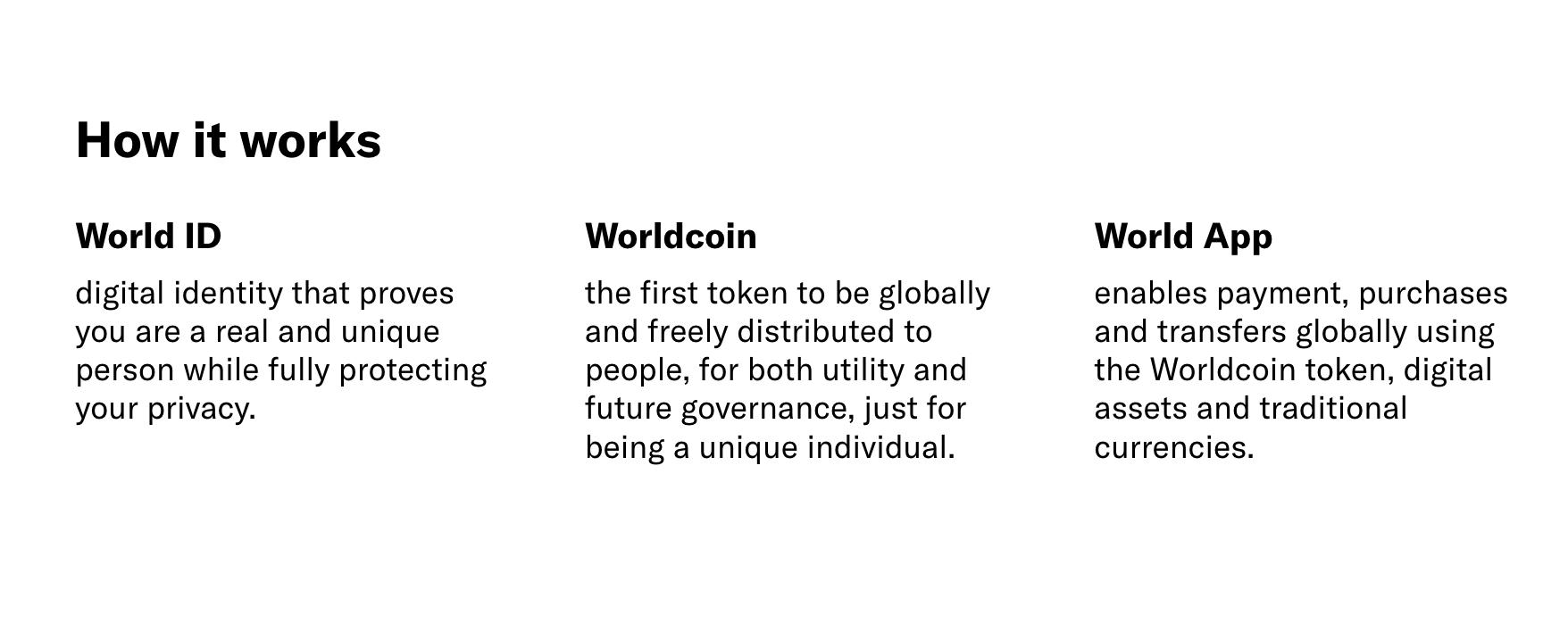
World ID: A system that proves whether a user is a real and unique person while protecting privacy.
Worldcoin: Tokens that are airdropped for free to users globally.
World App: A wallet that enables global payments, purchases, and transfers using Worldcoin tokens, digital assets, and traditional currencies.
In addition to the free token Worldcoin mentioned at its inception, World ID and World App are new developments for Worldcoin after two years of silence. Looking at it now, what Worldcoin is working on aligns with the current narratives in the crypto field, namely the ongoing discussions about DID (Decentralized Identity) and the still undefined wallet track.
Currently, World ID is described as the "underlying identity protocol" of Worldcoin, supported by zero-knowledge proofs, allowing people to prove their authenticity without sacrificing anonymity. Achieving this proof of identity still relies on the iris-scanning hardware Orb, and given public concerns about biometric privacy, users can also use accurate phone number verification and other tools.
The actual development entity of Worldcoin, Tools For Humanity, adds that World ID "is a decentralized and privacy-first protocol… This means that just as people can have self-custodied wallets, with World ID, people can have self-custodied IDs." Users can obtain a World ID on any compatible mobile wallet, including Worldcoin's self-developed wallet application, World App.
The simplest use case for World ID currently is login verification, with the first technical demonstration focusing on verification on Discord. Worldcoin's World ID proof of identity protocol will support many basic Web2 and Web3 use cases, such as fair access to token airdrops, community governance, DeFi applications, etc., all conducted in a way that resists Sybil attacks and protects privacy.
Additionally, the SDK (Software Development Kit) for World ID has invited developers to register for a waiting list, and the product will be open to all users, including web widgets, developer portals, development simulators, examples, and guides. The World App is still in the testing phase.
Explanation of Privacy Controversies
At the end of 2021, Worldcoin announced plans to launch its mainnet in 2022 and aimed to cover 1 billion users by 2023. Given the relatively small user base in the crypto space, Worldcoin's ambitions were once questioned as comparable to a "moon landing plan."
Indeed, Worldcoin's development has fallen far short of its original goals, with the mainnet launch now postponed to the first half of 2023, and the current user base only around 1.4 million. However, a million users is still considerable for a crypto project, especially compared to 130,000 users in 2021, achieving a tenfold growth over two years.
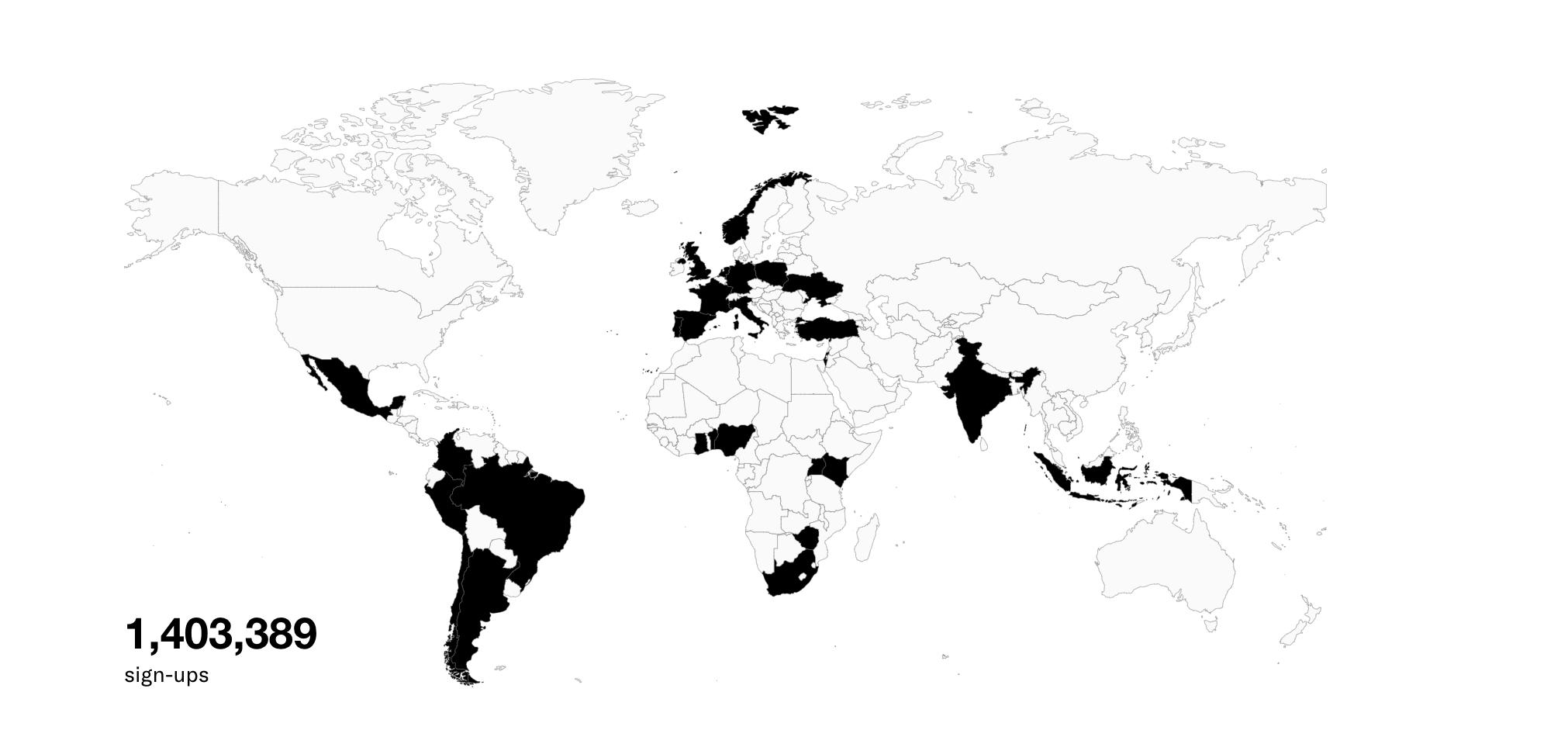
However, using biometric information to achieve proof of identity remains a controversy that Sam Altman and Worldcoin cannot avoid.
Sam Altman has consistently stated that the privacy issues surrounding Worldcoin are misleading. He said, "Personally, I would prefer to give up the amount of privacy sacrificed for scanning my retina compared to the amount sacrificed for using Facebook or other things… I want to conduct more experiments to see what problems we can solve with technology in this new world."
The CEO Alex Blania, personally appointed by Sam Altman, explained that biometric recognition will address "very fundamental issues" in decentralized technology: the risk of Sybil attacks, which occur when an entity in the network creates and controls multiple fake accounts. This is particularly dangerous in popular anonymous decentralized networks. So far, finding a truly resistant proof of identity against Sybil attacks has been one of the core obstacles to the mass adoption of Web3.
At the same time, accounts and transactions on Worldcoin will never be associated with any biometric data from Orb. Iris scanning is only used for identity verification, and only a one-way irreversible IrisHash generated locally is sent to the database. Additionally, using technologies like zero-knowledge proofs, Worldcoin can utilize user data without knowing the specific data of the users.
If the initial concerns about privacy issues with Worldcoin's biometric recognition were technical, later on, Worldcoin's methods of information collection have also faced repeated accusations.
In a report titled “Deceived, Exploited Workers, and Cash Relief: How Worldcoin Recruited Its First 500,000 Test Users”, MIT Technology Review interviewed about 35 individuals who participated in Worldcoin registration work and concluded that Worldcoin used deceptive marketing tactics.
First, Worldcoin targeted primarily developing countries and relatively poor non-Web3 users. The methods Worldcoin used to attract user registrations were reminiscent of the aggressive marketing tactics during the internet era, offering cash, AirPods, Bitcoin and Ethereum airdrops, and promises of future earnings from Worldcoin tokens, even collaborating with local governments to achieve rapid user registrations.
Most registered users had almost no understanding of crypto and Worldcoin. MIT Technology Review criticized: "Worldcoin promises to provide a fair distribution of cryptocurrency-based universal basic income. But so far, all Worldcoin has done is build a biometric database from the bodies of the poor."
Secondly, the scope of Worldcoin's biometric information goes far beyond iris scanning. With advanced cameras and sensors, Worldcoin can capture high-resolution images of "users' bodies, faces, and eyes, including their irises." The user data consent form also mentioned that Worldcoin would conduct "non-contact Doppler radar detection of your heartbeat, breathing, and other vital signs." Subsequently, Worldcoin clarified that it had never implemented vital sign detection technology and would remove related statements from its data consent form.
In fact, Worldcoin's ground promotion has faced numerous challenges. According to Bloomberg, Worldcoin has suspended operations in at least seven countries/regions after local contractors left or regulations prohibited business. In the process of persuading users to register, Worldcoin has also been troubled by uneven smartphone access, high user education costs, and allegations of fraud.
More Decentralized, More Private
At the project's inception, Worldcoin's operational model did not resemble a typical crypto project, especially with the inefficient "ground promotion model" mentioned earlier.
After shifting its focus to "identity verification, personal ownership, and financial networks," Worldcoin recently disclosed its decentralization progress and plans.
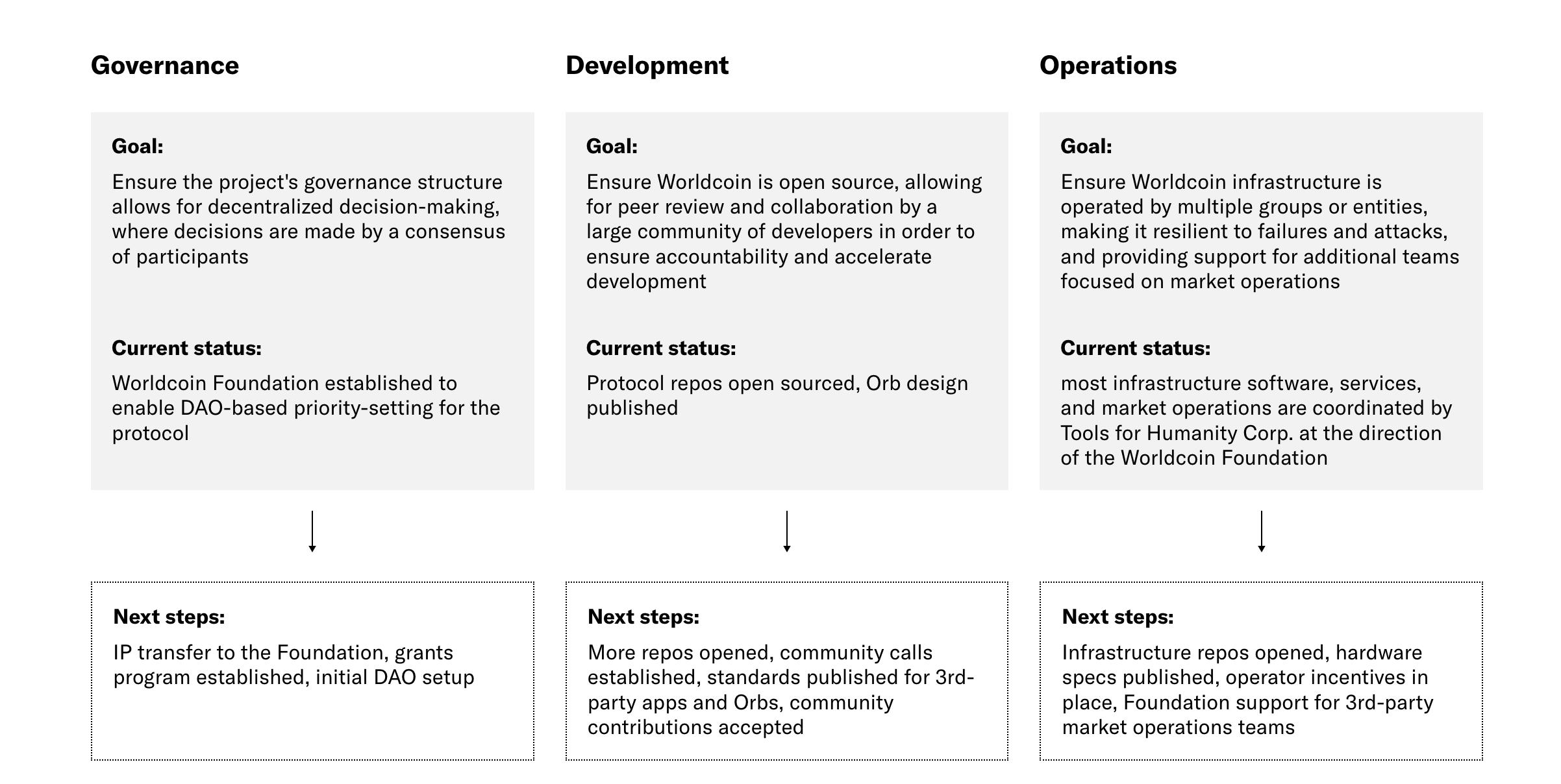
In governance, Worldcoin ensures that the project's governance structure allows for decentralized decision-making. It has launched the non-profit Worldcoin Foundation and will transfer IP to the foundation, establishing grant programs and DAO communities.
In development, Worldcoin ensures that it is open-source, allowing a large number of developers to conduct peer reviews and collaborate to accelerate development. Currently, Worldcoin's source code and Orb design are being opened one by one, while establishing community communication mechanisms (such as meetings of all core Ethereum developers) to ensure transparency and create a "World Improvement Proposal" (WIP) process. The team will open more protocols, improve community communication mechanisms, and publish standards for third-party applications and Orbs while accepting community code contributions.
In operations, Worldcoin ensures that its infrastructure is operated by multiple groups or entities to resist failures and attacks. Next, it will improve operator incentives and support more third-party market operation teams.
In this way, after two years of silence, Sam Altman's crypto project Worldcoin seems to have begun to take on the characteristics of a crypto project, no longer merely talking about visions and collecting biometric information, but instead launching identity verification protocols and making efforts toward decentralization.
Additionally, Worldcoin is actively seeking Ethereum's scaling solutions and has made a series of technical contributions to EIP4844, such as implementing kzg-ceremony-sequencer, KZG ceremony participant clients, and supporting cryptographic libraries (ECC, KZG), and has stated that it will adopt Ethereum Rollups as soon as possible to provide better security guarantees.
However, with the Worldcoin mainnet yet to be launched, some practical functionality demonstrations cannot be verified for now, and the controversies surrounding biometric airdrops remain difficult to eliminate.
As for the key question, "What kind of sparks can AI and crypto produce together?" Sam Altman has only superficially suggested that the popularity of AI will lead to an increased demand for identity verification. As for what new innovations may arise from the mutual influence of AI and crypto, it may be an important possibility that Sam Altman or Worldcoin is also exploring.
 Risk warning
 Risk warning