BRC-20 has caused significant fluctuations in the Bitcoin network. What are the controversies and risks that cannot be ignored?

 Multiple data metrics of the Bitcoin network have reached all-time highs.
Author: flowie, ChainCatcher
The drastic fluctuations brought by BRC-20 to the Bitcoin network have sparked strong dissatisfaction among many Bitcoin maximalists. In addition to the criticisms from Bitcoin purists regarding BRC-20's encouragement of centralization, there are also multiple warnings from the tech community about its security issues.
Drastic Fluctuations in the Bitcoin Network, Multiple Data Indicators Reach Historical Highs
While BRC-20 brings a new narrative, it has also put unprecedented pressure on the Bitcoin network.
Yesterday, following a record daily transaction volume of 605,000 on May 1, the on-chain daily transaction volume reached a new high of 663,000. Currently, the transaction volume related to BRC-20 protocols, including deployment/minting/transfers, has surpassed that of non-Ordinals protocol transactions. On May 7, BRC-20 protocol transaction volume accounted for over 65% at one point.
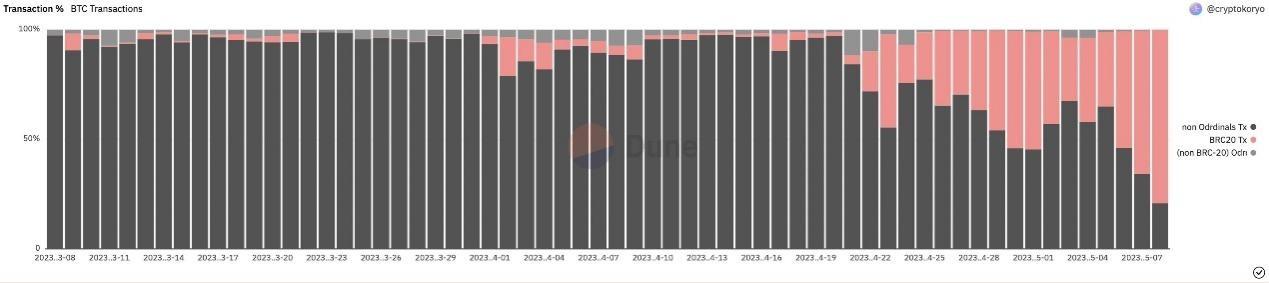
The extraordinary transaction volume has caused unprecedented congestion in the Bitcoin network, triggering panic in the community. According to Bitcoin browser data, the number of unconfirmed transactions in the Bitcoin network has reached 309,732, and yesterday, the Bitcoin network frequently stalled, with two instances of over one hour without block production. Binance also suspended Bitcoin withdrawals twice due to network congestion, being forced to integrate the Lightning Network to alleviate the pressure.
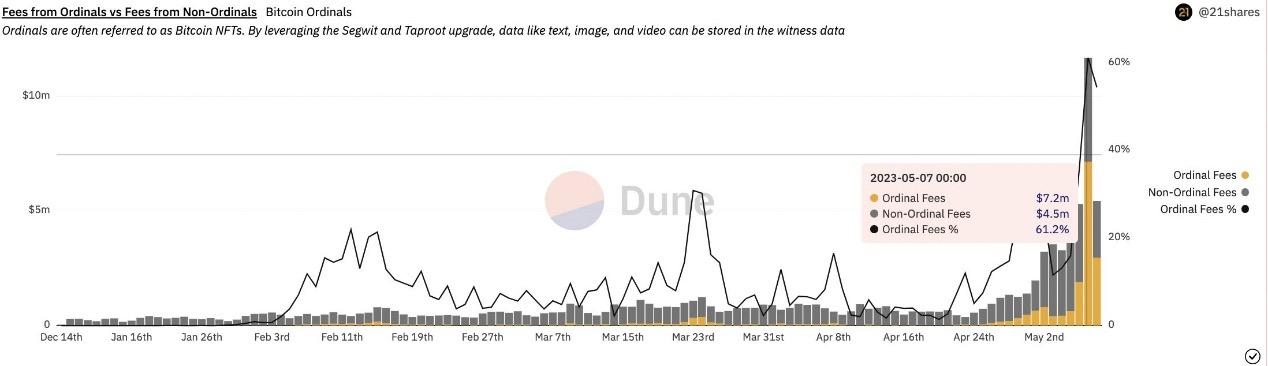
While congested, the Bitcoin network's transaction fees and block rewards have also surged significantly. The average transaction fee in the Bitcoin network has risen to $19.2 per transaction in the past 24 hours. According to @BitcoinEmber, two months ago, the average block reward for BTC was only about 0.19 BTC in fees, which has now skyrocketed to 4.85 BTC in fees, a 25-fold increase.
The high transaction fees and block rewards have also allowed miners to generate astonishing profits, earning over $36 million in just seven days. Even more astonishingly, to compete for the first transactions, three Bitcoin blocks yesterday had block rewards significantly exceeding transaction fees. According to 21Shares researcher Tom Wan, based on historical analysis, the likelihood of this happening is less than 0.005%. Consequently, Bitcoin transaction fees have reached the highest record in the past six years. Since July 2021, the transaction fee rate in the Bitcoin network has remained around 1-2%, but on May 7, this metric surged to 31%.
Due to the drastic fluctuations caused in the Bitcoin network, BRC-20 is triggering considerable controversy.
Recommended Reading: “ Why Bitcoin Miners Made Over $36 Million in Fees in the Past Week?”
Controversies and Risks Raised: Deviation from Decentralization, Lack of Fairness and Security
Many believe that Satoshi Nakamoto's original intention was to "create a decentralized currency," and that creating DeFi, NFTs, and tokens on Bitcoin deviates from this intention. In fact, since the beginning of this year, the new narratives surrounding the Bitcoin ecosystem have faced dissatisfaction and criticism from Bitcoin purists. With the explosion of the BRC-20 narrative, many crypto KOLs have become more specific in their accusations.
Firstly, the BRC-20 narrative is accused of violating the core principle of the crypto world—decentralization. Bitcoin is currently the most decentralized, but the mechanisms established by BRC-20 encourage centralization. The bitcoin manual analyst Che Kohler believes that BRC-20 tokens introduce unnecessary complexity in managing digital assets, such as requiring additional steps for storage and trading. Specifically, minting BRC-20 inscriptions requires installing a separate Unisat wallet, and there are no on-chain automated market makers on Bitcoin, meaning that already minted tokens must be traded privately or on specialized secondary markets like UniSat's Marketplace. This provides more opportunities for centralized exchanges to manage assets and earn transaction fees, while exposing users to fraud and attack risks.
The crypto security platform SlowMist also warns users that the defenses of the BRC-20 token minting platforms are relatively weak, making them susceptible to malicious attacks that can alter code, leading to easy theft of assets during the minting process.
In addition to centralization, BRC-20 tokens are also accused of deviating from mainstream narratives of fairness and low cost. Crypto researcher Haotian | CryptoInsight (@tmel0211) argues that the first-come-first-served FOMO mechanism for inscriptions and the miner fee prioritization mechanism present a logical paradox, meaning that minting is not necessarily fair. In other words, while everyone can mint simultaneously, ordinary users may be squeezed out by larger players who can afford to pay higher miner fees. Ultimately, this may lead to the cost of trading on secondary markets being lower than the effort put into minting.
Additionally, Haotian reminds users that services similar to Unisat, withdrawal and deposit wallet regulations, and the mechanism of batch minting signatures on-chain have some cognitive pitfalls. Many novice users only look at the miner fees recommended by the system, unaware that a successful on-chain inscription transaction incurs third-party fees, platform network data delays, and various errors due to lag, meaning that miner fees may need to be 2-3 times higher than expected.
Moreover, many tech experts have pointed out security risks in the mechanisms. Firstly, BRC-20 tokens are not closely related to Bitcoin assets and do not possess the security mechanisms of the Bitcoin network. Bitcoin ecosystem contributor Ajian mentions that issuing assets on the Bitcoin chain can only rely on "off-chain protocols," with Omni, Counterparty, RGB, Taro, and Ordinals being no exceptions. Regardless of what data is written on-chain, it cannot transform into the security mechanisms of these assets. If you issue an asset, no matter what data you write on-chain, you cannot require the Bitcoin network to control the inflation of that asset. In other words, while BRC-20 tokens attract many investors by leveraging Bitcoin, they do not possess Bitcoin's security, degree of decentralization.
Additionally, when block rewards exceed transaction fees, it may trigger MEV strategies known as time-bandit attacks. Crypto analyst @0xShinChannn analyzes that when the potential profits from MEV exceed block rewards, it becomes economically rational for miners to disrupt consensus stability. Specifically, a miner or a group of miners attempts to rewrite blockchain history by secretly mining an alternative version of the chain, which includes transactions with higher fees. When the attacker's alternative chain becomes longer than the current main chain, they can publish it to the network, effectively causing a blockchain reorganization. Blocks that previously belonged to the main chain but are now replaced by the attacker's chain become orphan blocks. Ultimately, time-bandit attacks undermine consensus and produce isolated blocks, negatively impacting the overall security and reliability of the network.
At the same time, there are many voices warning that BRC-20 tokens may trigger regulatory crackdowns on Bitcoin. Originally, BTC resembled a commodity, but BRC-20 tokens may facilitate an unregistered securities market on the Bitcoin blockchain. This year, U.S. regulatory agencies have already begun "crackdowns" on some centralized exchanges and stablecoins regarding whether they are unregistered securities.
Conclusion
Currently, the myth of BRC-20 tokens benefiting users may lead many to have a significant deviation in their perception of the real market and risks under FOMO. Among the popular BTC-20 tokens, only ORDI, VMPX, NALS, and DRAC have a 24-hour trading volume exceeding one million dollars. Many analysts, based on on-chain activity data, estimate that the active player base for BTC-20 may be around ten thousand, with the majority of substantial asset profit-makers likely being very few.
Additionally, those who missed the BTC-20 opportunity may want to pay attention to more narratives regarding the performance of the Bitcoin network. Although BRC-20 tokens are fraught with controversy, they have also exposed some issues within the Bitcoin network. Currently, narratives surrounding Bitcoin's performance, such as the Lightning Network and RGB protocol, may be迎来第二春.
 Risk warning
 Risk warning