How has the zkSync Era ecosystem progressed in the two months since its launch?

 zkSync Era is growing rapidly, but there is still a significant gap compared to Arbitrum.
In just 2 months since its launch, the @zksync ERA independent wallet addresses have exceeded 680,000, with a total ecosystem TVL reaching $338M, ranking fourth in layer2. Although there is still a significant gap compared to Arbitrum, the growth rate of various metrics indicates that this airdrop battle will surely soar to new heights.
But how is the zkSync ecosystem progressing currently? What unknown variables still exist in the decentralization process? In the following thread, you must ponder carefully.
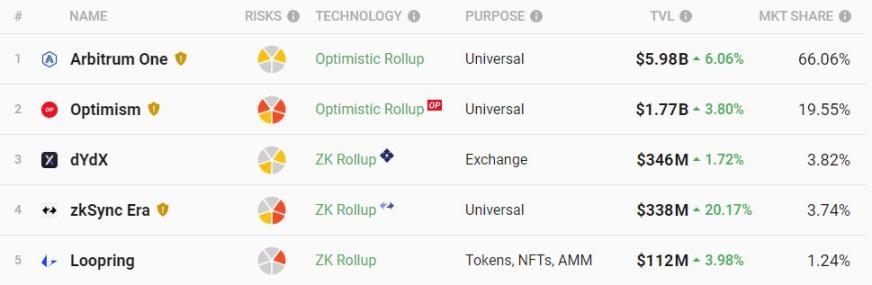
The current data volume does not yet highlight the advantages of zk-rollup, and the user experience leaves much to be desired. For example, issues such as high gas fees, transaction failures, and unstable slippage are frequently complained about.
In simple terms, the mechanism of zk circuits proving each transaction inherently incurs high costs, and it is only after the ecosystem data reaches a certain volume that transaction speed, GAS costs, and smooth experiences can achieve a balanced state. This is a process of quantitative change leading to qualitative change, which requires observation.
zk-Rollup may aim to lead the way after mass adoption, but for now, the focus should be on not falling behind Arbitrum, which is reflected in:
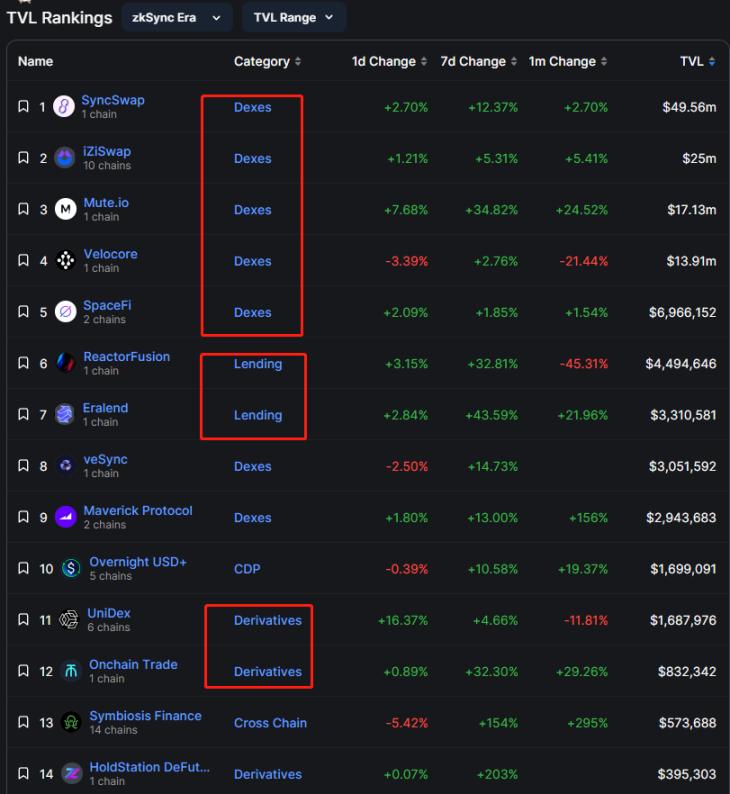
- The ability of leading projects to attract capital needs to be strengthened. Top DEX, Lending, and Derivative projects like @syncswap, @ReactorFusionR, and @OnchainTrade need to further enhance their locked value and yield, similar to the growth engine effect GMX has on Arbitrum;
- The innovative advantages of zk technology at the underlying level are yet to be released. Theoretically, compared to Arbitrum, zk-rollup can achieve millions of TPS in transaction volume and has a more extreme decentralization, but currently, due to the complexity of zkSync's PlONK circuit algorithm and prominent compatibility issues, it poses severe challenges to ecosystem expansion. This significantly delays the time for zkSync to produce a breakout project. Currently, @izumi_Finance's DL-AMM innovative mechanism is worth observing.
- The zkSync ecosystem lacks sufficient diversity and innovation. The potential of an ecosystem can be assessed based on its performance in categories like Derivatives, Lending, and Yield Aggregators, but currently, zkSync is focused on DEX interactions? Digital domains? Memes? Clearly, these projects can attract attention, but the sustained siphoning effect is far less efficient than Farming Pools; we should observe whether @HoldstationW's APY can remain stable.
Overall, the current development of the zkSync ecosystem is commendable, but it is still in the early alpha stage. Market sentiment is evidently overly optimistic. Next, I will present a few potential unknown variables (risks) I've observed; in short, Calm Down!
In simple terms: the future issue of Sequencer's POS privilege; the decentralized Validator is still overly controlled by MatterLabs; instability in underlying dynamic fee rates, and issues with the open-sourcing of Plonk contracts, etc.
Previously, there were complaints about the centralization of Sequencers in op-rollup, and currently, zkSync's Sequencer is also a centralized component operated by MatterLabs. In the future, it will achieve decentralization based on POS mechanisms and authorization methods (there are privileges, but not extreme).
However, zkSync's Sequencer cannot change the order of transactions because if a transaction is altered, the zk-SNARK proof becomes invalid. So even if it does not achieve extreme decentralization, it cannot be malicious.
Validators are responsible for generating SNARK proofs for the transactions submitted by the Sequencer off-chain, and after cross-verifying their accuracy, they add them to the new block's Rollup chain.
Although ultimately, Validators (including zkPorter) must be absolutely decentralized, in the current immature market stage, most of the validating nodes are still controlled and operated by the Matter Labs team. According to the roadmap, they will gradually move towards decentralized autonomy.
What does this mean? Will these Matter Labs highly controlled validator nodes quietly collect user IP addresses?
From a technical perspective, there is a possibility that "malicious nodes" could track transactions and collect user IP addresses.
Especially before complete decentralization, this area is inherently a black box. If individual validating nodes collect IP and other information under the guise of resisting witch attacks to optimize airdrop strategies, it seems reasonable.
Of course, as a leader in zk ecosystem privacy transactions, I believe zkSync would not engage in such contradictory actions.
However, in the face of the current overwhelming zkSync airdrop frenzy, it is hard not to generate such inferences and concerns.
Here, we only discuss the theoretical technical logic of whether it can be done; as an observer of the zk ecosystem industry, I tend to remain optimistic. I encourage those with multiple accounts looking to benefit from airdrops to make their own judgments and responses.
Lastly, let’s address the zkSync fee issue that has left many confused, especially the significant differences in interaction fees and failure rates among different projects.
This is essentially a compatibility issue between smart contracts and the zk underlying layer. If the contract's code logic is complex and the data structure and Plonk's circuit algorithm optimization are not in place, instability will arise.
This will inevitably become a barrier for developers to enter the ecosystem, and it may take time to digest.
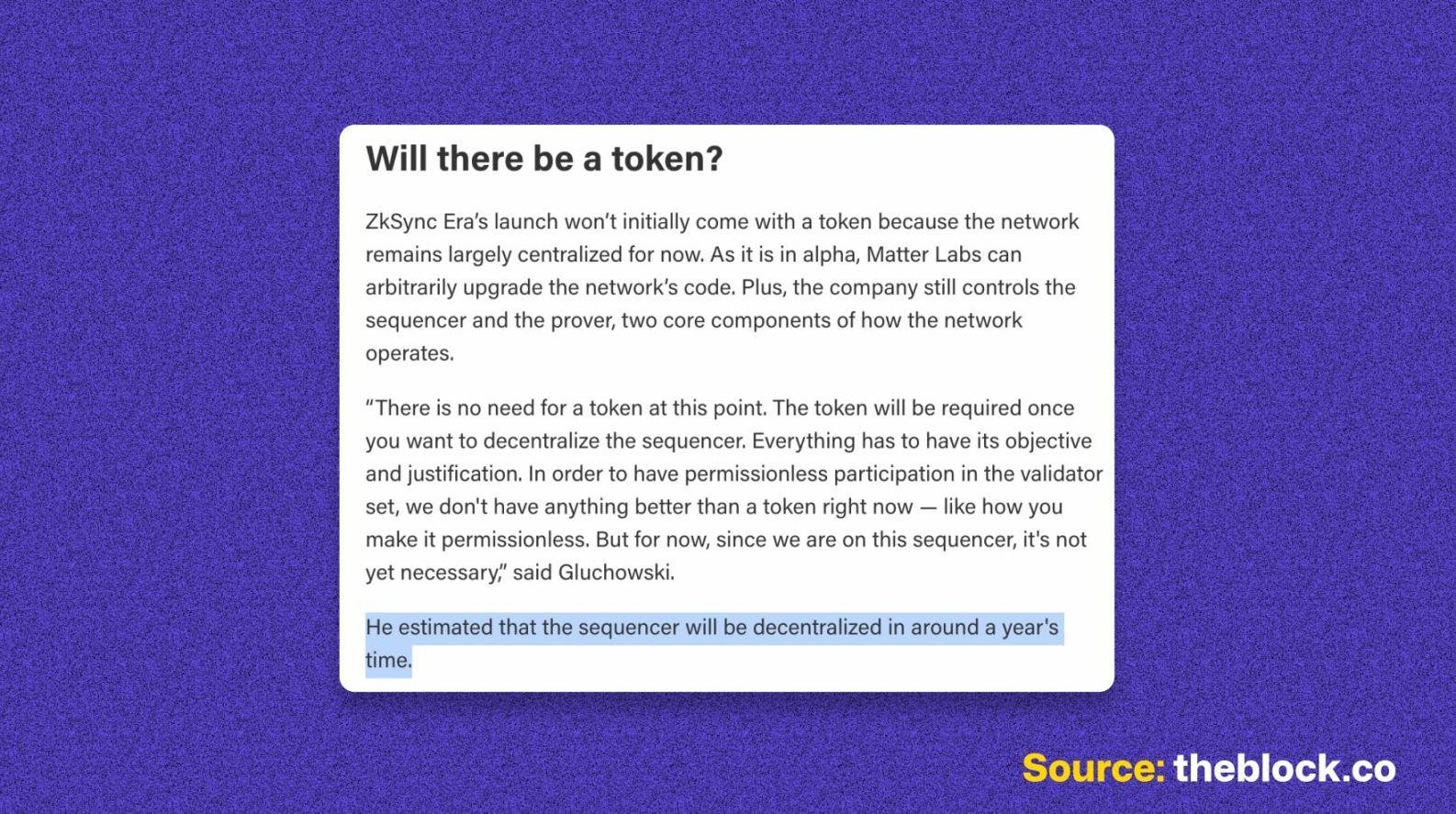
Thus, it is not difficult to understand why Matterlabs CEO Gluchowski stated in an interview that there is no need to issue tokens now, as decentralization will be implemented within the next year.
On one hand, this allows time for issues related to Sequencer, zkPorter Validators, and other decentralization matters; on the other hand, it gives excellent projects time to develop and innovate zk projects to strengthen the ecosystem, and of course, it also provides opportunities for airdrop participants to accumulate rewards.
 Risk warning
 Risk warning