




A Comprehensive Interpretation of Balancer's Innovations in DEX: 7 Types of Liquidity Pools and Architectural Logic

 Balancer has made several innovations in the development of DEX but is often overlooked. In June, Balancer ranked fourth in liquidity among DEXs and fifth in trading volume.
Written by: Jiang Haibo, PANews
Balancer has made many innovations in the development of DEX, but it lacks presence in the competition between Uniswap and Curve. According to data from DeFiLlama, Balancer's liquidity in DEX ranks fourth, only behind Uniswap, Curve, and PancakeSwap; a dashboard compiled by Dune's co-founder shows that Balancer's trading volume in June this year also ranks fifth, following Uniswap, PancakeSwap, Curve, and DODO.
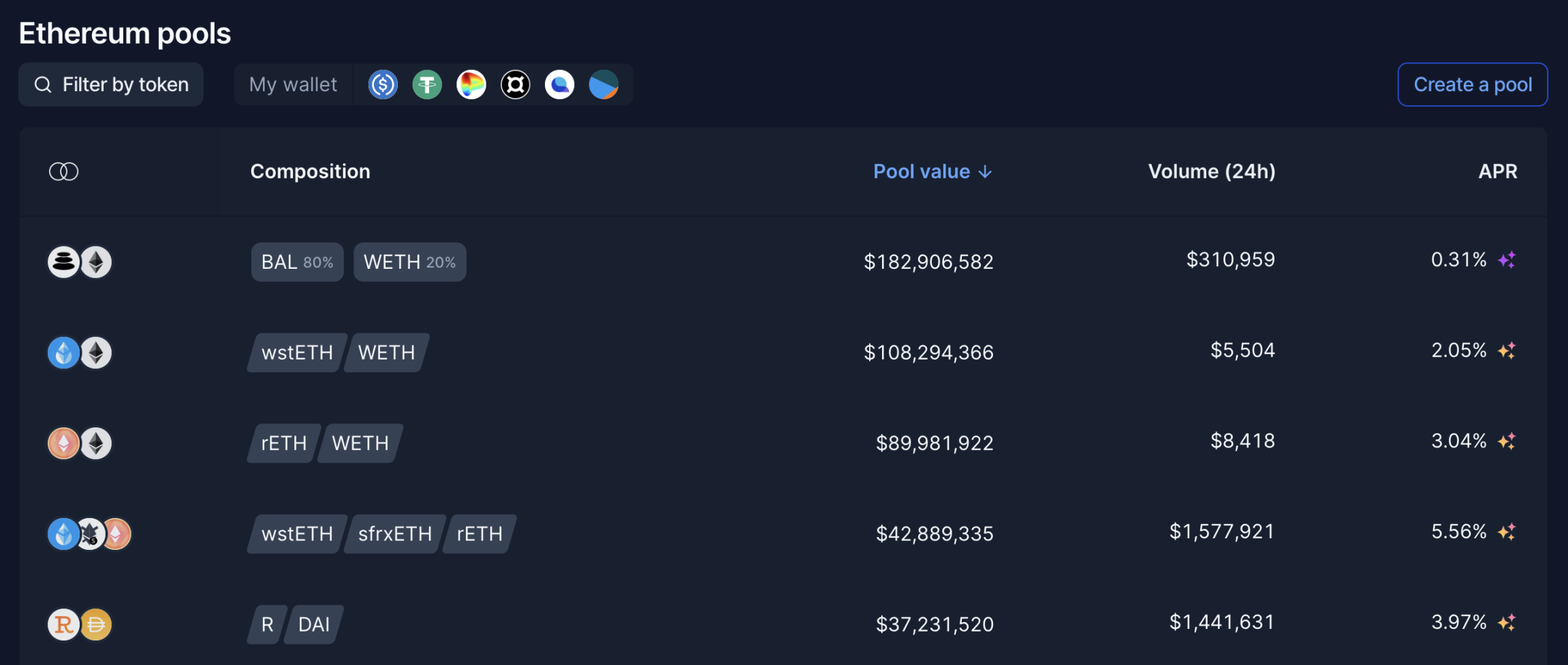
In the development of LSD, Balancer has also captured a good market share. Among the top five liquidity pools on Balancer's Ethereum, the liquidity pools wstETH/WETH, rETH/WETH, wstETH/sfrxETH/rETH, and R/DAI are all related to LSD or LSDFi. Below, PANews will review Balancer's innovative initiatives.
Enhanced Pools: Utilizing Idle Liquidity for Mining
At the end of 2021, Balancer partnered with Aave to launch Boosted Pools, which can utilize idle liquidity for liquidity mining in protocols like Aave. In practice, enhanced pools typically retain only 20% or even less of the total liquidity for trading, with the remaining funds invested in lending protocols like Aave and Morpho to earn additional returns. For example, liquidity providers in the Balancer Boosted Aave V3 USD pool, composed of DAI, USDT, and USDC, can earn trading fees in the DEX, deposit interest in Aave, and $BAL mining rewards issued by Balancer simultaneously.
By combining Balancer's composability with lending protocols, this innovation can incentivize deeper liquidity, more efficient trading routes, higher capital efficiency, and greater returns. However, due to this composability, liquidity providers in Boosted Pools may also suffer losses when underlying lending protocols encounter security issues. For instance, the Euler attack in March this year resulted in liquidity providers in the Balancer Boosted Euler USD pool losing $11.9 million, but fortunately, the hacker eventually returned the funds.
Composable Stable Pools
In August 2021, Balancer announced the launch of MetaStable pools in collaboration with Lido, along with liquidity incentives. Although Uniswap and Curve previously dominated the market for non-stablecoin and stablecoin trading, the emergence of new types of highly correlated but not fully pegged assets has led to new demand, such as Lido's wstETH and Compound's cDAI yield tokens, which are close in value to their underlying assets but change over time. If liquidity is provided using Curve's Stableswap mechanism, as time goes on, the value of one of the assets changes, and the appreciation portion of the asset is captured by arbitrageurs.
MetaStable pools take into account the constant changes in exchange rates between assets by adjusting the slope of the Stableswap curve, concentrating liquidity around the actual exchange rate, thus making capital efficiency and liquidity for liquidity providers more precise.
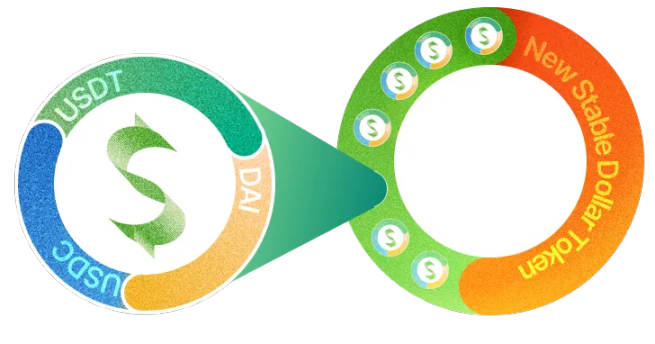
Later, Balancer unified all types of stable liquidity pools (stable pools, meta-stable pools, etc.) into composable stable pools. Composable stable pools can be traded directly using their own LP tokens, i.e., "nested" trading, or LP tokens can be paired with assets like WETH in other pools, thereby reducing gas fees for entering and exiting liquidity pools.
As mentioned earlier, among the top five liquidity pools on Balancer's Ethereum, four are related to LSD. Since wstETH, rETH, and sfrxETH accumulate returns into the value of the tokens, they are more suitable for adopting the composable stable pool mechanism.
Liquidity Bootstrapping Pools: Helping Over 130 Projects Raise Funds
The popularity of Uniswap has allowed everyone to provide liquidity and enable others to trade after issuing tokens, sparking the IDO craze in 2020. Some projects saw their token prices skyrocket several times shortly after providing liquidity on DEX, with early profits being captured by a few whales or bots through scripts. Meanwhile, teams could not raise much funding in this process, and providing liquidity also required substantial capital.
As an established DEX, Balancer introduced Liquidity Bootstrapping Pools (LBPs) in March 2020, which are smart pools that allow teams to issue tokens while establishing deep liquidity.
Balancer allows project teams to weight their token's liquidity pool and change the weight over time. For example, in the auction of the TKN token, a liquidity pool with a TKN/USDC ratio of 90/10 can be created, where initially 90% of the tokens are TKN and 10% are reserve asset USDC.
As time goes on, the proportion of TKN continuously decreases; for instance, according to programming, the TKN/USDC ratio can reach 50/50 or 10/90. In this process, if there are no external purchases, the price of TKN will continue to decline, as shown in the figure below.
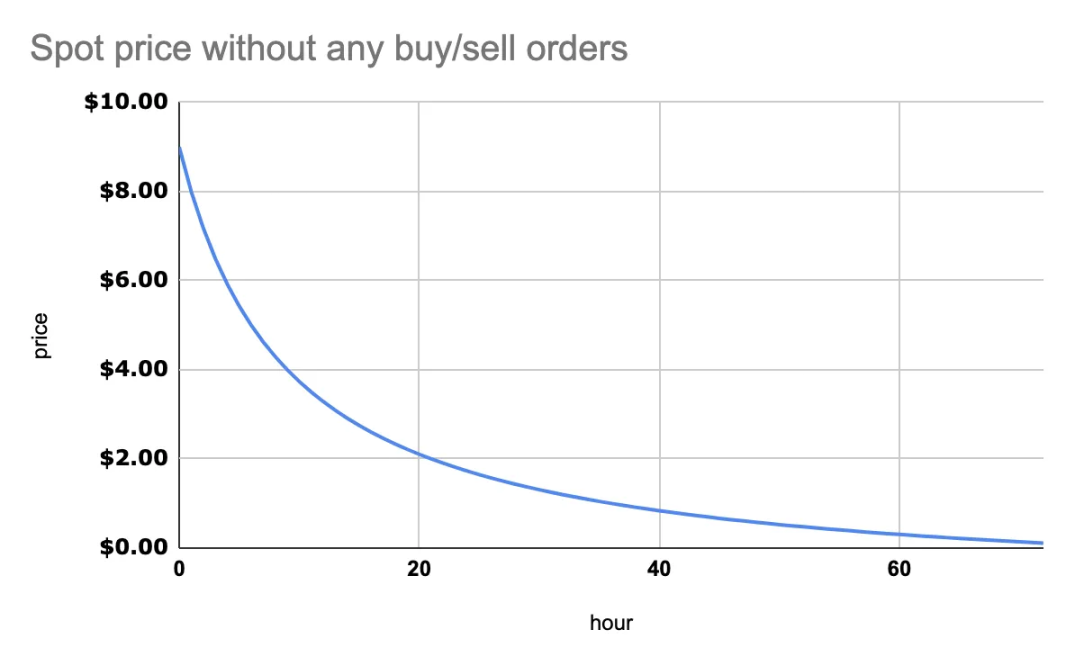
This is a fairer way of conducting initial token sales; since the initial price is set high, bots have no profit to gain and may even incur losses. When the price drops to the expected value, users spontaneously engage in trading. The project team does not need to provide a large amount of capital initially, and tokens are sold at reasonable prices, which is friendly to token issuers.
The front-end website Fjord Foundry (formerly Copper Launch), which uses Balancer's liquidity bootstrapping pools, shows that it has conducted auctions for over 130 communities across multiple chains, with auction values reaching $750 million (Balancer and Fjord Foundry charge a fee of 1% of the sales amount). For instance, the Xirtam scam project raised funds on Fjord Foundry.
The sale of $AKITA tokens gifted to Gitcoin is a successful use case of Fjord Foundry. The issuer of the meme token $AKITA sent some tokens to Vitalik's wallet, and Vitalik donated the tokens to Gitcoin, but selling the tokens became an issue. Subsequently, Gitcoin sold $AKITA through Fjord Foundry, and the slow sales process avoided significant slippage while accumulating some fee income through the pool.
Weight Pools: Providing Liquidity with Specific Weights for Multiple Tokens
Weight Pools are Balancer's main feature, extending the AMM formula x*y=k proposed by Uniswap. In Uniswap, only two tokens are allowed to provide liquidity, and before Uniswap V3, the values of the two tokens had to be equal.
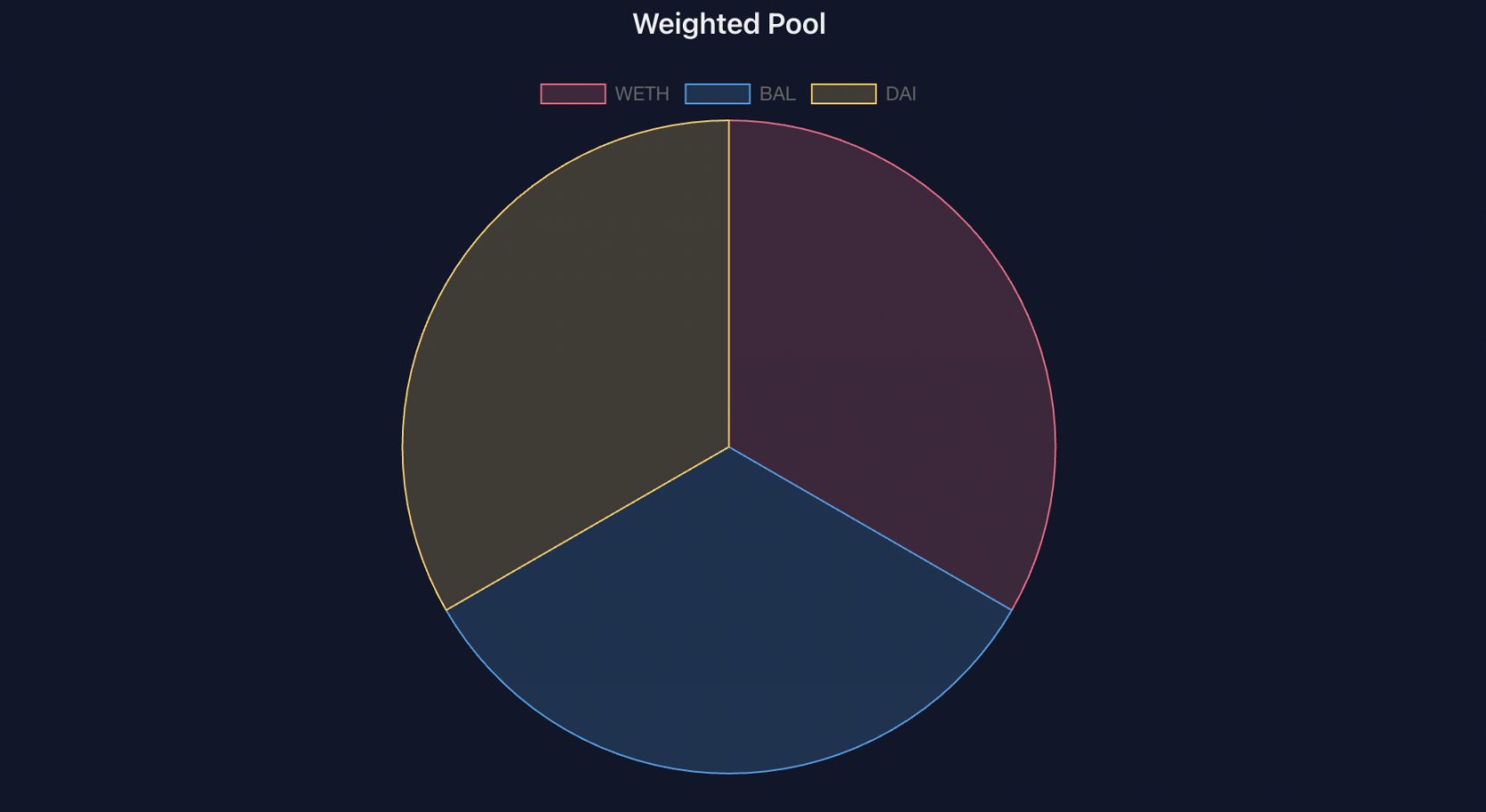
However, the risks between tokens are not the same; a 50/50 weighted liquidity pool is not suitable for all liquidity providers and all assets, and sometimes it is necessary to deposit multiple assets into the same liquidity pool. The emergence of Balancer solves this problem, allowing users to build liquidity pools with two or more tokens and customize the weights, such as a 60/20/20 weighted pool for three tokens.
Yearn used Balancer's 80/20 weighted pool as a liquidity incentive pool for YFI during its token distribution.
Managed Pools: Suitable for Fund Managers, Can Charge Management Fees
Managed Pools are a derivative of weight pools, allowing pool creators (Owners) to update token weights, enabling creators to adjust the distribution of internal assets to fit different strategies.
Managed pools offer high flexibility, unlocking complex portfolio strategies and providing a framework for fund managers. Fund managers can create various pools and strategies, and users can participate in these pools. Fund managers can charge a certain percentage as management fees, and Balancer can also take a portion of the management fees as protocol fees.
Linear Pools: Introducing Target Price Ranges for Trading Pairs
Linear Pools are designed to facilitate trading between original assets and yield-bearing wrapped assets, such as DAI and Aave's aDAI. Linear pools introduce a target range to encourage maintaining prices within that range.
Linear pools have fee and reward mechanisms that incentivize arbitrageurs to keep the exchange ratio of the two tokens at an ideal ratio. Moving the price away from the target range incurs a fee, while trades that bring the price back into the range can earn rewards. Additionally, linear pools are often part of enhanced pools.
Protocol Pools: Custom DeFi Protocols Built on Balancer
Protocol Pools represent entire DeFi protocols built on Balancer's infrastructure. Balancer provides the infrastructure for customized AMMs by separating liquidity pools and accounting logic. Other AMM logic can be implemented on top of Balancer Vault through custom pools, achieving programmable liquidity.
For instance, the stablecoin project Gyrscope concentrates liquidity within the price range of PAMM through a customized Balancer liquidity pool.
Balancer v2 Architecture
Launched in April 2021, Balancer v2 was the first to separate AMM logic, token management, and accounting. Token management and accounting are handled by the Vault, with each pool's AMM logic being independent. In terms of architecture, Balancer V2 transitioned from each Vault in V1 separately holding assets to a single Vault holding all assets. Because Balancer has many liquidity pools, with the same assets present in pools with different trading fee ratios and asset compositions, the original architecture required cross-Vault transactions for trading with assets like BAL and ETH, resulting in high fees. The new architecture offers better flexibility, capital efficiency, and gas efficiency.
Conclusion
Balancer has made many original updates in the development of DEX, such as adjusting the architecture to manage all assets with a single Vault; the auction mechanism of liquidity bootstrapping pools; multi-token management in weight pools and managed pools; and allowing other developers to customize various functions on top of Balancer.
However, the development of DEX is becoming increasingly homogenized. Balancer's initial inspiration may have come from Uniswap, and the recent release of Uniswap V4 also plans to implement a single Vault architecture for managing all funds and allow developers to create various functions on Uniswap, intensifying the competition in the DEX space.
 Risk warning
 Risk warning


Popular articles