








Viewpoint: The brief spring is hard to sustain, and the second major collapse after FTX is on the way

 Will a macroeconomic recession turn cryptocurrency into a safe-haven asset, or will it collapse the entire crypto world?
Written by: Ann,
Compiled by: Odaily Planet Daily jk
Bear markets typically experience a massive price drop, with values lingering at the bottom for a long time, only to end years later. The last market cycle (2018) went through such a situation, followed by the black swan event of 2020—the macro market crash triggered by COVID-19. In November 2022, when FTX encountered problems and Bitcoin's price reached $16,000, we experienced a similar 50% price drop as in 2018. We are now facing a second similar crash.
2018 = 2022, 2020 = ?
There are unsettling similarities between the market crashes of 2018 and 2022, which were more driven by the cryptocurrency industry itself rather than macroeconomic reasons. This was a clear cryptocurrency event, not caused by a collapse of the entire market. Yes, the Fed was raising interest rates before this crash, but the final blow was personally delivered by our Sam Bankman.
The crashes of 2018 and 2019 were the first "shock" after reaching historical highs, the first low point.
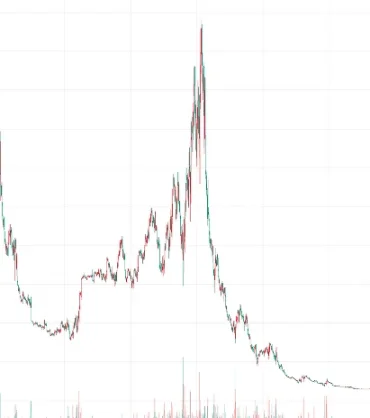
Crash after the bull market from 2012 to 2019
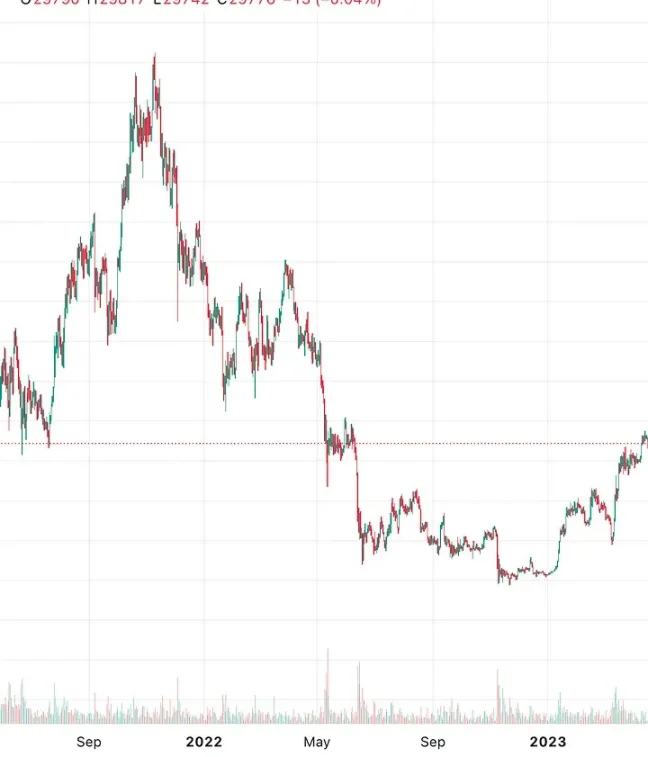
FTX crash in Q4 2022
After both crashes, there was a rebound that misled people into thinking "the market is back," but in reality, there is usually some kind of retesting process before the bear market truly ends.
In the last bear market, this "retesting" was the market crash triggered by COVID-19. I believe we are now welcoming a similar situation, waiting for an equivalent event to 2020.
For the second crash, I have noticed some characteristics:
- Before the crash, the market experienced a rebound and a sentiment of "the market is back." It wasn't just the price increase; developments like institutional adoption (such as BlackRock's Bitcoin ETF) were also in this atmosphere.
- The seeds for the next bull market have already begun to be sown. It is the "DeFi Summer" from 2019 to 2020. Now, any market similar to the DeFi summer is the "Infra Summer." I believe restaking will play a significant role in this.
- More importantly, unlike the first crash, the second crash is influenced by major macro events, completely beyond the control of the cryptocurrency industry.
The Rise of U.S. Stocks Will Stop
Regarding the last point, signs of those macro influences have already appeared. Over the past year, the Nasdaq index has shown vulnerability, recently experiencing its worst performance since February. Interestingly, cryptocurrencies did not follow this upward trend, which may indicate that traders are more skeptical about the Nasdaq's "dead cat bounce."
It seems as if digital assets do not believe in this rebound. One can imagine that if the Nasdaq falls, the already skeptical cryptocurrency prices will not react positively.
Economic Recessions Often Occur During Rate Cuts
Moreover, the effects of rate hikes should manifest. Historically, economic recessions do not occur when the Fed is raising rates, but rather when they begin to cut rates.
As shown in the chart below, the gray overlay marks economic recessions, which always occur during rate cuts. This was the case in both the 2008 financial crisis and the 2000 internet bubble burst.
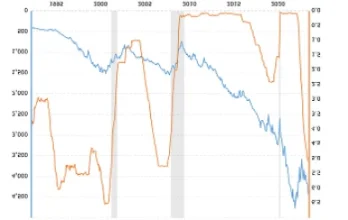
Source: https://www.macrotrends.net/2638/sp500-fed-funds-rate-compared
Q2 Earnings
We are also approaching the release of Q2 2023 earnings reports, which are expected to disappoint as the post-pandemic boom begins to lose its effect.
Companies are expected to announce their earnings this week. We can anticipate market volatility, and Bitcoin's price has remained flat in recent weeks, preparing for this. (In technical analysis, this indicates that the Bollinger Bands are contracting— a calm before the storm.) This means volatility is approaching, although this indicator alone cannot determine the price direction.
Aside from short-term reactions, this week's earnings reports may become the first domino in a larger macro event. We will know soon.
The debt crisis is becoming apparent. Now, due to rising interest rates, U.S. interest payments have soared to $1 trillion. It remains unclear how the government will pay this massive expense without cutting back elsewhere, but it is worth watching.
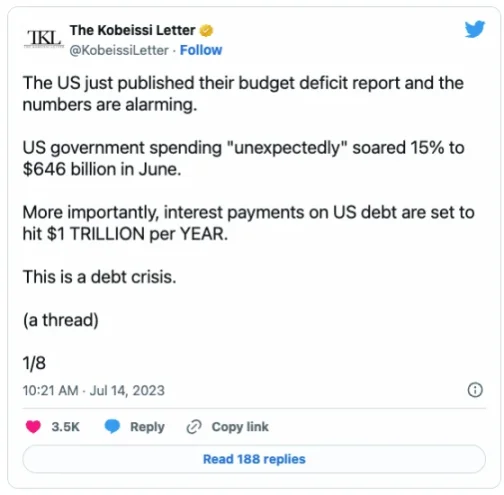
U.S. government spending increased by 15% in June
How to Prepare?
For all potential doomsday events, the more pressing question is how we, as individual market participants, should respond to potential volatility.
I have a few suggestions, with the most important ones being:
1. Don’t Lose Money Trading Low-Quality Coins
This bear market is different in that we will still be inundated with junk coins and fleeting low-quality projects. From trends like Azuki in 2022 to the recent craze for "memecoins," the market has been trying to scam your last bit of money.
As I write this, another frustrating project—called "Worldcoin"—has launched its token. If I were to list some of the recent popular money-grabbing projects on social media, I would include Rollbit, Hamster Coin (what are you thinking, social media folks!), and Arkham Intelligence in the fraud list for June to July 2023.
This attempt to make you part with your money seems never-ending. Never fall into their traps.
2. Yield-Generating Assets
I know you might think that even with Ethereum's 5% yield, it cannot offset losses when digital assets drop by 50%. But just looking at the yield is not enough. For me, the biggest benefit of "harvesting" my digital assets (I use the term harvesting broadly to cover various DeFi strategies that allow me to earn) is that once the assets are safely stored in a DeFi vault, I become lazy about intervening. For example, unlocking certain tokens may require a 7-day wait. During significant price drops, this can help prevent panic selling.
It's less about the yield and more about preventing shaky hands.
3. Monitor Loan Levels
Recently, as Bitcoin's price rose to $20,000 and Ethereum's price to $2,000, some people have started to borrow more boldly (using temporarily appreciated assets as collateral).
I'm not keen on this practice. The market volatility over the past year has indeed been unsuitable for managing loans. The price fluctuations are too large, making you sweat. Unless you enjoy this thrill, I believe loans will only bring too much trouble, too much risk, with little reward.
4. Relax… and Watch the World Burn
When I tweeted that I enjoy bear markets, it is not an exaggeration. The recent ETHCC event in Paris and all its accompanying activities showed that the crypto community is more vibrant than ever after visitors left. Development work has not stopped, and there are more projects to help you stay focused.
Moreover, the chaos in traditional finance seems worth observing. We will see how the old ways of traditional finance end their weaknesses, and if a collapse occurs, crypto will rise as a new generation of financial systems. I suggest we all grab some popcorn and watch.
It sounds a bit cold, but think of it as "relax and don’t worry too much." Things may get worse before they get better. Human society has its mysterious ways of evolution, and this may just be one of those processes.
Most importantly, hold onto your money and survive.
 Risk warning Risk warning





Popular articles





