BlackRock, Fidelity and others are bringing Bitcoin spot ETFs. How far away is the new round of "institutional bull"?

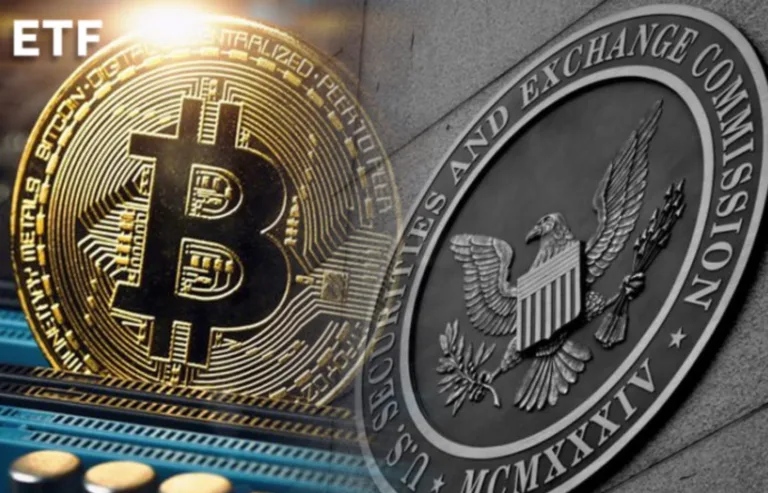
 On January 11, Beijing time, the U.S. Securities and Exchange Commission (SEC) approved 11 Bitcoin spot ETFs, including those from BlackRock, Fidelity, Invesco, Grayscale, and other traditional and emerging capital, allowing them to enter the cryptocurrency market through Bitcoin spot ETFs.
Author: Mia, flowie, ChainCatcher
Editor: Marco, ChainCatcher
In the early morning of January 11, Beijing time, the U.S. Securities and Exchange Commission (SEC) approved 11 Bitcoin spot ETFs, including those from BlackRock, Fidelity, Invesco, Grayscale, and other traditional and emerging capital firms, allowing them to enter the cryptocurrency market through Bitcoin spot ETFs.
SEC Chairman Gary Gensler continued to warn about the risks associated with Bitcoin, stating: "While we have approved the listing and trading of certain spot Bitcoin ETP shares today, we have not approved or endorsed Bitcoin. Investors should remain cautious about the countless risks associated with products related to Bitcoin and its value in the cryptocurrency space."
1. Multiple Traditional Asset Management Giants Enter the Market
Documents from the SEC show that the 11 Bitcoin spot ETFs approved by the SEC include institutions such as BlackRock, Fidelity, VanEck, Bitwise, Franklin Templeton, Valkyrie, Hashdex, ARK 21Shares, Grayscale, WisdomTree, and Invesco.
The approved financial institutions include both emerging funds focused on cryptocurrency assets, like Grayscale, and traditional financial institutions such as BlackRock, Fidelity, and Invesco.
Grayscale, founded in 2013, is a cryptocurrency asset management fund under Digital Currency Group. As one of the well-known Bitcoin whales, Grayscale manages approximately $36 billion in assets, with multiple single-asset trust funds and management funds focused on large-cap cryptocurrencies, including BTC and ETH.
ARK Invest, known for its bets on Tesla and Bitcoin, is an investment management company founded in 2014 by Cathie Wood, often referred to as the "female Buffett." ARK Invest focuses on disruptive innovation opportunities in fields such as artificial intelligence, robotics, energy storage, DNA sequencing, and blockchain technology. Currently, ARK Invest manages over $11 billion in assets, a significant portion of which is related to cryptocurrencies, including multiple increases in its holdings of Coinbase stock (COIN) over the past year.
Compared to emerging investment firms focused on cryptocurrency, the entry of traditional Wall Street institutions like BlackRock, Invesco, and Fidelity has excited investors in the crypto space, as it is believed to bring more traditional capital into the cryptocurrency sector.
These institutions have had many connections with crypto assets prior to this.
BlackRock, founded in 1988, is one of the largest asset management giants in the world, with approximately $9 trillion in assets under management, covering equities, fixed income investments, cash management, alternative investments, and consulting strategies.
BlackRock has entered the crypto space by providing crypto trading and custody services, investing in Bitcoin and other cryptocurrencies, and holding stocks of companies related to Bitcoin.
Fidelity, founded in 1946 and managing $4.5 trillion, is among the top ten asset management giants globally.
In 2018, Fidelity announced the launch of Fidelity Digital Asset Services to provide custody and trading execution services for digital assets, opening up cryptocurrency trading exposure not only to institutional investors like "hedge funds, family offices, and market intermediaries" but also to retail investors.
WisdomTree, established in 1985, is also a well-known American asset management company. WisdomTree launched the first ETFs in June 2006 and has become one of the major ETF providers in the U.S. Currently, WisdomTree manages over $100 billion in assets and has made significant investments in tokenized U.S. Treasury bonds, with multiple tokenized bond fund products.
VanEck, founded in 1955 and known for investing in foreign growth stocks and gold, also aims to share in cryptocurrency investments. VanEck manages over $76 billion in assets.
In November 2021, VanEck launched a Bitcoin futures ETF—XBTF, which currently manages over $59 million. VanEck's Ethereum futures ETF (EFUT) also opened for trading in October 2023. Additionally, VanEck has invested in well-known crypto companies like Binance.US and Gemini.
Invesco, established in 1978, is also one of the well-known comprehensive service asset giants in the U.S. Currently, Invesco manages over $1.5 trillion in assets and oversees more than 200 ETFs, with the Invesco QQQ ETF tracking the Nasdaq-100 Index being particularly famous. Invesco launched an investment fund focused on the metaverse in 2022 to invest in blockchain and metaverse hardware and is also one of the LPs behind the crypto fund Dragonfly Ventures III.
Franklin Templeton, a long-established asset management institution founded in 1947, is known for its bond funds under the Franklin brand, international funds under the Templeton brand, and value funds under the Mutual Series brand. It currently manages $1.4 trillion in assets. Franklin's government money market fund FOBXX is also the largest player in the tokenized U.S. Treasury market. Additionally, Franklin launched a metaverse ETF in 2022.
As cryptocurrencies like Bitcoin have grown from niche assets to an investment category that global investors cannot ignore, these traditional asset management giants have officially entered the market, determined to promote Bitcoin's acceptance among more investors.
2. Is a New Round of "Institutional Bull" Coming?
It is well known that cryptocurrencies have been labeled as "high risk" since their inception, keeping the financial industry at bay. As Bitcoin has evolved from an obscure "virtual currency" to a cryptocurrency investment product valued at up to $40,000, its wealth-generating potential has become evident to traditional finance, making the crypto market a coveted target for traditional financial firms.
For the traditional financial industry, the approval of Bitcoin ETFs will provide a legitimate opportunity to enter the crypto space. Traditional financial giants will be able to conduct Bitcoin ETF business with legitimacy, and institutions can invest directly through trading platforms and brokers without needing to engage with crypto exchanges.
The simplification of capital entry methods will also attract more funds into the crypto market.
On January 11, Bloomberg's senior ETF analyst Eric Balchunas stated that BlackRock might inject $2 billion in assets on the first trading day of the Bitcoin spot ETF, breaking the first-day flow record.
Bloomberg's ETF analysts expect the inflow for Bitcoin ETFs to reach $15 billion. Standard Chartered provided even more astonishing predictions, stating that if Bitcoin ETFs are approved, $100 billion is expected to flow into the Bitcoin ETF market by the end of this year.
If these predictions hold true, the influx of substantial funds will significantly enhance liquidity in the crypto market, increase trading volume and activity, and invigorate market vitality, driving the development and innovation of the entire industry.
The approval of Bitcoin ETFs marks an important milestone for the cryptocurrency market, indicating that cryptocurrencies have officially entered the mainstream financial market. This is not only a victory for Bitcoin but also a triumph for "grassroots" to "mainstream," signifying that the concept of "cryptocurrency" has gained recognition in mainstream societal values and is beginning to receive legal regulation and protection, which will push the entire industry toward a more mature, standardized, and transparent direction.
The standardization and transparency of mechanisms related to cryptocurrencies will also contribute to the development of the cryptocurrency market, pushing the entire crypto market toward maturity.
The last bull market for Bitcoin, driven by capital like Grayscale, was referred to as the "institutional bull," but the bubble driven by high leverage was eventually liquidated, leading to a prolonged bear market.
With the anticipation of Bitcoin spot ETFs, Bitcoin has already risen over 160% in 2023. With more traditional capital joining, how far can the new round of "institutional bull" be?
Institutions have already made predictions for Bitcoin's price by the end of 2024: Standard Chartered predicts it will hit $100,000.
 Risk warning
 Risk warning

Popular articles