Crypto ETF Weekly | Last week, the net outflow of Bitcoin spot ETFs in the U.S. was $358 million; the net outflow of Ethereum spot ETFs in the U.S. was $170 million

 Bitwise submitted the Uniswap spot ETF S-1 registration document to the SEC.
Compiled by: Jerry, ChainCatcher
Performance of Crypto Spot ETFs Last Week
US Bitcoin Spot ETF Net Outflow of $358 Million
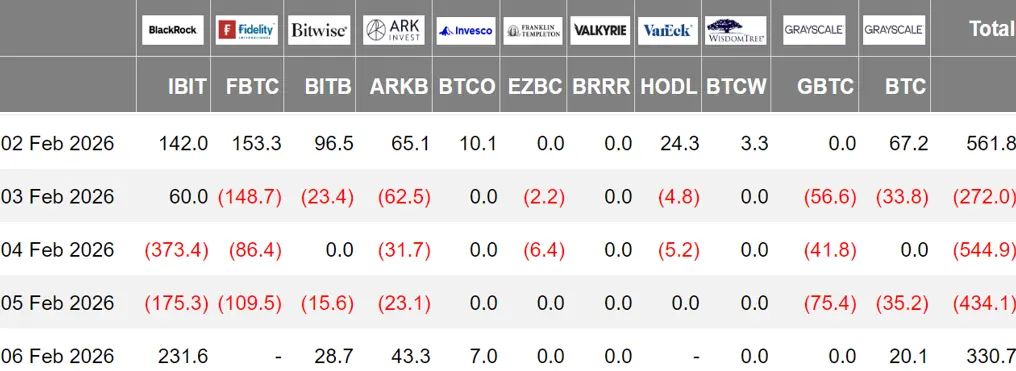
Last week, the US Bitcoin spot ETF experienced a net outflow over four days, totaling $358 million, with a total net asset value of $80.76 billion.
Five ETFs were in a net outflow state last week, with outflows mainly from FBTC, GBTC, and IBIT, which saw outflows of $191 million, $173 million, and $115 million, respectively.
Data Source: Farside Investors
US Ethereum Spot ETF Net Outflow of $170 Million
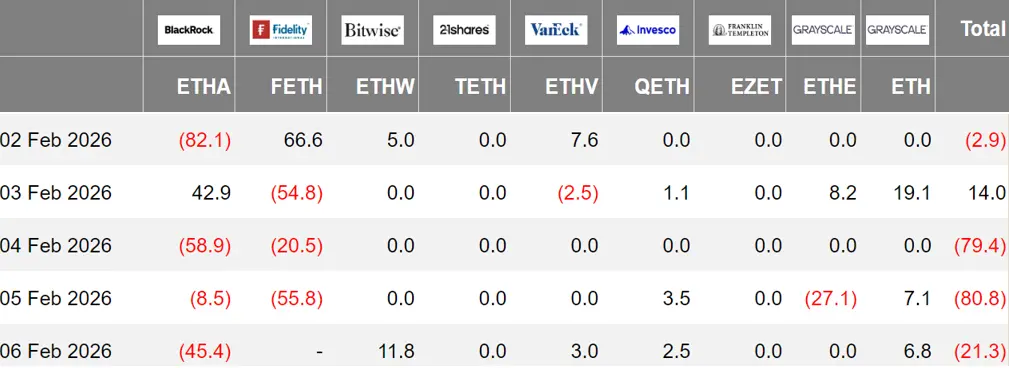
Last week, the US Ethereum spot ETF had a net outflow over three days, totaling $170 million, with a total net asset value of $10.9 billion.
The outflow last week mainly came from BlackRock's ETHA, with a net outflow of $152 million. Three Ethereum spot ETFs were in a net outflow state.
Data Source: Farside Investors
Hong Kong Bitcoin Spot ETF Net Inflow of 28.6 Bitcoins
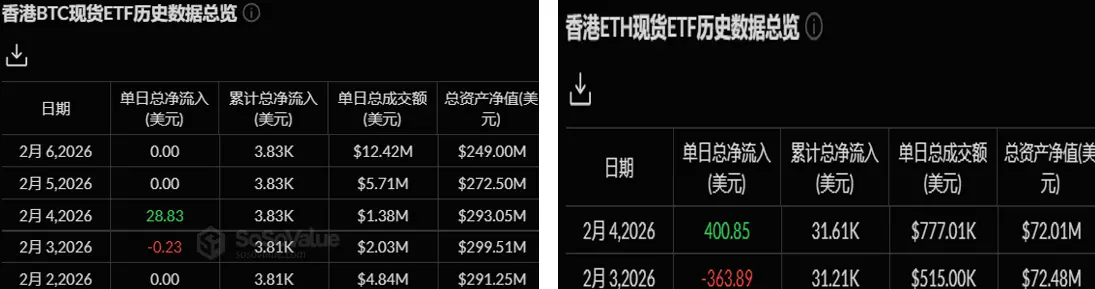
Last week, the Hong Kong Bitcoin spot ETF had a net inflow of 28.6 Bitcoins, with a net asset value of $24.9 million. The issuer, Harvest Bitcoin, reduced its holdings to 290.66 Bitcoins, while Huaxia increased to 2,410 Bitcoins.
The Hong Kong Ethereum spot ETF had a net inflow of 36.96 Ethers, with a net asset value of $7.201 million.
Data Source: SoSoValue
Performance of Crypto Spot ETF Options
As of February 5, the nominal total trading volume of US Bitcoin spot ETF options was $5.87 billion, with a nominal total long-short ratio of 0.78.
As of February 5, the nominal total open interest of US Bitcoin spot ETF options reached $22.32 billion, with a nominal total open interest long-short ratio of 1.56.
The market's short-term trading activity for Bitcoin spot ETF options has increased, with overall sentiment leaning bearish.
Additionally, the implied volatility is 67.61%.
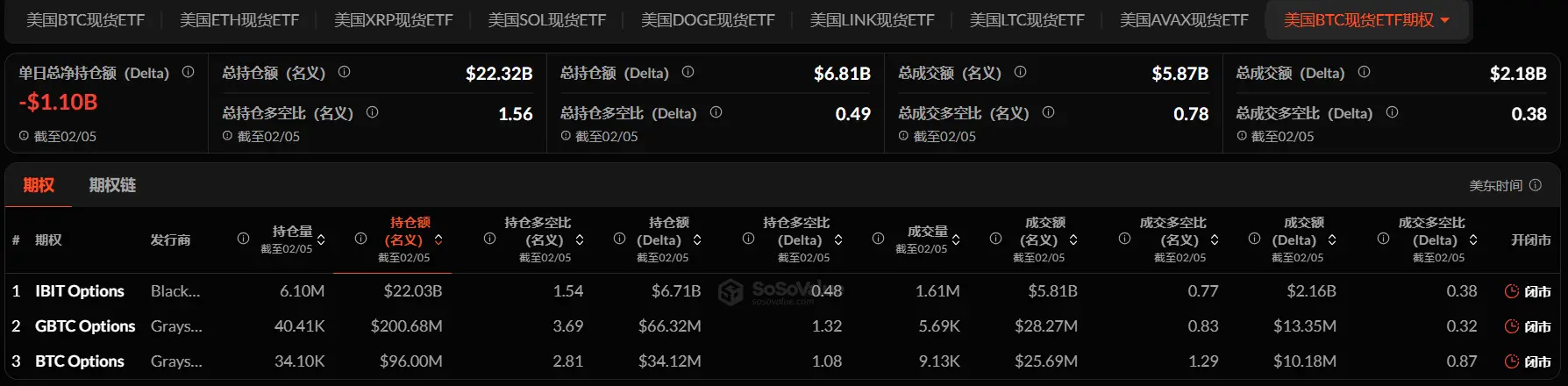
Data Source: SoSoValue
Overview of Crypto ETF Dynamics Last Week
Bitwise Submits S-1 Registration for Uniswap Spot ETF to the SEC
According to official documents, Bitwise has formally submitted an S-1 registration statement to the US Securities and Exchange Commission (SEC) to launch the Bitwise Uniswap ETF.
This product is managed by Bitwise Investment Advisers and is custodied by Coinbase Custody. It currently does not participate in staking but may introduce it in the future through amendments to the registration documents.
ProShares Launches CoinDesk 20 Crypto ETF
According to CoinDesk, asset management company ProShares announced the launch of the KRYP ETF, the first crypto asset ETF in the US tracking the CoinDesk 20 Index, providing investors with exposure to a basket of the 20 largest and most liquid cryptocurrencies.
The index is market-cap weighted with a cap on weights, rebalanced quarterly to reduce the risk of concentration in a single asset. CoinDesk 20 selects from the top 250 cryptocurrencies by market cap, excluding stablecoins, meme coins, privacy coins, and various anchored/wrapped assets.
Pilgrim Partners Asia Reduces Holdings in BlackRock Ethereum ETF Worth Over $16 Million
Singapore asset management company Pilgrim Partners Asia disclosed in a filing to the SEC that it sold 620,000 shares of BlackRock's iShares Ethereum Trust ETF last quarter, valued at $16.21 million.
Currently, the company still holds BlackRock Bitcoin ETF valued at $25.49 million and Strategy shares worth $10.64 million.
Grayscale CoinDesk Crypto 5 ETF to Add BNB
According to official news, Grayscale announced that its CoinDesk Crypto 5 ETF will add BNB. This ETF has been listed on the NYSE Arca and covers Bitcoin, Ethereum, SOL, and XRP, with the trading code GDLC. The product was formerly known as Grayscale Digital Large Cap Fund.
Views and Analysis on Crypto ETFs
Bloomberg senior ETF analyst Eric Balchunas stated on platform X that the previous judgment that the investor structure of Bitcoin ETFs would be stronger than market expectations still holds, but he had expected ETF funds to reduce severe market volatility, which has proven to be incorrect.
Eric Balchunas mentioned that he originally thought retail funds in ETFs would replace the highly speculative retail investors before the FTX incident, thereby enhancing market stability, but he did not fully consider the selling pressure from early holders (OGs) reducing their positions at high levels. He also pointed out that Bitcoin's approximately 450% increase over two years is a potential risk signal, as rapid price increases often accompany high volatility, indicating that Bitcoin's high volatility and high-risk asset attributes will continue in the foreseeable future.
As Bitcoin's sell-off intensified and fell below $70,000, its core selling point of "limited to 21 million" is facing market doubts. Analysts point out that ETFs, cash-settled futures, options, and financing loans have diluted Bitcoin's scarcity, creating "synthetic supply," making prices more influenced by derivative trading rather than supply and demand.
Senior analyst Bob Kendall stated, "Once synthetic supply is possible, assets are no longer scarce, and prices become a derivatives game, which is the current state of Bitcoin. Similar structural changes have also occurred in the gold, silver, oil, and stock markets."
Bloomberg Analyst: Bitcoin ETF Investors Hold Firm, Actual Outflow of Assets Only About 6%
Bloomberg senior ETF analyst Eric Balchunas stated on platform X that despite Bitcoin's price experiencing a 40% drop, leading many investors to incur paper losses, only about 6% of assets in Bitcoin ETFs have actually flowed out, with 94% still holding their positions.
In contrast, the behavior of veteran Bitcoin investors (OGs) under similar market conditions may differ, indicating that the new generation of ETF investors is more committed to long-term holding strategies.
Citi: Bitcoin Approaches Support Level Before US Elections, ETF Fund Inflows Have Clearly Slowed
According to CoinDesk, Citi's analysis points out that Bitcoin is approaching a key price support level before the US elections.
The report states that after several weeks of decline, Bitcoin's price has fallen below the bank's estimated average entry cost for US spot Bitcoin ETFs of about $81,600 and is nearing the critical level of about $70,000 before last year's election.
The report notes that the main new demand source supporting the market—ETF fund inflows—has clearly slowed, while the futures market continues to see long positions being liquidated. Analysts indicate that the cryptocurrency market exhibits volatility similar to precious metals but has failed to follow the recent safe-haven rally in gold, highlighting that its price is still primarily influenced by liquidity conditions and risk sentiment rather than safe-haven demand.
The report suggests that regulatory progress remains a key potential catalyst, but the advancement of the US Digital Asset Market Structure Bill has been slow and uneven, with related expectations having weakened. The report also mentions macro risks, including concerns about the Federal Reserve's balance sheet contraction, which historically puts pressure on cryptocurrency assets by reducing liquidity in the banking system.
According to Bloomberg, the core issue of Bitcoin's recent "slow" sell-off is that the group of investors originally expected to become the most stable buyers in this new round has not continued to enter the market. Glassnode data shows that investors entering through US spot Bitcoin ETFs have an average purchase cost of about $84,100. With Bitcoin currently hovering around $78,500, this group is facing about an 8% to 9% paper loss.
This is not the first time ETF investors have found themselves underwater. As early as last November, when Bitcoin briefly fell below $89,600 (which was the average cost range for ETF investors at the time), analysts pointed out that this would be a key test of the "faith strength" of new mainstream investors. Subsequently, as fund inflows remained profitable at the beginning of 2024, the overall average cost of ETFs decreased, but later entrants have all fallen into losses. From the peak, Bitcoin has fallen over 35% from its 2025 high and briefly dropped below $77,000 in a low liquidity trading environment over the weekend.
Analysts believe this is the result of multiple factors: exhaustion of fund inflows, declining market liquidity, and an overall weakening of macro attractiveness. Bitcoin's failure to respond to traditional bullish factors such as a weakening dollar or geopolitical risks, along with its "decoupling" state from other assets, has made its trend increasingly lack direction. The biggest difference between the sharp drop in October and the current downturn is market sentiment: there is no panic now, only "absence."
The rally that pushed Bitcoin above $125,000 in 2025 stemmed from the market's heightened excitement over regulatory prospects, institutional entry, and a bullish retail base. However, since the October crash liquidated billions of dollars in leveraged positions, it is precisely these buyers who once drove the rally that have chosen to remain on the sidelines and observe.
According to Glassnode analyst Chris Beamish, Bitcoin has now fallen below the average cost basis of US spot ETF holders (about $84,000), leading to unrealized net losses for ETF buyers. Chris Beamish stated that this is the first real stress test for US spot ETF holders.
After the US stock market opens, investors will choose to buy or panic sell, and tonight may see a "stress test."
Matrixport: Bitcoin Lacks New Narrative, Weak ETF Funds May Lead to Continued Consolidation
Matrixport's latest analysis points out that the core reason for Bitcoin's recent continued consolidation is the "lack of narrative." Data shows that Bitcoin spot ETFs have recorded net outflows for three consecutive months, and although several US wealth management institutions have gradually opened allocation channels, the new channels have not brought corresponding incremental funds, resulting in an overall weak ETF funding situation.
Matrixport believes that marginal demand from the traditional finance (TradFi) side may have reached a stage of saturation. From a timing perspective, July was the last significant net inflow window, after which funding momentum has continued to weaken. The report indicates that Bitcoin may need a "narrative reboot" or a new core pricing theme to form substantial support in terms of funds and expectations and to attract TradFi funds back; the current trend is more likely a phase correction rather than a long-term trend reversal.
 Risk warning
 Risk warning