




After the ETF launch, ETH experienced a short-term decline, but the approval of staking and the UX upgrade will become long-term catalysts

 Two important catalysts coming for Ethereum: the announcement of the staking standard and the next hard fork.
Author: The DeFi Investor
Compiled by: Deep Tide TechFlow
Future Outlook for Ethereum
The spot Ethereum ETF has finally been launched.
From the initial trading volume, this launch is quite successful.
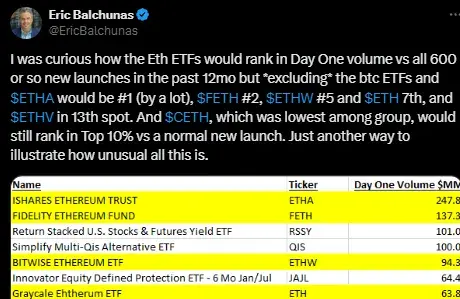
However, as we have seen, ETH started to decline after the launch.
In this article, I will discuss the reasons behind this, the future price trends of ETH, and two important catalysts that Ethereum is about to face.
My Expectations for ETH Price Trends
I believe there are two main reasons why ETH is currently underperforming compared to BTC:
- The launch of the spot ETH ETF is a "sell the news" event: This phenomenon also occurred shortly after the launch of the spot BTC ETF.
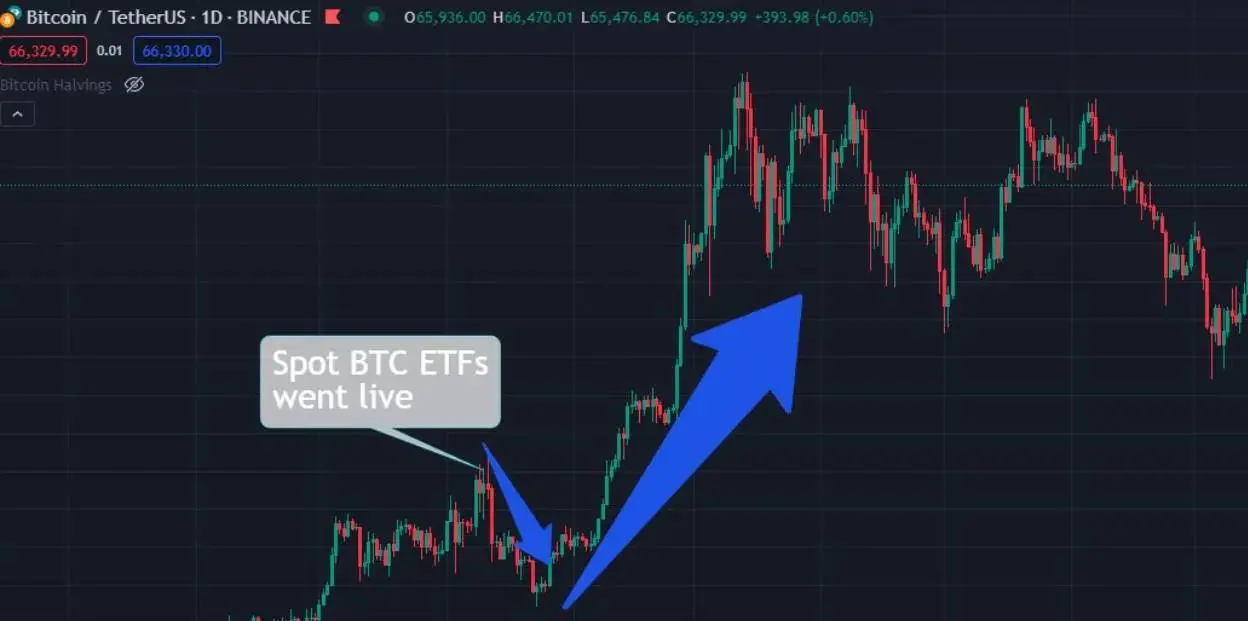
Since the spot ETH ETF was approved months ago, everyone who wanted to buy ETH had ample time to do so. Therefore, catalysts that are known in advance often turn into "sell the news" events.
- The launch of the ETH ETF unlocks $9 billion worth of ETH in the Grayscale Ethereum Trust: These ETH have been locked for years, and now holders can finally sell, leading to many people offloading their assets.
So how long will this decline last?
In the case of BTC, the price bottomed out about two weeks after the launch of the spot BTC ETF. After that, the price consolidated for a few days before hitting an all-time high.
If demand for the spot Ethereum ETF is high in the coming weeks, ETH may experience a similar situation. However, for this to happen, the net flow of the ETH ETF needs to turn positive.
For example, yesterday, due to the selling pressure from the Grayscale Ethereum Trust, the ETH ETF experienced a outflow of $133 million.
There are also some reasonable concerns about ETH in the short term:
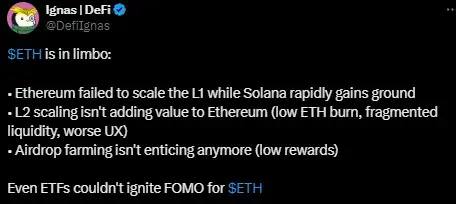
Upcoming Catalysts for Ethereum
I also want to talk about two important catalysts that Ethereum is about to face.
The first is the approval of Ethereum ETF staking. This could significantly increase the demand for the spot Ethereum ETF. Although an annual staking yield of about 3.2% for ETH may not seem much, the low annual inflation rate of ETH and the potential for earning rewards through staking could make ETH more attractive than BTC for certain institutions.
According to SEC commissioners, Ethereum ETF staking "can always be reconsidered," so its approval is just a matter of time.
The second catalyst is the release of Pectra, which is Ethereum's next hard fork. This major upgrade is expected to take place in late Q4 of this year or in Q1 of 2024. Pectra will introduce several significant changes:
Making Ethereum account addresses more programmable
Increasing the maximum stake for ETH validators from 32 to 2048 ETH
By making Ethereum account addresses more programmable, Pectra will bring significant improvements to the on-chain user experience.
For example, it will support batch sending of transactions, develop social recovery features for wallets, and allow dApps to pay users' gas fees. Such upgrades in user experience are necessary for the widespread adoption of cryptocurrencies.
 Risk warning Risk warning
Popular articles