Trump and Cryptocurrency: A Dangerous Political Game

 If the U.S. government recognizes Bitcoin and other crypto assets, many cryptocurrency practitioners will certainly benefit, but the main goal of the industry is to integrate crypto assets into the mainstream investment world while maintaining as little regulation as possible.
Original Title: “Trump's Dangerous Embrace of Bitcoin and the Crypto Bros”
Author: John Cassidy, The New Yorker
Translation: BitpushNews Scott Liu
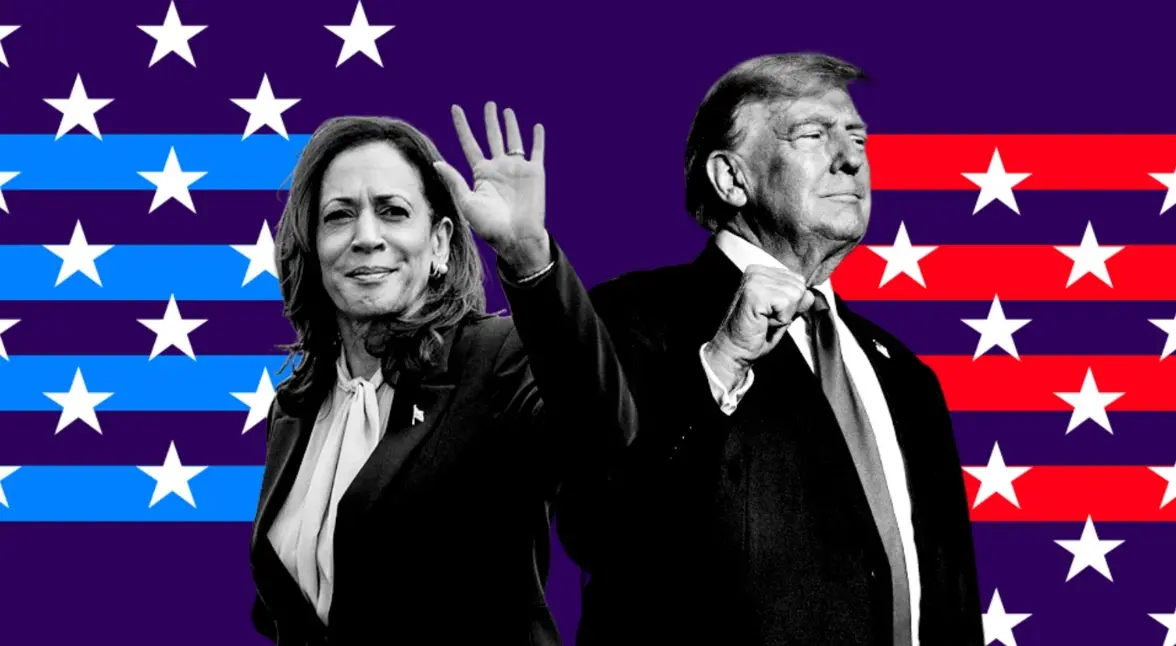
Politically, a month can mean huge changes. As the lackluster Democratic presidential campaign has turned into the "Kamala Harris Show," Donald Trump's re-election campaign has morphed into the "Cryptocurrency Show." After venture capitalist and cryptocurrency supporter J.D. Vance became his running mate, Trump appeared at a Bitcoin conference in Nashville, promising to establish a strategic Bitcoin reserve and make the U.S. a global Bitcoin superpower. He also promised to fire SEC Chairman Gary Gensler, a staunch opponent of cryptocurrency who has criticized the crypto industry for its "record of failures, fraud, and bankruptcies."

Trump's move is ironic, as he stated in 2019 that Bitcoin's value was "a mirage." According to CNBC, at the Nashville event, dozens of cryptocurrency supporters, including the Winklevoss twins and Kid Rock, each paid $500,000 to have a private roundtable with the former president. Days later, a company owned by Trump listed limited edition gold sneakers printed with Bitcoin and "TRUMP CRYPTO PRESIDENT" for sale online, priced at $500 each. (Reportedly, these shoes later sold for as much as $25,000 on eBay, with one pair even listed at $69,999.)
In recent years, the cryptocurrency industry has faced crises. In December 2022, FTX founder Sam Bankman-Fried was arrested for defrauding FTX customers of over $1.7 billion and was subsequently sentenced to 25 years in prison. In November 2023, Binance founder and CEO Changpeng Zhao pleaded guilty to failing to combat money laundering and was sentenced to four months in prison.
A greater threat to the cryptocurrency industry comes from Gensler and his regulatory demands that many crypto assets be classified as investment securities, which would subject them to strict investor protection laws and government oversight. The cryptocurrency industry has long argued that investing in cryptocurrencies is more akin to purchasing commodities, such as precious metals and beef, which should be regulated by the Commodity Futures Trading Commission (CFTC) rather than the larger SEC.
In September 2022, Gensler stated in a speech in Washington that he believes "the vast majority" of cryptocurrency tokens are securities, citing the words of the agency's first head, Joseph Kennedy: "The SEC will make businesses without integrity afraid." In the following months, the SEC sued several leading cryptocurrency companies, including Binance and the largest U.S. cryptocurrency exchange, Coinbase, accusing them of operating unregistered securities exchanges and other violations. While the defendant companies denied any wrongdoing and attempted to dismiss the cases before trial, in March of this year, a federal judge in New York ruled that most of Coinbase's case could proceed. In June, a judge in Washington, D.C. also stated that most of Binance's case could proceed. In December of last year, a federal judge in New York ruled that four cryptocurrency tokens sold by the South Korean company Terraform Labs were securities.

The SEC has also faced setbacks on this critical issue. In July 2023, a federal court in California ruled that the XRP token created by the San Francisco cryptocurrency company Ripple Labs was not a security when sold to the public. In June of this year, the SEC ended its investigation into Ethereum, the second-largest blockchain network after Bitcoin. However, overall, the SEC has made progress. Dennis Kelleher, president of the public interest group Better Markets, said, "People in the cryptocurrency industry are doubling down on political contributions. The biggest demand from the cryptocurrency industry is to have Congress declare that digital assets are not securities, thus removing the SEC's jurisdiction."
The scale of donations from the cryptocurrency industry is staggering. According to Bloomberg, three cryptocurrency political action committees (PACs), including the largest, Fairshake, raised $170 million from donors such as Coinbase, Ripple, and venture capital firm Andreessen Horowitz. These cryptocurrency funds have flowed not only to Trump's presidential campaign but also to House and Senate races. Moreover, much of the funding seems aimed at defeating Democratic critics of cryptocurrency, including Ohio Senator Sherrod Brown and Montana Senator Jon Tester, with some funds also going to other Democrats.
In last week's primary in Arizona's 3rd congressional district, Democratic Phoenix City Council member Yassamin Ansari defeated former state Democratic chair Raquel Teran with the help of a PAC-funded advertisement. Given the influx of cryptocurrency funds, over a dozen House Democrats recently co-signed a letter to Democratic National Committee Chair Jaime Harrison, urging the committee to "take a forward-looking approach to digital assets and blockchain technology." However, the fact remains that the biggest political supporters of the cryptocurrency industry are Republicans.
After Trump attended the recent Bitcoin conference, Wyoming Senator Cynthia Lummis announced that she would propose legislation to establish a "Bitcoin Strategic Reserve" consisting of about one million Bitcoins. (Another cryptocurrency supporter, Robert F. Kennedy Jr., also cheered this.) Ironically, many in the cryptocurrency space pride themselves on being libertarians, often arguing that one of Bitcoin's great advantages is its independence from government. And now, a Republican senator proposes spending over $60 billion of taxpayer money (considering Bitcoin's current price) to acquire about 5% of the entire cryptocurrency supply.
Trump has a more moderate proposal, suggesting that the U.S. government should simply hold all the Bitcoins seized by law enforcement agencies. What economic benefit would holding these Bitcoins provide? Georgetown University financial economist James Angel said, "The biggest benefit is that it would make the largest users of Bitcoin vote for Trump."
If the U.S. government were to recognize Bitcoin and other crypto assets, many cryptocurrency practitioners would certainly benefit, but the industry's main goal is to integrate crypto assets into the mainstream investment world while maintaining as little regulation as possible. Kelleher said we have seen this story unfold. In 2000, Congress passed the Commodity Futures Modernization Act, effectively exempting certain financial derivatives from regulation, contracts whose values are linked to the prices of underlying assets. In the following years, the issuance of mortgage derivatives, such as credit default swaps, surged. Many large banks ultimately faced financial collapse due to these derivatives. When the housing market collapsed, the value of the underlying mortgage securities plummeted, leading to the collapse of the entire financial system, ultimately resulting in taxpayer-funded bailouts.
The most powerful rebuttal to the potential risks of cryptocurrency may be that a collapse in digital asset prices would have little impact on the broader financial system. (In 2021 and 2022, Bitcoin's value fell by more than two-thirds.) But as Kelleher points out, that collapse occurred in an environment where regulators insisted on isolating cryptocurrencies and crypto assets from the financial system. Kelleher said, "Imagine if the collapse happened in a scenario where cryptocurrencies were deregulated and fully integrated and connected to the banking system, with countless derivatives whose values were linked to Bitcoin prices, these liabilities would be spread across the banks' balance sheets. Then we would be back to the 2008 scenario."
This may be the worst-case scenario, but the larger question is: we have already seen the dangers of loose financial regulation. Mortgage securities at least served a larger societal purpose, such as expanding homeownership. Even if someone discovers significant societal benefits from crypto assets, those individuals would choose to remain silent. However, don't expect to tell this to the cryptocurrency believer at Mar-a-Lago. He still needs to raise funds for his campaign and sell sneakers.
 Risk warning
 Risk warning