Trading Never Sleeps: On-chain, Crude Oil and Leverage
 Core Viewpoint

 The prices in this window are determined by emotions, amplified by leverage, driven by war narratives—rather than by crude oil supply and demand.
Author: Zhou, ChainCatcher
During the weekend of March 7 to 8, the fires of war in the Middle East continued to rage, and the situation in the Strait of Hormuz worsened, with oil-producing countries announcing consecutive production cuts.
However, the global crude oil futures market was closed, and on-chain 24-hour trading became highly sought after.
Binance launched WTI crude oil perpetual contracts on Saturday; the trading volume of crude oil contracts on the Gate platform surged by over 900% month-on-month.
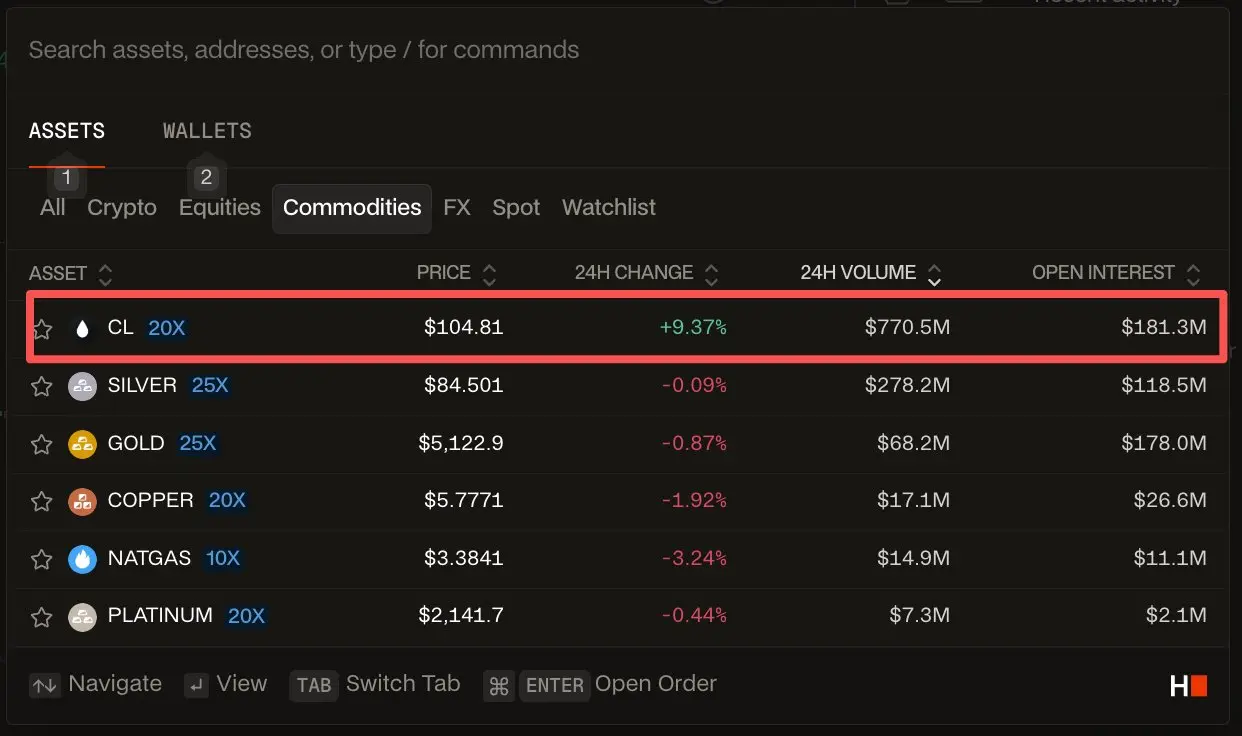
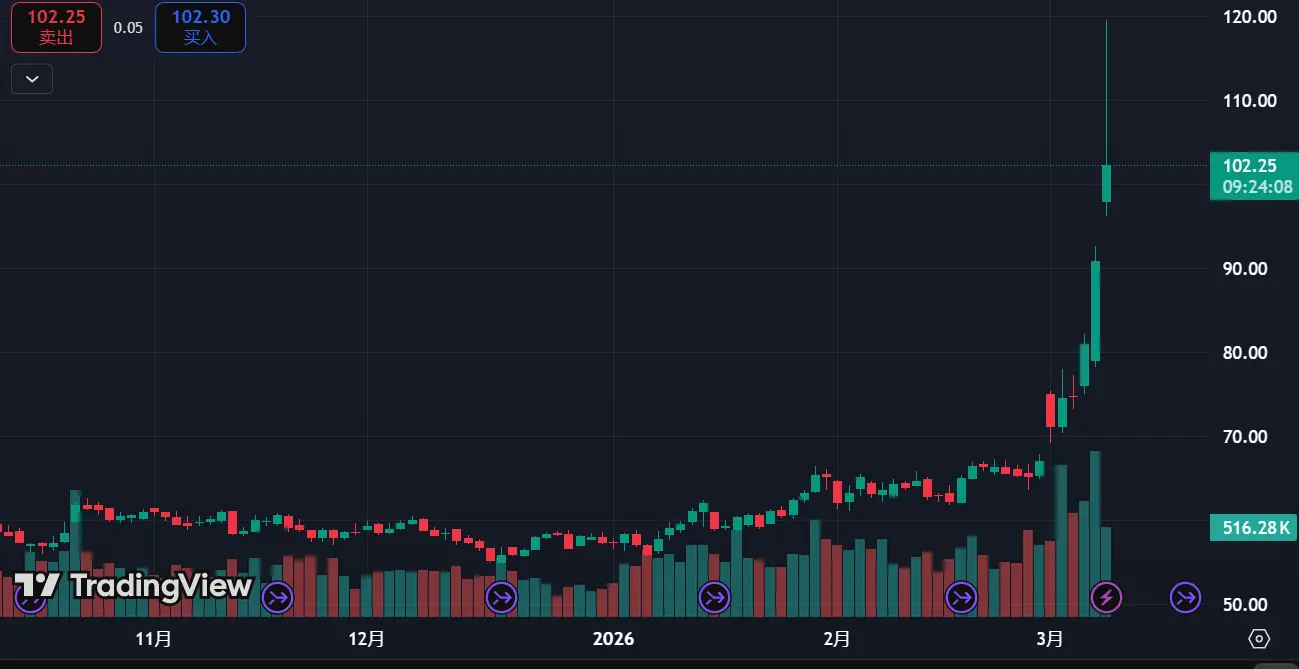
On Monday, as traditional futures markets opened, WTI saw a one-day surge of over 30%. The trading volume of WTI crude oil contracts (CL) on Hyperliquid skyrocketed from over $100 million on March 3 to nearly $1 billion by March 9.
Everyone is saying this is the shining moment for on-chain commodities, yet no one is asking who determines the prices in this window.
The window is open, but who sets the price?
According to Bloomberg, the cryptocurrency market has become the only public window for traders to gauge the risks of ongoing conflicts in the Middle East.
As the war in Iran continues, on-chain platforms tracking contracts for crude oil, gold, and silver have seen significant volatility driven by retail and crypto-native traders.
The volatility of on-chain prices can serve as a real-time indicator of market sentiment, but its reference value is limited. Crypto observers note that these platforms also provide a reference model for what "around-the-clock trading" might look like in traditional markets.
This time, reality is more extreme than the narrative.
Goldman Sachs' monitoring data shows that oil flow through the Strait of Hormuz has plummeted by about 90%, with an average daily supply of 18 million barrels vanishing into thin air.
J.P. Morgan estimates that the scale of supply disruptions in the Gulf region could rise from 1.5 million barrels per day to nearly 6 million barrels per day within weeks, which is 17 times the peak reduction during Russia's production cuts in 2022.
Kuwait, the UAE, Iraq, and Qatar have all announced production cuts or shutdowns. Since March, WTI has seen a cumulative increase of over 50%.
The real beneficiaries of this market surge are those crypto exchanges that had positioned themselves in on-chain crude oil contracts in advance; the explosion in trading volume has directly driven their fee income to soar.
Gate data shows that the 24-hour contract trading volume for Gate XBR (Brent crude) reached $12 million, a month-on-month increase of 951.37%; the 24-hour contract trading volume for XTI (WTI crude) reached $21.15 million, a month-on-month increase of 397.08%, with funding interest and market participation continuing to rise.
On-chain monitoring data indicates that even before this market surge, several well-known on-chain traders and institutions had already positioned themselves in RWA U.S. stocks and commodities.
- Sky co-founder Rune (@RuneKek) established a long position in crude oil worth $8.7 million at an average price of $92 on March 7, simultaneously hedging with short positions in ETH and the Nasdaq.
- CBB (@Cbb0fe) opened a short position in CL worth $36.3 million at an average price of $78.3 on March 4, while also shorting the South Korean stock market, natural gas, and the AI industry chain, with a long position in gold worth $4.76 million.
- Loracle opened a short position in CL worth $7.8 million at an average price of $92 on March 7, and also shorted NVDA and PAXG with a position of $5.6 million, currently facing losses on both sides.
- After the $7.7 million short position of the whale 0x8af was fully liquidated, it quickly re-established a new short position.
- An address that previously made over $50 million in profits from shorting altcoins has incurred losses of $7.3 million in commodities over the past month.
Among these individuals, some are engaging in structured hedging, some are betting on reversals, and some are adding to trends.
Their directions vary, but one thing is the same—none of them are true crude oil traders, no one is seriously analyzing the actual blockade probability in the Strait of Hormuz, and no one is building a crude oil supply-demand model.
What drives them to enter the market is the narrative of war and the amplifiers provided by on-chain leverage.
This is the essence of the current on-chain commodities market. Liquidity determines who sets the price, and the liquidity in the on-chain market is still just a fraction of the traditional market. The daily trading volume of crude oil futures on the Chicago Mercantile Exchange (CME) is in the tens of billions, while Hyperliquid's nearly $1 billion is already a historical peak.
A single position from a large trader can top the leaderboard; perhaps the power of price discovery has never truly occurred on-chain, and the so-called 24/7 trading is merely a collective imagination of crypto traders regarding war.
In this window, prices are set by emotions, amplified by leverage, and driven by the narrative of war—rather than by crude oil supply and demand.
The money has been made in crude oil, but greater macro risks are accumulating
Those still speculating in on-chain crude oil contracts may not realize that the same war is accumulating risks from another direction.
According to models from The Kobeissi Letter, if oil prices remain around $120 for more than three months, the U.S. CPI inflation rate will rise to about 3.7%, reaching the highest level since September 2023.
Meanwhile, February's non-farm payrolls showed a decrease of 92,000 jobs, and the unemployment rate rose to 4.4%. The slowdown in employment should have pressured for interest rate cuts, but renewed inflation expectations have left the Federal Reserve immobilized.
Once the window for rate cuts closes, the valuation logic of global risk assets will come under renewed pressure. The stock market, commodities, and cryptocurrencies cannot remain unaffected.
The risks do not stop there. Sovereign funds from the Middle East, such as those from Saudi Arabia, the UAE, and Qatar, are pausing large investments in U.S. AI and data centers, while the U.S. is simultaneously planning to extend export controls on AI chips globally.
Additionally, BlackRock has announced restrictions on investor redemptions from its $26 billion corporate loan fund—these funds have been aggressively financing data center projects at high interest rates over the past three years, allowing investors to redeem quarterly, but with loan terms lasting 5 to 10 years, creating a mismatch in duration that has sown hidden risks.
The funding sources for the crypto market and the AI narrative are highly overlapping; once the AI narrative cools and triggers a wave of fund redemptions, it will lead to more sell-offs, a scenario that has occurred before the 2008 subprime mortgage crisis.
Conclusion
A war has transformed a group of dog coin speculators into crude oil traders; some of them have made money, while others have been liquidated and reopened positions.
On-chain trading never sleeps, and the war will not stop because of it. The bill for macro risks has yet to come due, and the battle between bulls and bears has not reached a true settlement.
Next time, who will be on the right side?

 Risk warning
Popular articles