Grayscale: Why is Ethereum performing poorly? What will the future market look like?

 The cryptocurrency market fell in early August, with Ethereum performing poorly, possibly due to an increase in long positions in the futures market and selling by a few large holders.
Source: Grayscale X Account
Author: Grayscale
Compiled by: Bai Shui, Golden Finance
Summary
Cryptocurrency valuations fell in early August due to concerns about the U.S. economic outlook and broader financial market volatility. Ethereum underperformed, possibly due to increased positions in the futures market and sell-offs by a few large holders.
If the U.S. economy continues on a "soft landing" path, Grayscale Research expects token valuations to rebound.
However, even in a weaker economic environment, Grayscale Research has reason to believe that the downside risk to prices may be more limited than in the past.
After experiencing a sharp decline from August 2 (Friday) to August 5 (Monday), crypto assets and broader financial markets stabilized mid-week (Figure 1). Although the prices of major tokens typically have low correlation with other asset classes, volatility in traditional markets may impact cryptocurrency valuations.
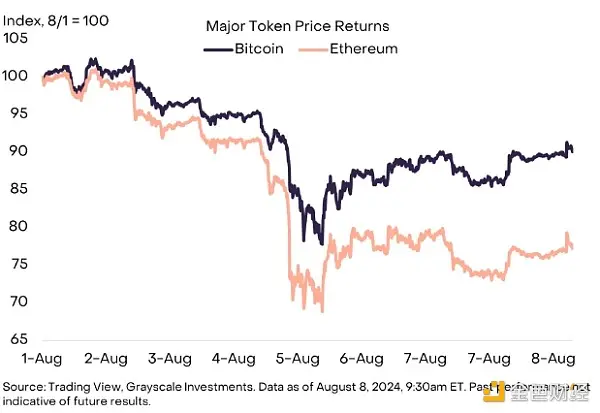
Figure 1: Bitcoin and Ethereum Decline in Early August
The direct cause of the decline was the U.S. July employment report released on August 2, which was weaker than expected. In particular, the report showed an increase in the unemployment rate comparable to previous economic recession periods. Concerns about a cyclical downturn led to weak performance in cyclical assets like stocks, while traditional safe-haven assets like U.S. Treasuries, the yen, and the Swiss franc performed strongly (Figure 2). Non-U.S. stocks and strategies that short U.S. stocks performed particularly poorly. Both Bitcoin and Ethereum fell; while Bitcoin performed relatively better on a risk-adjusted basis, Ethereum's performance lagged behind other crypto assets and many traditional market segments, which we will explore further below. Among major crypto assets, Solana significantly outperformed other cryptocurrencies.
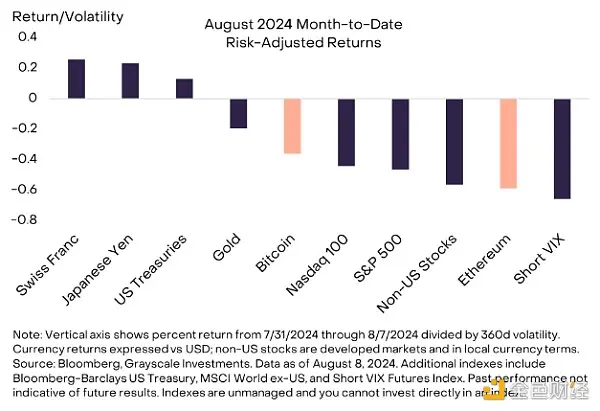
Figure 2: Ethereum Underperformance
Despite Ethereum's higher volatility compared to Bitcoin, its performance during the recent decline was more pronounced than usual. For example, Chart 3 shows the maximum percentage drop in Bitcoin prices since 2020, compared to the drop in Ethereum prices during the same period. In these events, Ethereum's price typically declines about 1.2 times that of Bitcoin. The latest "crypto winter" (i.e., bear market period) showed similar relative performance. In contrast, as of August 2024, Ethereum's price has fallen approximately 1.8 times that of Bitcoin, indicating that Ethereum faces additional, unique downward pressure.
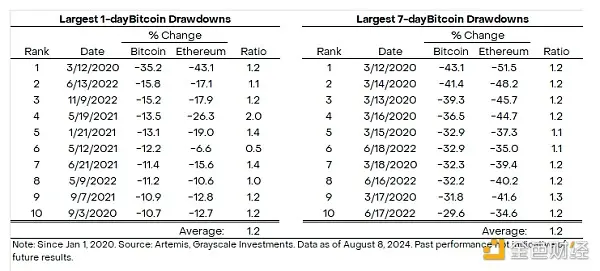
Figure 3: On average, Ethereum's decline is typically 1.2 times that of Bitcoin
One reason for Ethereum's relatively large price drop seems to be excessive long positions in perpetual futures. In May 2024, as the U.S. Securities and Exchange Commission (SEC) approved the 19b-4 application for issuers of U.S. spot Ethereum exchange-traded products (ETPs), traders significantly increased the total positions in perpetual futures (Chart 4), perhaps anticipating further price increases following comprehensive regulatory approval; this approval was granted in July 2024, and U.S. spot Ethereum ETPs began trading shortly thereafter. Subsequently, some long positions were liquidated during the recent decline, accelerating the price drop. On August 4, Ethereum's price fell 7.6% in just three minutes, with a total liquidation of $340 million in perpetual futures that day. As the sell-off occurred during the U.S. overnight trading session and Binance's spot prices were at a significant discount compared to Coinbase, the liquidation appeared to be primarily driven by leveraged traders in Asia.
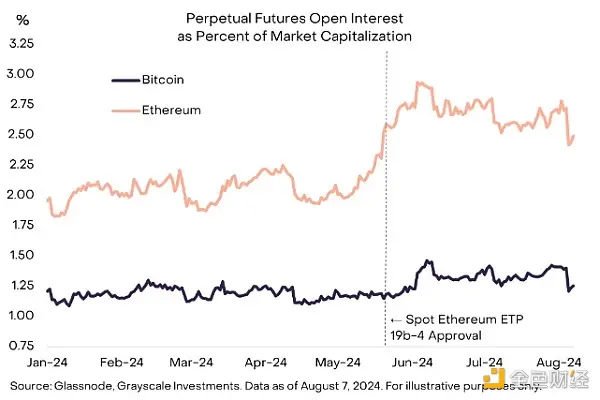
Chart 4: Increase in Ethereum Futures Leverage in May 2024
Another factor that may have contributed to Ethereum's poor performance is the actual and anticipated sell-offs by a few large holders, including market makers Jump Crypto, venture capital firm Paradigm, and Golem Network (a crypto protocol with a large treasury of Ethereum assets). While the exact amount of the sell-off is uncertain, based on data from analysis platform Arkham Intelligence, Grayscale Research estimates that these entities collectively held approximately $1.5 billion worth of Ethereum (based on Ethereum's price at the time) before they began transferring tokens. The decline in the number of active validators and the rise in Ethereum staking reward rates also indicate that the relatively sticky token supply has changed, which may affect market sentiment.
In the past week, broader financial markets have stabilized. Perhaps most notably, the VIX index, which measures implied volatility in the U.S. stock market, peaked above 60% intraday on Monday before closing at 26% on Thursday (Chart 5). Whether the market can maintain stability will depend on upcoming macroeconomic and corporate earnings data, as well as any policy responses from the Federal Reserve or other central banks. Key reports on the economic data front include the weekly unemployment claims report (released every Thursday), the Consumer Price Index report (to be released on August 14), and the next employment report (to be released on September 6). The Federal Reserve is likely to cut rates at its meeting on September 18, but the market is more focused on the policy path thereafter. Policymakers may provide more guidance at the Jackson Hole Symposium scheduled for August 22-24.
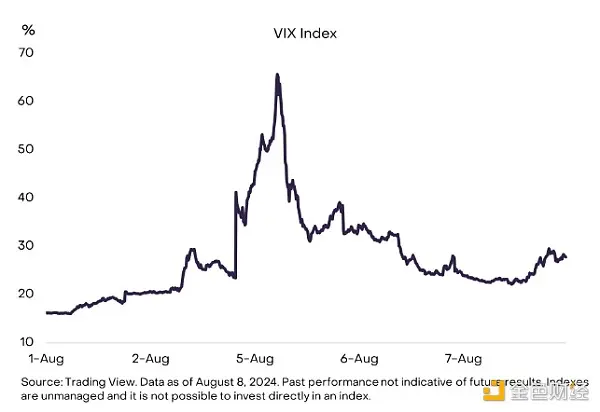
Figure 5: Market Volatility Decreased in the Past Week
If the U.S. economy avoids recession and continues on a "soft landing" path, Grayscale Research expects token valuations to rebound, with Bitcoin re-testing its historical highs later this year. However, even in a weaker economic environment, Grayscale Research has reason to believe that the downside risk to prices may be more limited than in past declines. These include relatively stable net demand from newly listed U.S. ETPs, insufficient credit provided by centralized financial institutions during this cycle, and the relatively lackluster returns of altcoins since the beginning of this year. Changes in the political landscape surrounding the crypto industry in the U.S. compared to past cycles may also reduce the downside risk to valuations.
Economic cycles are an inevitable feature of investing in almost all asset classes, and the uncertainty of the macro outlook should be viewed as a short-term risk for crypto investors. Meanwhile, Grayscale Research believes that there is almost zero tolerance for a severe economic recession, and expects policymakers to begin printing money and spending as soon as problems arise. The irregular practices of monetary and fiscal policy are among the reasons some investors choose to invest in Bitcoin; therefore, a period of economic weakness may reinforce the long-term investment thesis for Bitcoin.
 Risk warning
 Risk warning






Popular articles