CEO Discusses the Behind-the-Scenes Story of Founding Coinbase: Banking Partners are the Key to Success, Once Opposed Investing in USDC
 Core Viewpoint

 Compliance, Innovation, and Global Monetary Reconstruction
Source | Cheeky Pint
Compiled | Golden Finance
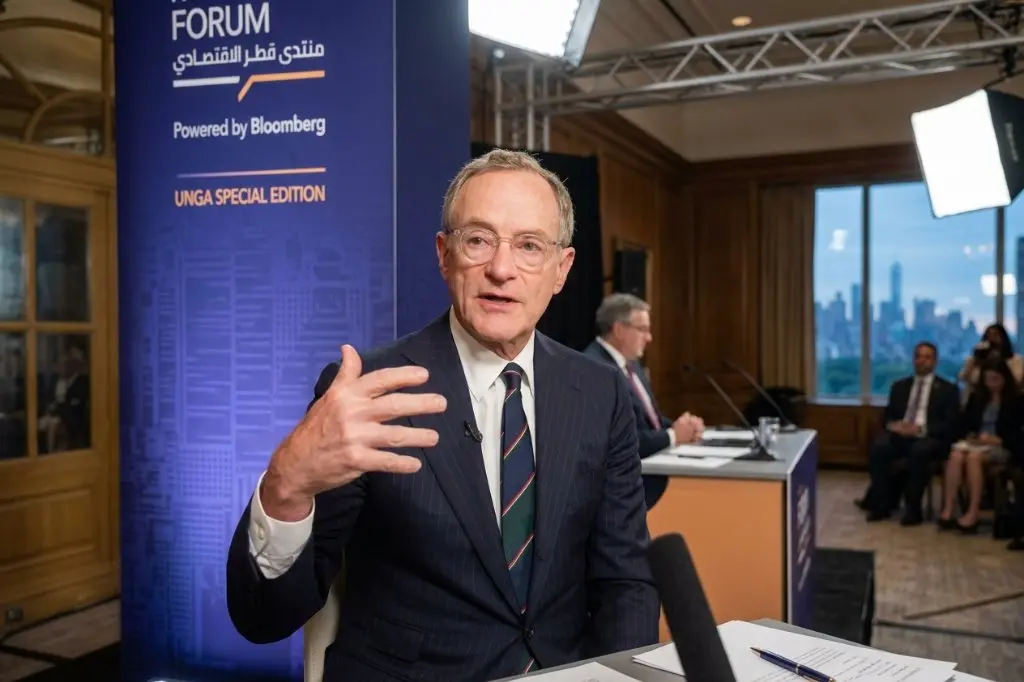
The podcast Cheeky Pint, hosted by Stripe co-founder John Collison, had an in-depth conversation with Coinbase CEO Brian Armstrong.
Brian Armstrong discussed many behind-the-scenes stories of Coinbase: from how to win in the competitive landscape in the U.S., to some life-and-death moments for Coinbase, and the cat-and-mouse game with North Korean hackers; from the influence of cryptocurrency behind the U.S. elections and the GENIUS Act, to the trend of banks embracing crypto; from the near miss of USDC due to a CEO's dissenting vote, to the successful nurturing of L2Base, and Coinbase's exploration of prediction markets.
Armstrong also predicted that by 2030, the price of BTC could reach $1 million. This optimistic outlook is based on the gradual clarity of U.S. regulations (such as the passage of the GENIUS Act) and the influx of global institutional capital. He stated that five to ten years from now, most wealth management firms or sovereign funds will include 1%-10% of crypto assets in their portfolios.
He also pointed out that only five to ten top fiat currencies will survive, while the long tail of about 150 other government fiat currencies will be replaced by BTC and USDC. The dollar's status as a reserve currency is facing challenges—if the U.S. fiscal deficit continues to spiral out of control (with the debt/GDP ratio approaching historically dangerous thresholds), the dollar will lose its reserve currency status.
Below are the top ten highlights, followed by the full interview, which has been edited.
Top Ten Highlights:
Coinbase's success in the U.S. is due to its compliance path—working with the U.S. government to obtain money transmission licenses, making us the only crypto company in the U.S. with bank partners at the time, allowing users to connect their bank accounts directly to buy Bitcoin.
North Korean hackers graduate 500 new recruits each quarter, and their full-time job is to attack— we must become the toughest nut to crack.
Banks are like newspapers of the past: some will disappear, and the smartest will embrace cryptocurrency. Visa/Mastercard are experimenting with stablecoins, and ultimately customer demand drives everything.
Coinbase will not apply for a bank license. The core function of a bank license is to allow not holding all funds, and Coinbase does not want to be a bank. Coinbase aims for full reserves rather than a fractional reserve system.
By 2030, BTC will rise to one million dollars. Five to ten years from now, most wealth management firms or sovereign funds will include 1%-10% of crypto assets in their portfolios.
I voted against the USDC project back then because it wasn't decentralized enough. USDC may have added $800 million in revenue for Coinbase over the past year, which I never expected; fortunately, the rest of the team supported USDC.
Avoiding the "embrace and suffocate" of large companies that stifle innovation—Base's success is due to our protection of it rather than excessive intervention. The CEO's job is less about coming up with the next great idea and more about creating the right environment for good ideas to happen and be nurtured.
I lean more towards free markets than most. The best consumer protection is sometimes competition. If one company is terrible, the best solution is to let another company compete and offer a better choice.
There are five to ten top fiat currencies that can survive, but the long tail of about 150 other government fiat currencies will be replaced by BTC and USDC.
If discipline is completely lost, the dollar will lose its reserve currency status. When the UK or the Netherlands lost their reserve currency status, their debt/GDP was in the range of 200-250, and the U.S. is currently at a historically dangerous threshold.
Full text:
How Coinbase Succeeded in the U.S.
John Collison: Brian Armstrong is the co-founder and CEO of Coinbase, one of the largest cryptocurrency exchanges in the world, founded in 2012, while Stripe launched in 2011. We grew up at the same time. Coinbase has just been added to the S&P 500 index, and the GENIUS Act has just passed. This is a good moment to take a step back and look at the big picture. The crypto space around 2014-2015 was a red ocean with so many competitors, and you defeated countless others. When you look back, how did Coinbase succeed?
Brian Armstrong: It has been a long journey. I remember seeing you get into Y Combinator, which was very inspiring for me. "Maybe a fintech company can be created in this space." So part of the reason I was so eager to get into Y Combinator was seeing Stripe's success.
In the early days, the crypto space was truly a wild west. I would attend early Bitcoin meetups where there were talented cryptographers and anarchists. At one of the first Bitcoin meetups I attended in San Francisco, someone told me he was starting his own religion. So we came from those early chaotic days reminiscent of the Chaos Computer Club.
I think Coinbase made several decisions at that time that helped us get through tough times.
One was that we decided to take the compliance path, which meant working with the U.S. government and obtaining MTL (money transmission licenses).
Another thing was that we tried to accumulate as many credibility indicators as possible. One of them was being accepted into Y Combinator. This allowed us to establish banking relationships in the U.S., which was very difficult at the time, and we partnered with Silicon Valley Bank to obtain MTL.
For a time, we were the only U.S. crypto company with bank partnerships, so users could easily connect their bank accounts to buy Bitcoin. This really gave us a head start in a way that others couldn't catch up.
John Collison: Who were your competitors at that time? Was it Mt. Gox? Who were you competing with for consumer share?
Brian Armstrong: Mt. Gox was in Japan, and of course, it later collapsed. There was a company in San Francisco called Tradehill that could have become a big exchange but failed to reach some key milestones. There were so many companies along the way that I can't even name them all. There was a Bitcoin conference in San Jose, California in 2012, which, looking back, was a landmark event. The Winklevoss twins showed up, and I met Vitalik Buterin there for the first time. He hadn't invented Ethereum yet. I remember people looking around the room, feeling very niche. Some talks had only five attendees. We had a small booth selling T-shirts.
John Collison: What was Vitalik doing before Ethereum?
Brian Armstrong: He was a writer for Bitcoin Magazine. He was actually a very good writer.
I don't know if there's a lesson to be learned from this, but I think you have to get in early on these tech trends—you don't want to be the 42nd AI company when everyone is rushing in. You want to dive into something you think is cool when others don't see it that way. I think it's like Paul Graham said, you'd rather have a thousand true fans of your product than a bunch of indifferent people. That's how we were. No one took what we were doing seriously, whether it was Coinbase or the entire industry.
John Collison: Can you describe what it was like to be a more "formal" player? Did having a money transmission license and bank partnerships help you win because you could develop products that others couldn't follow, or did it earn you consumer brand and trust that led them to choose you?
Brian Armstrong: I think it's both. It allowed us to launch products that others couldn't and kept us from being shut down.
John Collison: Were others shut down?
Brian Armstrong: Yes, others either received cease and desist letters and couldn't afford legal fees, or they basically went out of business due to being hacked.
In the early days, Coinbase had a few near-death experiences when we weren't the mature company we are today, and someone tried to hack into Coinbase's system. I can tell you about some of those harrowing experiences. With those credibility indicators, we were able to attract enough talented people. By the way, some other companies at the time were completely anonymous. Those people told me, "I don't want to put my name on this website because it goes against the spirit of crypto." To me, if we were going to raise money and be regulated, how could we stay anonymous forever? If a company gets big enough, someone will come knocking. I wasn't afraid to put my name on it and say, "I'm a U.S. citizen living in the U.S. I'm doing this for legitimate reasons, and I'm in it for the long haul."
A company is a reflection of its founders. Stripe reflects a lot of your and Patrick's traits in many ways, even in some details you may not be aware of. Coinbase is the same for Fred Ehrsam and me. It truly is a derivative of our DNA—it encompasses many things—but one of them is that we are legitimate, trustworthy, and we are doing this for legitimate reasons for the long term. That is very important.
Some Life-and-Death Moments for Coinbase
John Collison: Fred had previously worked in finance. Did you work in finance before?
Brian Armstrong: No. I studied computer science and economics. I've basically always been a software engineer. I tried another startup that didn't succeed. Fred also got a degree in computer science and economics from Duke University, but he later went to Goldman Sachs to do forex trading. When I first met him, I thought, "This guy can write code, has a computer science degree, but he also knows a bit about finance." In the first few weeks of our collaboration, he came to me and said, "I'm pretty sure we are losing money every time someone buys Bitcoin." I thought, how could that be? Then he demonstrated it on the whiteboard, and he was right. A complementary skill set.
John Collison: The first version of the business model didn't work. You needed to optimize it. You mentioned some harrowing experiences; what were they?
Brian Armstrong: Let me give you a few examples. In the first version of the app, I created a simple hot wallet deployed on a server. I told people that the app was still in alpha testing and not to store any money they couldn't afford to lose. At that time, Coinbase raised about $150,000 from Y Combinator. As early users kept coming in, the amount of money they stored kept increasing, even though there were warnings all over the app, and the total deposits were getting close to $150,000. I thought if we lost all that money, I hoped I would have the ability to pay it back, or else the company would go bankrupt.
John Collison: You didn't want users to deposit more than what Coinbase had.
Brian Armstrong: Exactly. I had calculated the growth rate of deposits against the funds we had. I said, "We probably have eight weeks to migrate this system to a new one." I vaguely felt we needed to move the money from the internet to cold storage. I didn't know how to design one. I had studied computer science, taken security courses, and had a basic understanding of cryptography, but I had never built a real key storage solution or anything like that. So I called two friends: "I need a crash course—tell me how to do this." I asked one of them, "How long do you think it would take to build this?" He said, "A ten-person team might take years to really validate it and everything." I said, "We only have eight weeks." He said, "Then you're in trouble." I called another engineer on our team, and we basically started writing the first generation of Coinbase's cold storage architecture. We were sleep-deprived, and to meet the deadline, we made some trade-offs that we thought were reasonable. But it worked; that was one of those life-and-death moments. If we had waited any longer and the company had been hacked, Coinbase wouldn't exist today.
Another similar example: one day we were having lunch in San Francisco, and an employee noticed on his computer that a lot of withdrawals were happening. We quickly realized someone had hacked into our accounts and was withdrawing money at lightning speed. I remember we shut down the entire site, figured out how they got into that account, managed to block it, and about 12 or 24 hours later, the site was back online. We fixed the vulnerability and continued running, and then I realized that if that hacker had started acting while we were asleep, we would have been bankrupt by morning. We only lost about $50,000 in that incident. But that was pure luck because we noticed it at Pacific Time—San Francisco—where they started acting.
Looking back, there were many such moments, very scary. It was like flipping a coin; there were three or four such coin-flipping moments, not all related to cybersecurity.
Once a company really starts to take off, there are other challenges about how to keep up. One of them is the influx of customer support tickets, and we didn't have a customer support team at that time. So we would work on weeknights and weekends, answering all support tickets from 9 PM to midnight after finishing other work. At some point, the unread support tickets reached ten thousand, twenty thousand, thirty thousand, and people started getting very angry and disappointed with us. We realized, "We have to scale up here at lightning speed. How do we build a customer support team in the next seven days?" Our team designed a ten-question quiz because we couldn't interview all these people that quickly. We allowed people to apply online and take this quiz, which was a very difficult quiz about crypto knowledge and other things. We did five-minute interviews with many of them and hired them, and we started to catch up. There were many similar issues along the way, and we were just feeling our way through, solving things on the fly.
North Korean Hackers
John Collison: What are some things the general public doesn't understand about the realm of cybercrime?
Brian Armstrong: One is that there are many North Korean agents trying to work at these companies.
John Collison: Are they working remotely from North Korea or in the U.S.?
Brian Armstrong: As far as we know, most are remote. This does create another attack vector. North Korea is very interested in stealing cryptocurrency. You might think we can work with law enforcement—we do receive some files like, "Okay, this is a known actor," and sometimes we share with other companies.
But it feels like every quarter, 500 new recruits graduate from some school, and hacking is their entire job. In many cases, they are also victims, but they are still interviewing for these positions. We had to take some measures. First, when these people are interviewed on camera, someone is offline coaching them. So we forced them to turn on their cameras to prove they are not AI. We also started requiring everyone to come to the U.S. for onboarding training to access any sensitive systems. We fingerprint them to ensure that anyone with sensitive permissions is a U.S. citizen with family in the country because you don't want someone to feel they can run away without worrying about extradition or anything like that.
Another thing that surprised me is that these threat actors are willing to try to bribe our customer support staff. Our customer support staff works in a fairly closed facility, and they have a strictly locked Chromebook. In some cases, someone offered them hundreds of thousands of dollars to sneak in personal phones and take screenshots. We had to severely restrict access for these customer service personnel. We have started moving more work to the U.S. and Europe. We just opened a new customer support facility in Charlotte, North Carolina, and are really starting to build deterrence, meaning when we catch someone doing this—we've been doing red team exercises—we're not just kicking them out; they go to jail. We strive to make it clear that accepting that money is ruining your life, even if you think it's life-changing money, it's not worth going to prison. These are the things we have to deal with now, and I'm sure the risks will only increase.
John Collison: More verification of physical presence, more isolation of decentralization, and enhancing deterrence through active prosecution. It feels like in a world filled with AI and deep fakes, proof of physical presence will become increasingly important.
Brian Armstrong: Yes. By the way, people may have also seen that we are now also hunting down threat actors. We are offering a $20 million reward for information leading to the arrest or conviction of the criminals responsible for the recent attacks on our customers. We have fully compensated those customers. We have received a lot of leads in this regard and are tracking these people with law enforcement; the process is quite interesting.
The ultimate deterrent is not hunting down insiders but hunting down the threat actors themselves. We have to become a tough target.
Crypto Trends: Everything Exchange and Asset Tokenization
John Collison: I want to take stock of everything happening in the crypto space, which may help the discussion. Store of value is definitely a very important function; 24/7 trading of assets—I even count memecoins in that; the payments space has also seen some success so far, and both of our companies are seeing rapid growth in that area; the volume of cryptocurrency payments, especially stablecoin payments, looks very optimistic for the next five years; and accessing dollars globally is also a big deal. What else would you add to this list?
Brian Armstrong: You've mentioned several of the most important ones. Prediction markets entered the mainstream during the last election, and trading volume continues to grow, and there are some new things on the horizon we can discuss. But I think you've captured the essence.
John Collison: Cryptocurrency can be said to be the underlying infrastructure for prediction markets. We didn't have these before cryptocurrency.
Brian Armstrong: Yes and no. Prediction markets existed before cryptocurrency, and there is currently a pending legal question in the U.S.: if you build them entirely on-chain with self-custodied wallets, do they not fall under financial services? If so, their creation could be much less regulated—this applies to self-custodied wallets and other areas as well.
Another cool aspect of trading use cases is that now every asset class is being tokenized. People are not just trading cryptocurrencies on-chain; soon they will be trading stocks as well. There is private company capital formation, as well as commodities, forex markets, debt instruments, government bonds—every asset class is being tokenized, and we are working to capture this trend. We coined a term called "everything exchange." Coinbase is striving to become a global liquidity market for all asset classes. This is exciting in many ways.
On one hand, there is broader international coverage, with many people in various countries having a strong demand for U.S. assets. They want to invest in companies like Nvidia, but unless you are wealthy in the market, it's hard to open a U.S. brokerage account. Then there is trading, fractional shares, and you can start doing some perpetual futures and other interesting things.
John Collison: So you think, for example, stocks—now there are American Depositary Receipts (ADRs), and if Americans want to buy German or Canadian stocks, the process is extraordinarily complex, and they end up only being able to buy derivatives. And you think on-chain tokenization is a superior form of derivatives?
Brian Armstrong: Yes, I think a lot of assets will be tokenized, and to some extent, that is already happening, including private company capital formation—even personal fundraising, like real estate projects or film production. In the future, people will also be able to innovate on governance mechanisms, such as stipulating that only long-term holders of stocks have voting rights. This can be set through smart contracts: you must hold for over a year to gain voting rights. There is a lot of room for innovation in this space.
John Collison: What do you think the next major application scenario for asset tokenization will be? Do you think this is the main direction, or are there other more important application areas?
Brian Armstrong: The current core applications are trading and payments. I believe Bitcoin has a deflationary store of value function that should not be underestimated. This is a $20 trillion market opportunity—using gold as a reference, but Bitcoin is superior. I believe Bitcoin will ultimately surpass gold.
We are starting to see the emergence of lending services and capital formation. Decentralized social media is also interesting; we just released the beta version of the Base app. Now every piece of content posted by users corresponds to an independent token, and creators have personal tokens whose value accumulates. Users can purchase tokens, and if they like a piece of content, they can share it and earn economic benefits, and they can also remix it, like meme templates on the internet, ultimately all value can return to the content creators. This original ecosystem is nurturing interesting ideas, and although the specific forms are still unclear, the Base app has shown vitality. The waitlist is long. These are all emerging application scenarios.
Widespread Adoption of Stablecoins
John Collison: We both agree that payments themselves can serve as an important new application—over the past decade, it has basically been limited to the crypto enthusiast community, but now it is gradually moving towards the mainstream.
Brian Armstrong: I'm particularly excited about Stripe entering this space because it greatly enhances the credibility of the industry. The technology is maturing, but there are scalability issues: users face messy character payment addresses instead of readable names, and the wallet experience needs to be optimized. Crypto payments should be the most convenient payment method.
Brian Armstrong: What do you see as the next barrier to the widespread adoption of stablecoins?
John Collison: I think building user familiarity will be the key breakthrough.
Currently, one of the most valuable use cases for Bitcoin remains cross-border money movement—it truly solves a real problem. If you want to transfer $2 from the U.S. to Turkey, there are almost no products in the traditional financial system that can achieve that. But crypto technology makes it easy.
In the creator economy, we are also seeing a surge in demand.
Interestingly, the application experience and user behavior can create a positive feedback loop. Take QR code technology as an example: this decades-old technology needed two triggering conditions—one was that Apple integrated it natively into the iPhone camera app, allowing users to automatically recognize QR codes just by pointing the camera at them (this happened in the late 2010s); the other was that the COVID-19 pandemic created a demand for contactless experiences, making U.S. users truly familiar with QR codes.
Similarly, stablecoin applications also need to meet these two conditions: one is support from consumer-grade applications (which is not yet fully developed),
and the other is cultivating user habits. To promote stablecoins, we even set up a crypto payment experience at the coffee station on the first floor,
but it is still very unstable, and we always encounter various failures. But once the application experience becomes smooth and users gradually become familiar, we believe the usage of stablecoins will see explosive growth.
Brian Armstrong: Absolutely right. I think you're correct. It will be interesting to see whether the ultimate solution will rely on QR code technology or if it will need to leverage tap-to-pay NFC technology?
John Collison: I actually use QR codes as a metaphor for this wave of technological adoption. Tap-to-pay NFC does seem like a likely solution, especially as operating system support improves. Now that iOS has relaxed NFC usage restrictions, perhaps the Coinbase app can call the NFC interface?
Brian Armstrong: We have seen many excellent tap-to-pay demonstrations; this area is opening up. However, the secure enclave on devices is another matter; access is not yet open, and we will continue to work on it.
We even discussed mailing payment stickers to saturate and cover the entire city for testing—observing which merchants are willing to accept crypto payments.
Currently, most application scenarios are focused on cross-border payments and internet-native areas, where crypto payments are the only viable method. Because when global communities gather, using a single national currency feels strange.
Physical retail stores may adopt it later; that's my guess. Merchants want to save 2%-3% on payment processing fees and are also willing to pass some of those savings on to consumers.
How Banks Embrace Cryptocurrency
John Collison: I agree. It feels like digital use cases will be the first to roll out; we are increasingly launching Stripe Checkout experiences—making cryptocurrency payments an option. Many physical retail stores accept Alipay or JCB. Clearly, accepting the Japanese card brand JCB in the U.S. is quite niche. But that group is large enough to make it worthwhile. It feels similar here; once you exceed a certain minimum penetration rate, not everyone uses it to pay, but not accepting it becomes unworthy.
What do you think about all banks starting to embrace cryptocurrency? Jamie Dimon said, "Bitcoin is a scam, worse than the tulip bubble. If I were the government, I would shut it down right now." And now they are certainly launching their tokenized dollar, JPMD. This is an interesting phenomenon. I'm curious how you view this widespread occurrence among major banks.
Brian Armstrong: Ultimately, they will respond to customer demand. As long as customers need it, they will provide support.
I feel there has always been this back-and-forth between banks and cryptocurrency; they will say, "We're not sure if we like Bitcoin, but we like blockchain technology. Maybe we can build a closed network for interbank settlements." Perhaps they don't like paying SWIFT fees, are excited about the concept, and have run many related projects, but I haven't seen them fully embrace it.
It's like the "innovator's dilemma" that Clayton Christensen talked about. Culturally, it's very difficult for an organization that profits immensely from the traditional system to change. Anything they do in the crypto space is probably only a fraction, but it comes with all the risks and complexities. There aren't many people in their companies who come in with that mindset. There aren't many genes in the company that want to build crypto products. It's like how some local newspapers couldn't adapt to the new system when the internet first emerged; those newspapers gradually disappeared, but some of the best newspapers adapted. Just like now, media companies all have websites. Banks will embrace cryptocurrency. Payment companies like Visa and Mastercard are running good experimental projects on stablecoins. Clearly, I think Stripe has fully committed, which is very wise, and you are also encouraging many others to wake up and do something. I think the smartest ones will adapt.
From Coinbase's perspective, we increasingly hope Coinbase will become people's primary financial account. As cryptocurrency consumes financial services, for some of our customers, Coinbase can become a bank alternative, managing their transactions, payments, direct deposits, and they have credit cards with Coinbase. By the way, many people actually won't even care if it's cryptocurrency. They just want the best financial services. If this is the cheapest way to send money to overseas family, or if they can get the best rewards on this card, or anything else, that's what we ultimately want to provide them. Banks will have to compete in this new environment. They can either become an infrastructure layer supporting new fintech applications, which become the primary financial accounts for the next generation of young people, or banks can adapt to the new world and build their own applications or embrace cryptocurrency. As I said, the smartest banks will do this, while many banks will be left behind. This is the competition of the free market.
John Collison: Companies won't innovate; it's consumers voting with their feet that brings about innovation. In terms of banking, who has impressed you?
Brian Armstrong: Yes, there are several. I think Jamie Dimon is a great leader—very smart, although I don't quite agree with his comments on Bitcoin, but he's a great person, and we have a lot of collaborations with them. Santander has been great. There are also some banks that have truly embraced cryptocurrency, like Citizens Bank, CrossRiver, and Silicon Valley Bank.
Will Coinbase Become People's Primary Financial Account?
John Collison: What would it mean for Coinbase to become people's primary financial account?
Brian Armstrong: That would mean we take on a greater responsibility and proportion of people's financial lives.
It's not just about trading cryptocurrency; it could mean using crypto assets as collateral for loans, or getting 4% Bitcoin back on spending with a Bitcoin credit card, or sending money overseas instantly for less than a cent.
Therefore, we need to be good at leveraging the benefits of cryptocurrency to update the financial system, rather than doing crypto for the sake of crypto. Coinbase's early users were just hardcore fans of cryptocurrency.
Currently, about 6% or 7% of people globally have used cryptocurrency—similar to the early 2000s internet. And we need to reach about a billion people or half the world's population using it to truly increase economic freedom globally. It has to be something more important than the technology itself. It has to be faster, cheaper, and better, helping me accomplish what I want to do.
Coinbase Will Not Apply for a Bank License, Aiming for 100% Reserves
John Collison: The reason I ask is that I've observed the growth of new banks (neobanks) outside the U.S. Nubank dominates in Brazil, and Revolut is the fastest-growing bank in Europe. Meanwhile, the largest consumer banks in the U.S. remain largely the same. Compared to the 1970s, it's a group of very similar, recognizable players. Maybe it will still be like this in ten years, or things could change drastically. I'm very curious about what the new banking revolution in the U.S. will look like.
Brian Armstrong: That's a great way to put it; I should use that phrasing when describing it. Some people call them stablecoin banks or super apps. Many terms can be thought of.
I think this is our opportunity. By the way, from a technical standpoint, I don't think we will apply for a bank license. The core function of a bank license is to allow not holding all funds, which is called a fractional reserve system. It's an interesting business model, but it also comes with extremely heavy regulation, making it very difficult to truly innovate and iterate quickly on products. We don't want to be a bank.
Coinbase aims for full reserves rather than a fractional reserve system. A 100% reserve rather than a fractional reserve is actually safer for customers—because there can be no bank runs. You can even invest assets, especially stablecoin reserves, in bankruptcy-remote assets like U.S. Treasuries. You can build very strong protections that will allow us to continue innovating and providing the best customer experience.
I think for many people, it can replace banks… or in your terms—America needs a new bank because it seems like these institutions have been emerging elsewhere in the world.
A Lot of Capital Waiting to Be Allocated, BTC Price Will Reach $1 Million
John Collison: What is your prediction for the average annual growth rate of Bitcoin's price over the next decade?
Brian Armstrong: My rough idea is that by 2030, Bitcoin will rise to one million dollars, and of course, the margin of error for such predictions is large.
Let me provide a few data points: the U.S. is starting to see regulatory clarity, which I think is a bellwether for other G20 countries. The GENIUS Act has passed for stablecoins, and the market structure bill is being discussed in the Senate. Praying for some progress by the end of this year would be a huge milestone.
Now the U.S. government has a strategic Bitcoin reserve. If you had said this five years ago, people would have thought you were crazy, believing the U.S. government could never officially hold Bitcoin. If the U.S. does this (there is currently an executive order requiring this), many other countries will follow suit. We have already seen sovereign nations showing strong interest in this; Coinbase provides crypto services to about 140 government entities (including federal, state, local, and international agencies). Governments are increasingly getting involved. You can imagine the massive pool of capital globally.
I believe regulatory risks will not disappear, but the huge risk of "the government shutting down the crypto industry" has significantly decreased.
As for whether the Bitcoin protocol has flaws? I think it has been thoroughly reviewed. We need to ensure it is upgraded to post-quantum cryptography. The Bitcoin core team, as well as Ethereum and Solana, are researching upgrade plans to transition to post-quantum cryptography.
The list of risks is decreasing, while the demand and the amount of institutional capital waiting for the next bill to come out is increasing. For large institutions I talk to, 1% of their portfolios are allocated to Bitcoin; I ask them, "What would it take to increase that to 5%-10%?" They respond, "Regulatory clarity, that's it." I think we will continue to see a massive influx of capital. The impact of ETFs has already been enormous.
John Collison: When people talk about institutional capital waiting on the sidelines, I think the analogy with gold is very apt because it is a non-productive store of wealth—I'm saying this in a positive sense, not a negative one. But specifically regarding institutions, I don't think major sovereign wealth funds, mutual funds, etc., currently hold a lot of gold. Isn't buying BTC like buying a substitute for gold? But it seems unusual for large institutions to buy non-cash-flow assets?
Brian Armstrong: It depends on their strategy. There is a theory that in a diversified portfolio, 5%-10% should be allocated to commodities and other assets. BlackRock has actually published some reports and studies suggesting that crypto assets should be part of every healthy diversified portfolio at this time because they exhibit interesting inverse correlations with other assets—this relationship evolves over time. I believe that five to ten years from now, most wealth management firms or sovereign funds will include 1%-10% of crypto assets in their traditional diversified portfolios.
How Ordinary People Should Allocate Crypto Assets
John Collison: If someone doesn't want to allocate part of their portfolio to crypto assets, should they dollar-cost average into Bitcoin or even other major tokens (not meme coins) and weight by market cap? If someone wants to put some funds into crypto assets, what is the correct investment strategy?
Brian Armstrong: Disclaimer: I do not provide investment advice. For anyone just learning about anything new, whether it's crypto assets or otherwise, a reasonable approach is to invest 1% of your net worth (the amount you are willing to lose and learn).
John Collison: Within crypto assets, how should one allocate?
Brian Armstrong: Bitcoin is a great starting point. We have an index called COIN50 that includes the top 50 tokens weighted by market cap. I won't list specific tokens, but I think you should hold Bitcoin. If you want to allocate it, you can also hold index funds.
What you should do is try and use crypto assets: spend at Stripe merchants, use the Coinbase credit card, post content on the Base app and start earning crypto assets, shop at stores that accept crypto payments, etc. People should use crypto assets, and part of that is investment.
Ultimately, as stocks are tokenized, when people want to get loans, they will unknowingly use crypto technology. Just like people may not understand the principles of electricity, but they can turn on a light switch.
What Does the GENIUS Act Mean?
John Collison: Now we have the GENIUS Act; what does it specifically mean? What can we do now with the GENIUS Act that we couldn't do before?
Brian Armstrong: I'll start with stablecoins and then talk about the GENIUS Act. Stablecoins are essentially fast, cheap, global payment tools. We can now make payments anywhere in the world in a second for a penny. This is unique; no other payment network can meet all three conditions of being fast, cheap, and global at the same time.
The GENIUS Act stipulates that if you want to issue and operate stablecoins in the U.S., you must meet certain requirements to make them safer and more reliable. One of them is that 100% of the reserves must be backed by U.S. dollars or short-term U.S. Treasuries, and no other high-risk assets can be held, and regular audits must be conducted to prove compliance. This is a basic regulatory requirement.
But the more important significance is that it becomes federal law written into the code and recognized, indicating "this will become a trusted, legitimate, and allowed technology in the U.S." This has sparked huge demand from every company involved in payment businesses (i.e., all companies). They realize they need to formulate stablecoin strategies and figure out how to respond because the U.S. government has recognized it, and this will become a trend.
John Collison: I've noticed an incredible surge of interest in the past two or three months.
Brian Armstrong: It's like a gold rush. Everyone is rushing in, trying to figure out what this is all about and thinking about how to save money for their companies. Many companies are trying to pay developers in markets around the world. In the U.S., Europe, and some other countries, existing systems work well. But there are still many long-tail countries where people cannot access good financial services. Payment channels are like black boxes; it's unclear what the final amount will be and high fees are charged.
If there were a fast, cheap global payment network, it would democratize financial services, allowing anyone with a smartphone to stand in a more equitable competitive environment, and their wealth would not be eroded by inflation. This is a powerful tool for promoting progress, property rights, sound currency, and economic freedom. This is the opportunity that stablecoins bring.
Now we need to complete the market structure bill, covering non-stablecoin crypto assets, which are securities and which are not, and other issues.
How Crypto Influences U.S. Elections
John Collison: The passage of the GENIUS Act was a winding process; you must have some interesting stories about it?
Brian Armstrong: I realized that for a long time, we were trying to make progress in Washington to push legislation, but nothing happened. Someone told me, "Congress is good at two things: doing nothing and overreacting in a crisis."
We realized that political will had to be generated to achieve this. There are 50 million people in the U.S. who have used crypto assets, and we said, "Let's try to organize." We funded a 501(c)(4) nonprofit called standwithcrypto.org to get 2 million Americans to raise their hands to show they want to elect candidates who support crypto assets.
I remember discussing with the policy team, and I said, "Let's grade every politician's performance in the November 2024 elections from A to F." The policy team's job was to build relationships with politicians, and they suggested listing supporters of crypto. I said, "No, I want to list crypto enemies and give them an F. Who got an F?" I could see them sweating nervously. We needed to get some people to win elections because of crypto votes and others to lose elections because of crypto votes.
John Collison: The performance of the crypto space in Washington is well-known; it has been more contentious than the tech industry historically. We have friends and enemies. Thus, the scorecard and "Stand with Crypto" campaign were launched—Fairshake has been more relevant in some recent struggles. Was this led by you? Are we no longer timid but rather expressing our stance clearly?
Brian Armstrong: Many people were involved; I can't take all the credit, but I saw a shift in the crypto industry.
The traditional policy advice we received from tech industry people was, "You need to go there, build relationships, be nice. Then you should form a trade organization to play the bad guy, fight, write sharp op-eds, etc." But somehow, the people we found in these trade organizations just wanted to be nice.
I kept thinking: who would participate in political struggles on X platform, criticizing those doing bad things? They just want to have polite conversations in closed-door meetings. As the elections approached, I realized that if no one was going to be the bad guy, maybe we should be. I don't think we did anything too crazy, but by Washington's standards, it was already quite crazy.
We made it clear that we unequivocally support crypto assets, regardless of whether you are left or right. We want to elect candidates who support crypto assets while wanting to oust those who oppose crypto assets. This really shocked people in Washington because everything there is partisan.
In the lead-up to the elections, there was a fierce debate, and I received angry calls from both sides: "How can you donate to this person?" We said, "Because they support crypto assets." Then the other side called: "How can you donate to that person?" I said, "Because they support crypto assets." We were essentially single-issue voters.
On one hand, I think we may have annoyed both sides and won't make friends after the elections. But on the other hand, if you are being attacked, it means you hit the target. We are clearly a non-political company, but we do not hide our support for crypto assets. I have to remind many people that "non-political" does not mean 50/50; it means we will support candidates who support crypto assets, regardless of their party affiliation. Not every election is 50/50; it might be 60/40 this time, and the other way next time.
This is a huge mindset shift, a bit of reverse thinking, and it helped elect the most pro-crypto Congress. The work we did with many others—I don't want to take all the credit; other companies were involved—laid the groundwork for passing this legislation. We showed people in Washington that there is no voter base against crypto assets; Americans want crypto assets, and supporting crypto assets helps get elected. This is just good political strategy.
Qualified Investor Standards, U.S. Territories, etc.
John Collison: Once the market structure bill passes and the GENIUS Act takes effect, do you have any other issues to address in Washington?
Brian Armstrong: The previous administration did try to stifle the entire industry—but now we have accumulated some knowledge on policy, and this kind of self-righteous perception can be dangerous—after all, the world is unpredictable, and outcomes can vary. I hope we can complete the market structure bill. This has got me thinking about what else we can do to help update the financial system.
Our mission is to increase economic freedom. One example is that I think the qualified investor law is somewhat unfair. Only the wealthy can invest to become wealthier, which seems regressive. Perhaps we could replace the qualified investor standard based on net worth or income with a financial literacy test.
I'm excited about the idea of economic zones. They have worked well in places like Shenzhen, China, and the UAE. We have so much regulation; why not set up a sandbox in a region to test new ideas? It could be around crypto assets, biotechnology, drones, or supersonic aircraft. If we could establish ten blocks of federal land in the U.S. as different economic zones, that would be great.
There is a company called PROSPERA (we invested in it) that has established a prototype in South America and is now trying to implement it in the U.S. There are many other areas.
Brian Armstrong: Do you have any particular policy issues you would like to promote in Washington?
John Collison: Maybe in aviation. I'm super excited about the new MOSAIC rules (modernization of special airworthiness certification)—overall, the current government has an agenda to relax regulations, but they need to really do it and pass new rules. They just did this in the aviation sector: you can't build a plane and sell it to the public; you must go through a series of FAA approvals, which is a very cumbersome process that takes years and is very rigid. For example, electric planes cannot pass certification because the regulations require "aircraft engines to burn gasoline, etc." U.S. Transportation Secretary Sean Duffy announced a brand new aircraft certification system last month, which greatly simplifies the process. I believe this will encourage more bottom-up innovation in that field. This was once on my policy wish list, but now it has become a reality.
I believe the light aviation sector will see more innovative breakthroughs—this sector was clearly leading in the U.S. but has stagnated over the past few decades. By the way, you should also note that the current government issued an executive order requiring the FAA to allow supersonic aircraft that do not produce perceptible sonic booms (meeting specific decibel standards) to fly in U.S. airspace.
Brian Armstrong: That is indeed exciting. I really look forward to flying to my destination faster. Another reform worth pushing is that the current FDA approval process for bringing drugs to market takes an average of 10 years and costs $2 billion; they set up three phases of clinical trials to verify safety and efficacy. But if a drug has passed the first phase of safety trials, why not allow doctors to prescribe it? Especially for terminal patients with no other options. You know it's safe; you just don't know if it's effective, so let doctors make the decision. This would get drug data to market faster. Many people die every year. There are many such things that can be improved through reasonable deregulation movements.
The Phenomenon of Runaways and Fraud in the Crypto Space
John Collison: I think everyone agrees that the qualified investor rules are somewhat silly. They are both exclusive (if you don't meet the minimum net worth test), and as we've seen, the wealthy are not necessarily savvy investors. The investor list for Theranos is a who's who of various wealthy and qualified investors. Meanwhile, if everything is completely deregulated, a bunch of scams and frauds will emerge. The U.S. has some of the best capital markets in the world. When I see certain freer areas in the crypto world, I think the phenomenon of rugging and people seeking zero-sum behavior are some of the worst things we shouldn't allow to continue. When you think about alternatives to the qualified investor rules, what would be the framework for liberalizing investments while maintaining the best qualities we have today (i.e., high integrity and strict honest and fair trading rules)?
Brian Armstrong: That's a great question. Fraud should be prosecuted to the fullest extent of the law. You can require disclosures: if you want to raise money for something, you must provide certain information. If you make mistakes on important matters, especially if you intentionally defraud investors, you should go to jail for that. But that doesn't mean only the wealthy should be allowed to do so.
We also don't want to create the misconception that "government approval means it's a good investment." Many public companies—hypothetically approved by the SEC and others—have dropped 85%-90% in the past few years, like some biotech companies (I won't name names). You can lose all your money in the public market. We need to foster personal responsibility: there is no reward without risk. The government is not here to tell you what a good investment is; you still need to make your own judgment. But they can help ensure "the information this person gives you is true." If they lie to you, tort law can allow you to seek damages.
I may lean more towards free markets than most. The best consumer protection is sometimes competition. If you have a car company with a terrible car that frequently breaks down and is expensive, the best solution is to let another company compete and offer a better choice.
Many people, even without financial knowledge, have street smarts and know what a scam is. They know when three friends tell them that thing is bad.
John Collison: Have you taken measures at Coinbase regarding some token hype scams? Or do you think people are adults and should assess investments themselves?
Brian Armstrong: We have had a lot of debates about this because it's a bit like an app store or even Amazon. Suppose someone tries to sell fraudulent products on Amazon; Amazon might want to remove it. But suppose it's a two-star or three-star product that some people like and many don't, but it's not fraudulent. You should allow people to make their own choices and see it has two stars, but if they want to buy it, they can. Maybe the vendor can improve it.
We try to adopt a similar philosophy: we want to list all legitimate products (fraud is illegal) and provide information to customers to help them make better decisions. We have tried various ways and haven't fully nailed it yet. I've considered an on-chain review system or reputation scoring. We released an API that allows anyone to query crypto addresses (which can be assets or people) and get on-chain reputation scores. This is an early prototype.
Ultimately, you would get something like a FICO score (note: a credit score created by Fair Isaac Corporation that lenders use to assess a borrower's creditworthiness), Amazon, or Yelp ratings. You need to ensure that if I try to send John Collison some USDC to buy beer, I need to confirm it's the real John Collison and not an impersonator. These tools built by the private market will help with that, allowing the government to hunt down fraudsters.
150 Fiat Currencies Will Be Replaced by Bitcoin and Digital Dollars
John Collison: You mentioned the product-market fit of crypto assets in emerging markets, where there is a very strong product-market fit. In historically high-inflation markets, people have traditionally tried to move their funds out, trying to exchange their funds for dollars or other things they believe will hold value better; this behavior has existed for decades. Perhaps countries with black market exchange rates are indicators of demand. Many of these governments do not always approve of this; they prefer all funds to remain in their national currency. There is a gap between what governments want and what people want. How will this develop? Who will win?
Brian Armstrong: You're right. When we enter a new country, we often have to walk a tightrope. We really want to work within the existing system, usually going to obtain licenses and set up local entities for regulated financial service products. I'll talk about self-custodied wallets later.
When we talk to different departments of the government, we hear different voices. Usually, there are some people in the government who are hesitant about crypto assets, sometimes it's the central bank. Other departments in the government are actually very supportive—they want to achieve national digitization and create economic opportunities. But the people clearly want crypto assets.
In many parts of the world, Coinbase can operate within that system and provide what people want. But in other regions, we find it difficult or impossible to enter and create regulated financial service businesses because those countries lack clear regulatory frameworks or only grant bank licenses to their cousins and bribed friends, which is illegal for U.S. companies to do. You can't effectively do business in many of those places.
So we also have a self-custodied wallet, which is not viewed as a financial service business by regulators because we never hold customer funds. It is regulated more like a software product (like a messaging app), and you can launch it directly. It's like storing keys in 1Password; it is essentially a software product. This allows us to enter some other markets.
You asked where the future is headed. In some markets, I think the top five or ten government fiat currencies may remain; I don't think they will disappear. But the long tail of about 150 other government fiat currencies should be replaced. They perform poorly, are often abused, and erode people's rights. I think there is ample reason to indicate that these fiat currencies should be replaced by Bitcoin and USDC.
For example, Ecuador has taken a similar approach—they pegged their national currency to the dollar. To be honest, this is almost a form of civil disobedience for all such countries. In regions like Venezuela, by introducing self-custodied wallets that allow the public to hold dollars, it may technically violate legal provisions. I think I can accept that. This is a form of civil disobedience—because people are indeed in a terrible situation due to the government stealing wealth through inflation. This is a good thing.
Clearly, a digital dollar is very beneficial for the U.S., maintaining its reserve currency status and demand for Treasury bonds. The use of Bitcoin in the U.S. is also a good thing because democratic countries around the world are now facing issues with deficit spending. To get elected, you promise more free stuff, which drives up costs. How do you discipline a balanced budget? Bitcoin is part of the answer. It is a check on deficit spending, and if it gets out of control, people will flee to Bitcoin in uncertain times. If deficit spending is controlled, people will continue to use that fiat currency.
I don't want to overstate this, but I think Bitcoin extends the Western civilization or American experiment to some extent. But if we completely lose discipline, the dollar will lose its reserve currency status, and I hope it doesn't because I am an American, and I believe America is a good thing for the world. I would rather people turn to Bitcoin than the renminbi. Thank goodness we have Bitcoin as a check in this new economy.
How Can the U.S. Avoid Losing Reserve Currency Status?
John Collison: How can the U.S. avoid losing its reserve currency status?
Brian Armstrong: Don't inflate the dollar. The debt-to-GDP ratio is usually something to watch. We are currently around 150 or 170. Historically, when the UK or the Netherlands lost their reserve currency status, they were in the range of 200-250. The U.S. is currently at a historically dangerous threshold. It's hard to see where the political will to do this will come from. I hope Bitcoin can be part of the solution. We'll see.
The Success of Dollar Stablecoins
John Collison: Why haven't non-dollar stablecoins succeeded? The dollar accounts for over 95% of global stablecoins, far exceeding the dollar's share of global currencies. Why is that? Will this continue?
Brian Armstrong: If you can access anything without permission, you will use the most trusted reserve currency. That might be the reason.
Europe deserves credit; they have indeed introduced—sometimes Europe is a leader in regulation, but this isn't necessarily a field you want to lead in. They did introduce a regulatory framework before the U.S. There is a euro stablecoin, but it is very small and not very attractive. I think the dollar is meeting people's needs.
Another smaller but interesting potential thing is called flatcoin. I don't know if you've seen these; they are not backed one-to-one by the dollar (the dollar does have a certain level of inflation, about 2% to 5% per year), but they try to track the CPI (Consumer Price Index) to maintain purchasing power. So if a Big Mac is worth one dollar today, ideally, a stablecoin should also be able to buy it for one dollar ten years from now. There is a company called Ampleforth that has built a token called SPOT, which has been tracking the dollar since 2019 and is now worth about $1.26. It has gone through crazy ups and downs, but it has actually remained quite stable.
Economists often debate whether you want 2%-3% inflation each year to incentivize people to spend money? Having something that maintains purchasing power for contracts and pricing is nice; you want future prices to remain stable.
Coinbase's Internal Venture Capital: The Birth of USDC and Base
John Collison: Coinbase has institutional products, the USDC stablecoin, brokerage services, and L2 Base; you are everywhere. This may work in this fast-evolving industry. How do you focus? How do you allocate resources? How do you decide what to cut?
Brian Armstrong: It depends on how you calculate. Stripe has many products in the payments space. A lot of this comes down to the founders. Sometimes I can't help but have many ideas; in fact, the company usually pushes back, saying we need to focus more. I say, "Okay, you're right; we should focus." Focus has its advantages. Having multiple revenue streams also has its benefits. When one is up, another is down. Letting some small teams handle various things also has its advantages.
USDC and Base started with teams of only three to five people, and USDC may have added $800 million in revenue for us over the past year. I never expected that.
John Collison: You actually didn't expect that? Isn't it obvious?
Brian Armstrong: No, it wasn't obvious. We have an internal system where employees can pitch their venture bets twice a year.
The internal venture bet model we are trying to build is that you don't need unanimous agreement. In most companies, you need your boss, your boss's boss, all the way up to the CEO to say yes to approve something. This means that as long as there is one no, you're out. The venture bets at Coinbase are that you can go to any product lead, along with a few carefully selected smart engineers, and me and a few others. If you get a yes from any of us and get funded from their budget, you're greenlit. It's like pitching to a group of internal venture capitalists.
This means Coinbase gets more of a venture culture. We try many ideas, some don't work, and we have to shut them down. It's hard; how do you have the courage to reduce projects—because in a startup, you will run out of money and won't be able to raise the next round. So we have to simulate these investment rounds. Occasionally, they completely exceed expectations.
I'll let you in on a secret: I actually voted against the USDC project. Because I read it, and I said, "Ah, it's not as decentralized as I want it to be." I had some reasons in my mind; thankfully, others in the team voted yes and funded it from their budget. I was completely wrong. I often use this example to illustrate that the best ideas don't have to come from me; they can come from anyone in the company. We have to try bolder ideas.
John Collison: What about Base?
Brian Armstrong: Base is another example of a venture bet. It started as a small thing; Jesse came to me and said he wanted to launch a Layer 2. I had no specific ideas on how to do it. All we did was fund and protect it. New ideas can sometimes be fragile within big companies.
I remember you said something very insightful—avoid letting large companies' "embrace and suffocate" stifle innovation.
The only good thing I may have done is protect it, but most of the time, I didn't know what Jesse was doing. He iterated on three or four ideas, and Base was the fourth thing he came up with. Base finally started to succeed and became the number one Layer 2 solution on Ethereum. Now it has just launched the Base app.
As CEO, my job is less about coming up with the next great idea and more about creating the right environment for good ideas to happen and be nurtured, while bad ideas ultimately get shut down. We have some discipline in this regard.
The most challenging time for new venture bets is when the core business is threatened or in a downturn. The core business is always under threat.
John Collison: So that's why it is core. It's a successful business that others want.
Brian Armstrong: This makes our decision-making very healthy, but it is a healthy tension within the organization. Usually, people say core funding is insufficient and under threat. How can we allocate more? I want to draw resources from that thing that hasn't generated revenue yet. But sometimes I find myself on the other side, saying I want to fund the core, and we should also allocate 10% of resources to these venture bets. Because five to ten years from now, we need to have the next chapter emerge.
Sometimes there is a division between founders and operators; if you have too much founder energy, they can sometimes blow things up. If you have too much operator energy, they just get bored and can't innovate anymore, but they run things very efficiently.
John Collison: It's like a series of layered S-curves.
Brian Armstrong: I'm lucky at Coinbase to have Emilie Choi as President and COO. She and I make a great team. I think we both can do things naturally in any way. I try to be more of a founder, providing risk tolerance, venture bets. She makes Coinbase a well-run company, like when she opposes me, saying, "Brian, if we just focused on the core business in Europe, we could generate another billion dollars in revenue." So it's a great combination.
Coinbase is Researching Prediction Markets
John Collison: Are you using prediction markets in your internal operations?
Brian Armstrong: Not yet.
John Collison: If you are crypto believers, shouldn't you be using them?
Brian Armstrong: Yes. We are integrating and researching prediction markets. We haven't gotten full clarity yet; the new CFTC chair has not been confirmed. U.S. citizens are still not allowed to use on-chain prediction markets. Every market that is allowed to operate in the U.S. must get CFTC approval. So if there are some interesting internal bet projects, we don't have the resources to acquire everything. But hopefully, it will become easier at some point.
John Collison: Once they are approved, will I see prediction markets about projects?
Brian Armstrong: That's a good idea.
AI and More
John Collison: In what other ways is Coinbase different from crypto believers, AI believers, and companies founded 10 or 20 years ago?
Brian Armstrong: Like many companies, we are diving as deep as we can into AI. We are doing a lot of best practices. I mandate that every engineer use Cursor and Copilot. About 33% of Coinbase's code is now written by AI, with a goal of reaching 50% by the end of this quarter.
John Collison: As we start to enter the crypto world more and as crypto becomes more related to payments, what advice do you have?
Brian Armstrong: The crypto space has never been as good as it looks, nor as bad as it seems. You have to stick with it for the long haul and ride the ups and downs. It is very cyclical.
Coinbase really wants to set more open standards, and there is a trade-off. Because if you truly have a decentralized protocol, for example, Base, we launched it, but it is undergoing progressive decentralization; we are moving from phase zero decentralization to phase one, and we will soon reach phase two. On the Base network, everyone should be able to exist in an environment that competes fairly with Coinbase. That is the goal we want to achieve.
It is a permissionless system where everyone can build. This is what truly disrupts traditional finance. It won't be another proprietary system. This is what truly embraces crypto.
 Risk warning Risk warning

Popular articles