At the new high, exploring the cross-border new species BNB

 BNB has never been like today, from Wall Street to Main Street.
Author: Shenchao TechFlow
On July 28, at $861, BNB reached a new all-time high, increasing over 5700 times compared to its issuance price of $0.15 in 2017.
BNB has never been as close to the elite Wall Street on one side and ordinary people on Main Street on the other as it is today.
In July 2025, the American alternative asset management firm 10X Capital and the venture capital firm YZI Labs announced plans to establish a "micro-strategy" fund specifically for investing in BNB, aiming to provide a compliant path for institutions and family offices to hold BNB reserves through a U.S. stock market listing.
BNB is integrating into the U.S. stock market, while the U.S. stock market is also entering the on-chain world through BNB Chain.
In July, the RWA platform xStocks, supported by Kraken and Backed Finance, will launch over 60 on-chain products for U.S. stocks and ETFs on BNB Chain, covering Tesla, Apple, Nvidia, and even the S&P 500 ETF.
On the other side of Main Street, BNB Chain is deeply embedded in every cross-border household that needs efficient transfers and in the hands of every developer looking to experiment with entrepreneurship on the blockchain.
From mobile payment providers in Africa to remittances in the Philippines and the freelance crypto market in Latin America, BNB Chain provides real financial infrastructure for these real users through low fees and fast confirmations.
If Bitcoin is the "digital gold" of the crypto world, and Ethereum is the "underlying silver mine" for smart contracts, then BNB, once regarded as the "ancestor of exchange tokens," has now evolved into a new type of crypto asset.
It is no longer just a platform token for fee discounts or merely fuel for public chains, but a multi-dimensional value carrier that bridges centralized finance, on-chain ecosystems, and real-world assets:
One side connects to the capital markets of Wall Street, while the other delves into the life scenarios of ordinary users. The next story is just the beginning of this identity transformation.
Transformation of the Chain: Pragmatism
The development of BNB Chain has always been marked by a strong pragmatic tone.
Compared to public chain projects that purely emphasize narrative or capital halo, BNB's technical path resembles a continuous tuning aimed at actual needs.
In the past year, two network upgrades have quietly changed its foundational performance.
First, the Lorentz hard fork, launched at the end of 2024, shortened the block time to 0.75 seconds, and the transaction confirmation time was reduced to 1.875 seconds, with peak daily transaction volumes exceeding 17.6 million.
In 2025, the Maxwell upgrade followed, not only continuing to optimize performance but also reducing on-chain transaction fees to around $0.01—a fee level close to that of centralized exchanges.
The direct result of these changes is an enhanced user experience.
On-chain, the response speed for transfers, interactions, and deployments has become more controllable, and interaction costs have become predictable, which is especially important for high-frequency interactions in DeFi or payment applications.
From the roadmap announced in 2025, BNB Chain has even higher performance goals.
The official plan is to achieve, in stages over the next 18 months, including:
Raising the block gas limit to 1 billion to support more complex on-chain operations
Compressing confirmation time to 150 milliseconds, close to traditional payment system standards
Launching a Rust client to enrich the developer ecosystem
Implementing a Super Instructions mechanism to optimize contract execution efficiency
The logic behind this series of plans is quite clear.
BNB Chain is steadily advancing towards "high performance, low fees, and easy development," not aiming to seize narrative heights, but to ensure that on-chain interactions have real financial service feasibility—especially in performance and cost-sensitive areas such as cross-border payments, micro-settlements, and on-chain asset issuance.
This also means that BNB Chain is attempting to solve a more realistic problem:
How to make blockchain infrastructure applicable in traditional financial business scenarios.
Moving Towards Wall Street: From xStocks to "BNB Micro Strategy"
If the technical upgrades represent BNB Chain's own evolutionary trajectory, then the connection with traditional finance is a new attempt in BNB's ecological layout in recent years.
First, there is the integration with real-world assets (RWA).
In July 2025, the RWA platform xStocks officially launched on BNB Chain, supported by Kraken and Backed Finance.
The products launched by xStocks include over 60 tokenized on-chain assets of U.S. stocks and ETFs, covering well-known targets such as Apple, Tesla, Nvidia, and the S&P 500 ETF.
Although these assets essentially still belong to trust certificates, their launch signifies that BNB Chain is becoming an important infrastructure for the on-chain RWA market, participating in the tokenization experiments of traditional financial products.
Adam Levi, co-founder of Backed, stated: "xStocks is a neutral, public-interest-oriented asset class, and expanding to BNB Chain is an important step in making it the standard for tokenized stocks. The global influence and deep liquidity of BNB Chain make it a natural partner to drive this vision."
On July 16, Ondo Finance also announced that BNB Chain would join its "Global Markets Alliance," deploying Ondo's complete portfolio of tokenized assets, including hundreds of U.S. stocks, ETFs, and funds, to BNB Chain in the near future.
This is one of the few publicly announced collaborations with BNB Chain, allowing BNB Chain users to purchase and hold these "tokenized U.S. stocks" on-chain without going through traditional brokers and without being restricted by market opening hours, and even use them for DeFi applications.
This month, Circle also announced that it would issue interest-bearing stablecoin USYC natively on BNB Chain.
Secondly, discussions around BNB as an "asset allocation" have begun to enter the institutional view.
U.S. publicly listed company Nano Labs disclosed that it has raised $500 million in bonds to purchase BNB. On July 28, Nano Labs announced the addition of 8,000 BNB through OTC trading, increasing its total holdings to 128,000 BNB, with a total market value exceeding $108 million. The future target reserve scale may reach $1 billion.
On July 28, Nasdaq-listed biopharmaceutical company Liminatus Pharma (NASDAQ: LIMN) announced plans to establish a subsidiary called "American BNB Strategy," aiming to raise and invest up to $500 million in BNB in phases.
Previously, U.S. publicly listed company Windtree (WINT) announced that it had signed a $60 million securities purchase agreement with Build and Build Corp, with the funds primarily used for acquiring BNB and initiating a BNB treasury strategy.
In early July, the U.S. alternative investment firm 10X Capital announced that it was working with crypto venture capital YZi Labs on a BNB reserve plan, aiming to establish an investment vehicle specifically for holding BNB and seeking a path to listing through the U.S. stock market.
This is just the beginning.
Binance founder CZ stated on X that he heard that over 30 teams want to launch BNB treasury reserve related public company projects.
This trend bears some similarity to Bitcoin's early "micro-strategy" accumulation.
The difference is that the logic behind BNB is more related to its on-chain applications, RWA ecosystem, and burning mechanism, emphasizing practicality and deflationary potential rather than merely being a value storage attribute.
According to the latest quarterly burn announcement for BNB (the 32nd), approximately 15,900 BNB were burned, valued at about $1.024 billion, reducing the current circulating supply to about 13.9 million BNB.
Among the top 10 tokens by market capitalization, BNB is the only crypto asset with a clear deflationary attribute, and its speed is astonishing, which has provided solid support for its value, reduced volatility, and created a continuous upward price momentum.
On July 28, when the price of BNB broke $861 and reached a new high, it was a real testament to its deflationary strength.
Overall, whether in RWA applications or institutional accumulation, BNB's path to financialization is still in its early stages. However, these attempts reflect a direction—BNB is seeking an entry point into the traditional financial system, and this exploration may very well be an indispensable part of the future crypto asset ecosystem.
Scene Implementation: Payments and User Expansion
The technical upgrades and financialization attempts of BNB Chain have attracted much attention, but its ecological landscape is always built on one core logic—to truly serve more real users with blockchain.
In recent years, the on-chain ecosystem surrounding BNB has gradually shown a clear trend: based on low costs and high efficiency, it continuously penetrates payment scenarios, community inclusivity, and developer ecosystems.
In the payment field, BNB is becoming one of the "candidates" for small transactions and cross-border settlements.
Since 2025, the transaction costs on BNB Chain have been compressed to around $0.01 to $0.05 per transaction, combined with a confirmation speed of under 2 seconds, providing a technical foundation for micropayments and cross-border remittances.
BNB Chain's official team has also provided merchants with easy-to-integrate CMS plugins, supporting mainstream online payment solutions including Shopify, WooCommerce, and Magento 2.
The combination of "ease of use + fast settlement" is driving some of BNB Chain's payment experiments into the real market.
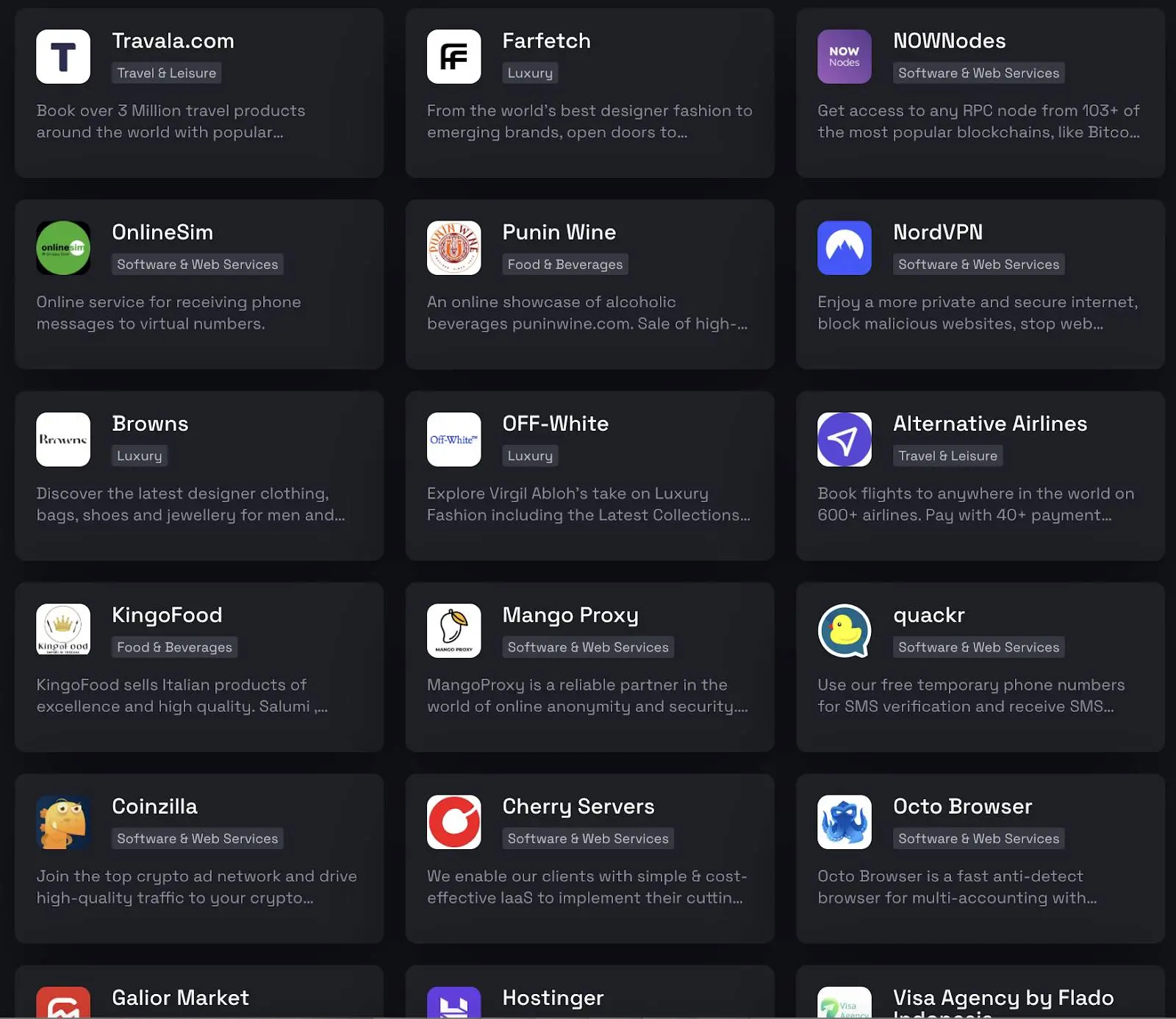
For example, luxury online shopping platform Farfetch, women's clothing brand MAINLESS, virtual number service platform Onlinesim, and travel platform Travala, among dozens of other well-known platforms, have integrated BNB Chain to support payments in cryptocurrencies like BNB, providing an almost "Web2 experience" for online consumption.
More notably, BNB is deeply penetrating financial scenarios.
In addition to RWA, BNB Chain has also built an increasingly complete stablecoin ecosystem, including established stablecoins like FDUSD, TUSD, USDT, and USDC.
In 2025, the Trump family's crypto project World Liberty also deployed its stablecoin USD1 on BNB Chain, with over 90% of its supply now deployed on BNB Chain, establishing trading pools on platforms like PancakeSwap, making BNB Chain the ecological base for USD1.
This stablecoin system not only provides liquidity foundations for DeFi protocols but also offers rich combinations for on-chain payments, lending, clearing, and asset issuance.
Based on the liquidity foundation of stablecoins, BNB Chain initiated the Builder Support Program, covering hackathons, MVB (Most Valuable Builder) accelerators, and incubation fund support systems. Many DeFi, GameFi, and SocialFi projects in the ecosystem choose to prioritize deployment on BNB Chain for the following reasons:
Mature stablecoin liquidity foundation, facilitating the construction of lending pools, AMM pools, and payment channels;
Low fees and high throughput on-chain interaction environment, suitable for financial-grade micropayments and lightning transactions;
Early user acquisition support provided by the official team and partners, making it easier for entrepreneurial projects to scale and promote.
As the BNB team describes:
"From Wall Street to Main Street, BNB Chain powers real users, real builders, and real results. Performance, fairness, and cost-efficiency—not just in theory, but in every block."
This infrastructure capability, which can be utilized by entrepreneurs and genuinely used by users, allows BNB to maintain strong ecological vitality even in a phase where new narratives are lacking.
Looking back at the development paths of the BNB ecosystem, whether in off-chain payments or on-chain finance, the underlying logic remains unchanged—to cover more ordinary users with low-threshold on-chain interactions and richer liquidity, seeking the possibility of scalable expansion.
BNB, A New Cross-Border Species
The story of BNB is transcending the inherent boundaries of crypto assets.
From the initial exchange token to public chain gas, to the construction of payment networks and developer ecosystems, it has now crossed into real-world assets (RWA) and the U.S. stock capital market…
BNB is no longer just a simple label of "platform coin" or "public chain coin," but is evolving towards "cross-border financial infrastructure": a new cross-border species that connects on-chain and off-chain, serves users and institutions, and possesses both financial liquidity and public chain performance, capable of being accepted by both traditional markets and decentralized ecosystems.
In the centralized crypto world, BNB is the core asset of the Binance ecosystem, participating in practical scenarios such as trading fee discounts, Launchpool, and airdrops, binding the liquidity and user network of the world's largest trading platform;
In the decentralized on-chain world, BNB is the gas token of BNB Chain, serving as fuel for various contract interactions in DeFi, payments, gaming, RWA, etc., with its low-cost and efficient on-chain environment becoming the first choice for entrepreneurs to deploy and realize projects;
In the real world, with the integration of RWA and compliant financial projects like xStocks, Ondo, and USD1, BNB is becoming the "anchor point" for mapping traditional financial assets, and some U.S. companies are beginning to use BNB as a reserve asset.
This makes BNB one of the few "hybrid assets" that can simultaneously capture the benefits of centralized finance, the value of on-chain infrastructure, and the bridging potential of real-world assets.
Therefore, BNB can not only meet the needs of institutions for compliant entry but also accommodate the liquidity networks built by developers, maintaining its narrative dominance between centralization and decentralization.
This may be the true significance of BNB as a "new species"—
From Wall Street to Main Street,
beyond the value storage of Bitcoin and the smart contracts of Ethereum,
BNB is carving out a new path of "usability + financial attributes + user scale."
Recommended Reading:
Solana and Base Founders Start Debate: Does Content on Zora Have "Fundamental Value"?
Paradigm Incubation, Ventuals Attempts to Bridge the "Last Mile" of On-Chain Private Equity Trading
The Fall Trilogy of Pump.fun: Legal Hunting, Price Halving, Trust Collapse
 Risk warning
 Risk warning