






Ten years of Ethereum, the year Wall Street took over

 It's time to look back at the journey we've taken with Ethereum.
It seems that in order to coincide with this significant 10th anniversary, ETH is making another push towards $4000.
From the mainnet launch on July 30, 2015, to today in 2025, over the span of ten years, it has not only witnessed the rise and fall of the entire blockchain industry but has also built an unprecedented "world computer" through numerous upgrades and consensus. Once underestimated, smart contracts have now become the most universal operating system in the Web3 world. ETH has also grown from a few cents during its crowdfunding phase to a large asset with a market capitalization exceeding $300 billion.
At the same time, the Ethereum Foundation has also completed an important "blood transfusion." Internally, changes are happening, and externally, things are also shifting. In the past year, a number of traditional financial companies have gradually purchased ETH, with institutions like SharpLink, BTCS, and BMNR announcing their inclusion of ETH in their strategic asset reserves.
All these changes are occurring in this special year: 2025, marking the tenth anniversary of the Ethereum mainnet launch.
This decade is the most colorful chapter in the history of blockchain. From a white paper to a global ecosystem worth hundreds of billions of dollars; from the "Eight Kings' Governance" founding team to the isolated breakthrough amidst the siege of "Ethereum Killers"; from PoW to PoS, from a technical laboratory to public infrastructure, Ethereum has completed its first cycle.
But its true story may just be beginning.
The "Prequel" of Ethereum
The focus of this phase is the split and ideological conflict within the Ethereum founding team, occurring between 2014 and 2015. Vitalik Buterin, the programmer genius who always speaks passionately about technology, often responds that his biggest regret in the Ethereum journey is "the matter of the 8 co-founders." Clearly, these 8 co-founders who have long since departed are a concern for him.
When Vitalik had nothing but an idea, he welcomed the first 10 developers who responded to his invitation to join and selected 5 of them for the leadership team, which became the 5 co-founders of Ethereum: Vitalik Buterin, Anthony Di Iorio, Charles Hoskinson, Mihai Alisie, and Amir Chetrit.
"This was obviously a very serious mistake; they looked like good people, and they wanted to help, so at the time I thought, why not let them be in leadership?" Vitalik reflected on his decision at that time.
The topic of Ethereum's co-founders is a controversial one, with many versions circulating online, and even the relevant Wikipedia entries being continuously edited. After Vitalik "certified the 8 co-founders," the widely accepted version in the community is that, following the 5 founders, three more developers became co-founders in 2014: Joseph Lubin, Gavin Wood, and Jeffrey Wilcke.
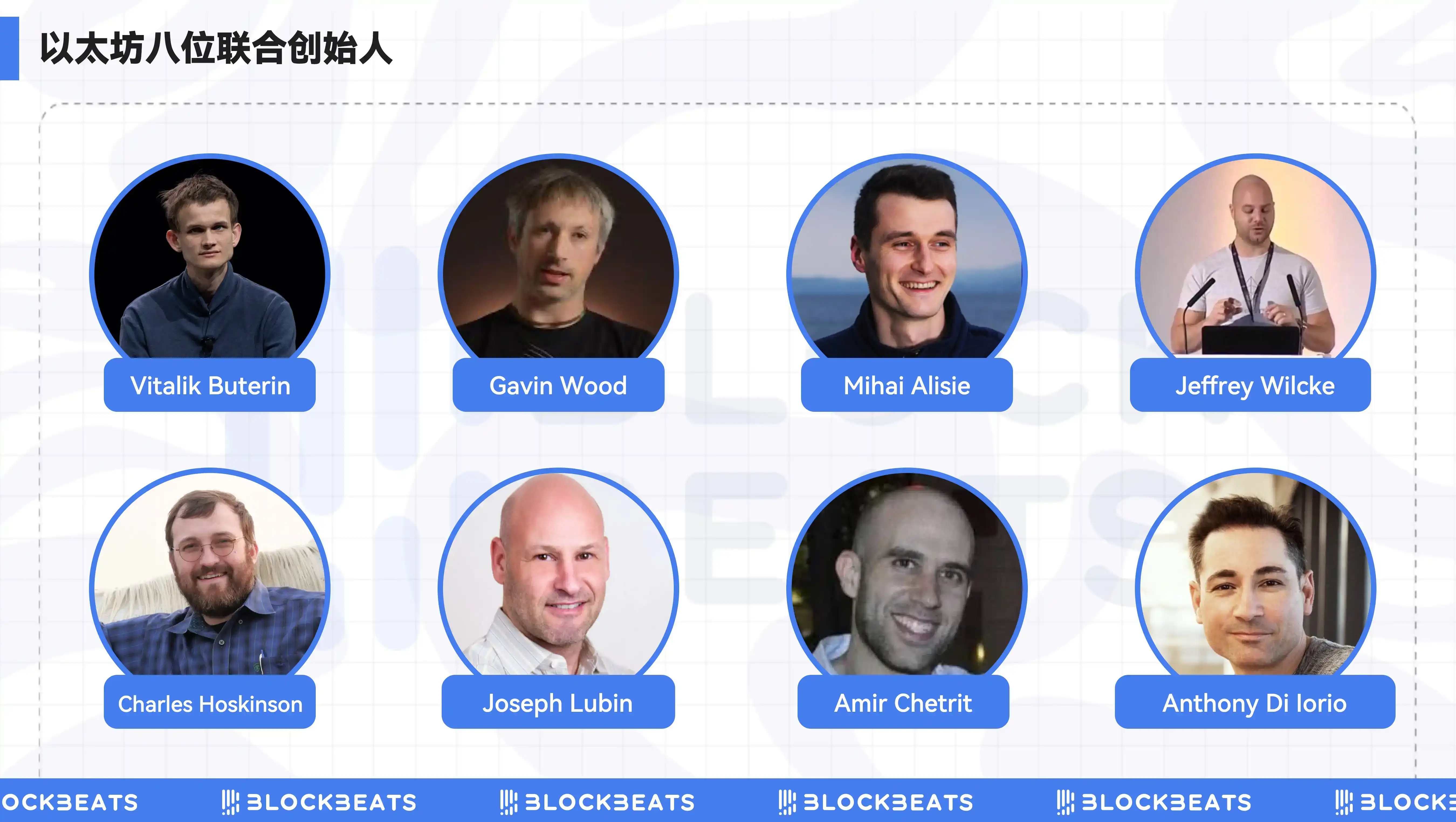
Thus, Ethereum completed the formation of its early 8 core leadership group, reminiscent of the "Eight Kings' Governance" implemented in the early Yuan and Qing dynasties to prevent the emperor (or khan) from acting unilaterally.
Berlin "Pilgrimage"
In the documentary "Vitalik: An Ethereum Story," which launched last year, Vitalik recalled that he began his digital nomad life in mid-2013.
That was the prehistoric period of Ethereum, when Bitcoin was only $204, more than a year after Vitalik and Mihai Alisie founded Bitcoin Magazine. While building Ethereum, he traveled around the world due to invitations from various communities. In 2013 and 2014, Ethereum established headquarters in Switzerland and Berlin, the white paper was released, and Vitalik visited China to crowdfund for Ethereum, meeting with miners.
Berlin was the city where he stayed the longest.
"Pilgrimage," Vitalik described his active time in Berlin's Bitcoin Kiez area. In Berlin's Bitcoin Kiez area, cryptocurrency payments were very common. Within a few hundred meters, there were dozens of shops accepting BTC payments. The community center "Room 77" was also a hub for various groups, including tech developers and political activists.

Room 77, photographed by Vitalik Buterin in 2013, has since closed.
In this area, Ethereum rented an office just 1.5 kilometers from "Room 77," which Vitalik could walk to in under 20 minutes. Searching for the Ethereum office address "Waldemarstraße 37A, 10999 Berlin" on Google Maps still shows this address marked with Ethereum Network Launch (30/07/2015) and a group photo of the early core members of Ethereum.
In early 2014, most of Ethereum's core members were basically around Vitalik, and the Ethereum team was in a highly cohesive state.
At the Miami Bitcoin Conference in January that year, Vitalik and his co-founders stood together for the first time to showcase their project to the world, which went well, marking Ethereum's official entry into the public eye. However, this was also the eve of separation.

The first Ethereum gathering held in Miami in January 2014, image source: internet
Swiss Split
The entire year of 2014 was not ordinary for the crypto world; the Mt. Gox hack and bankruptcy caused Bitcoin's price to plummet from a peak of $951.39 to $309.87, a drop of 67%. It was also the year when CZ sold his house in Shanghai and bet everything on Bitcoin for $600 to become OK's CTO. SBF, fresh out of MIT, was applying for jobs on Wall Street.
For Ethereum, 2014 was an important year, showcasing a crypto version of the "Silicon Valley Eight Immortals' Departure," where the split in this meeting determined the future direction of Ethereum.
On June 7, 2014, all members of Ethereum's leadership gathered in Switzerland for an internal meeting, focusing on the future direction of Ethereum. The meeting was held at the Spaceship house in Switzerland, the origin of ETH and Ethereum's first headquarters.

Spaceship house, image source: Mihai Alisie
In fact, before this meeting, the topic had already been debated internally for a long time, even giving rise to factions. The internal relationships within Ethereum became tense, with ongoing debates about whether to use venture capital funding or to crowdfund from ordinary people; whether to pursue a profit-oriented path and become the Google of crypto or to remain a purely non-profit organization.
Vitalik recalled this memory, saying, "I was once persuaded to lean towards a more corporate path for Ethereum. But this never made me feel comfortable; it even felt a bit dirty."
It is said that this meeting, which determined Ethereum's "life or death," lasted an entire day, and Vitalik decided to choose the decentralized and non-profit route. "I was trying to shirk responsibility throughout the process because I really didn't want to take on the responsibility, and in the end, I had to clear out some people."
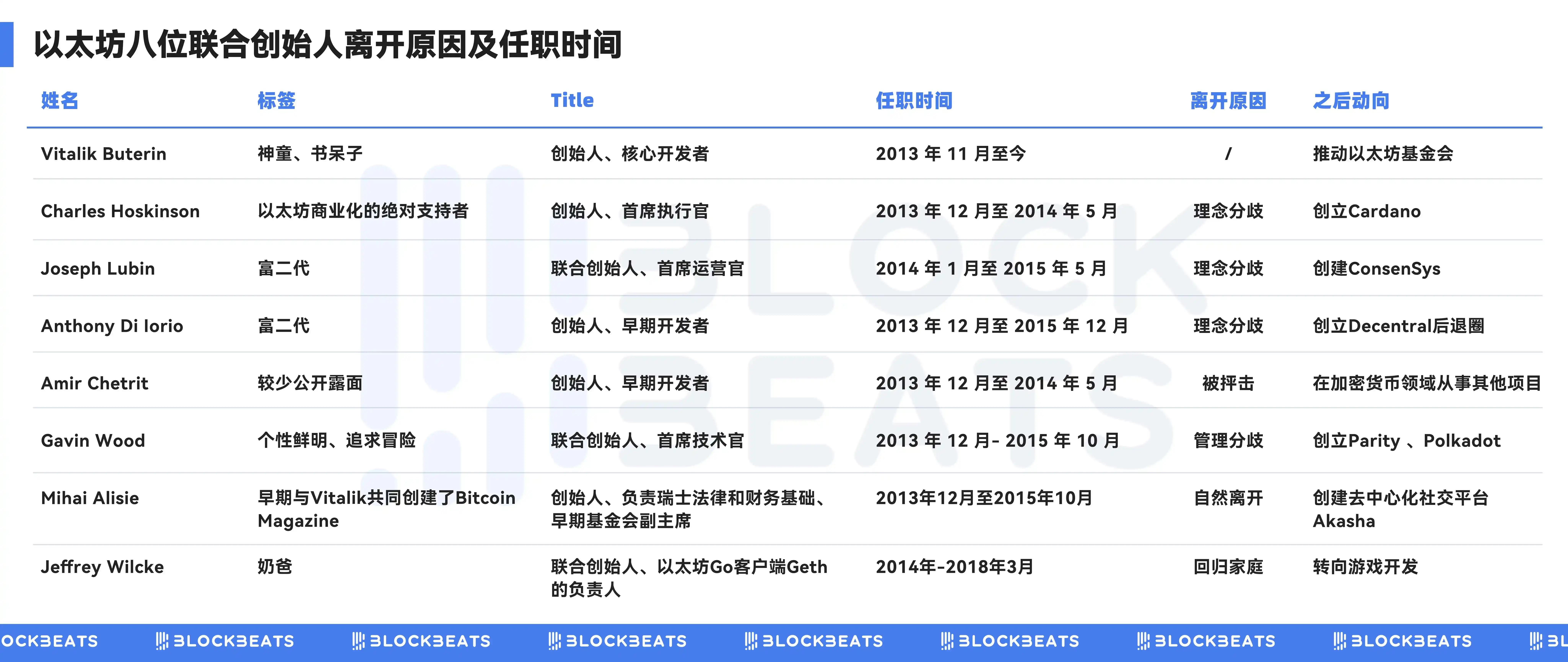
This decision became the first turning point in Ethereum's history, directly leading to the first major split in the team.
Charles Hoskinson was the most prominent opponent in this conflict, advocating that Ethereum should become a commercial company, obtain funding through venture capital, and later develop into a profitable tech giant. "A horizontal power structure, where janitors and executives are on the same level, is just crazy."
After leaving Ethereum, Charles founded the development company IOHK (later restructured into a venture capital studio) and launched a PoS public chain called Cardano. This became a leading altcoin for several years, known as "Japan's Ethereum" due to its early focus on the Japanese market, and it was also the first generation "Ethereum Killer," consistently ranking in the top ten in market capitalization.
Following Charles Hoskinson, Joseph Lubin also decided to stop participating in core development and shifted to founding the incubator ConsenSys, which completed a $450 million Series D funding round in 2022 at a valuation of $7 billion, with investors including ParaFi Capital, Temasek, SoftBank Vision Fund II, and Microsoft. Over the years, ConsenSys has incubated numerous blockchain startups and built a rich array of ecosystem projects for Ethereum, the most successful of which is the wallet MetaMask, the most commonly used wallet in the Ethereum ecosystem, generating weekly revenues of $300,000 and total revenues nearing $300 million.
Similar to Joseph Lubin, Anthony is also a wealthy second-generation individual whose involvement in Ethereum was primarily to make more money. Therefore, after Ethereum established a non-profit operating model, Anthony gradually stepped back into a semi-retired state, creating Decentral and developing the Jaxx digital wallet (ultimately confirming his departure from Ethereum in December 2015). In 2018, Forbes estimated his net worth to be between $750 million and $1 billion, placing him among the top 20 richest individuals in the cryptocurrency field. However, in 2021, he announced that for personal security reasons, he decided to "liquidate" and exit the space, no longer funding any blockchain projects, and planned to focus on charity and other ventures.
Amir Chetrit, on the other hand, left due to a lack of investment in Ethereum and was criticized by other developers and founders at the Swiss meeting, later venturing into other industries. Due to his anonymity and focus on privacy, there is very little information about him.
By the end of 2014, when the dust settled, only four of the original eight co-founders remained in the team: Vitalik Buterin, Gavin Wood, Mihai Alisie, and Jeffrey Wilcke.
Vitalik also reflected that he was too hasty in selecting the team and did not consider the deep-seated differences among the members; the ideological conflicts and clashes of interests were far more complex than he initially imagined. "I did realize at that time that not everyone in the cryptocurrency field is like me, fighting for ideals; many people just want to make a lot of money. Relationships between people are a real issue."
Work had to continue, and Vitalik and the others who remained continued their efforts. Fortunately for Vitalik, the foundation was taking on more work at that time, and his most important technical partner, Gavin Wood, was still fighting alongside him.
The Tumultuous Foundation
July 30, 2015, was a historic moment for the Ethereum mainnet launch.
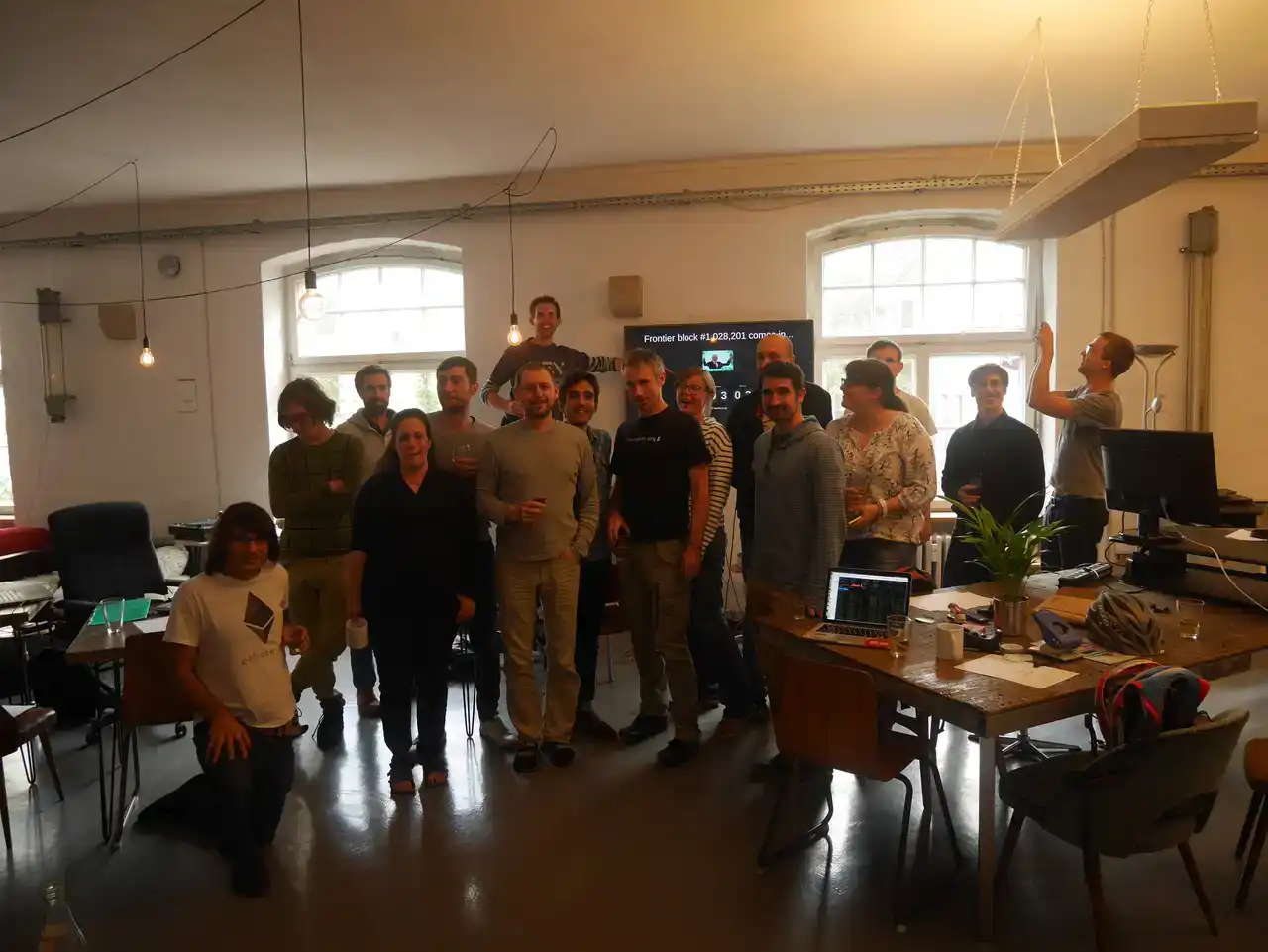
Some early members gathered in the Berlin office to witness the automatic launch of Ethereum after block 1028201. A highly significant photo captured some of the core members at that time. Those in the frame with Vitalik included several notable core developers:
Gustav Simonsson was an early security advisor for Ethereum, playing a crucial role in the security of the Ethereum mainnet. After leaving Ethereum, he joined Dfinity, continuing to delve into decentralized computing networks.
Christian Reitwiessner was the developer of the Solidity programming language, providing the foundation for running smart contracts on Ethereum.
Among the Solidity development team, Liana Husikyan was also an important member, being one of the main developers of Remix IDE. Remix is an integrated development environment for writing and deploying smart contracts, helping to simplify the smart contract development process.
Meanwhile, Christoph Jentzsch was the founder of Slock.it and one of the initiators of The DAO. Although it forked in 2016 due to security vulnerabilities, The DAO remains one of the most important experiments in blockchain history, promoting the exploration of decentralized governance models.
Additionally, there were authors of ERC 20 and ERC 725, Fabian Vogelsteller, Vlad Zamfir, who facilitated Ethereum's transition from proof of work (PoW) to proof of stake (PoS), and Jutta Steiner, who was the security head of the Ethereum Foundation (later becoming the CEO of Parity Technologies founded by Gavin).
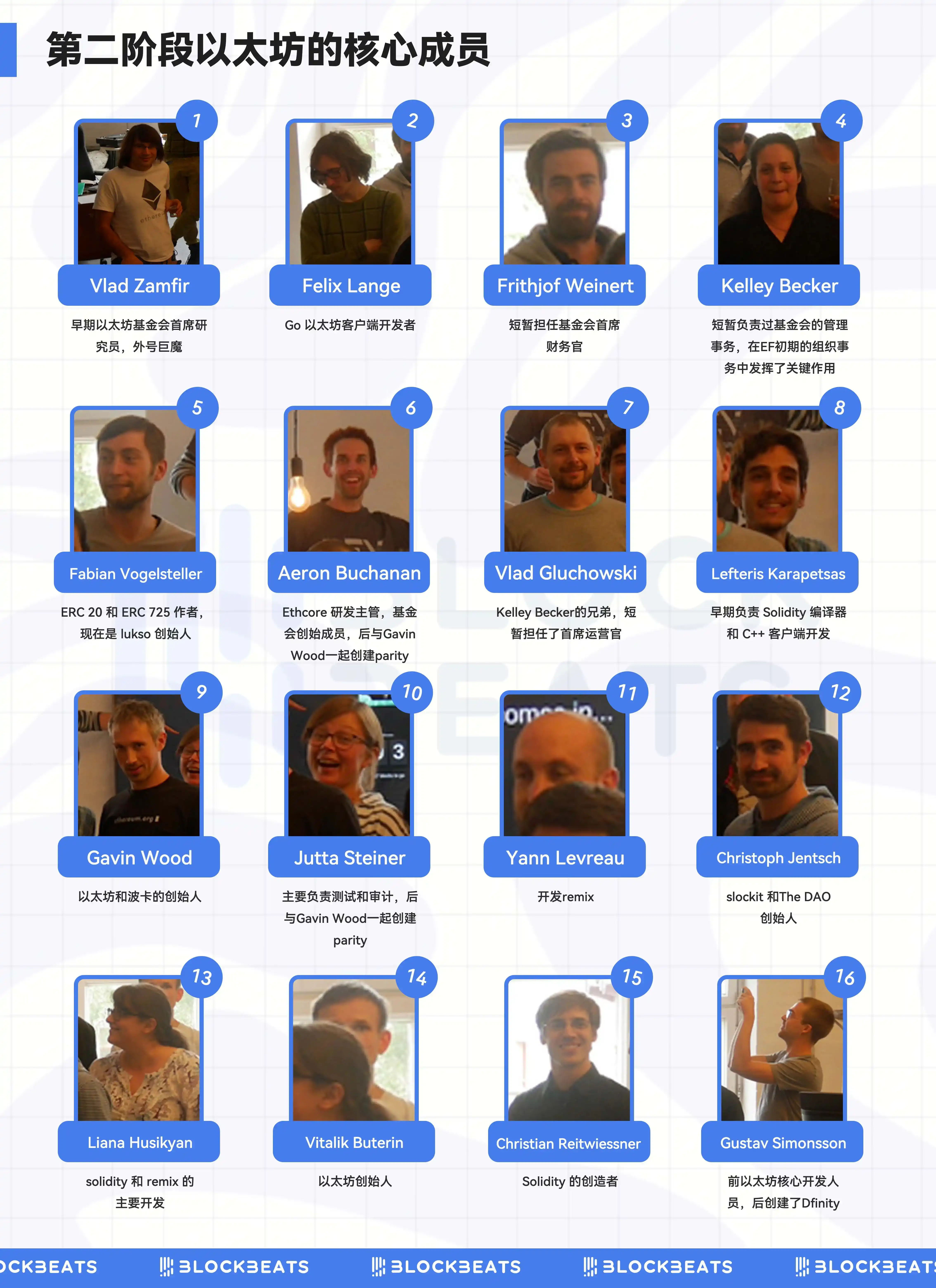
This photo also contains a much-discussed detail: Vitalik is partially obscured in the corner of the photo, while his most important technical partner, Gavin Wood, is in the center, looking very much like a proper CEO.
In some earlier photos, we can also see the close collaborative relationship between Vitalik and Gavin. However, no one anticipated that this leader of the Ethereum engineering team and author of the Ethereum yellow paper would be one of the next to leave.

On November 28, 2014, the Ethereum Berlin office hosted the first DEVCON developer conference, where most members gathered in Berlin. Previously, everyone had communicated via Skype; this was their first face-to-face meeting. The photos from the conference show Vitalik and Gavin still embracing each other as usual.
Just three months after the mainnet launch, Gavin Wood chose to leave, believing that Ethereum needed a more centralized engineering management model to be more efficient. However, Vitalik once again said "NO." The significant disagreement ultimately led Gavin to leave the team and establish his own company—Parity (Ethcore). Parity quickly became an important node operator in the Ethereum network, once controlling over 40% of the network nodes. Subsequently, Gavin vigorously promoted the development of Polkadot, which for a long time was one of Ethereum's significant competitors.
Gavin's departure directly weakened Ethereum's engineering capabilities; his leadership and technical expertise were crucial in the early development of Ethereum. With his departure, the team's efficiency issues gradually became apparent. Ethereum's Geth client developers were distributed globally, leading to frequent management and coordination problems, which affected development progress.
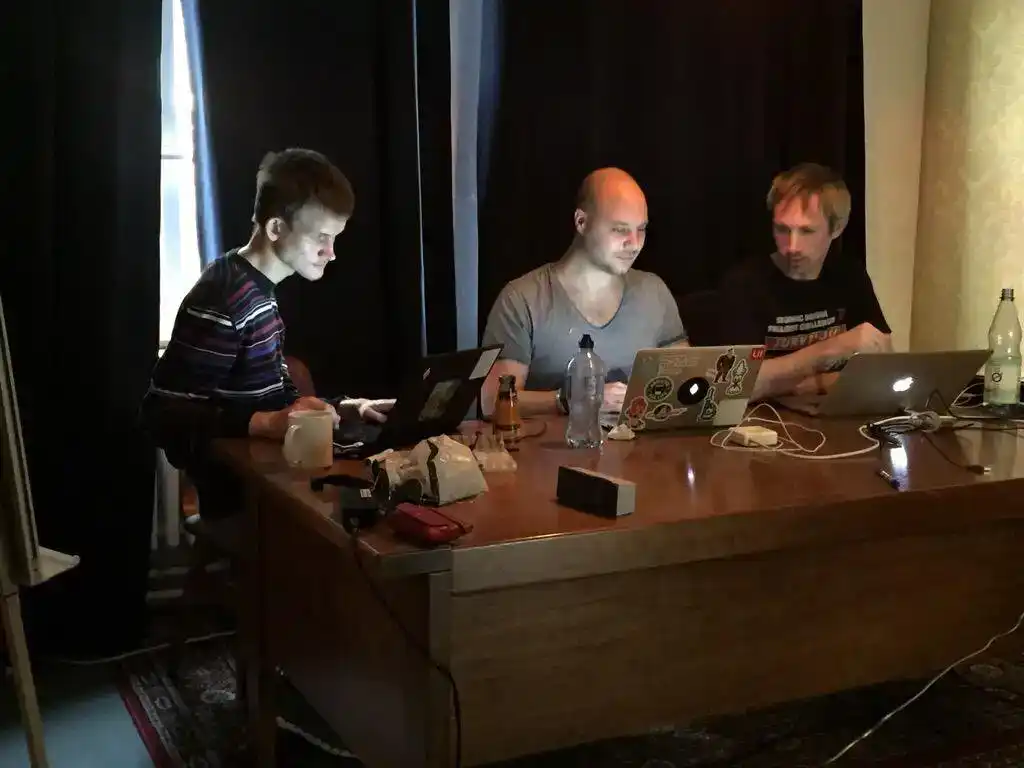
Vitalik, Jeff, Gavin, image source: Vitalik
However, after Gavin's departure, the remaining two co-founders, Mihai Alisie and Jeffrey Wilcke, also left during this period.
Mihai Alisie was one of Vitalik's earliest partners; the two co-founded Bitcoin Magazine, and he assisted in establishing the legal framework for Ethereum in Switzerland, serving as the vice-chairman of the foundation. Mihai's departure was relatively natural; he did not have intense conflicts with the team, but the core strength of Ethereum's early construction further diminished.
Jeffrey Wilcke gradually exited after The DAO was hacked, leading to a significant amount of ETH being stolen and causing Ethereum to fork. He handed over the development work and technical oversight of the Ethereum Go client Geth to his assistant Péter Szilágyi, redirecting his energy towards game development and spending time with family, around March 2018.

Jeffrey Wilcke taking care of his child, image source: internet
With the departure of these founding members, Vitalik's sense of loneliness within Ethereum grew day by day. Developers revealed that 2015 was a lonely and challenging year for Vitalik, as he often spent nights in the Berlin office.
The First Generation Foundation
At its inception, many members of the Ethereum Foundation were temporarily appointed. For example, Kelley Becker and Frithjof Weinert briefly served as the foundation's Chief Operating Officer and Chief Financial Officer, respectively, responsible for the daily operational management and financial management of the foundation, ensuring it had sufficient funds to support Ethereum's development and operations. However, their tenures were short-lived, and they soon left the foundation.
In 2015, while Ethereum was undergoing large-scale recruitment, the foundation also took on more work, integrating Ethereum's core developers into its research team.
By April 10, 2015, the Ethereum Foundation began to establish its organizational structure, initiating board member selection, and its operations gradually got on track. By mid-2015, Ming Chan, who had years of experience in IT and management consulting, was appointed as the new executive director of the Ethereum Foundation, handling the foundation's daily operations, ensuring standardized management, and facilitating the smooth progress of technical development and community operations within legal and regulatory frameworks.
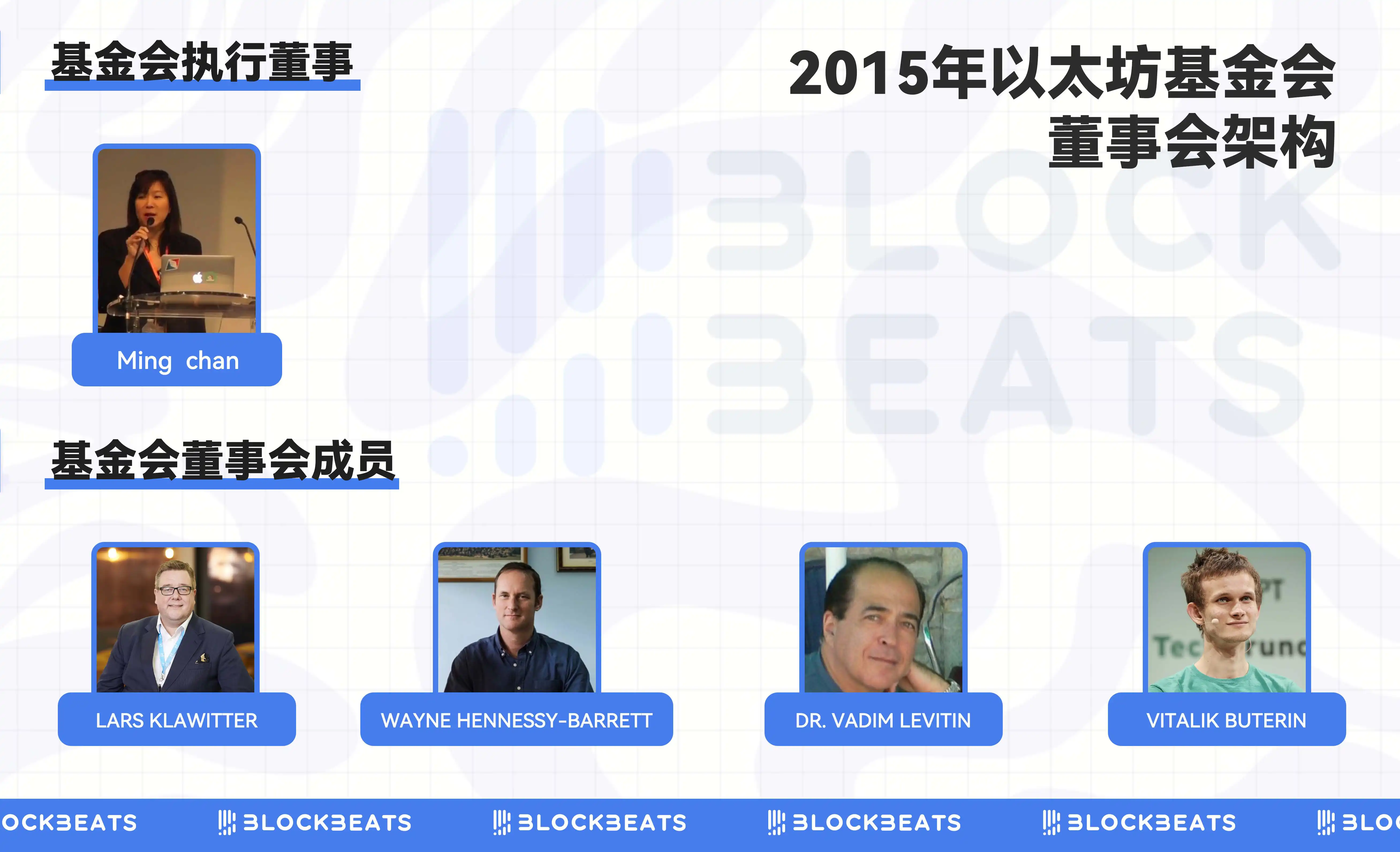
The internal structure of the foundation was further clarified. Besides Vitalik remaining as the core figure in technology and community, Lars Klawitter, Vadim Levitin, and Wayne Hennessy-Barrett also joined the board of the foundation.
Lars Klawitter was responsible for integrating technology and innovation within the foundation; he was active as an entrepreneur during the internet revolution and had served as the head of innovation at Rolls-Royce. Vadim Levitin was a technical expert with extensive international experience who had worked for the United Nations, helping the Ethereum Foundation expand its influence globally. Wayne Hennessy-Barrett was another board member who brought a global perspective to the foundation, with rich operational experience in emerging markets in Africa.
With the addition of these new members, the Ethereum Foundation gradually improved its governance structure, shifting its core tasks from technical development to community coordination and resource allocation.
At that time, the foundation still held a large amount of ETH assets and supported the development of the Ethereum ecosystem by funding various research projects and developer teams.
The Second Generation Foundation
In 2018, the crypto world experienced the explosive growth of ICOs and the significant crash of 94, marking the beginning of a "regulatory clearing year" for cryptocurrencies. Bitcoin's price fell from a peak of $19,870 to around $3,000, and Binance emerged as the largest trading platform globally. It would be another two years before the "Ethereum Killer" Solana, which focuses on high performance, efficiency, and throughput, was launched.
When people talked about Ethereum, they mostly mentioned two things: the upgrade to Ethereum 2.0 and that the Ethereum Foundation was selling coins again.
The ETH supply controlled by the foundation had been continuously decreasing and selling off over the years, leading to a predominance of negative sentiment among community members. However, some members of the Ethereum Foundation stated that this was one of the signs of the foundation's intentional decentralization, "EF consciously wants to weaken its influence and role, which is a good thing."
Indeed, since Aya Miyaguchi took over as the new executive director of the Ethereum Foundation in 2018, the foundation no longer served as the central hub for all development work as it initially did. Instead, it shifted more towards supporting and coordinating communication and collaboration between different projects, as well as expanding cooperation with external partners like ConsenSys.
After Aya Miyaguchi took office, the EF's responsibilities became clearer, mainly limited to:
- Hosting an annual Devcon or Devconnect;
- Maintaining an execution client Geth, but not maintaining any consensus clients;
- Providing tens of millions of dollars in unconditional grants to the broader community each year;
- Hosting conference calls: such as All Core Devs (ACD) hosted by Tim Beiko, All Devs Consensus (ACDC) hosted by Alex Stokes, etc.;
- Conducting research: this may still be one of the centralized departments, but some EF research teams may become independent;
- Roadmap formulation: Vitalik updated the roadmap diagram, and then dozens of tasks were developed in parallel by different teams;
Currently, the Ethereum Foundation's official website lists only three leadership members: besides Aya Miyaguchi and Vitalik, there is also board member Patrick Storchenegger.
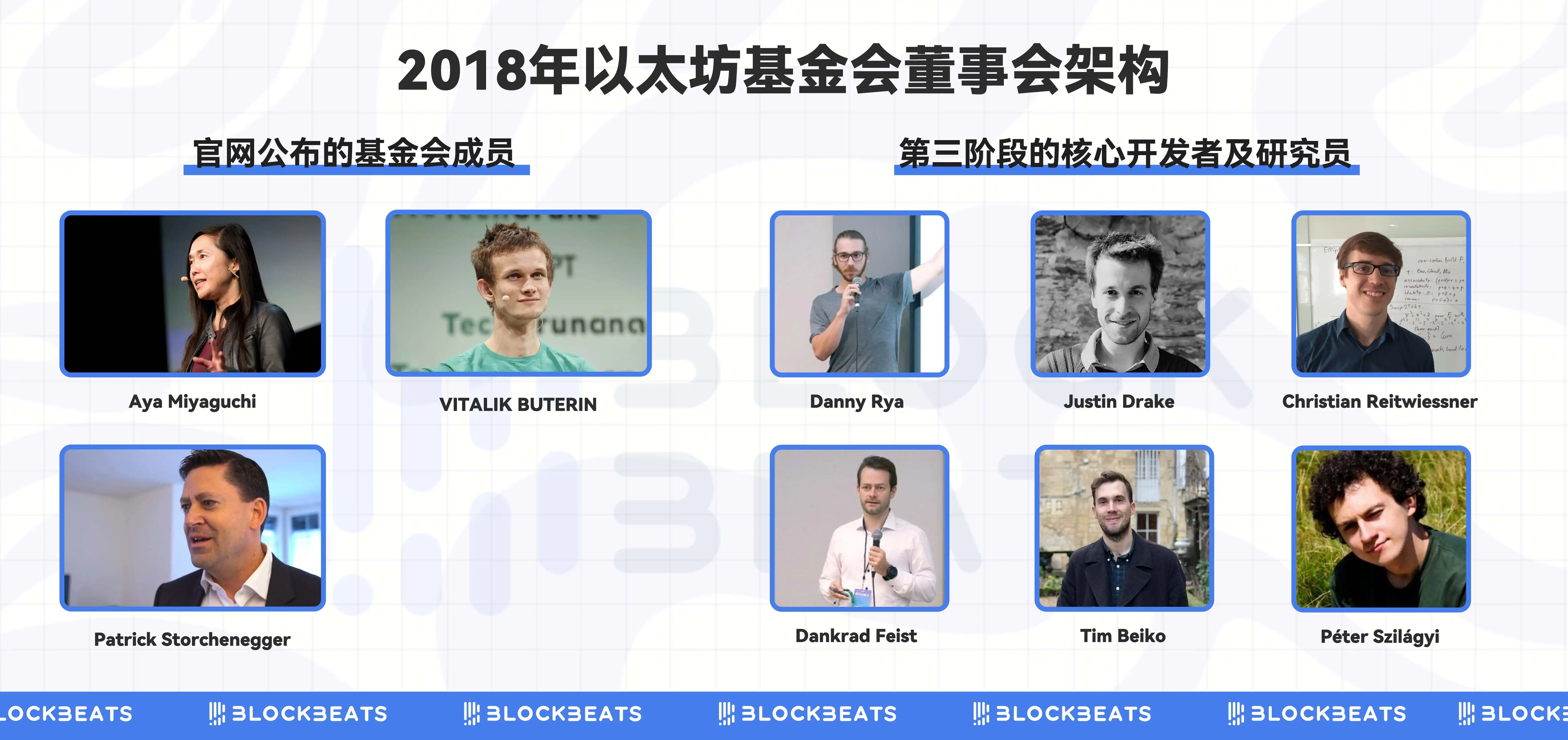
During this period, several new core developers within the Ethereum Foundation gradually emerged as key figures in Ethereum 2.0 and the entire ecosystem. Below is a list of individuals I personally consider important in Ethereum: Danny Ryan, Justin Drake, Tim Beiko, Dankrad Feist, Solidity creator Christian Rwitqiessner, and Péter Szilágyi, etc. (In my view, there is no specific order, and I won't detail them all.)
Danny Ryan is a core member of the Ethereum 2.0 team, hailed by the community as the "Chief Engineer of Ethereum 2.0." He played a crucial role in coordinating the development process of Ethereum 2.0, especially during the launch of the Beacon Chain and the merge upgrade, and he was the first Ethereum Foundation researcher to appear in the documentary "Vitalik: An Ethereum Story."
Since joining the Ethereum Foundation in 2017, Justin Drake's main work has also been focused on Ethereum's transition to proof of stake (PoS), playing a key role in the execution of the ETH merge. Additionally, Justin Drake is one of the main spokespersons in the community regarding Ethereum's future technical roadmap, frequently participating in podcasts and interviews to educate the public, such as in the Ethereum Foundation's Reddit AMA, where he is also one of the main speakers with a solid foundation in the community.
Tim Beiko joined the Ethereum Foundation full-time in 2018 and became one of the leaders among core developers in 2021, responsible for organizing ACD conference calls, serving as an important bridge between Ethereum's core developers. As a protocol engineer, his work covers the advancement of multiple Ethereum Improvement Proposals (EIPs).
Dankrad Feist is an important researcher at the Ethereum Foundation, focusing on the study of Statelessness and Data Availability issues. His proposed concept of "Danksharding" is part of Ethereum's sharding technology roadmap, and the expansion solution ultimately chosen for the Ethereum mainnet is named after Dankrad Feist. Additionally, his research on MEV (Maximum Extractable Value) has provided new insights into Ethereum's security, although he has had public disputes with the current lead developer of Geth, Péter Szilágyi, on this issue, ultimately forcing Vitalik to mediate.
After stabilizing the team members, from 2018 to 2022, the expansion of the Ethereum ecosystem gained mainstream recognition. In 2019, DEXs like Uniswap, Compound, and SushiSwap provided lucrative yields for any DeFi user providing liquidity, leading to a rapid growth in Ethereum's TVL during DeFi Summer. The year 2021 marked the "centennial year of the metaverse," with Facebook rebranding as Meta, paving the way for the explosion of NFTs. In 2022, the crypto world experienced a "Lehman moment," with Luna and FTX collapsing one after another, and the Solana ecosystem being hit hard, while Ethereum successfully transitioned from PoW to PoS, and the Layer 2 sector thrived, reaching a peak period of success.
"Midlife Crisis"
However, as the saying goes, "What goes up must come down." In 2024, Ethereum finally faced its "midlife crisis," with stagnant prices.
2024 was also an important year, marking the 10th anniversary of ICOs. The 10-year-old Apple nearly went bankrupt, with a peak market value of only $20 billion. Microsoft, after ten years of being listed, saw its market value grow from $670 million to $130 billion. Meanwhile, Ethereum's market capitalization stood at $321 billion. Although Ethereum's market value growth over these 10 years has been more rapid than that of nearly all current tech giants, it was even once thought to surpass Bitcoin.
However, there is a rule in finance that when an asset's scale reaches $300 billion or $500 billion, it will face a "growth bottleneck." As the 34th largest asset globally, ETH's market capitalization of $321 billion is currently within this "growth bottleneck." The "car" is too heavy, and the "庄" (institutional investors) are too scattered; under such scale, Ethereum's growth is very difficult, almost struggling against "gravity."
While Ethereum stagnated, Bitcoin continued to hit new highs, and Solana "rose from the dead." No one can fully articulate the issues and stories surrounding the Ethereum Foundation at that time in just a few words. But what we all know is that the low performance of ETH's price has kept Ethereum and the Ethereum Foundation in the spotlight for the past couple of years.
As a decentralized non-profit organization, managing Ethereum's internal organizational structure is not easy. Looking back at Ethereum's journey, from the eight founding team members' ideological differences leading to their "separation," it played out like a crypto version of the "Silicon Valley Eight Immortals' Departure." Now, against the backdrop of stagnant prices, community dissatisfaction has fallen into a cyclical anger loop, erupting from time to time, with the community mocking ETH's price through memes that keep updating. Even the complex relationships and ideological conflicts within the Ethereum Foundation continue, with researchers frequently clashing, and Vitalik often facing criticism.
Aside from Vitalik, another person feeling the pressure is Aya Miyaguchi, the former executive director of the Ethereum Foundation.
Over the past year, Aya has faced significant backlash from the Ethereum community, becoming a controversial figure in both the Chinese and English Ethereum communities.
In the past year, Solana, Ethereum's biggest competitor, has risen from the ashes. Besides founder Toly's efforts to promote various "Solana casino culture memes," the work of Solana Foundation Chair Lily Liu has also gained community recognition, such as proposing the PayFi concept of "using on-chain staking yields to pay for off-chain real transactions," hosting many high-quality hackathons, and investing in several quality projects within the Solana ecosystem.
In the eyes of many in the Ethereum community, Aya has had almost no "achievements" during her 7 years as executive director of the Ethereum Foundation.
"Being hired for a job for which one is unqualified for 7 years, receiving compensation without doing any work," is the sentiment most deeply felt by traders and KOLs in the English community, led by CoinMamba.
They even attempted to exert public pressure to force Aya to leave, making statements like "The day Aya leaves will be Ethereum's liberation day," "ETH will hit new highs within two weeks of Aya's departure," "If we keep the pressure on, she will resign," and even issuing irrational insults and death threats against her.
If everyone remembers the period around the New Year when Vitalik was overwhelmed by various tweets, such as abstract references to Milady and even contemplating leaving Ethereum, it was during that time that Vitalik faced immense public pressure from the community.
The Third Generation Foundation
By March 2025, the Ethereum Foundation finally announced a significant leadership change: Executive Director Aya Miyaguchi stepped down from daily management duties to become the foundation's chair. Two new co-executive directors, Hsiao-Wei Wang and Tomasz Stańczak, were appointed to replace Aya in her previous role.
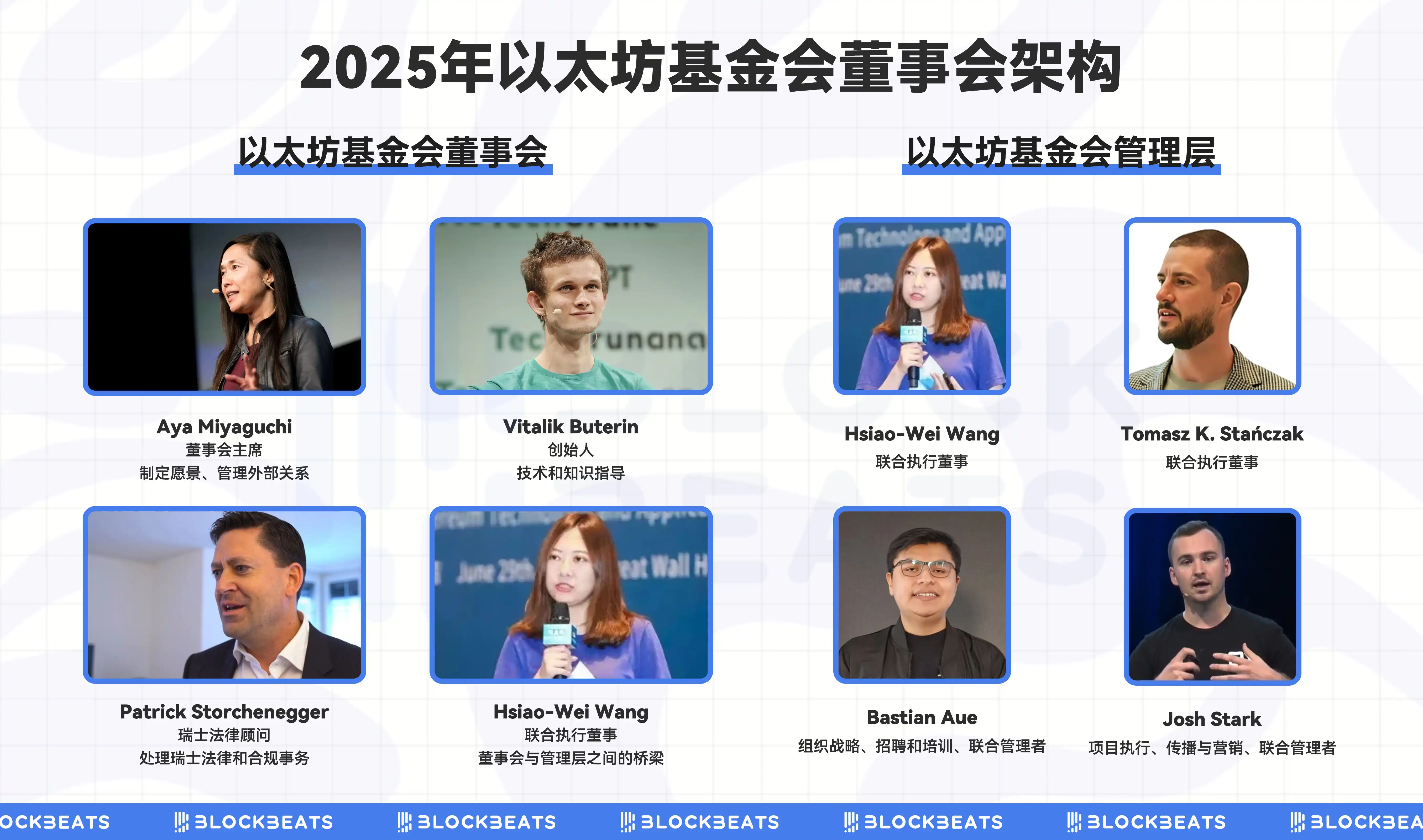
Hsiao-Wei Wang started as a backend engineer and stumbled upon blockchain in 2016. At that time, Vitalik was looking for contributors interested in Ethereum research, and Hsiao-Wei successfully applied to join as one of the core developers.
This blockchain pioneer from Taiwan has focused on core Ethereum research for 7 years, making significant contributions in the fields of sharding and Beacon Chain. Sharding technology is a key upgrade to solve Ethereum's scalability issues, significantly improving network throughput and making Ethereum more efficient and smooth in handling a large number of transactions. Additionally, she has long been responsible for reviewing Ethereum protocols and developing proof of concepts (PoC), laying a solid technical foundation for the advancement of Ethereum 2.0 (Eth2).
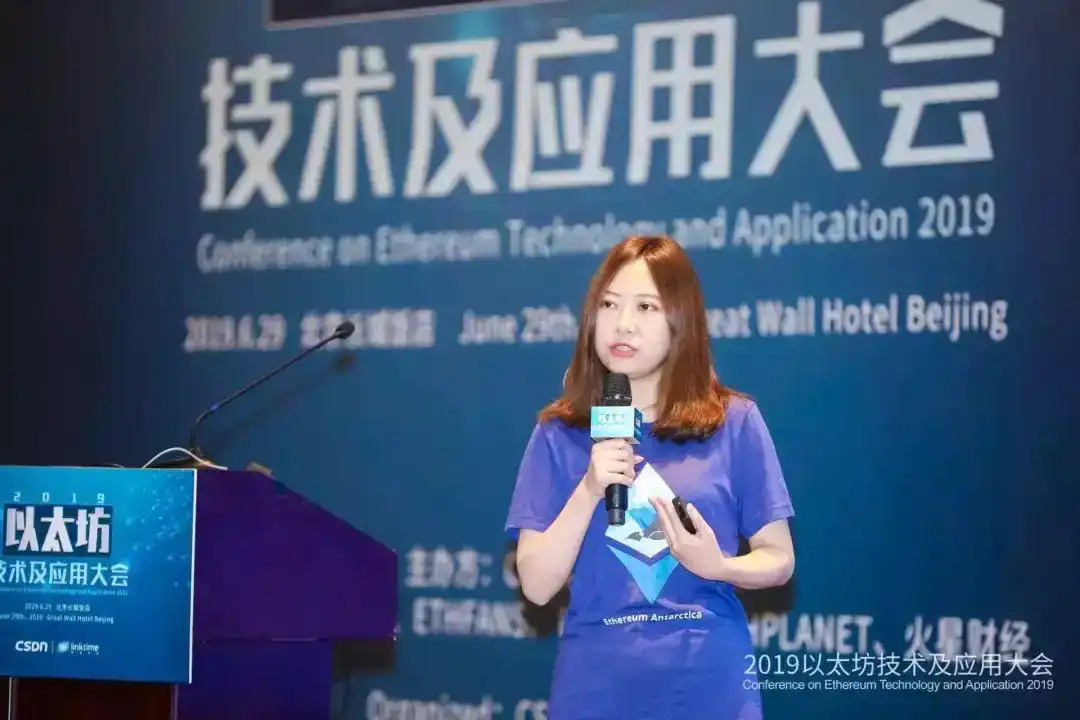
Despite her deep technical expertise, Hsiao-Wei has not confined herself to the world of code but has actively engaged in community building. She frequently represents the Ethereum Foundation at various technical conferences, especially in Taiwan, where she has organized and promoted many high-quality Ethereum technical exchange activities, successfully bridging local developers with the global Ethereum ecosystem. For example, at the 2018 Ethereum Sharding Workshop in Taipei, she was the organizer and played a central role in the technical discussion sessions.
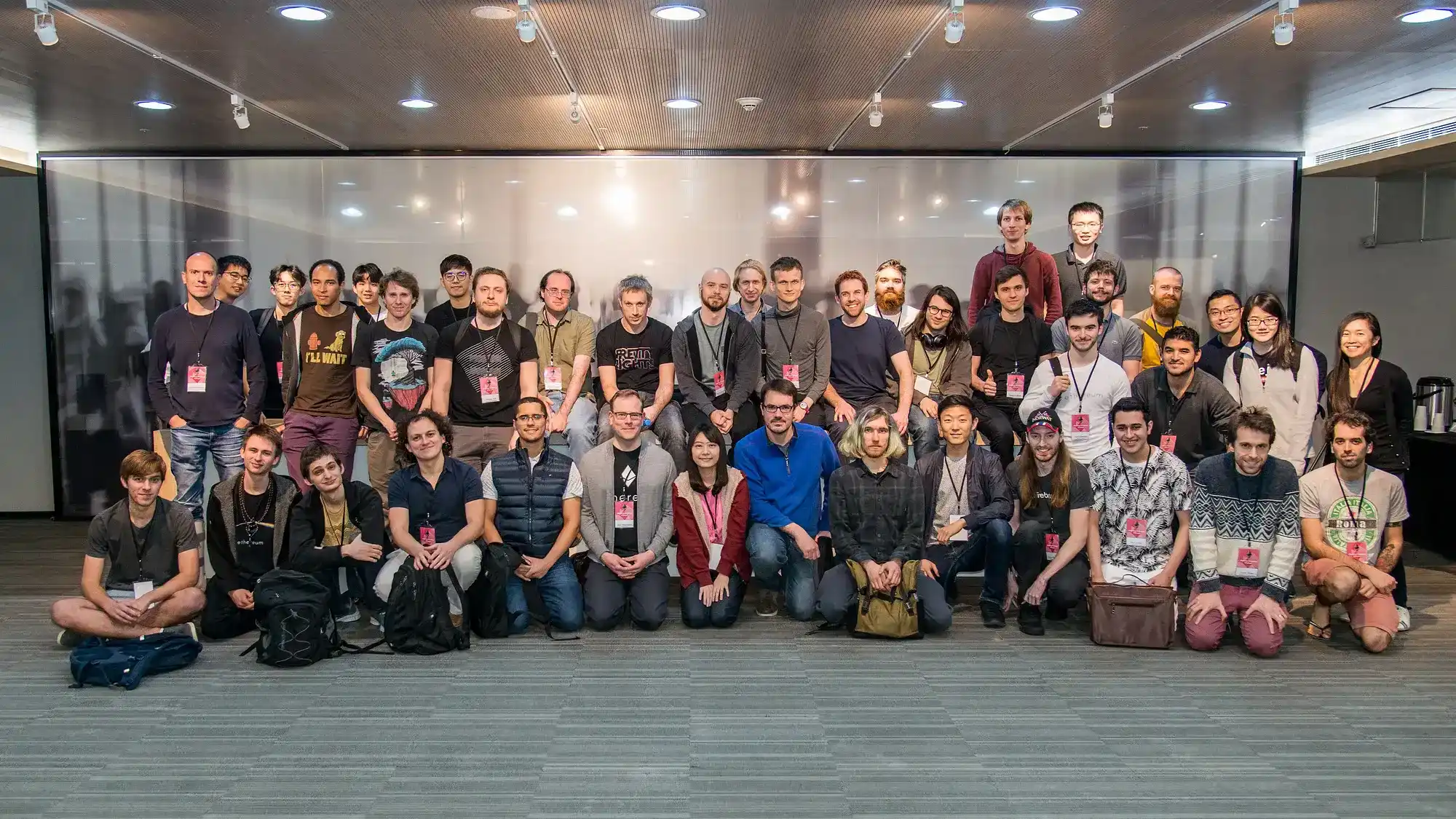
Hsiao-Wei Wang at the 2018 Ethereum Sharding Workshop in Taipei
The other co-executive director of the Ethereum Foundation, Tomasz Stańczak, is the founder of Nethermind. He is not only one of the core developers of Ethereum but has also conducted in-depth research in key areas such as MEV (Maximum Extractable Value) and PBS (Proposer-Builder Separation).

Before entering the blockchain field, Tomasz was a financial market engineer with rich technical experience. In 2017, he officially joined the Ethereum development team as a core developer, becoming an early member of FlashBots and a board member of the Starknet Foundation.
He later founded Nethermind, which is now one of Ethereum's most important execution clients. Nethermind started as an experimental project but quickly grew into one of the most critical infrastructures in the Ethereum ecosystem under Tomasz's leadership, ranking alongside Geth, Besu, and Erigon as one of the five major execution clients. Compared to Geth's historical accumulation, Nethermind has attracted more and more developers and institutional users with its efficient code architecture, flexible customization, and strong enterprise-level support.
Hsiao-Wei Wang and Tomasz Stańczak were appointed as the new co-executive directors, and the return of former EF researcher Danny Ryan was met with cheers from the community.
As mentioned earlier, Danny Ryan is a core member of the Ethereum 2.0 team, hailed by the community as the "Chief Engineer of Ethereum 2.0." He played a crucial role in coordinating the development process of Ethereum 2.0, especially during the launch of the Beacon Chain and the merge upgrade. He was also the first Ethereum Foundation researcher to appear in the documentary "Vitalik: An Ethereum Story." In an informal community vote regarding Ether, Danny Ryan was selected as the best candidate to serve as the sole leader of the EF. On September 13, 2024, he announced his indefinite withdrawal from Ethereum development for personal reasons, ending a seven-year career in Ethereum development. In March of this year, Danny Ryan announced his return to the Ethereum ecosystem, taking on the role of co-founder of Etherealize, the marketing and product department for Ethereum ecosystem institutions.
The Truth Behind the Change of Hands
The story of the change of hands had already spread widely in 2024. After the Hong Kong conference, rumors of "Ethereum's underground garage change of hands" circulated.
On-chain data can hint at some clues. From December 2024 to April 2025, Ethereum's price experienced a free fall, but it was also the moment when the Herfindahl-Hirschman Index (HHI) quietly began to rise.
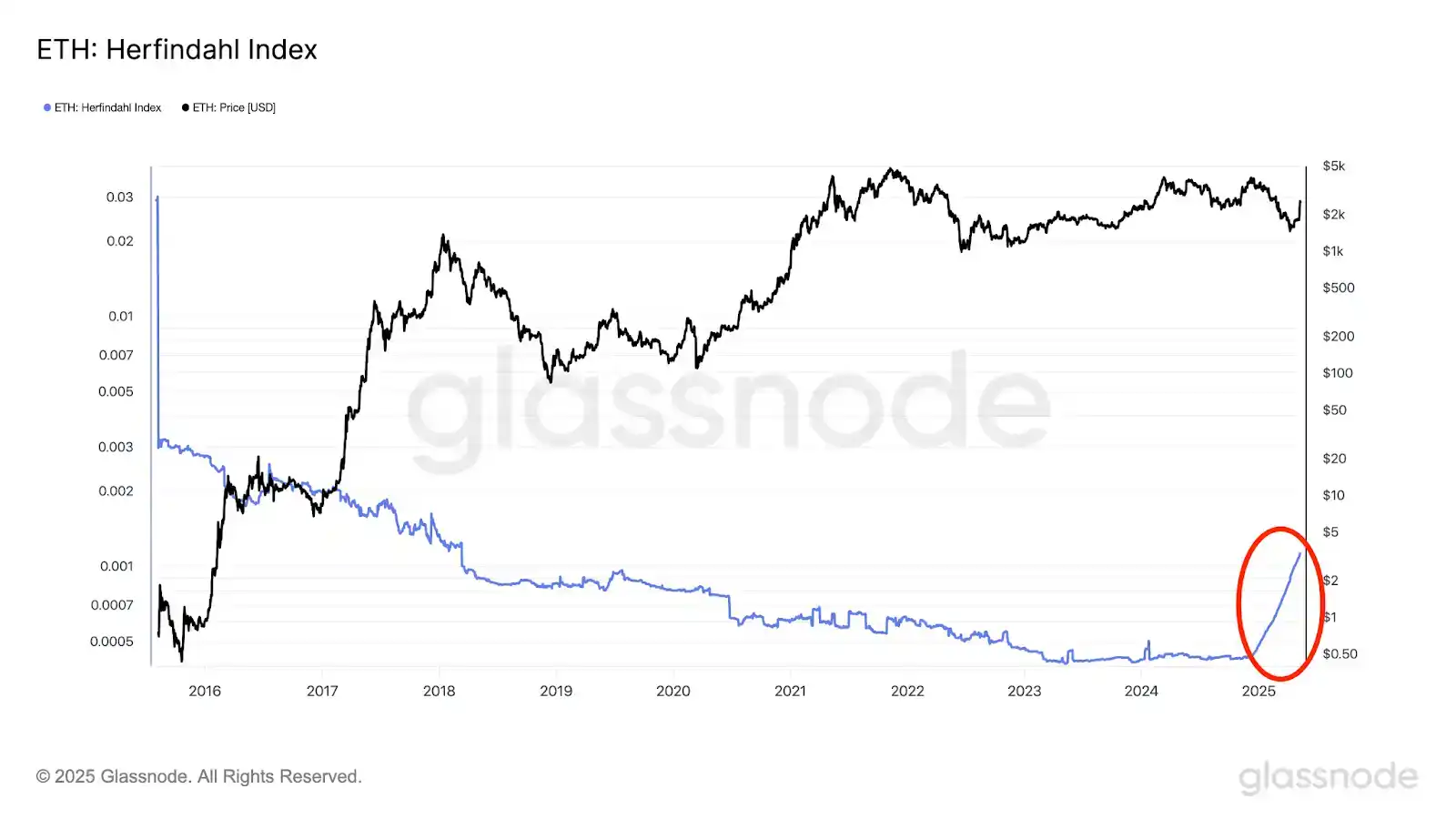
Image source: Glassnode
HHI is an indicator that measures asset concentration. On the Ethereum chain, it represents the trend of chip ownership. While prices plummeted, the HHI was rapidly rising, indicating that ETH was not being widely sold off by the market; instead, it was being concentrated from dispersed retail investors into the hands of a few large holders or even institutional addresses.
Beyond the data and trends, it is even more evident that in the new round of price increases led by the narrative of crypto strategic reserves, companies acting as ETH strategic reserves have become increasingly common.
In May 2025, SharpLink Gaming ($SBET) announced it had raised $425 million through PIPE financing to purchase 176,271 ETH, with a market value exceeding $460 million at the time.
In June, BitMine Immersion Technologies ($BMNR) announced it would raise $250 million through PIPE financing to purchase ETH, clearly stating its intention to "transform into an ETH infrastructure asset manager." After the announcement, BMNR surged for several consecutive days, becoming another "ETH concept stock" following SBET.
Unlike SBET, BMNR is no longer just "buying and holding coins," but has clearly targeted ETH staking yields, on-chain cash flow, and participation in the DeFi ecosystem. This marks the first time a traditional mining company has transformed to go long on ETH using an "ETF-like logic," indicating that the mindset of institutional investors has shifted from directional betting to structural capturing.
Almost simultaneously, BTCS ($BTCS) did not publicly announce how much ETH it bought in one go but emphasized the innovative nature of its financing structure: a hybrid financing model of "DeFi + TradFi." It is not just buying ETH but acquiring a stablecoin liquidity anchor asset.
Bit Digital ($BTBT) also quietly disclosed its purchase of 20,000 ETH, planning to transition from a BTC mining company to an ETH staking node operator. In this round of change of hands, some players from the BTC camp have already begun to switch sides.
From SBET firing the first shot to BMNR, BTCS, BTBT, and other US stocks and mining companies taking turns, the entire process took less than a month, with a rapid, clear, and orderly rhythm.
It is also worth noting that the largest ETH strategic reserve company, SBET, has a major individual shareholder who is none other than Joseph Lubin, one of Ethereum's eight co-founders. As mentioned earlier, he left Ethereum due to ideological differences and founded ConsenSys. Joseph Lubin not only holds a large amount of Ethereum but also became the chairman of SharpLink's board after investing, holding 9.9% of SBET's shares.
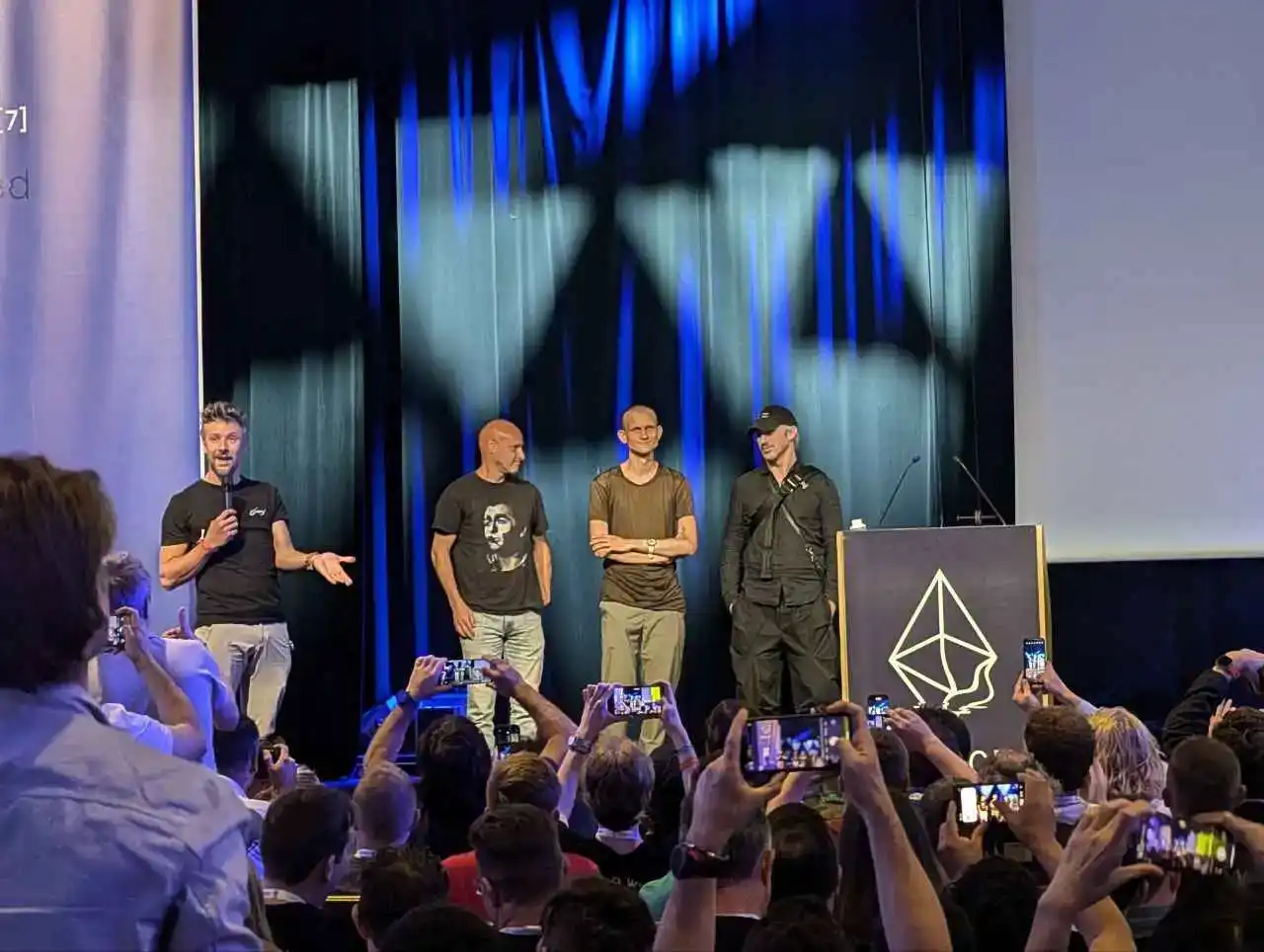
Interestingly, at the EthCC7 conference in Brussels in July 2024, after Vitalik's speech, the three core founders of Ethereum—Vitalik Buterin, Joseph Lubin, and Gavin Wood—took a historic group photo, marking a graceful closure and reconciliation of their past "rupture."
Ethereum Without Vitalik
In the memories of Vitalik's father, when Ethereum was first established, Vitalik did not intend to take on a leadership role; his thoughts were more along the lines of, "Hey, I came up with a cool idea; let me write it down first, and maybe some smart and influential people will do something."
But then, things changed. Many people joined the project, telling Vitalik, "The person who should drive this project is you." Thus, people pushed him into a leadership position, but this was not a natural progression for him; it was outside his comfort zone and remained one of his greatest challenges.
"Vitalik almost perfectly satisfied our society's deepened image of tech founders, the youthful admiration, and a certain naive yet powerful obsession," as economics professor Nathan Schneider, who has interviewed Vitalik multiple times, put it.
But in 2025, Vitalik is 31 years old.
While in Zuzalu in Montenegro, he saw people ten years younger than him taking on leadership roles in various projects, as organizers or developers; at a hacker gathering in South Korea with about 30 people, he was the oldest person in the room for the first time.
Vitalik has fulfilled the imaginations of many programmers about their ideal selves—young and legendary. Vitalik is a symbol; no longer young, he is no longer suited to play such a role, and he is aware of this.
Ten years ago, he thought about doing something cool, and many praised him as one of the world-changing, impressive, young prodigies like Zuckerberg. Now, after experiencing the changes of the crypto era, the Russia-Ukraine war, and the struggles of survival, Vitalik has gained new insights: "I am now playing a completely different role; it is time for the next generation to take over what once belonged to me."
"I am curious if Ethereum can still survive without Vitalik's leadership?" Previously, a related discussion thread on Ethereum's Reddit sparked much discussion: "In recent years, Vitalik has not led Ethereum as people imagined," "I even heard that Vitalik is not even the best person to explain Ethereum's roadmap."
Marcocastignoli, who works at the Ethereum Foundation, also expressed his personal view: "Although I am not one of them, I clearly know that Vitalik is just one member of the EF research team, which consists of a group of very smart minds, and Vitalik is just average among them."
Several new core members mentioned earlier have gradually emerged as core developers in the Ethereum community.
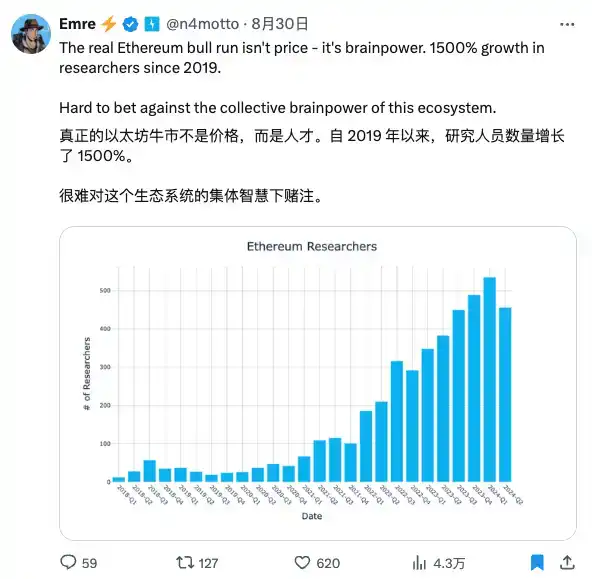
Moreover, according to statistics from Electric Capital, there are currently as many as 99 active core developers in Ethereum, a figure far ahead of other blockchain projects like Bitcoin, Cardano, EOS, or Tron. Looking at a broader scope, the Ethereum network now has over 250,000 developers and researchers, making it one of the most decentralized blockchain development communities.
In his youth, when Vitalik was abandoned by Blizzard, he could create a new world with his technology, as if everything was created by technology. After experiencing several rounds of reshuffling among Ethereum team members, he finally realized his own limitations; Vitalik's self was deconstructed from this point onward.
As he wrote at the end of his reflections on turning 30: communities, ideologies, "scenes," nations, or very small companies, families, or relationships—are all created by people.
Not created by technology. Moreover, Vitalik is no longer the youngest, smartest, or even the most representative technical researcher of the roadmap in Ethereum. Vitalik's role will continue to diminish, and one day, Ethereum will become Ethereum without Vitalik.
Perhaps it is time to imagine Ethereum without Vitalik.
Recommended Reading:
Brother Magi and Yi Nengjing Return, Is the NFT Market Entering a Deep Shift?
Founders of Solana and Base Start a Debate: Does Content on Zora Have "Fundamental Value"?
 Risk warning
 Risk warning