BTC Strategy in the Era of High-Performance Public Chains: Solana and the Transformation of On-Chain Capital

 In the era of high-performance public chain competition, it is ultimately not a simple TPS race, but rather a matter of who can build a more active and efficient on-chain economic ecosystem.
The heat of high-performance public chains has never been as high as it is today. The congestion and high fees of the Ethereum network have shifted the market's focus to emerging public chains like Solana, Avalanche, and Base. These chains have gained favor among developers and users due to their higher TPS and lower transaction costs, with Solana being particularly prominent—not just because of its speed and low fees, but also because its unique technical architecture offers new possibilities for on-chain strategies.
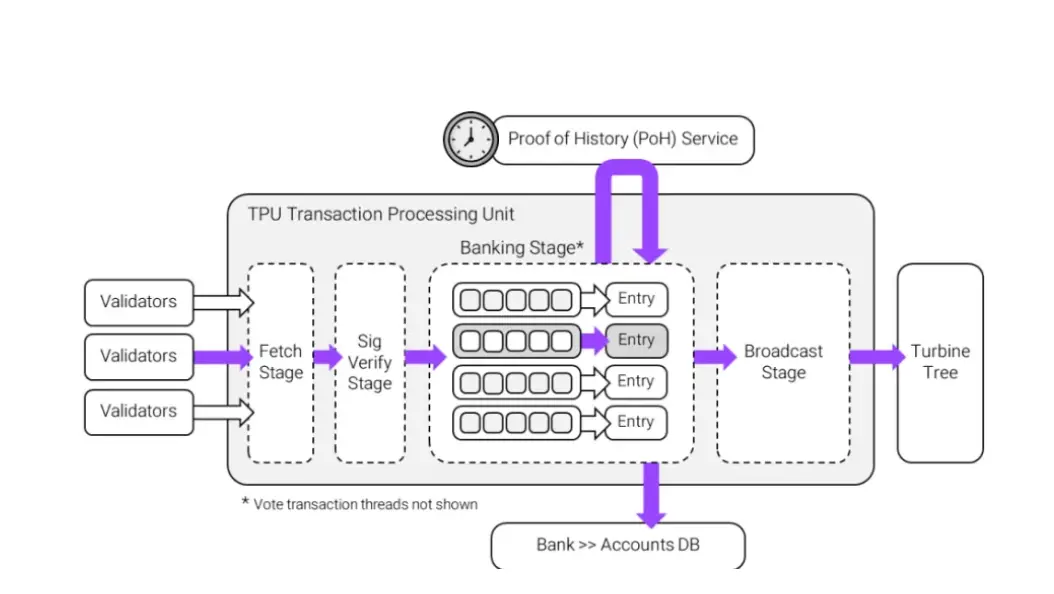
The core innovation of Solana lies in its Proof-of-History (PoH) and Sealevel parallel execution engine. PoH essentially timestamps each transaction, ordering on-chain operations to reduce the time nodes spend on redundant confirmations. For example: imagine a group of friends queuing to buy tickets; if everyone has to ask "who's in front of me," the whole line moves slowly; PoH is like everyone having a queue number, allowing them to proceed directly by number, instantly improving efficiency. Sealevel allows non-conflicting transactions to execute simultaneously, similar to a supermarket checkout where A buys apples and B buys milk; both can operate at the same time, but if they both rush for the last bottle of apples, they must queue. This way, Solana can process a large number of transactions in parallel in most cases, significantly increasing throughput, but during peak times, transaction rollbacks may still occur, requiring developers to consider conflict control in smart contract design. The editor's view is that while the speed and low cost of high-performance chains are attractive, the complexity brought by transaction parallelism poses new challenges for strategy design.
However, high performance is just a basic condition; what truly determines the vitality of a public chain is the activity level of on-chain assets. This exposes a key issue: BTC, as the largest digital asset by market capitalization, has long been in a "sleeping" state on high-performance chains. Whether it's cbBTC on Solana or wrapped BTC on other chains, most can only serve as transaction mediums or basic collateral, failing to generate direct returns or participate in complex strategies. The dispersion of liquidity and low efficiency is akin to wasting a Ferrari just for commuting.
The complexity of cross-chain operations further exacerbates this issue. Users wanting to transfer BTC from Ethereum to Solana to participate in high-frequency trading strategies face high cross-chain fees, long confirmation times, and various technical and security risks. Traditional cross-chain bridge solutions either rely on centralized custody or have extremely high technical complexity, making it difficult for ordinary users to use smoothly.
In this context, liquid staking tokens (LST) provide new options for Bitcoin holders. Currently, various LST solutions have emerged in the market, among which Lombard's LBTC is a typical 1:1 BTC-backed product, usually offering an annualized return of around 1%. The technical feature of this type of product is the non-rebalancing design: the number of tokens held by users remains unchanged, but the underlying BTC corresponding to each token gradually increases with staking rewards. For example, the initial 1 LBTC may correspond to 1.01 BTC after a period of time, achieving capital appreciation in this way.
In terms of security mechanisms, such products typically adopt a multi-institution custody model, ensuring fund safety through multi-signature technology and reserve proof. LBTC uses a custody alliance composed of 14 digital asset institutions to disperse risk. However, any custody solution carries counterparty risk, and users need to weigh convenience against autonomy.
In terms of technical implementation, products like Lombard are exploring cross-chain functionality. Based on protocols like LayerZero, some LSTs have already achieved bridging from Ethereum to Solana: by verifying transactions through light nodes, utilizing a decentralized relay network to transmit messages, and combining oracle services to provide price data for asset mapping. Theoretically, users can complete cross-chain transfers within minutes.
As more LST products are deployed across different chains, the strategy choices for BTC holders are indeed expanding. They can use such tokens as collateral in DeFi protocols, participate in DEX trading, or engage in lending operations. This trend indicates that Bitcoin is transitioning from a mere store of value to a more active DeFi asset, but it also introduces new technical and market risks.
Market Impact and Future Trends
From a broader perspective, this change has threefold significance. First is the improvement in capital efficiency—BTC is no longer a static asset but a dynamic capital that can participate in multiple yield strategies simultaneously. Second is the validation of technical feasibility—demonstrating that high-performance chains can indeed support complex financial strategies, with perpetual contracts, liquidity mining, and lending operations running smoothly in the Solana environment. Finally, it provides a replicable template for the entire industry, showcasing how to achieve the monetization and activation of cross-chain assets while ensuring security.
Of course, this process is not without risks. The security of cross-chain bridges remains a challenge, as many historical hacking incidents have been related to cross-chain operations. The stability of high-performance chains under extreme market conditions also needs further validation; Solana has previously experienced outages due to network overload. The uncertainty of the regulatory environment cannot be overlooked either, as the regulatory stance of various countries on LST products is still evolving.
However, from a developmental trend perspective, the activation of core assets like BTC in a multi-chain ecosystem is an irreversible trend. The demand from traditional financial institutions for yield-bearing digital asset products continues to grow, and the technological infrastructure is constantly improving. The development of new technologies such as zero-knowledge proofs and account abstraction will further lower user thresholds and enhance the security and convenience of cross-chain operations.
Market data also supports this judgment. Currently, the total market capitalization of BTC is about $1.2 trillion, but the BTC assets participating in DeFi account for less than 1% of the total supply. If this ratio can increase to 5%-10%, the corresponding market size would reach $60 billion to $120 billion. The liquid staking market on Ethereum has already validated the feasibility of this model, with a total locked value exceeding $40 billion, providing a good reference for the development of BTC LST.
The competition in the era of high-performance public chains is ultimately not just a simple TPS race, but rather about who can build a more active and efficient on-chain economic ecosystem. Technical performance is foundational, but asset activity, cross-chain interoperability, and user experience are the key factors that determine success or failure. The successful launch of LBTC on Solana not only provides strong support for Lombard's upcoming token issuance but also demonstrates a viable path for the entire industry from technological innovation to the realization of commercial value.
 Risk warning
 Risk warning