The Finance of Real Estate: Fixed Income-like Assets and Call Options, Towards On-chain Asset Generation
 Core Viewpoint

 When the halo of emotions and culture fades, how should we understand its true value from a purely financial perspective?
"Homeownership" is a deeply rooted belief in East Asian culture, serving as the cornerstone of family stability and wealth inheritance. From "Rich Dad Poor Dad" to TV dramas like "Dwelling Narrowness" and "Tokyo Women's Guide," the obsession with buying a home seems to be the ultimate goal of striving.
However, 2020 became a watershed year. As housing prices in first-tier cities entered a downward trend, the myth of "always rising" that lasted for twenty years was shattered. When down payments could be consumed by price declines, and the middle class underwent a profound and forced "financial education," we were compelled to reassess real estate as the most important asset class. When the halo of emotion and culture fades, how should we understand its true value from a purely financial perspective? The answer can be broken down into two core parts: a "quasi-fixed income product" that provides a safety net, and a "call option" full of imaginative potential. All of this seems to point towards a more efficient and transparent realization form—RWA.
Ⅰ Redefining Real Estate Value—The Safety Net of "Quasi-Fixed Income"
From a financial perspective, the value of any asset derives from the cash flows it can generate in the future. For real estate, its most fundamental value is the rental income it can provide as living space, after stripping away speculative components. Therefore, real estate is essentially a "quasi-fixed income product," and the core metric for measuring its value is the "rent-to-price ratio" (or "rental yield"), which is monthly rent divided by total property price (or annual rent divided by total property price).
The Reality of Low Rent-to-Price Ratios: When Tenants Are Happier Than Landlords
In core areas of first-tier cities in China, rental yields are as low as around 1.5%, meaning that property investors would take nearly 70 years to recoup their investment through rent, far below the healthy international level of 4%-5%. When an asset's "dividend yield" (rental return) is significantly lower than its opportunity cost, the only reason to hold it is the expectation of future price increases. Once this expectation reverses, the valuation logic of real estate will revert from "investment" to "consumption," and its intrinsic value must be anchored by rental levels.
How to Find Value Gaps: Investment Decisions Driven by Rent-to-Price Ratios
When investment returns to common sense, the rent-to-price ratio becomes a ruler for finding value. Investor "trend animal NickNie" chose to invest in real estate in Urumqi, with a clear motivation behind it—seeking value areas nationwide where rental yields can reach 3%-4%, purely viewing it as a high-quality "quasi-fixed income" product to hold.
In contrast, Hong Kong provides a more mature model. The rental yield in Hong Kong is around 3.5%. For investors, this signifies the arrival of an extremely important watershed—"your rent can cover your mortgage payment." After paying the down payment, the asset can generate its own cash flow without requiring continuous cash input. With the leverage effect of a 30% down payment, the annualized investment return of a property in Hong Kong can easily reach around 7%, making it an attractive fixed income product globally.
The Hidden Costs of "Quasi-Fixed Income": Property Management Fees and Asset Depreciation
However, stable rent is not net income. Holding costs, especially property management fees, are also key factors determining the long-term value of an asset. A major hidden danger of real estate in mainland China is the generally low property management fees.
In the early stages of a property's depreciation, the impact may not be strongly felt, but as the property ages, elevators need repairs, and exterior walls need maintenance, one realizes that the initial fees collected are far from sufficient. This shortsighted management model may lead to a dramatic decline in community quality over the long term, ultimately becoming a vertical slum that no one wants to take over.
In contrast, in mature markets like New York and London, property management fees and property taxes can be as high as around 2% of property prices. Although this erodes some rental income, it also ensures the longevity of buildings and the long-term preservation of assets. This seemingly high cost is, in fact, a necessary expense to maintain the stability of "quasi-fixed income" products.
Ⅱ Beyond Stable Income—The Imaginative Space of "Call Options"
If the quasi-fixed income attribute is the cornerstone of real estate value, then the call option attribute is its amplifier, the core secret behind the soaring property prices in China over the past twenty years. This option bets on the macro future of the country.
Reassessing the Value of China's Real Estate "Call Options"
A call option refers to the portion of the property price that exceeds rental returns, encompassing three core expectations for the future:
Demographic Dividend: The ongoing urbanization process brings a continuous influx of young people and housing demand to large cities.
Economic Growth: Rising disposable income supports higher property prices.
Positive Expectations: The social consensus of "someone will always take over" encourages people to leverage their finances by emptying "six wallets."
Over the past twenty years, these three factors have consistently materialized, inflating the value of the option and creating a significant wealth effect. However, today, changes in demographic structure, a slowdown in urbanization, and a shift in economic growth rates have altered all three core supporting factors. When each policy leads not to price increases but to an increase in listings, it signifies that this hidden call option is being ruthlessly repriced by the market.
New Global Options
As the value of domestic options diminishes, astute investors are beginning to turn their attention to the global stage, seeking the next market with high growth potential— the Middle East.
Extremely High Safety Net (Quasi-Fixed Income): The rental yield in the core area of Riyadh, the capital of Saudi Arabia, reaches an astonishing 10%. Due to the country's wealth and high per capita disposable income, rental levels have solid support.
Huge Imaginative Space (Call Options):
Society: After the new crown prince took office, reforms were implemented, allowing women to work. As women gain independent economic sources, large families will transition to smaller households.
Population: The population is extremely young, with many children per household. To put it bluntly, the future "buyers" are continuously emerging.
Prices: The property price in Riyadh is about 15,000 RMB per square meter, while Dubai, as a benchmark, is around 50,000 RMB per square meter, indicating several times of catch-up potential.
Ⅲ Future Outlook—Towards On-Chain Asset Generation
Although the above analytical framework and trading techniques can greatly enhance investment efficiency, the pain points of traditional real estate still exist: high investment thresholds, poor asset liquidity, and information opacity.
A property costing millions will exclude most small and medium investors. Buying and selling can take months or even longer, with cumbersome and complex transaction processes. All of this is precisely what real estate tokenization can solve.
Tokenizing "Quasi-Fixed Income + Call Options"
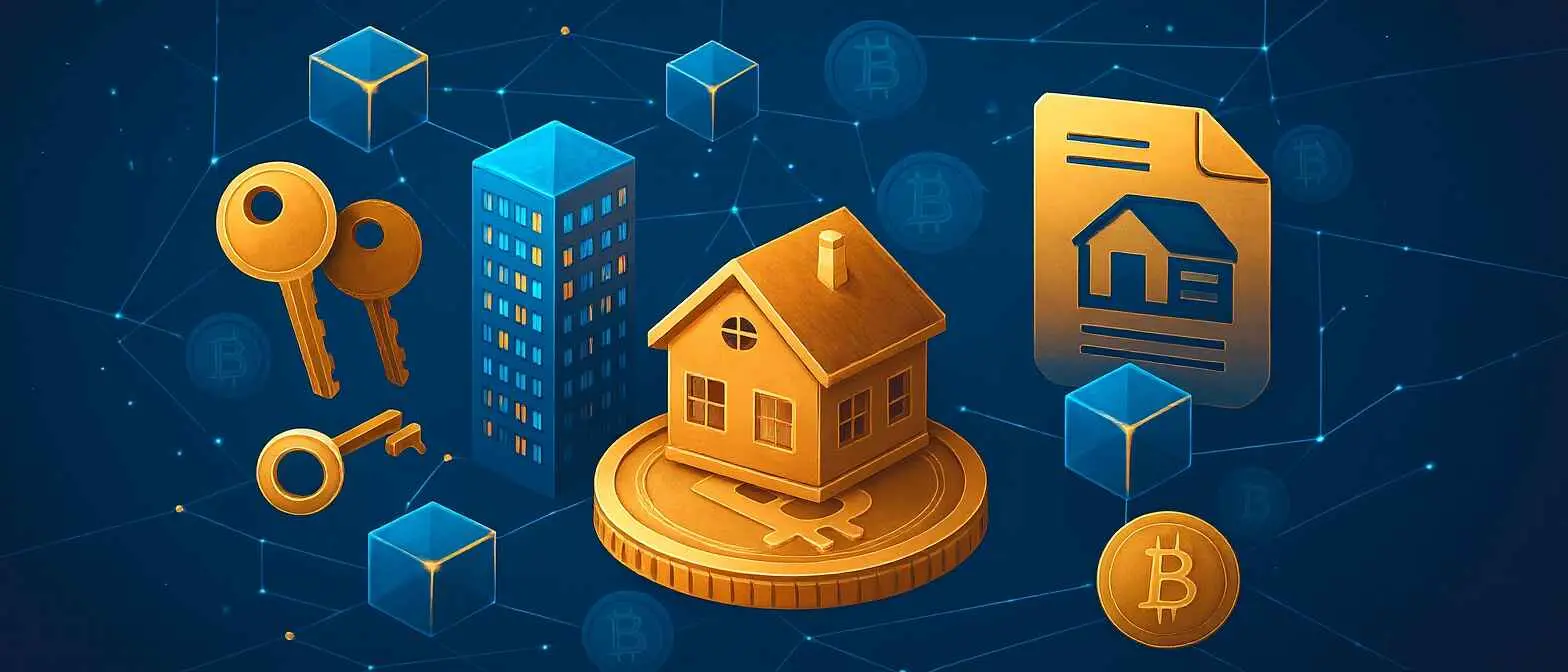
Imagine we can package an apartment located in Riyadh, Saudi Arabia, with a 10% rental yield and significant appreciation potential into digital tokens using blockchain technology. This financial product can be cleverly designed in two layers:
Quasi-Fixed Income: Represents stable rental income rights. Holders can receive rental "interest" distributed automatically by smart contracts, just like holding bonds.
Call Option: Represents ownership of the future appreciation portion of the asset. Holders can share in the capital gains from rising property prices.
The Revolution Brought by Technology
This model will bring disruptive advantages:
Fragmented Ownership: A property worth millions can be divided into tens of thousands of tokens, lowering the investment threshold to as little as $1, allowing anyone to participate.
Extreme Liquidity: These tokens can be traded on-chain or on digital asset exchanges 24/7, enabling near-instant buying, selling, and settlement.
Absolute Transparency: All information, such as rental income and transaction history, is recorded on the blockchain, making it public, transparent, and immutable.
Building a Global Real Estate Capital Market
Investing in global real estate will no longer require complex cross-border procedures and large amounts of capital. Investors can conveniently build a global investment portfolio on their phones, including rental income from Hong Kong apartments, appreciation potential from Saudi properties, and shares of New York commercial real estate, just like buying and selling stocks. They can freely allocate the proportions of "quasi-fixed income" and "call options" according to their risk preferences.
 Risk warning
 Risk warning