



Silicon Valley 101 x RootData Annual Summit Highlights: Industry Leaders Gather to Discuss New Opportunities in AI + Crypto
 Core Viewpoint

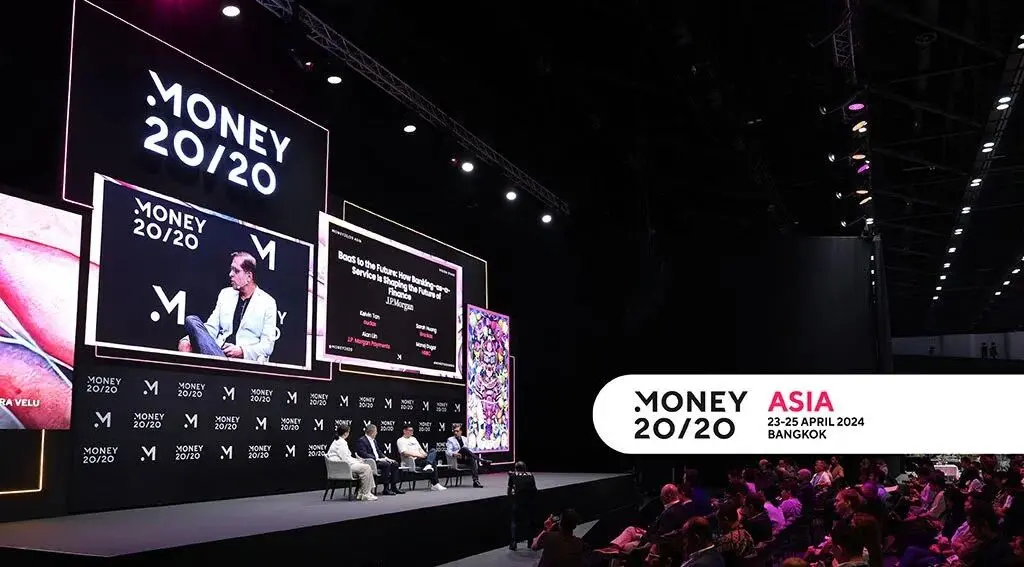
 The Silicon Valley 101 x RootData Annual Summit successfully concluded in Silicon Valley. This summit brought together representatives from dozens of well-known institutions and projects in the AI and Crypto fields, including AWS, ChainOpera AI, Gensyn, and Orange DAO, to engage in in-depth discussions on the innovative integration of AI and Crypto. The summit featured two major forums: "Valley 101 Alignment 2025 Tech Summit" and "DeInsight 2025."
On October 5, Silicon Valley time, the Silicon Valley 101 x RootData Annual Summit successfully concluded in Silicon Valley. This summit was co-hosted by Silicon Valley 101 and RootData, featuring two major forums: "Valley 101 Alignment 2025 Tech Summit" and "DeInsight 2025." The "DeInsight 2025" forum was jointly sponsored by AWS and ChainOpera AI, with blockchain media ChainCatcher, the proxy crypto browser Donut, and the AI + Web3 investment accelerator AI101Labs co-hosting.
At the event, representatives from dozens of well-known AI and Crypto projects and institutions, including RootData co-founder Hunter, AWS Solutions Architect Justin Lin, ChainOpera AI co-founder Salman Avestimehr, AI101 Labs Managing Partner Elaine Yang, Gensyn co-founder Harry Grieve, Orange DAO General Partner Orion Parrott, OpenMind CTO Boyuan Chen, Donut COO Darcy, RootData Chief Product Manager Ye Wang, Alumni Ventures venture capitalist Bryan Liu, Turnkey Solutions Engineering Head Michael Lewellen, Crossmint BD Head Nick Wang, Camp Network CTO Rahul Doraiswami, Kite AI Product Head Yusuke Muraoka, PIN AI co-founder Ben Wu, Virtuals Protocol Growth and Community Head Christoper Johnson, and Momentum BD Wesley, engaged in keynote speeches and roundtable discussions on the innovative integration of AI and Crypto.


RootData also released the “2025 Cryptocurrency Development Research Report” and the Crypto Influence Annual List RootData List 2025 at the summit. This list includes the "Top 100 Projects" and "Top 50 VCs," aiming to showcase influential and innovative key players in the Web3 space and assess the critical forces driving industry progress.
Keynote Speeches

The event began with a keynote speech by Elaine Yang, Managing Partner of AI101 Labs, titled "On-Chain Intelligence: AI Opportunities in the Tokenized Era," systematically elaborating on the investment logic and cutting-edge trends in the integration of AI and Web3.
Elaine Yang pointed out that we are at a historic turning point in the integration of AI and Web3. She believes that on-chain intelligence will become the core infrastructure of the next-generation machine economy and shared AI101 Labs' panoramic investment layout in this field. Elaine expressed optimism about AI-driven Web3 entertainment, next-generation AI browsers, and deep learning-driven on-chain transactions.

Harry Grieve, co-founder and CTO of Gensyn, delivered a keynote speech titled "Scaling Machine Intelligence with Crypto Infrastructure."
Harry Grieve noted that the current development of machine intelligence faces four major challenges: a true demand challenge at a massive scale in technology; oligopolistic monopolies and asymmetric pricing in the economy; ethical issues involving "machine rights" and "computational rights"; and security risks related to regulation.

Orion Parrott, General Partner of Orange DAO, gave a keynote speech titled "AI + Blockchain Entrepreneurship Guide," providing a clear action guide for entrepreneurs.
Orion Parrott pointed out that we are at a historic turning point where blockchain and AI technologies intersect, offering unprecedented opportunities for entrepreneurs. Regarding how to choose a technology path, he proposed a three-dimensional evaluation framework: technical fit (blockchain capability, AI tools, and ecosystem combinability), community culture (values and developer support), and governance and sustainability (upgrade paths and real user participation).
Parrott outlined a methodology for early-stage entrepreneurs: to find broken inefficient systems in reality as entry points and to use "achieving more with less code" as the golden standard for measuring platform adaptability.

Boyuan Chen, CTO of OpenMind, delivered a keynote speech titled "From Thinking Machines to Action Machines."
Boyuan Chen officially introduced the OM1 platform at the conference. This platform aims to empower various forms of robots to perceive, adapt, and act in complex human environments. He noted that OM1 adopts a modular architecture and is hardware-agnostic, allowing developers to create an AI agent that can run in a digital cloud environment or on various physical robot hardware.

Darcy, COO of Donut, detailed Donut's product vision and design philosophy.
Darcy explained that Donut aims to become the infrastructure connecting AI agents with the crypto world. It is not only a crypto browser but also a multi-agent trading framework and wallet automation platform, dedicated to becoming the unified execution front for all future AI agents. She emphasized that this design will reshape the future form of trading order flow.

RootData Chief Product Manager Ye Wang released the "2025 Cryptocurrency Development Research Report."
Ye Wang mentioned that the integration landscape of the crypto market is undergoing profound changes. The CeFi sector leads with a strong financing amount of $23.58 billion, with a single financing of $173 million being 11 times that of the infrastructure sector, demonstrating the "dimensionality reduction strike" of traditional financial power on the crypto-native ecosystem through tools like IPOs/bonds/acquisitions. Meanwhile, IPO/Post-IPO/ICO rounds account for $16.06 billion, or 47% of total financing, with an average single financing of $292 million, far exceeding the seed round's $5.1 million.
The report particularly emphasizes that ETFs and DAT are rewriting the rules of crypto financing, with the coin-stock concept leading the large financing track with $13.93 billion. The financing share of the AI x Crypto sub-track has surpassed 5%, and the deep integration of cryptocurrency and AI is becoming the strongest driving force in the capital market and early entrepreneurship in 2025.

Salman Avestimehr, co-founder of ChainOpera AI and a professor at USC, delivered a keynote speech on "Foundations of Collaborative AI Agent Networks," systematically elaborating on his proposed vision of "Crypto AGI," which aims to build a community-built and community-owned AI agent network that deeply integrates AI and blockchain technology to promote the large-scale adoption of DeFi and real-world assets (RWA).
Salman pointed out that the current DeFi and AI fields face issues of complexity in use and resource monopolies, while ChainOpera AI is committed to bridging the two fields through a community-driven intelligent agent network.

Finally, AWS Solutions Architect Justin Lin systematically elaborated on how enterprises can achieve transformation from proof of concept to large-scale implementation through AWS AI.
Justin Lin pointed out that AI development is undergoing an evolution from generative assistants to intelligent AI systems, with future goals of achieving fully autonomous workflows and multi-agent collaboration. He emphasized that model selection and evaluation are core aspects of enterprises applying AI, and by 2028, most enterprises will deploy dozens of generative AI models, necessitating the establishment of a systematic testing framework and designing architectures that support model switching.
Roundtable Discussion

Alumni Ventures venture capitalist Bryan Liu, Turnkey Solutions Engineering Head Michael Lewellen, Crossmint BD Head Nick Wang, and Camp Network CTO Rahul Doraiswami engaged in an in-depth discussion on popular topics such as the integration path of AI + Crypto and current challenges in a roundtable titled "Crypto: Next Big Thing."
Alumni Ventures venture capitalist Bryan Liu stated that AI and blockchain are perfect complements: AI is efficient but uncontrollable, while blockchain is trustworthy but slow. The combination allows AI to accelerate blockchain, and blockchain to serve as a trust layer for AI. He is particularly optimistic about blockchain as the payment and trust infrastructure for the future AI agent economy.
Crossmint BD Head Nick Wang focused on making crypto technology a payment channel for AI agents. His project is building the relevant infrastructure, while the current main challenges are the insufficient acceptance of stablecoins by merchants and the need to establish new security and accountability standards for agent transactions.
Turnkey Solutions Engineering Head Michael Lewellen mentioned the security issues brought about by the integration of AI + Crypto, emphasizing the need to set strict permission limits for AI agents operating funds. At the same time, he foresees that the combination of "identity and payment" on-chain will give rise to disruptive use cases such as automatic real-time tax reporting and promote government adoption.
Camp Network CTO Rahul Doraiswami is dedicated to using the immutability of blockchain to provide IP traceability and trust computation in the AI field. He believes that enhancing user experience and adopting more advanced cryptographic technologies are key to driving development.

Yusuke Muraoka, Product Head of Kite AI, Ben Wu, co-founder of PIN AI, Christoper Johnson, Growth and Community Head of Virtuals Protocol, and Wesley from Momentum BD engaged in an in-depth discussion on popular topics such as the value of AI + Crypto integration, the future of decentralized AI, and killer applications in a roundtable titled "AI + Crypto: Building the Future of the Digital Economy."
Christoper Johnson, Growth and Community Head of Virtuals Protocol, believes that the successful integration of AI and Crypto lies in simple applications that solve specific pain points. He is optimistic about the business model of self-collaborating agents and believes that decentralization is key to resisting monopolies by giants.
Ben Wu, co-founder of PIN AI, advocates that users should have complete control over their personal AI in the future, breaking the data silos of centralized platforms by building data wallets, allowing personal AI to become the "coordinator" that schedules various professional AIs.
Yusuke Muraoka, Product Head of Kite AI, believes that the next-generation economy will be driven by AI agents, and the urgent task is to establish secure and controllable payment infrastructure, achieving trustworthy micropayments between agents through verifiable authorization proofs.
Wesley from Momentum BD stated that the core of the next wave of digital assets lies in bringing trillion-level traditional assets (such as stocks) on-chain, while the current main obstacle is the mismatch between slow regulation and rapid technological innovation.
 Risk warning Risk warning