








Dialogue with Deribit CEO: Why Binance Didn't Beat Us and the Next Steps After Being Acquired by Coinbase
 Core Viewpoint

 An interview with Deribit CEO Luuk Strijers reveals how the platform has grown from a niche crypto options platform to a leader in institutional trading. Deribit accounts for over 80% of BTC options trading volume and over 90% of ETH options trading volume.
Original Edit | Wu Says Blockchain
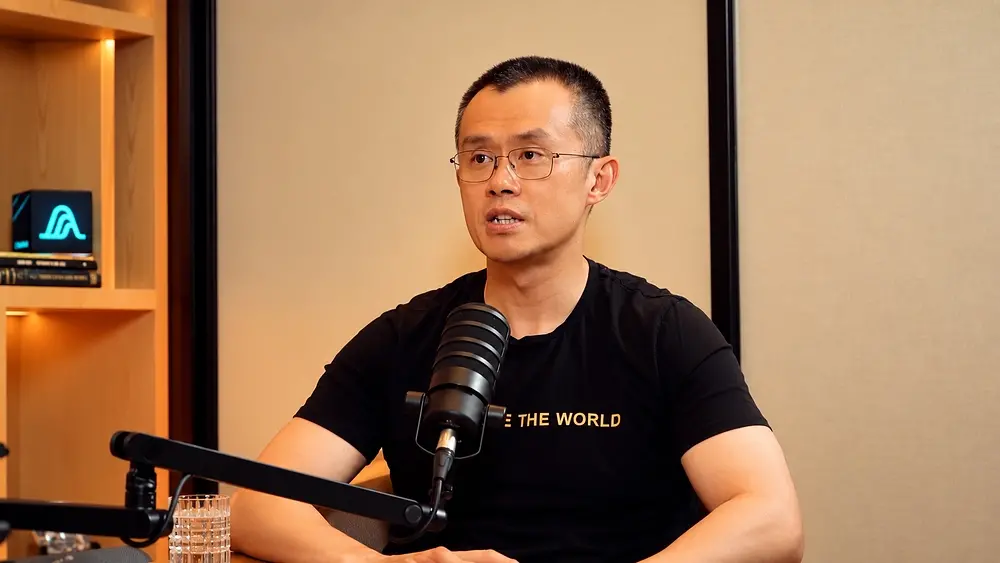
In this interview with Wu Says, Deribit CEO Luuk Strijers shared the company's journey from a niche platform focused on crypto options to a leader in institutional trading. Deribit is currently the largest cryptocurrency options exchange, with its BTC options trading volume accounting for over 80% of the total market volume, and ETH options trading volume accounting for over 90% of the total market volume.
Luuk pointed out that Deribit's early entry, consistent product focus, and infrastructure advantages are key to its success against multi-product competitors like Binance. Luuk elaborated on the reasons behind the acquisition by Coinbase, including strategic alignment and synergies for global expansion. He also addressed challenges regarding compliance processes, particularly KYC, and emphasized that the platform will continue to focus on serving professional institutional investors.
Additionally, Luuk discussed his views on DeFi options platforms, future market expansion plans, product evolution directions (including the introduction of smaller contract sizes and longer-term options products), and Deribit's role and positioning as a core component of Coinbase's international options business.
Audio transcription was completed by GPT and may contain errors. Please listen to the complete podcast on platforms like Xiaoyuzhou and YouTube. The author's views do not represent those of Wu Says, and readers are advised to strictly adhere to the laws and regulations of their location.
Xiaoyuzhou: https://www.xiaoyuzhoufm.com/episodes/68eb796e224325ea70d4151a
YouTube: https://youtu.be/SrY5LtKonOE
Luuk's Personal Background and Entry into the Crypto Industry
Maodi: Good afternoon, Luuk. Thank you for taking the time to speak with us. We have been following Deribit's development for some time, and we are very pleased to have an in-depth conversation with you today. First, could you please briefly introduce your personal background and career experience? What was your career path before joining Deribit? What prompted you to enter the crypto industry?
Luuk: Thank you for the invitation. First of all, regarding why I entered the crypto industry— I joined Deribit in 2019 as the Chief Commercial Officer. Before that, I worked at the Singapore Exchange for about five years. Prior to that, I worked at a Dutch options exchange for five or six years. My earliest career experience was in the capital markets in Amsterdam, where I worked for about five years; that was my first job in 2004. It has been 21 years now, with about 15 to 16 years spent in exchange-related work.
I have been following traditional exchanges, options trading, and futures trading for nearly fifteen years. When the crypto boom started around 2016 to 2017, I was also doing some spot trading. At that time, I realized that this field contained enormous opportunities and potential, and I was very eager to explore further. This thought ultimately led me to Deribit. I officially joined in September 2019, and I have been the CEO for almost two years now.
Why Deribit Leads the Options Market Over Other Major Exchanges
Maodi: Deribit is a rather unique exchange; it was not founded by a Chinese team like many other platforms. In your opinion, why has Deribit been able to survive and succeed in this field? We know that many exchanges like Binance, Bybit, and OKX have also attempted to launch options products but have never been able to capture market share from Deribit. I find this very interesting; they seem to do everything except break through in crypto options. Why do you think that is?
Luuk: I believe there are several reasons. We started in 2016, which was very early. At that time, hardly anyone cared about crypto options. Bitcoin's volatility was much greater than it is now, so the premiums for options were also very high. There were no dedicated market makers for options in the market at that time, so the quality of the order book was quite poor.
However, over time, this market gradually grew. By 2018, we saw professional market makers entering the space, with some teams spun off from traditional large options market-making firms, specifically building trading teams for crypto options. With their entry, the bid-ask spreads became narrower, and the depth of the order book improved, allowing us to gradually build a good reputation. The first batch of hedge funds and small to medium-sized institutions began to enter, and we grew little by little. This "first-mover advantage" continues to help us significantly today. Many users choose Deribit because we were among the first serious players focused on options, and we have consistently maintained a high level of commitment to this sector.
Everything we do revolves around options. All our resources—including our team and infrastructure—are focused on options trading. For example, we do not use cloud services; instead, we deploy dedicated hardware ourselves, which allows for faster trade execution. We also offer features like multicast, which is a super low-latency binary data stream service that no other platform can achieve as quickly. We have market-making protection mechanisms and a series of other features that others have not developed because they do not need to— their product range is too broad.
You can think of those large platforms as "crypto supermarkets"; they do everything: spot, futures, tokens, NFTs… Product managers are competing for resources every day: developing spot today, perpetual contracts tomorrow, and only occasionally focusing on options.
For us, it is always options. Whether today, tomorrow, or the day after, we always focus solely on options.
This focused mindset gives us an advantage and allows us to create a high-quality product. We have done everything we can to ensure that this product is of high quality, which is our uniqueness. Of course, I am not saying that other platforms have not done well; some platforms have indeed grown significantly, but we have intentionally chosen to take a vertical route. We have given up some businesses; for example, we have not built a large spot market, but we have excelled in options.
Product Depth, Liquidity, or Institutional Trust? What Drives Deribit's Market Leadership
Maodi: Do you think Deribit's leading position in the crypto options space comes more from product depth, market liquidity, or from the trust of institutions and professional traders?
Luuk: As I mentioned earlier, our core advantage actually comes from our mindset of building high-quality products. This includes bringing in top-tier market makers, designing effective incentive mechanisms, ensuring sufficient market liquidity, and providing features like market-making protection. We have been working hard to compress bid-ask spreads and maintain the depth and quality of the order book.
But we do much more than just trading. We also have significant advantages in compliance and operations. We are regulated in multiple jurisdictions, and our platform architecture is specifically designed for institutional users. For example, we have SOC 2 Type II certification, which signifies that our operational security system has been audited and verified. We also have ISO certifications that comply with various industry standards. I believe many of the other exchanges you mentioned have not undergone financial audits, while we have been audited for five consecutive years.
These quality indicators allow us to stand out in competition. Especially after the collapse of FTX, the market's focus on "quality" has become unprecedentedly important. Investors are starting to truly compare platforms; if you are going to place $100 million in assets on a platform, you must ensure it is safe, reliable, and professionally operated. That is why many people have chosen us.
Indeed, we may have lost a bit of market share in retail users or some simpler products. But on the institutional side, our growth has been very significant. Currently, about 85% of the trading volume on our platform comes from institutional investors, and I believe this proportion will continue to hold. Because we provide a highly professional product that attracts those who truly understand the field.
If you come from traditional finance and now want to start an asset management firm, brokerage, or other crypto-facing financial business, what you are most familiar with and want to trade are still the things you have been doing for decades—options and futures. You will definitely ask, "Who is doing the best in this field?" and the answer is us. Institutional clients seek quality and liquidity, and that is precisely what we excel at.
Acquisition by Coinbase: Why Deribit Chose to Sell and Future Synergistic Development
Maodi: We know that Coinbase acquired Deribit this year. Besides Coinbase, were there other potential buyers? I heard that Binance, Bybit, and GSR also expressed interest. Can you share more information? What was the reason behind Deribit making this decision? What were the core motivations? Why not choose to remain independent? From a strategic perspective, what changes should Deribit users expect after being integrated into Coinbase?
Luuk: This question contains many layers. Let me start from the beginning. Our founders initially hoped to cash out a portion of their shares, so we brought in an investment bank, Deloitte, and some other advisors to assist us in pushing this process forward.
However, as time went on, the market situation changed, partly due to political factors like Trump's election. Thus, what started as a plan to sell only a portion of the shares gradually turned into an interest in selling the entire company. There were indeed multiple potential buyers, including some you mentioned. But I cannot confirm who exactly because we signed confidentiality agreements, but I can say that there were indeed other options.
So why did we ultimately choose Coinbase? First of all, Coinbase is a publicly traded company, which makes the transaction process simpler and more transparent. They can pay with stocks that have a clear present value—this is not a vague future promise but real liquidity that can be realized now.
But perhaps more importantly, we share the same philosophy. Coinbase itself has a very strong product that dominates the spot trading market. Their product construction approach is quality-oriented—no shortcuts, compliance first, and financial stability. They want to achieve global expansion, and so do we.
Deribit's product is strong, but it is a "niche" product; we are not a "one-stop supermarket" trading platform. Coinbase has a more comprehensive product line. When the two come together, we can provide a complete product architecture that can impact industry-leading players in both quality and breadth. At the same time, we can start serving some user groups that we previously could not reach, such as the retail market.
So when you combine Coinbase's brand, trust, compliance qualifications, and financial strength with Deribit's expertise in the options field, it forms a very powerful combination. This is also the main reason we ultimately chose Coinbase—of course, financial factors are also an important part of it.
Will KYC Become More Complex After the Coinbase Acquisition? How Deribit Responds to User Compliance Complaints
Maodi: The next question might be a bit tricky. We see many users complaining that Deribit's KYC process is too complicated, even to the point of being "painful." How do you respond to these criticisms? Will KYC and compliance become stricter after the acquisition by Coinbase?
Luuk: First of all, I want to apologize to all users—compliance is indeed a "bad" process. It is really hard for us to make it a pleasant experience. While we strive to make it as smooth and automated as possible, the reality is that global regulatory standards are constantly rising and will only become stricter in the future.
The challenge is how the platform adheres to these rules. For example, enhanced due diligence regarding the source of funds has become a mandatory requirement. We must ask users to provide proof of the source of funds, proof of residence, and various other documents. There are also language barriers. It is particularly difficult for Chinese users because many government bills do not have addresses, and many bills are paid through platforms like WeChat, which is different from the global norm. Other regions typically verify addresses through bank statements, which is not common in China. Therefore, while this is a global issue, China does face some unique challenges.
So will there be any changes after integrating with Coinbase? Actually, there won't be much change—Coinbase follows the same rules as we do, and all regulated platforms must adhere to these rules. The more globalized the platform, the more complex the compliance becomes. Coinbase itself is a global company, so the compliance challenges they face are the same as ours.
In the past, Coinbase received more user complaints than we did, and they specifically formed a task force to address these issues. While I do not have exact statistics, to my knowledge, they have resolved about 90% of the backlog, and the entire process has become much smoother. Now, the waiting time for users has decreased from a week to possibly just one hour. While I can't provide precise numbers, the general direction is correct.
So yes, this process will still feel annoying. But at the same time, we will respond to user issues more quickly. We will do our utmost to optimize the process and reduce unnecessary friction. Of course, there will still be some obstacles, but as long as you contact us or Coinbase through email, Telegram, Twitter, or other common channels, we will follow up and resolve issues promptly.
Users also need to understand that regulatory standards will only become stricter, and there is a rationale behind this. If we want blockchain and cryptocurrency to truly become a globally recognized payment system, we must ensure that every transaction is compliant—whether it is a transfer from a Chinese user to Europe or vice versa. To achieve this, VASPs (Virtual Asset Service Providers) like us must verify user identities, sources of funds, transfer destinations, and ensure that the entire path is documented.
This is indeed cumbersome on an operational level, but as more VASPs—there are hundreds globally—gradually adopt the same standards, everything will become smoother. This way, when we need to verify user identities or transaction information with another platform, the process will be faster. The real problem arises when the other platform does not respond, and we have to conduct manual investigations, which can be very time-consuming.
Will You Ban Users from China or Hong Kong After Integrating with Coinbase?
Maodi: After integrating with Coinbase, will you ban users from certain countries or regions, such as mainland China or Hong Kong? How will you balance regulatory compliance, trading speed, and user experience?
Luuk: That’s a good question. We will not ban more regions. We will only maintain the current list of banned countries, which is a "standard banned country list" commonly followed by many exchanges worldwide. Mainland China and Hong Kong will not be banned.
Will Decentralized Platforms Challenge the Status of Centralized Exchanges?
Maodi: Recently, we have seen some on-chain futures platforms performing strongly, such as Hyperliquid. What do you think of this trend? Do you believe that decentralized options platforms could potentially challenge the dominance of centralized exchanges like Deribit in the future?
Luuk: The answer is "yes and no." I think Hyperliquid and similar platforms have indeed done an impressive job in user interface, trading experience, and liquidity. But the problem is that these platforms may serve 10,000 users today, and tomorrow another platform airdrops tokens, and those users might just move over. The day after tomorrow, it could be another new platform. This constant migration leads to very low user loyalty and makes institutional adoption very difficult.
For an institution, to start trading on a platform, it must first conduct comprehensive KYC and due diligence. If users frequently jump platforms, institutions cannot bear the repeated onboarding costs and processes. This is a major reason why institutions are reluctant to engage deeply in DeFi.
The second, and perhaps most important reason, is the lack of KYC. If you do not know who the counterparties are, then in today's increasingly strict global regulatory environment, you cannot be compliant. Large institutions cannot bear such risks.
So does DeFi have a future? Of course. It is a remarkable concept that will continue to exist and succeed in some form. But will it be widely adopted by institutions? In its current form, I do not think so. However, I do not believe DeFi will disappear; it will continue to evolve, and more new projects will emerge. I sincerely wish Hyperliquid and similar platforms all the best; they are indeed doing well.
The bigger question is: will users remain loyal to a particular platform? Will standardized models and more refined KYC processes emerge in the future? Perhaps, but not yet.
Does DeFi pose a threat to centralized exchanges? To some extent, yes. Because those traders active in DeFi could have traded on Deribit, Binance, and other centralized platforms. Perhaps we cannot serve them, either due to regulatory restrictions or product mismatches, or maybe they currently prefer what DeFi offers, such as liquidity or certain features.
The reality is likely a mixed result of both. Yes, we have indeed lost some market share to DeFi, but that is not a bad thing. It is part of the natural evolution of the market. What these platforms are doing is meaningful, but they serve a completely different user group. Our institutional clients will not turn to DeFi in the short term.
So I do not believe that the future will only have DeFi or only have CeFi; both will continue to coexist and grow together.
Strategic Focus: Deribit's Development Path After Integrating with Coinbase
Maodi: Looking ahead, what is Deribit's next strategic focus? Will you continue to concentrate on options business within centralized exchanges, or do you plan to pursue broader innovations? Will Deribit be fully integrated into Coinbase, or will it maintain a certain degree of independence?
Luuk: Both aspects will be present. We will become Coinbase's international business unit. Coinbase's goal is to achieve global expansion, and we are part of their toolbox—or more accurately, now it is our toolbox because we have essentially become a platform. Although we are still operating independently at this stage, this will gradually change.
We are gradually integrating into the broader Coinbase organization—but not the U.S. business part. You need to view Coinbase as a structure composed of U.S. and non-U.S. parts, and we will represent the non-U.S. part. Of course, in the future, we may also enter the U.S. market, but for now, our positioning is as Coinbase's international business arm.
This means we will still focus on the options business but will also expand into more products. We are expanding our product line and plan to integrate with Coinbase's existing products to jointly provide a complete and comprehensive trading product suite.
In practical terms, for example, we will introduce Coinbase's high liquidity spot market to users. Our own spot market is currently very small, so integrating Coinbase's spot liquidity will be a significant enhancement. In exchange, we will also provide Coinbase with our advantages in options liquidity and technical infrastructure.
These integrations are being planned—currently, they are literally on the drawing board. A specific timeline has not yet been determined, but our goal is to roll out these integration projects over the next year.
The Role of the Asian Market in Deribit's Future Growth
Maodi: Do you think Asia, particularly Hong Kong or Singapore, will play a more important role in Deribit's expansion?
Luuk: I believe Asia is a very promising market in the cryptocurrency space. Not only retail users but also many family offices and hedge funds have shown strong interest. Overall, the risk appetite in the Asian region for investing and trading high-risk assets seems to be higher than in other parts of the world. So yes, I do believe that Asia holds more opportunities.
However, we must also consider this issue from a compliance and licensing perspective. We need to clarify what we can and cannot do in various regions, where we can establish operations, and where we are restricted. Currently, we are evaluating how best to address these challenges.
Team Size and Corporate Culture: A Comparison of Deribit and Coinbase
Maodi: What is the work culture like at Deribit? How many employees do you currently have?
Luuk: We currently have about 175 employees. I am not sure about the exact number at Coinbase, but after our merger, there will be about 4,000 employees in total. This means Deribit accounts for 175 of those 4,000.
Most Coinbase employees are in the U.S., but they also have teams in Singapore, India, and London, covering both coasts of the U.S. Deribit is a smaller team; we have a relatively large office in Amsterdam, primarily responsible for technical work, including development, servers, systems, and security.
We will continue to consider Amsterdam an important technical center, but relative to Coinbase's scale in the U.S., our portion will be much smaller. In the future, we will collaborate in appropriate areas while maintaining independent operations where necessary.
The Biggest Challenges Faced as CEO and Deribit's Core Competitive Advantage
Maodi: As CEO, what has been the biggest challenge you have faced in leading Deribit? If you had to summarize Deribit's core competitive advantage in one sentence, what would you say?
Luuk: Since I joined Deribit in 2019, the biggest challenge over the years has been dealing with various crises. We have experienced some technical issues, the most representative event being when we had Three Arrows Capital (3AC) as a shareholder, and they later went bankrupt. This brought many complex issues—financial, legal, regulatory, and operational. We had to go through legal processes, which put a lot of pressure on the team. It can be said that the journey has not been smooth.
But we have learned from it. I think early on, we were too lenient with our clients, granting credit limits that exceeded what was appropriate. This was a painful but valuable lesson. We have become stronger because of it, and our internal policies have changed, raising overall standards. You could say that without these challenges, we might not have such strict operational discipline today—such as conducting annual financial audits, obtaining various certifications, and establishing compliance systems.
So, although we have gone through many ups and downs, these "stress tests" have made us more mature.
Deribit's strength comes not only from our products but also from how we treat our customers. Of course, we are not perfect; we have had technical issues in the past. But we always take responsibility, compensate customers, and have never let users suffer losses due to our internal problems.
If I had to summarize, I would say our advantage lies in having both high-quality products and a trustworthy, dedicated team that maintains good relationships with customers. This is the core value of Deribit.
Looking ahead, products may continue to evolve, but our service approach will not change—we will continue to provide a high-quality product experience and always put users first.
Additional Q&A Session
Does Deribit Have Strategies to Address Market Share Challenges?
Luuk: First of all, we have recently set historical highs; these have been some of the best months since Deribit's inception. If you look at 2024 and 2025, we are breaking records one after another. So, the growth of IBIT is actually a good thing. They are targeting U.S. retail crypto options trading, which is precisely the service we currently cannot provide. So we sincerely wish them all the best because we are collectively driving the development of this industry, expanding market demand, and making options products more popular. They are indeed doing an excellent job serving a previously uncovered market.
There are indeed many people who want to trade, but we were unable to accommodate them at that time. Now they finally have the opportunity, which is a good thing. But this is not happening at the expense of our market share—we are also continuously innovating and reaching new highs.
So our current market share remains solid. We still hold about 75% to 80% of the open interest in options. Yes, there are many competitors in the market—Binance, OKX, CME, etc.—but we are still undoubtedly number one.
This is actually a comparison between different products. For example, ETFs are dollar-denominated derivatives, while our products are priced in Bitcoin. So while they fall under the same broad category, they are not identical.
Currently, there are two mainstream options in the market: one is the offshore market we serve, and the other is the domestic user market like IBIT. The simultaneous growth of these two markets indicates that the overall opportunities in the industry are expanding. Bitcoin is reaching new highs, and I believe it will continue to rise. The market is expanding, demand is growing, and naturally, more participants are needed. In the past, U.S. users were blocked from participating; now they are back.
So their success is good for us. They are doing well, and we will benefit. We have many common market makers, and pricing is generally similar. You can trade on IBIT and then hedge on Deribit, or vice versa. This creates arbitrage opportunities and new trading strategies, attracting more new participants into this ecosystem.
Although Bloomberg's article suggests this is eating into our share, that is not the case. I even think it is helping us. If IBIT continues to expand, I would be very happy—because their growth is also driving our growth. Conversely, if they suddenly collapse and lose half of their market share, it would negatively impact us. So their success is actually a positive for the entire ecosystem.
Does Deribit Plan to Launch More Traditional Assets like Gold, Silver, and Other Commodity Derivatives?
Luuk: Actually, we tried to launch gold—but later took it down. We had it live for about a year, during which the market was still at a high point, but active demand just did not materialize. So at this point, we believe the biggest opportunities still lie in digital assets.
We now support SOL and are planning to launch more crypto-native assets. If we compare ourselves to traditional exchanges, we can see a similar hierarchical structure—traditional exchanges have first-tier blue-chip indices, followed by some second-tier products. For us, Bitcoin and Ethereum are first-tier products, but there are many other tokens worth trading. We may need to use incentives in the early stages to improve liquidity quality, such as offering some incentives for the first six months and then observing market feedback.
If the market responds well, we could even launch index products—such as a basket index covering the top five, top ten, or top twenty crypto assets, allowing users to gain broader market exposure all at once.
But the core question is: should we bring traditional market products (like stocks, gold, commodities) into the crypto world? Or should we continue to focus on creating the best crypto-native products? Traditional financial institutions are adding crypto assets to their products, but do we also need to reverse that and bring their assets into our space? This is a question worth pondering.
At least for now, our first attempt to launch gold did not yield ideal results. You could say that in the future, we might try to launch options on stocks like Tesla, allowing users to trade these assets using BTC or ETH as collateral, but that is still uncertain. Additionally, traditional markets are closed for two days a week, which can create liquidity constraints over the weekends, another significant challenge we need to consider.
That said, we are indeed exploring more new products. For example, we recently launched linear contracts for BTC and ETH. Before this, we only had inverse contracts—products priced in BTC or ETH; now we also offer options priced in USD, making it easier for users to price and settle.
More importantly, these new products can unlock additional client yields. Currently, users holding these positions can earn an annualized yield of around 3.85%, which is very attractive and has inspired some new trading strategies.
Future plans? We hope to have "both"—more crypto assets and more types of product innovations.
As Bitcoin Prices Rise, Is Deribit Considering Lowering the Minimum Trading Unit for Contracts to Improve Accessibility for Users?
Luuk: You are absolutely right. This is also the reason we launched linear contracts and equipped them with smaller contract sizes. Yes, we are now also considering whether to make similar adjustments to inverse contracts.
Does Deribit Plan to Launch Long-Term Options (LEAPs) with Expirations Longer than One Year?
Luuk: We do occasionally receive inquiries about this. But if you look at the actual trading volume and liquidity, it is very concentrated in shorter durations—mainly focused on the current month and the next quarter. Institutions sometimes use six-month durations in structured products, but even one-year options account for a very small proportion of overall trading volume. Two-year options are even more niche.
So I do not think we will make it a standard listed product. However, one option we are considering is to offer it through an RFQ (Request-for-Quote) mechanism.
This way, market makers do not need to quote prices for such durations around the clock, but if you have a trading need, you can send a request for a quote, and we will provide a price. If you are satisfied with the price, you can execute the trade.
This allows users to gain trading opportunities for long-term exposure without relying on around-the-clock order book liquidity—because most market makers are unwilling to quote a 20% spread for a two-year duration, especially when hardly anyone is trading.
So the direction we are currently exploring is to create an RFQ trading area, somewhat similar to what CME does for some illiquid or customized products.
Why Was Deribit Able to Attract Coinbase—Is It Because of Its Strong Institutional-Oriented Culture?
Luuk: Yes, this is indeed one of the main reasons for our collaboration. As I mentioned earlier, it ultimately comes down to a shared philosophy. Both Deribit and Coinbase aim to develop in an institutional manner. This means we prioritize quality, establish robust customer risk management systems, conduct stress tests on our systems, ensure comprehensive compliance, and perform all necessary KYC checks.
Even though we provide flexible trading tools for traders, we still insist on offering services in the most professional and compliant manner.
This philosophy is reflected in all aspects—our hardware architecture, software systems, product design, KOL collaboration strategies, and product setups for retail, all of which demonstrate a path that is distinctly different from platforms focused on retail.
I believe Coinbase shares this mindset as well. They also have many talents with institutional backgrounds—some come from banks or brokerages. I am not saying we only hire people with such backgrounds, but the combination of traditional financial experience and crypto-native understanding is one of the reasons we are able to excel.
Our team is composed of people who have genuinely done these things and understand how to build and operate financial infrastructure. This is also a key reason why we chose to partner with Coinbase.
 Risk warning Risk warning



Popular articles





