TRON Industry Weekly Report: September CPI May Influence Short-Term Market Trends, VC Bets on Shared Liquidity Protocols
 This article analyzes the market, regulation, and cutting-edge protocols such as Superfluid.
# I. Outlook
## 1. Macroeconomic Summary and Future Predictions
Last week, the U.S. macroeconomy exhibited a pattern of "resilience and uncertainty coexisting." First, Powell stated in a public speech that although the economy may be more robust than expected, both hiring and layoffs in the labor market are at low levels, indicating no substantial improvement in the employment market. Meanwhile, the government shutdown entered its second week, with Treasury Secretary Scott Bessent warning that the shutdown has begun to affect the real economy, including federal employees being furloughed, delays in agricultural subsidies, and forced postponements of statistical data releases. Under these compounded factors, market confidence in growth and policy paths for the second half of the year has fluctuated.
Looking ahead, the dual pressures of slowing growth and policy uncertainty will become the main track. Economic forecasts have been downgraded by international organizations, with the U.S. growth rate for 2025 estimated at around 2.0%. Overall, the market in the second half of the year will focus on "when policy shifts + when real data confirms weakness," with risks skewed to the downside, and asset allocation needs to guard against the combined impact of slowing growth and policy lag.
## 2. Market Movements and Warnings in the Crypto Industry
Last week, due to insufficient liquidity and weak upward momentum, the crypto market began a second exploration trend. Although there was a technical rebound in the short term, the overall trend remains weak. If Bitcoin falls below the $100,000 mark, it may trigger a second round of liquidation risks. Meanwhile, the Federal Reserve's monetary policy remains in an uncertain range; if the pace of interest rate cuts slows, it will continue to suppress risk appetite. Overall, the crypto market is entering a period of deleveraging and liquidity contraction, with a focus on defensive strategies in the short term and monitoring when liquidity will return in the medium term.
## 3. Industry and Sector Hotspots
With total financing of $16.1 million, well-known VCs such as IOSG and Circle participated in the protocol Superfluid, which aims to create a new paradigm for efficient and scalable capital flow through real-time sharing of transactions among multiple parties; with total financing exceeding $1.2 million, Long Hash participated in the Epoch protocol, a multi-chain smart execution layer based on intent abstraction and solver coordination, which aims to promote intent-centric abstraction in Web3.
# II. Market Hotspot Sectors and Potential Projects of the Week
## 1. Overview of Potential Projects
1.1. Analysis of the Protocol Superfluid, which raised $16.1 million with participation from well-known VCs like IOSG and Circle, aiming to create a new paradigm for efficient and scalable capital flow through real-time sharing of transactions among multiple parties
++Introduction++
Superfluid is a revolutionary asset flow and distribution protocol that brings new use cases such as subscriptions, payroll, vesting, and rewards to DAOs and crypto-native enterprises worldwide.
This is made possible by the protocol's smart contract framework, which introduces Super Tokens—an extension of the ERC-20 standard that allows value to be transferred in a completely new way.
Superfluid is designed as a "token-centric" protocol, with all its functionalities revolving around the concept of Super Tokens.
The framework, along with the Super Token standard, allows for dynamic balances on-chain to describe cash flow and automatically execute over time in a non-interactive manner.
Any token can be transferred via Superfluid's streams or distributions, which are programmable, composable, and modular.
Funds are not locked in the protocol; all inflows and outflows are real-time net settled in each block without incurring additional gas costs. The code is fully open-source, and the protocol maintains non-custodial and permissionless characteristics.
Core Pillars of the Superfluid Protocol
Currently, the Superfluid protocol has two core pillars (previously referred to as Agreements):
- Money Streaming
○ A set of functions for creating money streams between two parties.
- Distributions
○ A set of functions for creating funding pools and distributing funds to multiple recipients.
++Architecture Overview++
++1.++ ++Super Tokens++ ++(Super Tokens)++
Super Tokens extend the functionality of the ERC20 standard, such as Money Streaming and Distributions (previously known as Super Agreements). Super Tokens are divided into two categories:
- Wrapper Super Tokens
○ Wrap existing tokens to endow them with Superfluid functionality.
○ Can be wrapped/unwrapped at any time for back-and-forth conversion.
- Pure Super Tokens
○ Designed to inherently support Superfluid functionality without requiring an underlying token.
○ Naturally possesses ERC20 functionality + Super Agreements capability.
Real-Time Balance
Super Tokens dynamically track account balances, considering the effects of regular transfers and money streams/distributions.
- Static Balance: Traditional ERC20 balance, affected only by one-time transfers.
- Real-Time Balances: Continuous impact on balance from each money stream or distribution, which can be positive or negative.
Current Balance Formula:
Current Balance = Static Balance + Real-Time Balance
Example:
- Account A Static Balance: 1,000 USDCx
- Account A Outflow: -100 USDCx
- Account A Received Instant Distribution: +200 USDCx
- Current Balance = 1000 - 100 + 200 = 1100 USDCx
++2.++ ++Money Streaming++
Money streaming is a process where tokens are continuously transferred from the sender to the receiver at a predetermined "per second rate," forming a "stream."
Money streaming is continuous until canceled by the sender/receiver or the sender's Super Token balance is exhausted.
Key Terms
- Flow Rate: The rate at which the sender's balance decreases per second and the receiver's balance increases per second.
- Netflow Rate: The net change in the account's Super Token balance per second (inflows - outflows).
- Sender: The party creating the money stream, setting the receiver and flow rate.
- Receiver: The recipient of the money stream.
- CRUD Timestamp: The time when the money stream is created, updated, or deleted.
- Static Balance: The balance at the last CRUD timestamp.
- Real-Time Balance: The change in balance calculated based on netflow since the last CRUD.
- Current Balance: Static Balance + Real-Time Balance.
Calculation Method
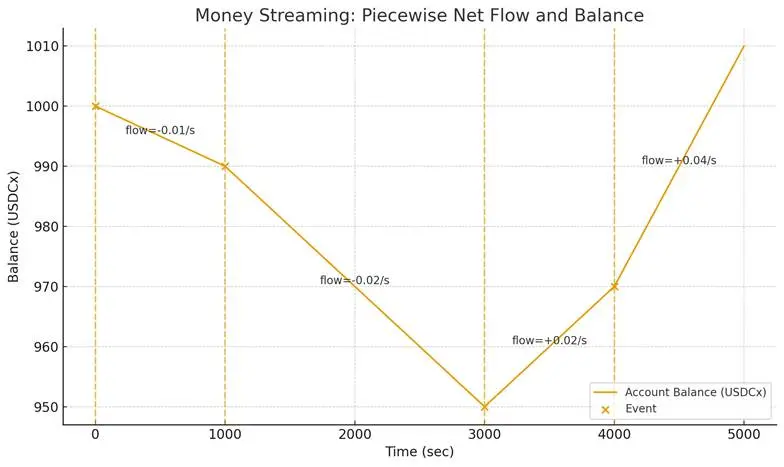
- Netflow Rate = All Inflow Rates - All Outflow Rates.
- When the flow is modified, the Superfluid contract updates:
New Netflow Rate
New CRUD Timestamp
New Static Balance (= Current Balance at that time)
Real-Time Balance resets to zero, accumulating again from that moment.
Balance Calculation Formula:
Current Balance = Static Balance + (Netflow Rate × Seconds Since Last CRUD)
Example (Account A)
- Initial Balance 1000 USDCx, flowing out to B at 0.01 per second → After 1000 seconds, balance = 990
- Increase flow rate to 0.02 → Static Balance 990
- After 2000 seconds, balance = 950
- Receiving inflow from C at 0.04 per second → Static Balance 950
- After 1000 seconds, balance = 970
- Delete flow to B → Static Balance remains 970
++3.++ ++Distributions++
Distributions: An efficient, scalable "one-to-many" method of transferring funds. Supports Instant Distributions and Streaming Distributions, capable of distributing funds to any number of recipients with very low gas consumption.
Two Types
- Instant Distributions
○ Distribute to any number of recipients in a single transaction.
○ Gas cost is fixed, regardless of the number of recipients.
○ Distribution Formula:
Each recipient = Total Distribution Amount × (Number of Units for Member / Total Units in Pool)
- Streaming Distributions
○ Continuously distribute funds to pool members.
○ Based on the Money Streaming mechanism.
○ Distribution Formula:
Each recipient = Flow Rate × (Number of Units for Member / Total Units in Pool)
Core Concepts
- Pool: The channel for distribution, can be viewed as a smart contract.
- Distribution: The action of proportionally allocating funds.
- Units: The allocation ratio of members in the pool.
- Pool Admin: Responsible for allocating/reclaiming units for members.
- Members (Subscribers/Pool Members): Users holding units and eligible to receive distribution shares.
Key Features
- Pool as Contract: The pool itself can act as an ERC20 token, allowing members to transfer units among themselves.
- Flexible Permissions: Any account can initiate a distribution, but only the pool admin can allocate units.
- Gas Efficiency: Distribution costs remain constant, regardless of the number of members.
- Flexible Distribution Methods: Supports instant or continuous streaming distributions.
Workflow
- Create Pool: Any account can create a pool and designate an admin.
- Allocate Units: Admin allocates units to members, representing their share.
- Member Management: Members can join or leave the pool.
- Execute Distribution: Distributors initiate instant or streaming distributions, and the system automatically allocates shares to members.
Streaming Distribution Illustration
This diagram shows a distributor sending funds in the form of a stream to multiple pool members, each holding a different number of units.
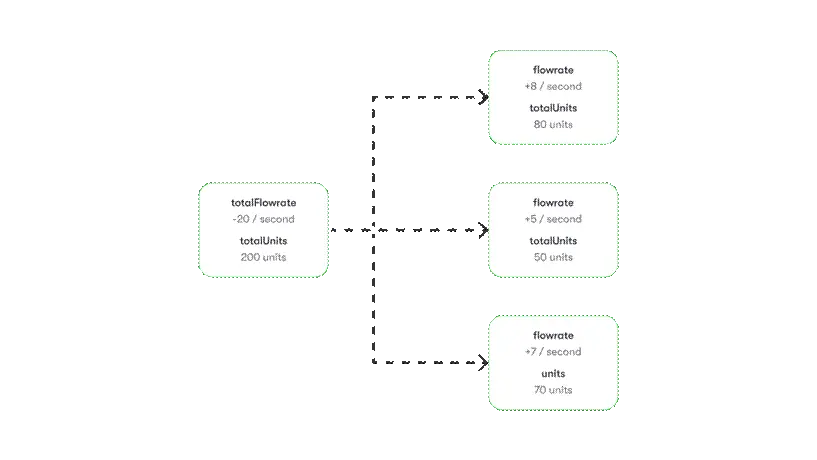
Note: A distribution can be completed for multiple members with just one transaction.
Adjusting Unit Counts
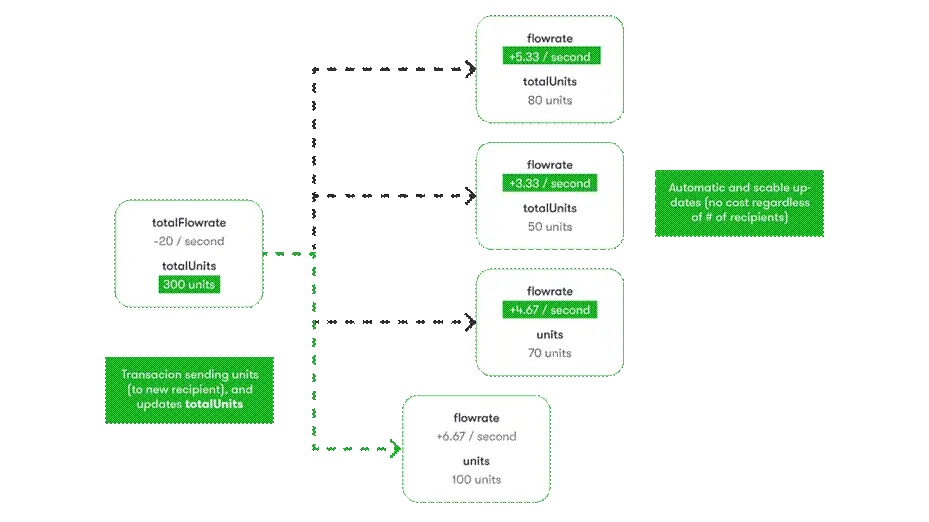
Here, the distributor modifies the unit counts for members.
This change will immediately alter the distribution rates for all members, and can be completed with just one transaction.
With Superfluid's batch call, multiple members' unit counts can be updated in one go.
Modifying the Flow Rate
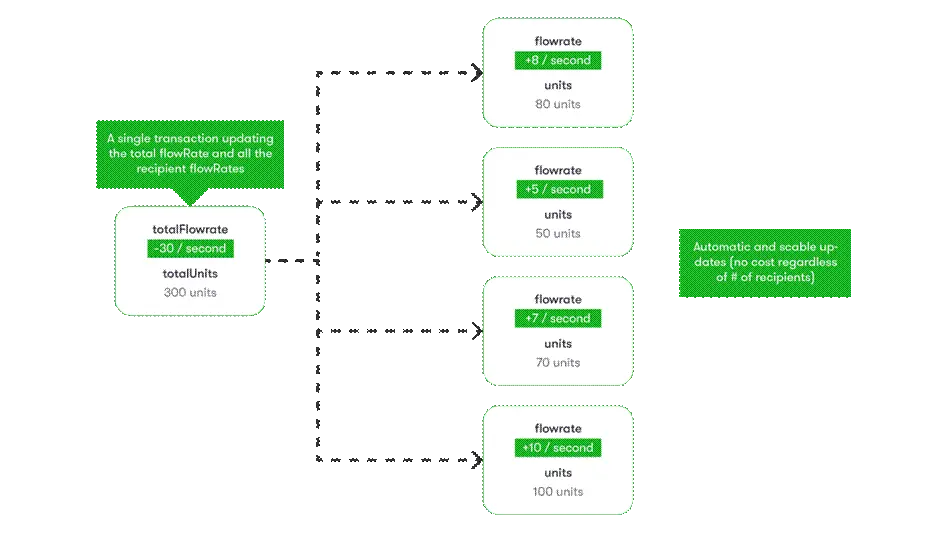
This example demonstrates that when the distributor modifies their flow rate, the total flow rate of the pool changes, thereby immediately affecting each member's fund flow rate.
++Tron++ Commentary++
The advantage of Superfluid lies in its ability to extend ERC20 tokens into "real-time flowing" assets through Super Tokens, allowing funds to be settled continuously on a per-second basis rather than in one lump sum; this makes scenarios such as subscriptions, payroll, and DAO reward distributions efficient and transparent, while also maintaining fixed gas costs and strong scalability, significantly enhancing the flexibility and programmability of fund usage.
Its disadvantage is that the ecosystem size and application coverage are still limited, requiring more mainstream protocol and enterprise integration; additionally, the user understanding threshold is relatively high (such as new concepts like real-time balances and flow rates), and it may face additional challenges in compliance and auditing.
1.2. Interpretation of the Epoch Protocol, which raised over $1.2 million with participation from Long Hash, based on intent abstraction and solver coordination for a multi-chain smart execution layer
++Introduction++
The Epoch Protocol is an "Intent-Solver Coordination layer" aimed at promoting intent-centric abstraction in Web3.
It is built on the declarative intents paradigm, creating a layer of infrastructure to shield users from the complexities of underlying chain interactions.
The vision of the protocol is to create a system where users only need to express their desired state outcome, without needing to understand the specifics of the underlying chains, protocols, gas fees, or execution paths.
Through precise coordination, Epoch will help users achieve their desired state with optimal fees and best paths.
Unique Approaches and Features of the Epoch Protocol
- Middleware Positioning: Epoch serves as the "intent abstraction layer" for Web3, helping users and dApps simplify interactions.
- Powerful Solving System: Multiple solvers + coordination mechanisms optimize complex intent execution.
- Security and Monitoring: State constraints + Hyperion observers ensure the correctness of intent execution.
- Account Abstraction Support: Unlocks automation, self-custody, and advanced permission management, with future compatibility for EOA.
- Wide Plugability: Provides a unified interface for users, dApps, and protocols, enhancing UX and discovery efficiency.
- DeFi Integration: Supports SAFE modules to automate fund operations.
++Architecture Analysis++
1. Epoch Node (Node Architecture) Core Points
Epoch Node is a modular intent execution node:
- Execution Client responsible for transaction processing and landing;
- Context Setter & Hyperions provide environmental awareness and condition triggers;
- SIO + Solver Environment is responsible for decomposing and optimizing complex intents into optimal execution paths.
2. Intent and Consensus Modules
Intent Modules = Plugin-based Business Logic Layer
- Pluggable and extensible, supporting AI and third-party tools.
- Nodes can flexibly choose tasks to solve.
Consensus = Multi-node Competitive Selection Mechanism
- Nodes submit proposals → Simulate → Validate → Select the best → Final settlement.
- ZK proofs ensure that computation results are verifiable, ensuring security and transparency.
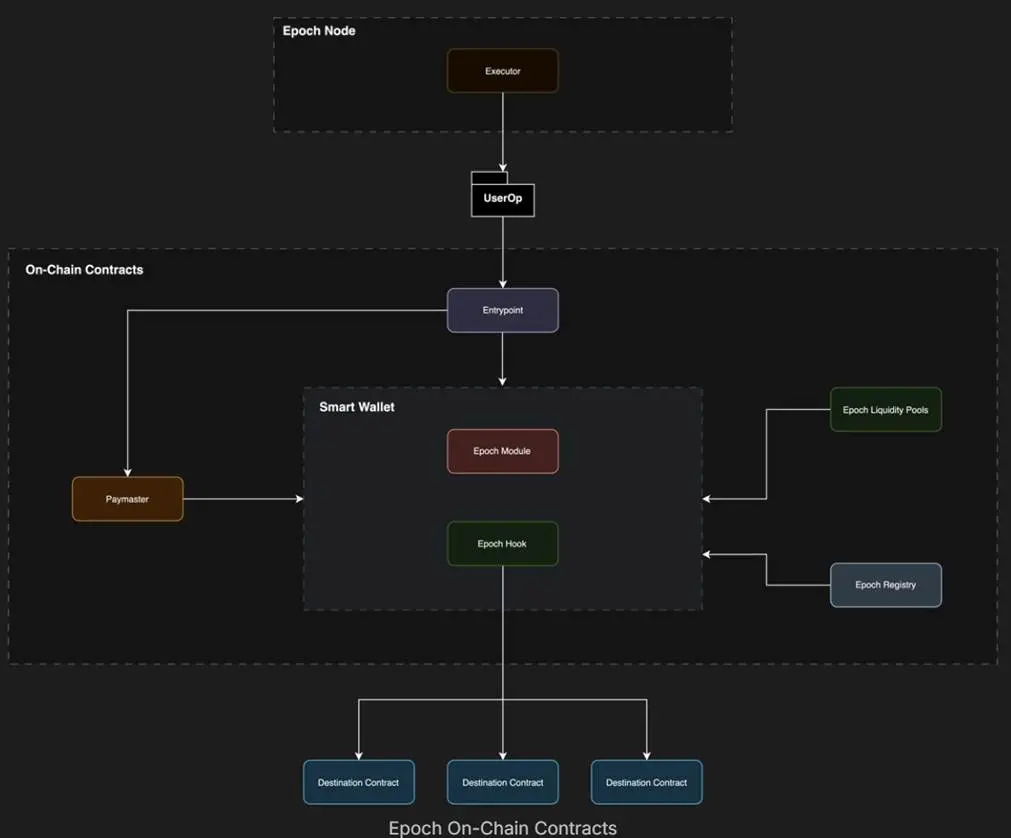
3. Core On-Chain Components of the Epoch Protocol
- Registry & Gatekeeper
○ On-chain registration and verification center, storing transaction and intent data.
○ Unified management of condition verification, multi-transaction merging, plugins, and hook calls.
- SAFE Smart Contract Wallet
○ Supports plugins and hooks, with user funds fully self-custodied (Epoch does not hold keys).
○ Future EIP-7702 will allow EOAs to directly use Epoch functionalities.
- Epoch Plugin
○ Connects intent solutions with Registry/Gatekeeper, preparing complete transactions for submission to wallets for execution.
- Epoch Hook
○ Executes condition verification, supporting on-chain security checks before/after transactions.
- Epoch Paymaster
○ Covers gas fees, allowing users not to hold corresponding gas tokens on the target chain.
- Epoch Liquidity Pools
○ Permissioned liquidity pools on various chains to provide instant cross-chain experiences.
○ Funds are held on the source chain, executed on the target chain, and released after partner projects provide proof.
○ Charges a small fee, distributed to liquidity providers and network participants.
Epoch SDK
- Developer Entry: Helps dApps quickly build and send signed intents.
- Constraint Settings: Configures correct state conditions for user intents and transactions.
- Automation: Supports automatic execution of non-intent transactions.
- Efficient Development: Reduces development cycles from days to hours.
++Tron++ Commentary++
The advantage of the Epoch Protocol lies in its ability to significantly reduce the complexity of user and dApp interactions with multiple chains through intent abstraction and solver coordination; combined with account abstraction, observer monitoring, on-chain verification, Paymaster coverage, and liquidity pools, it achieves automation, seamless cross-chain interactions, and safer execution; at the same time, the SDK and plugin architecture greatly lower the integration threshold for developers.
Its disadvantages mainly lie in the fact that the protocol is still in its early stages, with insufficient ecosystem and standardization, and a high reliance on solver performance and coordination mechanisms, while facing challenges such as cross-chain security, ZK verification costs, and governance complexity during large-scale implementation.
## 2. Detailed Explanation of Key Projects of the Week
2.1. Detailed Explanation of Intuition, a decentralized knowledge network with total financing of $7 million, open to everyone
++Introduction++
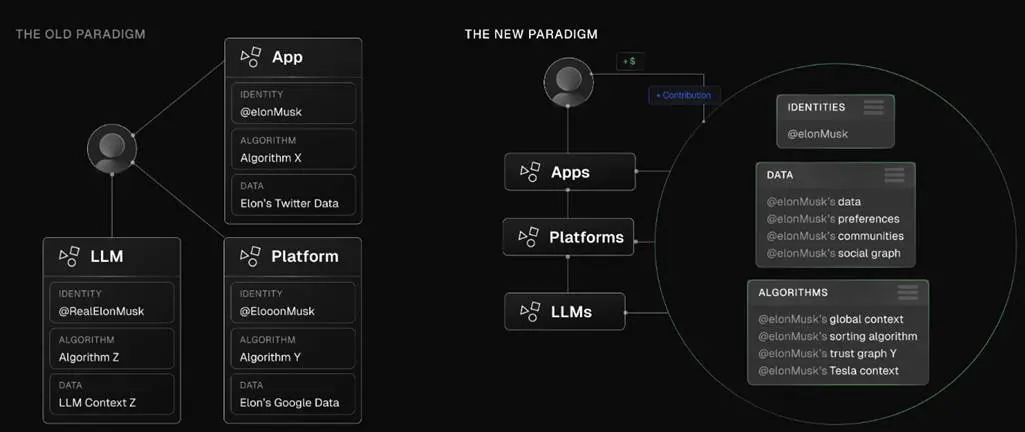
Intuition is building the world's first "open and semantic, token-curated knowledge graph," decoupling identity, data, and algorithms from the application layer. This universal, permissionless data lake brings a new pillar to decentralized networks—"trustful interaction layer." At this layer, it can handle objective facts as well as subjective opinions; both humans and machines can access the required data when needed, fundamentally changing how people interact with and develop on the network.
The birth of Intuition aims to address the limitations of the current identity and data paradigm. Existing centralized models have created large but inaccessible data silos that are prone to abuse, raising concerns about privacy and transparency, and forcing developers to expend too much effort on these foundational layers. By embracing decentralized technology, Intuition provides a new model for managing identity and data, as well as for trust and identity verification, emphasizing user ownership and empowerment, data integrity, open access, and discoverability.
++Architecture Overview++
Core Philosophy
Intuition is an ecosystem composed of various technologies aimed at building an open and permissionless knowledge graph that can handle both objective facts and subjective opinions.
Its vertically integrated knowledge stack provides developers with comprehensive tools to help them more easily develop next-generation technologies driven by collective human intuition.
Open Social Knowledge Graph
- Intuition's knowledge graph collects and organizes collective wisdom in a structured, decentralized, and permissionless manner.
- Its resulting state is open to everyone, accessible to anyone.
- It can encompass almost all entities on the network: pseudonyms, smart contracts, organizations, content, etc.
- The goal is to enable users to better understand the ecosystem and facilitate more informed interactions.
State of the Graph
On-Chain
- Atoms: Pointing to any URI, can bind smart contract wallets and data repositories to capture any data.
- Edges (Triples): Composed of 3 Atoms, expressing semantic relationships; accompanied by positive/negative repositories for supporting or opposing statements.
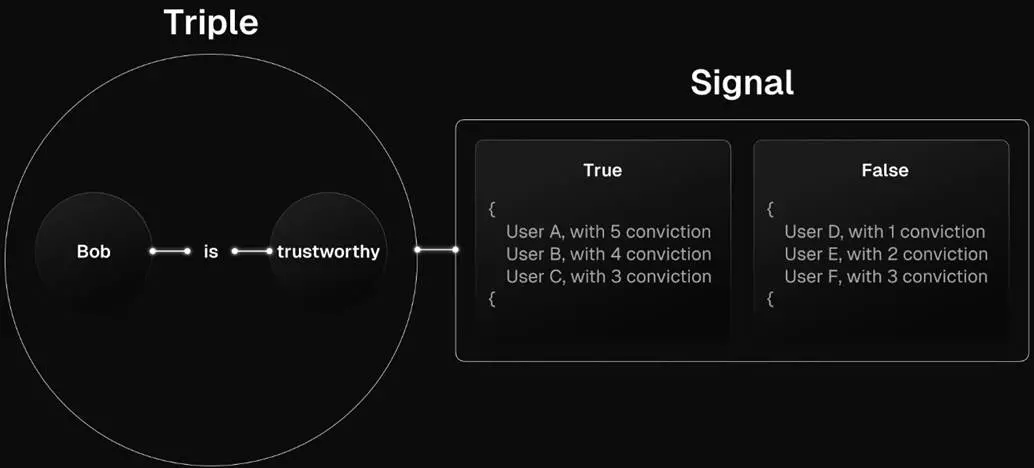
- Signals: Indicate "who is declaring what," determined by user balances in various repositories, reflecting recognition credibility and weight.
- Unified State: The "nodes, relationships, and weights" of the knowledge graph.
Off-Chain
- Atoms can point to any URI (such as Medium articles, Spotify songs, IPFS files, Ethereum addresses, etc.).
- Similar to NFT storage methods: On-chain records ownership and immutability, while off-chain stores rich metadata.
- The Intuition backend is responsible for indexing on-chain and off-chain states, unifying them into a queryable knowledge graph and providing an open API. Anyone can run their own backend replica.
Base Protocol: Trust Protocol
The Intuition protocol provides infrastructure for the new information economy, promoting:
- The creation of useful data
- The convergence of unified identifiers for various entities
- The standardization of data standards, patterns, and formats
It acts like a new consensus mechanism: not reaching consensus on the state of the ledger, but on the "state of the language and semantic layer."
The goal is to promote the realization of the Semantic Web, maximizing machine readability and interoperability of the internet.
- Users are rewarded for contributing data.
- The system supports decentralized identity (DID) and reputation data.
- The protocol remains neutral, allowing "anyone to say anything about anything," while providing a structured framework for exploration and filtering.
- Upper-layer applications can showcase relevant data through algorithms and filtering, targeting specific users or trust relationships.
Service Layer
- Indexing
○ Seamlessly integrates on-chain and off-chain data into a unified semantic knowledge graph.
○ Supports use cases such as DeFi analysis, verifiable reputation systems, and cross-platform identity solutions.
- Data Access / API
○ Provides real-time data streams and direct query interfaces.
○ Supports semantic tagging and real-time updates, helping developers build data-driven applications.
- Modules
○ Developers can integrate Intuition at the application layer, such as component libraries, platforms, etc.
○ The official launch of 1UI (component library, based on shadcn) facilitates quick access.
○ Provides templates and SDKs to help developers quickly deploy and integrate attestations.
- In-House Apps
○ The official builds a set of example applications demonstrating how to create and browse statements related to people or events.
○ Utilizes social graphs and distributed trust algorithms (such as EigenTrust) to enhance relevance and personalization.
○ Frontend libraries are open-source, encouraging community development.
++Module Details++
1. Atoms
Atoms are the most basic knowledge units in Intuition, serving as unique, globally persistent, decentralized identifiers applicable to all things—people, concepts, products, etc. Each atom can serve as a building block for more complex data structures, facilitating the certainty and semantic organization of information within the knowledge graph.
Understanding Atoms
In Intuition, each atom is secured by a decentralized identifier (DID) and an Ethereum wallet address, establishing a verifiable foundation.
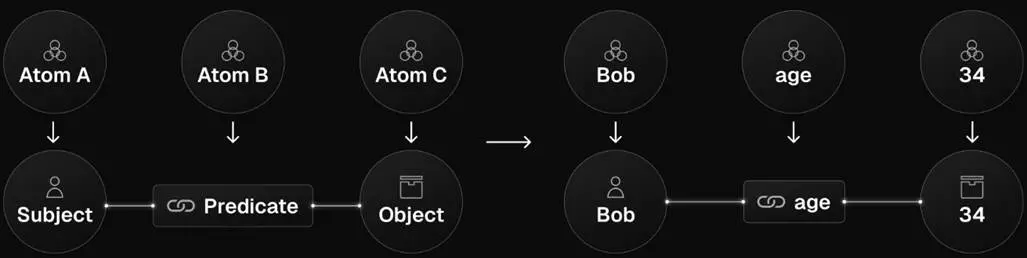
Atoms are categorized into three main roles within the semantic structure: Subject, Predicate, Object. This structure can form Triples, used to express specific assertions or facts about the world.
Example Triple
Format: Subject - Predicate - Object
●Alice [ Subject] - hasAccessTo [Predicate] - Intuition [Object]
○ Alice is the subject
○ hasAccessTo is the predicate
○ Intuition is the object
Another example, showcasing Intuition as the subject:
●Intuition [ Subject] - is a [Predicate] - Ethereum-based attestation protocol [Object]
This statement semantically and structurally describes the role and essence of Intuition.
Composition of Knowledge
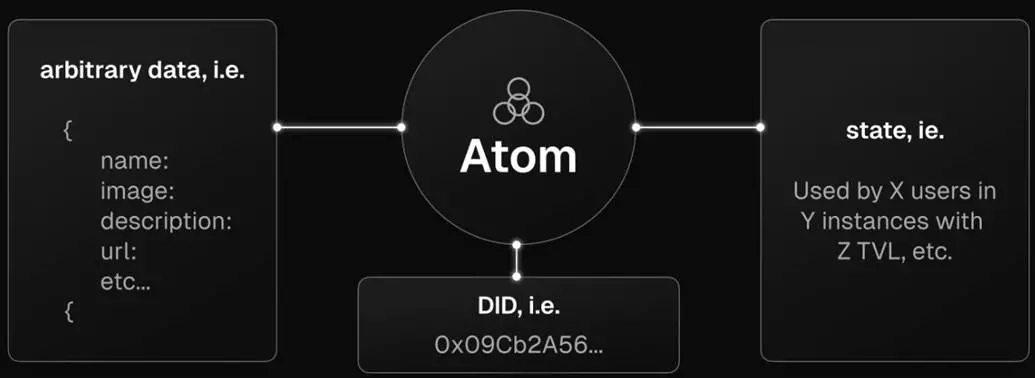
Components of an Atom
● Atom Data describes the concept or entity represented by an atom. Typically stored off-chain, using decentralized storage solutions like IPFS or Arweave, with an on-chain record pointing to that data's URI.
● Atom Wallet is the smart contract wallet associated with each atom, granting autonomy to the atom over its identity. This wallet is controlled by a dedicated smart contract known as the Atom Warden.
● Atom Vault is a mechanism allowing users to deposit tokens into an atom, indicating the relevance and support of that atom. The Total Locked Value (TVL) in the atom vault reflects the acceptance and importance of that atom.
Triples
Triples are higher-order structures in Intuition used to define relationships between atoms.
Each triple consists of three components: Subject, Predicate, Object, all of which are atoms.
This structure provides precise, machine-readable data representation, supporting complex and highly interconnected proofs and statements.
Triple Structure
- Subject: The entity or concept being described
- Predicate: The relationship or attribute of the subject
- Object: The value or characteristic assigned to the subject
Signals
In Intuition, signals refer to any actions expressing intent, belief, or support within the system.
Signals can be explicit, such as voting mechanisms or signed attestations;
or implicit, inferred from user behavior.
Signal Mechanisms
Users can hold positions on Atoms and Triples, expressing their stance by increasing their balance on relevant entities.
The existence of signals allows for a more nuanced and layered expression of trust and belief, forming a dynamic, multi-tiered preference system in the decentralized ecosystem.
It is important to note:
- Creating an atom or triple ≠ signaling on it.
- When users create an atom or triple, they can choose to hold a position on it (i.e., make an Initial Deposit), but this is not mandatory.
- If users do not make an initial deposit, that action only means an atom or triple has been created and does not constitute a signal.
++Tron++ Commentary++
The advantage of Intuition lies in its semantic structure of Atom + Triple, granting any entity a decentralized identity (DID) and wallet address, thus enabling the construction of a verifiable knowledge graph with openness, composability, and collaboration; at the same time, the introduction of user preferences and trust expressions through the Signal mechanism makes information not just static storage, but dynamically reflect consensus and value.
Its disadvantages include a higher complexity of the system, requiring users to understand concepts like DID, smart contract wallets, storage, and staking, which raises the threshold; additionally, signals depend on user activity and economic incentives, and insufficient participation may lead to difficulties in cold-starting the graph or signal distortion.
# III. Industry Data Analysis
1. Overall Market Performance
1.1. Spot BTC vs ETH Price Trends
BTC
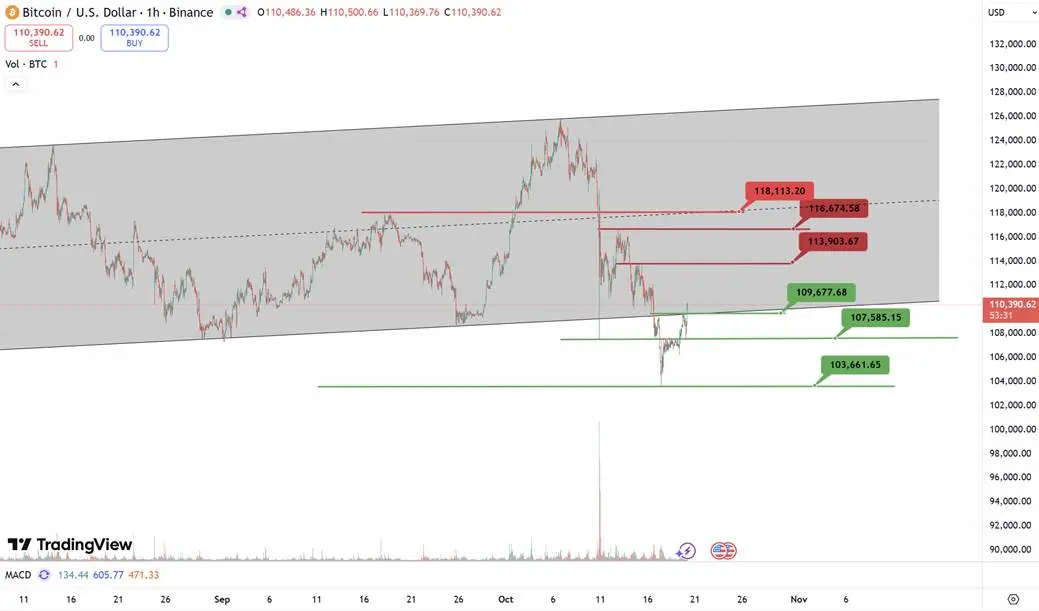
Analysis
Key resistance this week: $113,900, $116,700, $118,100
Key support this week: $109,700, $107,500, $103,700
ETH
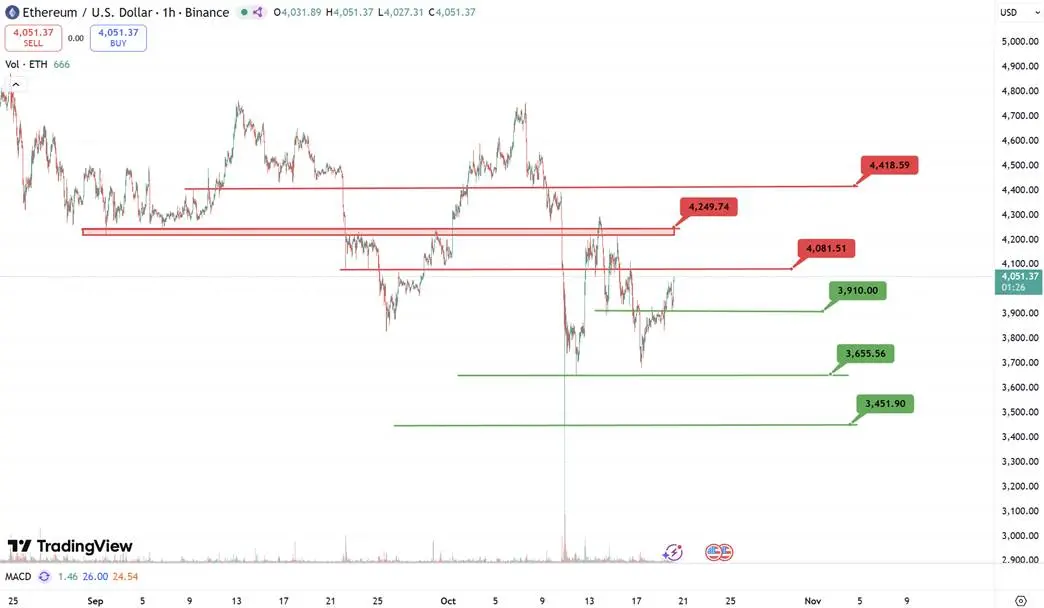
Analysis
Key resistance this week: $4,080, $4,250, $4,420
Key support this week: $3,910, $3,650, $3,450
2. Hot Sectors
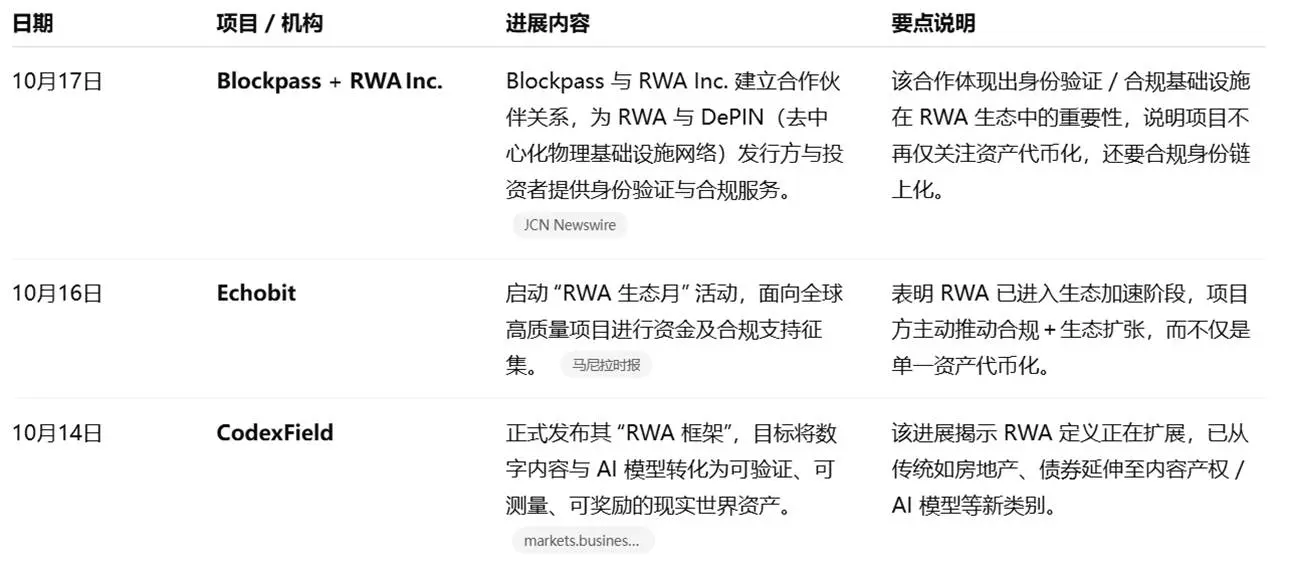
2.1. RWA Summary
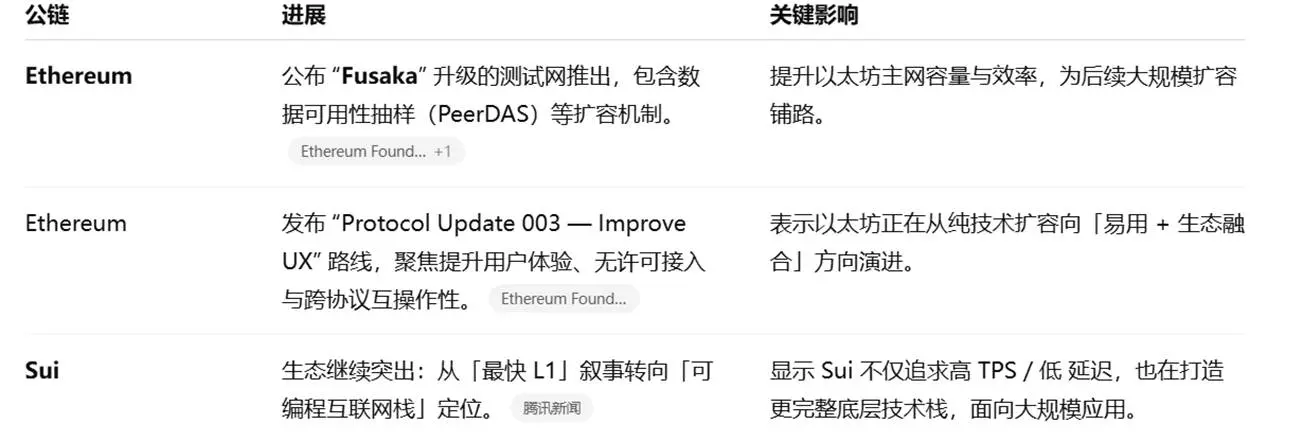
2.2. EVM & Non-EVM Public Chain Summary
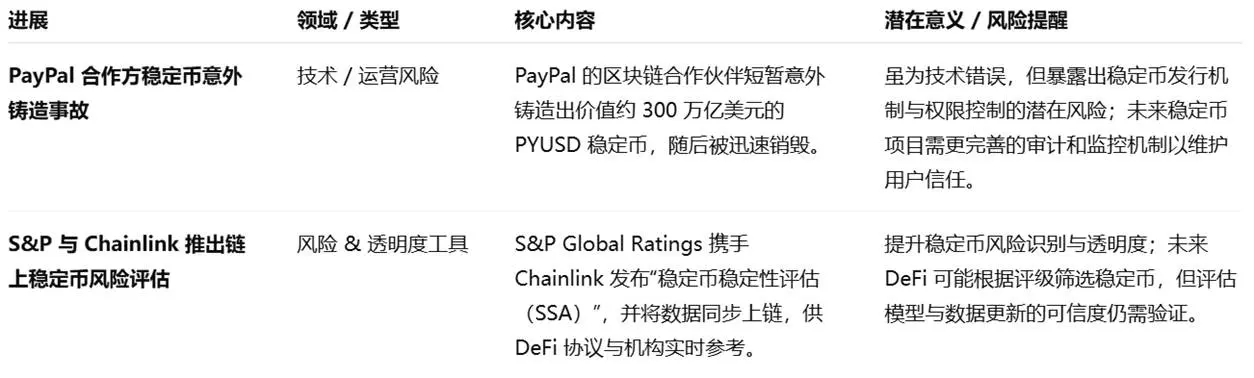
2.3. Stablecoin Sector Summary
# IV. Macroeconomic Data Review and Key Data Release Nodes for Next Week
The government shutdown / budget impasse has officially begun, with the U.S. federal government entering a shutdown state since October 1, leading to interruptions or delays in the release of multiple economic data, including the Labor Department's employment report and inflation data. As a result, market expectations for future policy and economic transparency have been impacted.
# V. Regulatory Policies
United States
- Federal Level: The Department of Justice and the Treasury Department have jointly launched the largest Bitcoin seizure operation in history (involving over $12 billion), reinforcing signals to combat crypto crime.
- State Level:
- California has enacted a new law prohibiting the government from forcibly selling unclaimed crypto assets, strengthening the protection of holder rights.
- Florida is promoting the inclusion of Bitcoin in state-level asset allocation, exploring the use of digital assets as economic tools.
- Overall Trend: Federal regulation is tightening, while state governments show significant divergence, forming a dual-track pattern of "strong regulation + experimental innovation."
United Kingdom
- The UK's Financial Conduct Authority (FCA) has launched a proposal for asset management tokenization.
- It allows fund management companies to tokenize investment funds on public blockchains, simplifying investment processes and reducing intermediary costs.
- If implemented, this will position the UK as a leading financial center promoting the on-chainization of traditional assets.
Kenya
- The Parliament has passed the Virtual Asset Service Providers Bill (VASP Bill):
- The Central Bank is responsible for regulating stablecoins and issuing institutions;
- The Capital Markets Authority (CMA) is responsible for regulating crypto exchanges and platform activities.
- Legislative Goal: Establish a clear regulatory framework for crypto, attract investment, and standardize the market.
- It becomes one of the few countries in Africa to achieve legal regulation of digital assets.
🇦🇺 Australia
- The government has granted banks new powers to combat crypto-related fraud, especially in cases involving international students.
- Strengthening the anti-money laundering (AML) and counter-terrorism financing (CTF) legal framework.
- Banks can directly intervene and block suspicious crypto transactions to prevent the spread of fraud chains.
- Policy Goal: Enhance financial security, build public trust, and curb the abuse of crypto assets.
 Risk warning Risk warning


Popular articles