








Tron Industry Weekly Report: The risk of U.S. debt continues to disrupt global markets, Nava and Fluent accelerate the implementation of AI finance and on-chain interactions

 Nava Labs completed a $8.3 million financing round, focusing on the infrastructure for identity, payments, and service calls under the AI Agent economy; Fluent Labs completed a $11.2 million financing round, concentrating on a high-performance blockchain execution layer that supports complex computing and AI workloads, demonstrating that the integration of AI and cryptocurrency infrastructure remains one of the core directions in the current market.
I. Outlook
1. Summary of Macroeconomic Trends and Future Predictions
From May 18 to May 24, the core focus of the global macro market centered on "U.S. fiscal risks" and "long-term high interest rates" becoming the market's focal point again. On May 18, Moody's officially downgraded the U.S. sovereign credit rating, triggering global market concerns about the U.S. fiscal deficit and debt sustainability. Subsequently, the yield on U.S. 30-year Treasury bonds quickly broke above 5%, and the yield on 10-year U.S. Treasuries rose back above 4.5%, with global long-term interest rates rising in tandem. The market began to reprice the "Higher for Longer" logic, with expectations for interest rate cuts significantly cooling. At the same time, funds began to shift from overvalued growth assets to gold, defensive assets, and certain energy sectors, leading to a noticeable increase in global risk asset volatility.
In the coming week, the global market will continue to focus on the trend of U.S. Treasury yields and U.S. fiscal-related risks. If the yield on 10-year U.S. Treasuries remains high, the U.S. tech sector, the cryptocurrency market, and overvalued risk assets may still face pressure; meanwhile, safe-haven assets like gold are expected to continue benefiting, and the overall global market may maintain a "high volatility + high interest rate" trading environment.
2. Changes and Warnings in the Cryptocurrency Industry Market
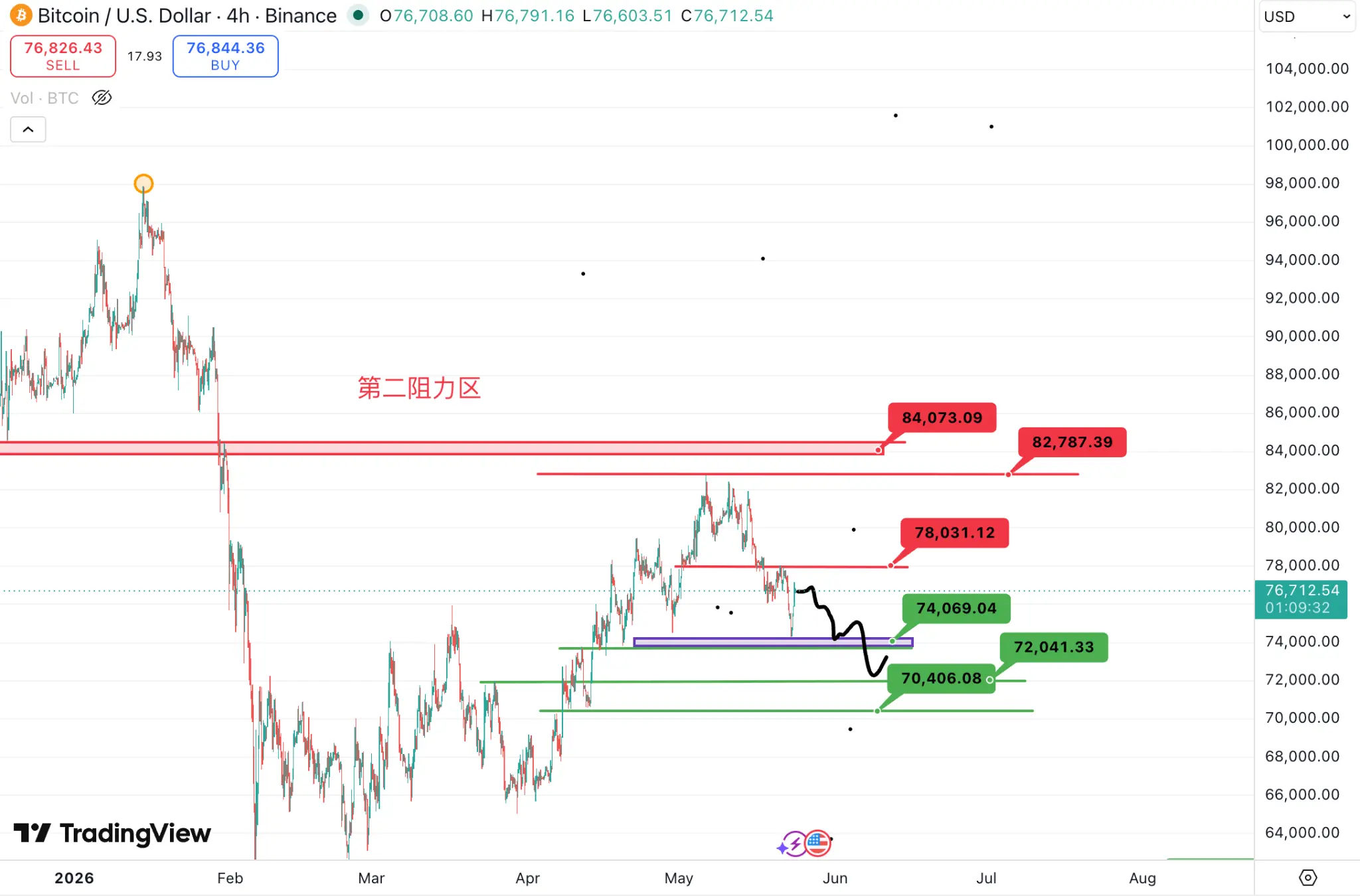
From May 18 to May 24, the cryptocurrency market continued to experience high volatility and pressure on risk assets. BTC briefly rose back above $80,000 during the week but quickly fell back due to rising U.S. Treasury yields, a decline in market expectations for interest rate cuts by the Federal Reserve this year, and outflows from ETFs, dropping to around $76,700 at its lowest. The week saw multiple large-scale leveraged liquidations, with 24-hour liquidation amounts exceeding $400 million to $800 million several times. Meanwhile, the advancement of the U.S. Clarity Act became a core focus of the market, with the bill involving debates over stablecoin yield limits, digital asset regulatory jurisdiction, and market structure issues, temporarily boosting BTC and cryptocurrency concept stocks, but macro pressures soon reasserted control over the market. Narratives around stablecoins, RWA, and AI Agent payments remained key areas of funding focus this week, especially in AI + Crypto infrastructure, on-chain payments, and data center computing power.
In the coming week, the market needs to pay close attention to three risk directions. First, the Federal Reserve's path and changes in U.S. Treasury yields will determine whether BTC can stabilize above $80,000 again. Currently, market expectations for further interest rate cuts this year have significantly cooled, putting overall pressure on risk assets. Second, the subsequent advancement of the U.S. Clarity Act and the SEC's regulatory statements on stablecoins, tokenized assets, and trading structures may continue to affect market risk appetite, especially regarding stablecoin yield models, RWA, and on-chain securities, which will become regulatory focal points. Third, the flow of BTC ETF funds remains a core variable for the short-term market, with recent phase-out redemptions approaching $1 billion. If ETFs continue to see net outflows next week, the market may further test support around $75,000. At the same time, vigilance is needed regarding chain liquidation risks in a high-leverage environment, as current market sentiment remains cautious, with funds more concentrated in BTC, stablecoins, and infrastructure projects with real cash flow, rather than a broad Altcoin market.
3. Industry and Sector Hotspots
Nava Labs completed a $8.3 million financing round, focusing on building identity, payment, and service invocation infrastructure under the AI Agent economy. Fluent Labs completed a $11.2 million financing round, focusing on supporting complex computing and AI workloads with a high-performance blockchain execution layer, demonstrating that the integration of AI and cryptocurrency infrastructure remains one of the core directions in the current market.
II. Market Hotspot Sectors and Potential Projects of the Week
1. Overview of Potential Projects
1.1. Detailed Explanation of the $8.3 Million Financing, with participation from Polychain, HackVC, and FalconX—Building Cryptocurrency Infrastructure for the AI Agent Economy, Nava Labs
Introduction
Nava provides arbitration-based verification services for on-chain transactions of AI agents. It combines escrow, security analysis, and fund protection mechanisms to make the autonomous execution process more reliable and meet institutional-level usability standards.
Nava acts as a middleware layer, positioned between the intent of the agent and on-chain execution, intercepting and processing transactions before they are sent to the blockchain. All transactions initiated by agents undergo Nava's verification process before any funds are actually transferred.
Protocol Framework Overview
System Structure (System Diagram)
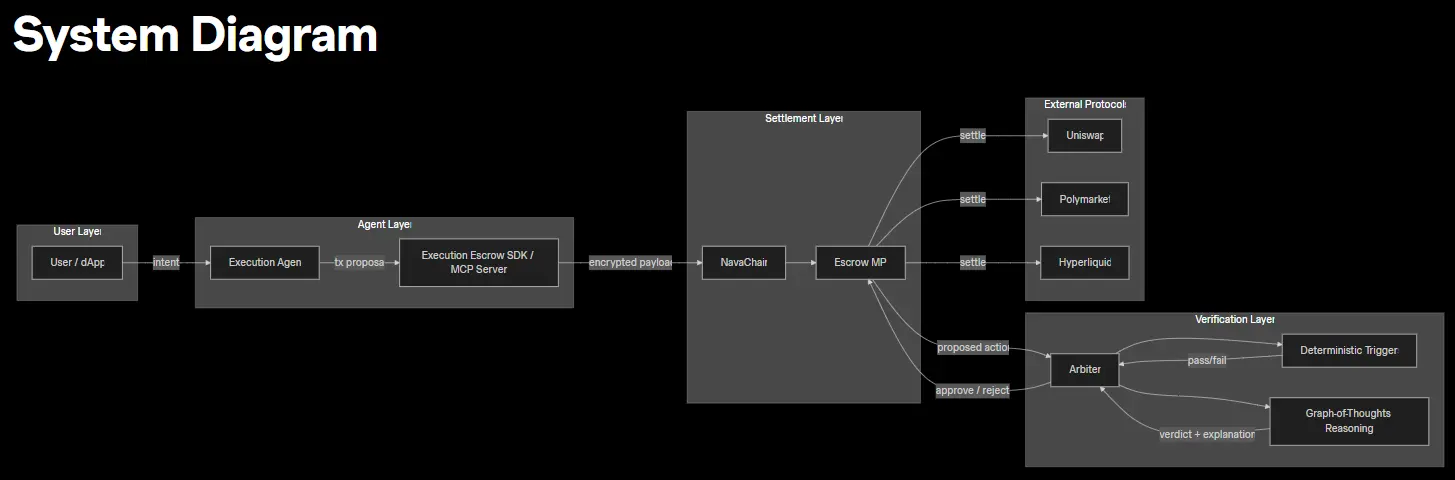
The entire system can be understood as several layers from top to bottom:
User Layer
Agent Layer
Verification Layer
Settlement Layer
External Protocols Layer
Key Process Data
Several core types of information circulate within the system:
intent (user intent, e.g., "What do I want to do?")
tx proposal (transaction proposal, i.e., specific transaction plan)
encrypted payload (encrypted data)
proposed action (action to be executed)
pass / fail (verification result)
verdict + explanation (final determination and reason)
approve / reject (approval or rejection)
settle (final settlement execution)
Core Components
The main roles in the system include:
User / dApp
Execution Agent
Execution Escrow SDK / MCP Server (responsible for submission and custody)
Arbiter (for transaction verification)
Deterministic Triggers (rule detection)
Graph-of-Thoughts (for complex judgments)
NavaChain (the on-chain coordination layer of the system)
Custodial MPC (responsible for fund custody)
Transaction Lifecycle
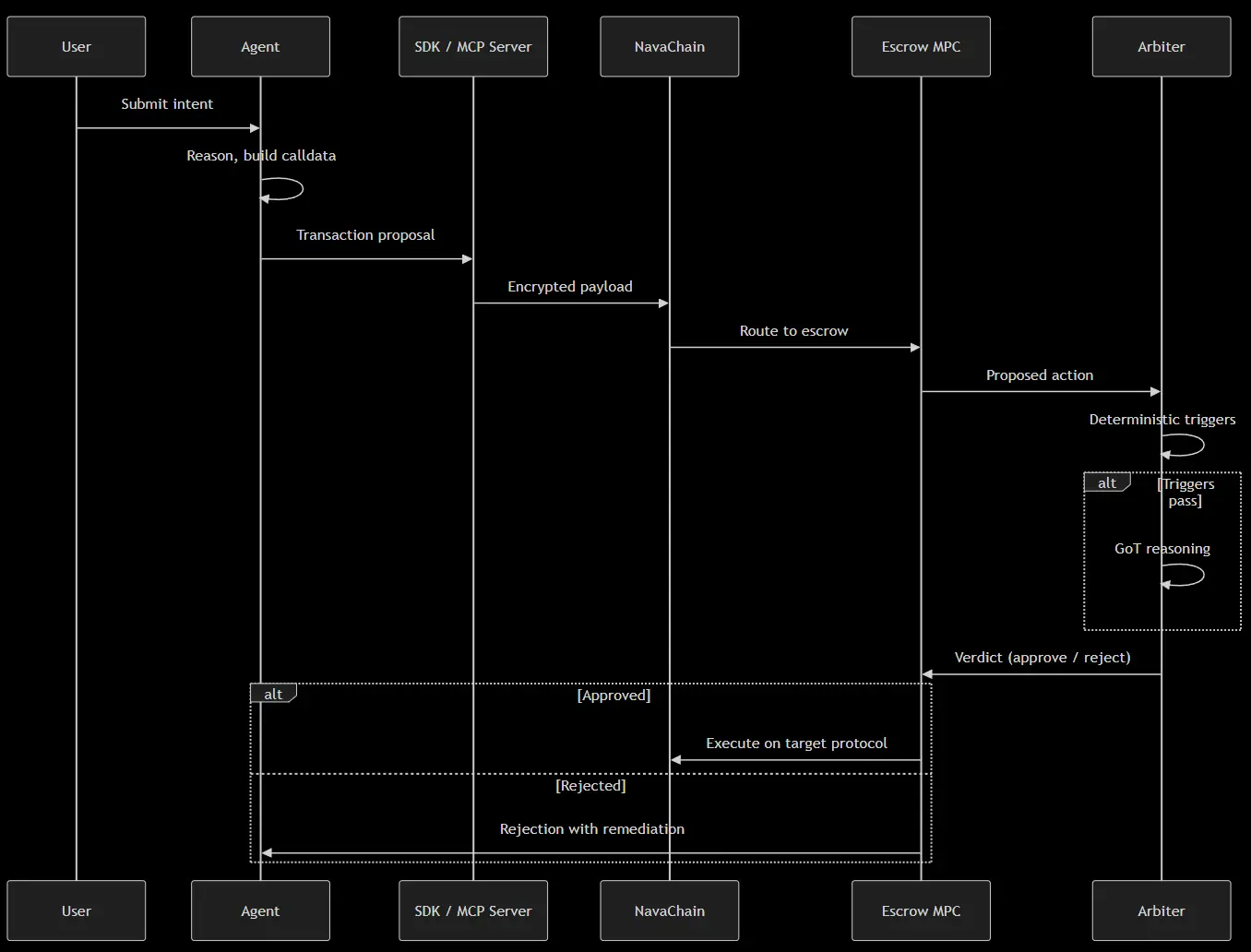
User submits intent
Users express their needs in natural language, e.g., "Exchange 2 ETH for USDC, maximum slippage 0.5%."Agent performs reasoning
The agent analyzes the user's intent, selects the appropriate protocol, and constructs a specific transaction.Agent submits transaction proposal
Through the MCP Server or SDK, the intent and transaction proposal are encrypted and sent to NavaChain.Custody module receives the transaction
Funds are first held in custody while the transaction is sent to the verification service for inspection.Arbiter performs verification
First, a quick check is done using rules (Deterministic Triggers); if insufficient, more complex reasoning (GoT) is applied.Return results
Pass: provides an explanation
Reject: states the reason and offers suggestions for correction
- Execute or intercept the transaction
If approved: execute the transaction on the target protocol (e.g., Uniswap)
If rejected: funds remain locked in custody and will not be used
Execution Escrow
It is essentially a "rule-based fund custody system" that holds user assets (such as tokens and permissions) through an MPC (multi-party computation) wallet and strictly controls the conditions under which these resources can be used. AI agents cannot directly execute transactions; they must first submit proposals, and only after passing verification will funds be released and executed.
Execution Agent
The Execution Agent performs operations on behalf of the user. It receives natural language intents (e.g., "Exchange 1 ETH for USDC"), performs reasoning, selects the appropriate protocol and parameters, and generates transaction proposals.
Agents are divided into two categories:
Assistant agents built into Nava products
Self-custodial agents developed by developers using the SDK or MCP Server
Escrow Contracts
Execution Escrow relies on a set of core contracts deployed on NavaChain:
AgentInboxFactory: creates an inbox for each arbiter to receive transaction proposals
AccountRegistry: records the mapping between users and their dedicated agents
VerificationServicesRegistry: manages registered verification services and their capabilities
SDK and MCP Server
The SDK and MCP Server are the main entry points for developers to interact with Execution Escrow, allowing agents to:
Submit transaction proposals (transaction data + user intent)
Encrypt data before on-chain submission
Query transaction verification status
Trigger automatic execution after verification passes
Among them:
The MCP Server provides tool invocation interfaces for LLM
The TypeScript SDK provides programmatic integration capabilities
Arbiter
The Arbiter is Nava's core verification engine, responsible for breaking down and verifying each transaction proposed by AI agents before it is truly on-chain. It constructs a directed acyclic graph based on the Graph-of-Thought, breaking a transaction into multiple check nodes, each responsible for verifying a specific constraint, such as whether the routing address is correct, whether the function call is valid, whether the token is on the whitelist, whether the slippage is reasonable, whether the gas is normal, and whether it meets regulatory requirements. Ultimately, these checks are summarized into an overall verification result, and only transactions that pass verification will be executed.
Deterministic Triggers
This is the first layer of the verification mechanism, used for quick, clear "rule compliance" checks, characterized by binary results (pass or fail) and very fast execution. It mainly includes:
Whether it hits the OFAC or sanctions list
Whether account balances are sufficient and addresses are valid
Whether it exceeds spending limits or transaction frequency limits
Whether the transaction format is correct and gas settings are reasonable
If any check fails, the transaction will be immediately rejected and will not enter the subsequent more complex AI reasoning phase, ensuring that the verification process is efficient and cost-effective.
Graph-of-Thoughts Reasoning
This is the second layer of the verification mechanism, used to handle more complex and subjective issues, which will only be activated after all deterministic checks pass. It conducts in-depth analysis based on LLM, mainly including:
Intent consistency: whether the transaction truly meets the user's original needs
Attack detection: whether there are hidden transactions, slippage exploitation, or malicious routing
Compliance checks: whether it meets regulatory requirements in different regions
Explainability: each judgment generates an auditable reasoning process
The core value of this layer is: not only providing conclusions but also explaining "why."
Verdict Output
Each verification by the Arbiter ultimately outputs one of two results:
Approve: the transaction meets all requirements and includes a complete explanation
Reject: the transaction did not pass verification, providing the reason for failure and suggestions for correction
All verdict results are recorded on NavaChain, forming an immutable audit record.
NavaChain
NavaChain is the on-chain settlement and coordination layer of Nava, responsible for recording and ultimately confirming all Arbiter verification results. Each verification process, including the scores of each node, timestamps, and final determinations, will be written to NavaChain, forming a complete record that is immutable and queryable.
What It Provides
NavaChain mainly provides four core capabilities:
Immutable audit records: all transaction proposals, verification processes, and final results will be on-chain, forming a complete audit trail
Execution and settlement layer: carrying the core logic of custody contracts and verification protocols
Encrypted communication mechanisms: ensuring that data interactions between agents and verification services are secure
EVM compatibility: allowing direct development using Foundry, Hardhat, and standard Ethereum tools
Role in the Pipeline
NavaChain does not directly handle user-initiated transactions but acts as a "coordination hub," connecting various modules:
Execution Escrow SDK submits encrypted transaction proposals to NavaChain
Custody contracts on NavaChain hold funds and distribute proposals to verification services
Arbiter reads proposals from NavaChain, completes verification, and writes results back to the chain
If verification passes, NavaChain triggers the actual transaction execution on the target chain (e.g., Ethereum)
Contracts
Key contracts deployed on NavaChain include:
AgentInboxFactory: creates independent proposal reception entries for each agent
AccountRegistry: records the mapping between users and their custodial accounts
VerificationServicesRegistry: manages all verification services and their capabilities
Tron Comments
Nava Labs' core advantage lies in addressing the key pain point of bringing AI agents on-chain—adding a verification and custody layer between "intent and execution." Through Arbiter + Execution Escrow + NavaChain, it has built a middleware system with security, explainability, and audit capabilities, making AI transactions nearly institution-grade reliable. Its modular design (SDK, MCP, EVM compatibility) also facilitates developer integration and ecosystem expansion.
However, its challenges are also evident, including a high overall architectural complexity, strong reliance on developers and ecosystems, real demand still in early validation stages, and the need for continuous trade-offs between performance, cost, and decentralization. Additionally, competition with other AI agent infrastructures (such as Autonolas, Fetch, etc.) may affect its long-term implementation speed.
2. Detailed Explanation of Key Projects of the Week
2.1. Detailed Explanation of the $11.2 Million Financing, led by Polychain, with participation from ECHO, TPC Ventures, Q42, and Primitive—Building a High-Performance Blockchain Execution Layer Supporting Complex Computing and AI Workloads, Fluent Labs
Introduction
Fluent is the first "Blended Execution Network," where EVM, WASM, and (soon-to-be-supported) SVM contracts can directly interact as if written in the same language, without cross-chain bridges or additional friction, providing truly free and barrier-free expressive capabilities.
If you are a developer building applications on Fluent, the gblend CLI tool can help you complete the entire process from project initialization to deployment, regardless of the programming language you use.
Core Analysis of System Architecture
Blended Execution
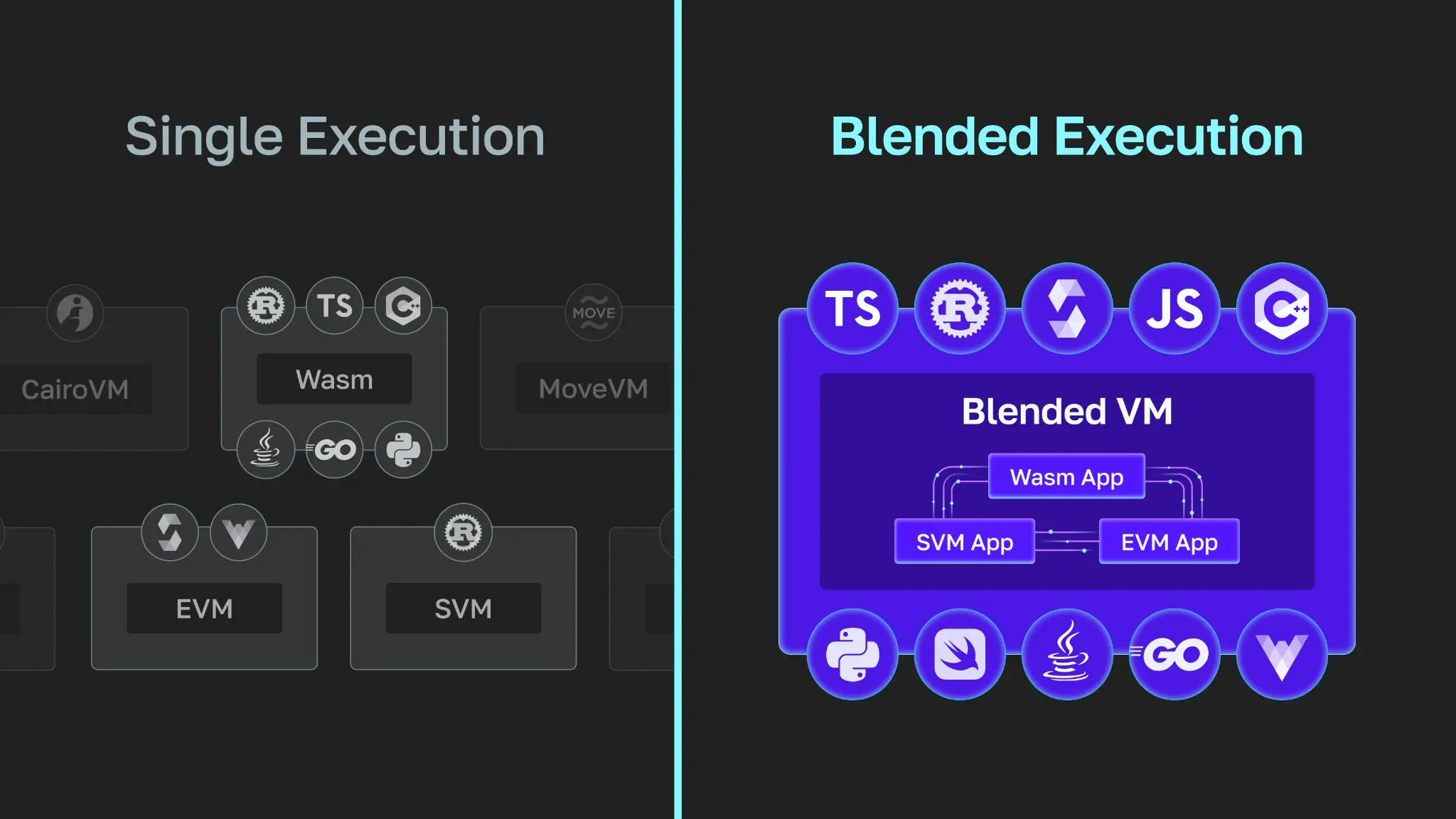
What is Blended Execution?
Blended Execution is a way for programs on different virtual machines (VMs) to work together in the same execution environment. Smart contracts, programming languages, and tools originally designed for different VMs (such as EVM, Wasm, SVM) can share the same state on a single chain and achieve seamless communication.
This means they can achieve real-time, atomic composability, allowing developers to freely use multiple languages and tools within the same application without worrying about compatibility issues. Additionally, existing applications on different VMs can share liquidity and network effects.
Core Benefits:
Users can interact directly between different applications without cross-chain bridges or wallet switching.
How does Fluent Support Blended Execution?
In Fluent, the capabilities of EVM, SVM, and Wasm are unified in the execution layer, all achieved through rWasm. rWasm is a low-level intermediate representation (IR) and is the core virtual machine of Fluent, used to represent and verify all execution operations.
Specifically, Fluent simulates the behavior of EVM, SVM, and Wasm and compiles them into rWasm for execution, thus achieving compatibility and interaction between different systems. Moreover, this design is more efficient in zk proofs, as the entire system only needs to prove state transitions once (rather than multiple proofs in multi-VM solutions).
Furthermore, this architecture is scalable, and in the future, it can support more VMs through AOT/JIT compilers.
What is an AltVM?
AltVM refers to other virtual machines that differ from EVM. EVM is currently the most mainstream smart contract execution environment, while AltVM offers different execution methods or capabilities, such as supporting more programming languages, higher performance, or lower costs.
Common examples include:
Wasm-based VMs (supporting languages like Rust, Go, C++)
MoveVM (emphasizing formal verification and security)
The significance of AltVM lies in enhancing the flexibility and expressive capability of blockchain applications, allowing developers to use more development tools and programming paradigms, rather than being limited to EVM.
Blended Execution vs MultiVM
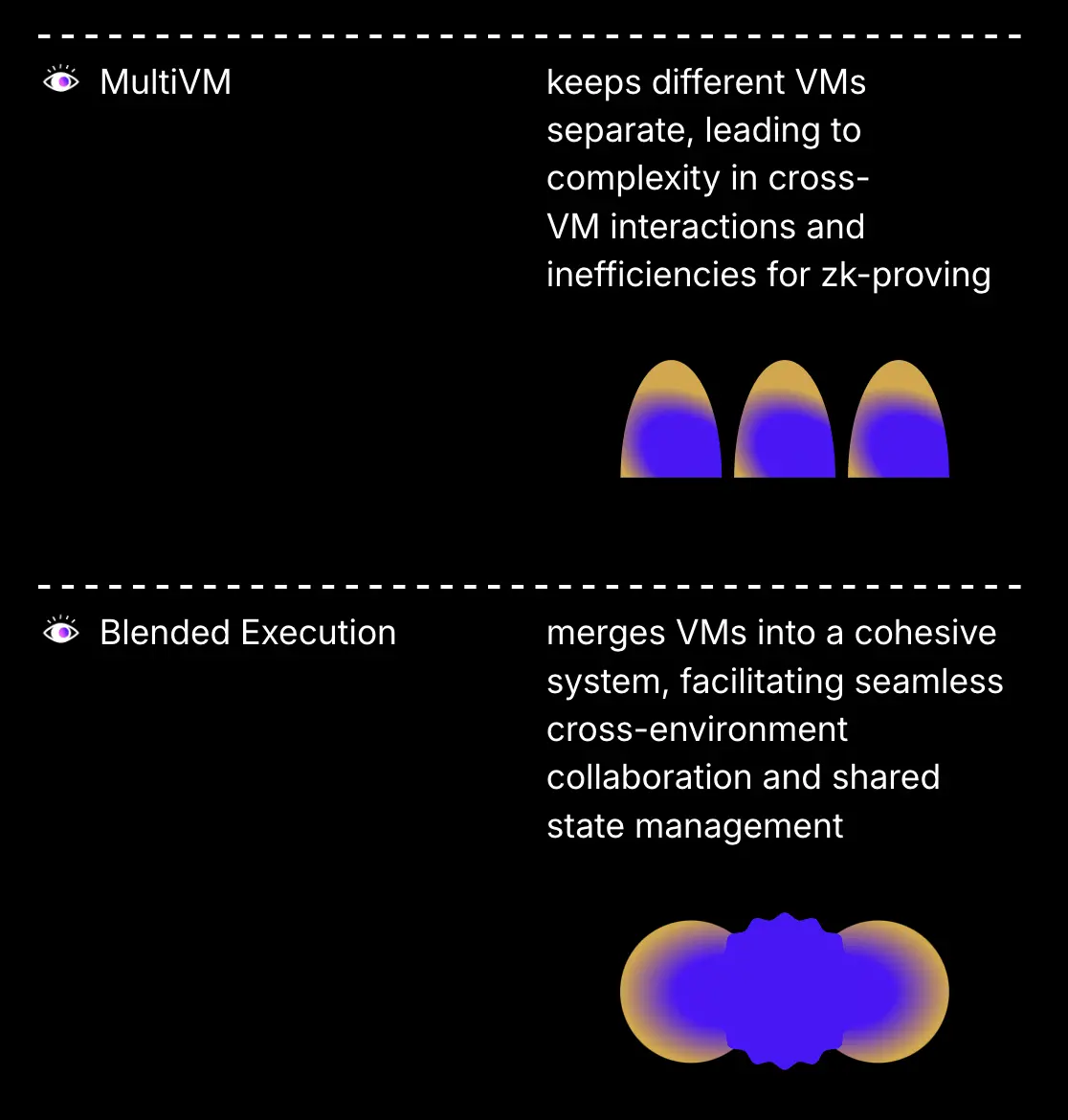
MultiVM is a common AltVM solution that runs multiple independent virtual machines within the same network, with each VM handling different languages or execution environments. However, these VMs are separate, and cross-VM interaction is complex, requiring additional state synchronization and coordination, which can lead to fragmentation in development and user experience.
Blended Execution, on the other hand, is a deeper integration solution. It does not allow multiple VMs to coexist but instead integrates them into a unified execution environment, allowing them to share the same state and execute collaboratively, thus achieving truly seamless interaction.
At the same time, in terms of zk proofs, Blended Execution is also more efficient, as it only requires proving state changes once.
The core difference lies in "whether there is truly a unified execution layer."
What is a Blended App?
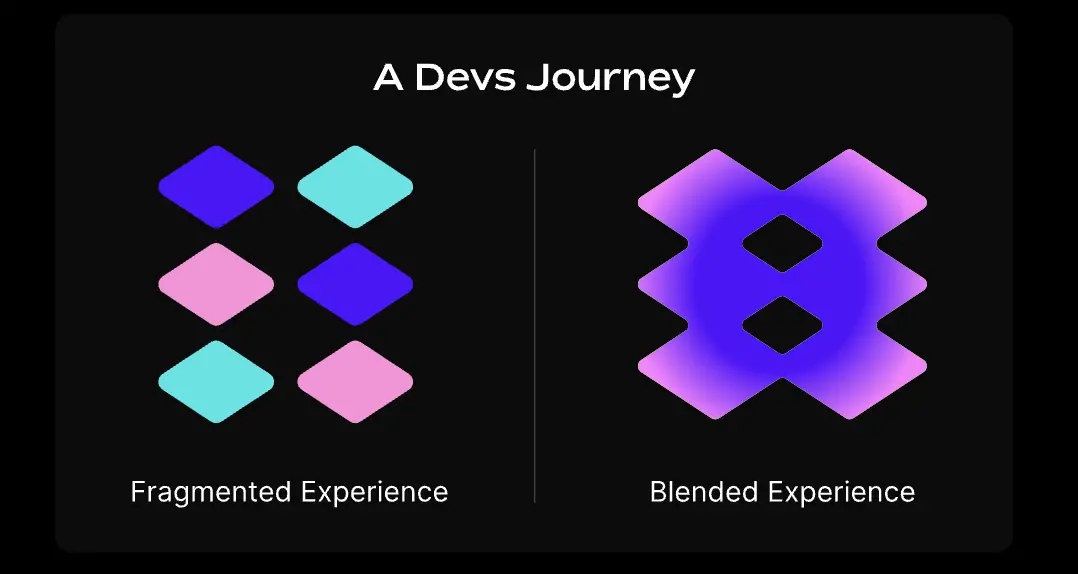
A Blended App is an application running in a blended execution environment that can simultaneously utilize the capabilities of multiple virtual machines (such as EVM and Wasm) within the same framework.
Benefits for Developers:
Developers can choose the most suitable language and execution environment for different modules, such as using Rust for high-performance parts and Solidity for DeFi logic, thus achieving the best balance between performance, flexibility, and usability.
Fluent Tech Stack Overview
Fluent is the first blended execution network, consisting of three core parts: zk virtual machine (zkVM), Layer 2 network, and development framework, used to build diverse blockchain applications on Ethereum.
Its core capability lies in simulating the execution environments of multiple virtual machines (such as EVM, SVM, Wasm), allowing smart contracts written in different languages (Solidity, Rust, etc.) to run in real-time and collaboratively under the same state, achieving true cross-VM atomic composition.
Fluent's Core Value Proposition
Fluent's core value lies in:
Simulating multiple virtual machines (VMs) in the same execution environment
Achieving real-time, atomic composability between different VM contracts
Supporting multiple programming languages (such as Solidity, Rust) for collaborative development
All applications share the same on-chain state
Essentially: allowing applications from different ecosystems to work together as one system.
The Fluent VM
Fluent VM is built on WebAssembly (Wasm) but has been streamlined and optimized to form rWasm (reduced Wasm), specifically for verifiable computation (zk scenarios).
rWasm, as the underlying execution standard, is responsible for uniformly representing all operations and improving zk proof efficiency. The execution logic of EVM, SVM, and Wasm will be simulated and compiled into rWasm for execution.
The system manages the accounts and state structures of different VMs through dedicated system contracts, thus achieving:
Unified execution of multiple VMs
Atomic, synchronous cross-VM composition
Scalable support for more VMs
Essentially: a unified execution layer compatible with multiple VMs.
The Fluent L2 Network
Fluent L2 is a zk-rollup designed to run Wasm, EVM, and SVM applications within the same network.
Its core features include:
Supporting blended execution of different VMs
All applications share the same state, enabling real-time composition
Compatibility with both EVM and SVM (retaining ABI standards)
No additional deployment costs for developers (both Solidity and Rust can be used directly)
At the base level, each VM is simulated through a Wasm system contract and ultimately executed uniformly on rWasm.
Essentially: a multi-VM L2 with a unified execution environment.
App Deployment Models
Fluent supports two application modes:
Shared Apps
Share the same state on Fluent
Applications of different VMs and languages can be composed in real-time
Suitable for DeFi, foundational protocols, etc.
Dedicated Apps
Independently running customized state machines
Customizable execution environments (such as DA, orderers, etc.)
Using Fluent for proof and verification
Essential differences:
Shared = collaboration within the same system
Dedicated = independent systems + Fluent for verification
The Fluentbase Framework
Fluentbase is Fluent's development framework for deploying smart contracts and building verifiable computing environments.
It provides:
SDK (development tools)
Proof system for state transition functions (STF)
Developers can build based on Fluentbase:
Blended Apps: on-chain applications with multiple languages and VMs
Blended Execution Networks: blockchain networks supporting multiple VMs (L2/L3)
Any computing environment: off-chain verifiable computing systems
Essentially: the development and expansion tool layer of Fluent.
Tron Comments
Fluent Labs' core advantage lies in its proposed Blended Execution architecture, which unifies multiple virtual machines such as EVM, Wasm, and SVM into the same execution layer through rWasm, achieving true cross-VM atomic composition and shared state. This has significant potential in enhancing development flexibility, breaking ecosystem fragmentation, and unleashing liquidity network effects. Additionally, its zkVM + L2 design theoretically offers better scalability and verification efficiency.
However, its challenges include extremely high technical complexity (involving multi-VM simulation, zk proofs, and unified execution layers), the ecosystem still being in its early stages (developers and applications have not yet scaled), performance and toolchain maturity needing validation, and the need to compete for developer mindshare and liquidity with existing mature execution environments (such as EVM L2, Solana, etc.). Therefore, its long-term success heavily relies on actual application implementation and the growth of the developer ecosystem.
III. Industry Data Analysis
1. Overall Market Performance
1.1. Spot BTC vs ETH Price Trends
BTC
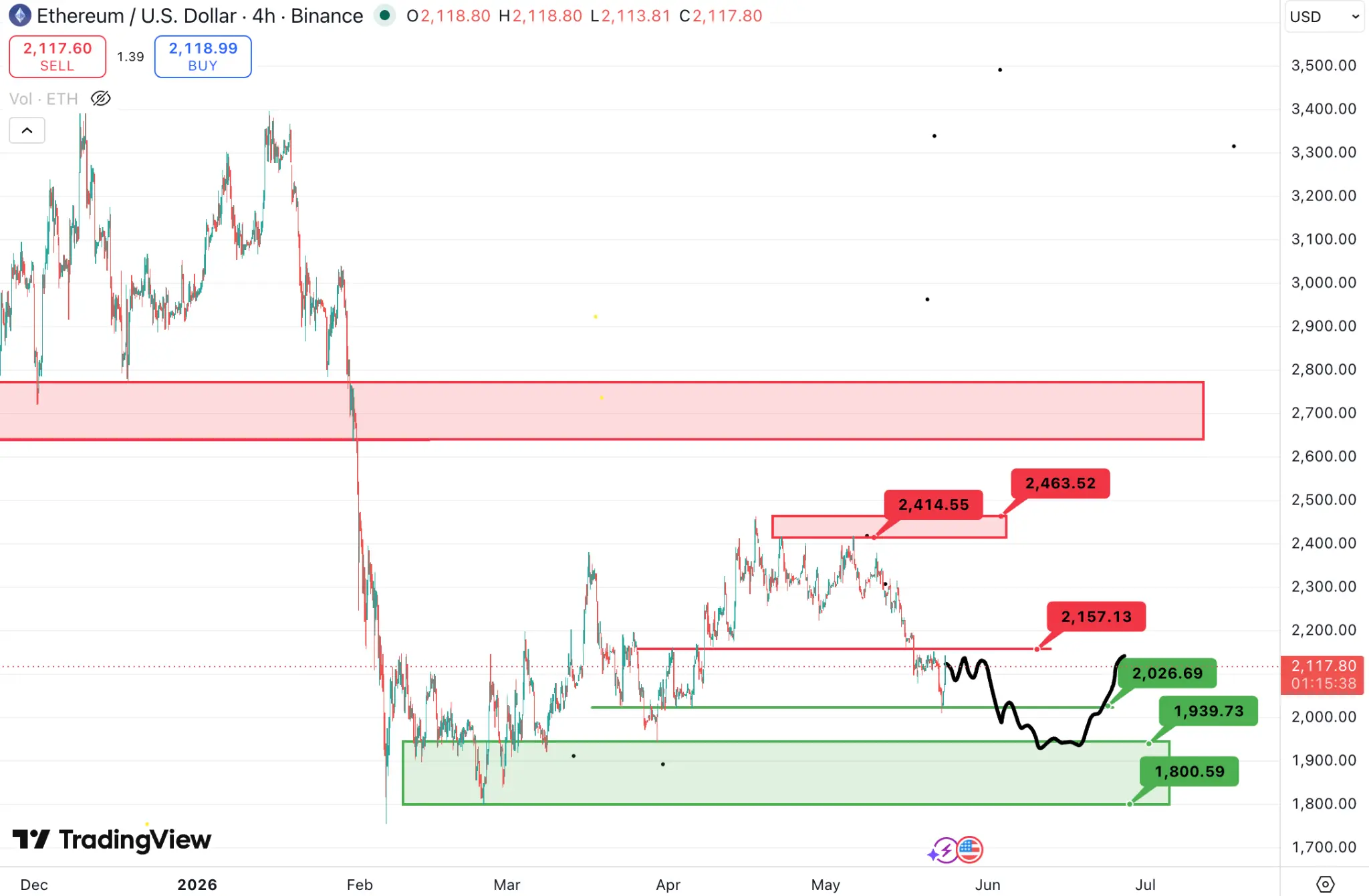
ETH
2. Summary of Hot Sectors
AI Agent Payments
Google Cloud and the Solana Foundation's Pay.sh has officially launched, supporting AI Agents to use stablecoins for direct payments for Gemini, BigQuery, Vertex AI, and other API services, pushing AI-to-AI automatic payments into real application stages.
AI + Stablecoin Infrastructure
Circle launched Agent Stack, allowing AI Agents to use USDC for automatic payments and on-chain settlements; meanwhile, the trading volume of the x402 protocol continues to grow, and Agentic Payment (AI automatic payments) is beginning to form standardized infrastructure.
AI Agent On-Chain Finance
Ant Group's Anvita platform supports AI Agents to hold assets, execute transactions, and settle stablecoins in real-time, integrating RWA Tokenization services, promoting the realization of the "Agent-to-Agent Economy."
RWA (Real World Assets)
RWA protocols such as Centrifuge and Creditcoin are beginning to combine AI Agents for on-chain collateral rate dynamic management, automated risk control, and AI credit review, evolving from "asset on-chain" to "AI-driven financial management."
ZK & Privacy Verification
zk-SNARK, ZK Identity, and Agent Authorization have become hot directions, with multiple studies beginning to explore the "AI Agent identity verification + zero-knowledge payment authorization" architecture to address privacy and compliance issues in AI automatic payments.
Agent-to-Agent (A2A) Economy
The A2A (Agent-to-Agent) payment system has become a key research direction in the industry, with multiple protocols starting to build a complete AI economic protocol stack around Agent Discovery, Intent Verification, on-chain authorization, and automatic settlement.
IV. Review of Macroeconomic Data and Key Data Release Nodes for Next Week
Macroeconomic Market Review
In the U.S., U.S. Treasury yields remain high and volatile, with the market continuing to debate expectations for interest rate cuts by the Federal Reserve. Several Federal Reserve officials emphasized that inflation remains sticky, and market risk appetite has somewhat receded.
U.S. PMI, employment, and consumer-related data continue to show resilience, reinforcing expectations for "higher interest rates lasting longer."
In Japan, Japanese government bond yields continue to rise, with the market keeping an eye on the Bank of Japan's subsequent policy normalization.
Economic recovery in Europe remains weak, with limited improvements in manufacturing data, and growth pressures in the Eurozone persist.
Gold remains high and volatile, while U.S. stocks and the cryptocurrency market show some differentiation in risk assets, with BTC briefly falling below $80,000 before stabilizing.
Key Macroeconomic Data and Events for Next Week (May 25 to May 31)
U.S.
Federal Reserve Meeting Minutes (FOMC Minutes)
U.S. PCE Price Index (Core Inflation Focus)
U.S. Initial Jobless Claims Data
U.S. Consumer Confidence Index
U.S. GDP Revision
Europe
Eurozone CPI Data
German Inflation and Manufacturing Data
Asia
Japan Tokyo CPI
China Industrial Enterprise Profit Data
V. Regulatory Policies
U.S.
- The U.S. Congress continues discussions on the implementation details of the GENIUS Act and the regulatory framework for stablecoins, focusing on reserve requirements, AML, and the boundaries of federal/state regulation. This topic continued to evolve last week.
Hong Kong
- The stablecoin licensing system in Hong Kong has entered the practical implementation stage, with the market closely watching the follow-up progress of the HKMA's first batch of stablecoin issuance licenses and the participation of traditional financial institutions.
South Korea
- South Korea continues to advance discussions on the Digital Asset Basic Act, focusing on stablecoin reserve regulation and exchange compliance systems. Although core legislative actions mainly occurred in April, relevant regulatory discussions continued last week.
Japan
- Japan's discussions on the regulatory and tax reforms following the inclusion of crypto assets in the Financial Instruments and Exchange Act continue, but no new significant formal legislation has been implemented.
European Union
- The EU continues to prepare for the final implementation of MiCA, with market attention shifting to the compliance deadline for exchanges and stablecoin issuers before mid-2026.
 Risk warning

Popular articles





