








Tron Industry Weekly Report: The Federal Reserve and the European Central Bank join forces to release signals, BTC begins to build a bottom, detailed explanation of the open clearing protocol Cycles

 A detailed explanation of Coinbase's investment of 6.4 million dollars in the open settlement protocol Cycles, as well as the Pheasant Network, which reconstructs cross-chain settlement infrastructure with extreme capital efficiency.
I. Outlook
1. Macroeconomic Summary and Future Predictions
Last week, the global macroeconomic core revolved around "inflation repricing + central bank policy path divergence + interest rate expectation fluctuations." In the United States, Federal Reserve officials continued to signal a "data-dependent but tight" stance. Although inflationary pressures have eased compared to earlier periods, structural demand driven by energy prices and AI-related investments still keeps the market cautious about future rate cuts, leading to a slight upward adjustment in interest rate expectations. The market began to reprice the possibility of "maintaining high rates for a longer time." In Europe, the ECB continues to oscillate between weak growth and persistent inflation, with the market generally expecting it to maintain a tighter or higher interest rate for a longer time to prevent energy and geopolitical factors from pushing prices higher again. Overall, the macro environment this week remains in a phase of reconfirmation of the high interest rate plateau, rather than a clear shift towards easing.
In the coming week, the global macro theme is expected to continue focusing on "central bank expectation repricing + inflation path verification + long-end interest rate fluctuations." In the United States, the market will continue to trade on the logic of "high rates maintained for a longer time." If subsequent inflation and employment data remain resilient, the interest rate curve may further flatten or even deepen into slight inversion, reinforcing the market narrative of "soft landing but long-term high capital costs." In Europe, the market will focus on whether energy prices and core inflation show signs of a second rebound, which will determine whether the ECB needs to maintain a stronger hawkish stance. In Japan, policy normalization remains a long-term theme, but short-term impacts are mainly reflected in changes in global liquidity structures (especially regarding global bond duration and arbitrage fund flows). Overall, the macro market next week is expected to focus on asset repricing in a high-volatility interest rate environment, with both risk assets and the bond market sensitive to "longer high rates."
2. Market Changes and Warnings in the Crypto Industry
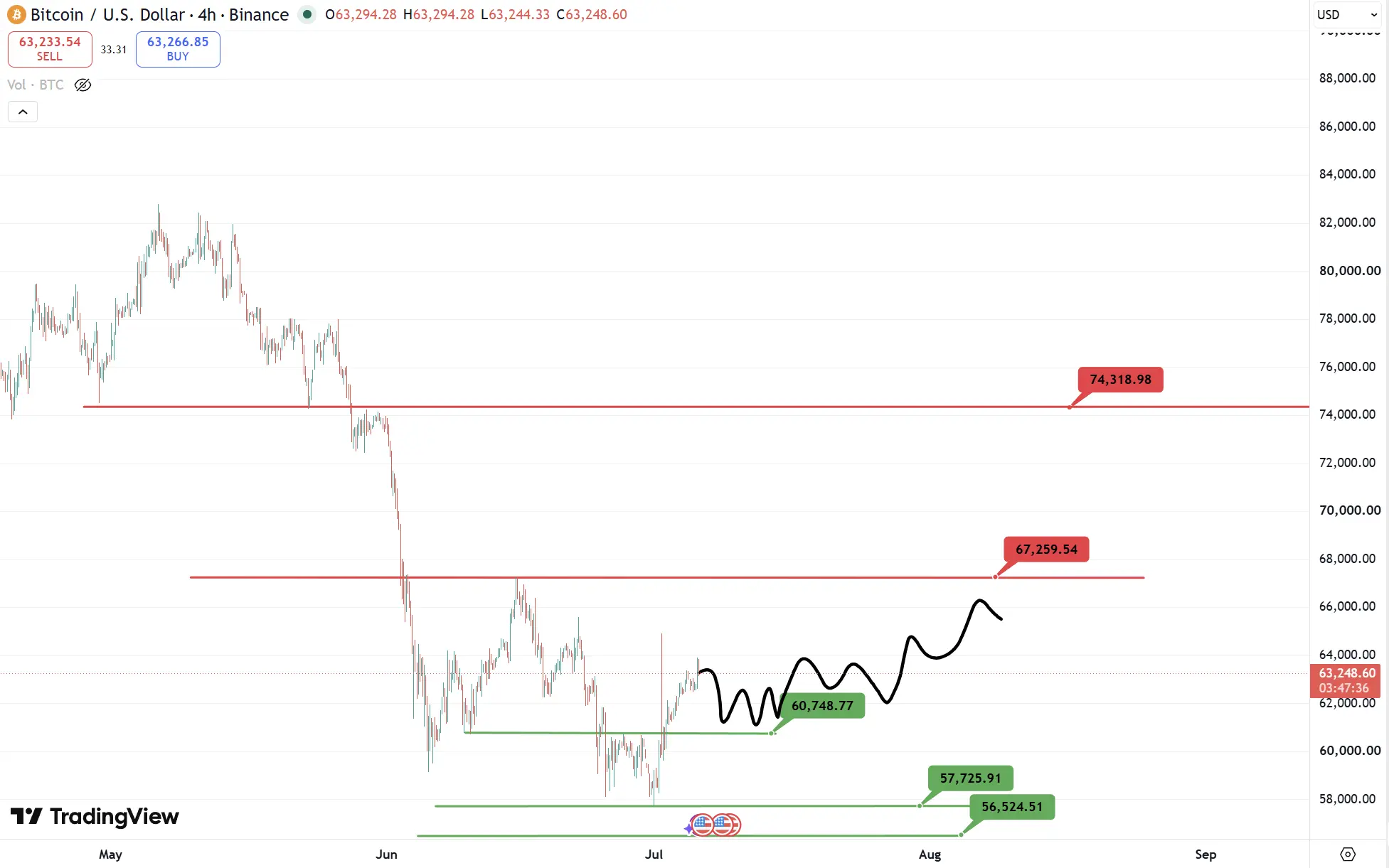
Last week, BTC exhibited a "weak rebound after breaking down" oscillation repair structure: at the beginning of the week, it continued to decline and briefly fell below $60,000 (with a low around $59k), mainly influenced by continuous outflows of ETF funds and a decline in macro risk appetite; subsequently, driven by technical buying, it slightly rebounded to the $61k--$63k range, but overall it remained in a weak structure, with the market in a "sideways repair period after a decline." ETH's performance was basically in sync with BTC but noticeably weaker, with limited rebound amplitude, and ETH/BTC continued to decline, indicating that main chain funds have not yet flowed back, and the overall situation remains in a passive following state.
In the altcoin sector, the "BTC siphoning + structural differentiation" pattern continued, with mainstream funds still concentrated in BTC and ETH. The altcoin market overall lacks a sustained main line, with only AI, RWA, and some L2 experiencing brief rebounds, but no trend-based market has formed. Essentially, the market remains in the tail end of a risk-off phase, with insufficient liquidity leading to rapid sector rotation and weak profit effects.
The current key for the market remains in the BTC range selection: $59k has become a core support level, and if it falls below this, it will trigger a new round of declines (in the $55k--$57k range), accelerating the retreat of altcoins; only if it can stabilize above $63k may a phase of rebound continue. ETH remains a passive variable, and if its relative weakness to BTC persists, it means that altcoin risks will not be released prematurely.
The biggest risk in the coming week still comes from ETF fund flows and macro data disturbances (interest rate expectations/inflation expectations), which will directly determine whether the market enters a second decline or continues to consolidate. Overall, as long as BTC does not re-establish a trend, altcoins will continue to maintain a weak structural market of "low liquidity + rapid rotation + no main line."
3. Industry and Track Hotspots
Detailed explanation of Coinbase's $6.4 million investment in the open clearing protocol Cycles, as well as the infrastructure Pheasant Network that reconstructs cross-chain settlement with extreme capital efficiency.
II. Market Hotspot Tracks and Potential Projects of the Week
1. Overview of Potential Projects
1.1. Detailed explanation of total financing of $6.4 million, led by Blockchange, with participation from Coinbase, Compound, and Primitive—Cycles, a decentralized clearing network that releases maximum liquidity with minimal capital.
Introduction
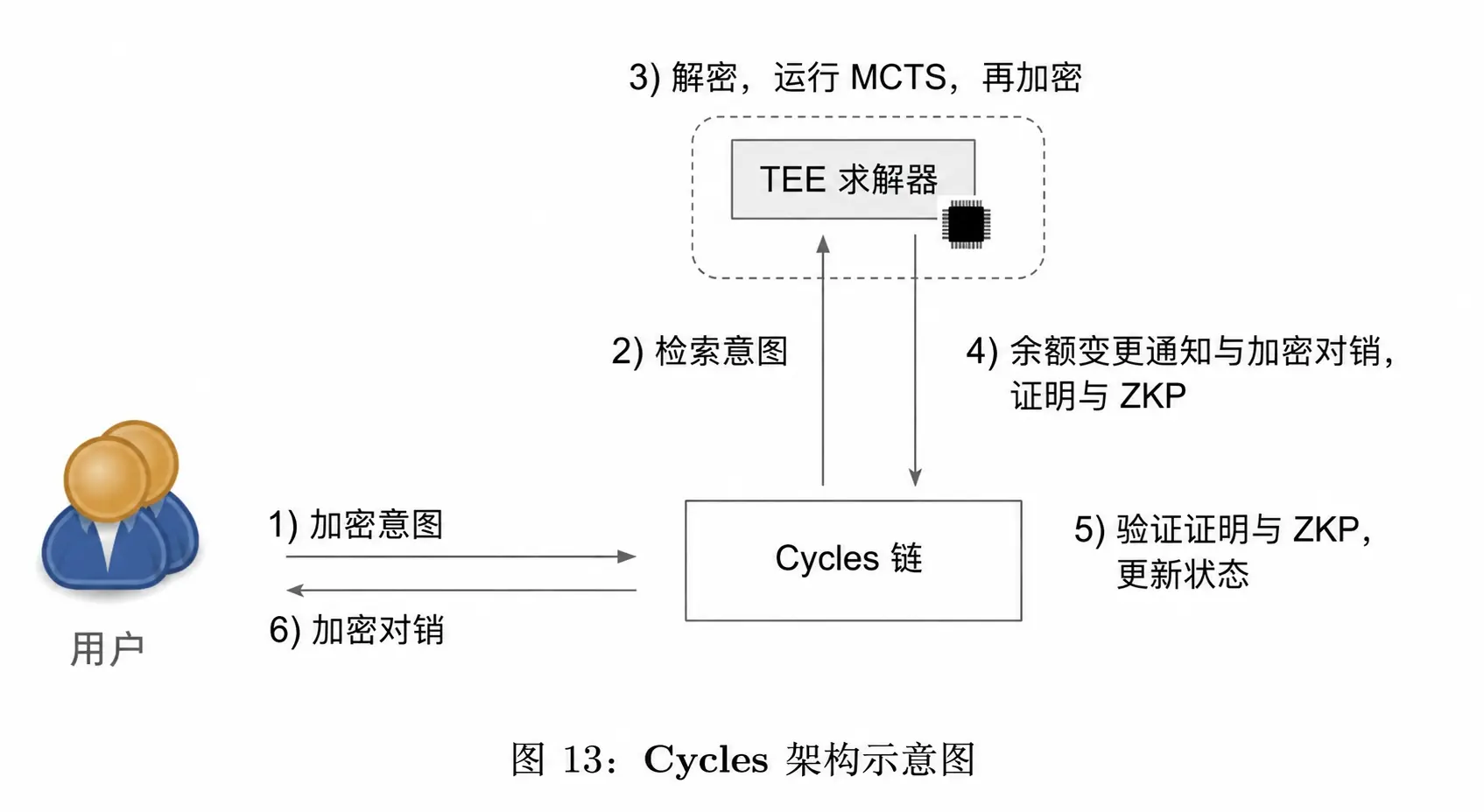
Cycles is an Open Clearing Protocol designed to enable more participants to complete more transactions with less capital through a more efficient Multilateral Netting mechanism. The protocol utilizes technologies such as Zero-Knowledge Proofs (ZK Proofs), Trusted Execution Environments (TEE), and Graph Algorithms to construct a network composed of obligations, thereby achieving maximum transaction clearing with minimal capital.
Additionally, Cycles will launch a stablecoin called Cycles Pay, which will directly connect to Cycles' clearing engine, allowing it to fully utilize the protocol's liquidity optimization capabilities during payment and settlement processes.
Brief Description of the Protocol Mechanism
- Core Mechanism of Cycles: Debt Network Clearing
Assume:
- A owes B 20
- B owes C 30
- C owes A 45
Under normal circumstances, all three need to make payments.
But Cycles identifies this as a closed loop:
A → B → C → A
Thus, the minimum debt is 20.
So:
- A's debt to B is cleared
- B's debt to C becomes 10
- C's debt to A becomes 25
As a result:
Total debt decreases from 95 to 35. No funds are transferred.
Clearing is completed merely through debt offset.
This is the most important value of Cycles:
It does not create liquidity but releases liquidity that has been locked.
- Four Types of Settlement Proposed by Cycles
The white paper states that all payment behaviors essentially fall into four categories.
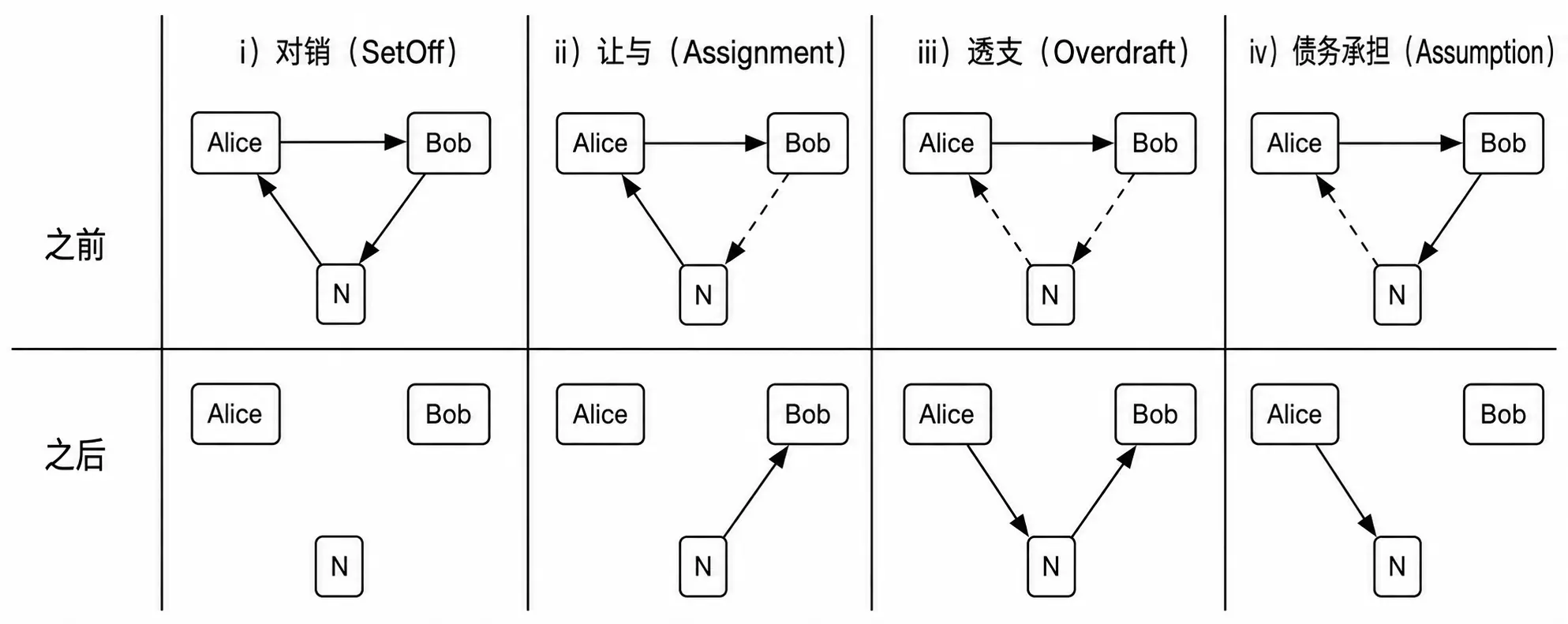
- Set-off (Debt Offset)
The most important type.
Example:
- A owes B
- B owes C
- C owes A
Directly offset.
Characteristics:
- No money needed
- No bank needed
- Most liquidity-efficient
This is the core model of Cycles.
- Assignment (Asset Transfer)
The most common payment method.
For example:
A's account has USDC.
Directly transfers to B.
B then transfers to C.
Essentially, it is an asset transfer.
- Overdraft (Credit Payment)
What if there is no money?
Borrow money.
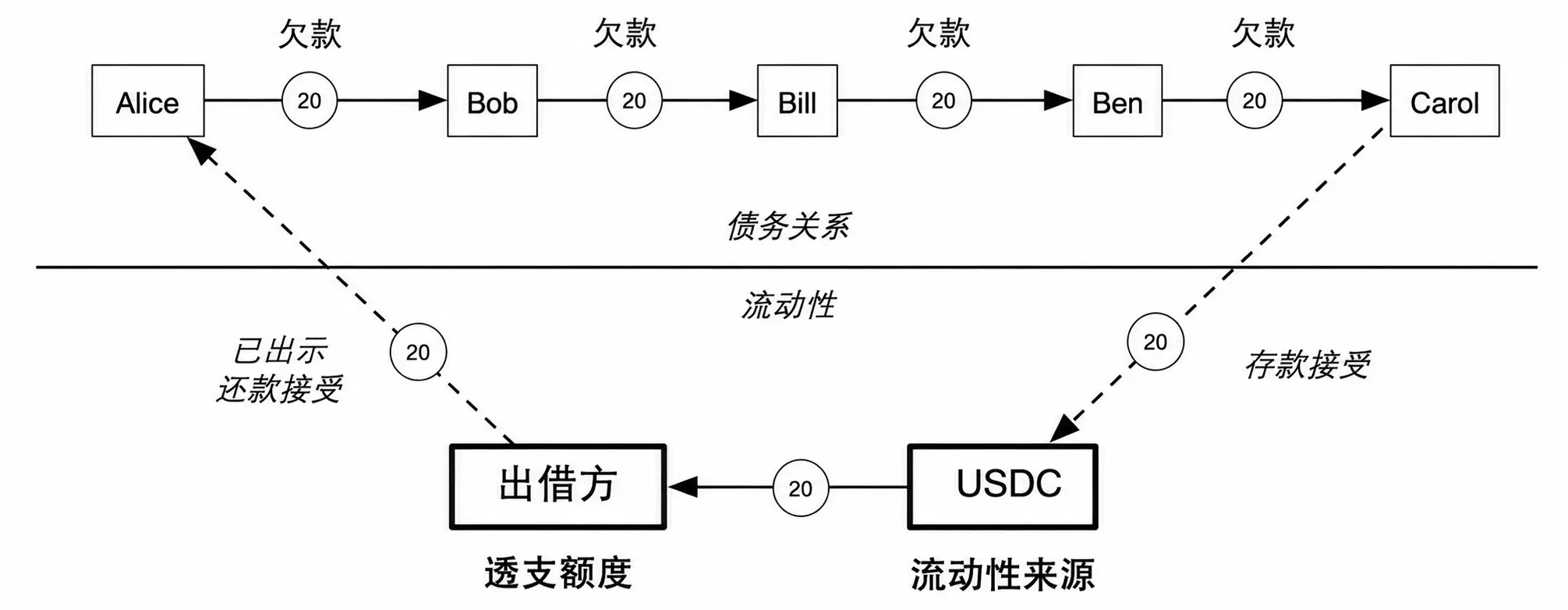
For example:
- The bank grants A credit
- A borrows money to pay B
After payment:
A no longer owes B,
but owes the bank.
This corresponds to:
- Bank loans
- DeFi lending
- Credit limits
- Assumption (Debt Transfer)
Debt for debt.
For example:
Originally A owes B.
Through protocol arrangements:
It becomes A owes C.
B exits.
Essentially similar to debt restructuring or debt assignment.
- Cycles' Innovation: Turning DeFi into a Corporate Clearing Tool
Many DeFi projects focus on solving:
- Leverage
- Yield
- Speculative trading
Cycles addresses how businesses can pay their bills.
This is a completely different direction.
Cycles can automatically decide:
- Which asset to use
- Which lending pool to call
- How much to borrow
to achieve optimal clearing.
- Graph Solver (Graph Algorithm Engine)
This is the brain of the entire protocol.
Cycles turns all data into a debt graph.
Nodes:
- Enterprises
- Banks
- Stablecoins
- Lending protocols
Edges:
- Debt
- Credit
- Payment willingness
Then it runs a graph optimization algorithm: MTCS (Multilateral Trade Credit Set-off)
The goal is to clear the most debt with the least funds.
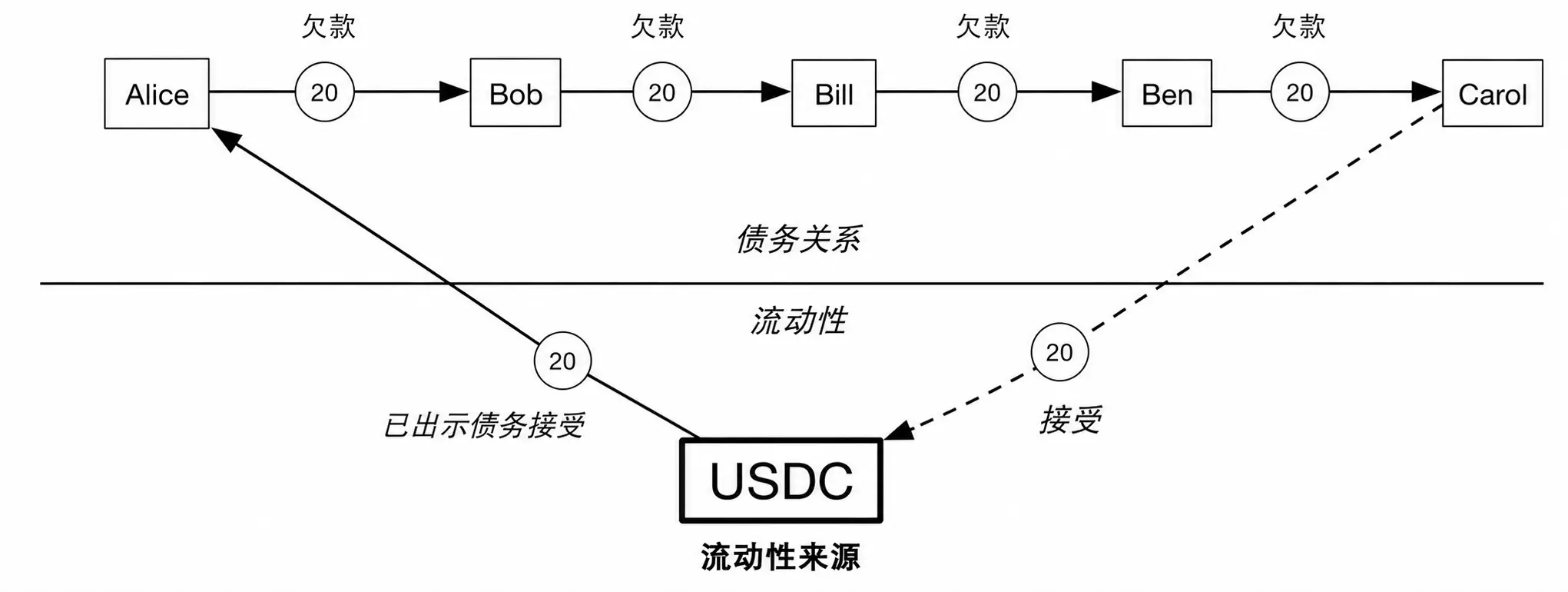
The experimental results provided in the white paper are very interesting:
After injecting a small amount of liquidity,
the scale of cleared debt far exceeds the scale of injected funds.
That is, $1 of liquidity can clear several dollars of debt. Because the same amount of money is repeatedly utilized in the debt chain.
- Multi-Asset and Multi-Chain Support
Cycles does not support only one currency.
It can simultaneously support:
- USD
- USDC
- ATOM
- BTC
- ETH
even corporate credit.
The key is that it does not do cross-currency exchanges but rather debt matching.
Therefore, the USDC system and ATOM system can participate in the same clearing network without needing to exchange currencies first.
- Privacy Solutions
What enterprises are most concerned about is: my supply chain relationships being made public.
Thus, Cycles employs TEE to handle the calculation of the debt graph.
ZK Proofs are used to verify the correctness of the calculations.
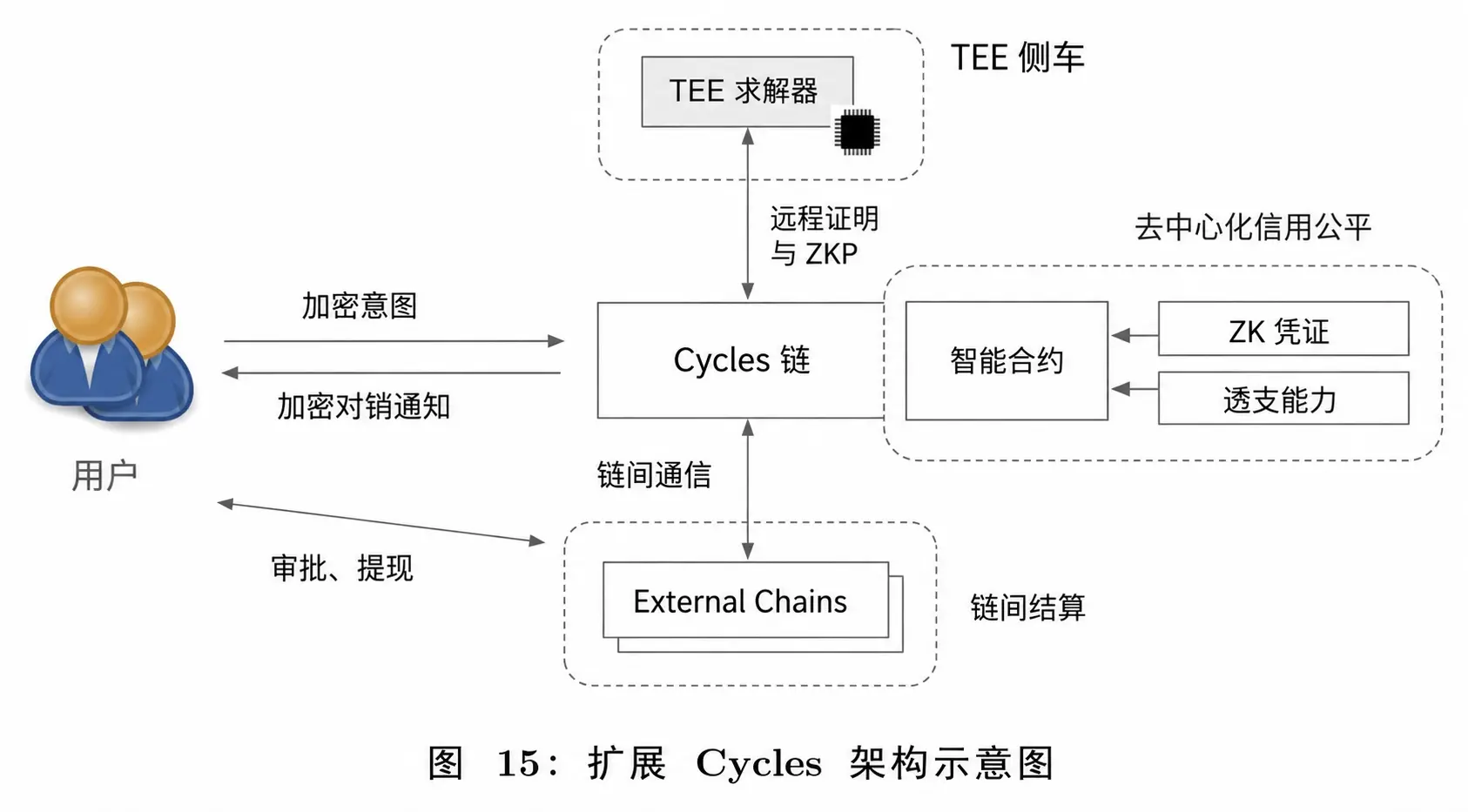
Architecture process:
- Enterprises upload encrypted debt data
- TEE decrypts and runs algorithms
- Outputs clearing results
- ZK proves the results are correct
- On-chain execution of settlement
This way:
- Others cannot see your receivables and payables
- The system can still complete full network optimization clearing.
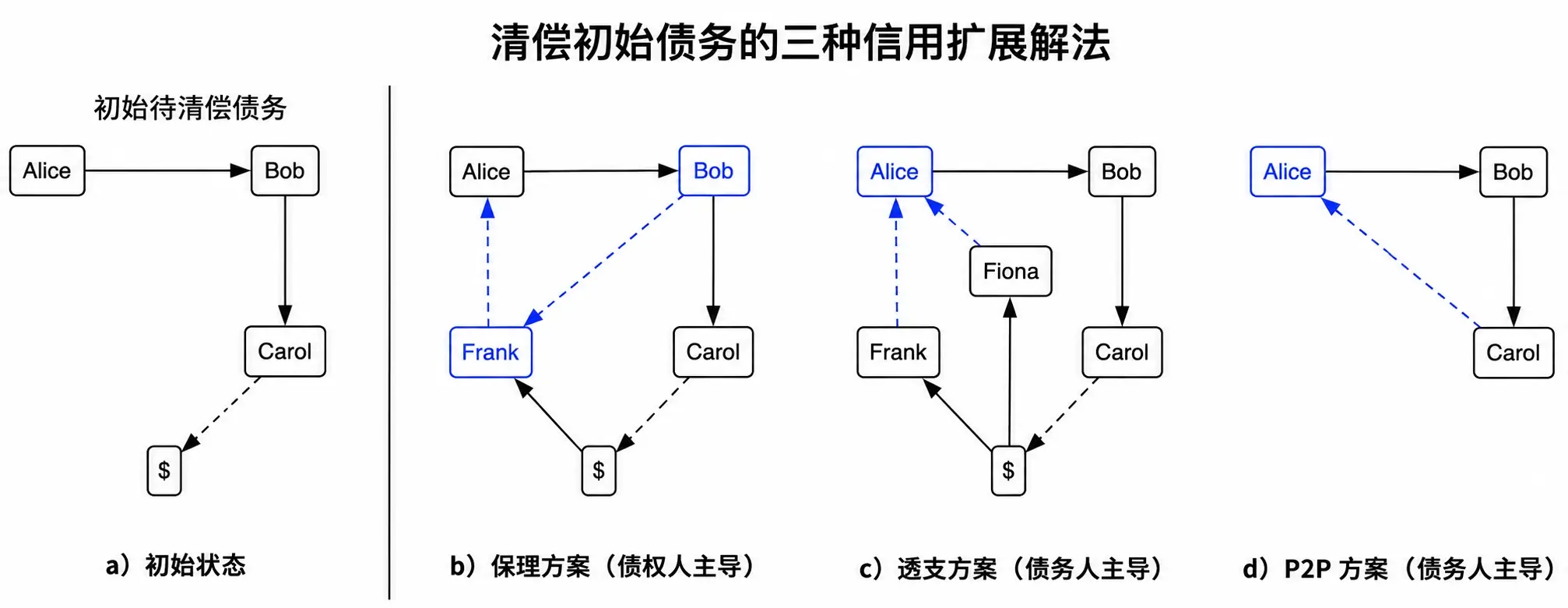
- Difference from Traditional Factoring
Traditional factoring:
A owes B
B sells the debt to a factor F.
Result:
A now owes F.
Problems:
- New intermediaries are created
- Costs increase
- Counterparties are replaced
Cycles believes:
The debt relationship should not change; it should utilize the network structure for direct clearing.
That is, Respect the Graph.
- Business Model and Ecological Positioning
From a positioning perspective, Cycles is not:
- L1
- DEX
- Stablecoin
nor is it:
- Lending protocol
It is more like a corporate version of a "Debt Settlement Operating System (Clearing OS)."
Its value lies in:
- Helping enterprises reduce working capital occupancy
- Lowering loan demand
- Reducing overdue payment risks
- Improving capital turnover efficiency
- Allowing DeFi funds to truly enter the real economy.
Tron Commentary
Cycles' advantage lies in its attempt not to create new liquidity but to release liquidity locked in receivables and payables in the real economy through a Multilateral Netting mechanism, unifying corporate debts, stablecoins, bank deposits, and DeFi credit limits into the same clearing network, and using graph algorithms, TEE, and zero-knowledge proofs to automatically find optimal clearing paths, achieving "clearing the most debt with the least funds," which has strong capital efficiency advantages for cross-enterprise payments, supply chain finance, and trade settlement scenarios; at the same time, its launched Cycles Pay stablecoin further strengthens the payment and clearing loop.
However, its disadvantage lies in the network's value being highly dependent on the scale of participation. Only with enough enterprises, financial institutions, and liquidity providers can the multilateral offset effect be fully realized, thus presenting significant cold start and network effect thresholds; additionally, obtaining corporate debt data, privacy protection, compliance requirements, and legal recognition across jurisdictions will pose high challenges for large-scale deployment.
2. Key Project Details of the Week
2.1. Detailed explanation of total financing of $2 million, led by Mint, with participation from Skynet Trading and 90s and other institutions—Pheasant Network, an infrastructure that reconstructs cross-chain settlement with extreme capital efficiency.
Introduction
Pheasant Bridge is a cross-chain bridge protocol driven by Intent, aimed at unifying Layer 2 infrastructure and connecting Ethereum and its expanding ecosystem.
Through the AI-driven intent engine AIntent, the protocol can understand the target needs of users and applications and automatically select the safest and most efficient cross-chain execution path.
Developers can quickly integrate native cross-chain capabilities into applications through Pheasant's Bridge-as-a-Service (BaaS) solution, which is built on an optimistic verification mechanism, featuring speed, low cost, and decentralization.
At the same time, the AI-driven intent optimization system can adjust execution strategies in real-time based on network conditions, dynamically selecting the best routes to provide users with a smoother, more stable, and predictable cross-chain experience.
Core Analysis of System Architecture
L2 → L1 and L2 → L2 Cross-Chain Process
Normal Cross-Chain Process (Default)
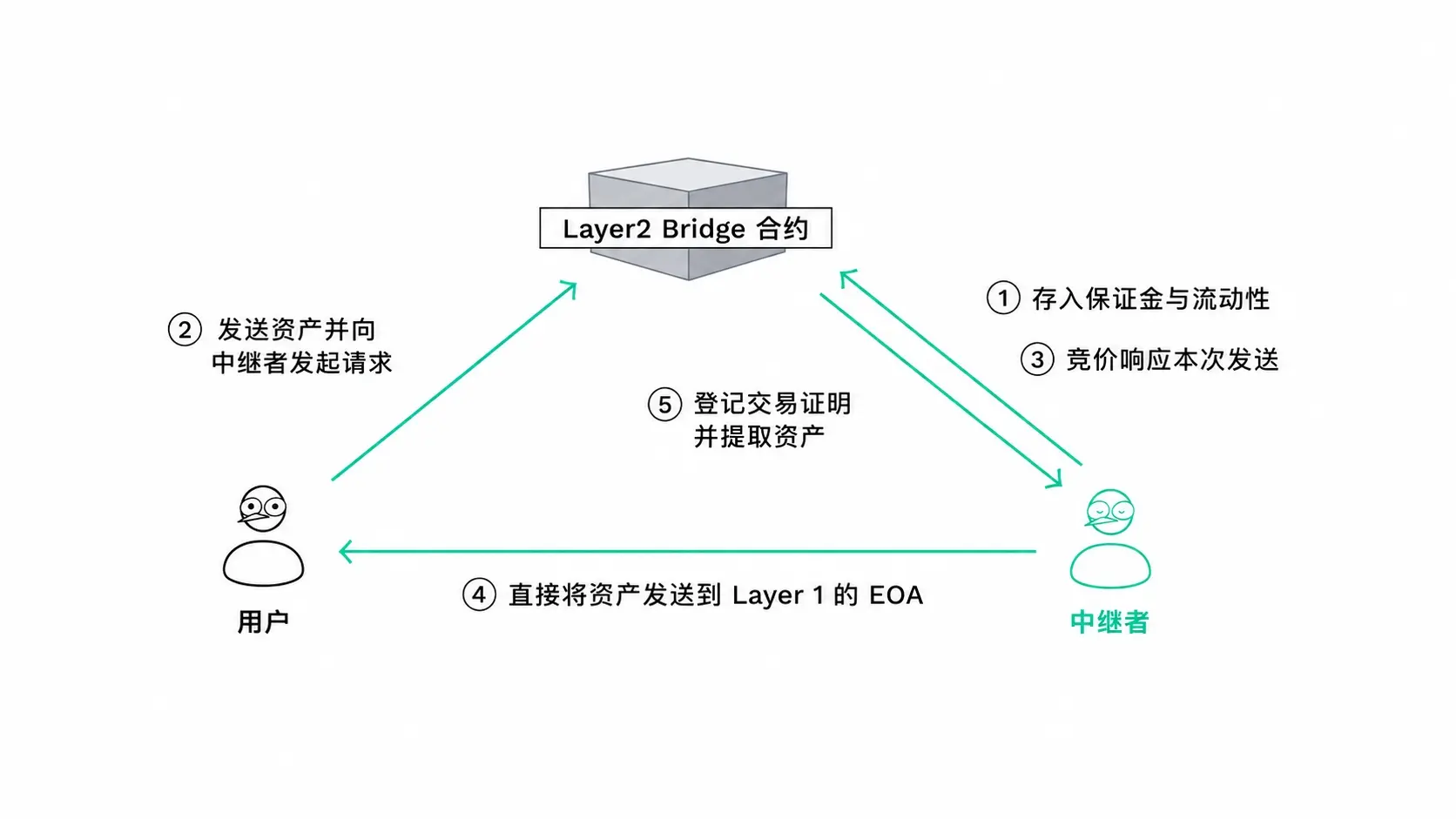
Pheasant Bridge completes cross-chain transactions using a relayer that pre-provides liquidity.
- Relayer Provides Margin
The relayer first deposits a certain amount of funds into the BondManager contract (Layer2 Bridge Contract) as a margin (Bond) to ensure the credibility of subsequent cross-chain actions.
- User Initiates Cross-Chain Request
The user sends the assets to be cross-chained to the PheasantNetworkBridgeChild contract on the source chain and submits a cross-chain request to the relayer.
- Relayer Directly Advances Payment
Upon receiving the request, the relayer does not need to wait for the traditional bridging process to complete but directly sends the corresponding assets to the user's address on the target chain.
Thus, the user can receive funds faster.
- Relayer Submits Proof and Recovers Funds
After completing the transfer, the relayer generates a transfer proof based on the target chain transaction hash and submits it to the PheasantNetworkBridgeChild contract.
Once verified, the relayer can withdraw the user's previously locked assets from the bridging contract, completing the fund recovery.
Fraud Handling Mechanism
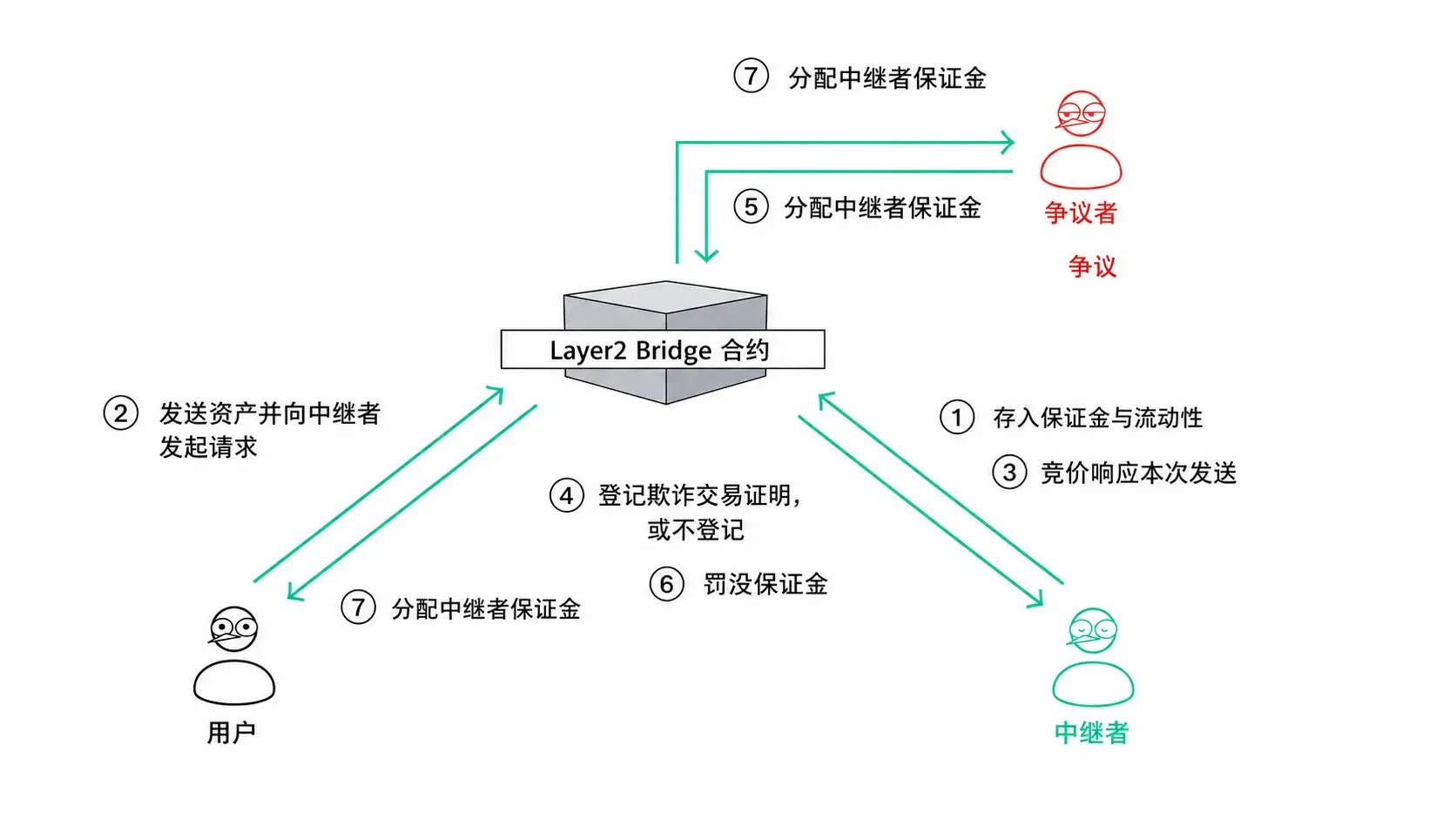
To prevent malfeasance by the relayer, Pheasant introduces an optimistic verification mechanism.
- Initiate a Challenge
If someone discovers abnormal behavior by the relayer, they can act as a Disputer (challenger) and initiate a dispute.
When initiating a challenge, the challenger must first stake a certain amount of assets to enter the Challenge Period.
- Relayer Submits Evidence
Within the specified time, the relayer must submit relevant evidence to prove that they have indeed completed a legitimate transfer.
- Evidence Established
If the evidence proves that the relayer did not act maliciously:
- Challenge fails
- The challenger's staked assets are forfeited
- The forfeited assets are rewarded to the relayer
- Evidence Not Established
If:
- The relayer cannot provide valid evidence
- Or fails to submit evidence within the specified time
It is considered a successful challenge:
- The relayer's margin (Bond) is forfeited (Slashing)
- The challenger receives corresponding compensation and retrieves their staked assets
L1 → L2 Cross-Chain Process
Unlike the L2→L1 bridging model, Pheasant has designed a lighter solution for L1→L2.
The reason is that if the L2→L1 model is continued, it would require deploying an escrow contract on the Ethereum mainnet (L1), significantly increasing user costs. Therefore, Pheasant adopts a more efficient relayer direct connection model.
Normal Cross-Chain Process (Default)
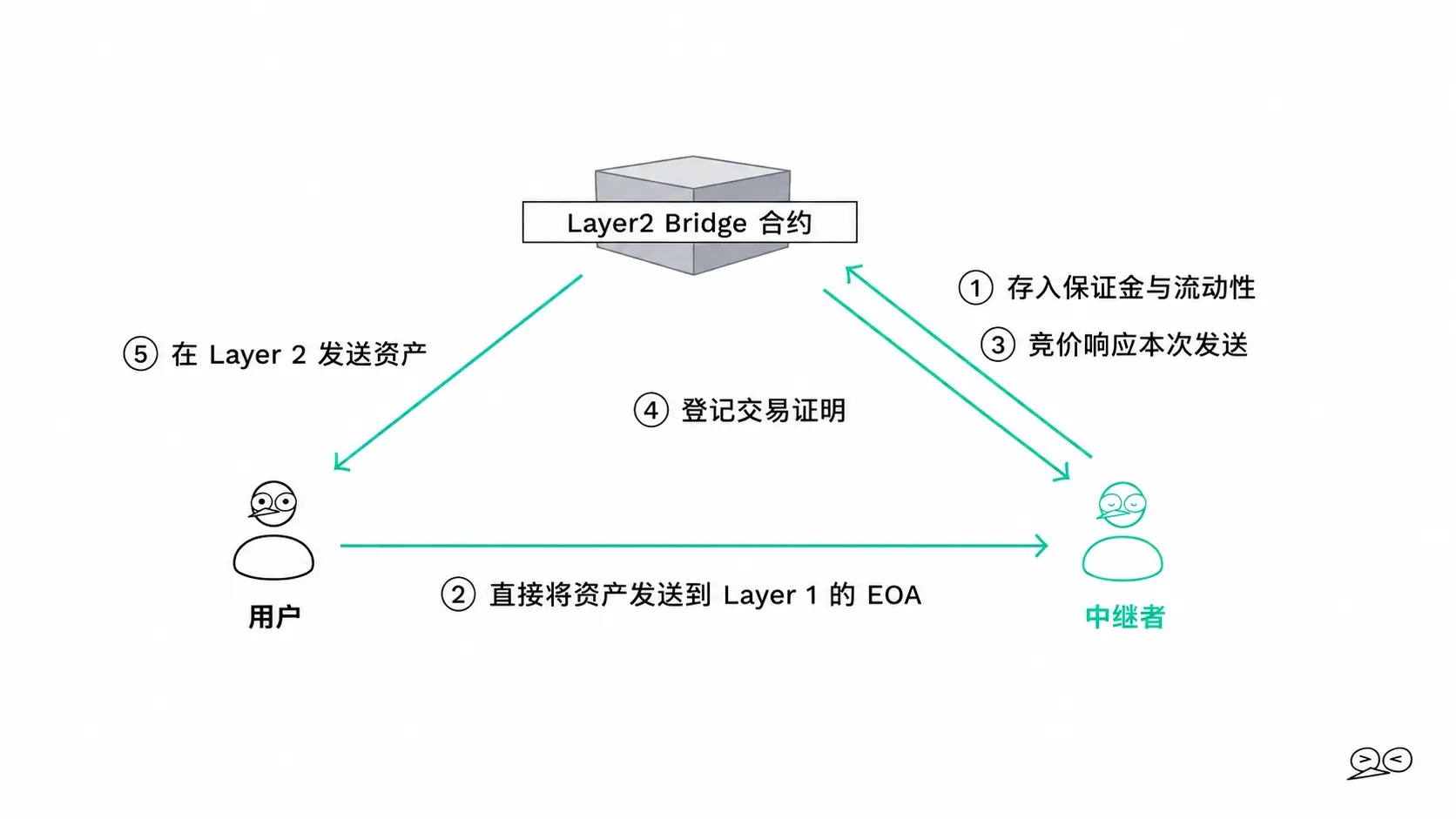
- Relayer Provides Margin
The relayer pre-deposits a margin (Bond) into the BondManager contract on Layer2 as a performance guarantee.
- User Directly Transfers to Relayer
When the user initiates an L1→L2 cross-chain, they do not need to lock assets into the bridging contract first but directly send the assets to the relayer's EOA (Externally Owned Account) on Layer1.
This transfer will automatically trigger the cross-chain process.
- Relayer Completes Target Chain Transfer
The relayer generates a transaction proof based on the user's transfer record and submits the proof to the PheasantNetworkBridgeChild contract on the target chain.
Subsequently, the relayer sends the corresponding assets to the user on Layer2.
Fraud Handling Mechanism
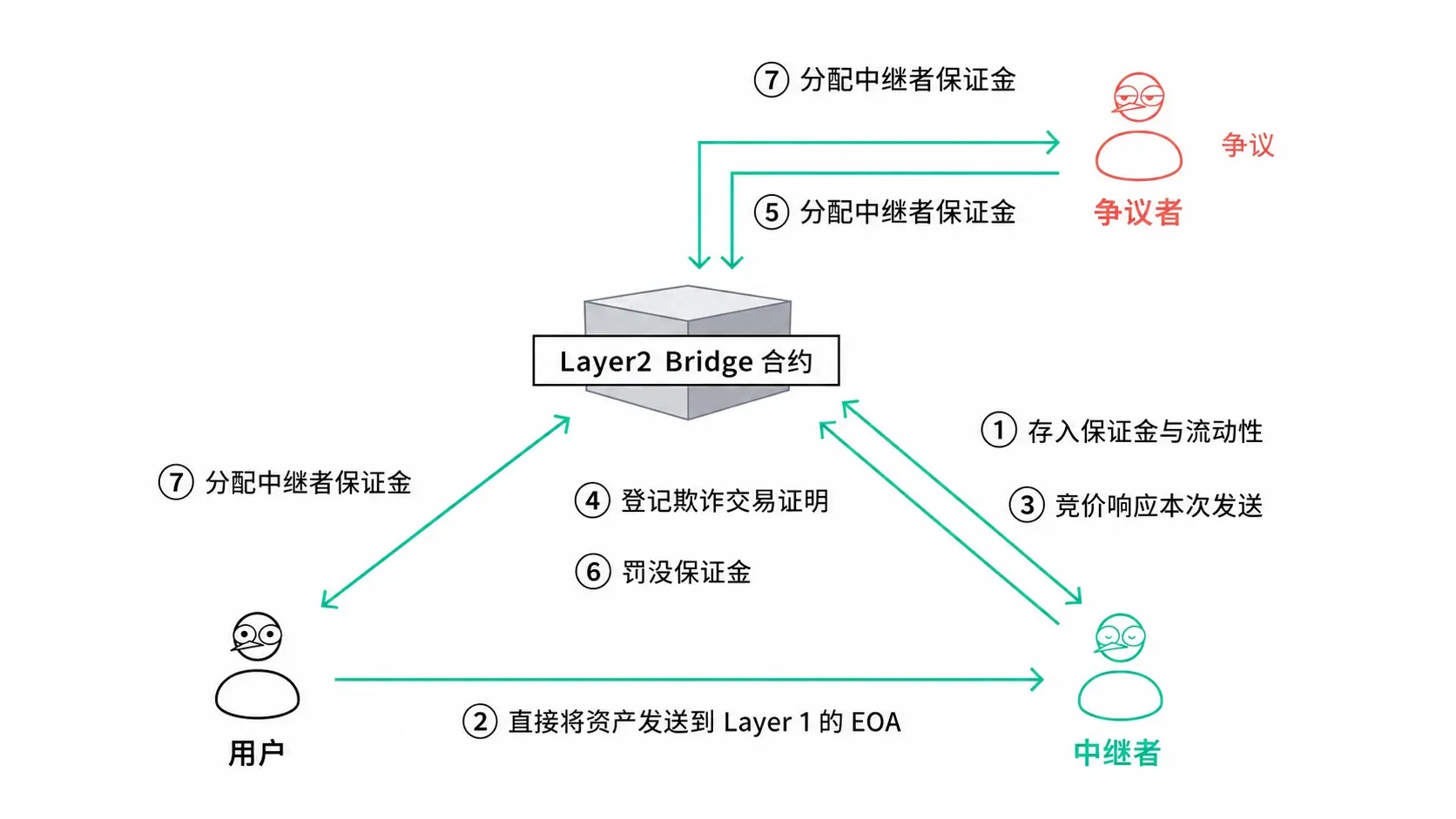
The risk control logic for L1→L2 is simpler than for L2→L1.
Since the user has directly transferred assets to the relayer, the system primarily guards against:
The relayer failing to perform after receiving the funds.
If the relayer does not send the corresponding assets to the user's Layer2 address within the specified time after the user completes the transfer, anyone can initiate a penalty process (Slash).
The system will directly deduct the relayer's pre-deposited margin and compensate the affected user.
Pheasant Swap Architecture
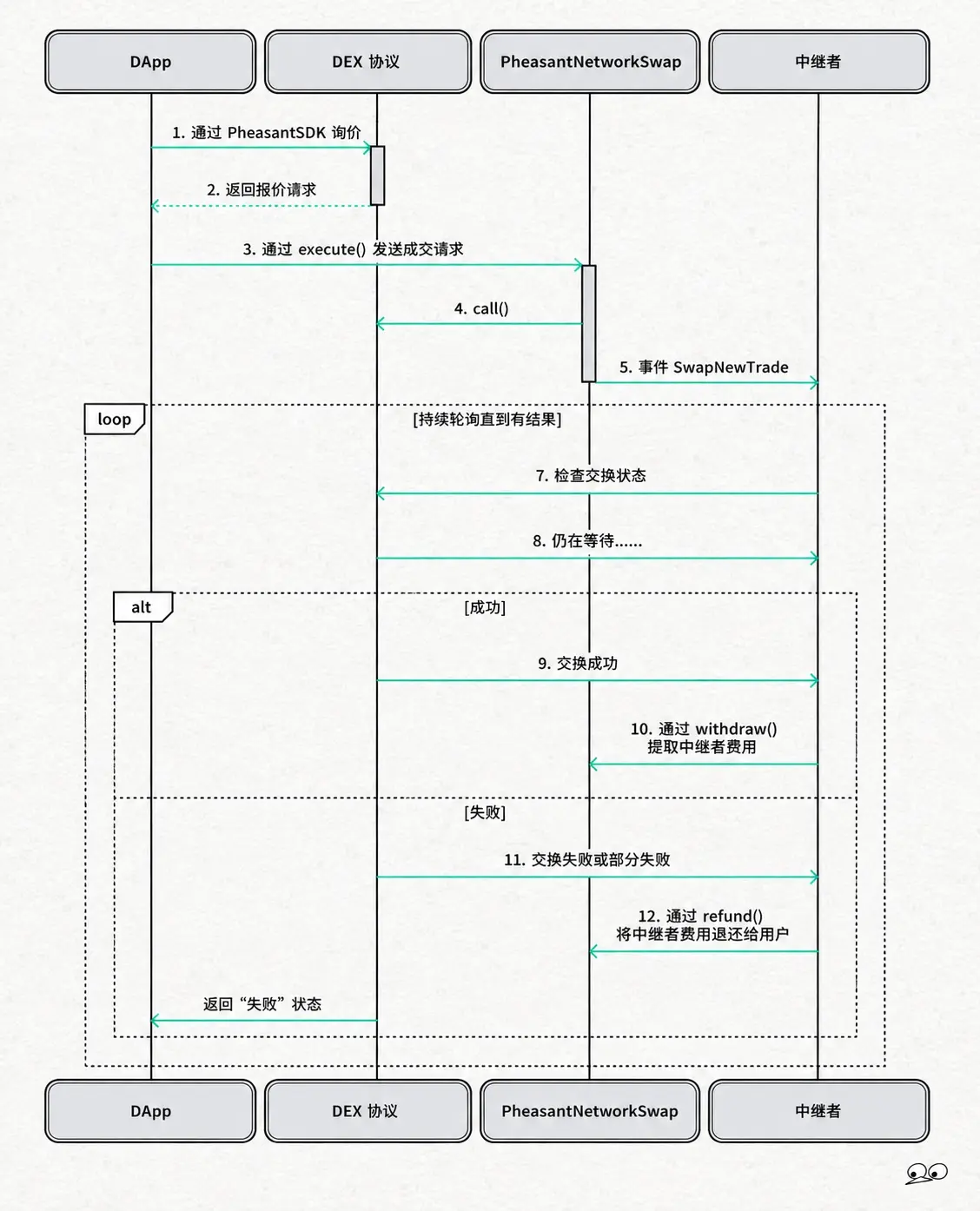
Pheasant Swap consists of four core components that work together to complete the cross-chain exchange process.
- DApp (Application Layer)
The front-end application that users interact with directly.
When users initiate a cross-chain exchange, the DApp retrieves the optimal quote through the Pheasant SDK and submits the transaction request to the PheasantNetworkSwap contract for execution.
Its role is equivalent to the user entry point for the entire cross-chain swap.
- DEX Protocol (DEX Protocol Layer)
Pheasant has integrated multiple DEX protocols as sources of liquidity.
When a swap request is received:
- The DEX is responsible for executing the actual swap
- Returns the swap result
- Synchronizes the result to the DApp
Thus, Pheasant itself does not provide liquidity but aggregates external DEX liquidity resources.
- PheasantNetworkSwap Contract (Transaction Contract)
This is the core scheduling layer of the entire system.
Mainly responsible for:
- Receiving user swap requests
- Selecting the corresponding DEX
- Routing transaction execution
- Managing the cross-chain exchange process
Essentially, it acts as the smart routing center for cross-chain swaps.
- Relayer
The relayer is responsible for monitoring the entire transaction lifecycle.
Including:
- Tracking cross-chain transaction status
- Confirming whether the transaction has been successfully completed
- Handling fee settlements
- Refunds in case of exceptions
If the transaction is successful:
- The relayer collects the corresponding service fee
If the transaction fails:
- The relayer refunds the relevant fees to the user
Tron Commentary
Pheasant Network's advantage lies in its use of an Intent-driven + Optimistic Bridge architecture, which automatically selects the optimal cross-chain path through the AI intent engine AIntent, and achieves rapid fund arrival through the relayer's pre-funding model. Compared to traditional cross-chain bridges, it reduces the complexity of cross-chain verification processes and liquidity pool dependencies, thereby lowering costs and improving capital efficiency; at the same time, its Bridge-as-a-Service (BaaS) model facilitates developers to directly integrate native cross-chain capabilities and supports a more efficient cross-chain swap experience through aggregated DEX liquidity and smart routing.
On the other hand, its disadvantage is that the system still largely depends on the performance capabilities and margin mechanisms of the relayer network. Although the challenge period and slashing mechanisms constrain malicious behavior, there remains a certain trust assumption compared to cross-chain solutions that rely entirely on on-chain verification; additionally, the advantages of AI intent routing and cross-chain experience ultimately depend on the number of relayers, liquidity depth, and the scale of ecosystem access, and the network effect needs to continue to expand to fully demonstrate competitiveness.
III. Industry Data Analysis
1. Overall Market Performance
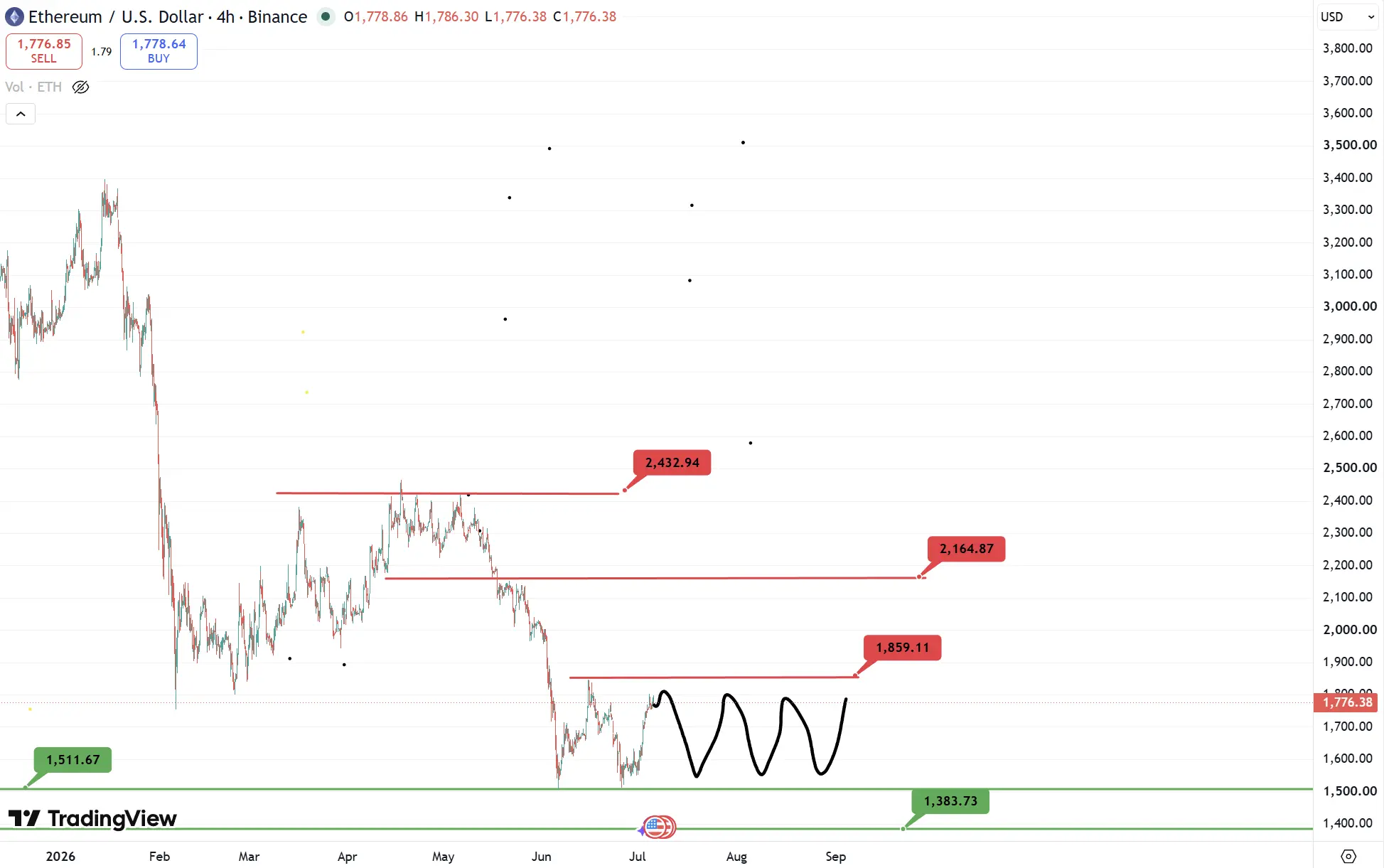
1.1. Spot BTC vs ETH Price Trends
BTC
ETH
IV. Macroeconomic Data Review and Key Data Release Points for Next Week
Review of Macroeconomic Data This Week
- U.S. interest rate expectations: The market continues to price in "higher for longer," with risk assets generally oscillating.
- Inflation expectations: No structural reversal signals have appeared in the inflation path, and the market remains cautious about rate cut expectations.
- Liquidity environment: U.S. dollar liquidity remains neutral to tight, with the crypto market overall lacking new macro drivers.
- Crypto market performance: BTC/ETH primarily oscillated within a range, with funds flowing more towards structural yields and RWA/stablecoin yield assets.
Key Macroeconomic Data Points for Next Week
Next week will still be driven primarily by U.S. data:
- U.S. employment data (non-farm/initial jobless claims) → to assess whether the labor market is cooling.
- U.S. CPI inflation data (if released during the window period) → to verify core inflation direction.
- PMI data (manufacturing/services) → as a reference for economic momentum and recession expectations.
- Speeches by Federal Reserve officials → affecting the interest rate expectation curve and risk asset pricing.
V. Regulatory Policies
European Union
- MiCA enters the "full implementation + exit phase": The final transition period will be completed around early July, with platforms that have not obtained CASP licenses required to exit or restrict operations, marking the industry’s entry into a strong licensing era, with many trading platforms (including leading exchanges) shrinking their business or discontinuing services within the EU.
- Regulatory focus is concentrated on: stablecoin issuance, reserve compliance, unified trading platform licensing, and enhanced consumer protection.
United States
- The stablecoin bill has entered the execution deepening phase (GENIUS Act system): The focus has shifted to the implementation of regulatory details, including stablecoin 1:1 reserves, bank-level compliance frameworks, and audit requirements.
- The market structure bill (CLARITY Act) is still in the promotion window, with ongoing negotiations over SEC/CFTC regulatory boundaries, and the institutional trend continues but has not fully solidified.
United Kingdom
- The FCA continues to advance a "fully financialized regulatory framework," imposing capital adequacy, stress testing, and risk management requirements on crypto companies, with the overall direction being a bank-like regulatory system.
- At the same time, adjustments are being made to capital requirements related to certain stablecoins, reflecting a dual-track strategy of "strong regulation + moderate relaxation to attract the industry."
Japan
- Crypto asset regulation continues to evolve towards securitization and institutional investment tooling, with tax systems and ETF-related frameworks being continuously optimized, aiming to integrate crypto assets into traditional capital market systems.
India
- The central bank (RBI) reiterates its strict stance on crypto assets, emphasizing that financial institutions should avoid exposure to crypto assets and maintain the option of a "potential comprehensive ban," with a conservative regulatory tone.
 Risk warning
Popular articles





