In-depth Research on the Oracle Track: Ecological Expansion, Economic Value Capture, and Financial Bridges
 Core Viewpoint

 The competition in the oracle track is essentially a struggle for the "definition of facts in the digital world." Whoever can become the safest, most reliable, and most networked "source of truth" will become an irreplaceable cornerstone of the future value internet.
Author: Gate Research Institute
Abstract
● Oracles are key infrastructure connecting blockchain with the real world: They can securely and transparently bring off-chain data (such as prices, events, asset statuses, etc.) on-chain, enabling smart contracts to perceive and interact with the real world, becoming the "trust engine" and "data settlement layer" of the Web3 ecosystem.
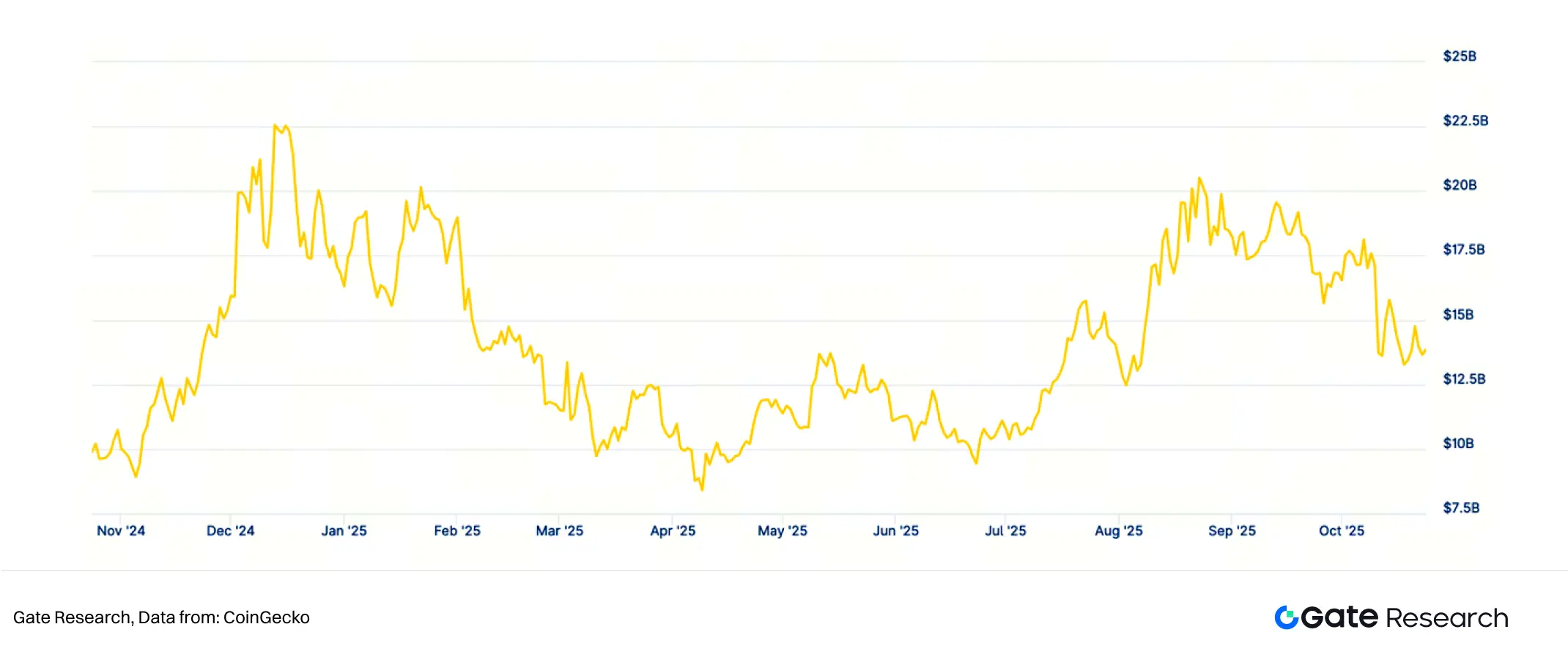
● Market scale explosion: Oracles have upgraded from the price input layer of DeFi protocols to the underlying trust foundation of the entire Web3 ecosystem. As of October 2025, the total locked value (TVS) in the oracle sector has exceeded $102.1 billion, with a total market value of over $14.1 billion and annual call volume reaching hundreds of billions of times, becoming an important part of the on-chain data economy.
● Oligopoly pattern and shift in competition focus: The current market has formed an oligopoly dominated by Chainlink (with a market share of over 87% and a TVS share of 61.58%). The focus of competition is shifting from single price feeding efficiency to service quality, sustainability of economic models, and cross-chain communication integration capabilities. Meanwhile, emerging protocols like Pyth Network and RedStone are rapidly rising in low-latency and high-frequency data scenarios, forming differentiated competitive advantages.
● DeFi, RWA, and institutional adoption become core driving forces: The growth of oracles has formed a "multiplier effect" pattern. DeFi (with a total TVL of about $168.3 billion) remains the primary battlefield; RWA (with asset scale exceeding $35 billion) is becoming the most incrementally potential institutional growth engine; while emerging applications such as cross-chain communication (CCIP), prediction markets, and AI + Oracle constitute the second growth curve for the future.
● Value capture model transformation: from call volume-driven to service staking model. The industry is transitioning from an early revenue structure reliant on call volume to an economic cycle system centered on node staking, security budgets, and service fees. This model provides long-term sustainable value support for oracle tokens and establishes their macro-financial position as a "decentralized trust layer."
● Future valuation anchoring: The long-term value of oracle tokens (such as LINK) is determined by protocol revenue, the quality of TVS growth, and staking ratios. The valuation logic is also shifting from "narrative-driven" to focusing on fundamental indicators such as MCap/TVS. Current estimates suggest that LINK's long-term reasonable valuation range is $26 to $35; introducing the Smart Value Recovery (SVR) mechanism could amplify the overall valuation by about 1.2 to 1.5 times, with price potential reaching $40 to $45.
● Macro-financial connection and the birth of "information interest rates": Oracles are becoming a key hub between real finance and on-chain finance. By synchronizing macro data such as bond yields, exchange rates, and interest rate curves in real-time, and exploring CCIP settlement paths with institutions like SWIFT and Visa, oracles are driving the digitalization of real finance and giving rise to a new revenue concept centered around data—information interest rates.
Keywords: Gate Research, Oracles, Chainlink, Pyth Network
1. Introduction
In the closed system of blockchain, smart contracts can ensure the determinism of the computation process and consensus of results, but they cannot actively access off-chain information. This design guarantees the security of the system but also brings inherent limitations—the on-chain world cannot directly "understand" changes in the real world, such as asset price fluctuations, weather events, or payment statuses. Oracles have emerged as a key infrastructure in this context: they are the trusted transmission layer connecting blockchain with the real world, securely, transparently, and verifiably bringing external non-deterministic information on-chain, thus endowing smart contracts with the ability to perceive and interact with the real world.
By 2025, the strategic position of oracles has been completely reshaped. They are no longer just the price input layer for DeFi protocols but have become the "trust engine" and "data settlement layer" for the entire Web3 ecosystem. In an increasingly complex environment of multi-chain parallelism and cross-chain communication, oracles are responsible for providing trusted data inputs for core modules such as DeFi, stablecoins, RWA (real-world assets), cross-chain communication, prediction markets, and PayFi. According to data from DefiLlama and CoinGecko, as of October 2025, the overall valuation of the oracle sector has exceeded $14.1 billion, with the total locked value (TVS) of mainstream decentralized oracles surpassing $100 billion, and the annual call volume reaching hundreds of billions, serving thousands of on-chain protocols. Among them, Chainlink remains the industry leader, while emerging projects such as Pyth, UMA, and RedStone continue to innovate and break through in low-latency data distribution, privacy computing, and "decentralized publishing networks."
Figure 1: Market Value of the Oracle Sector
From the perspective of ecological demand, oracles are the underlying engine driving the expansion of on-chain applications, serving as the foundational connection layer for DeFi, RWA, and the emerging data economy. From the perspective of economic models, the value capture of oracle tokens is undergoing a structural transformation—from the early reliance on call volume's "Gas-type revenue" to a "service staking model" centered on staking security and service economy. From the macro-financial perspective, the role of oracles is evolving from a "data relay layer" to a "decentralized trust layer," becoming a key support for the digitalization of the real financial system and the integration of encrypted finance. It provides traditional financial (TradFi) institutions with a verifiable, compliant, and secure mechanism for bringing assets and data on-chain, reshaping the trust logic of global financial infrastructure. Therefore, this report will systematically reveal the intrinsic logic and value evolution path of the oracle sector from three mutually supportive dimensions:
Ecological demand perspective: Analyze how DeFi, RWA, prediction markets, and AI scenarios drive the continuous growth of oracles;
Economic model perspective: Analyze how oracles form a value capture mechanism through data consumption, node staking, and token circulation;
Macro-financial perspective: Explore the opportunities and potential risks of oracle expansion in the trend of integration between on-chain finance and traditional finance.
Through this analytical framework, we believe that the long-term value of oracles far exceeds the single functions of "price feeding" or "cross-chain verification," but rather lies in their shaping of a new economic layer centered around "verifiable data." Future competition will no longer be about who provides faster data, but who can become the "trusted source of truth" supporting the operation of trillions of digital assets. In this sense, oracles are not only the data entry point of the Web3 world but also the ultimate trust cornerstone of the next-generation financial system.
2. Overview of Oracles: The Trust Engine Connecting On-Chain and Real World
2.1 Definition and Core Functions of Oracles
Blockchain is essentially a deterministic, closed system. To ensure that global nodes reach consensus after executing the same transaction, smart contracts cannot directly access off-chain data (such as prices, weather, IoT information, or enterprise databases). Therefore, smart contracts face limitations of "blindness" and "deafness" in the face of real-world information, known as the "oracle problem."
Oracles are the core infrastructure born to solve this "information island problem." They are not tools for predicting the future but secure middleware, acting as "data notaries" and "information translators." Their core responsibility is to securely and reliably transmit off-chain, non-deterministic external data into the deterministic blockchain environment for smart contracts to call after verification and processing.
Oracles are not just "data input ports," but also the foundational layer and trust engine of the on-chain economy. They map the uncertainties of the real world into verifiable states on-chain through trusted mechanisms, greatly expanding the application boundaries of smart contracts. It can be said that if blockchain is the "skeleton" of the Web3 world and smart contracts are the "muscles," then oracles are the "value neural network" that connects and drives everything, endowing it with perceptual capabilities.
Typical functions include:
● Price feeding: Providing real-time exchange rates for crypto assets to DeFi protocols;
● Verifiable Random Function (VRF): Used for NFT minting, on-chain gaming, and lotteries;
● Proof-of-Reserve: Verifying the reserves of stablecoins or asset custodians;
● Cross-chain data transmission: Enabling information exchange between smart contracts on different public chains;
● AI/IoT data input: Supporting off-chain models or physical device data on-chain.
2.2 Basic Principles and Technical Architecture of Oracles
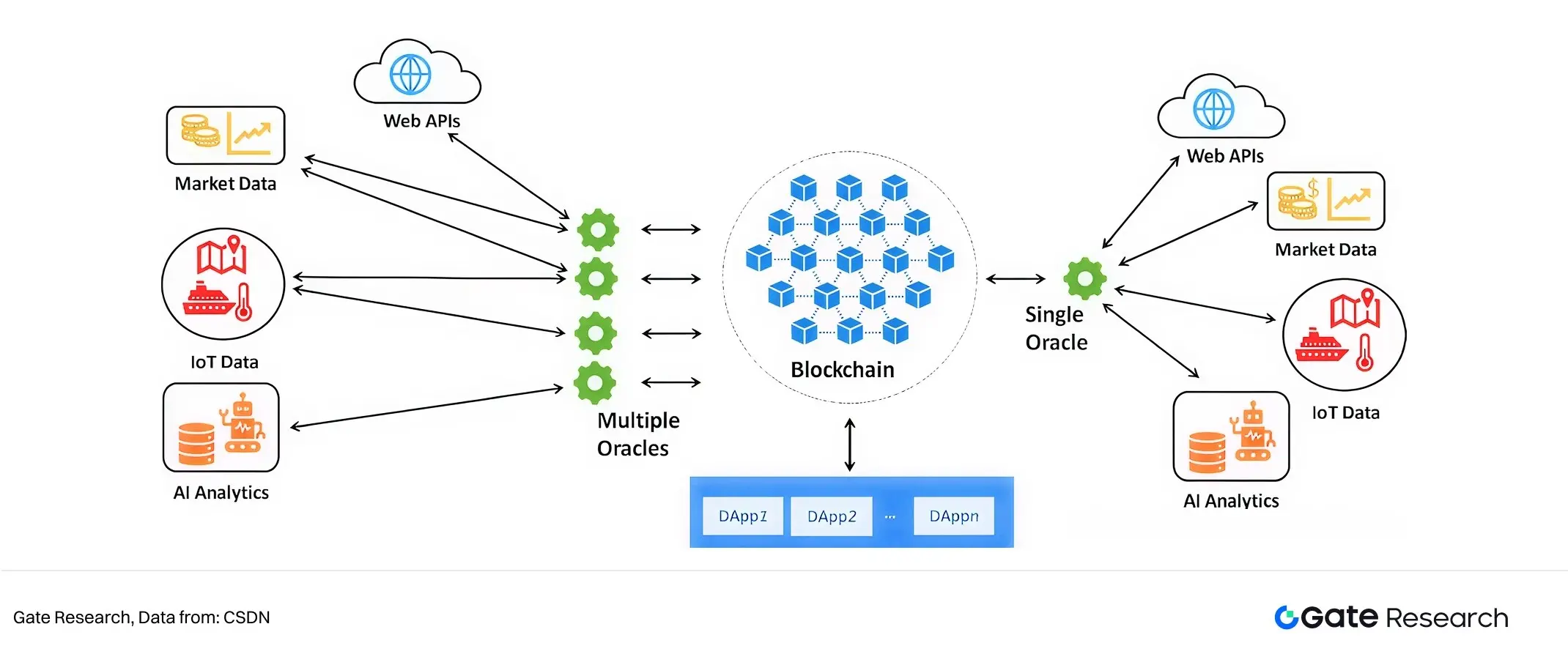
A typical oracle system aims to securely and accurately transform off-chain information into usable on-chain data, usually involving the following core links and technical mechanisms:
1. Data Collection (Data Source Layer): Oracle nodes (or systems) first need to obtain information from off-chain raw data sources. These data sources are extremely diverse, including exchange market APIs, financial data providers, IoT device sensors, government public databases, sports event result websites, and even manually input event results. The quality and diversity of data sources are the first line of defense for the reliability of oracles.
2. Off-Chain Processing and Verification (Aggregation & Verification Layer): After obtaining raw data, especially in decentralized oracle networks (DONs), multiple independent nodes perform verification and aggregation tasks.
○ Multi-source acquisition: To prevent manipulation or failure of a single data source, nodes typically acquire the same data from multiple designated sources.
○ Verification and consensus: Nodes sign the acquired data and aggregate and verify data from different nodes and sources through consensus algorithms (such as taking the median, weighted average, or excluding outliers). This step aims to eliminate erroneous or malicious inputs, generating a single, highly credible final value.
○ Economic incentive mechanism: To ensure nodes act honestly, staking (Staking) and slashing (Slashing) mechanisms are usually introduced. Nodes need to stake native tokens as collateral, receiving rewards for providing reliable data, while malicious or downed nodes will have their tokens forfeited.
3. Data On-Chain and Transmission (Transmission Layer): The verified and aggregated final data is formatted and submitted to the chain through a blockchain transaction, usually stored in specific smart contracts deployed by the oracle service provider.
4. Contract Interaction and Consumption (Contract Layer): DApp smart contracts that require data read the necessary data by calling the interfaces provided by the oracle contract and trigger the corresponding logic execution based on this data.
Figure 2: Oracle Technical Architecture
2.3 Development History and Classification of Oracles: From Centralization to Diversified Trust
The development of oracles is a history of constantly pursuing security, decentralization, efficiency, and functionality. Its evolution is reflected not only in the iteration of technical architecture but also in the deepening market demand for "on-chain trusted data."
2.3.1 Development Stages: From Single Point Trust to Decentralized Networks
The development of the oracle sector can be roughly divided into three key stages:
Stage One (Approx. 2014-2017): Centralized Oracle Era
● Characteristics: Early solutions were typically operated by project parties or a single entity running a centralized server, obtaining data from external APIs through scripts and directly publishing it on-chain.
● This model, while simple and efficient, has fatal single point failure and trust risks. Once the centralized entity acts maliciously, is attacked, or stops service, all DApps relying on its data will face the risk of paralysis. Therefore, this model has been largely eliminated by the mainstream market and is only suitable for low-value or internal testing scenarios.
Stage Two (Approx. 2017-2021): Birth and Establishment of Decentralized Oracle Networks (DONs)
● Characteristics: Marked by the rise of Chainlink. The core innovation lies in introducing a decentralized network architecture composed of numerous independent, geographically dispersed node operators; introducing economic incentive mechanisms where nodes must stake native tokens as collateral, receiving rewards for honest behavior while malicious behavior (providing erroneous data) will be penalized; introducing multi-source aggregation, where nodes acquire the same data from multiple sources and aggregate it through on-chain consensus algorithms (such as taking the median) to resist errors or manipulations from a single data source.
● DONs have greatly enhanced the security and reliability of oracles through decentralization and economic incentive mechanisms, enabling them to support DeFi applications worth hundreds of billions, becoming the industry-recognized "gold standard."
Stage Three (Approx. 2021 to Present): Specialization, Efficiency Optimization, and Function Expansion
The market is evolving towards more specialized, efficient, and functionally rich models based on DONs. On one hand, new models optimized for specific scenarios have emerged, such as first-party oracles (Pyth Network, where data sources run nodes directly) and optimistic oracles (UMA, using a "propose-dispute" model). On the other hand, the functions of oracles are no longer limited to simple data feeding but have expanded to provide off-chain computation, cross-chain interoperability, and verifiable randomness (VRF), evolving into a general decentralized computing platform.
2.3.2 Multi-dimensional Classification: Understanding Different Paradigms of Oracles
To comprehensively understand the diversity and systemic differences of oracles, they can be classified from multiple dimensions such as degree of centralization, data sources, data flow direction, system structure, and verification mechanisms. Different dimensions reflect the trade-offs of oracles in security, performance, trust models, and costs, and also indicate their adaptation paths in diversified Web3 applications.
Figure 3: Classification of Oracles
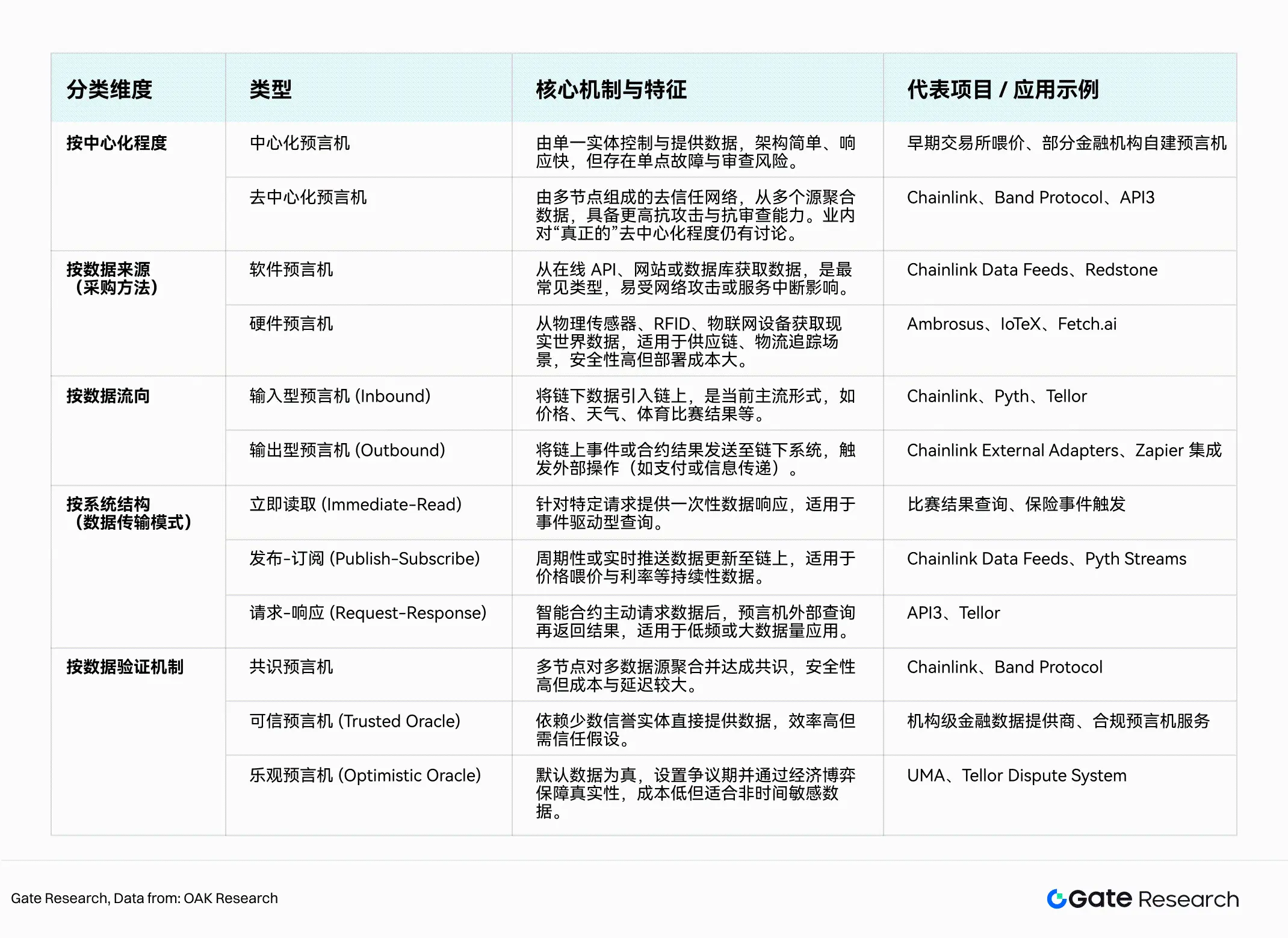
In summary, there are many classification dimensions for oracles, but they are not mutually exclusive; rather, they intersect in multiple dimensions. For example, Chainlink possesses a decentralized structure, software data sources, input and publish-subscribe architecture, and ensures data reliability through node consensus and cryptographic signature mechanisms; while Pyth Network simplifies off-chain dependencies with its "first-party data provider" model, balancing speed and trust. Understanding these paradigms helps researchers weigh security, cost, latency, and verifiability in different applications and build optimal oracle architectures for specific needs (such as high-frequency clearing, RWA auditing, or AI predictions).
2.4 Industry Scale and Market Structure of Oracles
2.4.1 Market Scale: From Functional Components to Infrastructure Ecosystem
Over the past five years, the oracle market has undergone an evolution from "auxiliary infrastructure" to "core data layer." Oracles no longer merely perform on-chain data input functions but have become the underlying support for key modules such as DeFi, RWA, derivatives, and cross-chain communication.
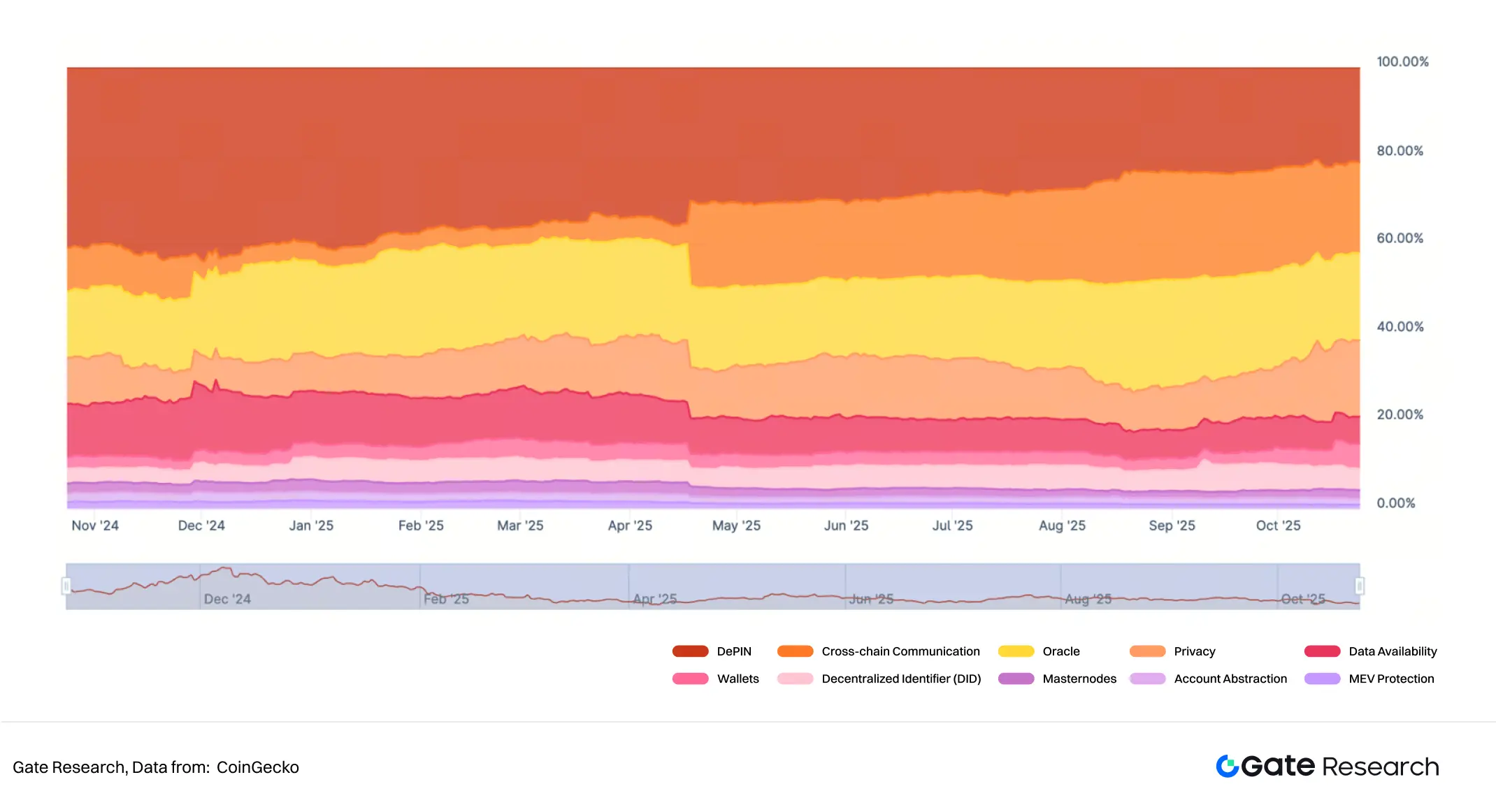
As of October 2025, according to DefiLlama Total Value Secured (TVS) and CoinGecko market data, the overall locked scale of oracle protocols is approximately $102.179 billion, with an overall market value of about $14.1 billion, growing over 43% compared to the same period in 2024 (approximately $9.8 billion). In the blockchain infrastructure sector, the market value share of oracles is approaching 20%, becoming one of the fastest-growing subfields.
Figure 4: Market Value Share of Different Blockchain Infrastructure Sectors
2.4.2 Market Structure: Head Monopoly and Multi-layered Expansion
From the competitive structure perspective, the current oracle market has formed an oligopoly centered around Chainlink, gradually developing a multi-layered specialized competition system. The overall industry structure exhibits a typical "head monopoly + emerging breakthroughs" characteristic: Chainlink builds a solid moat based on multi-chain compatibility and enterprise cooperation, firmly occupying the market core; Pyth Network has native performance advantages in high-frequency trading public chains (Solana, Sui, Aptos), rapidly capturing specific niche markets; API3 and RedStone focus on data transparency and API native access, enhancing first-party data source capabilities to achieve differentiated competition.
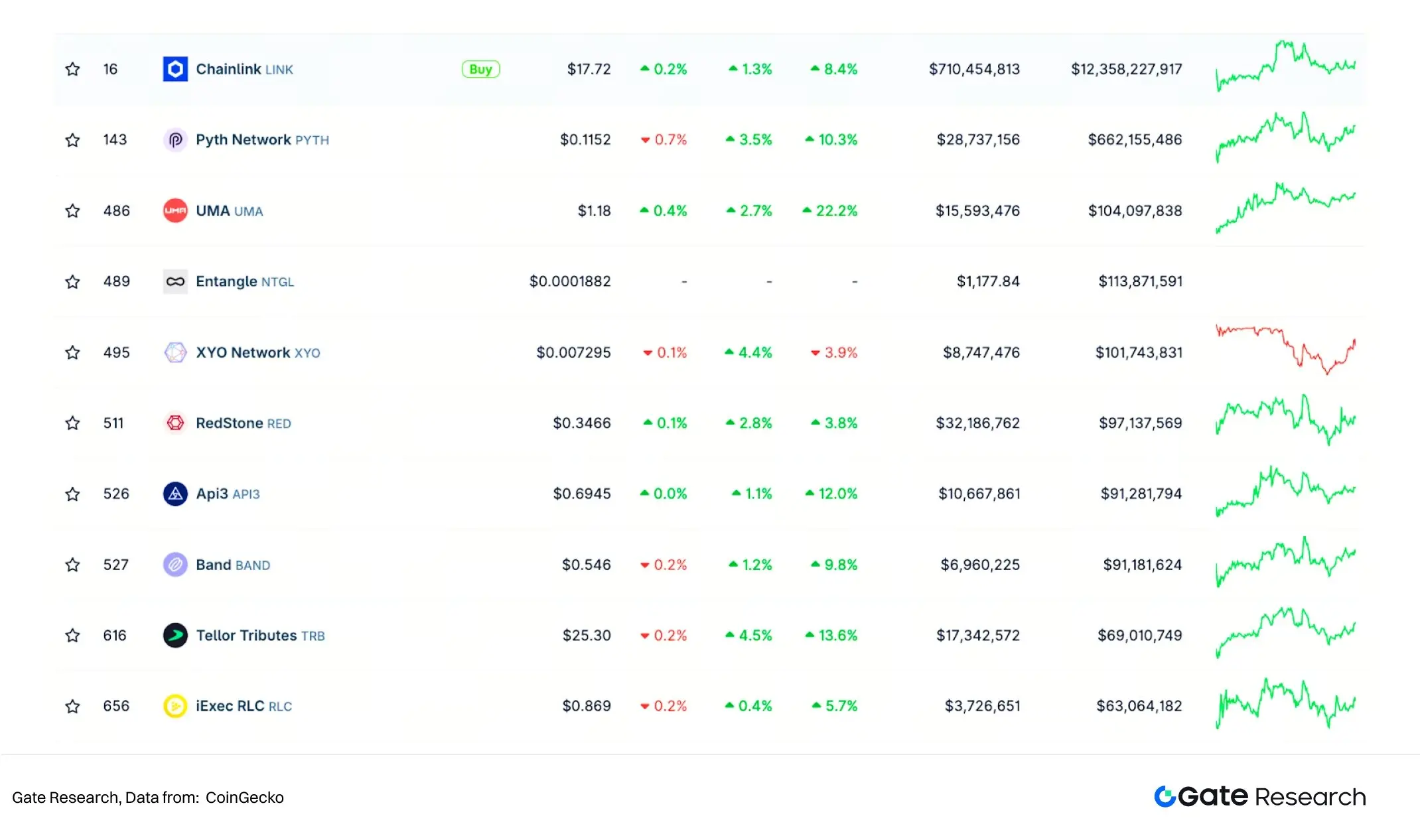
In terms of market value structure, Chainlink dominates the industry with over 87% market share, with a market value of approximately $12.3 billion; followed by Pyth Network (about 4.6%), UMA (about 0.73%), and XYO (about 0.71%). Chainlink has built a solid ecological barrier through deep integration in core scenarios such as DeFi, cross-chain communication (CCIP), and proof of reserves (PoR); while emerging protocols like Pyth, UMA, and RedStone continue to expand their differentiated competitive space through innovations in high-speed data distribution, privacy computing, and first-party data source mechanisms.
Figure 5: Top Oracle Protocols by Market Value
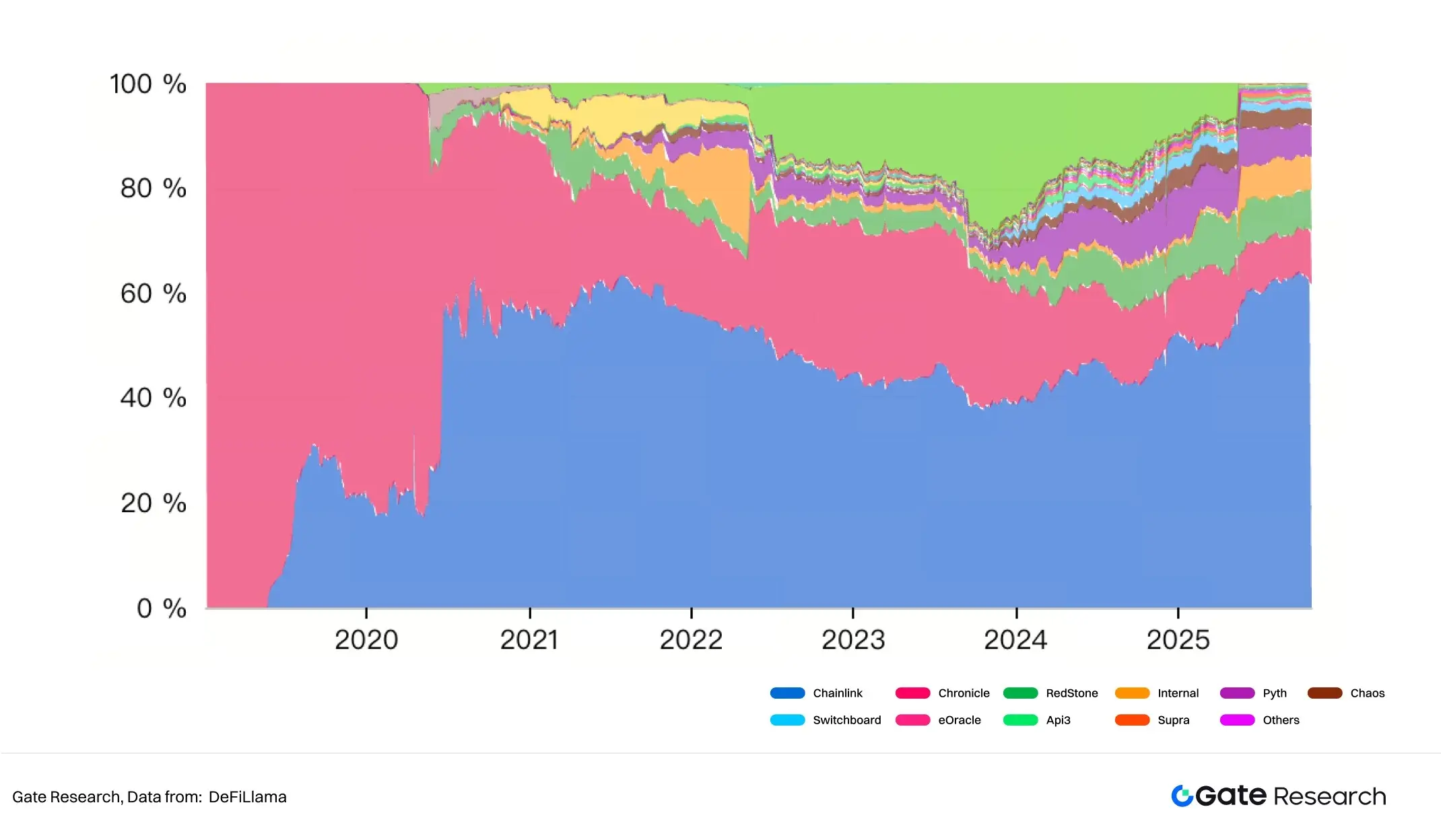
In terms of locked value, the overall collateral value of the industry has exceeded $102.1 billion. Among them, Chainlink occupies an absolute leading position with a market share of 61.58% (TVS reaching $62.922 billion); followed by Chronicle (10.15%) and RedStone (7.94%), with Pyth Network ranking fifth at 5.84%, and API3 ranking ninth at 0.55%. Overall, while Chainlink still dominates the market, the penetration speed of emerging protocols is clearly accelerating, and the industry structure is evolving from a unipolar to a multipolar landscape.
Figure 6: Top Oracle Protocols by TVS Share
From the distribution of on-chain ecosystems, the use of oracles is showing a clear trend of multi-chain and ecological binding. Based on weighted analysis results from multiple data sources such as DefiLlama and Dune Analytics:
● The Ethereum ecosystem remains the core battlefield for oracle applications, relying on the extensive deployment of Chainlink's official Data Feeds, gathering the main sources of calls and revenue (among over 2,000 protocols integrating Chainlink, the number deployed on Ethereum reaches 1,339);
● Solana's growth momentum is reflected in the high-frequency updates and call volumes of Pyth Network, which has rapidly risen in high-frequency derivatives and real-time data scenarios due to its high throughput and low latency characteristics;
● Layer 2 networks (such as Arbitrum, Base, Optimism, etc.) have become the fastest-growing frontiers for oracle protocol expansion, with their call volume curves observable in Chainlink's CCIP and L2 statistics;
● Emerging public chains (such as Sui, Aptos, Sei) tend to build built-in or vertically integrated oracle systems through deep integration with RedStone and Pyth.
Overall, the market is gradually evolving from single-chain dependence to a multi-chain collaborative pattern. Leading protocols are reshaping the competitive landscape through the integration of data layers and cross-chain communication layers, and oracles are evolving from basic functional components to the most strategically significant "data hub infrastructure" in the blockchain ecosystem. In summary, by 2025, the oracle market has evolved from a "single-point price feeding tool" to a "cross-ecosystem data coordination layer." With the inflow of institutional funds and the advancement of RWA, the industry will enter a second round of protocol upgrade cycles, and future competition will shift from single price feeding efficiency to service quality, sustainability of economic models, and cross-chain communication integration capabilities.
3. Ecological Demand Perspective: Oracle-Driven Expansion of On-Chain Applications
As the functions of oracles expand, their on-chain application scenarios continue to enrich, evolving from simple price feeding to multi-type event triggering and cross-chain data coordination, making oracles a driving force for on-chain innovation.
3.1 The Ecological Position of Oracles: The "Input Layer" of On-Chain Applications
The core value of oracles lies not only in "data transmission" but also in their foundational input position within the entire Web3 technology stack. In a typical Web3 architecture, the information flow presents the following hierarchy:
User Layer (Wallet / DApp) → Application Layer (DeFi, RWA, Prediction Markets, On-Chain AI) → Protocol Layer (Smart Contracts) → Oracle Layer (External Data Input) → Off-Chain Real Layer (Prices, Events, Assets)
Thus, oracles become the "truth interface" of the entire decentralized system, and their reliability directly determines the credibility of on-chain applications:
● DeFi: Whether liquidation and collateral valuation are safe and reliable;
● RWA: Whether the mapping of real assets is accurate and trustworthy;
● Cross-Chain Assets: Whether state verification and transaction traceability are guaranteed;
● Prediction Markets: Whether settlement fairness is ensured;
● On-Chain AI Computation: The authenticity of data input and the credibility of decision-making.
In other words, the role of oracles in Web3 is akin to the "external data TCP/IP protocol" of the blockchain world, serving as the foundational premise for building a trusted computing economy and the underlying infrastructure for promoting the robust operation of on-chain innovation.
3.2 Ecological Demand Pattern: Five Main Lines Driving Oracle Growth
As the "value hub" connecting the real world with on-chain smart contracts, the growth potential of oracles is closely tied to the expansion process of the entire Web3 ecosystem, particularly depending on the maturity and scaling of high-value application scenarios. By 2025, the demand for oracle usage has evolved from the early single DeFi price input to a "multiplier effect" pattern driven by multiple high-growth tracks.
3.2.1 Structural Driving Forces for Oracle Ecological Expansion
The growth of the oracle market scale is driven by the following three key factors:
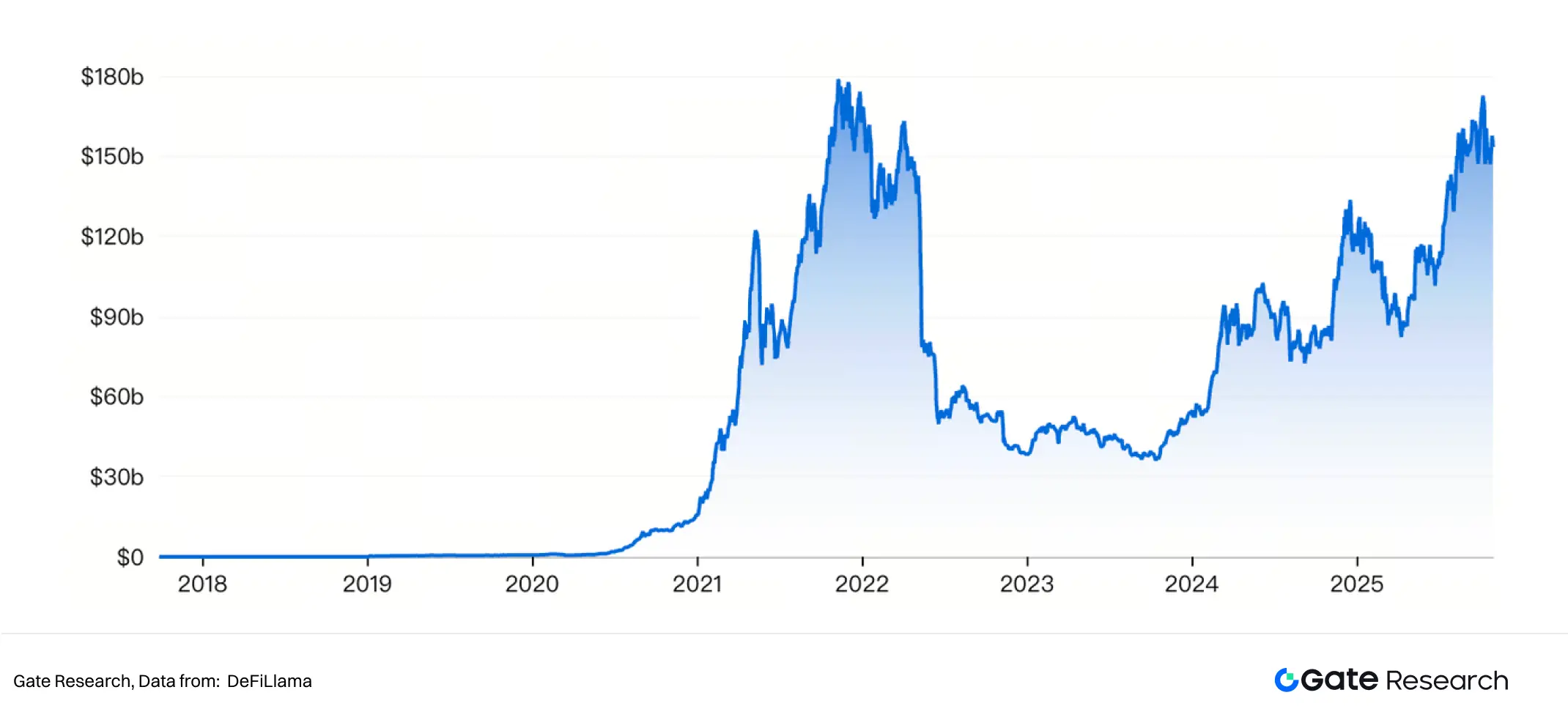
1. Expansion of DeFi Scale and Strengthening Systemic Dependence (TVL Driven): As of October 2025, the total locked value (TVL) of DeFi has reached approximately $168.373 billion, returning to historical highs of DeFi Summer, indicating a continuous increase in on-chain capital scale. With over 80% of DeFi protocols relying on oracle data sources, DeFi has become the earliest and core application arena for oracles. High-frequency scenarios such as lending liquidation, derivatives pricing, and asset valuation have created a natural ecological closed loop for oracles, establishing a stable value capture mechanism and competitive barrier within the DeFi system. Whether it is mainstream protocols like Aave, Synthetix, or GMX, their system security and asset anchoring are inseparable from reliable oracle data. This makes oracles the foundational infrastructure for risk control in DeFi and on-chain asset pricing.
Figure 7: DeFi TVL
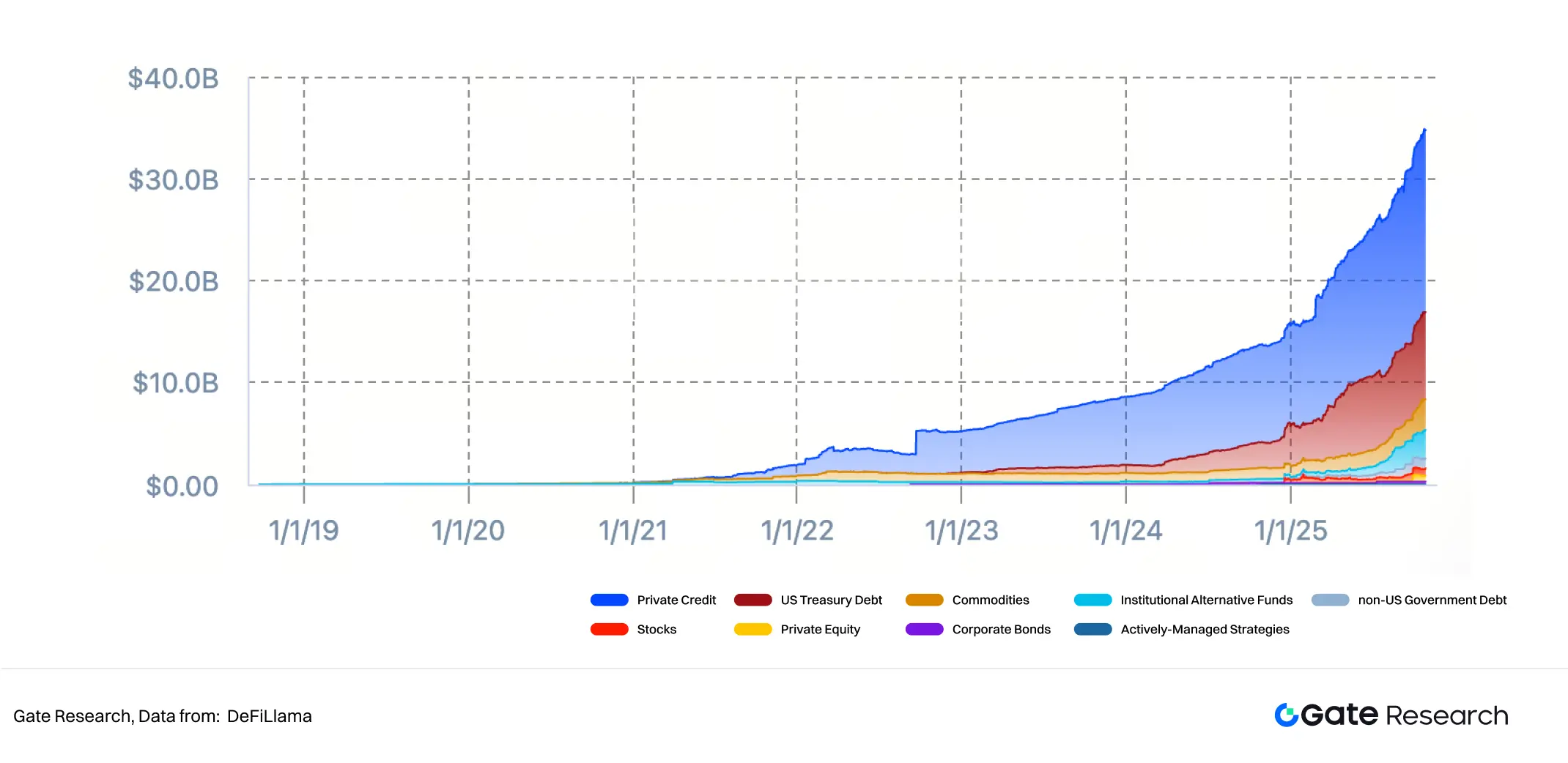
2. Institutional Growth of RWA and Demand for On-Chain Data: The rapid development of RWA is becoming the second core engine driving demand for oracle services. As of October 2025, the observable on-chain RWA asset scale has exceeded $35 billion and continues to grow steadily. Key data involved in RWA, such as valuation, interest rates, payment statuses, and credit ratings, all originate from off-chain systems and must rely on highly credible oracles for on-chain integration. Thus, the institutional expansion of RWA is constructing a long-term and rigid demand structure for the oracle market: the requirements for high-precision, low-latency data synchronization continue to rise; the demand for multi-source verification and audit proof is steadily increasing; and the reliance on standardized interfaces for off-chain financial data (such as treasury bond rates, fund net values, and bill payments) is deepening. In other words, the rise of RWA is injecting trillions of dollars of liquidity from traditional finance into the oracle ecosystem, accelerating its evolution from "on-chain data services" to "cross-system data infrastructure."
Figure 8: Total Scale of RWA Assets
3. Explosive Demand for Low Latency and Cross-Chain Communication in Emerging Application Scenarios: The new generation of applications is placing higher performance and architectural requirements on oracles. With the rise of new scenarios such as AI and prediction markets, the demand for low-latency, high-precision data and cross-chain messaging has significantly increased. These applications not only require oracles to quickly and accurately provide price information but also need capabilities for multi-chain synchronization and trusted verification. For instance, prediction markets are a typical application direction for oracles in the "event verification" field. Platforms like Polymarket and Kalshi rely on oracles to confirm real-world event outcomes, such as election results, sports events, or macroeconomic data. As the trading volume in this field rapidly grows—by October 2025, the cumulative trading volume of Kalshi and Polymarket has reached $33.94 billion—the event verification and messaging capabilities of oracles are becoming an important force driving ecological expansion. Consequently, the role of oracles is evolving from "information feeders" to "cross-chain event coordinators," further reinforcing their stickiness and infrastructural position in the Web3 ecosystem.
Figure 9: Cumulative Trading Volume of Kalshi and Polymarket
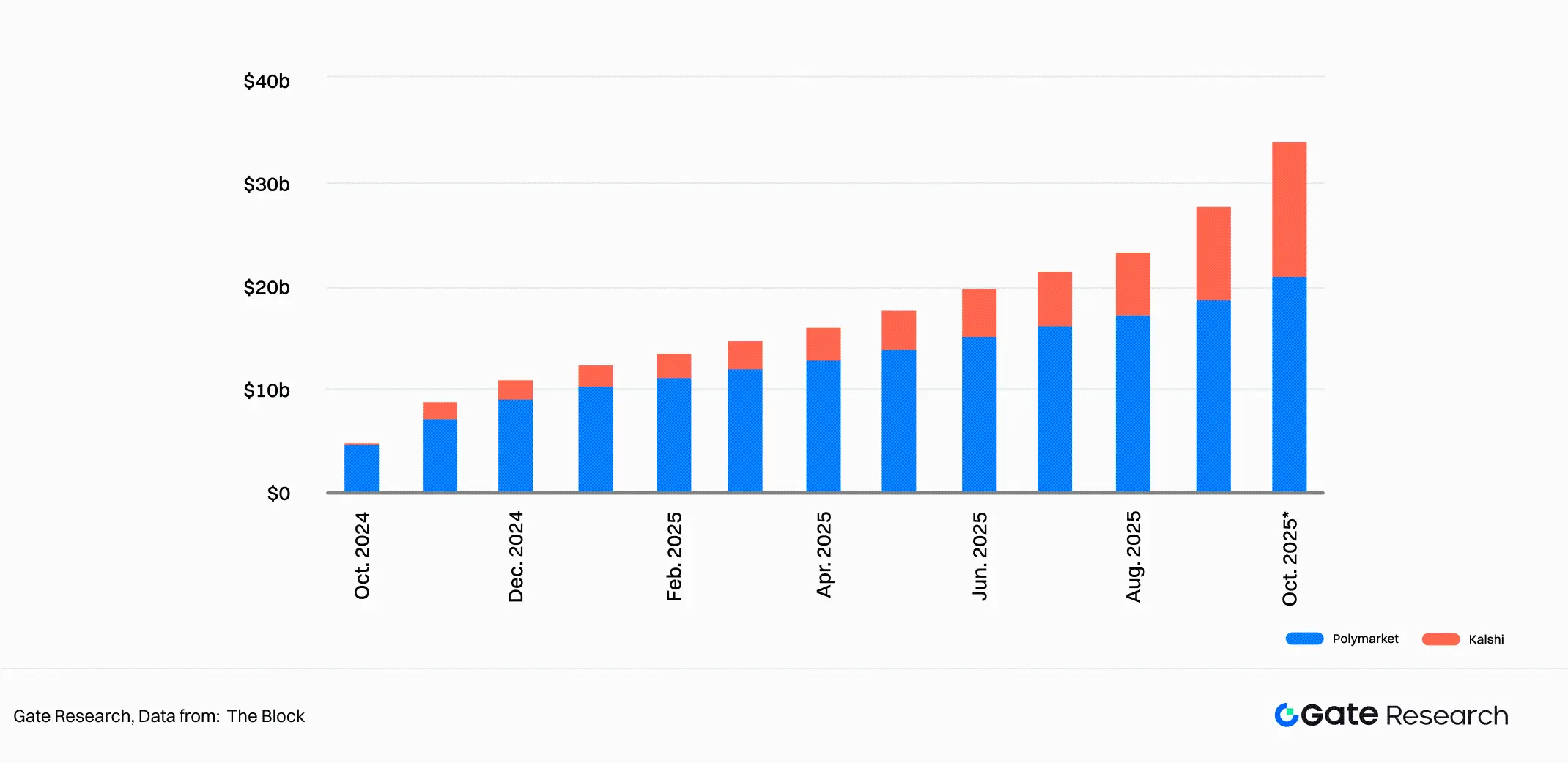
Overall, the ecological demand for oracles is forming a spiral growth path from DeFi → RWA → high-performance new applications. In this process, oracles are no longer merely data input interfaces but are becoming the key foundation driving the financialization, assetization, and interoperability processes of Web3. In the future, their market growth logic will shift from single transaction demand to systematic data infrastructure construction, becoming the central layer for the trusted operation of the on-chain economy.
3.2.2 Oracle and Ecological Association Matrix: From Dependence to Multiplier Effect
Based on the aforementioned three driving factors, and in conjunction with the current call volume, revenue contribution potential, and strategic synergy of oracles, this report categorizes the main service targets of the oracle ecosystem into five core tracks: DeFi, RWA, cross-chain communication, prediction markets, and AI + Oracle. Among them, DeFi is the native main battlefield for oracles, RWA is the institutional growth engine, while cross-chain communication, prediction markets, and AI + Oracle constitute the emerging growth curve.
The value of oracles is highly correlated with the scale and depth of the service tracks. To quantify this relationship, this report constructs an "association strength matrix" to assess the degree of dependence of different tracks on oracle services. The model sets four equally weighted dimensions (each accounting for 25%): data dependence, call frequency, revenue contribution potential, and strategic synergy. The final scoring formula is as follows:
Association Strength = (Data Dependence + Call Frequency + Revenue Contribution Potential + Strategic Synergy) / 4
Based on this model, the quantitative assessment results of the five tracks are as follows:
Figure 10: Association Strength of Oracles with Different Ecological Tracks
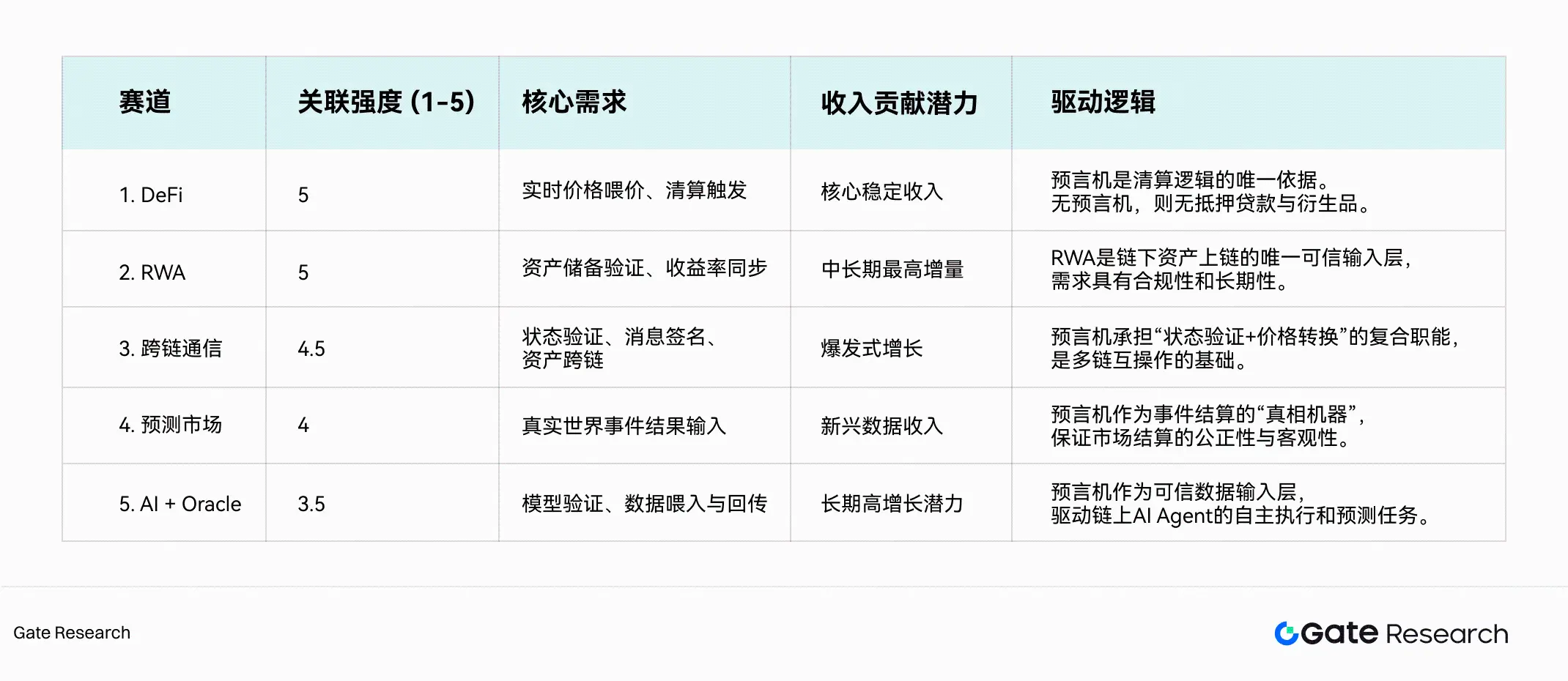
3.2.2.1. DeFi: The Native Main Battlefield for Oracles (Association Strength: 5.0)
In all DeFi applications, price input is the decisive factor triggering the logic of smart contracts. Whether it is the liquidation logic of lending protocols like Aave and Compound, the asset anchoring of synthetic asset platforms like Synthetix, or the collateral verification of stablecoin systems like MakerDAO (including proof of reserves, PoR), price input directly determines whether the protocol can accurately trigger liquidation and rebalancing mechanisms.
Core Logical Features:
● High-frequency calls: Updates at minute-level or even higher frequencies to respond to rapid market fluctuations;
● Sensitivity to price stability: Minor deviations may trigger large-scale liquidations or systemic risks;
● High node fault tolerance: Multi-node aggregation and strict reputation mechanisms, with an error rate below 0.05%.
Data Support and Economic Contribution: Currently, nearly all of the top ten contributors to oracle TVS come from DeFi protocols. For example, among Chainlink's over 2,000 protocols, DeFi accounts for 1,043. It provides over 100 million price updates monthly for top protocols like Aave v3; in Q3 2025, through Aave liquidation activities, it recovered over $1.6 million in MEV, with a month-on-month growth of over 15 times, and an average recovery rate of about 80%.
3.2.2.2. RWA: The Strongest Growth Driver in the Medium to Long Term (Association Strength: 5.0)
RWA is the fastest-growing Web3 track from 2024 to 2025, representing the trend of trillion-dollar traditional financial assets migrating on-chain. Since the authenticity, valuation, and yield of RWA exist off-chain, oracles become the core driving engine with the most incremental potential and institutional value in this track.
The core challenge of RWA lies in how to establish a uniquely trusted input layer for the value of off-chain assets on-chain. Oracles play two key roles here:
● Proof-of-Reserve (PoR): Verifying whether custodial assets (such as treasury bonds) genuinely exist, ensuring token value anchoring;
● Yield Synchronization (Yield Feed): Synchronizing off-chain interest rates, asset net values, or payment statuses to on-chain protocols, ensuring accurate yield distribution.
Market Potential is Huge: The demand for daily updates of interest rates and asset net values makes RWA projects have higher call frequency and value density for oracles. For every additional $100 million in RWA assets, oracle annual revenue is expected to grow by about $30,000 to $50,000. Industry estimates suggest that the daily synchronization scale of off-chain reserve data served by Chainlink PoR may reach hundreds of millions of dollars, and its share in Chainlink's overall revenue is reportedly over 25%.
3.2.2.3. Cross-Chain Communication: New Boundaries for Oracles (Association Strength: 4.5)
With the maturation of modular blockchains and multi-chain ecosystems, oracles have transitioned from the "price layer" to the "message layer." In cross-chain interoperability architectures, oracles are responsible not only for price feeding but also for cross-chain message transmission, asset state verification, and transaction settlement execution, becoming the trust pivot of multi-chain ecosystems.
A typical representative of this model is Chainlink's CCIP (Cross-Chain Interoperability Protocol). CCIP is based on a distributed oracle node network, integrating "state verification + message signing + price conversion" functions. Its working mechanism includes: the application layer initiating cross-chain requests → oracle nodes verifying source chain events → CCIP network generating cross-chain proofs → the target chain updating states based on trusted proofs.
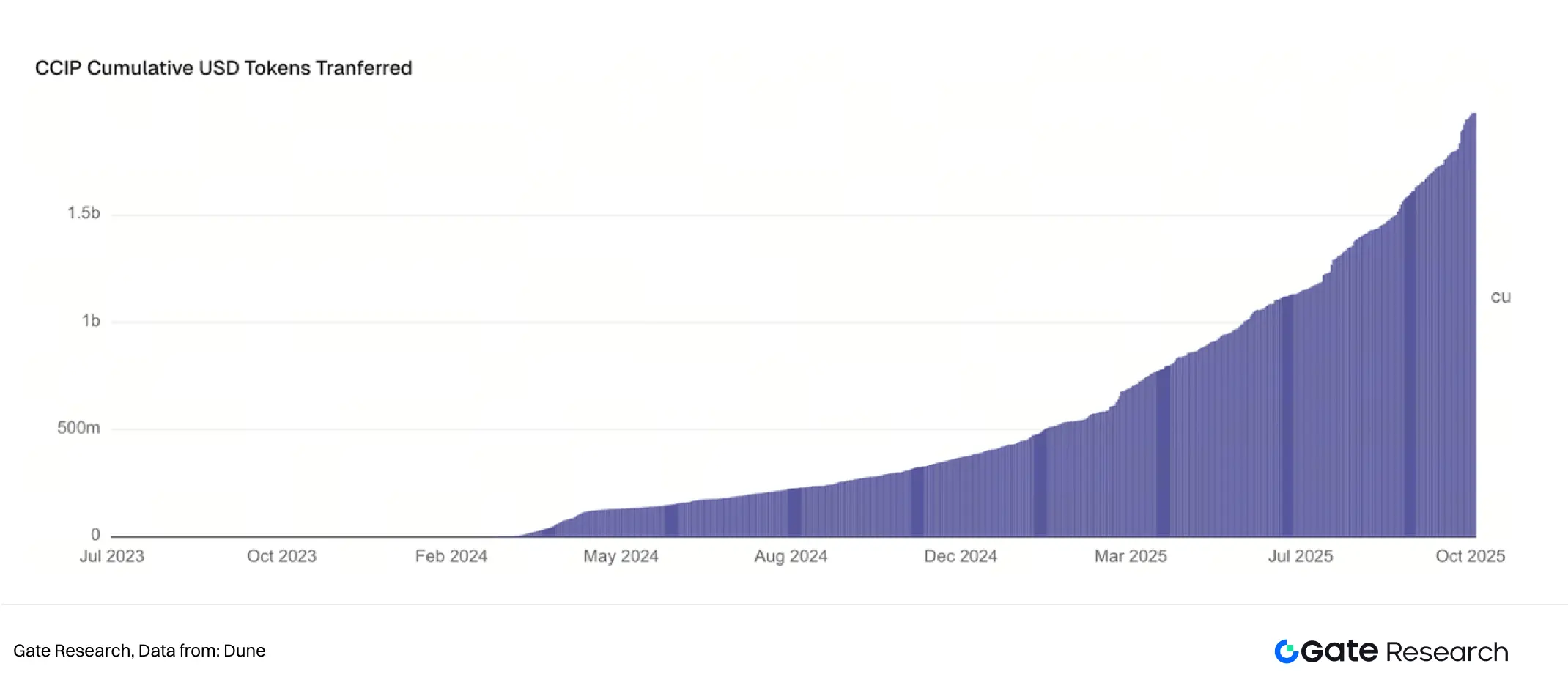
Data Support: The CCIP model has validated through testing collaborations with traditional financial institutions like SWIFT that the oracle network can support bank-level cross-system settlements, opening up a multiplicative growth space for oracles to enter the traditional financial clearing market, becoming an important engine for Chainlink's future value growth. Chainlink indicates that its cross-chain protocol CCIP has expanded to over 65 networks (public chains + L2), with significant growth in both cross-chain message volume and the number of service chains. As of October 2025, CCIP has cumulatively serviced token transfer volumes nearing $2 billion.
Figure 11: Cumulative Transfer Volume of CCIP
3.2.2.4. Prediction Markets: The Realization of Information Economy (Association Strength: 4.0)
Prediction markets are a direct application of oracle technology in information verification and event settlement, regarded as the "information economy" testing ground of Web3. Platforms like Polymarket price future event outcomes through economic incentives, while oracles serve as the "truth machines" ensuring fair market settlements.
Symbiotic Relationship and Core Functions: Prediction markets have a rigid dependence on oracles, as oracles must provide the final credible results of real-world events (such as elections, sports scores, macroeconomic indicators) during the settlement phase to complete asset liquidation and distribution for users. The two form a natural upstream and downstream symbiotic relationship:
● Oracles: Act as the "truth input layer," providing secure and trustworthy external data on-chain, ensuring that "facts" are auditable.
● Prediction Markets: Act as the "truth pricing layer," aggregating collective wisdom through market games and transactions, and paying data calling fees to achieve value settlement.
Emerging High-Value Revenue Scenarios: The application boundaries of oracles continue to expand, gradually entering the "information verification economy," covering real-time news verification, AI-generated data validation, and other non-financial fields, with huge potential. For example, Polymarket's trading volume has grown from $360 million in early 2024 to about $21 billion in 2025, significantly increasing the demand for event settlement data. High-value events (such as political elections) will drive a large number of liquidation calls, bringing considerable fee income to the oracle network.
3.2.2.5. AI + Oracle: A Collaborative Direction for Data Trustworthiness (Association Strength: 3.5)
The combination of AI and oracles represents the trend of the new generation of on-chain data ecosystems, aiming to achieve verifiable AI and machine economy. In this technological wave, oracles upgrade from data intermediaries to the core trust interface between smart contracts and AI agents.
Collaborative Logic: AI models typically compute off-chain, and if their predictions or decision results are to be securely relied upon by smart contracts, oracles must act as a trusted data input layer, addressing the authenticity, auditability, and security of AI outputs.
● Core Role: Oracles are responsible for bringing the reasoning results, data analysis, or action instructions of AI models on-chain in a trusted and signed manner.
● Typical Case: Bittensor (TAO) is responsible for model training and inference, while Chainlink Functions is responsible for securely feeding high-value inference results into on-chain smart contracts, enabling AI-driven on-chain automation.
New Payment Models for the "Machine Economy": As AI agents autonomously execute transactions, predictions, or automated tasks on-chain, they will have a rigid demand for continuous and diverse data. This brings a new, sustainable payment model for the oracle network—data subscriptions for the machine economy. Analysis shows that the external data subscription of each AI agent averages about $0.5 to $2 per day, forming a long-term and predictable revenue stream.
Overall, the growth of oracles is no longer linearly dependent on a single track but is polynomially related to the total asset volume on-chain, cross-chain call volume, and the marketization process of RWA. The core logic is that every tokenized, on-chain, or cross-chain asset and event will generate new demands for trusted data calls. This ecological structure forms a clear "multiplier effect" growth pole: DeFi and RWA constitute the "trust hub" of oracles, providing stable and high-value cash flow; cross-chain communication (CCIP) and prediction markets expand their "state verification" boundaries, serving as the explosion points for mid-term revenue; while AI + Oracle represents the commercial extension, opening a new era of "AI calling blockchain," which is the long-term and largest growth potential driving the total revenue of the oracle sector.
4. Economic Demand Perspective: Value Capture Mechanism of Oracles
As oracles evolve from a single data feeding tool to a "data infrastructure layer" supporting DeFi, RWA, AI, and cross-chain communication, their economic essence has transformed into an economic system driven by data demand. The oracle network, as a commercial entity, depends on its ability to build a positive cycle economic model for long-term sustainability. This model must address two core issues: how to capture value (protocol revenue) and how to ensure network security (token economics).
4.1 Value Capture: From Data Services to Data Economy
4.1.1 Value Logic of Oracles
The essence of oracles is the relay service for off-chain data, but as decentralized networks mature, they have evolved into a "data market" with a complete economic system. Its core participants include:
● Data Providers (Publisher): Providing off-chain price or event information;
● Node Operators (Operator): Responsible for data aggregation and on-chain signing;
● Protocol Consumers (Consumer): Such as Aave, Synthetix, etc., paying fees to obtain trusted data;
● Token Holders: Providing network security through staking and earning rewards.
Unlike traditional Layer 1 blockchains, the value capture of oracles does not come from transaction fees or block rewards but relies on the economic equation of "data consumption rate × call frequency," which can be simplified to:
Token Value = f(On-Chain Call Volume, Data Price, Protocol Cut, Staking Ratio, Inflation Dilution Rate)
Therefore, the key to the growth of oracles lies in the enhancement of ecological scale and call density, rather than mere technological upgrades.
4.1.2 Value Capture Mechanism
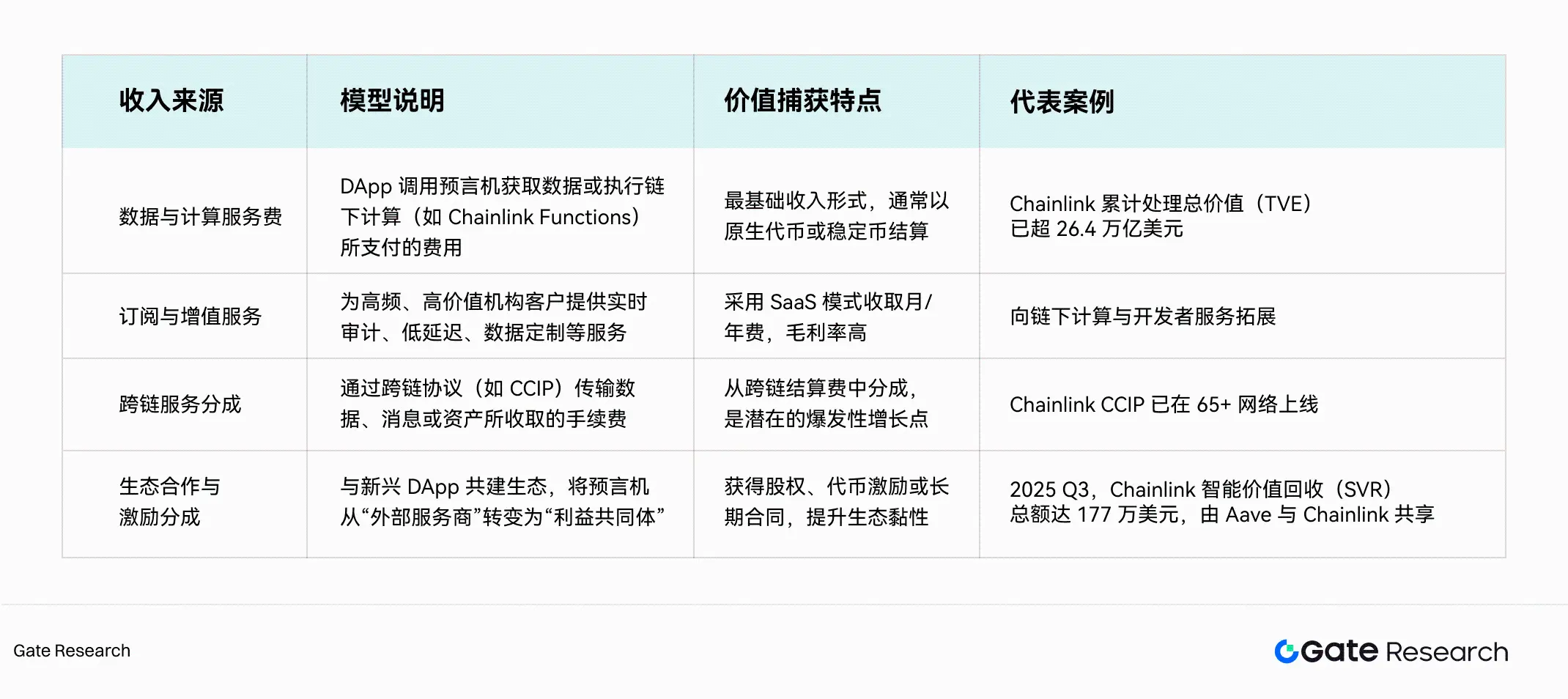
With business diversification, the revenue sources of oracles have gradually expanded from "single data providers" to "comprehensive platform service providers." The main revenue structure is as follows:
Figure 12: Revenue Sources of Oracles
4.2 Token Economics: Building a Moat of "Crypto-Economic Security"
Oracle tokens (such as LINK, PYTH) are not only payment mediums but also core tools for ensuring network security and economic incentives. Their economic design follows a basic principle: the cost to corrupt a reliable oracle network must far exceed the potential profit from corruption. This principle forms the basis of the "crypto-economic security" of oracles.
The tokens of the oracle network serve three functions:
● Payment Layer: Serving as the settlement medium for on-chain data services and calls;
● Security Layer: Providing economic guarantees through staking mechanisms;
● Governance Layer: Coordinating the behavior of nodes, publishers, and consumers, and distributing protocol revenue.
4.2.1 Implementation Mechanism: Staking and Penalties
In the oracle network, node operators must stake a large amount of native tokens as "collateral" to qualify for providing data services.
● Staking Mechanism: Nodes lock in economic rights by staking native tokens, ensuring their actions align with network security goals.
● Incentive Mechanism: Nodes can earn service fees paid by users and token rewards distributed by the protocol after providing accurate and timely data.
● Penalty Mechanism: If nodes submit erroneous data, delay responses, or act maliciously, their staked assets will be automatically forfeited, ensuring the system's economic deterrence.
This design allows the oracle network to achieve self-correction of data quality and economic security without centralized arbitration.
4.2.2 Value Flywheel: Symbiotic Growth of Security and Demand
The economic model of oracles constructs a self-reinforcing positive flywheel mechanism:
1. Ecological Demand Growth → Continuous increase in demand for data services from high-value DApps like DeFi and RWA;
2. Protocol Revenue Increase → Rising call volumes and service fees, forming stable cash flow;
3. Staking Value Increase → Nodes increase staking to obtain rewards, raising the total locked value of the network;
4. Enhanced Network Security → Rising attack costs, increasing system trust;
5. Attraction of High-Value Users → Enhanced security, in turn, attracts more institutions and financial scenarios, forming new demand-side growth.
This mechanism achieves the co-evolution of security and revenue, making oracles one of the few infrastructures in the Web3 ecosystem with a sustainable business model.
4.3 Chainlink (LINK): The Universal Trust Layer and Value Capture Logic of the Data Economy
Oracle tokens are not only payment mediums but also the core of network security and incentive mechanisms. Their design follows the same principle— the cost of attacking the network must be higher than the potential profit.
4.3.1 Project Evolution and Technical Architecture
Chainlink was founded in 2017 by Sergey Nazarov and Steve Ellis, aiming to provide trusted and verifiable external data inputs for smart contracts. After years of evolution, Chainlink has expanded from a price oracle to a universal data infrastructure covering cross-chain communication, off-chain computation, and data verification.
Figure 13: Evolution Stages of Chainlink
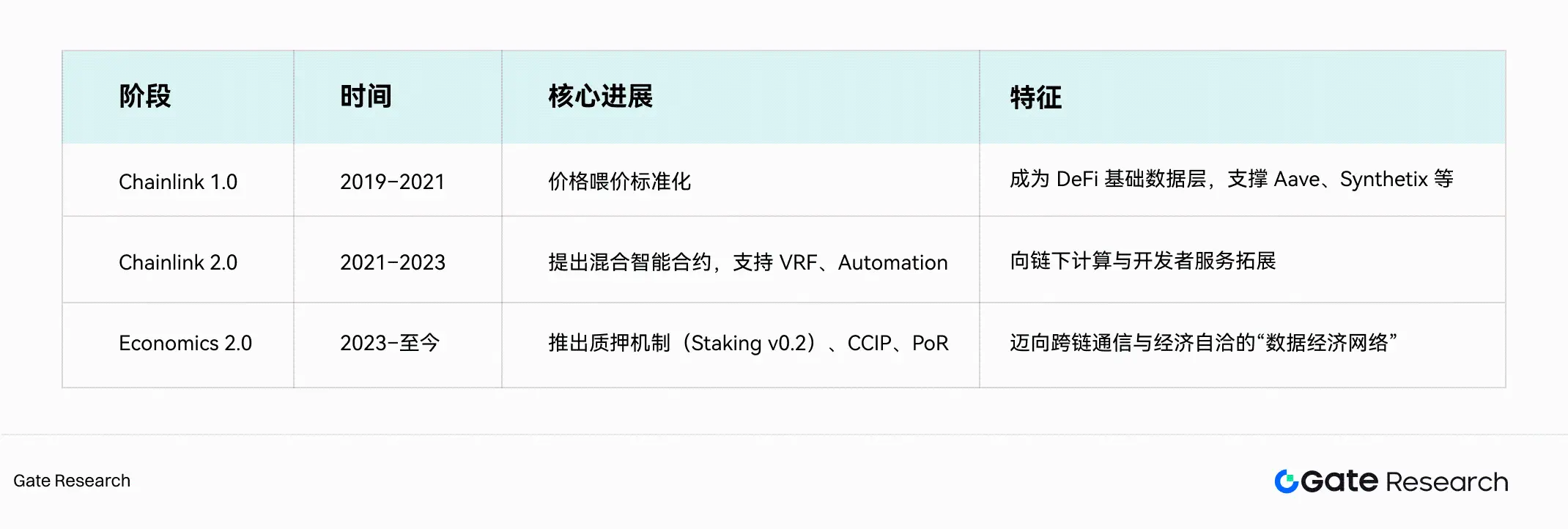
Currently, Chainlink is not just a price data network but a universal data transmission protocol spanning oracles, cross-chain bridges, random number generation, and computation layers, becoming the foundational trust layer of the Web3 data economy. Chainlink constructs a data ecosystem through modular design, where each layer can independently serve different scenarios, forming strong composability and ecological stickiness.
Figure 14: Technical Modules of Chainlink
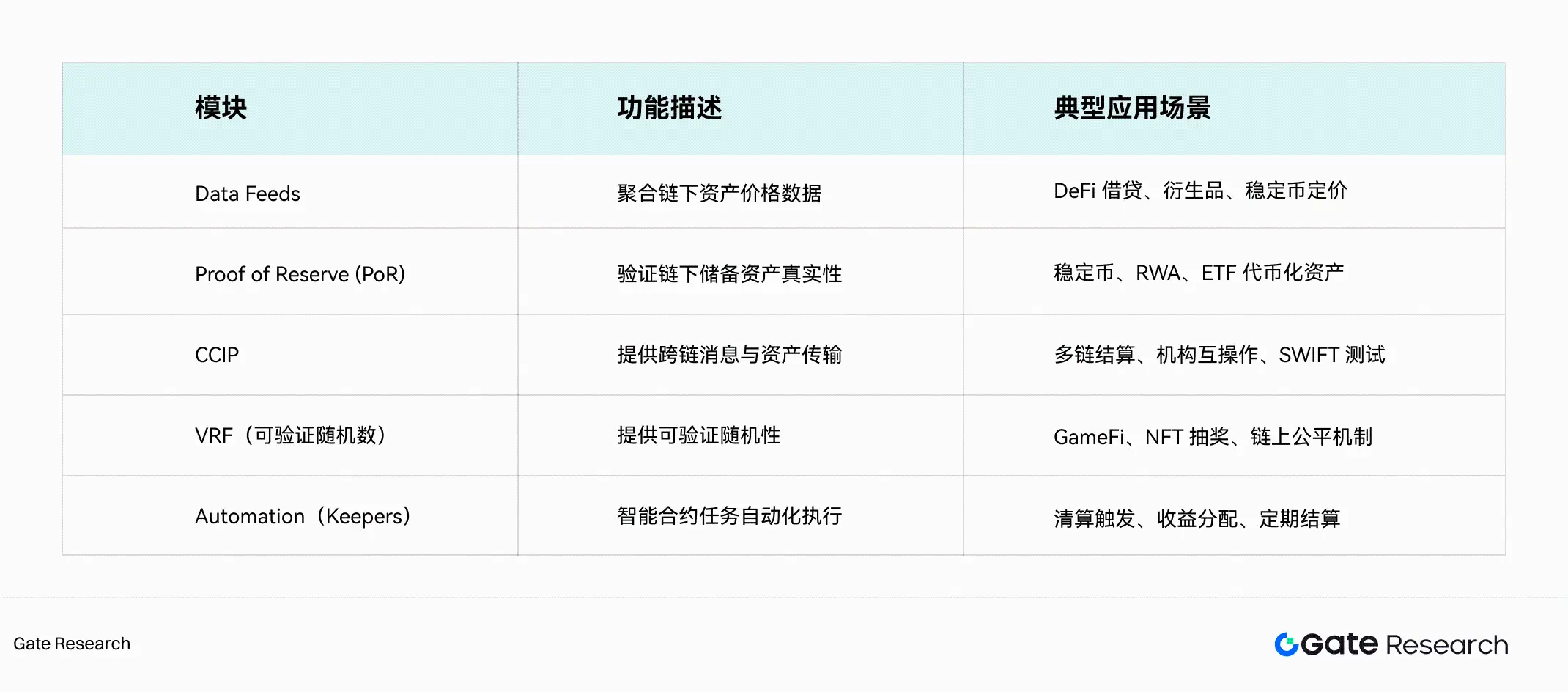
4.3.2 LINK Token Economic Model and Value Capture Mechanism
LINK is the economic core of the Chainlink network, encompassing payment medium, staking collateral, and security budget, serving as the energy source supporting the operation of the entire decentralized data infrastructure. Its value capture logic can be divided into four dimensions:
Figure 15: LINK Value Mechanism
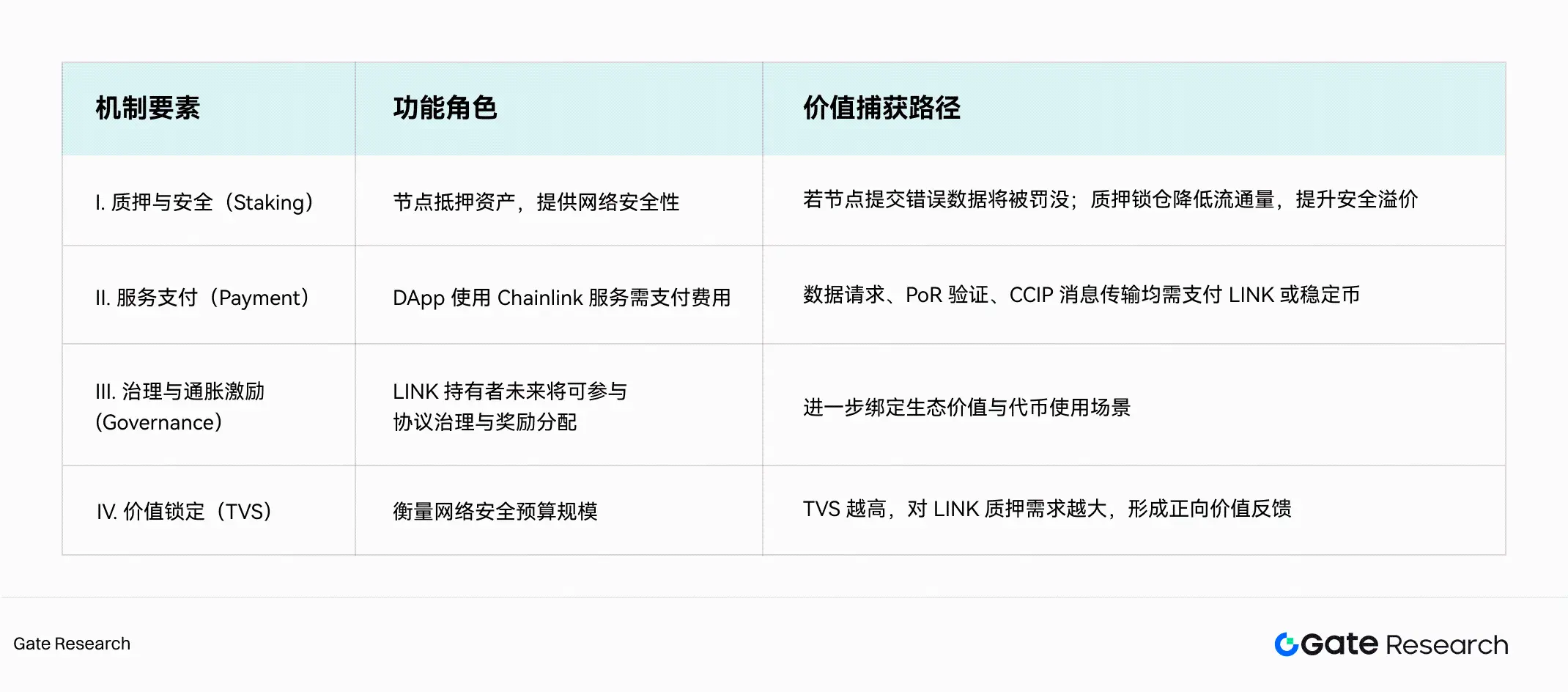
1. Mechanism Evolution from Incentive Subsidies to Service Staking
The LINK token economic model has undergone a transformation from being driven by inflation incentives to being driven by service staking.
● v1 Stage (2019-2022): Mainly relying on inflation issuance and node reward mechanisms, revenue comes from LINK rewards and call subsidies, with limited on-chain usage and significant price volatility.
● v2 Stage (2023 to Present): The introduction of Staking v0.2 and data payment models, where node earnings consist of actual call fees (ETH, USDC, etc.) and LINK rewards, directly linked to on-chain economic activities, forming a stronger deflationary support logic.
As of October 2025, the community has staked over 40.875 million LINK (accounting for 5.8% of circulation), with a total staking value exceeding $700 million (according to DeFiLlama data), establishing a solid economic security buffer.
Figure 16: Total Staking Value of LINK
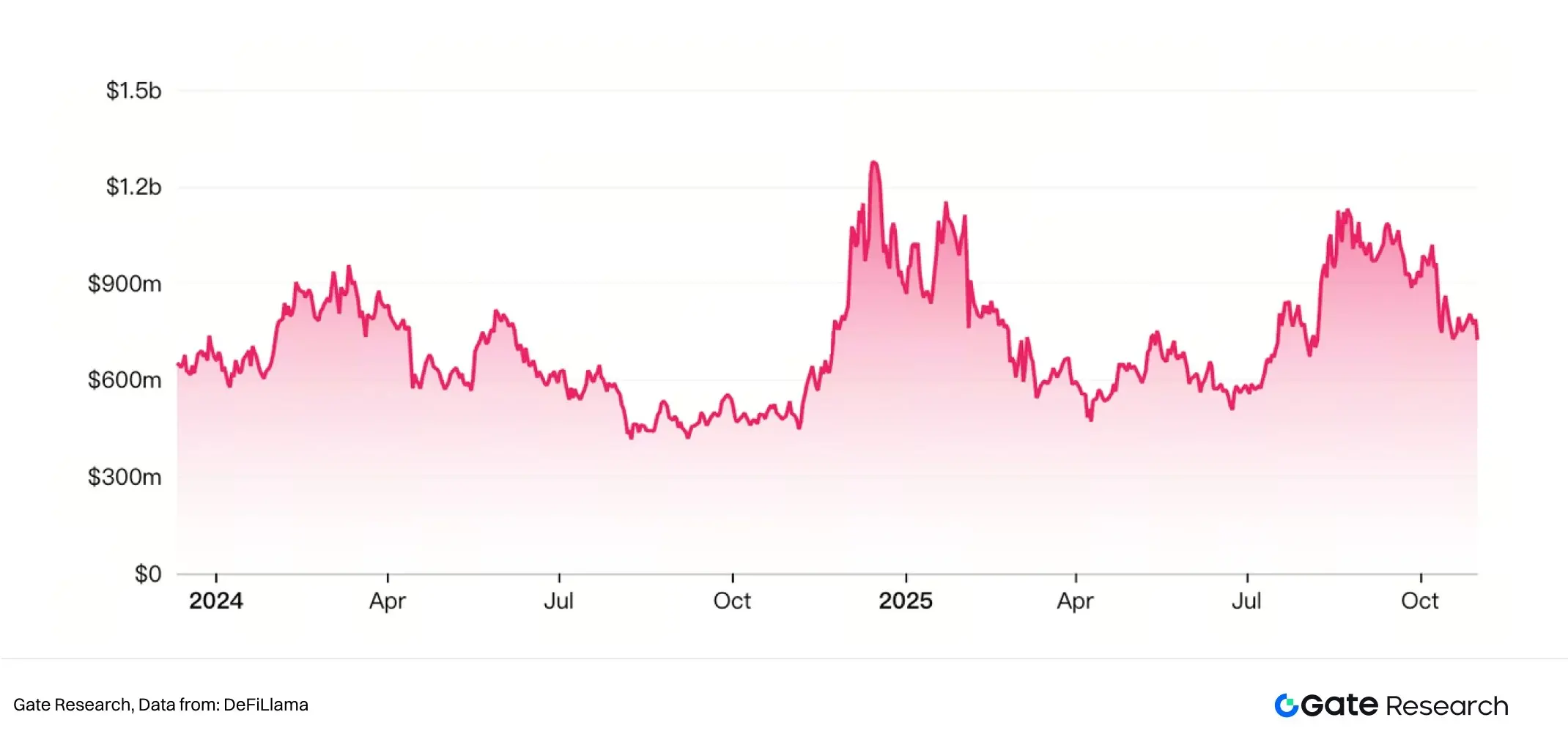
2. Revenue Sources and Economic Distribution of LINK
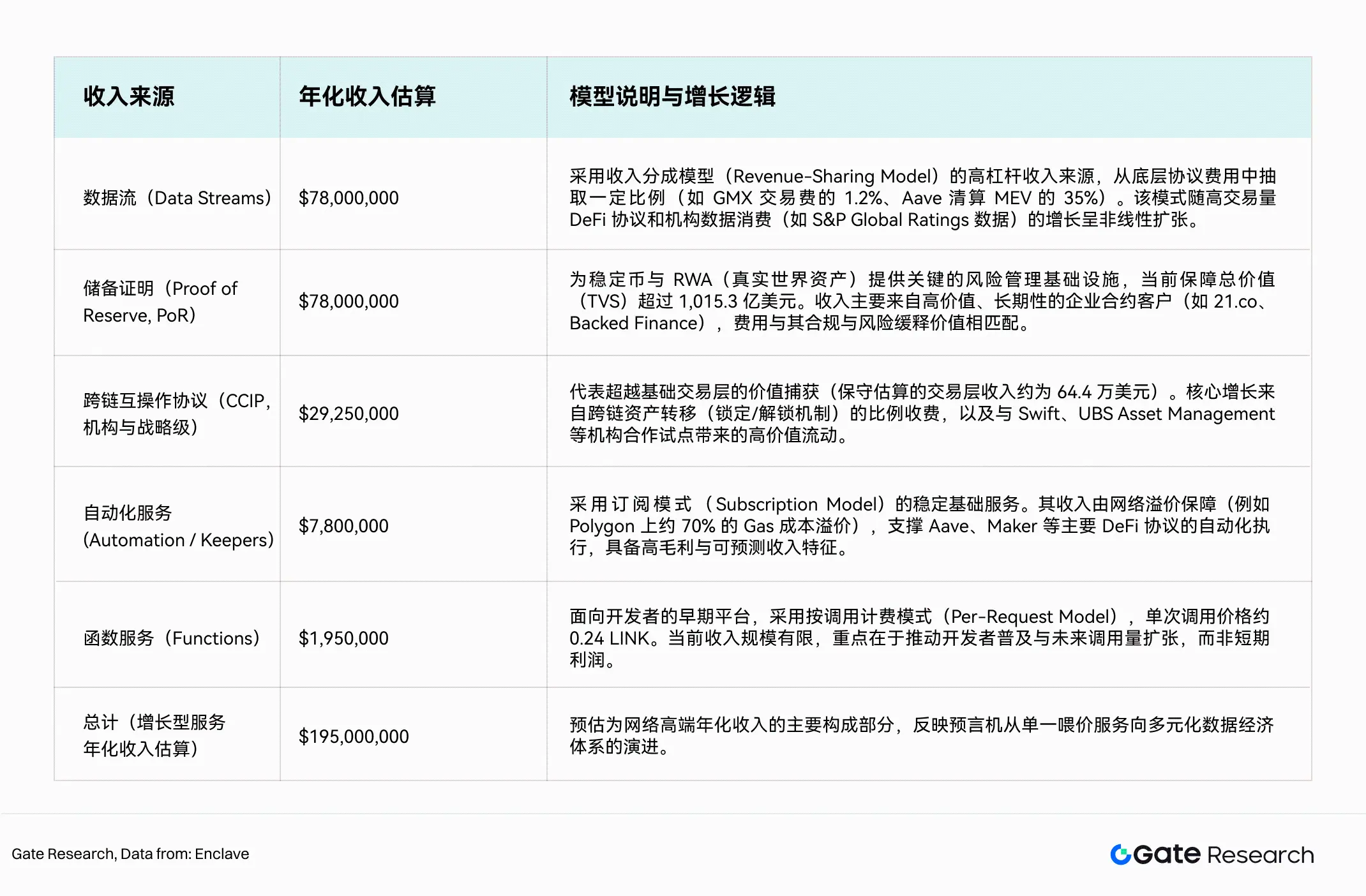
The core revenue structure of Chainlink has expanded from a single price feeding service to a multi-dimensional data economy system, with recovered revenue used to enhance LINK staking rewards and network sustainability. According to estimates from Enclave, the network revenue in 2025 is approximately $195 million, with the specific composition as follows:
Figure 17: Revenue Composition of Chainlink
3. Deepening the Value Capture Mechanism of LINK: Smart Value Recovery (SVR)
The value capture system of LINK has evolved from a single functional token to a multi-layer structure with deflationary support, security premiums, ecological premiums, and sustainable revenue streams. Among them, the Smart Value Recovery mechanism (SVR) is a key innovation driving its economic model towards a sustainable closed loop. Overall, the value capture of LINK can be summarized as a "three-layer structure": security budget anchoring, protocol revenue capture, and smart value recovery (SVR).
The core innovation of SVR lies in making Chainlink not just a "data provider" but a co-capturer of on-chain Oracle Extractable Value (OEV). This mechanism combines oracle price updates with liquidation execution opportunities through a "dual aggregator architecture," recovering the OEV generated from price fluctuations during DeFi protocol liquidations through bidding and auctioning, thus transforming the on-chain value that would have flowed to third-party arbitrageurs into intrinsic revenue for the protocol and tokens.
In terms of revenue distribution, the OEV recovered by SVR is allocated at a ratio of approximately 60%:40%: 60% returned to the DeFi protocol to enhance liquidation security budgets and risk mitigation capabilities; 40% allocated to the Chainlink network and nodes, further increasing LINK staking rewards and security budget scale. According to Q3 2025 data, SVR has recovered over $1.6 million in OEV within the Aave protocol, effectively improving node yield and promoting the sustainability of the LINK token economic cycle.
The introduction of SVR marks the upgrade of LINK's economic model from "service payment" to a multi-dimensional architecture of "security participation + revenue sharing + value recovery." This mechanism not only allows the Chainlink network to capture direct cash flows from real on-chain economic activities for the first time but also strengthens the binding relationship between LINK and the security budget, forming an economically self-consistent closed loop centered on security and incentives.
4.3.3 Valuation Logic and Intrinsic Value Anchoring of LINK Tokens
As the economic model of the Chainlink network matures, the valuation logic of LINK is shifting from traditional "narrative-driven" to an endogenous value system centered on security budgets and protocol cash flows. Its price is no longer solely driven by market sentiment but is structurally bound to network usage intensity, TVS, and the ability to capture real revenue. This framework can be abstracted as:
Token Value ∝ (Usage Volume × Fee per Use × Capture Rate) + (Staked Value × Security Multiplier)
Where:
● Usage Volume: The number of data calls and cross-chain communications;
● Fee per Use: The fee paid for each call (in LINK or equivalent stablecoins);
● Capture Rate: The proportion of protocol revenue converted into LINK for burning, staking, or distribution;
● Security Multiplier: The capital multiplier effect of the security budget, reflecting the amplifying effect of LINK staking value on TVS.
From a valuation structure perspective, the Market Cap / TVS (MCap / Total Value Secured) ratio has become an important reference indicator for assessing LINK's reasonable price. From 2020 to 2025, this ratio has decreased from about 2.0 to 0.12, indicating that the market valuation focus has shifted from speculation to fundamentals. Specific manifestations include:
Figure 18: Chainlink Market Cap and TVS Ratio
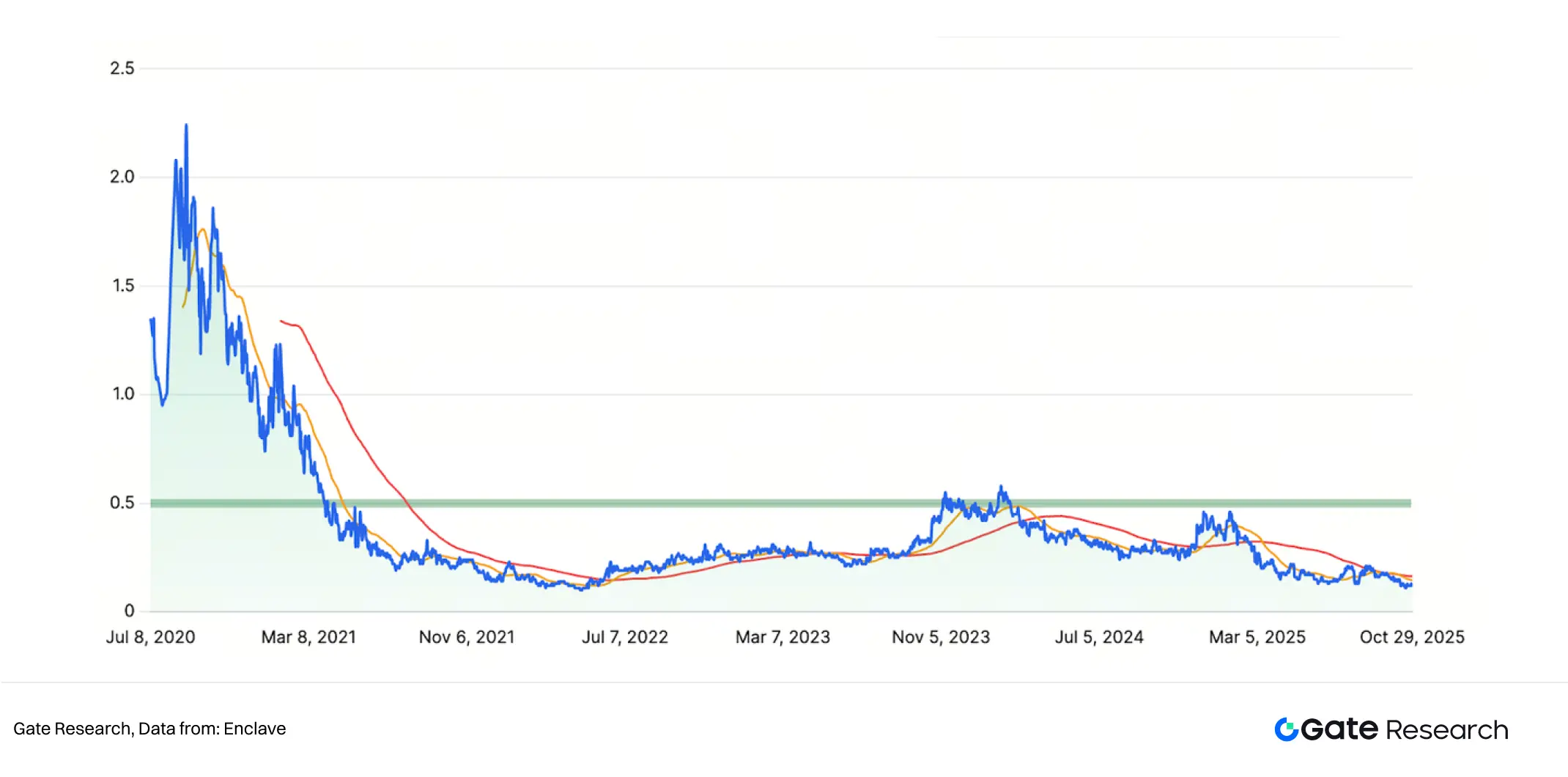
● TVS growth outpacing market cap growth: RWA and CCIP drive rapid increases in TVS, while token price growth lags behind;
● Security budget value being underestimated: The current MCap/TVS level of 0.12 is significantly lower than the long-term average range (0.3-0.5), indicating that the market has not fully priced LINK's security budget and cash flow value;
● Revaluation potential is promising: If TVS maintains an annual growth rate of 30-40% over the next two years, and the staking rate and protocol revenue increase in tandem, the MCap/TVS ratio is expected to rebound to the 0.3-0.4 range, corresponding to a price center for LINK tokens of about $26 to $35 (based on the current TVS of approximately $62.922 billion).
At the same time, the introduction of the SVR (Staking & Value Recovery) mechanism adds a "revenue multiplier" dimension to LINK's valuation, making it no longer reliant on a single fee model. This mechanism transforms potential on-chain liquidity into protocol cash flow by recovering OEV generated during DeFi liquidations and directly allocating it to stakers. Its economic effects include:
● Increasing staking yield (APY): OEV sharing enhances the actual returns for stakers;
● Strengthening cash flow sustainability: Revenue sources expand from service calls to DeFi activities themselves;
● Reinforcing valuation support: SVR creates dual demand for LINK's usage and locking, enhancing the valuation floor.
It is estimated that when the annual recovery scale of SVR exceeds $10 million, it will have an amplification effect of about 1.2 to 1.5 times on LINK's overall valuation, equivalent to pushing the MCap/TVS ratio to the 0.35-0.45 range, with price potential reaching $40 to $45.
In summary, the long-term value anchoring of LINK can be expressed as:
LINK Value = f(TVS Growth, Protocol Revenue, Staking Ratio)
When the three factors of TVS expansion, protocol cash flow, and staking ratio resonate, LINK will possess structural revaluation potential. With the integration of new scenarios such as RWA, AI agents, and prediction markets, LINK is expected to become an infrastructure token with the attributes of "real yield + security budget + cross-chain clearing," with its long-term reasonable valuation center projected in the $25 to $35 range, with upside potential exceeding $40.
Overall, from the perspective of economic models, the core competitiveness of oracles has shifted from "data accuracy" to "economic sustainability and verifiability of data services." Chainlink builds a systematic moat through "security budgets + fee models," evolving oracles from cost centers to sustainably profitable infrastructures.
5. Macro-Financial Perspective: Opportunities and Risks in the Integration of Real Finance and On-Chain Finance
Oracles have evolved from a single data feeding tool to a "financial neural hub" supporting DeFi, RWA, AI, and cross-chain communication. Their expansion is driving deep interconnections in global financial infrastructure, reshaping asset pricing, clearing, and regulatory systems, and opening a new phase of digitalization in real finance.
5.1 Opportunities: Financial Digitalization and the Birth of Information Interest Rates
Digitalization of Real Finance: The Data Trust Hub
Oracles synchronize key macro and micro data in real-time, making the execution logic of on-chain financial contracts closer to the real world, providing a trustworthy bridge for traditional financial institutions (TradFi) to embrace decentralized finance (DeFi).
In terms of RWA asset pricing and clearing, oracles can synchronize key macro indicators such as bond yields, foreign exchange prices, interest rate curves, and stock indices to on-chain, enabling RWA protocols to automatically adjust yields and risk premiums based on real financial variables.
In terms of institutional collaboration and settlement, traditional financial infrastructure institutions like SWIFT, DTCC, and Visa have integrated with oracle services like Chainlink's CCIP to explore automation in interbank information exchange and asset settlement. Chainlink collaborates with 24 financial institutions, including SWIFT, Deutsche Bank, and ANZ, aiming to simplify corporate action processing and explore a "hybrid structured" financial system: on-chain for contract execution and fund settlement, off-chain for identity verification and regulatory compliance.
In terms of on-chain macroeconomic data, oracles securely synchronize macroeconomic data such as CPI, GDP, and federal funds rates to on-chain, allowing on-chain risk models to dynamically reflect changes in the real economic cycle, promoting real-time interaction between regulation and market information.
Financialization of Data: "Information Interest Rates" and Capital Repricing
The oracle network becomes the realization carrier of "information interest rates"—high-quality, low-latency, verifiable data can generate yields, becoming a tradable capital factor.
This mechanism is reshaping capital pricing logic. The value of on-chain assets is no longer solely dependent on "narratives" but is directly related to the accuracy and verifiability of data. Through data aggregation, verification, and distribution, oracles are constructing a capital market for the data layer, enhancing the execution efficiency of smart contracts and reducing systemic risks in the on-chain financial system.
For institutions, high-quality oracle data means more precise risk pricing, more flexible interest rate curves, and more robust clearing parameters. Institutional investors can thus engage in arbitrage and efficiency optimization based on "data quality," achieving the value transformation of information as capital.
5.2 Risks: Model Consistency and Systemic Vulnerabilities
As the "public layer" of financial data infrastructure, the security and governance stability of oracles determine the resilience of the entire financial system. The new risks brought by integration mainly focus on technology, governance, and regulatory aspects.
Technical and Algorithmic Risks: The Model Consistency Trap
When the market overly relies on a single data source or algorithm model, any errors or delays in that oracle data can be systematically amplified, leading to collective misjudgments or chain reactions in the financial market, forming what is known as the "model consistency trap." Although decentralized structures enhance the system's resistance to attacks, collusion among nodes, data pollution, and algorithmic biases remain potential risk sources. Especially in scenarios involving large asset liquidations or cross-chain bridge transactions, any data error could trigger systemic financial events.
Governance and Centralization Risks: The Hidden Worry of Data Monopoly
The oracle ecosystem also faces centralization risks at the governance level. If services are concentrated among a few networks or large node operators, it may form a de facto "data monopoly." Once this monopoly extends to the CCIP or RWA asset layer, it will undermine the spirit of decentralization and pose challenges to the openness of the global financial system.
Without unified industry standards and transparent governance mechanisms, the oracle ecosystem may be dominated by a few enterprises, and its long-term stability will depend on the openness and anti-manipulation capabilities of the governance structure.
Regulatory and Compliance Risks: Interoperability Barriers Across Jurisdictions
The differences in data governance, privacy protection, and financial compliance across jurisdictions are core challenges facing the globalization of oracles. Significant differences in regulatory standards for bringing financial data on-chain in different regions lead to compliance risks for oracles in cross-border applications. In the future, the regulatory orientation is shifting from "risk prevention" to "promoting transparency," with compliance and standardization focusing on three pillars:
● Data Verifiability: Ensuring data sources and signatures are traceable;
● Privacy Protection and Minimal Disclosure: Achieving verification transparency while protecting privacy;
● Interoperability Across Jurisdictions: Providing a compliance basis for data circulation between global financial institutions.
Overall, the role of oracles has elevated to the core hub connecting real finance and on-chain finance. They not only promote the transparency and automation of the financial system but also accelerate the global interconnection of capital markets, constructing a unified settlement framework across chains, markets, and assets. Meanwhile, risks such as data monopolies, algorithmic biases, and governance centralization may weaken the core spirit of decentralized finance and introduce new systemic vulnerabilities.
6. Outlook: Elevating from Data Pipeline to Trust Layer
The evolution of oracles is essentially an upgrade from a "data pipeline" to a "trust layer" that provides "verifiable facts" for the entire digital world. This elevation means that future financial and commercial activities will not only rely on the efficiency of on-chain settlements but also depend on the authenticity and verifiability of on-chain data. Whether it is DeFi clearing systems, RWA asset credentials, or corporate compliance reports and central bank digital currency interactions, oracles will play a key role in the information transmission and verification processes. As more real financial institutions, governments, and enterprises connect to the on-chain system, the marginal value of the oracle network will grow exponentially.
For investors, the long-term value of oracle projects should focus on "real usage" and "economic security." Investment judgments should center on three key indicators: first, protocol revenue (i.e., the real data fees paid by DApps, financial institutions, etc.) is the most sustainable valuation basis; second, the growth quality of TVS (Total Value Secured) should be deeply analyzed—attention should be paid to whether its service targets are concentrated on blue-chip DeFi protocols rather than high-leverage or short-cycle projects; third, the economic security model (including staking mechanisms, slashing penalties, and node incentive structures) determines the underlying resilience of the network to withstand attacks and maintain data reliability.
For institutions, it is recommended to actively explore the deployment model of "first-party oracle nodes." By directly running nodes, institutions can securely and authoritatively bring their transaction data, pricing models, or asset information on-chain, enhancing market transparency and gaining data dominance in the future digital economy. This means that financial institutions can shift from being consumers of data to issuers and verifiers of data, thereby achieving a higher voice in the balance between regulation and innovation.
For developers, oracles should be viewed as core foundational components of DApps. Developers should fully utilize their advanced functions such as off-chain computation, verifiable randomness (VRF), and automation triggering mechanisms to build next-generation applications that can deeply interact with the real world. For example, bringing weather, logistics, legal rulings, or IoT data on-chain can give rise to new business forms such as insurance, supply chain finance, carbon credits, and AI smart contracts.
Ultimately, the competition in the oracle sector is fundamentally a contest for the "definition of facts in the digital world." Whoever can become the safest, most reliable, and most networked "source of truth" will become an irreplaceable cornerstone of the future value internet. Just as Google defined the standards for information retrieval in the internet age and AWS established the standards for computing power in the cloud computing era, the leaders of the oracle era will define the standards for "trusted data" and occupy a decisive position in the next revolution of financial infrastructure.
Author: Ember
7. References
++https://oakresearch.io/en/analyses/fundamentals/zoom-on-different-types-crypto-oracles++
++https://blog.csdn.net/thefist11cc/article/details/116227623++
++https://defillama.com/protocol/chainlink?staking_tvl=true\&fees=false++
++https://blog.chain.link/chainlink-reserve-strategic-link-reserve/?utm_source=chatgpt.com++
++https://www.theblock.co/data/decentralized-finance/prediction-markets-and-betting++
++https://blog.chain.link/chainlink-smart-value-recapture-svr/++
++https://www.tokenmetrics.com/blog/chainlink-link-price-prediction++
++https://coinlaw.io/chainlink-statistics#Blockchain-Networks-Supported++
++https://enclaveresearch.com/chainlink-market-cap-tvs-ratio/++
++https://enclaveresearch.com/chainlink-network-other-services-revenue-estimate-for-2025/++
++https://www.coingecko.com/en/categories/infrastructure#key-stats++
++https://www.coingecko.com/en/categories/oracle#key-stats++
Disclaimer
Investing in the cryptocurrency market involves high risks. Users are advised to conduct independent research and fully understand the nature of the assets and products they purchase before making any investment decisions. Gate does not assume responsibility for any losses or damages resulting from such investment decisions.
 Risk warning Risk warning