Delphi Digital: The Ultimate War of Super Apps, Coinbase, Binance, Kraken, and X Enter the Game
 Core Viewpoint
 The battle for the interface has just begun. Whoever can become the default interface for cryptocurrency users will win the value invested in the protocol.
Author: Delphi Digital
Compiled by: Hu Tao, ChianCatcher
The highest market cap internet companies rarely produce any products. The success of Amazon, Meta, and WeChat lies in their control over the channels of information discovery and distribution. The cryptocurrency industry will be no different.
Today's differentiation is reflected at the application layer. Super apps connect existing lending protocols, trading venues, yield sources, and payment channels into a unified interface.
Expanding the fintech product line often requires obtaining licenses, making expensive acquisitions, or spending years on research and development. The operation of cryptocurrencies is different, as adding features may mean connecting to a protocol that has already self-initiated.
Account abstraction, low-cost rollup execution, and reliable bridging solve long-standing user experience issues. Real use cases beyond speculation are emerging in tokenized assets, yield products, lending, and prediction markets. Here are the main competitors.
Coinbase
Wall Street knows Coinbase as a trusted ETF asset custodian. Cryptocurrency users know Coinbase as the driving force behind Base and its expanding suite of on-chain products.
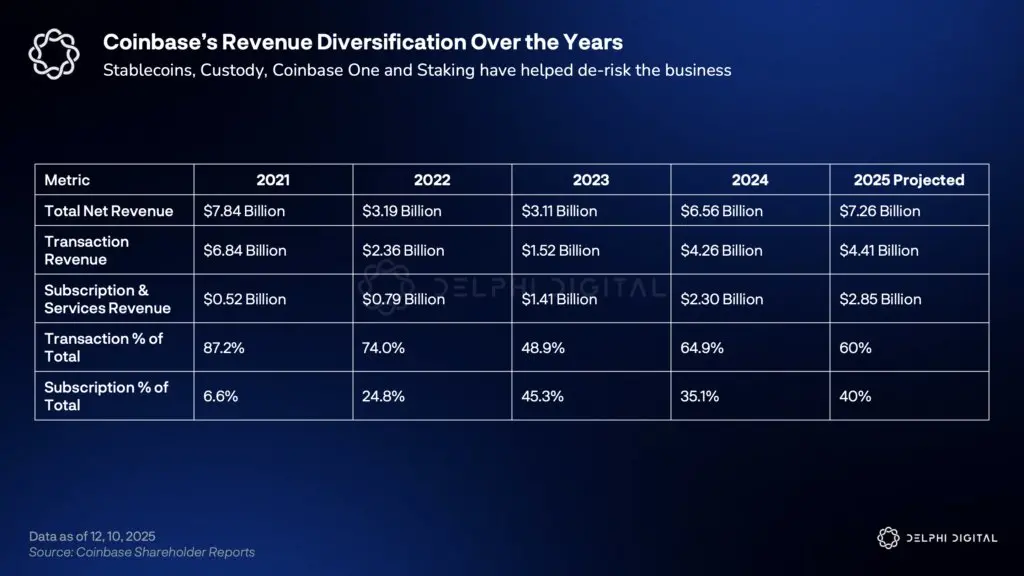
Coinbase initially relied heavily on trading activity as its business model, but it has now diversified. In Q3 2025, stablecoin revenue reached $354.7 million. Revenue related to the dollar reserves held in Circle accounts arrives quarterly, without relying on market activity.
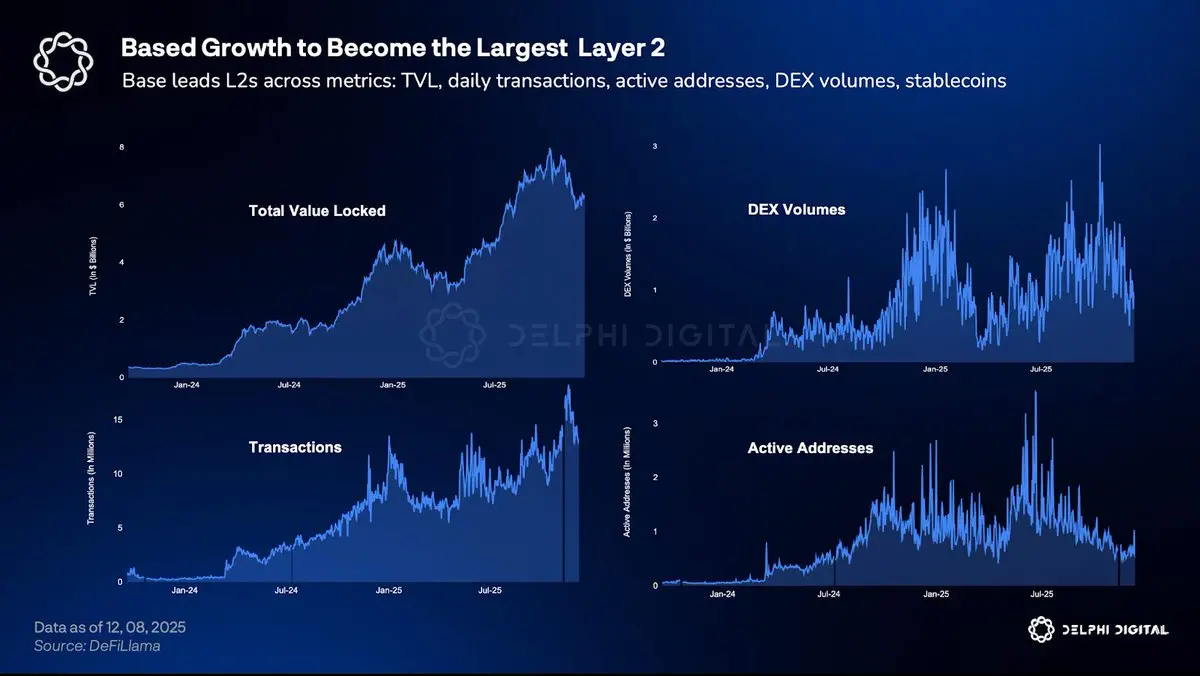
Building on this, Coinbase is constructing an interface layer. The Base App feels more like a content delivery platform than a trading terminal. The underlying rollup platform hosts independent projects, and Coinbase leverages its own influence for promotion. Morpho's outstanding loans on the Base platform have exceeded $905 million, showcasing the power of compounding. In payments, with the growth of AI-driven trading, the x402 platform will provide them with agent payment channels.
Coinbase is also filling strategic gaps through acquisitions. The $2.9 billion acquisition of Deribit has positioned it as a leader in Bitcoin options trading. The $375 million acquisition of Echo marks Robinhood's official entry into the token issuance (IPO) space.
This move is based on the assumption that combining the convenience of custody with permissionless access yields better results than focusing solely on either model.
Robinhood
In the past, users needed to open separate accounts for stocks, banking, and digital assets. Funds would be stuck between different platforms and settlement windows. Robinhood integrates this information into one platform. After closing positions, funds can be immediately used for other purposes, such as spending or earning yields.
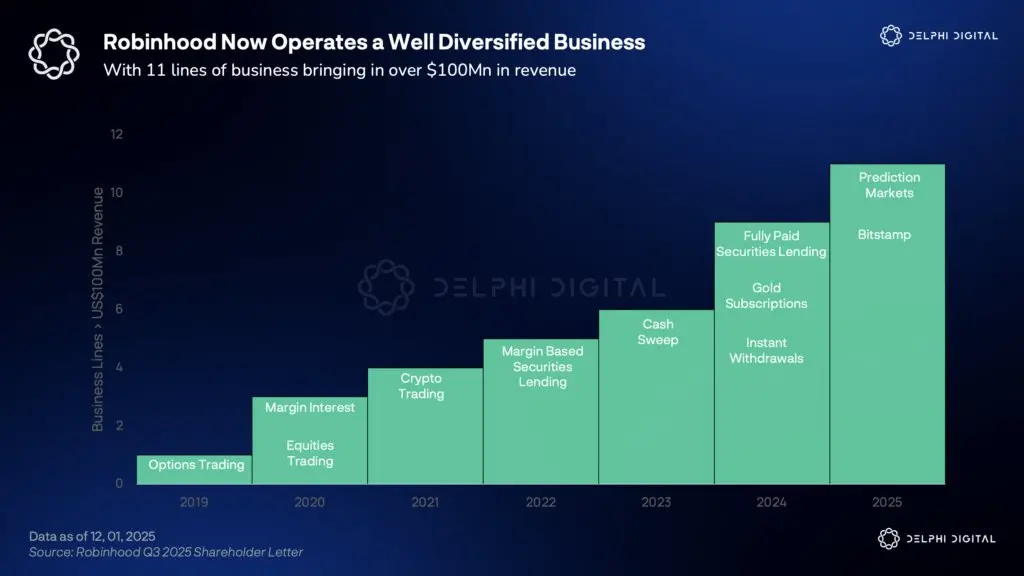
The subscription model has created a strong user retention mechanism. Gold memberships have increased by 77% year-over-year.
Maintaining access requires keeping assets on the platform. Associated bank cards can reveal user behavior patterns in income, savings, investments, and spending, which help in risk assessment as the lending business matures.
International growth mainly comes from blockchain-based securities. Over 400 U.S. listed companies are now open to European users. Although these companies rely on synthetic structures rather than direct ownership, their investments in pre-IPO companies have garnered significant attention. Plans describe settling through a dedicated aggregation mechanism, which will eliminate overnight waiting periods and remove trading time restrictions.
These plans strike a balance between regulatory credibility and the willingness to rapidly advance emerging fields.
Binance
Binance has become the default trading platform for spot and perpetual contracts. As the team identifies and meets user needs, everything else follows. Registered users exceed 270 million. Trading volume reached $7.3 trillion in 2024. Payment processing volume exceeds $250 billion, with over 45 million active users.
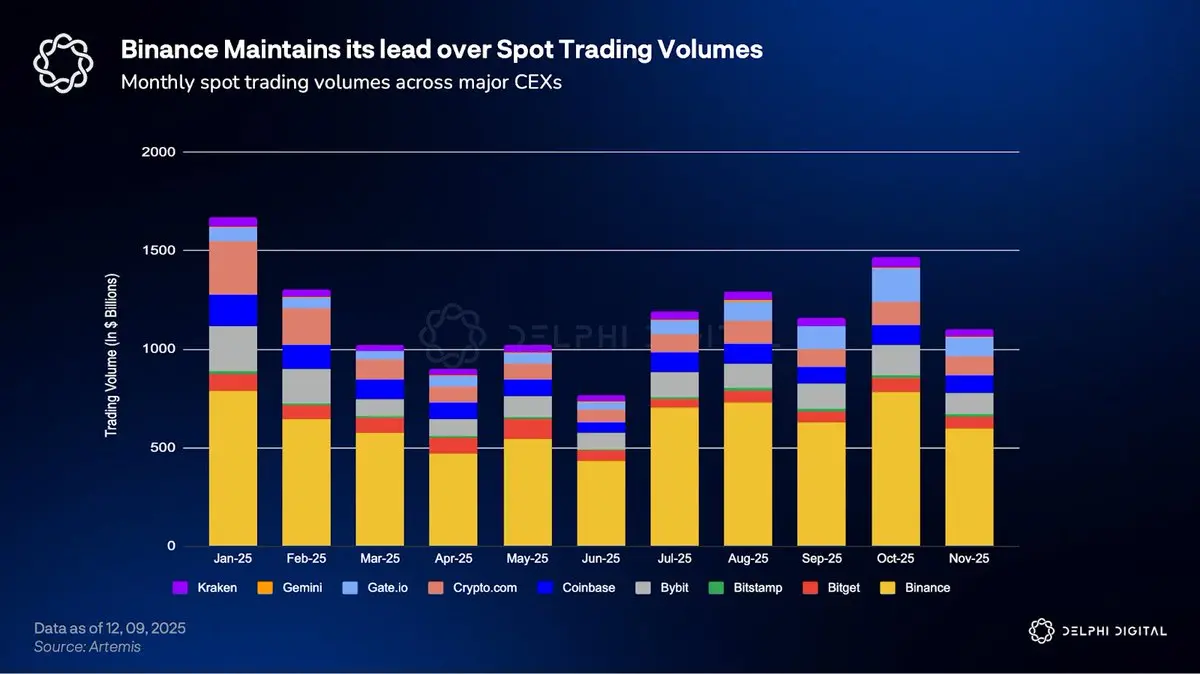
Currently, the product covers trading for foundations, merchant and consumer payments, passive income through staking and savings products, self-custody tools for broader ecosystem access, and premium services for large asset allocators.
Their token discovery program showcases the distribution leverage effect. Wallet users can participate in new token issuances early and receive token rewards. Among the tokens launched through the Alpha test, 18 successfully went live on exchanges. Participants typically buy in at prices lower than the official opening price of the tokens. It has been proven that the user growth achieved through these programs costs less than traditional advertising.
Each product supports the next. Traders discover yield options, yield earners find payment channels, and wallet users gain usable balances. These services promote each other rather than operate independently.
Kraken
Kraken has noticed that too many features can often confuse users rather than facilitate conversion. Complexity that represents powerful features in some regions may hinder in others. While other platforms seek to unify products, Kraken takes the opposite approach, segmenting the user experience while unifying the underlying technology.
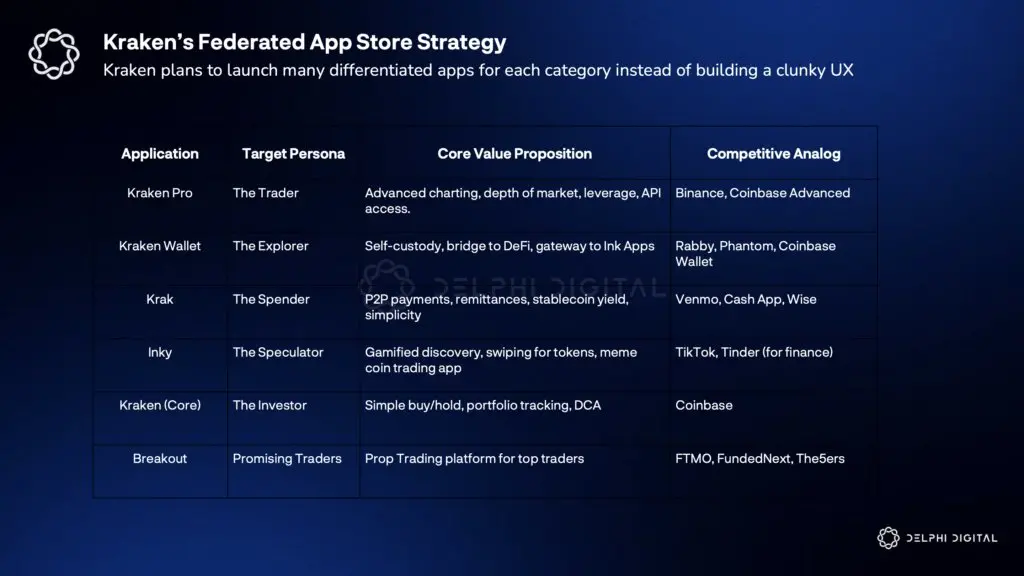
Inky caters to the demand for impulsive trading through click-based navigation design, aiming to enhance speed. Kraken offers cross-border transfer services, with balances earning about 4% annualized yield, and supports globally accepted bank card payments without conversion fees. Universal rollup functionality allows external developers to build products for existing customers without starting from scratch.
Backed has added tokenized equity features, with issuance exceeding $180 million, and supports external wallets. The $1.5 billion acquisition of NinjaTrader brought them domestic derivative brand recognition. A well-funded trading platform allows aspiring professionals to trade using company funds after demonstrating their skills.
X
X remains an unknown. The platform hosts important dialogues shaping the development landscape of cryptocurrencies, but currently lacks native fund transfer capabilities. Its regulatory approval has covered 38 jurisdictions in the U.S. and has established partnerships with several card organizations. If X commits to providing payment and trading services, given the attention it has already garnered, it will introduce an unpredictable variable.
The battle for interface supremacy has just begun. Whoever can become the default interface for cryptocurrency users will win the value of protocol investment.
 Risk warning Risk warning




Popular articles