Daily Observation of Crypto Concept Stocks: CLARITY Act Timeline Slips to "End of May," Waiting Costs for Coinbase and Circle Are Accumulating

 Released on April 24, 2026. The Senate Banking Committee markup has quietly shifted from "late April" to "the end of May," and this shift is not due to legislative failure, but rather the arrangement of various political agendas has not yet been finalized. With over 100 cryptocurrency companies jointly applying pressure and Senator Bernie Moreno publicly endorsing the "end of May" timeline, the probability of the CLARITY Act passing has not substantially decreased. However, for Coinbase Global, Inc. (NASDAQ: $COIN) and Circle Internet Group, Inc. (NYSE: $CRCL), each week of waiting incurs a quantifiable valuation cost.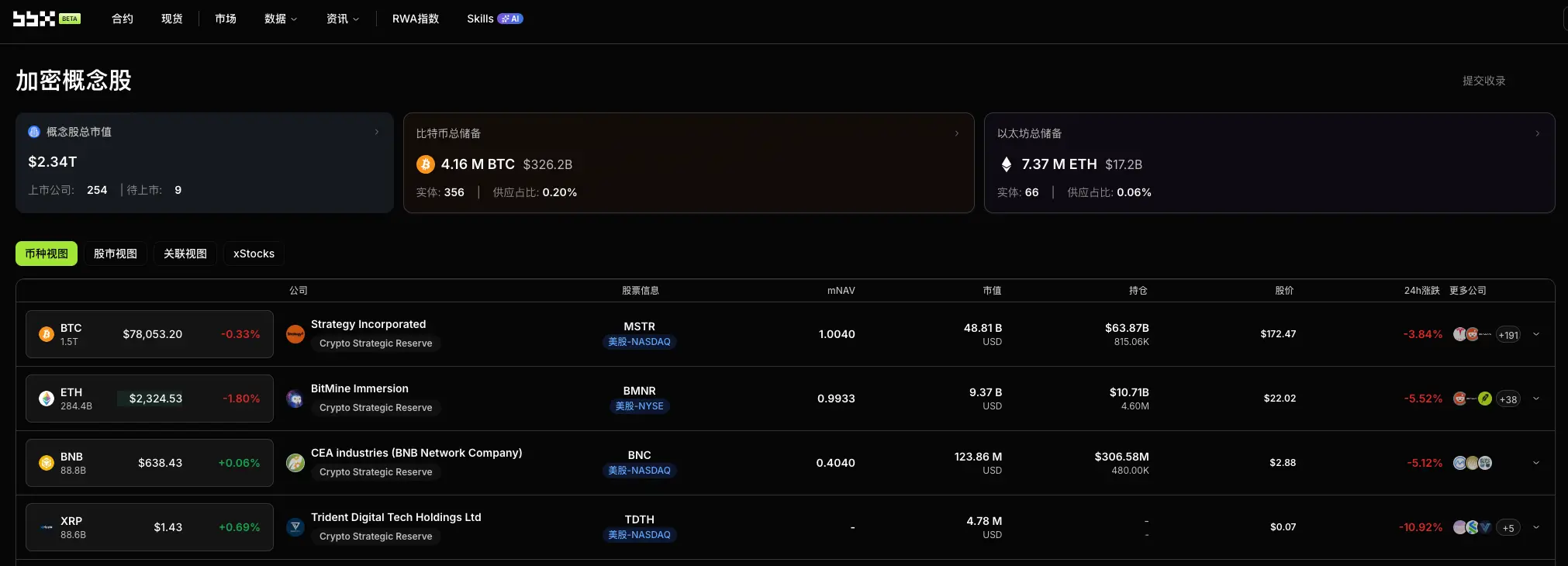
1. Why the timeline has shifted from "April" to "late May"
The core reason for the markup in late April not starting as scheduled is not that the legislation itself encountered new obstacles, but rather the objective compression of the Senate schedule. The joint letter clearly pointed out on April 23 that the Senate Banking Committee "has not scheduled markup," and the industry coalition is directly pressuring the committee leadership based on this fact, demanding to "immediately schedule and advance markup." Although Senator Moreno's statement of "late May" has not yet been officially confirmed by his office, it remains the most specific public timeline prediction at present—this means that the legislative window has not closed, but has merely shifted back by about four to six weeks. For the market, the key impact of this shift is: if markup is still not completed by late May, the probability of completing legislation within 2026 will enter a truly low range, and at that time, valuation discounts will be difficult to repair within the year.
2. Coinbase: How much revenue uncertainty corresponds to each week of waiting
For Coinbase Global, Inc. (NASDAQ: $COIN), the legislative pace of the CLARITY Act directly reflects the legal operational space of its two most growth-potential business lines—prediction markets and stablecoin yields. The joint letter explicitly demands the retention of "transactional yield rewards linked to payment stablecoins" and requires a clear definition of the SEC and CFTC's authority, protecting non-custodial developers from being classified as money transmitters. Each of these three core demands directly impacts Coinbase's addressable market size. Meanwhile, the New York Attorney General's lawsuit against Coinbase's prediction markets (April 21) is progressing simultaneously at both federal and state levels—if the CLARITY Act can establish the CFTC's federal priority jurisdiction over event contracts, it will become the strongest legal endorsement for Coinbase in state-level litigation. Each week of legislative delay extends the valuation discount brought about by this legal uncertainty.
3. Circle: The final wording of the stablecoin yield provisions remains the biggest suspense
Circle Internet Group, Inc. (NYSE: $CRCL) relies more singularly on USDC reserve interest and ecological usage. The signatories of the joint letter clearly support "retaining reward provisions related to payment stablecoins" and demand to ensure regulatory consistency across states, avoiding a patchwork of state-level licenses. For Circle, the joint letter represents the largest public support from the entire industry for the "legitimacy of activity incentives"—this provides unprecedented collective endorsement for its business model on a political level. Circle's Q1 2026 financial report is expected to be released on May 11, and if the CLARITY Act completes markup around the time of the report, it will become an important catalyst for Q2 valuation reconstruction; conversely, if the legislation is delayed again, Circle's stock price structural discount will continue to be under pressure during the earnings window.
The deep resonance between the Satsuma collapse and legislative progress
The two events from yesterday appear unrelated on the surface, but at a deeper level point to the same market judgment. The 99% drop of Satsuma Technology reveals a fact: when the BTC price fell from $126,000 to $60,000, no regulatory framework could protect aggressive corporate reserve strategies from the force of market gravity. The deeper demand of the CLARITY Act joint letter is precisely to provide clear boundaries for those institutions wishing to operate digital asset businesses within a compliant framework—this is not about eliminating risk, but about distinguishing "bearable market risk" from "legal risks that should not exist." For investors in Coinbase and Circle, the outcome of the markup at the end of May is the most important single policy anchor point for valuation paths in the second half of this year; while Satsuma's warning reminds the market that, before this anchor point is established, capital structures that overly rely on regulatory expectations face tests of vulnerability.
Data source: https://bbx.com/ Cryptocurrency concept stock information database, organized based on yesterday's announcements from global listed companies and SEC/TSE disclosure documents.
 Risk warning



Popular articles