Airdrops cannot make you rich, edgeX does not need a community
 Core Viewpoint

 When "same shares, different rights" becomes a loophole for project parties to manipulate the rules, airdrops have transformed from a reward for early users into a "stock harvesting" targeting the community.
Author: Gu Yu, ChainCatcher
Last week’s brutal BackPack anti-farming is still fresh in memory, and today another decentralized perpetual contract trading protocol edgeX has come under a tidal wave of criticism.
This morning, edgeX officially announced the website for viewing and claiming token airdrops, and plans to launch the exchange tonight. As a project incubated by Amber Group and strategically invested by Circle Ventures this year, edgeX was once highly anticipated by the farming community.
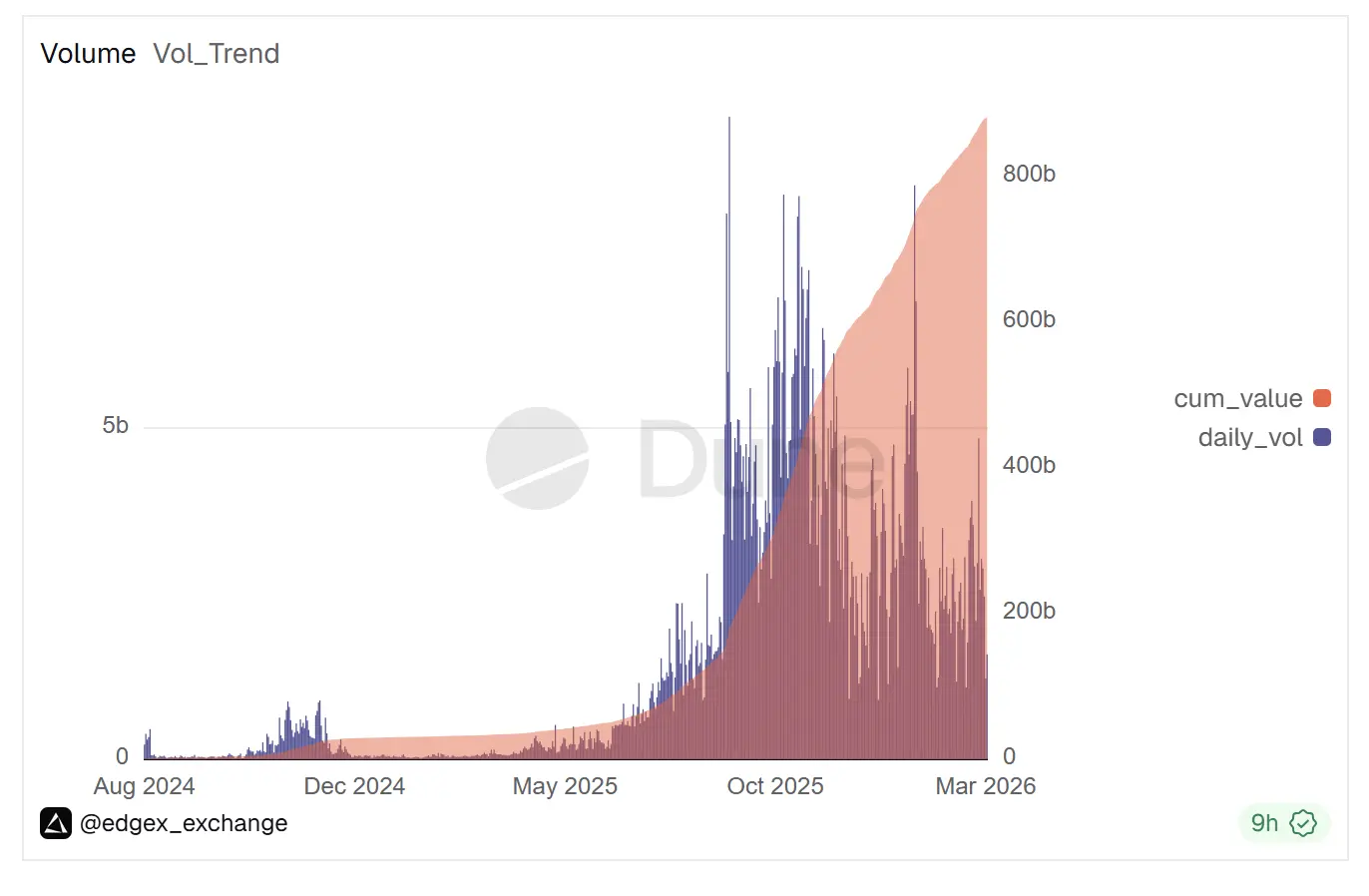
Since August 2025, edgeX's trading volume has entered a fast growth lane, with the total number of user addresses exceeding 470,000 and total trading volume surpassing $87.7 billion, while the current total TVL exceeds $360 million. In addition, edgeX has earned over $180 million in fee revenue from these trades.
The edgeX team had promised the community that there would be no witch hunts, and that where there are points, there are tokens, which is also a source of confidence for many edgeX users. However, what everyone did not expect was that edgeX indeed did not exclude witch accounts, but manipulated the "point weight" aspect.
According to community feedback, many users received the same number of points through trading, but the number of airdrop tokens received was different. Some users could receive 4 tokens for an average of 1 point, while others could only receive 0.5 tokens, and some could receive 11 tokens. In response, the project team only stated that there are indeed different weights for points from different sources.
Even if calculated at 11 tokens per point, its current value is only $5.5, while last year the price of each point in the secondary market was $30-40, which has caused significant losses for buyers of its points in the secondary market.
Worse still, several KOLs, including He Bi, exposed that the edgeX team had instances of insider trading, with multiple low-point related addresses cumulatively receiving a quarter of the airdrop tokens.
As community doubts grew, edgeX directly closed the comment section of its X account, attempting to suppress the spread of negative comments, but it was to no avail.
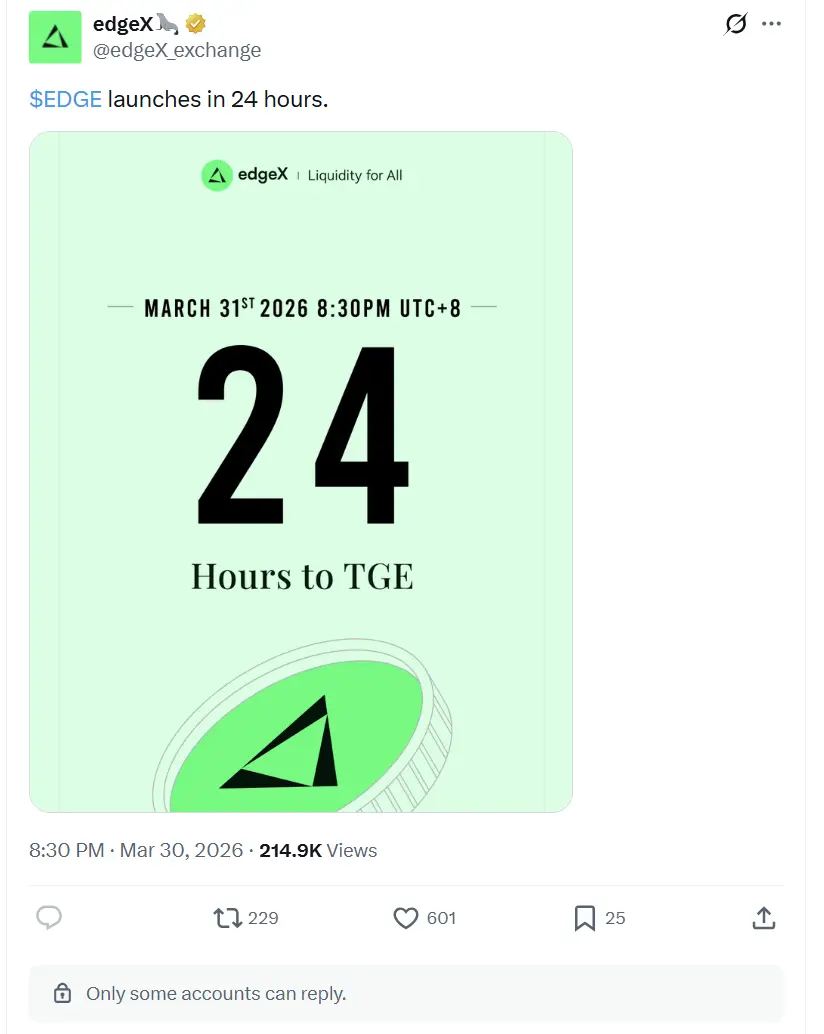
"Why is there different weight for the same points and arbitrary rule changes? Why delete posts, kick people out, and suppress discussions? Because a project that was prepared from the beginning to rely on false trading to inflate data, to raise valuations through storytelling, and to complete profit transfers in cooperation with behind-the-scenes market-making groups fundamentally cannot respect users or the community," stated well-known KOL Bing Frog in a post on X.
Bing Frog also mentioned that the worst part of edgeX is that it was never aimed at building a project from the start, but rather at creating a scheme, attempting to manipulate and harvest, thereby destroying the industry.
Undoubtedly, this "post-rule" handling method directly undermines the core trust premise of users regarding the airdrop mechanism—predictability. Once users cannot assess returns based on public rules, the so-called "point farming strategy" loses its basis for competition, and a series of large-scale "anti-farming" and "malicious acts" continue to impact user confidence.
In fact, a large amount of trading volume and user activity in many unlaunched DeFi protocols comes from airdrop expectations, and the seemingly large community size and trading volume are built on this foundation. Once such project teams complete token issuance, the attraction of potential returns for users diminishes, and the false prosperity will quickly collapse; once the expected returns from trading to obtain airdrops are no longer certain or even negative, the overall activity in the DeFi market may significantly decline.
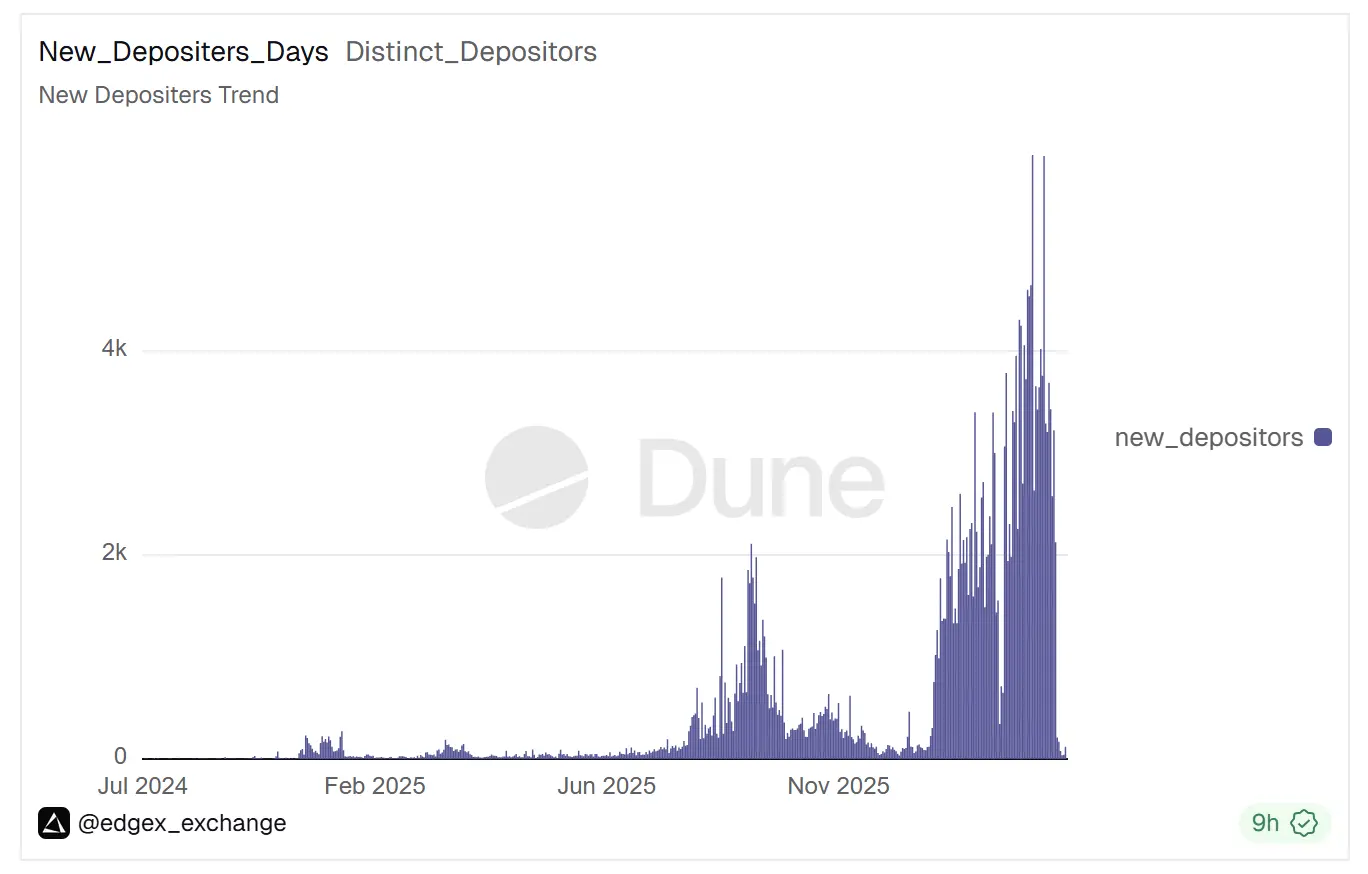
Taking edgeX as an example, in the days following the end of the project’s airdrop snapshot, the number of new deposit users for the protocol plummeted from over 2,000 daily to below 50.
After edgeX's anti-farming, what remains for the market is a series of questions: How many people will continue to believe in "farming for wealth"? As anti-farming becomes the new normal and many farmers leave, will the trading activity and user stickiness in DeFi continue to decline?
When "anti-farming" evolves from an individual phenomenon into an industry consensus, the myth of becoming rich through farming may have come to an end. For participants in the post-airdrop era, protecting the cash flow in hand may be more important than chasing those indistinguishable "airdrop expectations."

 Risk warning