Daily Observation of Crypto Concept Stocks: Circle's Q1 financial report will be released on May 11, can the markup window for the CLARITY Act in May become a catalyst for the valuation reconstruction of $CRCL?

 Released on May 7, 2026. Circle Internet Group, Inc. (NYSE: $CRCL) will release its Q1 2026 financial report on May 11, with consensus expected revenue of approximately $718 million. The timing of this financial report is crucial: it coincides with the final countdown phase of the CLARITY Act Senate Banking Committee markup locked in the "May" window, while the SEC held a roundtable discussion on stablecoin regulatory framework on May 3. On the same day that Morgan Stanley E*Trade enters retail crypto trading at 50 basis points and Coinbase releases its financial report, Circle's report will become the last key piece of the puzzle for the entire crypto concept stock sector in the intersection of regulatory expectations and performance realities.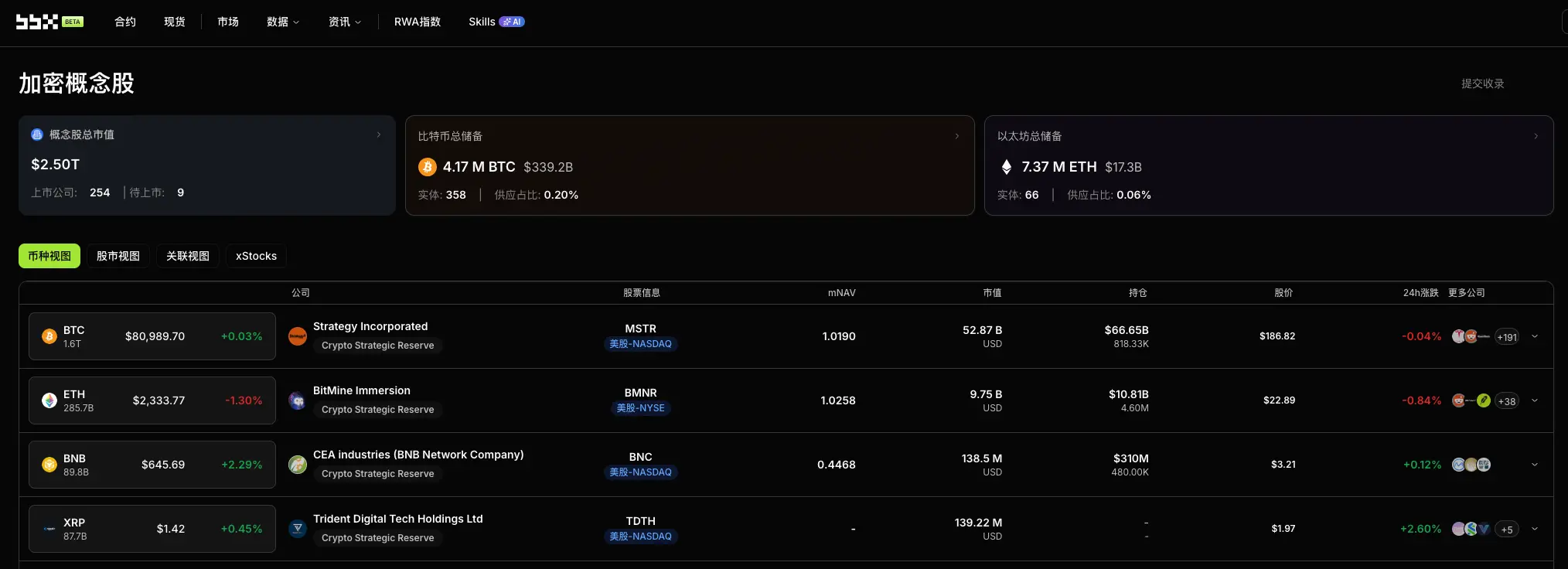
1. Earnings Report Expectations: USDC Reserve Interest is the Core Variable
Circle's main revenue comes from the interest generated by USDC reserve assets, as well as the rewards from the usage of USDC in exchanges, DeFi protocols, and corporate clients. Currently, the market capitalization of USDC has exceeded $78 billion, accounting for about 25% of the global stablecoin market, and it continues to expand even in the pressured environment of the overall crypto market in Q1 2026. Bernstein's research report concludes that stablecoin adoption has begun to operate independently of the crypto market cycle. During Q1, short-term U.S. Treasury yields remained in the range of 4% to 5%, theoretically keeping Circle's reserve interest income stable; the key variable is the quarter-on-quarter change in USDC supply—if there is a net expansion in supply during Q1, it will directly translate into an increase in interest income. The consensus expectation of revenue at $718 million is a relatively conservative figure; if USDC supply accelerates at the end of Q1 (with positive catalysts such as the launch of Meta's stablecoin payments in April and the expansion of Visa's settlement network), there is room for upward revision of the actual results.
2. CLARITY Act May Markup: Policy Catalysts Before and After the Earnings Report
Senator Lummis confirmed on April 29 that the markup for the CLARITY Act in the Banking Committee will take place in May 2026, and the SEC simultaneously announced a roundtable discussion on stablecoin regulatory framework on May 3. These two events are significant for Circle in two ways: first, if the markup starts around the time of the earnings report on May 11, it will become a policy trigger point for investors to reprice $CRCL—the systematic removal of "regulatory uncertainty discount" is often absorbed by stock prices earlier than actual legislative signing; second, if the markup is delayed again, Circle's valuation will continue to be under pressure during the earnings window, making it difficult to trigger a valuation reconstruction even if the fundamental data is robust. Currently, the $CRCL stock price is still quite far from its IPO high, and in the structural suppression of the stock price, the contribution of regulatory discount is much higher than the fundamentals themselves.
3. Indirect Benefits of Morgan Stanley E*Trade Entering the Market: Expansion of USDC Demand
Today's news about Morgan Stanley ETrade entering retail crypto trading with a 50 basis point fee and plans to cover all 8.6 million users has direct indirect benefits for Circle. The crypto trading settlement on the ETrade platform is supported by Zerohash, whose settlement infrastructure widely uses USDC as an intermediate settlement currency. As traditional brokers like Morgan Stanley, Schwab, and Robinhood successively integrate crypto trading into mainstream account systems, the demand for USDC as a settlement layer will systematically expand—this is a source of structural growth that Circle benefits from without needing direct involvement. Coupled with Visa's stablecoin settlement network with an annualized scale of $7 billion and Meta's USDC creator payment pilot, the real use cases for USDC are migrating from "internal crypto tools" to the "financial infrastructure layer," and the speed of this migration will be quantitatively confirmed for the first time in the Q1 earnings report.
Three Earnings Reports Form the Complete Picture of This Earnings Season for Crypto Concept Stocks
This week is the most concentrated window for Q1 earnings reports of crypto concept stocks: Strategy has released its report on May 5 (net loss of $12.54 billion, mainly due to non-cash accounting losses); Coinbase will release its report after today's market close; Circle will follow up on May 11. The combined results of these three earnings reports will largely determine the valuation baseline for crypto concept stocks in the second quarter. If Coinbase's subscription and service revenue shows relative resilience today, it will support the narrative that "the crypto platform business model is decoupling from cycles"; if Circle's Q1 USDC supply continues to expand, it will provide fundamental support for the stablecoin sector; if the CLARITY Act markup starts within this earnings window, the dual resonance of policy expectations and performance data will constitute the strongest single catalyst for valuation repair of $CRCL in the second half of this year.
Data source: https://bbx.com/ Crypto Concept Stock Information Database, compiled based on global public company announcements and SEC/TSE disclosure documents from yesterday.
 Risk warning