Where is Zhao Changpeng's billion-dollar investment going? YZi Labs' investment landscape fully revealed
 Core Viewpoint

 Zhao Changpeng's billion-dollar new "family office" YZi Labs investment landscape revealed: 70% of the funds are committed to the crypto ecosystem, while 30% are cross-industry bets on AI and biotechnology, launching a new capital experiment in the post-Binance era.
Author: Foinsight Family Office Insights
YZi Labs is not an ordinary family office; it is a long-term capital experiment in the new wealth of cryptocurrency.
In January 2025, an inconspicuous announcement caused ripples in the crypto industry. Binance's investment incubation department, Binance Labs, announced its rebranding to YZi Labs and gradually began to distinguish itself from Binance's original investment department.
"YZi" is derived from the initials of Binance co-founders Zhao Changpeng (Zhao) and He Yi (Yi). However, what is truly noteworthy is not the name itself, but the capital organization behind it.
This is a capital platform reportedly managing over $10 billion in assets, covering more than 300 projects across 25 countries and six continents, extending its investment reach from the crypto industry to AI, robotics, and biotechnology.
For the family office industry, YZi Labs is a new species that cannot be ignored. It has the foundation of a family office, the approach of a VC, and the ecological leverage of an industrial platform. Every move it makes could redefine the existence of "new wealth in cryptocurrency" in the global capital market.
Is it a Family Office or a VC?
One of the most intriguing aspects of YZi Labs is that its identity positioning has wavered.
At the beginning of the rebranding, YZi Labs head Ella Zhang clearly stated in a media interview that YZi Labs is purely a "family office investment tool."
However, a few days later, YZi Labs issued an official statement denying this claim, stating that it "is not a family office, but a venture capital and incubation company dedicated to promoting innovation," and specifically emphasized that "He Yi does not participate in daily operations."
An institution presenting different self-positioning in a short period indicates that YZi Labs' form is not easily summarized by existing classification frameworks.
In fact, it is a combination of three roles:
Foundation of a Family Office: The source of funds comes from the personal wealth of Zhao Changpeng, He Yi, and a few early core executives of Binance. Ella Zhang publicly stated that this funding primarily comes from Binance's entrepreneurial returns. YZi Labs does not raise funds externally and has no LP pressure—this means it can make many long-term decisions that traditional VCs cannot.
VC Methodology: YZi Labs has a professional investment team led by Ella Zhang, with Zhao Changpeng serving as a member of the investment committee. Investment amounts range from $500,000 to $50 million, covering seed rounds to growth stages, with the largest single project investment reaching $52 million.
Leverage of an Industrial Platform: Backed by Binance's vast user ecosystem, YZi Labs can provide invested projects with traffic, technical integration, and user cold-start support. This is a capability that no traditional family office or purely financial VC possesses.
This "trinity" structure makes it difficult to simply categorize YZi Labs, but it is precisely this characteristic that makes it worthy of attention in the family office industry.
The $10 Billion Foundation
So, how is this $10 billion in assets allocated?
According to Ella Zhang's interviews with relevant media in 2025 and her public disclosures at the Consensus conference in Hong Kong in 2026, YZi Labs' asset allocation is roughly "70-30": about 70% remains in digital assets, including various token holdings and on-chain protocol positions; the remaining 30% is expanding into non-crypto fields such as AI, biotechnology, and robotics.
With a team of 12 and $10 billion in managed assets, the average managed asset per person exceeds $800 million. This ratio is extremely rare in the global family office industry. Ella Zhang admitted that the challenge of managing this massive fund lies not in the number of projects but in whether enough high-quality assets that meet the standards can be continuously found.
What is even more intriguing is YZi Labs' attitude towards "exits." In 2022, YZi Labs' predecessor, Binance Labs, accepted about $300 million in external investment but later returned most of the funds to LPs. The reason is that YZi Labs adopts an "ultra-long-term" holding strategy, "unlike other VCs that calculate investment return multiples annually," which external investors found unacceptable due to the lack of an exit window in this investment logic.
Currently, YZi Labs is considering whether to reopen to external investors in the future. However, Ella Zhang emphasized that this will not happen in the short term, as YZi Labs is still in a "learning phase" in the fields of AI and biotechnology.
YZi Labs' Layout
From an investment direction perspective, YZi Labs' layout can be divided into three tracks.
Track One: Crypto Ecosystem—Foundation and "Blood Supply"
YZi Labs' crypto investments are not just financial allocations; they also serve a strategic function in maintaining the health of the BNB ecosystem. In October 2025, YZi Labs announced the establishment of a $1 billion Builder Fund specifically to support long-term builders on the BNB Chain, covering areas such as DeFi, AI, RWA, DeSci, payments, and wallets. Selected projects can receive up to $500,000 in funding and access resources from Binance's core team.
In the crypto field, YZi Labs also undertook a rather aggressive move by promoting the U.S. stock listing of the BNB "token treasury company." In July 2025, YZi Labs supported 10X Capital in establishing the BNB Treasury Company and seeking a Nasdaq listing, aiming to allow U.S. investors to gain compliant exposure to BNB through traditional stock channels.
Shortly thereafter, another entity, BNC (a subsidiary of CEA Industries), completed financing in a $500 million private placement led by YZi Labs and 10X Capital, purchasing 200,000 BNB and becoming the world's largest public holder of BNB.
However, this path is not smooth. In January 2026, YZi Labs publicly accused BNC's management of deviating from the initial commitments of the BNB treasury, leading to an intense proxy battle over governance rights and investment strategies. This conflict illustrates that even investments within Zhao Changpeng's system are not monolithic.
Track Two: AI and Robotics—The Boldest New Bet
In March 2026, YZi Labs led a $52 million financing round for Silicon Valley AI robotics company RoboForce. This is YZi Labs' most notable investment to date in a non-crypto field.
The TITAN robot developed by RoboForce specifically addresses labor shortages in industrial scenarios—solar energy, data centers, mining, and manufacturing. Nvidia CEO Jensen Huang mentioned this direction at the GTC 2025 conference. After completing the investment, Ella Zhang personally joined the board of RoboForce.

Robot developed by RoboForce
Additionally, YZi Labs' EASY Residency second season incubation project has included AI hard tech projects such as Trellis Robotics (a soft robot created by a Stanford team) and 4D Labs (spatial intelligence large models), indicating that its layout is not limited to financial investments but aims to establish deep connections with founders in these cutting-edge fields.
Market speculation has also been sparked by investments in Chinese AI companies. During the 2026 Hong Kong Web3 Carnival, He Yi revealed that YZi Labs has invested in "an AI company founded by a Chinese entrepreneur."
Market speculation initially pointed to Kimi's parent company, The Dark Side of the Moon—Zhao Changpeng had publicly praised Kimi on social media, and former YZi Labs investment partner Dana frequently interacted with executives from The Dark Side of the Moon after leaving. He Yi later downplayed the related statements, but the signal that YZi Labs is beginning to pay attention to Chinese AI startups is enough to attract market attention.
Biotechnology—The Longest Time Dimension Allocation
Ella Zhang describes biotechnology as "an exponential opportunity to extend human capabilities," but also acknowledges that YZi Labs is still in the early learning stage in this field and is in the process of assembling a professional team. The EASY Residency project has already included biotechnology entrepreneurs, but there has been no public disclosure of large biotechnology investments yet. This means that biotechnology is more of a "long-term layout" for YZi Labs rather than a current focus.
Ella Zhang uses the "barbell strategy" to summarize the allocation logic of these three tracks: crypto is on one end, being cyclical and highly volatile; AI is a certain trend; biotechnology is on the other end, being the longest time frame but with the highest potential returns. The combination of the three forms an investment portfolio that spans different time scales.
EASY Residency: A Sample Incubation System
In addition to direct investments, another core action of YZi Labs is incubation—its flagship project is called EASY Residency.
This name hides a twist; the official pronunciation of "YZi" is "EASY," implying that "the founder's journey is never easy."
EASY Residency evolved from the Binance Labs incubation program seven years ago but has made significant upgrades in its model. It is not a traditional online Demo Day-style accelerator but requires entrepreneurs to concentrate on-site and co-build in an immersive project.
From publicly available information, the conditions of this system are quite attractive. Selected projects can receive a $150,000 SAFE investment (in exchange for 5% equity), plus up to $350,000 in additional investment—totaling up to $500,000; additionally, it includes housing subsidies, free quotas from infrastructure partners like AWS, a $1 million security audit fund provided by CertiK, and regular mentorship from Zhao Changpeng, He Yi, and even Ethereum co-founder Vitalik Buterin.
In 2025, EASY Residency completed two seasons of incubation. The first season operated in New York, while the second season expanded to four cities: New York, San Francisco, Dubai, and Singapore. The Demo Day for the second season was held during Binance Blockchain Week, revealing selected projects covering various tracks such as prediction markets (Predict.fun), the Stanford robotics team (Trellis Robotics), and spatial intelligence (4D Labs).
Entering 2026, EASY Residency made significant adjustments, shifting from a fixed batch "quarterly model" to rolling admissions year-round, establishing permanent centers in New York and the San Francisco Bay Area. Three global Demo Days are planned for the year—one in April (Dubai TOKEN2049), and others in August and December.
This transition from a "project-based" to a "platform-based" approach is an evolutionary path worth referencing for family offices in incubation. It addresses the pain point of traditional accelerators where "connections end after the batch" and attempts to build a continuously operating founder community.
The Division of Labor and Balance Among Three Individuals
To understand the operational logic of YZi Labs, it is essential to clarify the division of labor among three core figures.
Zhao Changpeng, the source of capital and reputation. As the founder and largest shareholder of Binance, Zhao Changpeng is the anchor of funds and the source of industry influence for YZi Labs.
He serves as a member of YZi Labs' investment committee, participating in mentorship with an "intern mentality"—this understated description conceals substantial decision-making power. He does not sign checks, but his judgments shape YZi Labs' investment direction, particularly the focus on AI and robotics, which is reportedly driven by his personal technical preferences.
He Yi, a low-profile but key role. Holding about 10% of Binance's shares, He Yi is another crucial owner in YZi Labs' wealth pool. The official statement is that she "does not participate in daily operations," but as the current co-CEO of Binance, her influence within the Binance ecosystem is itself a latent resource for YZi Labs.

He Yi
Zhao Changpeng and He Yi are long-term partners, raising three children together. This means that YZi Labs' "family" attribute is not just a label but a real power and interest structure.
Ella Zhang, the actual operator. Ella Zhang is the daily captain of YZi Labs. In 2018, she co-founded the early structure of Binance Labs with Zhao Changpeng, investing in representative projects such as Polygon, CertiK, and Injective.
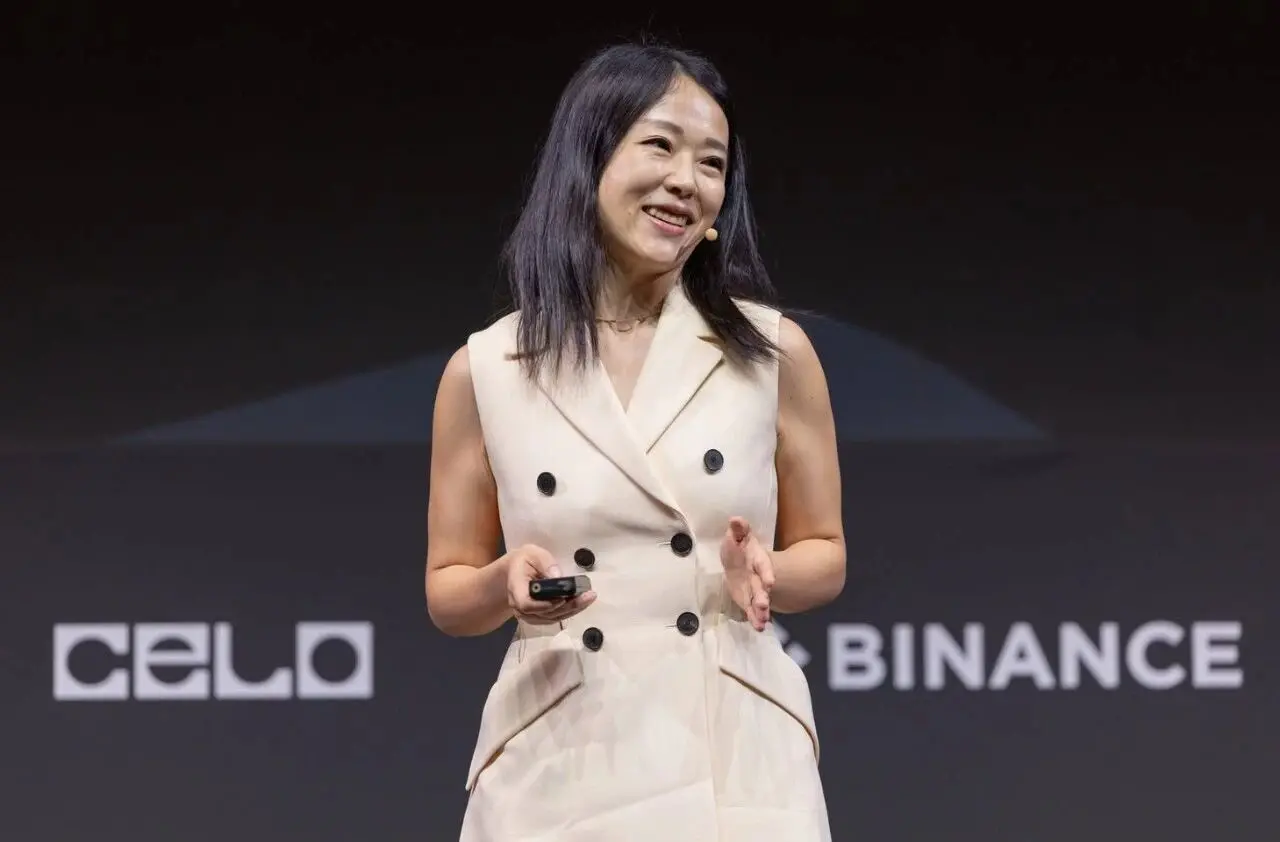
Ella Zhang
Ella Zhang has a background from Stanford Business School and Kleiner Perkins (KPCB), where she participated in early investments in Chinese consumer internet projects like JD.com and Himalaya. After leaving Binance Labs, she founded a supply chain technology company, Trendsi, completing a $25 million Series A financing.
In early 2025, Zhao Changpeng and He Yi invited her back to lead YZi Labs. Her dual background in entrepreneurial experience and traditional VC training allows her to play an irreplaceable bridging role in the transition from a crypto investment institution to a cross-domain capital platform.
Insights for the Family Office Industry
The reason YZi Labs is worth the attention of the family office industry is not due to the scale of its assets but because it represents a new form of family office.
In the past, people often understood family offices from classic frameworks such as asset preservation, intergenerational inheritance, tax structures, and diversified allocations. However, YZi Labs provides a different sample. When the founder's wealth comes from highly technical, volatile, and high-network-effect emerging industries, their "family office" may not necessarily follow a traditional conservative allocation but may continue to maintain a strong industrial betting attribute.
The core capability of such family offices is not how sophisticated their asset allocation models are, but whether the founder's industrial judgment can extend into the next technological cycle. In other words, their competitiveness does not come from diversifying risks but from the courage and judgment to concentrate bets.
Another dimension worth observing about YZi Labs is how it handles the tension between "founders exiting daily operations" and "maintaining industrial influence." Zhao Changpeng no longer manages Binance, but through YZi Labs, he remains deeply embedded in the capital flow and entrepreneur network of the Web3 ecosystem. This transition from "running a business" to "doing capital" is a highly valuable reference case for many families experiencing generational transitions or founder retirements.
Of course, YZi Labs also faces a series of unverified risks. Its 70% of assets are still concentrated in the digital asset field, which is greatly affected by industry cycles; managing $10 billion with a 12-person team raises questions about whether the organizational bandwidth is sufficient to support multi-track layouts, and whether the connections with specific policy cycles and market sentiments may evolve into certain tail risks in the future. These remain variables that need to be continuously tracked when observing the future direction of this institution.
From Binance Labs to YZi Labs, the change is not just a name but a "reorganization" that the first generation of entrepreneurial wealth in the crypto industry is undergoing. This new wealth from exchanges and token economies is settling, differentiating, and attempting to reorganize into a more long-term, cross-domain, and family capital-like platform form.
Zhao Changpeng's post-Binance era is just beginning on the capital level. For the family office industry, YZi Labs is worth tracking not because it has proven its success but because it is addressing a more timely question: after the founder leaves the front line of the business, in what form should the new wealth accumulated from high-volatility industries continue to exist?
("Family Office Insights" reminds: The content and views are for reference only and do not constitute any investment advice.)
 Risk warning



Popular articles