








Why did AI experience a widespread plunge overnight?
 Core Viewpoint

 Black day for the AI industry chain: Nasdaq down 1.33%, Philadelphia Semiconductor down 5%, Samsung and SK Hynix down over 6%. The triple negative resonance of the US-Iran situation, OpenAI's slowdown, and the US-South Korea game is causing the market to shift from "unlimited expansion of computing power" to "assessment of commercialization capabilities."
Author: Gelong
Overnight, the AI industry chain in the US stock market saw a significant decline, with the Nasdaq dropping 1.33% and the Philadelphia Semiconductor Index plummeting nearly 5%. Storage, optical communication, and AI computing power-related stocks generally faced heavy losses.
Panic sentiment quickly spread across markets, with today's Asia-Pacific market opening lower across the board. South Korean stocks, including Samsung Electronics and SK Hynix, fell more than 6%. Leveraged ETFs that are two times long on Samsung and two times long on SK Hynix both plummeted over 14%, further amplifying volatility due to leveraged funds.
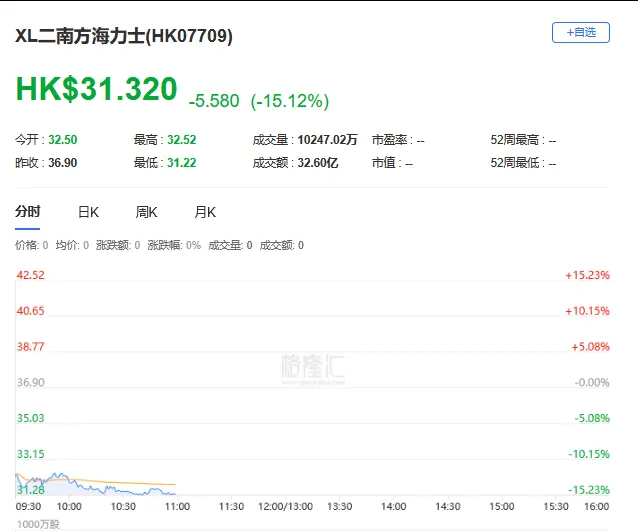
The A-share AI industry chain was also significantly impacted, with core sectors such as computing power, optical modules, and storage generally dropping over 5%, and several leading companies in various segments seeing declines exceeding 8%.
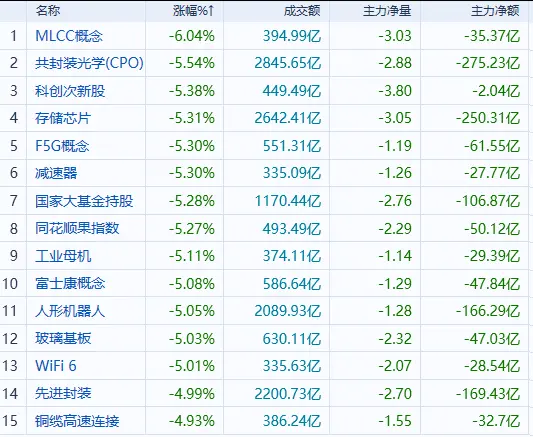
The negative stimuli mainly come from several aspects.
First, the sudden escalation of tensions between the US and Iran has pushed up oil prices and inflation expectations, suppressing the valuation of the entire growth sector from a macro perspective.
The US announced a suspension of negotiations with Iran, further intensifying regional conflicts, raising risks in the Strait of Hormuz, and causing international oil prices to rise again, reaching a three-week high. At the same time, the UAE has announced a suspension of all trade and financial dealings with Iran, further escalating regional tensions.
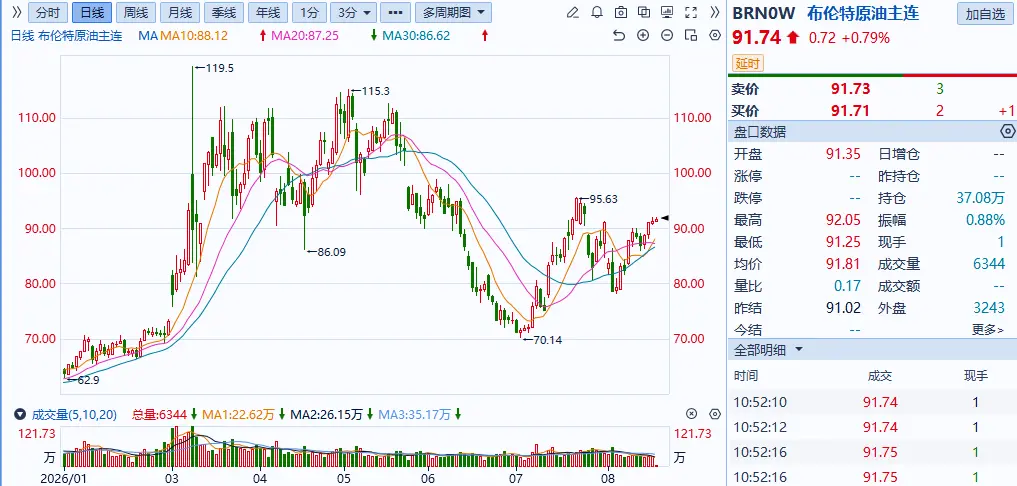
The rise in oil prices directly brings concerns about a rebound in inflation, prompting the market to reassess the Federal Reserve's monetary policy space.
Long-term US Treasury yields surged significantly, with the 30-year Treasury yield touching a new high not seen since 2007, and the 10-year Treasury yield also rising sharply.
In a high-interest-rate environment, the AI sector, characterized by high valuations and capital expenditures, is the most directly impacted.
The construction of AI computing power heavily relies on debt financing, and this year, the supply of AI-related bonds has significantly exceeded previous annual expectations. Bonds issued by Blackstone for Microsoft's data centers have seen yields approach junk bond levels, reflecting the rising financing costs for AI infrastructure.
Goldman Sachs pointed out that the massive capital expenditures in AI, combined with sovereign deficits, have led to a large influx of funds into the bond market, even raising the possibility that the Federal Reserve may have to maintain a tight policy despite weakening economic data.
As financing costs continue to rise, the market is beginning to reassess the logic of expanding computing power at any cost, leading to an initial sell-off in the AI hardware sector.
Secondly, the commercialization of large AI models has shown significant divergence, with OpenAI's performance slowdown shattering the market's linear optimism regarding AI applications.
The latest disclosed data for the second quarter shows that OpenAI's quarterly revenue growth rate was only 18%, with operating losses continuing to widen, while company executives have been leaving in succession, raising market concerns about internal management stability.
Although competitor Anthropic has achieved explosive revenue growth and made a small profit, the differences in revenue recognition do not indicate that the entire industry has smoothly entered a profitable era.
OpenAI's slowdown in growth has made the market realize that the commercialization of large AI models is not smooth sailing, with significant challenges remaining in converting enterprise clients and controlling costs.
In the past, the market was accustomed to unconditionally believing in the AI capital expenditure story, but now investors are beginning to question how much real revenue and profit can be generated from massive computing power investments. The AI industry chain has officially entered a period of assessment for its commercialization capabilities, moving away from the "burning money to expand scale" phase.
Thirdly, the ongoing semiconductor investment game between South Korea and the US continues to ferment, exacerbating the uncertainty in the global storage industry chain and directly impacting the HBM storage sector, which is core to AI computing power.
South Korea has publicly denied reports that the US proposed prioritizing the construction of memory chip factories in the US. South Korea has already planned to invest over $580 billion in local chips and data center clusters.
If Samsung and SK Hynix are forced to establish memory production lines on a large scale in the US, it will consume a significant amount of corporate capital and weaken the domestic semiconductor industry ecosystem.
However, the US's pressure tactics are multifaceted, using tariffs as leverage, and delays in investment landing may also spill over to affect cooperation in security fields between South Korea and the US.
This reflects the reality of "earning money from the US market, keeping capital in the US, and complying with industrial demands." South Korean storage companies rely on supplying HBM to the US AI market for substantial profits, while the US demands that companies repatriate capital to build factories domestically, or face trade penalties.
The market is concerned that if subsequent negotiations continue to drag on, whether South Korea chooses to compromise or confront, it will disrupt the global storage supply pattern.
If South Korea compromises, corporate capital will be diverted, and profits will be eroded by the high costs of building factories in the US; if they take a hard stance, they may face trade barrier risks.
This dilemma has directly triggered a sell-off of Samsung and SK Hynix, with leveraged ETFs further amplifying the decline, and panic sentiment spreading along the storage industry chain.
Of course, a short-term crash does not mean the complete end of the AI industry logic.
The long-term demand for AI computing power still objectively exists, but the market is no longer willing to pay a high premium for overly optimistic long-term stories.
Going forward, the market's focus will shift from merely looking at the scale of capital expenditures to assessing the real profitability of enterprises, changes in financing costs, and the ultimate direction of global supply chain games.
For the A-share market, external emotional shocks bring more emotional disturbances, and it will be necessary to observe the domestic industry chain's own orders and profit realization, distinguishing between short-term emotional sell-offs and substantive deterioration of fundamentals.

 Risk warning



Popular articles





