








Daily Observation of Cryptocurrency Concept Stocks: The Transition Period Has Just Ended, and the EU Wants to Impose an "Extended" Tightening Spell on the MiCA Regulations

 Released on July 9, 2026. Today's macro compliance observation focuses on the dramatic shift in the European crypto asset market (MiCA) regulations. As the historic transition period of MiCA just ended on July 1, EU regulators have once again sent a strong signal, planning to break down geographical barriers and fully incorporate non-EU stablecoin issuers and emerging technologies such as tokenization (RWA) into the new round of regulatory expansion. This marks a new wave of comprehensive upgrades to the compliance thresholds in the global crypto market.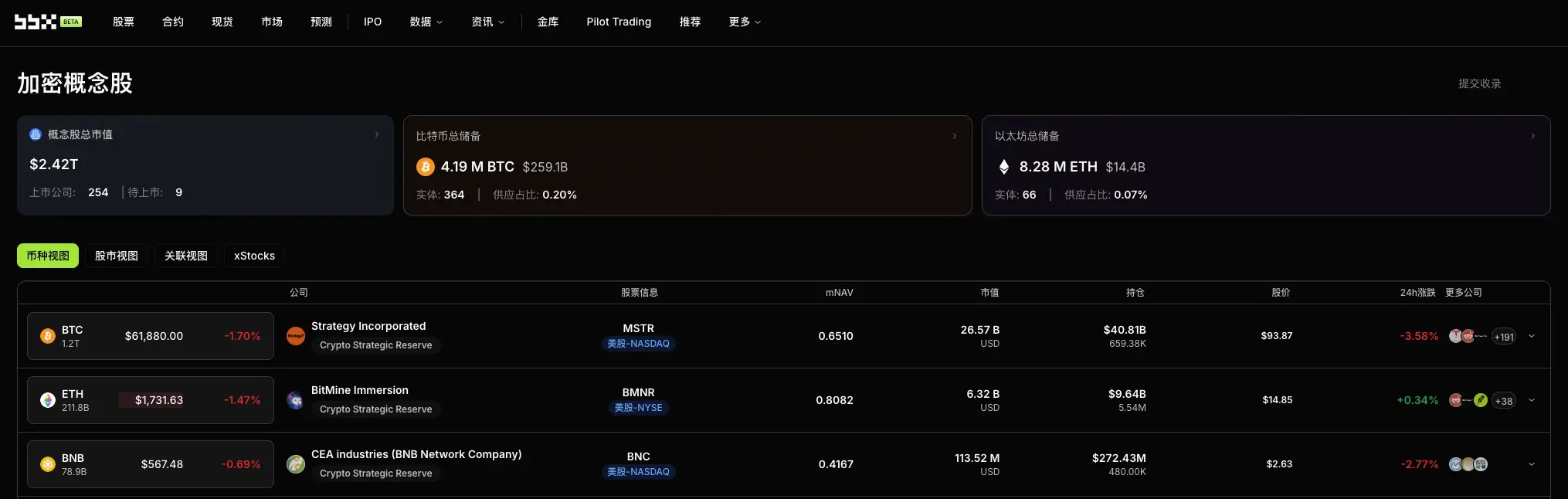
1. Institutional dividends are unstable, the EU launches a new round of expansion
As the world's first comprehensive institutional framework for crypto assets, the implementation of the MiCA regulation has been seen as Europe's trump card to regain its voice in digital finance. However, the pace of legislation often lags behind the evolution of crypto technology and global political geography.
Since the initial formulation of this rule, the global crypto ecosystem has undergone disruptive changes. To respond to these global developments, the EU, after completely closing the transition period on July 1, left almost no breathing room for the market and immediately began planning to expand the applicability of the MiCA regulation. This move reflects the deep anxiety of European regulators regarding technological spillover and the penetration of offshore financial instruments.
2. Targeting offshore issuers: Legal strangulation of non-EU stablecoin issuers
Among the disclosed revision intentions, the most shocking to the market is the EU's plan to extend regulatory reach directly to "non-EU stablecoin issuers."
In past enforcement guidelines, many stablecoin giants registered outside Europe often exploited the legal vacuum in the region to penetrate EU residents through offshore intermediaries. With the systematic expansion of the MiCA applicability, this means that any offshore stablecoin that has not obtained a formal Electronic Money Institution (EMI) license within the EU, or does not meet the EU's capital adequacy, cybersecurity, and consumer protection frameworks, will face substantial entry barriers in the European financial network. The era of traditional offshore stablecoins profiting from "lawless lands" is rapidly coming to an end.
3. Regulation sinks to RWA: Tokenization technology is put under a "tightening spell"
In addition to stablecoins, emerging technologies such as tokenization (Tokenization/RWA), which are expected to experience explosive growth in 2026, have also been explicitly listed as core targets of this MiCA expansion.
As more giants like Ondo and Broadridge map traditional U.S. stocks, government bonds, and other securities onto public chains, EU regulators believe that tokenized assets have effectively blurred the boundaries between traditional securities law and digital goods. To prevent potential liquidity shocks to European financial stability caused by on-chain synthetic assets, the new MiCA regulations will impose stricter penetrating audit standards on the underlying collateral of tokenized assets, third-party custody processes, and cross-border distribution.
4. Compliance costs for multinational corporate treasuries are being restructured
Based on the latest macro trends in Europe at the beginning of July, the global crypto compliance environment has entered a dynamic high-pressure period of "repairing while walking." On one hand, we see in the micro market that crypto treasury companies like BSTR, lacking liquidity support, were forced to abort their shell listing due to a $1.5 billion financing deadlock; on the other hand, the EU's continuously escalating "extended version" of the MiCA tightening spell is significantly raising the hidden compliance costs for crypto companies and multinational treasuries. The global digital asset market is bidding farewell to reckless growth and is fully moving towards high standards and de-offshorization within the mainstream financial system, which has become an irreversible narrative for the second half of 2026.
Source: https://bbx.com/ Crypto concept stock information database, compiled based on yesterday's announcements from global listed companies and SEC/TSE disclosure documents.
 Risk warning




Popular articles





