"The Difficult Summer of Bull Markets: Hundred Dollar Oil Prices, AI Backlash, and the Reinstatement of Tariffs"
 Core Viewpoint

 The traffic volume in the Strait of Hormuz has dropped to one-tenth of pre-war levels, the CDS spreads of mega-scale tech companies have risen to a historical high, and the yield on 10-year U.S. Treasury bonds has risen to 4.66%—the three pillars of the bull market are under pressure simultaneously.
Author: Gao Zhimou, Wall Street Watch
Global stock markets are facing a severe stress test this summer, with soaring oil prices, expanding AI capital expenditures, and the reintroduction of tariff policies simultaneously impacting the core pillars supporting the current bull market.
Due to severe disruptions in shipping in the Middle East and the Red Sea, Brent crude oil surged past $100 per barrel this week, reaching a two-month high. Meanwhile, Trump proposed imposing tariffs of 10% to 12.5% on about 60 economies, and these two factors quickly raised market inflation expectations, pushing the 10-year U.S. Treasury yield up to 4.66%.
The tech sector faced a significant setback this week, as Google's substantial increase in capital expenditure guidance raised market concerns about AI investment returns, leading to a nearly 6% evaporation in the market value of the "Seven Giants" in just one week. As a result, the S&P 500 index fell for the second consecutive week and recorded its largest single-day drop this month, with the 30-year U.S. Treasury yield approaching its highest level since 2007.
The bull market logic of resilient earnings, controllable inflation, and continuous expansion of AI spending has begun to waver. Currently, Barclays has downgraded its risk asset rating to neutral, Goldman Sachs maintains a neutral outlook for three months, and HSBC has shifted its strategy from the semiconductor sector to European banks, with Wall Street institutions intensively releasing tactical defensive signals.
$100 Oil and the Ghost of Inflation
The conflict in the Middle East is the epicenter of market turmoil this week.
The conflict has spread from the Strait of Hormuz to the Red Sea, causing a triple disruption in the global oil supply chain: According to maritime data company Kpler, only six ships passed through the Strait of Hormuz on Thursday, with traffic reduced to one-tenth of pre-war levels; the alternative route in the Red Sea that Saudi Arabia previously used to bypass Hormuz has been obstructed by Houthi attacks on two Saudi oil tankers; and the escalation of the Russia-Ukraine conflict has further compressed Kazakhstan's exports.
Analysts at maritime intelligence firm Windward estimate that about 25% of global oil supply is under threat.
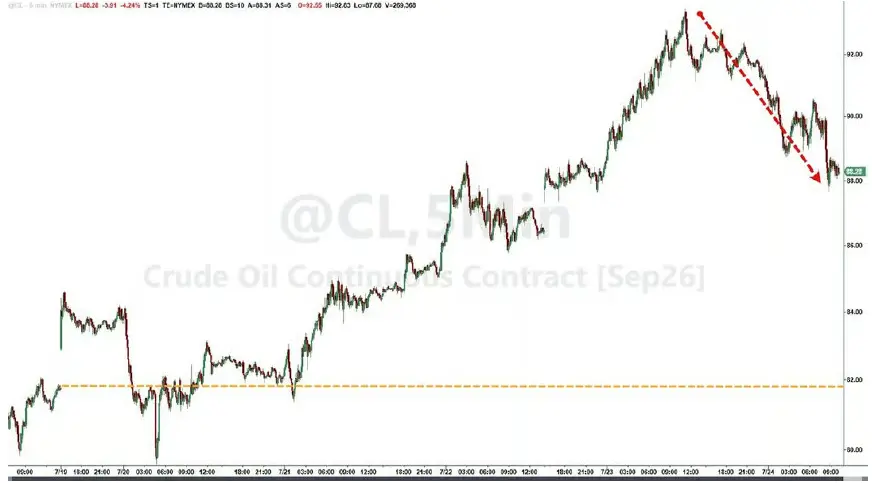
The transmission chain is interconnected: rising oil prices elevate inflation expectations, which alters interest rate pricing, and higher rates tighten financing conditions. The 10-year U.S. Treasury yield rose about 10 basis points this week to 4.66%, reaching a new high since Trump 2.0 took office; the market has priced in two rate hikes this year, with a 30% probability of a rate hike at next week's FOMC meeting.
"Oil is the most likely trigger factor," said Charlie McElligott, a cross-asset strategist at Nomura—higher oil prices are repricing "tail risks of inflation," meaning the probability of more persistent inflation, and this shock will first transmit to the interest rate market before eroding corporate profits.
David Lebovitz, a global strategist at JPMorgan, is focused on sustainability: If oil remains high throughout the summer, the risk premium will need to be reassessed comprehensively.
AI Arms Race Faces Trust Fractures
Beyond oil prices, the AI investment narrative also showed cracks this week.
As the first major tech company to report this season, Alphabet's performance itself was not an issue—cloud business grew 82% year-on-year, and search grew 17%. However, the company simultaneously raised its 2026 capital expenditure guidance by 8% to between $195 billion and $205 billion, causing its stock price to plummet about 8% that week. Tesla's situation was even more severe: its Q2 Non-GAAP earnings per share fell short of expectations due to declining profit margins, combined with concerns about the pace of AI product pipeline rollout, leading to a nearly 20% drop in just one week.
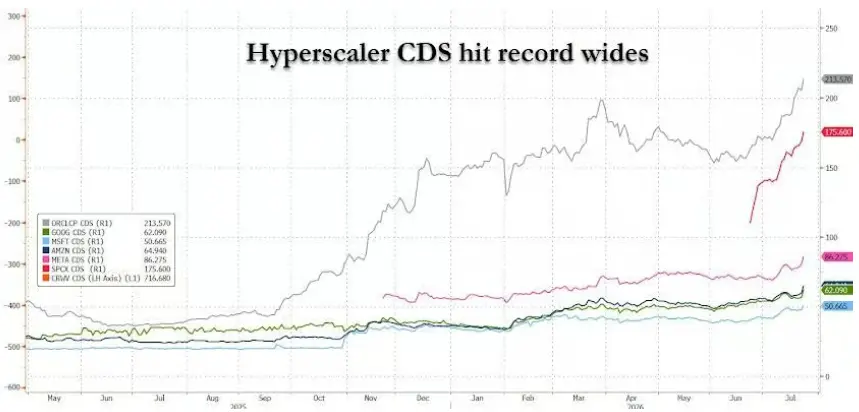
The divergence in the credit market is particularly noteworthy.
According to Goldman Sachs data, $489 billion in AI-related debt has been issued from 2026 to date, a 50% increase from the entire previous year, with 60% coming from non-major tech companies. The CDS spreads for major capital spenders have risen to historical highs—while overall credit spreads remain at their tightest levels in years. The pressure has not broadly spread but is highly concentrated in the AI supply chain.
The entire industry is pouring unprecedented funds into projects with uncertain returns.
Some estimates suggest that by 2027, cumulative capital expenditures in the AI sector will approach $1 trillion. Higher interest rates raise the return thresholds that these investments must ultimately surpass. "Financing channels remain open, but investors are becoming increasingly selective," said Lebovitz, "the biggest disconnect is the assumption that 'AI spending can expand infinitely.'"
Jensen Huang and Elon Musk publicly supported open-source models this week, which may further undermine this logic: cheaper models mean lower spending needs, and the risk of semiconductors returning to cyclicality is rising.
Next Week: The Ultimate Test for Bulls
Next week, the Federal Reserve, the Bank of England, and the Bank of Japan will hold meetings in succession, and companies representing 34% of the S&P 500's market value will release earnings reports, including four of the "Seven Giants"—Microsoft and Meta (Wednesday), Apple and Amazon (Thursday), with the latest signals on AI capital expenditures set to be released intensively.
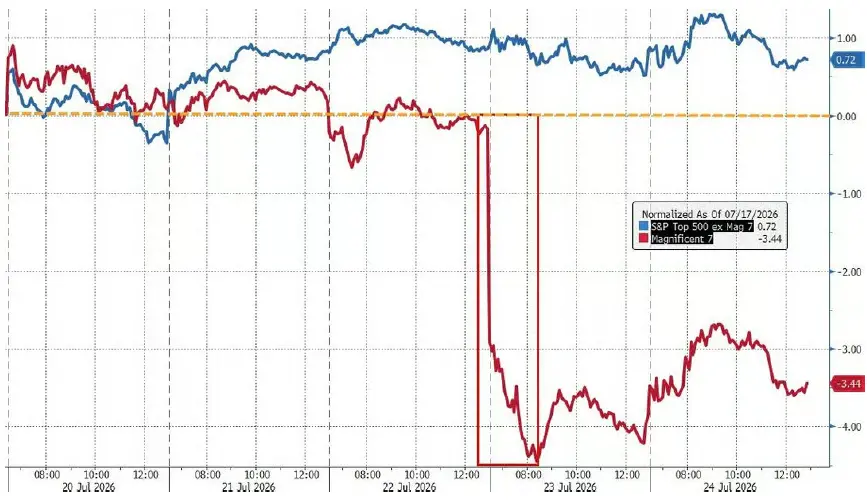
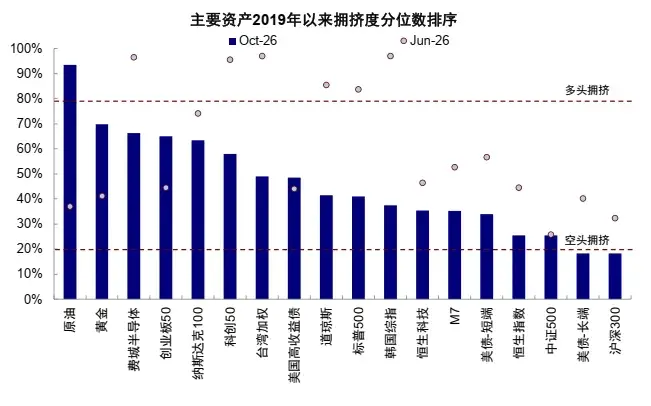
The technical situation is deteriorating. Goldman Sachs' trading department reported this week that overall fund flows are skewed to selling by 12.6%, with long-term funds skewed to selling by 21%—"almost no buy orders are seen, and tech earnings reports have not become the stabilizing force many hoped for." The S&P 500 has fallen below the 50-day moving average, market makers are in a negative gamma state, and the CTA trigger levels are being closely monitored; the Nasdaq has also fallen below the 50-day moving average and is testing the June 9 low. Gold has climbed back above $4,000, and the dollar recorded its best weekly performance in over a month—safe-haven assets are pricing in the same unease.
Sebastian Raedler, head of European strategy at Bank of America, put it bluntly: profit margin expectations, five-year forward earnings growth rates, and the global market capitalization/GDP ratio are all at historical highs, while risk premiums are at a 20-year low. "The market is pricing in a scenario where everything goes smoothly and there are no risks," he said. He expects global stock markets to have another 7% to 8% downside potential.

 Risk warning