From Mining Company to Energy Platform: MARA CEO Discusses the Endgame of Bitcoin Mining
 Core Viewpoint
 MARA CEO Fred Thiel: Bitcoin mining will not disappear, but mining companies are shifting from computing power providers to energy platforms; the window for Bitcoin as a medium of exchange has passed, and high-frequency payments will be handled by stablecoins.
Editor | Wu Says Blockchain
In an interview on July 23, 2026, Natalie Brunell spoke with MARA CEO Fred Thiel, who stated that as the demand for AI computing power continues to grow, electricity has become a core resource contested by Bitcoin mining companies, cloud service providers, chip companies, and large model enterprises. MARA is gradually transitioning from a single Bitcoin mining company to an energy platform that controls land, electricity, and data center infrastructure. He believes that Bitcoin mining will not disappear, but in the future, it will increasingly utilize surplus electricity generated by data centers, microgrids, and renewable energy; Bitcoin itself remains an important store of value asset, but due to a lack of income and significant price volatility, its window for development as a medium of exchange may have passed, with high-frequency trading and machine payments more likely to be handled by stablecoins.
The audio transcription was completed by GPT and may contain errors; please refer to the original podcast.
How to Become the CEO of the World's Largest Publicly Listed Bitcoin Mining Company, MARA
Fred Thiel: I have worked in the tech industry for 40 years. I started as a software programmer, but I wasn't very good at it, so the company moved me to product and sales, where I performed much better. Since then, I have worked in almost every segment of the tech industry. Around the age of 40, I was fortunate to lead an IoT company to go public, and then I worked in private equity and venture capital for a while.
Later, I was basically retired, mainly serving as a director for some companies and consulting on tech company acquisitions for large private equity firms. During that time, someone started talking to me about something called Bitcoin. I thought, "Bitcoin?" I remember working in fintech early in my career, but back then, fintech was mostly about banking software.
I believed that Bitcoin could indeed solve many problems, but at that time, it was unregulated and unlicensed, so I temporarily put it out of my mind. By 2014 to 2015, Bitcoin came back into my view. A CTO I had worked with put everything he owned into Bitcoin. I mean, he really put everything in, every penny.
He was very anti-government and completely opposed to any form of centralization. He told me, "I'm going to bet all my money on Bitcoin; that's all I'm going to do next." At that time, he was also developing a lot of software that utilized the Bitcoin blockchain. I respected this person a lot, so I began to think that this might really be interesting.
Then, a series of coincidences happened. Suddenly, someone told me, "We are encountering many problems when trading Bitcoin; the real challenge is how to transfer funds to exchanges." I naturally enjoy solving problems, so I started to think seriously about this. In 2015, I collaborated with a group of people to build an exchange, which you can think of as a wholesale exchange: users could first deposit funds into an account, and then we would distribute those funds to multiple different exchanges.
This way, because we didn't need to frequently transfer funds, we could trade directly and take advantage of arbitrage opportunities between different exchanges. The problem was how to obtain a license. We spent a long time on this, nearly a year, and finally obtained a license in Liechtenstein.
Why Liechtenstein? Because Liechtenstein had no stock exchange, and the local regulators regarded Bitcoin and ETH—at that time, these were the only two currencies worth trading—as foreign currencies. Therefore, we were able to obtain a foreign exchange trading license and conduct trading there.
But the problem was that since we held funds for clients, we also needed to obtain a banking license. Thus, the entire business model ultimately could not continue to operate. Meanwhile, a friend of mine contacted me and said, "Listen, someone has invited me to take over a public company, and we are preparing to transform it into a Bitcoin mining company. I know you understand cryptocurrencies; would you be willing to join the board and help us do this?"
So I joined. This was at the end of 2017 to the beginning of 2018. This company was actually the later MARA, which was then called Marathon Patent Group, a so-called "patent troll" company. MARA, or Marathon at that time, has a very interesting history. It was originally established as a vanadium mining company, truly engaged in metallurgy and mining operations.
Later, the company also engaged in oil and gas for a while and tried several other directions before it began acquiring patents. One of the patents they acquired was the foundational patent for controlling mobile devices using a limited set of voice commands. You can think of it as technology similar to Siri or Alexa.
This company later sued Amazon and Apple for patent infringement. Apple ultimately paid a patent licensing fee, but the company then invested all that money into the lawsuit against Amazon. To this day, that lawsuit remains unresolved. In short, at that time, MARA was essentially a patent troll company. Like many shell companies of that era, a group of people could easily gain control of it, and indeed, a group of people did.
This group was the team that first pushed Riot to go public. They saw what they had accomplished with Riot and decided to replicate the same model with MARA. They invited my friend to run the company, and he invited me to join the board.
After that, we had to resolve some ownership issues within the company, including some toxic convertible bonds. The company's balance sheet also had issues, and it took some time to deal with these matters. Subsequently, we began Bitcoin mining. The initial mining site was in Canada, at a hosting facility.
We have a great film on our website called "The Road to 23 EH/s." You can see that mining site in it, where the paint on the walls had already started to peel. Once the mining machines were powered on, all the fans would create a huge negative pressure in the room, directly sucking the paint off the walls and into the mining machines. In the end, that batch of mining machines could only be scrapped.
These were some impressive lessons learned in the early days. After that, the business experienced some intermittent development, and we eventually got the mining operations running. In April 2021, I left the board and officially became CEO; at that time, I was the fifth employee of the company.
From April 2021 to the end of 2023, we spent a lot of time raising funds. That was a relatively easy time for Bitcoin mining companies to raise financing, especially for those that were already publicly listed. We raised billions of dollars and placed a very large order with Bitmain when mining machines were in short supply, allowing the company to expand rapidly.
At that time, we did not invest in building or owning any mining sites but adopted a completely hosting model, taking a light asset approach. This allowed our expansion rate to surpass that of any other company. Because under the traditional model, you need to invest 20% to 30% of your capital into the mining site itself, and the remaining funds can be used to purchase mining machines, and building a mining site usually takes 12 to 18 months.
Our approach was to directly find partners with available capacity and then tell them, "We have capital and computing power; you have electricity and site capacity, so let's expand together." Therefore, by the end of 2023, we had become one of the largest Bitcoin mining companies in the world.
Why Must "Mining Companies Control Electricity"?
From the end of 2023 to the beginning of 2024, we began acquiring the mining sites where we had previously hosted mining machines, and the acquisition prices were below the replacement costs of those facilities. By the end of 2024, we owned about 70% of our operational infrastructure. After that, we began to think about how to directly control electricity, as electricity would become a scarce resource.
I remember giving a speech at the Mining Disrupt conference in July 2021. At that time, I made a statement that shocked many people: you must either become an electricity company or establish a partnership with an electricity company. Because by 2028 to 2032, with multiple rounds of Bitcoin halving occurring, you must control electricity resources. Electricity is the primary input cost in the mining business.
At that time, almost everyone laughed at this statement. But today, electricity has clearly become the most critical resource. This is also why we and many of our peers have begun to transform: if electricity is used for AI, the revenue generated by each electron is far greater than using it for Bitcoin mining.
However, we are still one of the largest Bitcoin mining companies in the world and will continue to mine Bitcoin. Even in a world centered around data centers, Bitcoin mining remains an excellent way to optimize electricity resources. In some areas with free or low-cost energy, using Bitcoin mining to absorb electricity still presents very good application scenarios. There are still many such localized opportunities globally. You just need to be willing to seek them out and have the ability to establish partnerships with those who control these electricity resources.
There is a saying in English called NIMBY, which means "Not In My Backyard." When we took over a mining site in Granbury, Texas, on the first day we owned that facility, there were already people outside protesting with signs that read "No More Bitcoin Mining." So, this is not a new phenomenon.
The new change is that people are beginning to believe that AI and data centers will drive up electricity prices, consume scarce resources like water, and also affect landscapes and create noise. People are worried about these issues. In a sense, fear actually stems from a lack of information. If you already know what the end result is, you can take appropriate measures. But if you have no understanding of what a data center is and someone just tells you, "It will be noisy and cause various problems," then naturally, you will be afraid.
I believe the entire industry is currently dealing with this issue. But fundamentally, it is still an energy and electricity issue. Building a new power plant typically takes six to seven years. If it is a traditional thermal power, gas power, or nuclear project, it can take 20 years or even 30 years. Through small modular reactors, or SMRs, we may be able to shorten the construction cycle to five years in the future.
But if people are already unwilling to accept the construction of a data center near their homes, then you can imagine how much they would oppose the construction of a nuclear reactor nearby. Therefore, I believe SMRs are more likely to be built on government-owned land. They may also be operated by indigenous groups or tribes who may be more willing to deploy SMRs on their own land.
Natalie Brunell: Can you explain to the audience who may not understand SMRs what they are specifically?
Fred Thiel: Sorry, SMR stands for Small Modular Reactor. The U.S. Navy has been using nuclear power to power its fleet for many years. Traditional utility nuclear power plants are usually individually designed projects. Each nuclear power plant is custom-designed, and all components need to be specially manufactured.
But in the nuclear-powered naval system, standardized components are used. Currently, there are some commercial companies founded by different teams that have received support from investors, including Bill Gates. Their business model essentially replicates what Ford did for the automotive industry in the nuclear reactor field.
That is, using assembly line production to reduce costs, standardize designs, and apply this model to nuclear reactors. This way, small nuclear reactors that do not require water cooling can be manufactured. These reactors can also consume old nuclear fuel used by traditional reactors, so there is no need to continue purchasing more uranium, while also helping to solve the problem of how to handle spent fuel rods.
Because they do not use water cooling and have a fail-safe mechanism, the reactor will automatically shut down if an anomaly occurs, making them very safe. The U.S. Navy has been using this type of reactor for decades, and there have been very few accidents because they have designed and optimized this technology to a very mature and reliable level. I believe SMRs will ultimately become an excellent solution to energy problems. However, people first need to accept nuclear energy.
Public acceptance of nuclear energy has been an issue since the Fukushima nuclear accident in Japan and the Three Mile Island accident in the U.S. Many times, public perception itself determines everything. But if you observe the actual situation in the U.S., you will find that the U.S. has enough electricity to meet the demands of AI, residential electricity, and industrial electricity.
The real problem is not the total amount of electricity, but when that electricity can be used during the day. Duke University released a study last year. The study estimated that the total electricity demand of the AI industry is about 40 GW, while the U.S. actually has about 72 GW of electricity available, provided that data centers can reduce load for less than 2% of the year.
You can think about it; 2% of 24 hours is a very short period. Data centers can fully operate using backup generators during these periods. But historically, data center operators have always wanted to build facilities no more than 100 miles from so-called "NFL cities," meaning close to large metropolitan areas.
They also want to achieve "five nines" availability, which means 99.999% uptime. This means data centers must have redundant power and other infrastructure. But as available electricity is gradually depleted, people are beginning to truly explore and innovate. They will ask, "How can we be more like Bitcoin mining companies? How can we use energy to actively reduce load when needed, making data centers a flexible load? How can we utilize the surplus electricity already present in the grid?"
It is important to remember that building a new gas power plant takes six to seven years. Even if Google says it wants to build a data center and deploy power generation facilities behind the meter, it still needs to purchase gas turbines, complete construction, and obtain permits. All of these things take time.
Therefore, the electricity that is immediately available in the market is very limited, but the demand chasing that electricity far exceeds the supply. Many people do not realize that this electricity limitation affects not only data centers but also all the equipment within data centers and the entire supply chain behind them.
Why Did the AI Computing Race Ultimately Turn into a Battle for Electricity?
Fred Thiel: Suppose the existing electricity can only support the construction of 10 GW of data centers, then the market can only absorb 10 GW of computing power devices because any devices beyond that cannot be powered on. This will limit NVIDIA's potential chip sales scale. Meanwhile, NVIDIA is also competing with companies like Google and AMD in the chip and computing power space.
Therefore, chip manufacturers are now also saying, "We must secure electricity in advance, or we will lose market share." A very interesting competition is currently happening. The battle for electricity is not only among massive cloud service providers that need computing power and data center capacity but also includes chip suppliers and cutting-edge model companies.
For example, OpenAI and Anthropic are competing with each other. If Anthropic cannot obtain enough computing power, the price of its Token usage must rise significantly. This would make open-source models suddenly more attractive. So, there are multiple wars happening simultaneously: at the Token cost level, there is competition between cutting-edge closed-source models and open-source, open-weight models; there is also a war between chip wars and massive cloud service providers.
Those who control land and electricity can sit back and say, "I am in a very advantageous position right now." MARA has accumulated a large number of relevant resources over the past few years. Currently, we operate about 1.1 GW of electricity. If we are willing to expand existing sites, the capacity can grow to over 2 GW.
Additionally, with the Long Ridge transaction we announced earlier this year, which includes a 505 MW gas power plant. Long Ridge also has over 1,600 acres of land. We can build a large-scale data center there without stopping power supply to the grid because we can continue to increase the capacity of the power plant.
We also control a substation, so we can access more electricity from the grid. Furthermore, we just announced a project acquired from HIF. This project has a capacity of up to about 2 GW and a large campus adjacent to a nuclear power plant in Texas. The campus is connected to about 13 to 15 high-voltage transmission lines, and these lines can withstand severe weather and hurricanes.
This facility was initially designed for industrial uses like power-to-fuel, but it is also a very ideal site for a data center campus. We are very excited about this. Therefore, the electricity resources we control now exceed 4 GW.
Does the Shift to AI Mean MARA Will Shut Down Bitcoin Mining Machines?
Natalie Brunell: We have recently heard a lot about Bitcoin mining companies shifting to AI. Does this mean that due to the profits from Bitcoin mining being less than providing electricity to AI companies, you will actually shut down Bitcoin mining machines? What impact would this have on the Bitcoin network?
Fred Thiel: First of all, this transformation cannot be completed overnight. Building a data center takes 18 to 24 months. Meanwhile, when designing related transactions, we will ensure that we can continue to mine Bitcoin before the electricity truly needs to shift to data centers. We will reasonably allocate the site so that Bitcoin mining can continue to operate.
In some cases, we will also retain a certain scale of Bitcoin mining capacity at a site because the electricity demand of data centers will fluctuate based on specific uses. Is it for model training or for inference? Does it bear critical IT loads? The electricity consumption curves for different scenarios are not the same.
One advantage of Bitcoin mining is that we use a containerized deployment model, so we can truly move equipment from one site to another. For example, at the HIF project we just acquired in Texas, that site has a capacity of 2 GW, and local energy prices are still sufficient to support profitable Bitcoin mining.
In theory, we could convert all our current mining sites into AI data centers and then move all Bitcoin mining machines to this site, and the entire mining business could still remain profitable. This does not even account for any AI business that may be deployed at that site in the future.
Currently, we operate about 1.1 GW of Bitcoin mining load. Even if we migrate this part entirely to the HIF project, there would still be about 900 MW of capacity remaining, while all our existing other assets can be repurposed into AI infrastructure.
However, as I said, this process takes years. Even if we have signed leases with tenants, completing the construction of a data center still takes 18 to 24 months.
Is AI Drawing Funds and Attention Away from the Bitcoin Market?
Fred Thiel: My hair is already quite gray, and the early days of internet construction were a very active period in my career. At that time, I was working in the data communications industry, which you can think of as related to Ethernet technology. When internet infrastructure began to be built, the market seemed to have an almost unlimited demand for products like routers, Ethernet switches, network devices, fiber optic cables, and data centers. But later, some of that demand did not materialize.
Today's situation is different because we have seen actual demand for AI computing power growing. I believe the real watershed moment that made people realize this was when Anthropic launched Claude Cowork and products like OpenClaw demonstrated true agent capabilities.
Around February of this year, ordinary consumers suddenly began to realize what AI really is. The investment community also started to observe this and realized: if demand has grown to such a high level while supply remains so low, then someone is bound to make a lot of money from it.
As a result, investors began to study the entire value chain built around AI. NVIDIA's CEO Jensen Huang proposed a very interesting pyramid model. The base of the pyramid is electricity; above that are chips and computing power, which is where NVIDIA operates; then comes infrastructure, including buildings, cooling systems, etc.; and at the top are various software layers.
The only factor limiting the development of all the upper levels is electricity. Therefore, Bitcoin mining companies suddenly became very attractive because they could potentially become providers of electricity resources and data center sites. From an economic cost perspective, building a Bitcoin mining site, including infrastructure and computing power devices, costs about $1 million per megawatt.
But building an AI data center, just the infrastructure cost without including computing power devices, requires $10 million to $15 million per megawatt. This depends on the scale of the data center, and then additional computing power devices need to be deployed on top of the infrastructure. So, this is a very capital-intensive business.
In the past, Bitcoin mining companies found it difficult to obtain credit from banks. Because in the eyes of banks, Bitcoin was not sufficiently regulated, Bitcoin itself did not have a clear intrinsic value, and its price was highly volatile. Banks also did not want to enter the so-called "loan-to-own" model, unwilling to hold mining machines due to borrower defaults.
During the last market bottom in 2022, this situation occurred. Many lending institutions ultimately had to take over Bitcoin mining equipment. But in the AI field, clients usually have investment-grade credit. If Google signs a contract with you, funds will actively flow to you. This is usually a lease contract lasting up to 15 years, capable of generating recurring revenue, thus presenting much lower risk in the eyes of financial institutions.
Private credit institutions are also interested in this. So, while you need a lot of capital, you can also obtain that capital. This has brought the entire capital market into play. Looking at individual investors, in the past, the main force driving up the valuations of many Bitcoin concept stocks was often retail investors.
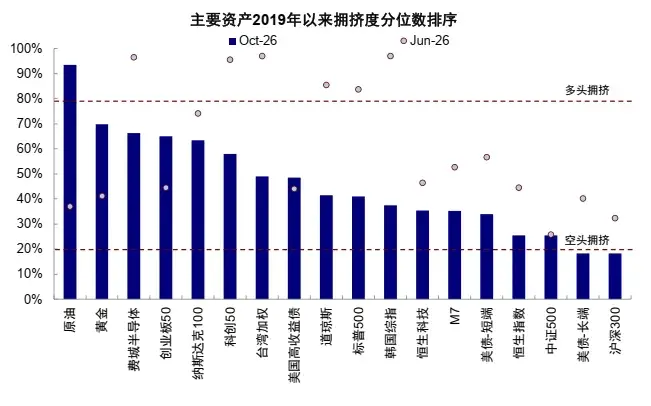
But now retail investors see: "The price of Bitcoin is falling, while AI-related assets are rising, so I will shift my funds over." Therefore, the market has begun to experience selling pressure on Bitcoin and Bitcoin concept stocks. Investors first shifted funds to gold, then to AI. Now, they are starting to withdraw funds from gold and further increase their positions in AI.
I believe that the IPO of SpaceX has sent a good warning to the world: not all assets will continue to rise forever. Companies that go public after reaching a very mature stage often have a large number of early investors hoping to exit. These investors have held company shares for eight to ten years and naturally want to realize profits and then move on to the next investment opportunity rather than continue holding long-term.
Therefore, I believe the IPO market will undergo significant changes in the future. Publicly listed companies will increasingly be those that are already quite mature, while the number of young companies will noticeably decrease. Meanwhile, competition in the AI industry will become increasingly fierce, both at the model level and the computing power level.
However, there is one market that will remain strongly protected for quite some time, which is electricity, land, and infrastructure capacity. If we summarize the main limiting factors into three aspects, they are capital, capacity, and computing power. Data centers represent capacity.
If you have electricity that is immediately available, can build a data center on your own site, and can put it into operation before the end of 2027 or 2028, then you will be in a very advantageous position.
Is AI a Bubble? How Long Can the Electricity Bottleneck Support the Industry?
Fred Thiel: I believe that certain segments of the market may indeed have bubbles, such as storage chips. Most viewers on the show may be too young to have experienced the personal computer boom of the late 1980s to early 1990s. At that time, as PCs began to become widespread, memory became a very important issue.
Suddenly, all personal computers needed memory. Whenever Intel's processors upgraded from 286 to 386, 486, and then to Pentium, the memory capacity required by these computers would further increase. Therefore, the memory industry has always experienced very obvious cycles of boom and bust. You can look back at Micron's stock price trends since the 1980s and see it constantly rising, falling, then rising again, and falling again.
The reason is that when market demand exceeds capacity, memory manufacturers will enjoy high prices and high profits for as long as possible. Eventually, some company will build a new factory, capacity will begin to increase, supply will gradually catch up with demand, and then exceed demand. At this point, the market will bottom out and crash.
After that, a new wave of technology will emerge, and demand will begin to grow again. But manufacturers will be very restrained, unwilling to rapidly expand production because they do not want to create another oversupply and industry crash. However, as demand continues to grow, they will ultimately have to build more capacity.
What we see today is that South Korean memory chip manufacturers are making huge profits while Chinese companies are building memory chip factories at the fastest pace. This basically means that within the next 18 to 24 months, the storage chip market is likely to enter a downward cycle again.
The same situation has occurred in the storage industry with hard drives and flash memory. These cycles will continue to repeat. But currently, there is another limiting factor, which is electricity. The electricity constraint limits how large the entire market can expand. Assuming that infrastructure capacity could be supplied infinitely, the AI market could grow faster, and price wars would occur earlier and more fiercely.
It is precisely because capacity is limited that the market is subject to an artificial constraint, allowing costs and profits to remain high for a period of time. I believe the electricity bottleneck may take at least four to five years to truly alleviate.
What Is the Real Difficulty in Building an AI Data Center?
Fred Thiel: It depends on where you start. If you are originally a Bitcoin mining company, then you already have land and electricity, and the electricity is already connected. This saves you two to three years right off the bat. Next comes the permitting process. But first, you need to find tenants. Because without knowing how the project will be constructed, you cannot apply for permits, and the specific construction plan is highly dependent on tenant needs.
Unless you are prepared to adopt a bare-metal cloud model like IREN, which means building the data center, deploying GPUs, and then renting out GPU computing power to other clients. But if you adopt a more traditional leasing model with large-scale cloud service providers, you must first determine the tenants.
The entire leasing process may take six months, during which site inspections, detailed designs, and other work must be completed. After completing this work, you can submit the permit application. Depending on the region where the project is located, permit approval may take 90 days or as long as two years. Then comes the construction phase, which averages about 18 months. The specific time may be longer or shorter, depending on the project scale and location.
Labor shortages are also a challenge. Meanwhile, you must order equipment in a timely manner to ensure that transformers, distribution units, racks, and other facilities arrive on time. This also explains why we decided to enter the AI market through a partner like Starwood rather than pushing forward on our own. If we relied entirely on ourselves, we would need to hire people who know how to persuade large-scale cloud service providers to contract with you; we would also need to hire people who understand how to design and build data centers; and we would need a team capable of managing contracting processes, EPC engineering, and other engineering work.
Once the data center is built and operational, you must also know how to complete the stabilization commissioning of the facility to ensure that large-scale cloud service providers are willing to accept and confirm that the project has been delivered. Moreover, all this work must be completed within very tight deadlines because if you cannot deliver on time, you may face very severe penalties for breach of contract.
We deliberately delayed entering this market because we believed we did not have a clear advantage in all the areas mentioned above. We wanted to find a partner who could leverage their relationships with data center owners, operators, and large-scale cloud service providers, while also utilizing their own EPC, construction, and design capabilities to quickly build these projects and bring in strong credit support for the projects. Starwood perfectly meets our requirements for such a partner.
Natalie Brunell: I was just about to ask if you regret not transitioning earlier. After all, we see some publicly listed mining companies may have started shifting to AI years ago. So, for you, not transitioning earlier is not a regret?
Fred Thiel: It is always easy to look back at things. I could certainly say, "If we had done this a year earlier, what impact might it have had on the stock price?" So, there is no such thing as a perfect timing. But I firmly believe that luck can be created because what we call luck is essentially the meeting of opportunity and preparation. And at that time, we were not prepared.
I have publicly stated multiple times that if I had gone directly to Google back then and said, "I want you to be the tenant for the data center we are preparing to build," they would probably have kicked me out of the office. You are just a Bitcoin mining company and have no idea how to build a Tier IV data center, right?
So, we had to work with partners who truly understood how to accomplish this. Starwood is excellent; they have built about 7 GW of data centers for companies like Google, Amazon, and Microsoft. They know what they are doing, and the collaboration is going very smoothly.
If you observe the financial arrangements of the partnership, you will also find that this model is very advantageous for us because it allows us to participate in projects in a very light asset manner. This means we do not need to issue a large amount of stock to fund these projects, thus avoiding excessive dilution of existing shareholders' equity.
Meanwhile, there is a lot of debt financing available in the market. Even with an 80% loan-to-value ratio, this model is still very light capital for us. Therefore, from a capital efficiency perspective, this approach is very efficient and allows us to develop larger-scale capacity. So, we will continue to focus on what we do best: acquiring land and electricity assets and then transforming those assets into uses that can create maximum value.
Why Did MARA Sell About 20,000 Bitcoins?
Natalie Brunell: What prompted you to make this decision initially? We often see that Bitcoin mining companies sell the Bitcoin they mine immediately. The current operating environment is also difficult, as many listed and unlisted mining companies are actually losing money from mining due to the impact of Bitcoin prices.
Fred Thiel: We have always made it clear that we are not a digital asset treasury company. For us, holding Bitcoin has always been just a treasury management strategy, a way to hold cash. In fact, our first purchase of Bitcoin was in January 2021. At that time, we directly entered the market to buy Bitcoin. The company had $150 million in cash on its balance sheet, but since there were no more mining machine capacities available for purchase in the market, we could not use that money to procure mining machines.
Therefore, we decided to allocate funds to Bitcoin as a form of cash storage because we anticipated that the price of Bitcoin would rise. Looking back, in January 2021, the price of Bitcoin was about $15,000, so this was clearly a very correct decision. Looking at the third quarter of last year, I remember stating in the company's public financial report that the market price was already somewhat overheated, and indeed it was.
At that time, we held about 55,000 Bitcoins. Calculating at a price of over $100,000 per Bitcoin, the value of Bitcoin on the company's balance sheet was about $5 billion to $6 billion. So, holding Bitcoin was indeed a very successful strategy.
However, as the price of Bitcoin fell, we also bore about $3 billion in convertible debt. About $1 billion of that may mature in 2027 due to investors exercising their put options. Our consistent practice has been that when the trading price of convertible bonds is below par, it is usually reasonable to repurchase those bonds.
Therefore, we sold about 20,000 Bitcoins to repay about $1 billion of convertible debt. Considering that these convertible bonds were trading at a discount at that time, this transaction was equivalent to us selling Bitcoin at about $80,000 each, making it very economically reasonable. Of course, this did send a signal to the market. But not long after, Michael Saylor took exactly the same approach.
Does Selling Bitcoin Mean MARA No Longer Believes in Bitcoin?
Fred Thiel: Because the market has indeed changed, and the speed of change is very fast. Frankly, I remember during interviews before and after the election, Bitcoin was continuously reaching historical highs, and everyone was preparing for Bitcoin to rise to $200,000 or even $300,000. But then, the situation suddenly began to change. A large number of Bitcoin treasury companies emerged in the market, and now it has been a year and a half, almost two years since then.
Some companies began to sell Bitcoin, and their original strategies were changing, while mining companies were shifting to AI. Even steadfast Bitcoin supporters sitting at home sometimes feel confused by this information.
Fred Thiel: Yes. Gold as an asset class has existed for a long time. There are periods when gold is very popular; there are also periods when gold is not favored by the market.
Recently, we have also seen gold experiencing its own shining moment.
Natalie Brunell: The two worst-performing asset classes this year are gold and Bitcoin.
Why Hasn't Bitcoin Become a Widely Used Payment Currency?
Fred Thiel: So, I think this issue must be viewed over a longer time span. But Bitcoin as an asset does face a fundamental challenge: it does not generate income. Therefore, as a store of value, the price of Bitcoin entirely depends on whether there are more people wanting to hold it than those wanting to sell it. It is essentially an asset determined by supply and demand.
When Satoshi Nakamoto originally wrote the white paper, Bitcoin was designed as a currency. But the more pressing question for discussion now is the overall security budget of the Bitcoin network, especially as so many mining companies begin to shift to other businesses. According to the original design, as block rewards continue to halve, transaction fees should gradually become an important source of compensation for miners. But in reality, this has not happened.
Natalie Brunell: Right, transaction fees are now probably at historical lows, aren't they?
Fred Thiel: Yes. The transaction fees for block space are very low now; I remember they might be around 5 basis points. Ultimately, the mining rewards themselves are also very low. The current block subsidy has significantly decreased compared to the past. The good side is that the new Bitcoins produced and entering the market have decreased. But at the same time, market demand for Bitcoin is also declining.
Looking back from the time of the U.S. election until 2025, the market first saw Bitcoin ETFs, followed by the emergence of digital asset treasury companies. All these factors created new demand, while the supply of Bitcoin did not change.
Therefore, the price of Bitcoin continued to rise, even exceeding the level that natural demand growth could support. This is also why we stated in the third quarter of last year that the price of Bitcoin was somewhat overheated and needed to fall back to a level closer to the statistical mean. According to this judgment, a more reasonable price for Bitcoin now might be around $90,000.
After experiencing such a huge rise, the price typically also needs to undergo a complete decline to return to the vicinity of the long-term mean before it can start rising again. So, I believe this process will take some time. However, during conflicts or turmoil, Bitcoin will still maintain its appeal. For those looking to quickly transfer assets, it holds very high value.
As for the future commercial use of cryptocurrencies by technologies like AI, I believe that ultimately, most transactions will be completed using stablecoins. When two parties are trading, both want to clearly know the value of the medium of exchange.
If you exchange eggs for milk, the two parties may have different valuations of the two goods. But if you exchange dollars for goods priced in dollars, both parties know how much it is worth. Of course, the dollar will also be affected by factors like inflation. But if you need to complete thousands of transactions per second, even a small fluctuation in Bitcoin's price can immediately change the actual value you receive. Especially when the profit from a single transaction is getting lower and the transaction frequency is increasing, this fluctuation becomes a very serious issue. Therefore, I regret to say that the window for Bitcoin to develop as a medium of exchange has likely passed.
But it remains an excellent store of value. If you want to place your assets outside centralized control or wish to hold assets in a form that can ultimately be easily transferred, then Bitcoin still holds value. As long as central authorities do not completely cut off the channels for converting Bitcoin into cash, Bitcoin will continue to be an asset held by specific groups, providing maximum flexibility for their wallets and wealth.
MARA Currently Does Not Plan to Continue Accumulating Bitcoin.
Fred Thiel: Yes, MARA currently has no such plans. As you just mentioned, most mining companies are now losing money from mining, and continuing to accumulate Bitcoin does not make sense. Because this means we would have to raise cash needed to maintain operations from elsewhere, and we do not want to do that by diluting shareholder equity through stock issuance.
Natalie Brunell: Compared to five years ago, do you now have less confidence in Bitcoin?
Fred Thiel: No, I have not diminished my confidence in Bitcoin; I have just placed it in a different context. I have a fiduciary duty to shareholders to create the best return possible on their invested capital. We control an asset, which is land and electricity resources. I can transform these resources into AI infrastructure, yielding returns far exceeding those from Bitcoin mining. Therefore, I must focus the company on realizing this opportunity.
We have many stakeholders, including employees, shareholders, industry partners, etc., and we need to do our utmost to create value for them. I believe that in the long run—I remember discussing this at another Mining Disrupt conference—Bitcoin mining will ultimately utilize surplus electricity that is wasted in everyday economic activities.
At that time, mining will no longer be an additional cost but will occur naturally. There will be a large number of micro-mining activities around the world. Large industrial mining companies will be viewed more as a tool for balancing electricity loads or as adjustable electricity absorption endpoints. Bitcoin mining, in addition to receiving Bitcoin rewards, also has practical value at the electricity system level.
For example, when you are stabilizing a data center and gradually connecting electricity, you usually need to use load banks to consume that electricity. But you can completely replace load banks with Bitcoin mining machines.
The costs of both methods are not different. But from the perspective of Bitcoin mining, this is equivalent to mining at zero marginal cost. Therefore, Bitcoin mining will ultimately migrate naturally to these scenarios that are most suitable for it. These applications will ensure that the network always retains sufficient computing power for Bitcoin to continue operating and circulating safely. The only remaining question is whether the Bitcoin community is still willing to continue maintaining the code and avoid the entire technical system becoming overly rigid.
Can Bitcoin Still Grow into a Multi-Trillion Dollar Asset?
Natalie Brunell: It sounds like the future you are describing is that Bitcoin will still exist as a relatively small asset class, rather than reaching the scale of $20 trillion, $50 trillion, or even $100 trillion as predicted by some in the community.
Fred Thiel: I believe that Bitcoin growing into an asset class with a scale of $2 trillion is already a significant achievement. It has entered the top ten assets globally.
Such things take time. The Bitcoin ETF market achieved growth in just one year that took the gold ETF market two to three decades to realize. But to maintain stable long-term growth, it must be built on a solid foundation. I believe Bitcoin is gradually forming such a foundation now.
However, my generation is still largely constrained by the traditional financial system. Looking at my children, they were exposed to and invested in Bitcoin at a young age. But as they grow older and start families, they also begin to consider index funds and traditional investment tools, gradually allocating across multiple asset classes.
By the time the next generation, my grandchildren, grow up, Bitcoin may just be one of many assets they invest in. They will not view it with the same intense enthusiasm as the generation that originally built Bitcoin.
Natalie Brunell: Why have you changed your positioning on Bitcoin? What has happened in the past five years that made you feel things have deviated from the original direction? Why hasn't Bitcoin become a broader store of value tool, nor replaced some asset classes and platforms in the traditional financial system?
Fred Thiel: The monetary system is controlled by large banks and governments. If governments around the world treated Bitcoin as a national reserve asset, if banks and regulators allowed banks to easily hold Bitcoin on their balance sheets and permitted banks to use Bitcoin for interbank fund settlements, the situation could be completely different.
Bitcoin is actually very suitable as a settlement currency because interbank settlements do not require millions of transactions to be completed every minute; they usually just involve processing a small number of large transactions at a time. For scenarios like international balance of payments settlements, Bitcoin is also a very excellent solution. But those traditional institutions that control currency, the financial system, and the rules have not allowed Bitcoin to truly enter this system.
Natalie Brunell: Do you think this situation will not happen in the future? Isn't it a gradually evolving process?
For example, the U.S. may establish Bitcoin reserves in the future. There are even views that the U.S. government has already started mining Bitcoin, and we have seen some signs on-chain that may be related to this.
Fred Thiel: I believe some government departments are indeed conducting related experiments. If they have surplus electricity, they will explore what can be done with that electricity. But the question is how to truly translate experiments and innovations into large-scale practical applications.
Ultimately, Bitcoin must have sustained demand. Only when there are more people wanting to buy Bitcoin than those wanting to sell it will the price rise. This is a self-reinforcing virtuous cycle: when the price of Bitcoin rises, more people will want to hold it; as the price continues to rise, people will see it as a better store of value.
Especially when fiat currencies are continuously devalued due to inflation, Bitcoin may still maintain its value. So, I see Bitcoin as being similar to gold. Gold has theoretically always been viewed as a perfect hedge against inflation, but it also has its own cycles and seasons.
Currently, Bitcoin may be in its autumn and winter stages. But spring will eventually come again, just as it has in the past.
Looking Ahead Five Years, What Is MARA's Development Roadmap?
Fred Thiel: I believe we will continue to mine Bitcoin to some extent. In two years, Bitcoin will undergo its next halving; in four years, there will be another halving. When the subsidy for each block eventually drops to less than one Bitcoin, if electricity can still be used for AI, then the cost of mining Bitcoin will become quite high.
I still believe that Bitcoin mining will gradually become part of certain computing devices in the future, and it may also be integrated into devices like air conditioners or incorporated into many products that can utilize surplus electricity. For example, solar panels. I expect that in the coming years, there will be more and more microgrids because consumers want to control their energy or at least be able to directly use the electricity they produce.
Those of us who once lived on the West Coast of the U.S. are quite familiar with solar energy. Although utility companies have made a mess of designing solar energy pricing and billing mechanisms, theoretically, the way to solve grid balancing issues is to install solar panels on a large number of buildings and deploy batteries in those buildings.
When the grid needs electricity, it can call upon the energy stored in those batteries, thus creating a more balanced grid. But when the batteries are full and the solar panels continue to generate electricity, what should be done with that surplus electricity? You can completely use it to mine Bitcoin.
Two years ago, we made a small investment in a company. Its business model was to install solar panels on residential rooftops while also deploying Bitcoin mining machines. When the batteries did not need charging and the house was not consuming that electricity, the system would automatically mine Bitcoin with the surplus electricity. This was a very capital-intensive business because the company had to bear all the upfront costs of solar panels. Ultimately, that company went bankrupt, but its concept was very good.
I believe that in the future, someone will integrate very simple circuits from Bitcoin mining ASICs into various devices. ASICs themselves are not complex; the truly complex part is power management. But if you are not doing industrial-scale mining, power management is not that important to you, then many opportunities for mining Bitcoin using surplus energy will emerge in the future. At that point, you may not even need to worry about mining costs because that electricity is essentially free.
Natalie Brunell: Indeed. It is hard to imagine that in just a few years, the market narrative has shifted from "Bitcoin consumes too much energy and will eventually boil the oceans" to now where such narratives have almost completely disappeared. Now, similar narratives seem to be shifting towards AI. But at least from my perspective, the public does not seem to worry about AI's energy consumption overheating the entire planet as they did with Bitcoin in the past.
Perhaps it is just my personal feeling. People were very fearful of Bitcoin's energy consumption in the past, but when it comes to AI, perhaps because everyone uses it every day, they choose to turn a blind eye.
Fred Thiel: Going back 25 years, when people talked about the internet, they would say, "Oh my God, the internet is only filled with crime and pornography; it's all bad stuff, and the internet will bring us no benefits." Until later, people found that they could not live without the internet.
AI will go through the same process. I believe Bitcoin will also experience similar changes in its own way. It will ultimately become a common presence: you will hold it as one of many investment assets and use it to store funds. If the dollar really starts to collapse in the future, I can guarantee that the market demand for Bitcoin will surge significantly.
Natalie Brunell: Do you think there is some kind of upper limit to Bitcoin's price? Is there a price level that would make you think, "I don't believe it can rise any higher"?
Fred Thiel: It is important to realize that price depends on both sides of the value equation. Suppose the dollar is severely affected by inflation, losing 20% of its value each year; then even if Bitcoin's price in dollars rises by 20%, your actual purchasing power remains unchanged.
So, the real question is what changes are happening to the value of global currencies and other assets. In times of high inflation, hard assets tend to become very valuable, such as art, land, and real estate. These tangible assets are often difficult to replicate or replace. We have seen such cycles repeatedly.
Gold and Bitcoin may also belong to this category. In times of high inflation, Bitcoin may become a refuge for funds seeking safety. Looking at your digital-native generation and my children's generation, for them, physical gold may feel like, "How do I even deal with this?"
Whether it is users on Revolut, Reddit, or those young people who have been exposed to stock trading from a young age due to Meme stocks, they probably would not choose complex gold certificate trading or engage with financial instruments that do not actually deliver gold. But they are very fond of the concept of Bitcoin. For this group, the greater the volatility of Bitcoin, the more exciting it may become.
What Is the Real Threat of Quantum Computing to Bitcoin?
Natalie Brunell: What are your thoughts on the BIP-110 proposal and this governance debate that seems to be tearing the community apart? Currently, it seems that less than 1% of Bitcoin miners support this proposal. What is your opinion on this?
Fred Thiel: The MARA Foundation has its own views on this. I believe this debate is not particularly constructive for the entire industry. At the same time, the threat of quantum computing to Bitcoin wallets is indeed real. The timeframe referred to here is roughly the next five to ten years.
This is not a problem facing the Bitcoin ledger itself, but rather a problem facing wallets, and it only involves a portion of wallets. Therefore, I believe there are better ways to address quantum risks. One possible solution is to set a certain time delay for transactions for specific types of wallets.
But all these measures require the entire community to suddenly play some sort of central authority role and take collective action. This conflicts with the philosophy of the Bitcoin community, which emphasizes decentralization. My personal view is—this does not represent MARA, just Fred himself—if your Bitcoin is stored in early traditional wallets, then create a new wallet and transfer your Bitcoin over.
Do not leave Bitcoin in a wallet or address that has been repeatedly used for transactions for a long time. Always use a new address, so your public key is not exposed for a long time, and you do not truly face this issue. If you have already forgotten the private key to your wallet, you cannot access the Bitcoin in it anyway. Even if someone later steals it, you can only say it was bad luck.
But if one day, Satoshi Nakamoto's Bitcoin suddenly starts moving, I can guarantee people will say, "These wallets have been hacked," or "Satoshi is actually still alive." In contrast, what I am more worried about is what will happen to the market if Satoshi's Bitcoin starts moving.
Natalie Brunell: If those Bitcoins start moving, doesn't that mean a quantum computing attack has occurred?
Fred Thiel: Not necessarily. It could just be that Satoshi decided to transfer their Bitcoin.
Natalie Brunell: I don't know. I do think that someone might have Satoshi's private key. Maybe Satoshi is still alive.
Fred Thiel: Yes. Looking back at the very early stages of Bitcoin's development, many unknown things happened. I have communicated with many people who are making related documentaries. I believe that in the coming years, different producers will release some very interesting works telling the stories of what happened in Bitcoin's early days.
If you really delve into the emails from back then and the things that happened behind the scenes, I personally believe that Satoshi has lost control of their wallet. In fact, it is possible that no one can control those wallets because the private keys were split and stored, and then some issues occurred later.
Natalie Brunell: That is a possibility. Then we ultimately need to decide how to handle those Bitcoins, right?
Fred Thiel: This is somewhat like the issue in the Craig Wright-related litigation, where the key is whether you can prove you actually control a certain wallet. Of course, there are indeed people who do not want the outside world to know they hold a large amount of Bitcoin.
When it comes to quantum computing, I always tell people one thing. In a previous professional experience, I served as the chairman of one of the largest cryptographic technology companies in Europe. This company produced hardware security modules, or HSMs. NATO, credit card companies, banks, and other institutions with very high security requirements use these devices to store cryptographic keys.
At that time, we also collaborated with the National Institute of Standards and Technology, or NIST, to participate in evaluating proposals for quantum-resistant algorithms to find alternatives to RSA. You can think about it; almost all the cryptographic systems used for bank accounts, email, and website SSL certificates are based on asymmetric encryption technology.
This means that one end requires a lot of computation, while the other end's computational burden is relatively light, essentially forming an asymmetric architecture composed of public and private keys. Currently, the assets and information hidden behind RSA keys are worth far more than the assets in early Bitcoin wallets. Hackers may have already obtained some of that encrypted data but are currently unable to decrypt it.
For example, you can monitor a large amount of network traffic from internet service providers and save logs. This data is encrypted because it is transmitted via SSL, but if you have a sufficiently powerful quantum computer, you may be able to decrypt it. At that point, you can directly obtain usernames and passwords without needing to brute-force them.
You can obtain usernames and passwords for wallet accounts, bank accounts, brokerage accounts, and almost all other accounts. Theoretically, you could even quietly transfer $0.1 from every account at Citibank. It may take a long time for anyone to notice this.
Through this quiet, decentralized method, the amount of money you can steal is far greater. In contrast, as soon as someone transfers one Bitcoin from a famous early Bitcoin wallet, the whole world will immediately know.
And who is most likely to be the first to gain access to the most advanced quantum computing capabilities? The answer is nations. What will nations use it for? Suppose North Korea has a quantum computer; it will first go after stealing funds. Bitcoin will be the last place they attack. They may later exchange the stolen assets for Bitcoin to transfer funds, but clearly, there are many better targets and methods.
I clearly remember sitting down with people from Microsoft and Google to discuss, "What public signals should we observe to determine that quantum computing is close enough that people really start to worry?" The "people" referred to here are mainly the chief security officers of banks.
The answer they gave was basically the same: when Microsoft starts replacing security certificates and Google also begins upgrading the security certificates used for websites and emails to quantum-resistant standards, you will know that they indeed believe the quantum threat is imminent.
Natalie Brunell: Very interesting. I have even heard some people say they would destroy their Bitcoin upon their death to increase Bitcoin's scarcity. But I don't quite understand this practice. Because if wallets need to be upgraded to quantum-resistant wallets in the future, then you may actually just be leaving those private keys to hackers, right?
Fred Thiel: That may ultimately be the case. However, if your Bitcoin private keys are stored in some hardware device and you always use new wallet addresses every time you transfer assets, then overall, it is still quite secure.
Natalie Brunell: But if you have already passed away, and then quantum-resistant wallets emerge, you cannot complete the upgrade. You thought you had destroyed those Bitcoins, but they may still be stolen by others, right?
Fred Thiel: Have you come across those net worth digits with a "B," meaning Bitcoin investors who have tens of billions of dollars in wealth and were not this wealthy before holding Bitcoin? They are almost all seriously engaged in estate planning. Interestingly, during the period when Bitcoin prices rose last year, there were trading days where Bitcoin worth $1 billion was liquidated.
What most people do not understand is that you can convert Bitcoin into ETFs like IBIT without necessarily treating it as a taxable sale. Why do it this way? First, it will be treated as an ETF. You can use it as collateral for loans, and you can include it in family trusts and estate planning.
So, we see many very wealthy Bitcoin holders suddenly starting to engage in estate planning. Because the question is, if you pass away, how will your partner, estate executor, or other relevant parties operate your wallet, manage private keys, and deal with various complex issues?
Therefore, bringing some assets into the traditional financial system is still supporting Bitcoin as an asset because the underlying holdings are still Bitcoin.
Natalie Brunell: Frankly, your overall judgment on Bitcoin just now sounds somewhat pessimistic.
Fred Thiel: No, I want to reiterate that Bitcoin is undoubtedly a core component of my personal assets, and I have always believed in Bitcoin. Like all assets, it will experience highs and lows. I am also very proud to have played a certain role in Bitcoin's gradual maturation process.
I believe Bitcoin will continue to grow. It will transition from an asset primarily held by enthusiastic crowds to an asset that both rational investors and steadfast supporters can participate in together. I believe Bitcoin will exist in the long term and will continue to maintain its value adjusted for inflation, finding its balance over the long term.
As for the so-called "Bitcoin flying to the moon," unless some major disaster occurs in the world that drives a massive influx of funds, I believe Bitcoin is more likely to continue being part of people's investment portfolios as an asset that can hedge against inflation and maintain purchasing power. By the way, that in itself is a good thing.
 Risk warning Risk warning