Morning News | Roundhill Memory ETF has included Changxin Technology in its holdings; COLDCARD suffers a third wave of attacks with losses exceeding 88 million dollars

 August 2nd Market Important Events Overview
Compiled by: ChainCatcher
Important News:
- Data: Galaxy identifies the third wave of COLDCARD attacks, estimated losses exceed $88 million
- Chinese VCs compete to raise funds after three years of winter, at least 60 dollar funds plan to raise $35 billion
- Zhao Changpeng: Software will always have vulnerabilities, the key is how the team behind it handles the issues
- Roundhill Memory ETF has included CXMT in its holdings, with a weight of 2.52%
- Leopold Aschenbrenner withdraws $3.5 billion Anthropic equity sale, opts to sell public stocks to deleverage and preserve private investments
- Michael Saylor releases Bitcoin Tracker information again, may disclose position change data next week
What important events have occurred in the past 24 hours?
Data: Galaxy identifies the third wave of COLDCARD attacks, estimated losses exceed $88 million
According to ChainCatcher, monitored by Bitcoin News, Galaxy has identified the third wave of COLDCARD attacks, with estimated losses now exceeding $88 million.
If users still hold funds in any model of ColdCard after 2020, it is recommended to transfer BTC immediately.
According to ChainCatcher, Michael Saylor, founder and executive chairman of Bitcoin treasury company Strategy, has released information related to Bitcoin Tracker again, captioned "Bitcoin Drive engaged."
Based on previous patterns, Strategy typically discloses Bitcoin position change information the day after relevant news is released.
According to ChainCatcher, U.S. ETF management firm Roundhill has made significant adjustments to its DRAM-themed fund this week, in addition to previously reported inclusion of CXMT (Changxin Technology) with a weight of 2.52%, it has also reduced its holdings in Samsung Electronics.
From Monday to Wednesday, the Roundhill DRAM themed fund reduced its holdings by approximately 1 million shares of Samsung Electronics daily, totaling 3 million shares over three days, worth about $432 million.
The top three holdings of the Roundhill DRAM themed fund are currently Samsung Electronics, Micron Technology, and SK Hynix, with weights of 26.39%, 24.54%, and 22.77%, respectively. Other major holdings include Seagate Technology, Western Digital, SanDisk, Kioxia, Nanya Technology, and GigaDevice.
According to ChainCatcher, as reported by NATE, South Korea's financial regulatory authorities are advancing amendments to the Capital Markets Act, planning to grant regulators "emergency intervention rights" to directly take market stabilization measures during periods of severe stock market fluctuations.
Currently, the Financial Services Commission (FSC) has initiated relevant legal amendments with the Financial Supervisory Service (FSS), focusing on single stock leveraged ETF products that are believed to amplify volatility during recent stock market crashes, intending to introduce regulatory measures including adjusting leverage multiples and setting investment caps.
In cases of abnormal market fluctuations, the aim is to reduce risks from concentrated trading. Additionally, South Korea's financial regulators are considering setting personal investment limits for single stock leveraged ETFs, standardizing investment caps at around 20% to prevent excessive capital concentration, and introducing a practical trading simulation system to enhance investors' understanding of the risks associated with leveraged products.
The South Korean regulatory authorities stated that the increase in the basic margin is primarily to raise the investment threshold, while the investment limit acts as a "cap" on capital inflows, and both will form a complementary risk control system.
Previously, South Korea raised the minimum margin requirement for investors in single stock leveraged ETFs from 10 million won to 30 million won starting July 31.
Data shows that on the first day of the new regulations, 16 related leveraged ETFs had a trading volume of approximately 30 trillion won, only about a quarter of the previous trading day's 12.4 trillion won, and down about 80% from the July 29 level of 15 trillion won.
According to ChainCatcher, as reported by The Wall Street Journal, the U.S. market has frequently seen bubbles around specific industries and themes in recent years, but these localized bubbles typically do not drag down the overall stock market.
The current storage chip bubble rapidly expanded and burst within about four months, accompanied by severe volatility and a hedge fund falling into crisis, yet the S&P 500 index is only 1.6% away from its historical peak, and the equal-weighted S&P 500 index set a new high last week. The recent pullback in AI-related stocks has also been almost completely offset by gains in other sectors.
Over the past decade, the U.S. market has experienced bubbles in 3D printing, Chinese concept stocks, low volatility products, SPACs, clean energy, cannabis, space, crypto assets, and AI concept stocks. Strategy has fallen 83% from its peak, Trump's media stock has dropped 89%, and SK Hynix fell 55% before rebounding last Friday.
Loose funds, speculative demand, and expectations for new technologies have driven these bubbles, while margin debt and leveraged ETFs have further amplified volatility in recent years.
These localized bubbles have not caused severe shocks to the economy, primarily because most were not financed by large amounts of debt. After the bubble burst, losses were mainly borne by investors, and the banking system was not significantly impacted.
Macro strategist Russell Napier stated that the banking system remains healthy, thus the market always has more credit available to create the next round of bubbles.
However, AI investments are pushing the market into a more dangerous area. Data center spending is expected to reach $7 trillion over the next four years, and if the productivity gains from AI are insufficient to support such a scale of investment, capital misallocation could severely harm the economy.
As AI construction increasingly relies on debt financing, if broader AI investments ultimately prove to be a bubble, their burst could impact the financial system, making it difficult for the overall market to remain unaffected.
According to ChainCatcher, as reported by The Wall Street Journal, during a period of tight funding, Leopold Aschenbrenner had agreed to sell approximately $3.5 billion worth of Anthropic equity. The buyer was an investor group led by Greenoaks and Sequoia Capital.
The deal was finalized late Wednesday night but was withdrawn the next morning. The fund then opted to sell most of its public stocks to repay loans.
Leopold ultimately retained equity in Anthropic and other private companies. In a letter to investors, he stated that the fund chose to sacrifice its public stock positions to eliminate leverage and preserve private investments.
According to ChainCatcher, Galaxy Research Director Alex Thorn tweeted that among a Coldcard attack victim holding nearly 30 BTC, 17 BTC were split and converted to ETH via THORChain, then deposited into the offshore betting platform Duel.com.
Tracking shows that this portion of funds corresponds to approximately 229.72 ETH (worth about $445,000). The victim and the research team have emailed all known addresses of Duel.com, providing all transaction and deposit information and requesting to freeze the funds, but the platform responded that the victim should contact the police, despite the platform's anti-money laundering policy claiming it conducts KYC and complies with relevant laws.
Thorn stated that this response is unacceptable, and most of the Western regions have passed midnight, meaning police reports would not be processed until at least Monday; he believes that if the platform refuses to freeze funds after being notified that they originated from an ongoing cyber attack, it constitutes complicity in theft.
As Duel.com's X account has been banned, Thorn instead tagged several individuals associated with the platform, urging them to push for the platform to take the correct actions, and stated that if the funds are not frozen, the platform will face significant legal action.
Trump Media Group officially launches Truth API, $100,000 per month for early access to Trump posts
According to ChainCatcher, as reported by CNBC, Trump Media Group has officially launched a paid data service called Truth API, providing customers with faster access to posts from Trump and other top accounts on the Truth Social platform. The service costs up to $100,000 per month, primarily targeting trading firms and corporations.
Trump Media's interim CEO Kevin McGurn stated that the Truth API aims to provide institutions with "direct, licensed, real-time data streams of the most market-impacting Truth posts." Trump's @realDonaldTrump account currently has 13 million followers, and some of his important policy decisions will be released first on Truth Social.
Before the service launch, U.S. Democratic Senators Adam Schiff and Elizabeth Warren had already written to the U.S. Securities and Exchange Commission, requesting an investigation into whether Trump Media violated the law.
The two stated that the service could constitute using the presidential office for personal gain and harm ordinary investors and market integrity.
Trump Media stated that Truth Social posts have already been able to influence the market, and the Truth API will drive the company's commercialization of its data assets through a high-margin, recurring revenue model.
Roundhill Memory ETF has included CXMT in its holdings, with a weight of 2.52%
According to ChainCatcher, the Roundhill Memory ETF (DRAM) has included CXMT (Changxin Technology) in its holdings, with a weight of 2.52%.
The DRAM ETF focuses on memory chip companies, and as of August 2, the top three holdings of this ETF are Samsung Electronics, Micron Technology, and SK Hynix, with weights of 26.39%, 24.54%, and 22.77%, respectively. Other major holdings include Seagate Technology, Western Digital, SanDisk, Kioxia, Nanya Technology, and GigaDevice.
Goldman Sachs expects the Federal Reserve to maintain interest rates unchanged in 2026
According to ChainCatcher, as reported by Coin Bureau, Goldman Sachs expects the Federal Reserve to maintain current interest rates throughout 2026.
It believes that the trend of slowing inflation will outweigh hawkish signals and market expectations for a rate hike in September.
According to ChainCatcher, Binance founder Zhao Changpeng reposted a user's experience of a Coldcard wallet attack on the X platform and stated that software will always have vulnerabilities, and the key is how the team behind it addresses the issues.
Zhao added that Trust Wallet also encountered a similar issue years ago, resulting in a loss of about $12 million due to the use of a non-truly random pseudorandom number generator, but the team ultimately bore the losses for users.
Previously, a suspected attack targeting Coldcard generated addresses has seen a third wave, with attackers transferring approximately 207.7294 BTC again. Data shows that the scale of observed Coldcard-related attacks has expanded to approximately 1,367.05 BTC, involving about 4,585 addresses, valued at approximately $88.6 million at current prices.
According to ChainCatcher, as reported by Bloomberg, the South Korean KOSPI index plummeted in July, causing significant losses for many retail investors. Despite the index rebounding a record 18% on Friday, retail investors still recorded a record net sell of KOSPI stocks that day; the index fell 22% in July, marking the largest monthly decline since the global financial crisis, with the total market capitalization of the South Korean stock market around $3.9 trillion.
Influenced by President Lee Jae-myung's push for stock market reforms and the listing of single stock leveraged ETFs, South Korean retail investors bought approximately 78 trillion won ($54.2 billion) worth of KOSPI stocks from May to June. After the market's sharp decline in July, many investors on social media pointed fingers at the government.
A 30-something investor in Seoul stated that he entered the Korean stock market for the first time in May and has now decided "not to invest in the South Korean stock market anymore"; another 40-something investor borrowed 50 million won against his home to trade stocks and criticized the government for launching leveraged ETFs, turning the market into a "casino."
In July, the KOSPI triggered trading halts four times, setting a monthly record. Samsung Electronics and SK Hynix together account for over 50% of the KOSPI weight, with their stock prices dropping 21% and 35% in July, respectively; however, since early 2025, Samsung Electronics has still risen over fourfold, and SK Hynix has nearly increased tenfold.
Analysts stated that this is a typical result of crowded trading combined with leverage, and deleveraging is difficult to complete in a few days; technology and semiconductor stocks may still experience severe volatility in the coming months, but this should not be seen as a complete collapse of AI investment logic.
The South Korean government has suspended the listing of new single stock leveraged ETFs since mid-July and promised to introduce more measures to stabilize the stock market and limit retail participation in high-risk products.
However, the head of the South Korean Shareholders Alliance stated that retail investors' anger and criticism towards the government have reached a peak, with many investors believing that the relevant measures have come too late.
According to ChainCatcher, as reported by the Financial Times, after experiencing three years of record low activity, Chinese venture capital firms are accelerating the fundraising of new funds, seeking to capitalize on renewed investor interest in the Chinese tech sector.
Data from Asante Capital shows that at least 60 new dollar funds are planning to raise a total of approximately $35 billion, of which about 40 are venture capital funds. HSG, IDG Capital, Matrix Partners China, and Ming Shi Capital are promoting new funds or preparing to start fundraising, while ZhenFund and Qiming Venture Partners have recently completed fundraising.
The successful IPOs of tech companies like Zhipu and MiniMax, along with advancements in projects like Moonlight and DeepSeek in the robotics field, have prompted investors to refocus on Chinese technology. Some investors view allocating to Chinese AI as a way to hedge bets on the U.S. market, as Chinese companies are highly competitive on costs and offer lower-priced model services.
However, market participants indicate that this does not mean that Chinese venture capital has returned to a prosperous period, but rather that dollar fundraising has seen a selective restart after three consecutive years of low levels.
Preqin data shows that in 2022, a total of 1,105 China-related funds raised $150 billion, while only 97 funds raised $13.6 billion in 2025.
Currently, some large U.S. investors remain cautious due to restrictions on sensitive technology investments, while European and Middle Eastern funds show stronger interest. Investors in the current "buyer's market" are vying for more co-investment rights and demanding that fund managers invest more of their own capital. Meanwhile, a large amount of capital is competing for limited high-confidence projects, particularly concentrated in the AI sector.
Meme Popularity Rankings
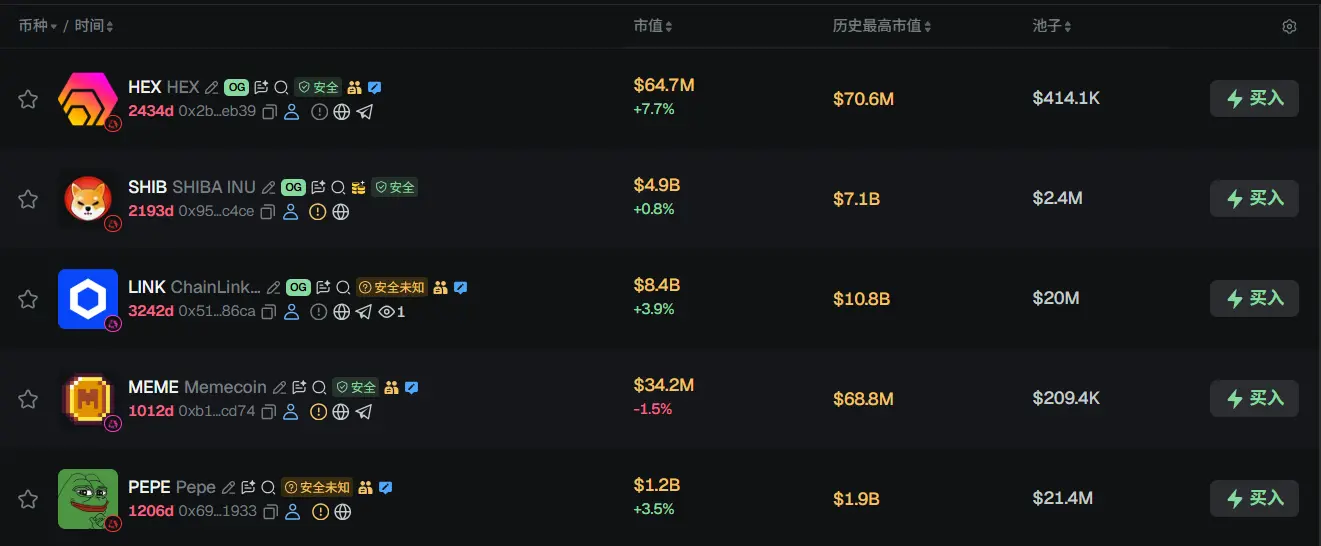
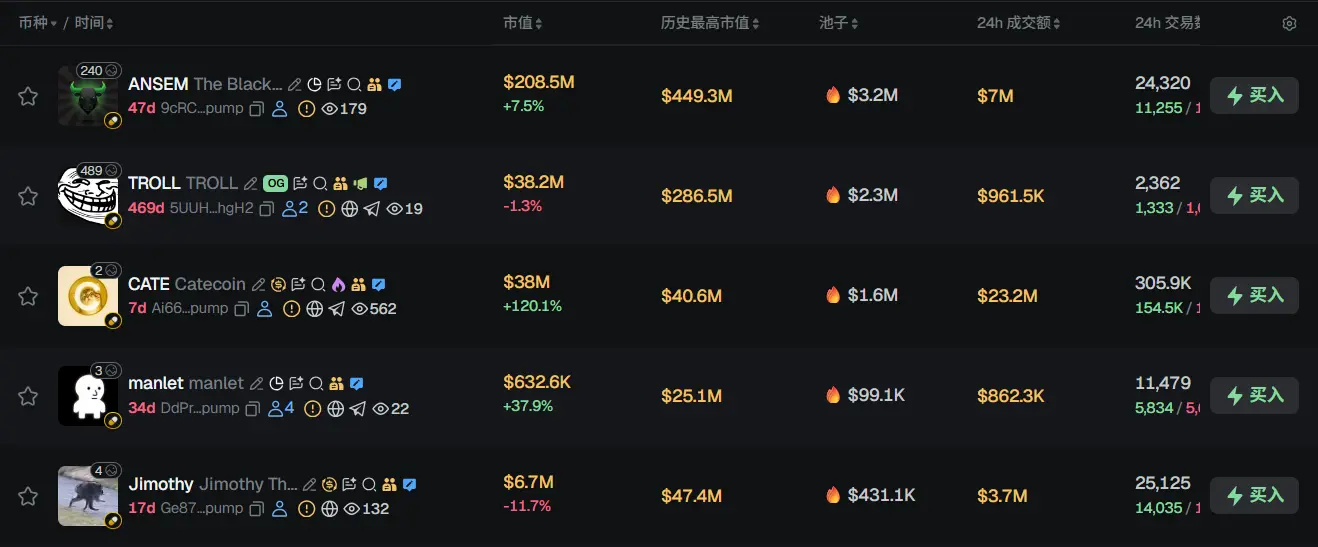
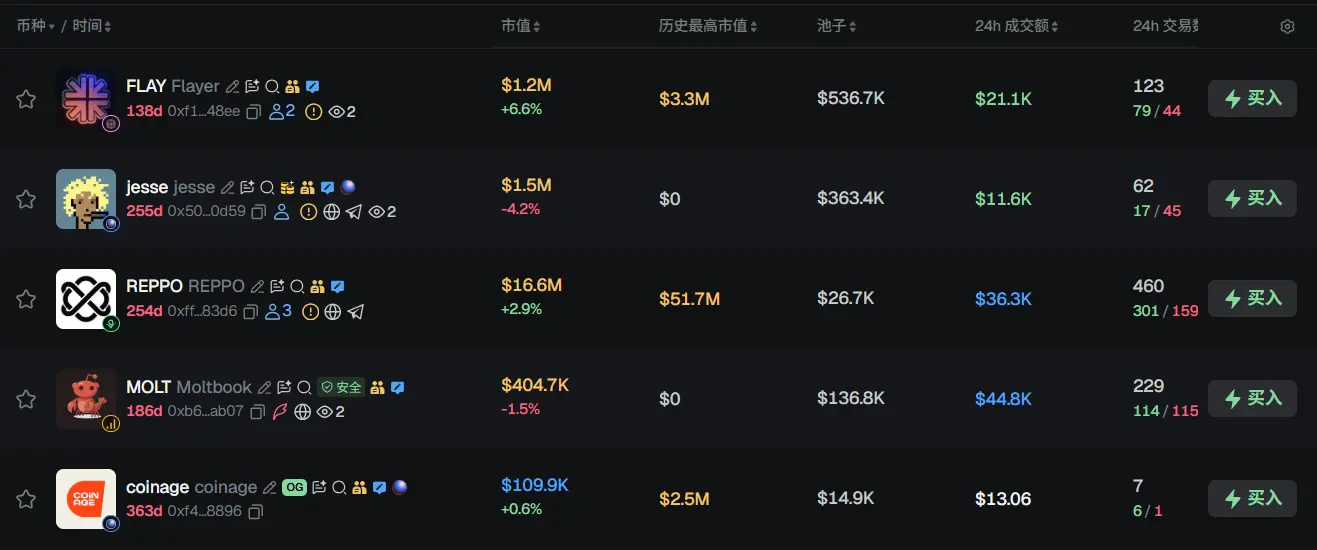
According to the meme token tracking and analysis platform GMGN market data, as of August 3, 09:00,
The top five popular ETH tokens in the past 24 hours are: HEX, SHIB, LINK, MEME, PEPE
The top five popular Solana tokens in the past 24 hours are: ANSEM, TROLL, CATE, manlet, Jimothy
The top five popular Base tokens in the past 24 hours are: FLAY, jesse, REPPO, MOLT, coinage
What are some noteworthy articles to read in the past 24 hours?
The funding situation in the South Korean stock market is showing a substantial turnaround. The net buying scale of foreign capital in a single day has set a historical record, and the selling pressure from domestic institutions has also significantly eased, combined with regulatory tightening on leveraged ETF access, multiple factors point to a marginal improvement in KOSPI market volatility.
On July 31, foreign capital net bought approximately 7.2 trillion won worth of KOSPI stocks in a single day, setting the highest single-day net buying record ever. According to the Wind Trading Desk, a report released by Citigroup research analyst Jin-Wook Kim indicates that this figure marks a fundamental reversal of the previously ongoing trend of large-scale net outflows of foreign capital over several months. Citigroup currently maintains a KOSPI target level of 10,000 points and believes that the headwinds from capital flows are further dissipating.
The scale of on-chain tokenized assets looks impressive, but it hides a fundamental contradiction—products that can circulate freely often lack real ownership, while products with real legal effect lack liquidity. This report dissects how much of this "1.89 billion dollar market" is real money, making it a must-read for any investor considering positioning in on-chain securities.
The stock market has not moved on-chain. What has truly emerged is a more credible infrastructure layer—used for distributing securities, recording ownership claims, and completing transaction settlements through blockchain-based systems.
a16z: From companies to DAOs, DUNA may become the next generation of organizational form
From Marco Polo's family trade to the Dutch East India Company, the essence of every commercial revolution has been "how to make strangers cooperate." This article by a16z outlines the 500-year evolution of organizational forms and points out the legal dilemmas faced by DAOs—not a technical issue, but a vacuum of institutional frameworks. For practitioners contemplating how Web3 projects can operate within compliance frameworks, this is a background article worth reading thoroughly.
For centuries, the core challenge of business has remained the same: how to enable people with different roles, asymmetric information, and varying interests to collaborate towards a common goal? The answer has almost always been some form of organizational innovation—a new structure that allocates risks, returns, and responsibilities in ways that previous generations could not achieve. The history of business is also the history of collaboration.
Corporate systems represent the most recent great leap in organization, born for the industrial age, specifically addressing (and exploiting) the collaboration issues of that era. However, software and internet-native protocols are reducing the once-inevitable costs of traditional enterprises—multi-layered centralized management, bureaucratic bloat, and intermediaries.

 Risk warning



Popular articles