After the approval of tokenized stocks: Robinhood, Circle, and the next phase of on-chain finance
 Core Viewpoint
 The direction is already irreversible.
Author: Owen (@xizhe_chan), Go2Mars Labs
Compiled by: Deep Tide TechFlow
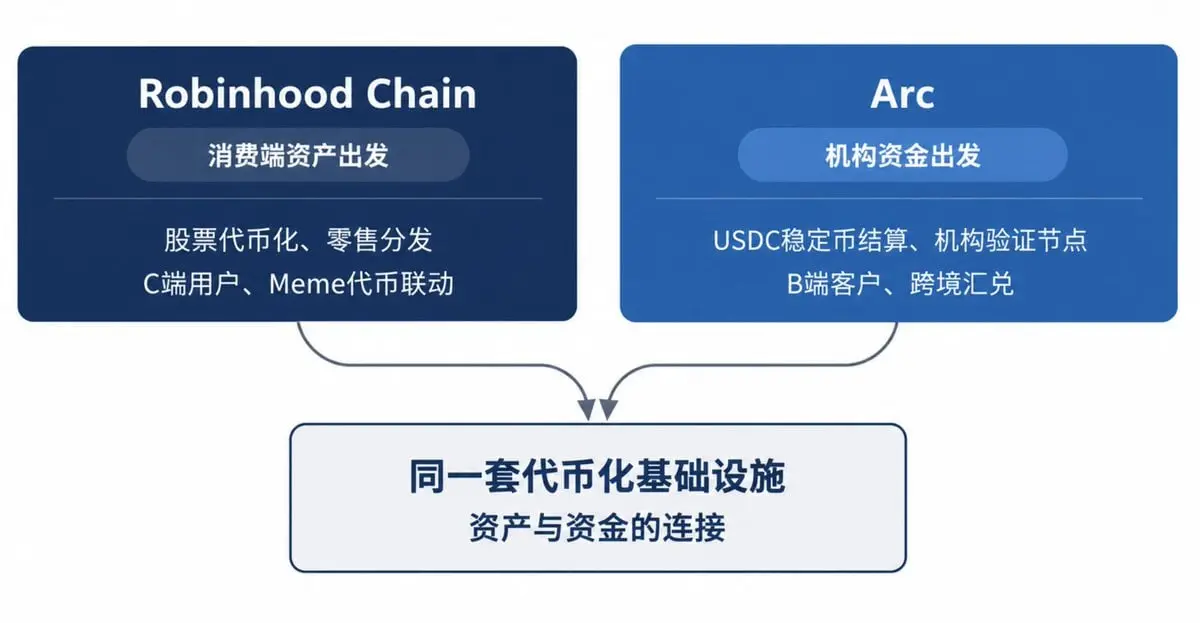
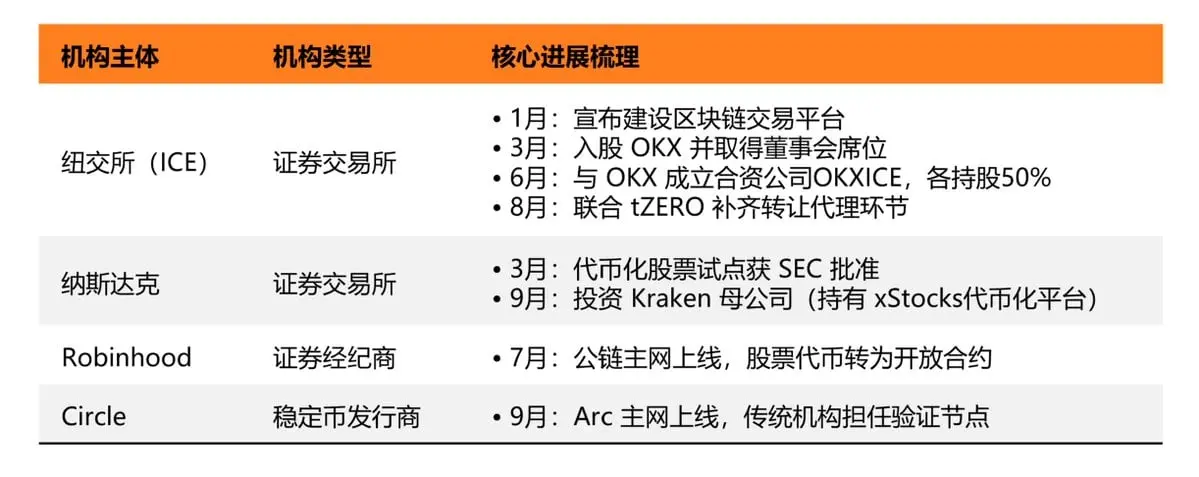
On September 17, the SEC officially approved on-chain trading of traditional U.S. stocks under the "Innovation Exemption," but with restrictions such as alignment of dividends and voting rights, advance notice to listed companies, and a five-year trial period. This article uses this as a starting point to clarify the relationship between "on-chain finance" and RWA: it continues the path of high-quality asset on-chain in North America, but its connotation exceeds the narrow definition of RWA, with a core focus on the globalization of dollar assets. The article further dissects the underlying logic of Wall Street's shift to support (consolidating dollar hegemony) and uses Robinhood (asset side: Robinhood Chain mainnet + ERC-8056 standard) and Circle (funding side: Arc public chain, USDC directly as Gas) as examples to outline the next phase of on-chain finance.
This article will analyze the on-chain migration of traditional finance based on the SEC's latest resolution on September 17, discuss the connotation of Onchain Finance, and analyze the background and implications of this transformation from the perspective of national regulation, institutional actions, and a series of initiatives from Robinhood and Circle.
A Historic Resolution: Tokenized Stocks Officially Approved
On September 17, 2026, the U.S. Securities and Exchange Commission (SEC) passed an important resolution: officially approving on-chain trading of traditional U.S. stocks. This resolution, more precisely termed the "Innovation Exemption," allows qualified tokenized securities platforms to provide formal licenses for securities trading.
This resolution also comes with a series of restrictions, such as:
- On-chain tokenized stocks must provide the same rights as traditional stocks, such as dividend rights and voting rights.
- Additionally, the platform must notify the underlying listed companies in advance, and companies can raise objections.
Moreover, this is merely an innovative regulatory framework within a five-year trial period and does not equate to a complete and comprehensive opening. This resolution continues a series of signals that have emerged in the traditional U.S. financial markets represented by the New York Stock Exchange and NASDAQ since 2026, which collectively reflect that: the underlying system of U.S. securities trading is migrating to blockchain.
"Robinhood Chain is the fastest EVM chain to hit 100M txns"
Source: Vlad Tenev (Co-founder of Robinhood)
A series of changes reveal a clear trend: the on-chain migration of traditional finance has become an important trend in the capital markets, and on-chain finance is one of the key narratives for the next step in the entire capital market.
I. A Review: What is On-chain Finance
When this term is mentioned, most people think of RWA, which refers to putting traditional financial assets on-chain. This understanding is somewhat valid because the core of Onchain Finance is indeed based on the previously popular RWA concept: issuing traditional assets on-chain to address the efficiency issues of traditional finance through tokenization.
However, two points need to be clarified: First, the concept of RWA has been misinterpreted and stigmatized too much; second, what Onchain Finance aims to do includes but exceeds RWA.
1.1 On-chain Finance: Continuation of the High-Quality Path of RWA
The concept of on-chain finance overlaps significantly with RWA, but its representative meaning goes beyond RWA.
Currently, RWA has actually formed two distinctly different paths.
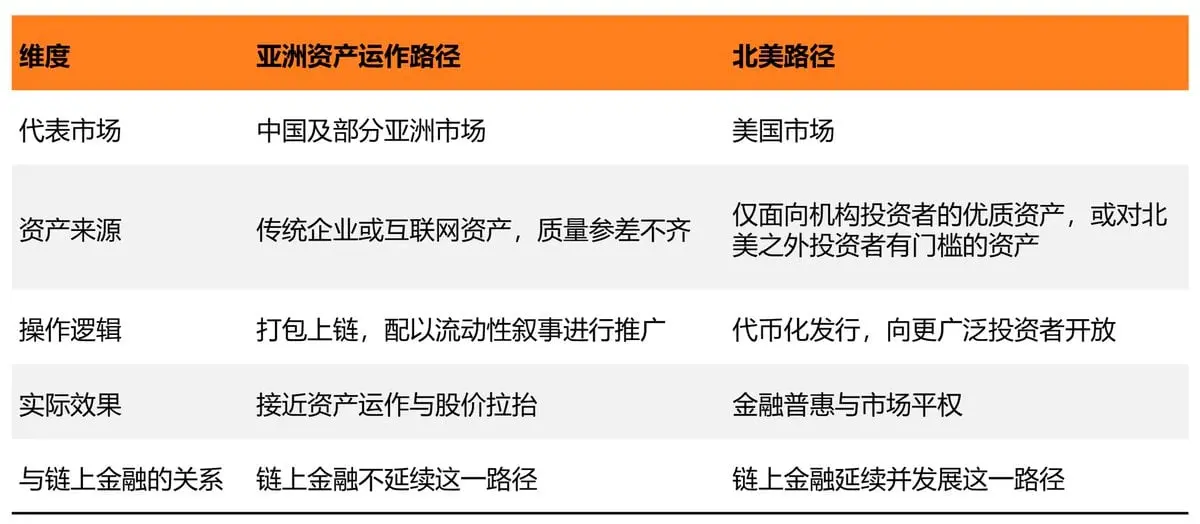
- The first path is represented by the Chinese and Asian markets, known as the "asset operation type" path: Traditional enterprises or internet giants package products lacking real market demand (PMF) onto the chain and promote them with liquidity narratives, essentially operating existing assets to form a strategy that links token prices to stock prices, which is logically no different from previous bankruptcy reorganizations and follow-up mergers.
- The second path is represented by North America, particularly the U.S.: Packaging high-quality traditional financial assets onto the chain, especially those assets that were previously only available to institutional clients and had high barriers for retail investors, achieving equity through on-chain issuance and promoting financial inclusivity.
What on-chain finance aims to do is to continue developing based on the North American path. This is the first judgment of this article: on-chain finance primarily continues the North American RWA path.
1.2 On-chain Finance: Connotation Far Exceeds the Scope of RWA
On-chain finance continues the high-quality path within RWA, while its connotation far exceeds the narrow definition of RWA, mainly reflected in three aspects.
First, the perspectives of observation differ. The narrow definition of RWA focuses on the impact of traditional financial assets flowing into the crypto space on the pricing of crypto assets; on-chain finance emphasizes using blockchain to solve the long-standing efficiency issues of traditional finance, including 24-hour trading, settlement speed, and access barriers.
Second, on-chain finance emphasizes the bidirectional interaction between traditional assets and crypto assets. The example of meme tokens on the Robinhood chain pulling up stock tokens is one case, while on-chain prediction markets repricing and hedging traditional financial assets is another, which will be analyzed in detail with specific cases later.
Third, the core logic of on-chain finance's extension is the globalization of dollar assets (i.e., the strengthening of "dollar hegemony"). High-quality assets like U.S. stocks and bonds can reach global investors at a lower cost through cryptocurrency channels, which is the core judgment of Wall Street's support for on-chain finance, and will be elaborated in the next section.
II. Why On-chain Finance Gained Support from Wall Street?
2.1 Four Stages of U.S. Regulatory Attitude Towards Crypto Assets
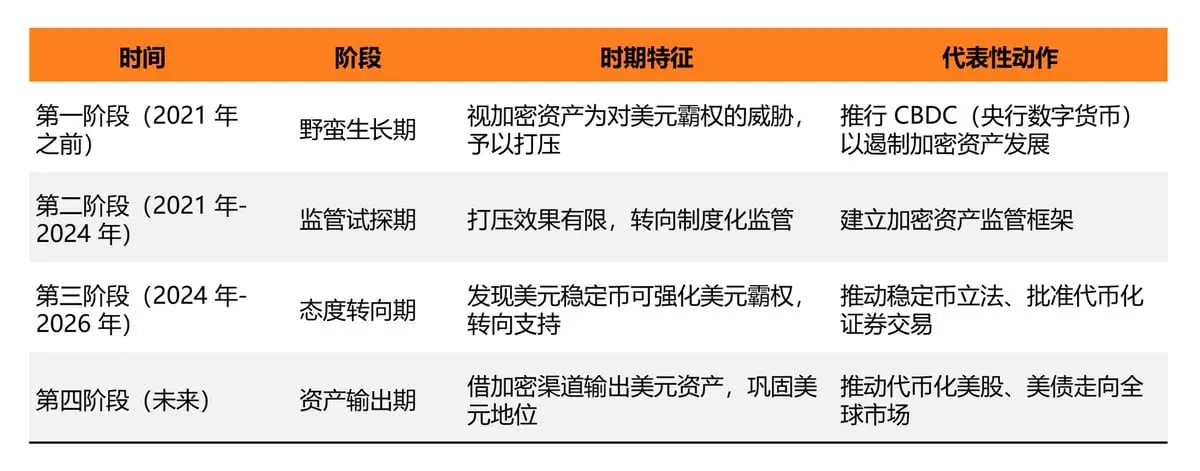
Many people may wonder why the U.S. government and major Wall Street institutions shifted from suppressing cryptocurrencies to supporting them. The answer lies in maintaining and strengthening the global position of the dollar, and this shift is reflected in four stages of U.S. regulatory attitudes towards crypto assets (see the table below).
Analyzing the above table, we can derive the following three interpretations:
- The suppression in the first stage gave way to institutionalized regulation in the second stage primarily because the central bank digital currency route never achieved the expected results: decentralized assets like Bitcoin not only were not curtailed but continued to expand in scale, forcing regulators to acknowledge that it is better to facilitate than to suppress, thus shifting to building a regulatory framework through licenses and information disclosure, as seen in the exchange licensing system and anti-money laundering requirements introduced between 2021 and 2024.
- The real turning point occurred in the third stage. U.S. regulators noticed that the market share of dollar stablecoins had exceeded 90%, a figure significantly higher than the dollar's actual share in global physical trade settlements (which is generally believed to be only around 40-50%). In other words, stablecoins became the most penetrative and fastest-spreading vehicle for the dollar in the digital world, and this discovery directly reversed the regulatory attitude: from preventing crypto assets to actively utilizing them, with the stablecoin legislation (GENIUS Act) introduced in 2025 and the subsequent SEC's approval of tokenized securities trading being concrete manifestations of this shift.
- The fourth stage is still unfolding, with the logic further advanced: stablecoins themselves are merely vehicles; the real long-term value lies in the dollar assets they correspond to. Since crypto channels have proven capable of efficiently pushing dollars globally, U.S. institutions will naturally consider using the same channels to bring U.S. stocks and bonds overseas, which is the key background when analyzing the paths of Robinhood and Circle later: one focuses on the asset side, and the other on the funding side, both ultimately serving the same strategic goal.
2.2 On-chain Finance: The Strongest Manifestation of Dollar Hegemony
The consolidation of dollar hegemony is fundamentally about the globalization of the dollar and dollar assets, corresponding to the two paths of on-chain finance: the funding side relies on U.S. bonds as underlying assets, carrying the dollar itself in the form of dollar stablecoins; the asset side focuses on U.S. stocks, extending to private credit, corporate bonds, and other financing tools for real enterprises, carrying dollar assets in the form of tokenized stocks.
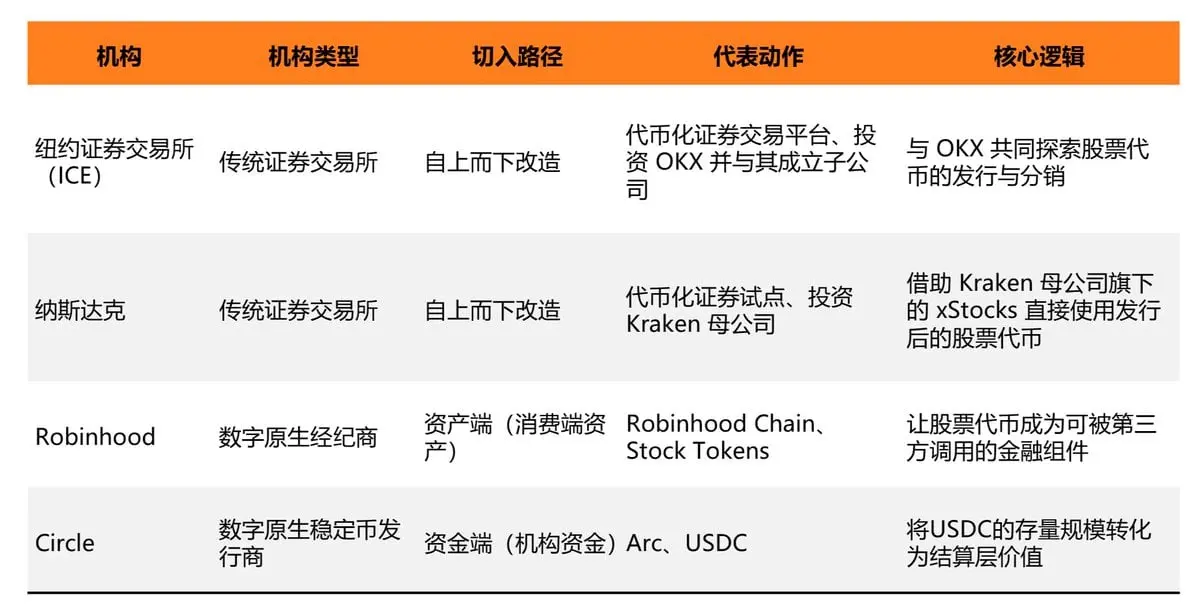
If the New York Stock Exchange and NASDAQ represent the top-down blockchain transformation of traditional exchanges, Robinhood and Circle represent two digital-native financial companies that start from the asset side and funding side, respectively, ultimately pointing to the same strategic goal.
"IPOs will move on chain."
Source: CZ (Founder of Binance)
Thus, this article selects Robinhood, representing tokenized U.S. stocks, and Circle, the compliant issuer of dollar stablecoins, as research subjects. Both have recently launched their own public chains, sparking widespread discussion in the industry, and sections four and five of this article will analyze them in turn.
III. Robinhood: The Asset Side Represented by Stocks
3.1 Stock Token Issuance Landscape: Head Concentration Effect
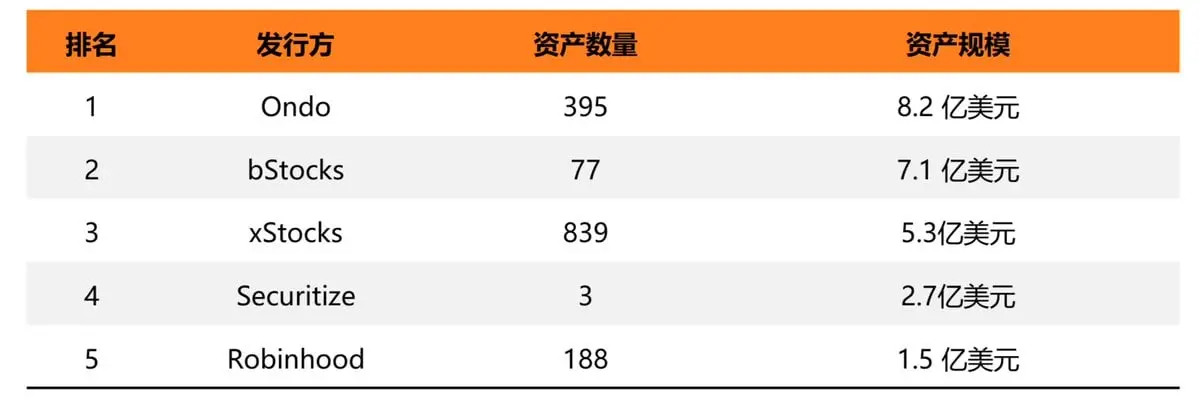
The feasibility of stock tokens has been validated by the industry. According to data from RWA.xyz, as of September 17, 2026, the distributed value of stock tokens across the network reached $2.82 billion, growing 13.1% in 30 days, with 3.63 million holding addresses, an increase of 125.34% compared to a month ago. This data indicates that the issuance capability of stock tokens no longer constitutes an industry barrier, and any qualified institution with asset sources can achieve tokenization.
From the perspective of issuers, the market has formed a clear head concentration: four issuers—Ondo, bStocks, xStocks, and Securitize—have a combined scale exceeding $2.3 billion, accounting for over 80% of the distributed value of stock tokens across the network, with Robinhood ranking fifth with 188 assets and approximately $150 million in scale. The paths of the leading issuers also differ: some rely on the number of assets, while others succeed with a single large asset. This landscape signifies that the focus of industry competition has shifted from whether issuance is possible to how it is used after issuance, which will be a key point of analysis in the subsequent chapters.
3.2 Robinhood: From Closed Products to Open Contracts
Robinhood launched Stock Tokens in Europe on June 30, 2025, expanding its services to 30 EU and European Economic Area countries, covering 400 million users. The tokens were initially issued on Arbitrum, allowing users to enjoy zero commissions, dividends, and 24/5 trading, covering over 200 U.S. stocks and ETFs. However, at this time, the product was completely confined to Robinhood's own app, with no essential difference in user experience compared to regular brokerage accounts.
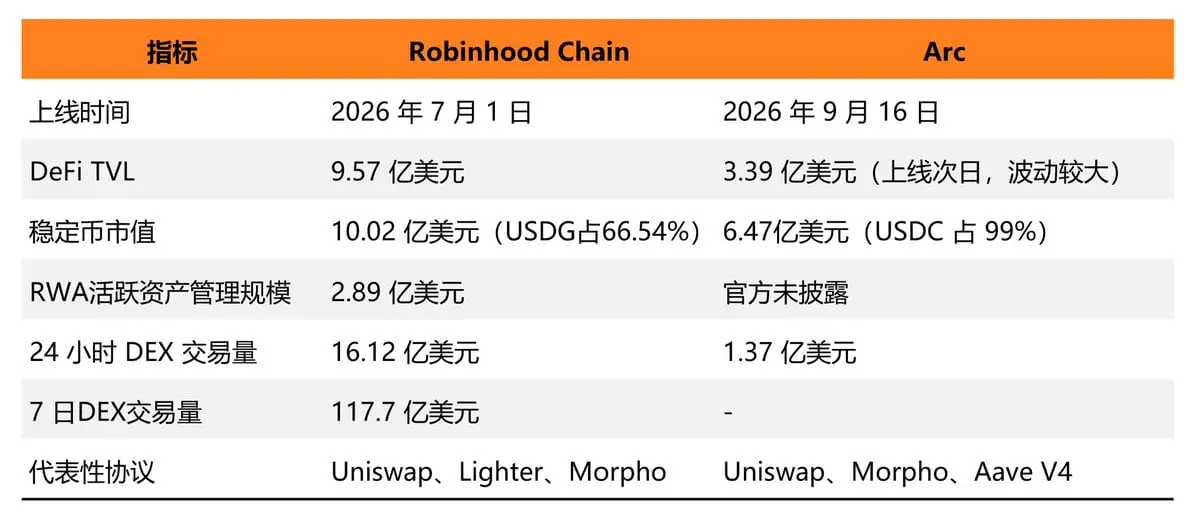
The real turning point occurred on July 1, 2026: the Robinhood Chain mainnet went live, and Stock Tokens were converted into standard ERC-20 contracts, with each asset equipped with an independent Chainlink price feed. This allowed third-party developers to directly integrate these tokens into wallets, DEXs, and lending markets, eliminating the need for Robinhood's involvement.
Co-founder Vlad Tenev revealed in a public interview in early August that the chain accumulated $10 billion in trading volume within weeks of its launch, processing 100 million transactions faster than any previous public chain.
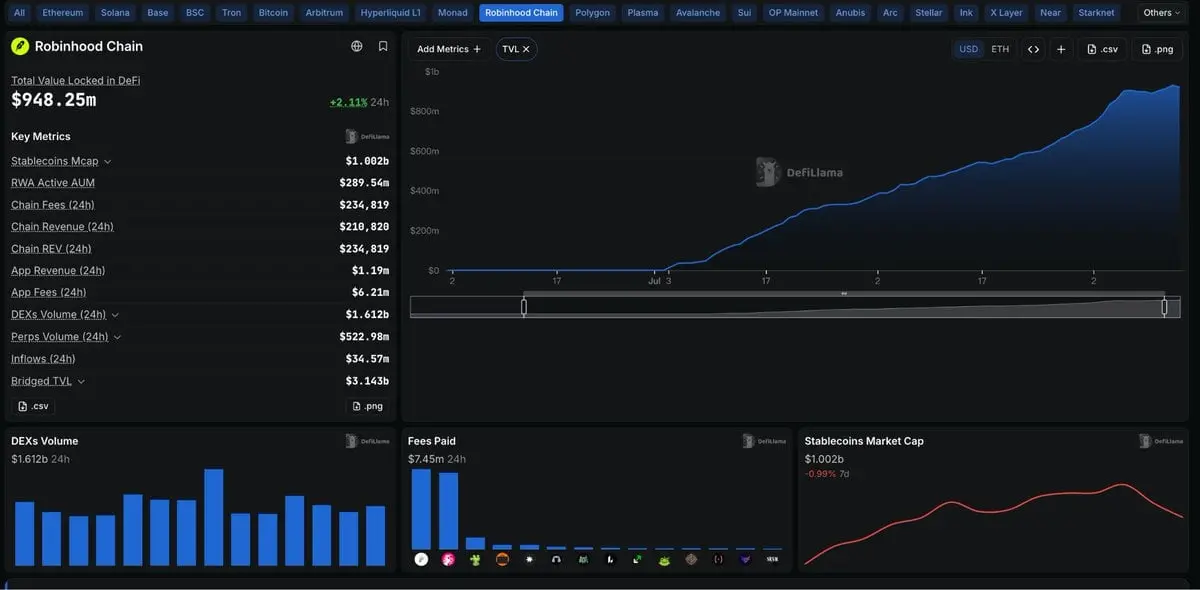
According to DefiLlama data, two months after the mainnet launch (as of September 17), the on-chain Total Value Locked (TVL) reached $957 million, with a 24-hour DEX trading volume of $1.612 billion and perpetual contract trading volume of $523 million.
The core of this transformation is that Robinhood actively relinquished complete control over the asset usage scenarios, instead positioning standardized contract interfaces as a source of competitive advantage. Stock Tokens thus transitioned from a type that could only be traded on its own platform to a financial component that could be called by any third-party contract, which is also the technical prerequisite for the discussion of the Meme token linkage mechanism in the sixth section.
3.3 Core Advantages of Robinhood Chain
The uniqueness of Robinhood Chain lies not only in the significant buzz it generated after its launch but also in the resources it has accumulated in the field of stock tokenization that other public chains cannot match: ready-made assets and distribution channels, standard-setting authority, and a positioning of open infrastructure.
First is the asset and channel advantage. Robinhood itself holds U.S. stock assets, possesses years of compliance and operational experience in securities brokerage, and has already established the technical path for stock tokenization, eliminating the need to find custodial brokers or third-party issuers to fill this chain. More critically, it comes with users and distribution channels; tens of millions of brokerage accounts themselves are ready-made cold-start traffic, which is a condition that most new public chains completely lack in their initial stages.
Second is the standard-setting authority. Robinhood, in collaboration with Superstate, proposed the ERC-8056 standard to regulate the handling of on-chain corporate actions (such as dividends and stock splits), which has been included in the Ethereum Improvement Proposal index. The first to establish the standard will likely force later entrants to follow, representing a technical discourse power advantage that is harder to circumvent than simply relying on first-mover scale.
Third is the positioning of open infrastructure. Robinhood Chain did not stop at moving stocks onto the chain but made stock tokens standardized components that any third-party contract can directly call. By giving up complete control over usage scenarios, it gains the expansion speed brought by broader developer participation; Uniswap has already taken on the main trading volume on this chain.
Compared to the previous phase where Stock Tokens were limited to a closed proprietary app, this transition from a closed product to open infrastructure is the core value of Robinhood's promotion of stock tokenization. Stocks thus begin to possess callable attributes similar to financial derivatives, becoming a financial component that can be freely called by any contract on the chain.
4. Circle: From Stablecoins to On-Chain Settlement Infrastructure
4.1 Circle's Stablecoin Chain Arc
Circle chose the funding-side path. On September 16, 2026, the Arc mainnet officially launched, with USDC used directly as Gas, enabling sub-second deterministic settlement. Eleven institutions serve as validation nodes, covering various fields including asset management, clearing, payments, and banking (see Table 5.2 for the list of institutions). On the launch day, mainstream lending protocols and spot trading platforms were already integrated, and multiple tokenized money market funds could be traded directly or used as collateral; Circle's StableFX (stablecoin foreign exchange matching system) simultaneously integrated over 10 local stablecoins, providing 24/7 cross-currency foreign exchange settlement capabilities.
This strategy differs from traditional institutions investing in exchanges or building their own matching engines: Circle relies on the existing advantage of USDC's global circulation exceeding $74 billion, aiming to convert existing funds into real on-chain financial activities. Therefore, Arc completed the integration of the entire set of asset, lending, and trading protocols from day one, without leaving a gap waiting for applications to gradually settle in like most new public chains.
Reference link: http://rwa.xyz/
4.2 Role Division: Validation Nodes, Lending Protocols, and Liquidity Markets
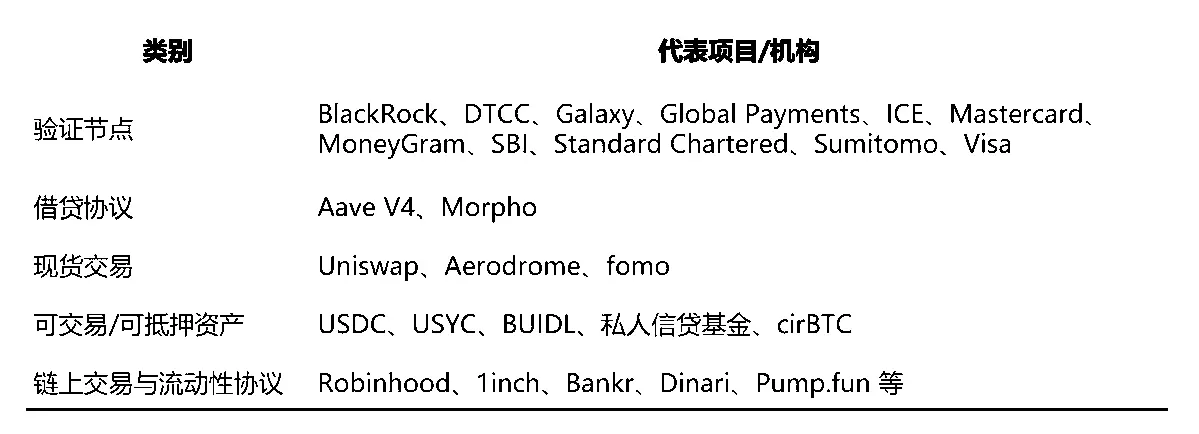
On the day of Arc's launch, a clear role division was established: validation nodes are responsible for underlying security and compliance, lending protocols provide leverage and credit services, spot trading handles liquidity, and stablecoins and tokenized funds constitute the tradable and collateralizable asset layer. This division of labor system was already in place on the first day of the mainnet launch, indicating that Circle was well-prepared in terms of protocol integration.
The composition of validation nodes includes various roles such as banks, payment networks, asset management, and rating agencies, which is distinctly different from the validation structure of most public chains that primarily rely on miners or stakers. This indicates that Arc was designed from the outset as infrastructure aimed at institutional clients, rather than a public chain for retail traders.
4.3 Convergence Trend of Asset and Funding Sides
Robinhood and Circle have different starting points: one approaches from consumer-side assets (C-side), while the other approaches from institutional funds (B-side). However, the ultimate problem both aim to solve is the same: assets and funds originally operate as two independent systems that need to be connected through the same tokenization infrastructure.
In the official list at the launch of Arc, Circle categorized Robinhood and several other on-chain trading protocols in the same category, directly reflecting this judgment. Currently, both parties have not publicly disclosed specific cooperative products, but this classification arrangement is sufficient to illustrate that the asset side and funding side are converging towards the same infrastructure.
This convergence trend also explains the issues to be discussed in the sixth section of this article: when different types of assets such as stock tokens and Meme tokens need to be integrated into the same settlement rules, exchanges and funding layer companies must operate under a unified open contract standard to achieve interoperability across applications. The division of labor system of Arc is a concrete manifestation of this trend at the infrastructure level.
5. Re-evaluating the Value of Meme Tokens: From Speculative Assets to Liquidity Entry Points
The first two sections discussed how traditional financial assets migrate onto the chain; this section will discuss a phenomenon in the opposite direction: on-chain native speculative assets are beginning to exert substantial reverse pull on traditional financial assets.
5.1 Traditional Positioning: Speculative Assets Without Fundamentals
Meme tokens, also known as "Shitcoins," are often criticized as a special asset class. They do not generate cash flow, lack fundamentals, and their prices are entirely driven by community sentiment and capital relay, with fluctuations being a zero-sum game; in past cycles, their rise and fall have typically been tied to specific narratives or social media trends, with almost no correlation to macro liquidity or real economic data. This is also why analytical institutions have long excluded them from fundamental research.
When discussing Meme tokens in the industry, the focus is usually on their entertainment and speculative attributes, rarely considering them as an asset class that can have substantial connections with the real economy: however, this perception began to change after the launch of Robinhood Chain.
5.2 Binding Mechanism: The Linkage Design Between Meme Tokens and Stock Tokens
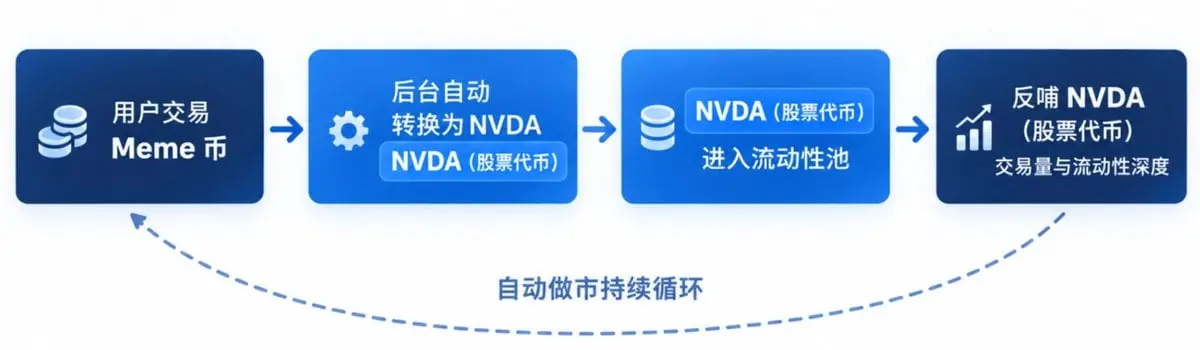
After the launch of Robinhood Chain, several products emerged on-chain that directly bound Meme tokens to stock tokens for trading. The most representative case comes from the token launch platform Long.xyz, which introduced the Meme token $AI (Artificial Inu): it is directly paired with NVIDIA's stock token $NVDA, and every transaction of AI tokens is first converted to $NVDA in the background before entering the liquidity pool. On-chain data shows that at one point, over 20% of the circulating supply of $NVDA was locked in the $AI token's liquidity pool for automated market making.
In addition to pairing Meme coins with stocks, many popular Meme coins that surged at the beginning of Robinhood Chain's launch (such as $CashCat) brought significant attention and traffic to the community. This phenomenon itself lacks sustainability and is a typical capital game, but the objective result is that a large amount of speculative capital originally unrelated to stock tokens was introduced into Robinhood Chain through these Meme projects and flowed back to the trading market of stock tokens through the pairing mechanism.
The common feature of this mechanism is that the front-end trading objects are speculative assets, while the back-end settlement objects are real security tokens, with price transmission completed through automated market makers. The capital flow, originally regarded as noise trading, is thus structurally directed towards real assets. Meme tokens are responsible for attracting traffic, while stock tokens are responsible for absorption, together forming a funding loop that had not been designed before.
5.3 Empirical Data: The Bidirectional Transmission Effect of Trading Volume
On-chain fee data provides direct evidence for this linkage effect. On September 1, 2026, Robinhood Chain's daily on-chain fees reached $3.75 million, surpassing the total fees of Ethereum's mainnet and Base chain on that day, setting a historical high at that time; on September 4, this number further rose to $6.04 million, a new high since its launch, primarily driven by Meme token trading on launch platforms such as Long.xyz and Pons. According to independent on-chain data analysis firm Bitquery, as of September 8, the cumulative fees since the network's launch in July exceeded $38 million, with about 70% generated after August 24, and approximately 90% retained by the network itself.
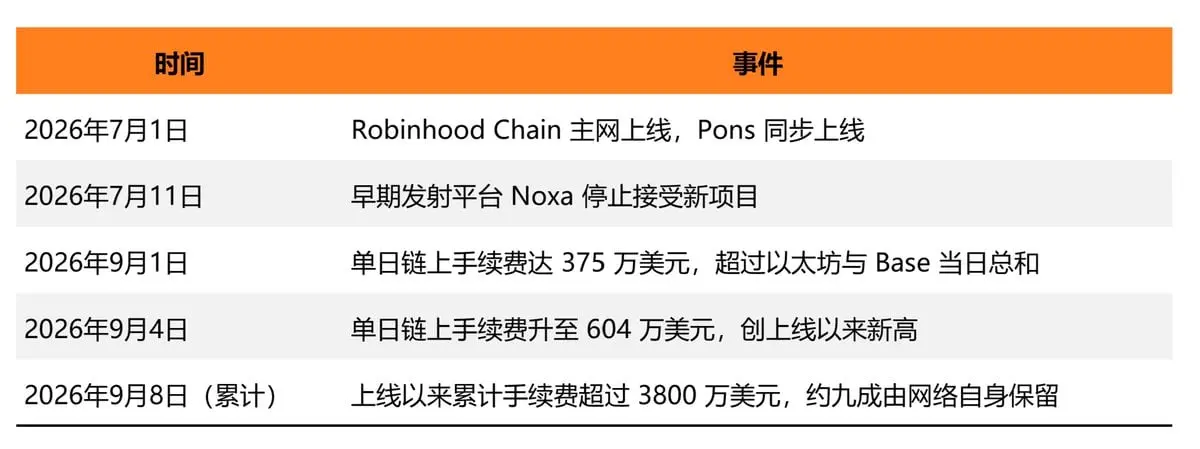
From a time series perspective, the on-chain fee data has remained high for several consecutive days, indicating that this linkage mechanism has a certain degree of sustainability.
5.4 Significance Assessment: Functional Transformation of Speculative Funds
Prior to this, there was almost no substantial connection between on-chain speculative funds and traditional financial assets: speculators traded Meme tokens, while investors held stocks, with the two markets operating independently. Now, Meme tokens have found a reason for their necessity, transforming into an entry point for directing traffic and funds into real assets. For Robinhood, the high-frequency trading of Meme tokens indirectly boosted the trading volume of stock tokens and on-chain fee income; for the entire industry, this is the first time concrete data can prove that on-chain speculative sentiment can be converted into actual trading volume of traditional financial assets.
This mechanism was subsequently echoed on the BNB Chain. On September 8, 2026, Binance founder Zhao Changpeng (CZ) posted on social media stating, "IPOs will move on chain."
"🚨 TODAY: The SEC issued an order granting temporary, conditional exemptive relief to Tokenized Securities Venues from the definition of 'exchange' in the Exchange Act to trade tokenized NMS stock using innovative permissioned automated mark"
Source: U.S. Securities and Exchange Commission (SEC)
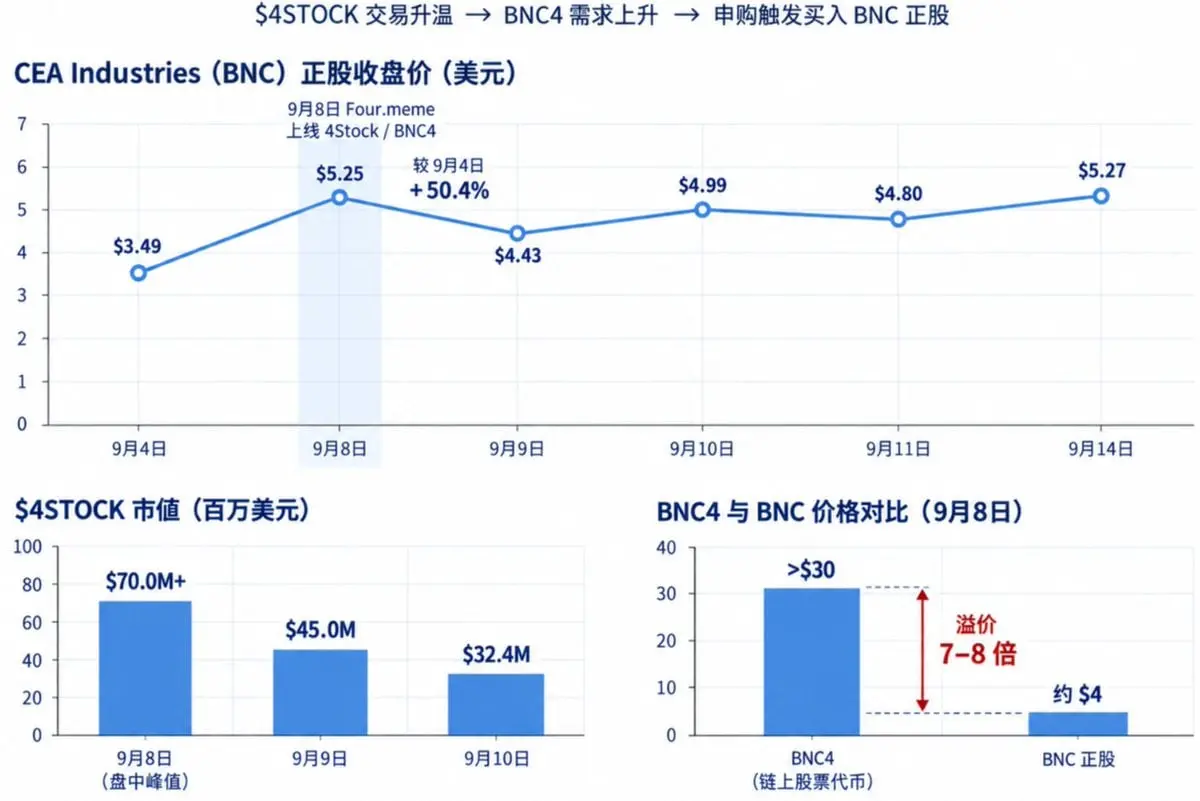
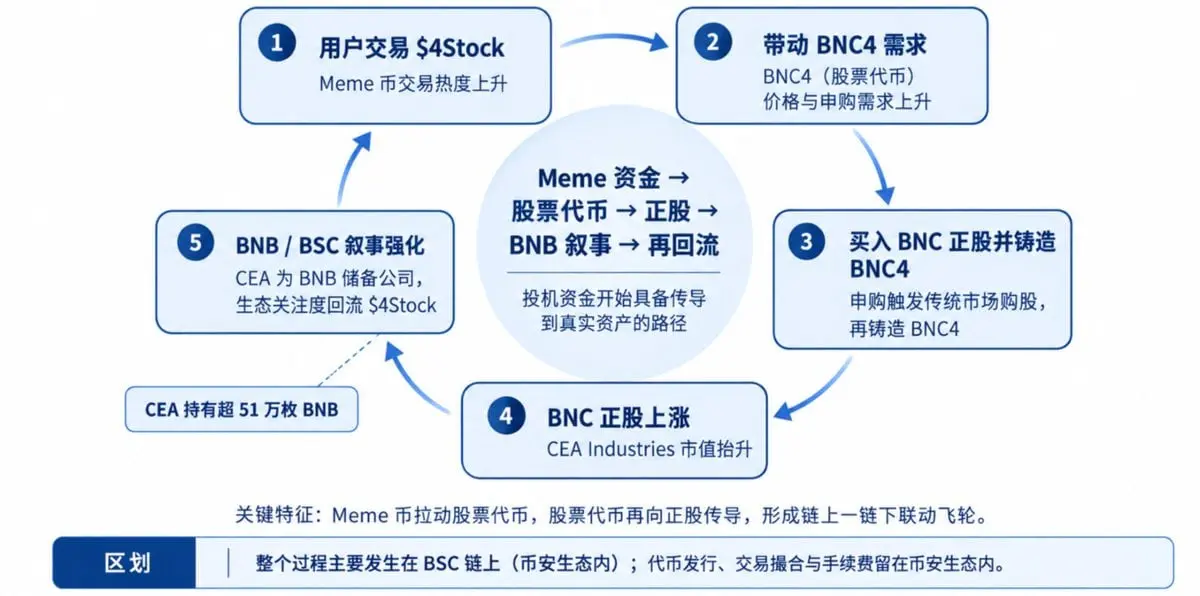
The Meme token launch platform on BNB Chain, Four.meme, immediately launched a new framework called "4Stock": first issuing the token $BNC4, pegged 1:1 to the Nasdaq-listed company CEA Industries (stock code BNC), and then issuing the Meme token $4Stock on top of BNC4.
This model is similar to the pairing logic of $AI and $NVDA on Robinhood Chain, with the difference being that CEA Industries is itself a shell company primarily engaged in holding BNB reserves, with holdings exceeding 510,000 tokens. Within 3 hours of launch, the market cap of $4Stock briefly reached $90 million; during the same period, the price of BNC4 briefly broke $30, corresponding to the underlying stock's price of about $4 at that time, resulting in a premium of 7 to 8 times; CEA Industries' stock price rose over 80% in pre-market trading that day, then fell back, but still closed with an increase of over 50% compared to the previous trading day. Wall Street truly witnessed: Meme coins can indeed drive real stocks.
This mechanism has formed a self-reinforcing cycle: Meme coins drive stock tokens, stock tokens drive the underlying stocks, and the underlying asset of the stocks is BNB itself, thus the upward momentum is transmitted back along the same chain. The entire process from token launch, trading matching to fee settlement occurs within the BNB Chain, and transaction fees remain within this system.
Compared to the DAT model of MicroStrategy, which relies on its market influence to continuously increase its Bitcoin holdings, this mechanism does not require additional funds to purchase underlying assets; it can elevate the valuation of each link in the chain solely through price linkage generated by trading itself, which is also why it is more concerning than traditional DAT models.
This type of linkage breaks the long-standing default perception that speculative assets and real assets are unrelated, making it one of the more counterintuitive phenomena in this round of on-chain financial development: a speculative asset without fundamental value can gain real economic functionality through mechanism design.
Of course, this type of linkage is accompanied by significant price discovery distortion, as the premium of $BNC4 relative to the underlying stock lacks an arbitrage mechanism for timely correction, reflecting that the current on-chain stock token market still has significant shortcomings in liquidity depth and pricing efficiency, necessitating caution when participating in such trades.
## 6. Industry Development and Trend Analysis of On-chain Finance
6.1 The Shift in Positioning of Cryptocurrencies: From Asset Issuance to Asset Utilization
One trend that can be observed is that the supply of on-chain usable assets is relatively sufficient, and the industry no longer needs to rely on the continuous issuance of new tokens to maintain attention; the old logic of "issuing tokens, hype, and listing" has become ineffective.
With the rise of on-chain finance, the industry's focus has shifted from asset issuance to infrastructure construction, centered around the utilization of existing assets to provide on-chain services for traditional finance. Public chains are taking on roles closer to underlying channels and service tools, with the future direction being to accommodate quality dollar assets and provide services that meet SEC regulatory requirements, such as ensuring token holders have the same dividend and voting rights as shareholders of the underlying stocks.
6.2 Functionalization of Meme Tokens and Repositioning of Stock Tokens
Meme tokens have previously been viewed as mere consumables of funds; the case of Robinhood Chain illustrates that as long as a reasonable binding mechanism is designed, their trading popularity can be directly converted into trading volume and fee income of real assets.
This discovery may lead to the emergence of teams specializing in the design of asset binding mechanisms, treating "how to direct the traffic of Meme tokens to real assets" as an independent product direction, rather than just a marketing or traffic tool. This type of mechanism design has exceeded the scope of conventional token issuance, involving automated market-making algorithms, cross-asset pricing models, and risk control parameter settings, leaning more towards financial engineering capabilities, beyond simple community operations.
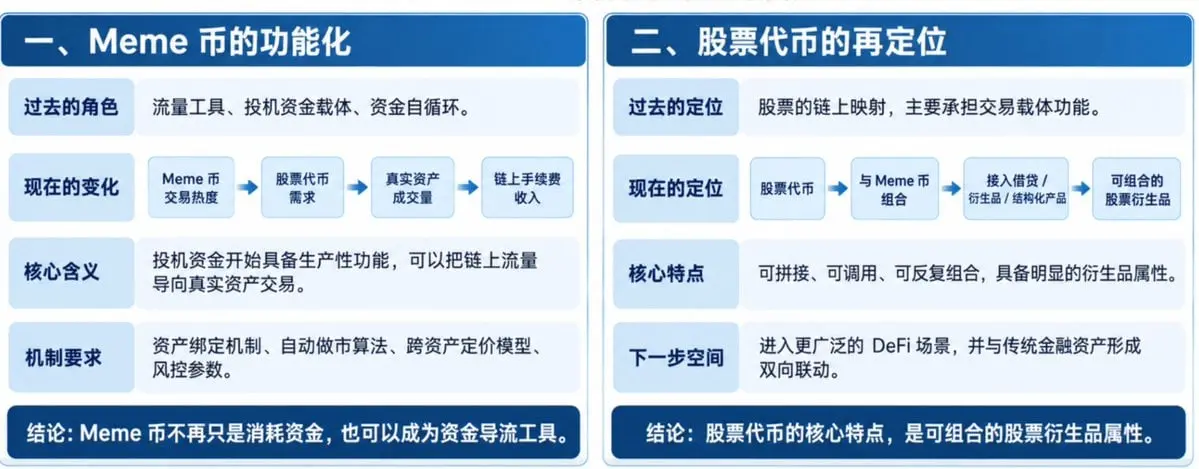
This discovery also opens a new observation window: stock tokens, after being combined with Meme tokens, now possess attributes similar to financial derivatives, with the core feature being that they can be repeatedly stitched together and freely invoked on-chain. Currently, only the combination of stock tokens and Meme tokens has been validated; if further integrated with lending, derivatives trading, structured products, and other DeFi plays, the combinability of stock assets themselves may become the core narrative proposition for the next stage.
This also raises a more fundamental question: as a combinable derivative, how can stock tokens be introduced into broader DeFi scenarios and form a two-way linkage with traditional financial assets? The answer to this question will determine the value boundaries that stock tokens can reach in the next step.
6.3 Transformation Paths for Coin-Stock DAT Companies
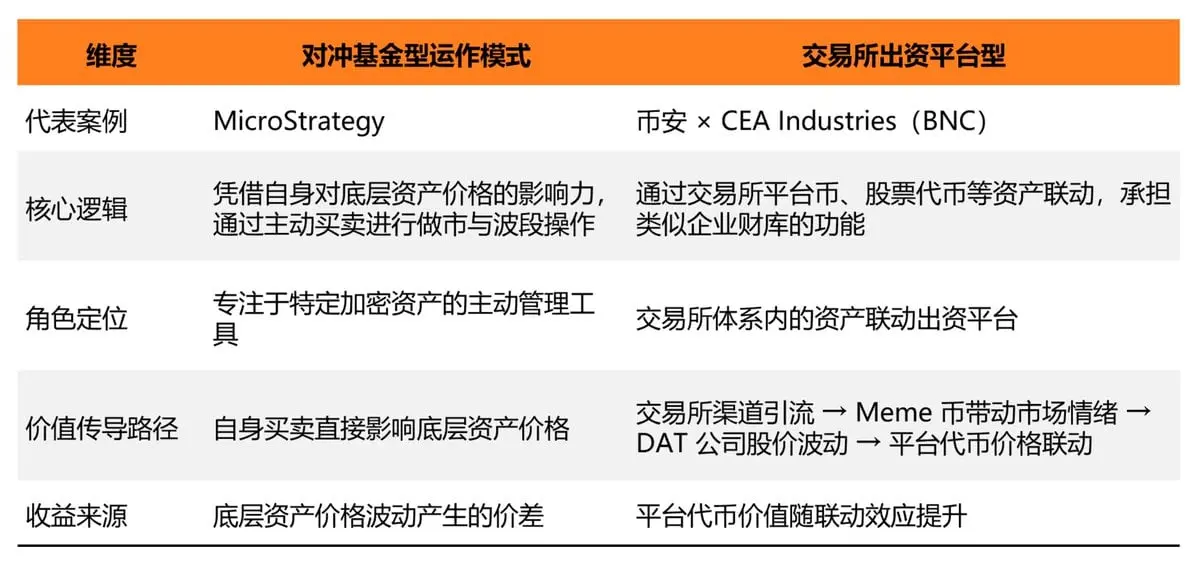
With MicroStrategy announcing the sale of part of its Bitcoin holdings and the examples of coin-stock linkage through internal platforms in the Binance system, the group of Digital Asset Treasury (DAT) companies is facing two distinct transformation paths.
- Hedge Fund-like Operation Model: Like MicroStrategy, leveraging its influence on the price of underlying assets, engaging in market-making and buying low and selling high, transforming the company into a proactive management tool focused on specific crypto assets.
- Internal Funding Platform of Exchanges: By linking exchange platform tokens, stock tokens, and other assets, assuming a role similar to corporate treasuries within the exchange system; Binance's linkage with CEA Industries (BNC) is an early example of this path: the exchange serves as an entry channel, using Meme coins to drive market sentiment, boosting the stock price performance of underlying DAT companies, thereby influencing the price of platform tokens.
In addition to the above two paths, small and medium-sized DAT companies lacking a clear positioning will face significant survival pressure in the future.
6.4 The Strategic Value of Public Chains to Crypto Institutions is Becoming Increasingly Prominent
Public chains are becoming a core component of institutional infrastructure: if an institution relies solely on third-party public chains to conduct business, transaction commissions and network fees will continuously flow to the public chain operators. Only by truly operating its own public chain well can it retain this portion of value within its own system.
Circle, in order to retain as much fee and revenue as possible within its own system, chose to build Arc; Robinhood, to promote internal stock tokenization and gain control over underlying settlements, also chose to build its own public chain; Binance's BNB Chain has become an important channel for linking platform tokens and Meme tokens through third-party launch platforms like Four.meme: this is also the core reason why all three parties have chosen to build or deeply bind public chains.
6.5 Future Focus: The Connection Layer Between Assets and Funds
The truly investable segments lie at the intersection of assets and funds, and these segments currently lack mature solutions. Teams that first solve the connection problem are likely to gain the most certain part of this round of industrial dividends.
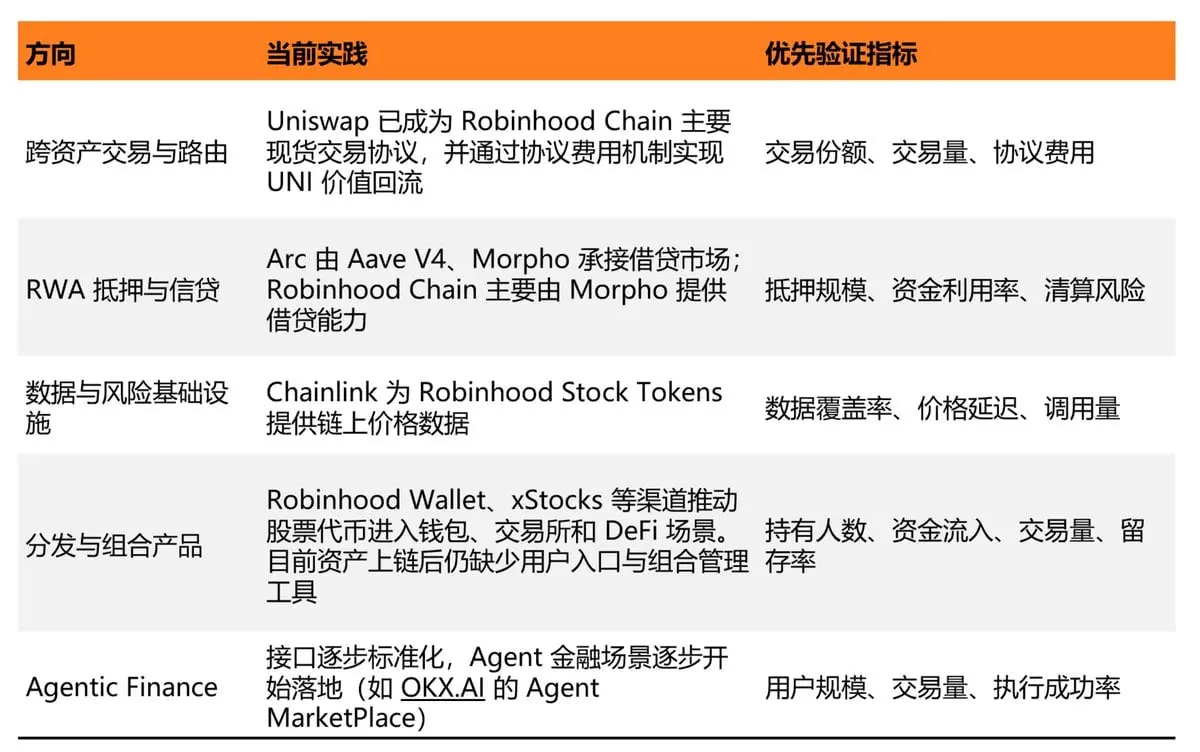
Among the aforementioned directions, cross-asset liquidity routing is currently a direction with strong real monetization capabilities, with Uniswap's recent performance being a specific case that can be analyzed.
With the rapid growth of spot trading volume following the launch of Robinhood Chain and Arc, Uniswap has captured the majority of the spot trading share on both chains. In a single day of trading in early September 2026, it accounted for a major share of over $1.3 billion in total trading volume on Robinhood Chain. This shift in role is directly reflected in token prices: from mid-August to early September 2026, the price of UNI rose from around $3 to over $7, an increase of more than 100%.
This case illustrates that institutions issuing tokenized assets or building their own public chains are not the only beneficiaries. Projects that control cross-asset liquidity entry points and have established value capture mechanisms at the protocol layer can also gain verifiable benefits from structural growth in trading volume, making them worthy of specific research and tracking.
### Conclusion
Looking at the events of the entire year of 2026, they point to the same conclusion: on-chain finance has moved beyond the conceptual stage and entered a substantive implementation phase driven by the SEC, the New York Stock Exchange, Nasdaq, Robinhood, and Circle. The driving force behind this transformation is the need for the globalization of the dollar and dollar assets to have both the funding side and the asset side in place simultaneously. Circle and Robinhood have chosen these two paths respectively, and both have retained trading commissions and fees within their own systems through their self-built public chains.
In this logic, stock tokens and meme coins have each completed their role transformations. Stock tokens have transitioned from a closed variety that could only be traded on their own platforms to financial components that can be called by any contract, possessing combinable properties similar to derivatives: this is the most counterintuitive and also the most worthy variable to continue tracking in this cycle. Meme coins, relying on this combinability, have found specific mechanisms to pull real assets on Robinhood Chain and BNB Chain, with the pairing of $$AI and $$NVDA, $4STOCK and BNC4, and the linkage to CEA Industries' underlying stock, allowing speculative funds to convert into real trading volume of traditional financial assets for the first time.
At the same time, the value in the asset issuance phase is declining, and the connection between assets and funds is currently the position with more certain returns. Uniswap's ability to double the price of UNI by capturing liquidity routing is a case that has already validated this judgment. RWA collateral and credit, data and risk infrastructure, and Agentic Finance are still in their early stages; whoever solves the connection problem first will have a better chance of obtaining the most certain part of this round of industrial dividends.
Of course, the risks are equally clear: the secondary market liquidity of tokenized stocks is thin, and the price discovery distortion caused by the linkage between meme tokens and stock tokens has not yet been corrected by arbitrage mechanisms. The regulatory framework itself is still in a transitional state of a five-year temporary exemption and has not formed a long-term stable institutional arrangement. These structural variables will determine how far on-chain finance can go next: but the direction is already irreversible.
 Risk warning

Popular articles