








Cryptocurrency capital splurges tens of millions of pounds: Is British politics becoming "Americanized"?
 Core Viewpoint

 Two low-profile crypto billionaires donated $100 million to the Reform Party led by Nigel Farage, which may permanently change the current political system in the UK.
Written by: David Segal, The New York Times
Compiled by: Luffy, Foresight News
For a populist leader who frequently visits bars and smokes, Nigel Farage, the leader of the Reform Party, has quite a few wealthy friends, and each one of them is a millionaire. Two of them have been continuously sending large sums of money to him and his party.
The amount of this donation has become a political scandal in the UK this year. The British media has been highly focused on Farage, and as more information has been revealed, the whole affair resembles a satirical drama suitable for Netflix: the main characters are two billionaires who rarely speak publicly and prefer to remain low-key, while the other character is the articulate populist politician dressed in a pinstripe suit.
This politician is 62-year-old Farage. He is extroverted, highly controversial, and gained national fame by promoting Brexit. He has a strong inclination towards nativism, once claiming that a two-hour delay to a rally was caused by traffic congestion caused by foreigners. His desire for wealth is almost as strong as his passion for nativism. In 2023, he participated in the reality show "I'm a Celebrity… Get Me Out of Here!" and earned $1.86 million, ultimately finishing in third place. He is also a high-paid brand ambassador for London gold dealer Direct Bullion.
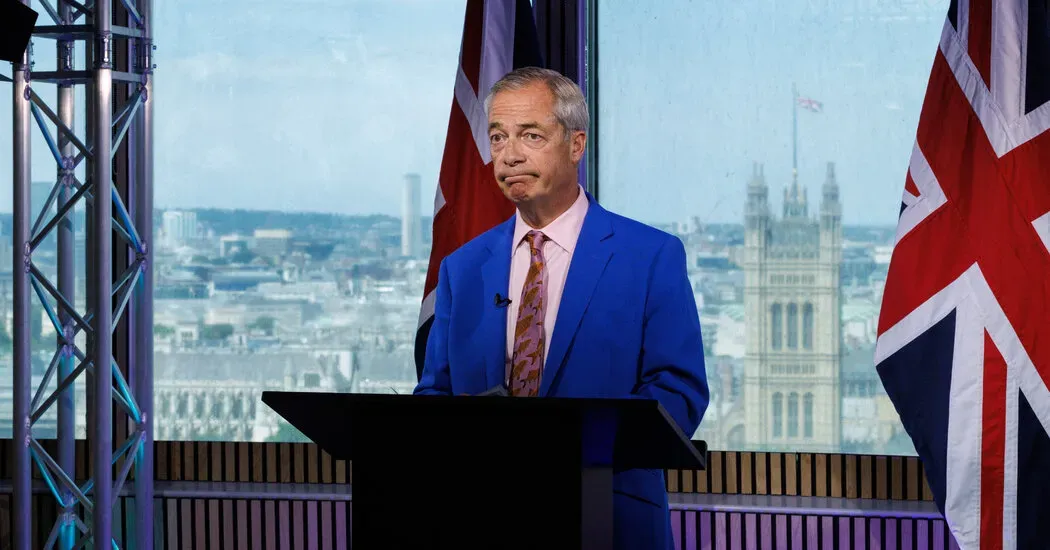
Nigel Farage, Leader of the Reform Party in the UK
However, this income pales in comparison to a huge sum he received in April 2024. At that time, he raised funds for the party as an ordinary individual and received $6.3 million. Farage later explained that this money came from Christopher Harborne, a pro-Brexit British crypto investor who has long settled in Thailand and is known locally as Chakrit Sakunkrit, and it was an "unconditional gift." Harborne stated in an interview with The Daily Telegraph in April that this donation "was made without expecting anything in return."
This has sparked widespread skepticism. The Sunday Times estimated that Christopher Harborne has a net worth of about $24 billion, most of which comes from a precise investment in Tether, the issuer of the stablecoin USDT. In June of the same year, Christopher Harborne met with the Governor of the Bank of England, urging the central bank to shelve the digital pound Britcoin project.
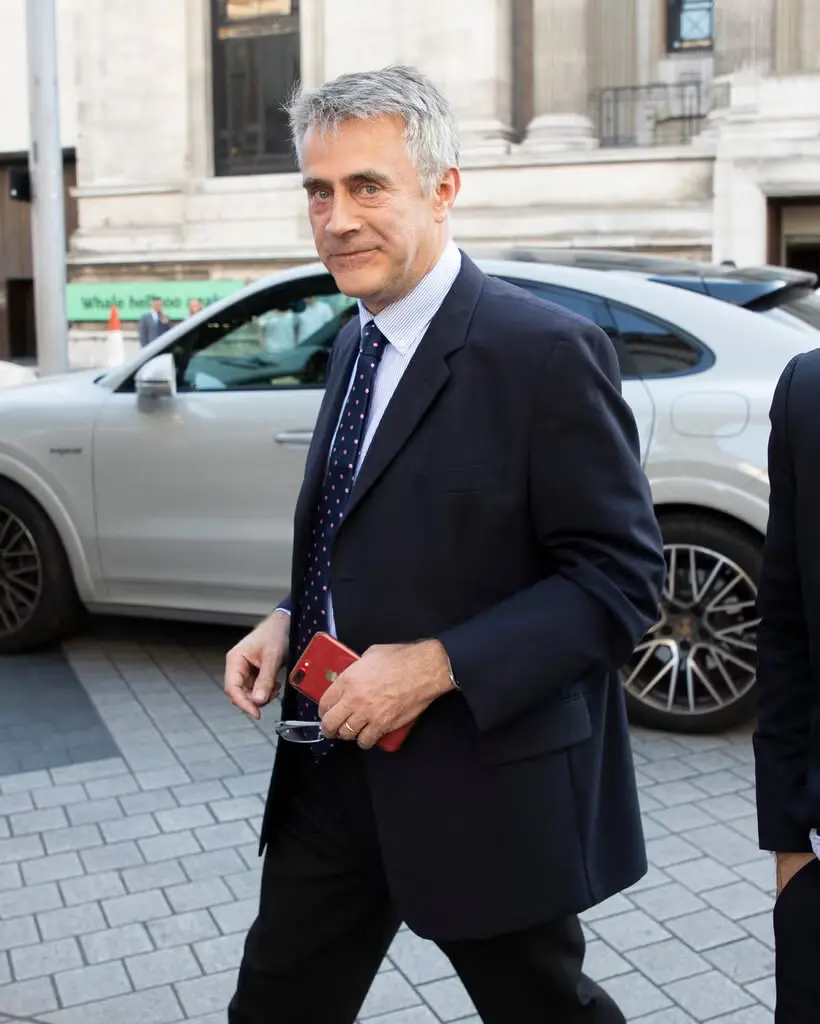
Christopher Harborne, Billionaire, Tether Shareholder
Once Britcoin is officially issued, it will directly compete with Tether. Speculation is inevitable about whether there is an exchange of interests behind this huge donation.
Currently, the Parliamentary Commissioner for Standards is investigating Farage for failing to declare the £5 million gift from Christopher Harborne. Farage insists that he has done nothing wrong. However, this donation is just the beginning of his troubles.
In early September, Channel 4 released a secretly recorded video showing Farage and several senior members of the Reform Party seemingly discussing how to circumvent UK laws regarding foreign campaign donations. In one segment of the video, Farage, while drinking wine and eating oysters, praises a poll reportedly funded by an American billionaire. Days later, the Metropolitan Police launched an investigation to determine whether there had been any violations of election laws.
An insider from the Reform Party complained to the BBC that the party seemed "a bit like a pirate ship." If this is the problem, a loyal supporter came up with a special solution: to invest more money.
On September 11, it was revealed that another crypto billionaire, self-described as a "math geek," Ben Delo, donated the equivalent of $48.7 million to the Reform Party, marking the largest single political donation in British history. He explained in an article for The Daily Telegraph that he hoped to help the Reform Party grow into a reliable party capable of governance.
Christopher Harborne clearly did not want to be outdone. The next day, he also donated $48.7 million to the Reform Party.
"My competitive spirit drove me to follow up with this donation, and I did just that," Christopher Harborne also stated in an article for The Daily Telegraph.
This series of donations has caused an uproar in the UK. Unlike the United States, the UK does not have Super Political Action Committees (SPACs), and parties can only receive limited public funding for parliamentary work and policy research; campaign expenses are not covered. Compared to the US, the entire political funding system in the UK has always been quite limited. Sam Power, a lecturer at the University of Bristol studying political funding and corruption, noted that in the last general election, the total campaign spending of all parties across various constituencies was only $125 million.
This amount is roughly equivalent to the cost of a single Senate campaign in Montana in 2024.
"We are seeing the political fundraising model in the UK becoming increasingly Americanized, and this American system is seen as a negative example in our eyes," Dr. Sam Power said. "This is not just a problem for the Reform Party, but a systemic issue. This has also led everyone to reflect: is this really the direction we want for British democracy?"
In just two days, massive funds flowed into the Reform Party, completely rewriting the funding landscape of British politics. This huge sum almost entirely comes from secret wealth accumulated overseas, with donors small enough to fit in a phone booth.
"High Cost-Effectiveness"
It is not only the political landscape in the UK that is being reshaped by crypto capital. In the US, crypto companies and their billionaire backers have grown into a formidable new force, funding candidates from both parties who support industry-friendly regulatory policies. Trump once criticized cryptocurrencies as "extremely volatile and baseless," but his attitude has completely changed. In the first year of his second term, his family's crypto business brought in over $1.4 billion, much of it from his TRUMP Meme coin.
Farage's representatives declined to be interviewed for this article, and Ben Delo and Christopher Harborne also refused to comment. Farage has long portrayed himself as the Trump of the Thames, a fighter against traditional finance, the old political establishment, and mainstream media.
At first glance, he seems an unlikely supporter of cryptocurrencies. He places great importance on national borders, but digital assets precisely ignore border restrictions. There is also a significant contradiction: he favors Tether, headquartered in El Salvador, rather than the domestically launched digital pound that carries the name "Brit."
But cryptocurrencies fit his persona: a fearless outsider, a nemesis of the establishment. This image has been honed since his middle-class childhood in the countryside of Kent. His father was an alcoholic stockbroker who abandoned the family when Nigel Farage was five years old.
Michael Crick, author of "One Party After Another: The Disruptive Life of Nigel Farage," wrote that Farage did not attend university and worked in metal trading in the City of London, where he did not perform well. He later served as a Member of the European Parliament for over 20 years. This job was well-paid, but his income was far less than that of the financial industry.
"He does yearn for everything that wealth brings," Michael Crick said, "while also feeling a deep sense of dissatisfaction—he has devoted his life to politics."
In recent months, a fixed pattern has emerged: whenever Farage intertwines politics and funding, a public relations crisis follows. After the Parliamentary Commissioner launched an investigation into the undeclared £5 million donation from Christopher Harborne, Farage quickly resigned from his position as a Member of Parliament for the Clacton constituency, only to announce his candidacy for the same seat again.
In a video statement, he said, "The people of Clacton can choose to support me or support the establishment."
The establishment's response was muted. Major parties did not field candidates, and Farage's only real opponent was Count Binface, a comedian wearing a trash can who claims to be from outer space.
Although Farage won easily, this summer's farce severely damaged the Reform Party's support. Shortly after, Channel 4 released an undercover video produced by the investigative agency Verbatim. In the video, an actor impersonates an American donor and discusses a poll used to measure the support rates of various UK parties with Farage. Channel 4 claimed that this poll was commissioned by the Reform Party, but the funding came from an American company. If this poll falls under the overseas funding projects received by the party, it could violate UK political donation regulations.
Farage commented on this poll: "It's fantastic, very cost-effective."
He later defended himself, claiming he was not seriously listening to that part of the conversation at the time. After the program aired, two senior aides resigned. The Reform Party denied any wrongdoing, and an internal investigation concluded that the poll was commissioned by the aides personally, not as a party action.
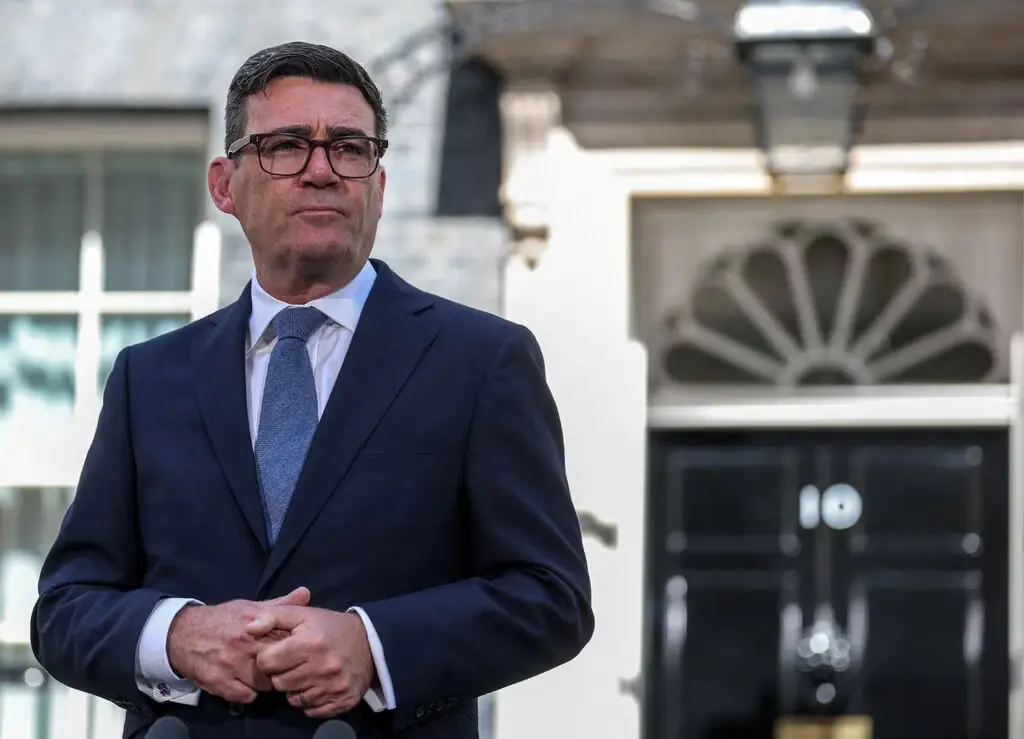
Andy Burnham
After this by-election turmoil and the Channel 4 report, the support for the Reform Party began to decline. Former Mayor of Greater Manchester Andy Burnham became Prime Minister, and the Labour Party's support subsequently rose.
Thus, the arrival of this nearly $100 million windfall was perfectly timed, shifting the focus of public opinion from "the Reform Party has been severely damaged" to "the Reform Party is financially robust."
This sudden influx of funds also carries risks. Farage claims that the party represents the voice of "ordinary people," but the two billionaires funding the party have no connection to ordinary citizens.
Both have spent most of their careers overseas, but Ben Delo stated that he specifically returned to the UK to donate to the Reform Party without restrictions. Ben Habib, the former deputy leader of the Reform Party who now criticizes Farage, stated that catering to overseas billionaires is no different from catering to foreign immigrants.
"The policies Farage promotes, aside from crypto-related provisions, will hardly affect these two individuals," Ben Habib said, "but they are influencing the direction of UK politics and the way the country is governed, which I think is very unhealthy."
"I can use the money to buy a Ferrari"
Christopher Harborne and Ben Delo possess enough influence to shake the political landscape, yet they rarely appear in the public eye.
Most of what the public knows about Christopher Harborne comes from a defamation lawsuit he filed in 2024. He sued The Wall Street Journal for an inaccurate report that implied he was involved in misleading banks regarding crypto companies. He was a McKinsey consultant, moved to Thailand in the 1990s, and founded an aviation fuel business.
The origin of most of his wealth began with a disaster that ultimately led to a massive fortune. In 2016, the global major cryptocurrency exchange Bitfinex was hacked while Christopher Harborne was trading on the platform. The platform issued BFX tokens valued in dollars to affected users, most holders chose to sell, but Christopher Harborne saw an opportunity and bought in large quantities. He then converted the tokens into equity, and after a series of subsequent transactions, acquired about 12% of Tether.
Today, Tether is valued at $183 billion, and Christopher Harborne holds about 12% of the shares. In this defamation lawsuit document, Christopher Harborne stated that he has never held any management position at Tether.
"He was just at the center of a huge venture at the right time," commented Carol Alexander, a finance professor at the University of Sussex. "This was extremely risky, and the outcome could have been completely different."
Christopher Harborne rarely uses social media and has never given a lengthy interview or appeared on a podcast. The few audio clips available come from a sharing session he held at his vacation spot in Kamala, Thailand.
"In Kamala, we strive to help every visitor, making a small change with each visit," he said calmly, sitting at a table in a shirt. "Just changing one small thing is enough."
This calmness is something Christopher Harborne gained after entering middle age. The Guardian quoted a video where he mentioned at a sharing session in Kamala that in his 40s, he worked 18 hours a day, relying on chocolate milk and cookies to sustain his energy. Around the same time, a two-seater plane he was piloting crashed into a couple's garden in Hampshire, England, fortunately, the homeowners were unharmed.
His political stance is difficult to categorize simply. His opinion pieces rarely mention borders or immigration issues. He claims to be mainly concerned with artificial intelligence, nuclear war, and climate change. As for the £5 million donation, he stated it originated in 2019 when a protester threw a banana milkshake at Farage during a campaign event in Newcastle.
This attack made him determined: "Not just now, but for the rest of my life, I will ensure Nigel's safety." After the donation was exposed, Farage was asked on a radio show about the use of the money, and he somewhat indignantly replied to the host, "I want to use it to buy a Ferrari, is that not okay?"
"I am glad to clear the stigma"
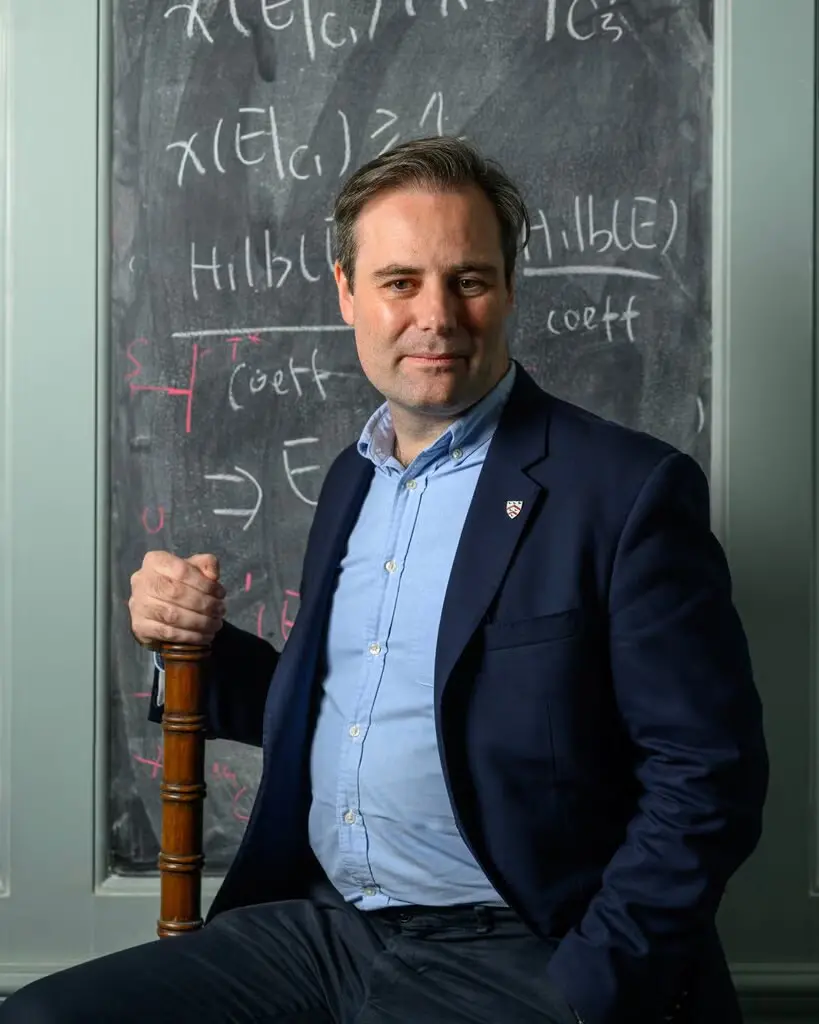
Ben Delo, cryptocurrency tycoon, co-founder of BitMEX
Ben Delo grew up in Oxford and was expelled from three schools during primary school, one of the disciplinary incidents involved vandalizing a teacher's restroom. At the age of 11, he was diagnosed with Asperger's syndrome, which he says made it difficult for him to understand social cues; others believe he simply enjoyed playing pranks. In 2005, he graduated from Oxford and wore a wetsuit under his tuxedo at a formal dinner. The dress code only required formal attire without further specifications.
British media often refer to him as the youngest self-made billionaire in the UK. His actual net worth is difficult to calculate accurately, and he has faced significant public setbacks on his path to wealth.
After joining JPMorgan in Hong Kong, he co-founded the cryptocurrency derivatives exchange BitMEX in 2014. Six years later, U.S. prosecutors accused BitMEX of deliberately failing to establish a comprehensive anti-money laundering and user identity verification system. In February 2022, Ben Delo pleaded guilty to a violation of the Bank Secrecy Act and agreed to pay a $10 million fine. Four months later, he was sentenced to 30 months of probation.
In March 2025, President Trump issued a full pardon for him.
"Today, a legal injustice has been corrected," Ben Delo wrote in a statement. "I am glad to clear the stigma and lift the burden of an unjust conviction, allowing me to continue my life and philanthropic endeavors."
After receiving the pardon, Ben Delo began large-scale charitable donations. Reports indicate that he has invested over $100 million in various charitable projects, including autism research and his alma mater, Oxford. His most notable project is called The Sanctuary, located in a neo-Gothic building near Westminster Abbey, situated between a co-working space and a private members' club. The entrance has no sign, and members are required not to take photos inside.
Harry Shukman from the British investigative organization Hope Not Hate researched this venue and described its interior: "Chesterfield leather sofas, ancient tapestries depicting medieval scenes, champagne, Fabergé eggs, and a stuffed penguin. There is also a map of Saint Helena Island, where Napoleon was exiled."
The Sanctuary regularly hosts events, inviting right-wing scholars, podcasters, and politicians who oppose "woke culture." Among the attending politicians is Rupert Lowe, who founded the Reform UK party, positioning it as more extreme than the Conservative Party.
Regarding Ben Delo, Rupert Lowe stated in a phone interview: "I think he is concerned about the direction in which the UK is heading and is trying to change the status quo in what he believes is the best way. I think he is a very admirable person."
Ben Delo stated in an opinion piece that he has "withdrawn from the cryptocurrency industry," and his donations are not aimed at acquiring more wealth. What he truly cares about is dismantling political correctness. He has described political correctness as "a totalitarian ideology that is stifling our society."
In his view, the Reform UK party is the only party capable of combating this invisible enemy. Ben Delo likens the Reform UK party to a startup, with the established parties being long-standing entities that have existed for hundreds of years, creating a significant disparity.
"One reason established parties have stood for so long is that they raise the cost of challenging them," he wrote. "I want to see a fair contest, with a level playing field."
"The market has largely digested this matter"
Now, the scales may have tipped in the opposite direction. The Reform UK party plans to hire up to 400 campaign managers in targeted constituencies nationwide. Farage has also stated that he aims to create "the strongest research and policy team in British political history."
The premise is that the Reform UK party can retain this donation.
In March of this year, the Labour Party introduced a bill proposing a political donation cap for British citizens living abroad or just returning home, limiting it to £100,000 per year. The bill will take effect retroactively from March 25, and if enacted, it would trigger a large-scale recovery of funds. If Ben Delo and Christopher Harborne settle abroad before this deadline, the Reform UK party may have to return nearly the entire £72 million donation.
Thus, the residences of the two have become a highly concerning issue across the UK.
Richard Tice, deputy leader of the Reform UK party, stated in a BBC interview: "We confirm that they are fully compliant with both current regulations and the proposed bill."
The bill is expected to complete its review in the House of Lords in the coming months, but the final destination of this cryptocurrency capital donation will likely be decided by the courts. Regardless of the outcome, Farage will solidify his position as the UK's leading populist leader, becoming a representative figure of the nationalist movement sweeping across Europe.
He may need to run again for the parliamentary seat in the Clacton constituency. Reports indicate that the investigation report from the parliamentary commissioner will be released soon, and if the conclusion is unfavorable to him, a recall petition will be initiated. Farage would then have to run for the same seat for the third time. If he wins, a daunting task lies ahead: to convince voters across the UK that he and the Reform UK party are ready to govern.
"There is no doubt that these scandals have damaged his image," said Alastair Campbell, a podcaster and former press secretary to Prime Minister Blair. "But he hopes to be like Trump: everyone has already accepted that such things exist. People will think, 'Yes, Nigel is that kind of person, but to be honest, all politicians are not clean.'"
 Risk warning


Popular articles





