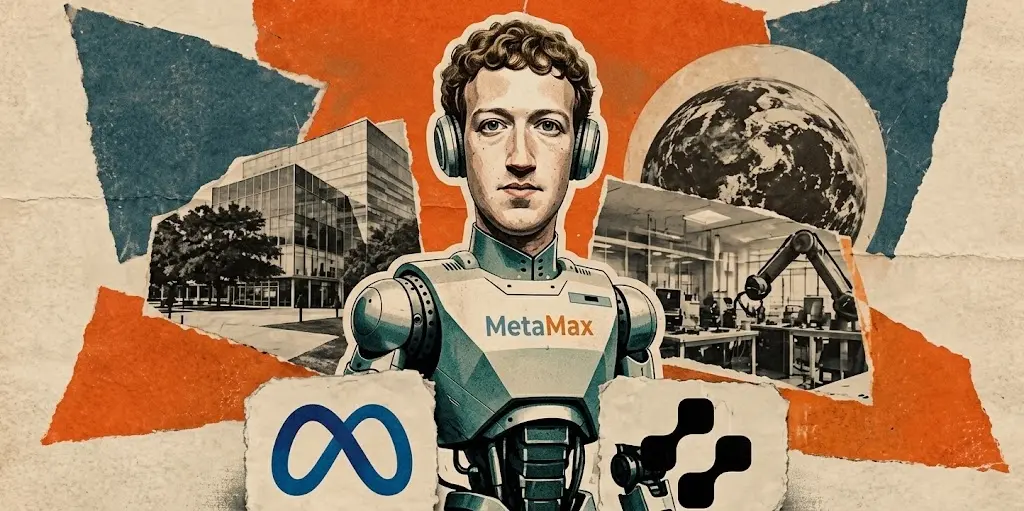
Meta Chief AI Officer: How was Muse created?
 Core Viewpoint


 The prototype of Muse was completed in a week or two, so why was it polished for another seven months? Meta's Chief AI Officer Alexandr Wang discusses how AI has evolved from occasional brilliance to being worthy of trust.
"Most people don't care about the research we did; they care about what it can do for them."
"If users encounter unreliable experiences, they will think this thing is garbage."
"I believe Muse can help everyone live the adult life they dreamed of as children."
When a document is left on a plane, knowing where it is and where you want it to go, there are still a bunch of things to handle next: finding someone to pick it up, arranging delivery, getting it into the office. David Senra mentioned in this interview that a friend of his handed these tasks over to Muse, requesting not to be involved in the subsequent process. According to his recount, Muse arranged the pickup and delivery, ultimately getting the document to his friend's office.
What impressed Senra were a few screenshots of conversations sent by his friend. For those accustomed to asking AI questions, this usage took an extra step: the AI not only provided suggestions but also took over the subsequent arrangements. Whether this experience can become routine is precisely the question pursued in this interview.
Muse is a personal AI agent launched by Meta, aimed at handling tasks for users. The guest in this episode, Alexandr Wang, Meta's Chief AI Officer and co-founder of Scale AI, discussed its journey from prototype to release: the team created a prototype in about one to two weeks, but the official launch came seven months later. During this time, they had to address the most pressing concern for users: can it be relied upon?
First, Find Something Worth Delegating to AI
Wang and his colleague Nat Friedman’s interest in personal agents stemmed from their own experiences using OpenClaw. OpenClaw can connect tools and execute tasks, prompting them to start integrating AI into their daily lives.
Wang recalls Friedman telling OpenClaw that he wanted to drink more water, and it surprisingly monitored him through camera feeds to see if he was drinking, then provided feedback. He also mentioned that Mark Zuckerberg is exploring the use of personal agents, such as having AI watch his mixed martial arts training videos and provide improvement suggestions.
In Wang's recollection, the industry's attention at that time was shifting significantly towards programming agents. However, Meta aimed to capture another type of demand: helping people manage their lives, freeing up time for them to do what they want. He connected this direction to Meta's existing products: applications like Instagram and WhatsApp, where people care about friends, family, and interests.
"We all have things we want to do and things we have to do. The promise of general artificial intelligence is that AI will handle many of the things we have to do, allowing us to spend our time on what we want to do."
Following this idea, Muse needed to start from everyday needs. Wang mentioned in the interview that the team often returned to one question: why should others care about this product? Users don’t need to be interested in AI research first; if there’s something in life they need help with, there should be a reason to use it.
Prototypes Are Quick, But Reliability Takes Time
In February 2026, Wang and Friedman each wrote down their thoughts on personal agents. Subsequently, the team created a prototype in about one to two weeks and presented it to the board. Some designs in Muse, including the early form of the mascot, emerged at that time.
The direction seemed right, and the prototype was impressive, but the subsequent work took much longer than those two weeks.
"That prototype sometimes worked and was quite magical, but most of the time it didn’t function properly and kept failing. We needed to turn it into a highly reliable, well-crafted consumer product that we could confidently hand over to users."
Wang believes that the early excitement around personal agents cooled down partly because people encountered surprises but found it hard to consistently get reliable results. After using it themselves, the team saw what it could do and also understood how those failures could deter users.
From prototype to launch, Muse took seven months. Wang specifically mentioned that Zuckerberg showed patience and restraint during this time. The team aimed to create a product that could eventually reach billions of people, ensuring that most of them had a good experience. A frequently malfunctioning prototype was clearly far from that goal.
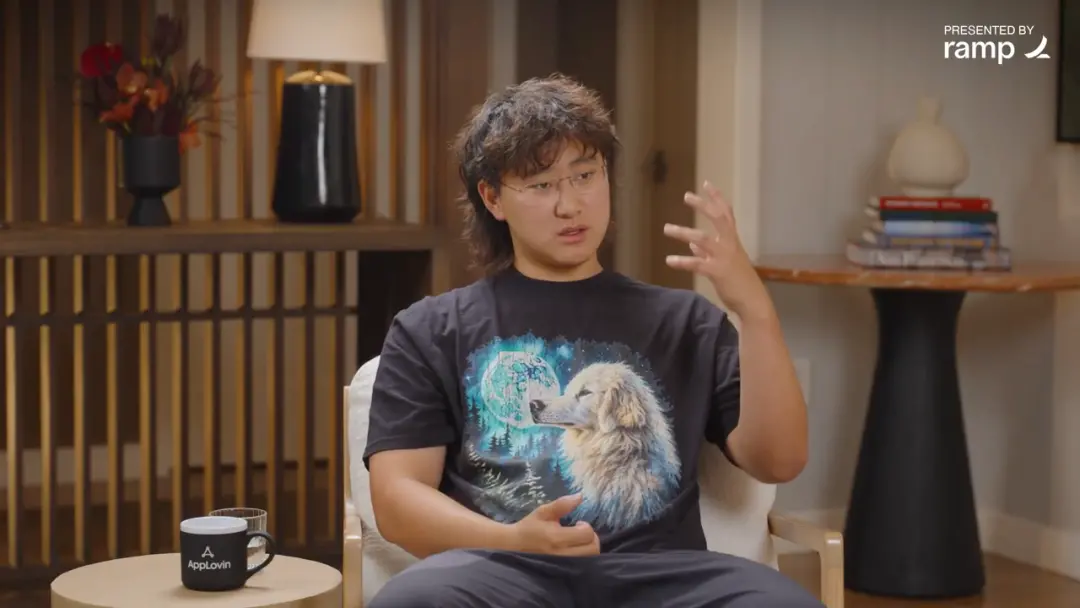
Wang recalls the early prototype of Muse: occasionally surprising, but often failing.
Breaking Down "Usability" into Over a Hundred Requirements
To identify where the problems lay, the team compiled a list of over a hundred behaviors and capabilities that an ideal personal agent should possess, then established evaluations, trained models, and checked for deficiencies item by item.
He did not disclose the entire list in the interview but clarified several factors affecting the experience: whether the model can reliably execute tasks, whether it can communicate with users during the process, and whether it will return to ask questions when it encounters issues that require user input. After model upgrades, these performances must continue to be compared and tested.
The team also repeatedly invited new users to walk through the process from installation to actual use. Developers were already familiar with "having AI execute tasks," but ordinary people might still treat it as a chat window. The product needed to help them understand what they could delegate to it, without assuming users would understand right away.
"We set thresholds for each item: if it falls below a certain level, it cannot be released; if it exceeds a certain level, it is considered good. Several times during checks, eighty items were green, and twenty were still red; we knew that wasn't enough."
Only when a specially trained model version met the thresholds for all items did the team cross this release hurdle. They also used this version themselves to confirm that it showed significant improvement over previous versions. Here, "all meeting standards" refers to the internal evaluation items listed and does not imply that all real-world tasks can succeed one hundred percent.
This provides a reference method for those developing AI products: first clarify what performance must be met after a user delegates a task, then decide whether it can be released. A successful demonstration and whether it is reliable during repeated user use need to be validated separately.
Don’t Turn a Product into a Wish List for Various Departments
Reliability needs to be checked item by item, and what experience the product should provide cannot rely on different teams piecing together functionalities. Wang is particularly concerned that products from large companies end up as a mixture of different ideas: each product manager wants to add their own input, and each team has its own assessment goals, ultimately leaving users to bear the confusion caused by this patchwork.
Therefore, even though the executive team views Muse as one of Meta's most important products, they still control the scale of participation. According to Wang, the combined number of people working on the model and product is less than two hundred. He also emphasized that this is relative to the scale of large companies.
In product selection, Friedman’s judgment has a significant impact on Muse. Wang hopes to deliver a complete and coherent experience that allows users to feel the team has a clear vision for the product. For those involved in development, once they finish the functionality they are responsible for, they must also consider whether it fits back into the overall product.
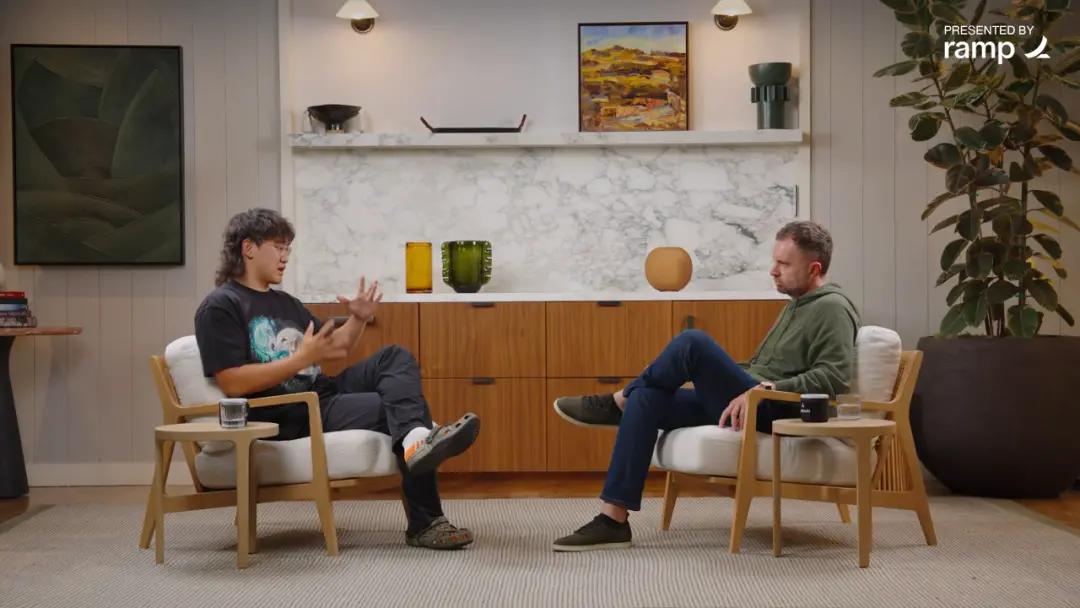
Wang discusses the product selection of Muse with Senra and the importance of maintaining a consistent overall experience.
Trust is Built Through Accomplishing Small Tasks
Even if the team feels the product is ready for release, users won’t immediately hand over all their important tasks. Wang observed that users who like Muse often go through a gradual process of deepening trust.
"You first give it a small task, it accomplishes it, and you think: oh, it can actually do that. Then you give it a slightly bigger task, and it accomplishes that too. After that, you hand it a somewhat larger problem."
Some college students Wang interacted with would verbally express their thoughts to AI, allowing it to organize them into a clear plan. This usage already reflects a considerable degree of trust: people don’t need to sort out all their ideas first before they are willing to delegate their unformed thoughts to AI.
However, Wang added a prerequisite for this gradual delegation: as the tasks become larger, the AI must consistently deliver results. If it starts making repeated mistakes, the goodwill accumulated from the first few tasks will be hard to sustain for users. This is also why the team repeatedly refines the model and checks its communication and inquiry capabilities.
Wang's own usage involves setting up some workflows in Muse first, then redirecting his attention back to meetings and interactions with people. He did not elaborate on the details of these workflows but described a state of use: by arranging some tasks, he can continue focusing on what he is currently doing.
What Will People Do with the Time Saved?
If AI takes over some tasks, what will people do with the time they regain? Wang thought of those plans that have gradually been set aside: many wishes from childhood become hard to pursue after finishing school, entering the workforce, and taking on family and various responsibilities.
He hopes personal agents can help people overcome these barriers: first realizing one idea, then daring to think of bigger things. He described his expectation as "living the adult life of childhood dreams." This is certainly still a grand vision, and the everyday usages discussed in the interview are just the beginning.
For those busy with work every day, this vision can boil down to a much smaller question: after AI handles a troublesome task for me, do I have a bit more time and energy to do things I have been neglecting? This is also a way to evaluate such products from the user's perspective. The seven months of refinement Wang spoke of ultimately need to be validated through these everyday experiences.
In Conclusion
If you want to try letting AI handle tasks for you, start by picking a small task with a clear scope and easily verifiable results, and see how much information it needs from you and whether it will come back to ask questions when issues arise. Once several uses satisfy you, expand the tasks you delegate to it. Reclaiming time can start with resolving a long-delayed trivial matter.
Source: "Creating Muse: The Fastest-Growing AI Product Since ChatGPT | Alexandr Wang, Meta" | David Senra (Guest: Alexandr Wang)
Original video: https://www.youtube.com/watch?v=S6l3aRsecuE
 Risk warning Risk warning