Why did AI surge after the midterm elections?
 Core Viewpoint


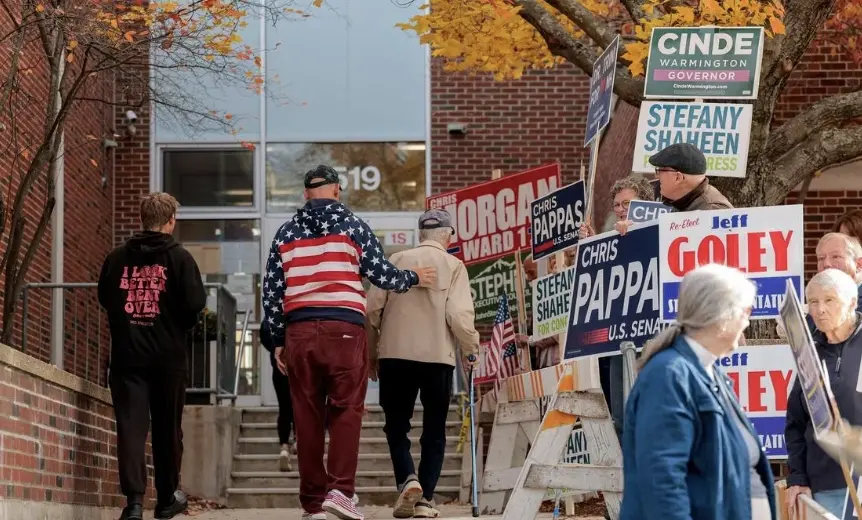
 Looking back, this midterm election that stirred the world feels more like a large-scale "expectation correction."
Author: Lone Ranger, Gelonghui
Today, global markets experienced a complete emotional rollercoaster in just a few hours.
On the domestic front, A-shares were sluggish and fluctuated in the morning, but afternoon funds surged into the technology sector, with the Sci-Tech Innovation 100 index soaring 10.14%, marking the largest single-day increase in nearly two years; the ChiNext index jumped 6.4%, achieving the largest single-day increase in nearly a year.
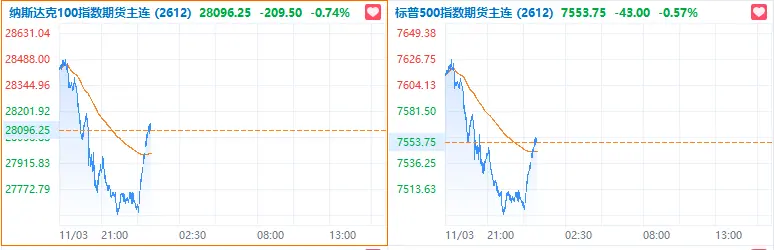
On the U.S. side, Nasdaq futures once dropped over 2%, and S&P 500 futures fell more than 1%. The initial sell-off was quite precise, not indiscriminate chaos. CoreWeave fell 7% after hours, while Nvidia, Google, Amazon, and TSMC all dropped over 2%.
Subsequently, the market reversed, with indices recovering from significant declines to slight gains, U.S. Treasuries strengthened, and gold returned above $4,000.
The Korean Composite Stock Price Index was even more dramatic, rebounding sharply from a 4% drop.
A historic Democratic sweep led to a collapse followed by a recovery, a deep V-shaped reversal.
The most talked-about figure throughout was still Elon Musk.
He spent $445 million for the Republican Party, firmly holding the title of "largest individual donor," only to face a major defeat. Pre-market, Tesla dropped over 5%, and SpaceX fell over 4%, rendering the billionaire's political insurance policy void.
He humorously remarked on social media: "My laser communication intervention in the election may not have worked this time." The money was spent, but the splash was minimal.
Previously, everyone thought that the Democratic Party's control would clearly be a negative for technology, so why did it instead lead to a big surge?
01
In fact, the morning's plunge was more due to being startled by "unexpected" outcomes.
Although everyone predicted a 99% chance of the Democratic Party winning both houses before the election, the extent of the Senate flip and the loss of deep red states indeed exceeded the expectations of most institutions.
Once the expectation gap emerged, funds instinctively ran for cover.
At that time, the market was mainly afraid of three things.
First, regulatory tightening. There was fear that the Democratic Party would quickly push for strong AI regulations, tighten data center approvals, and ramp up technology antitrust measures, directly hitting the lifeblood of capital expenditure in the AI sector.
Just a few weeks prior, AI infrastructure had already been in a correction, and the market had been buzzing about whether such significant investments could yield returns. Naturally, the emergence of negative news became a major area for sell-offs.
Second, fiscal shifts. There was concern that the Democratic-controlled Congress would completely block Trump's tax cuts and deficit expansion, leading to tighter fiscal policies that could drag down the economy and corporate profits. The market followed suit and fell, with the core reason being this.
Third, uncertainty in local policies. With Texas and Ohio, major powerhouses, turning blue together, no one could predict whether local governments would implement restrictive policies. This kind of decentralized regulation across states is harder to predict and hedge than federal legislation.
However, the panic did not last long. After the election results were finalized, the market quickly reacted: the election's impact on AI was more about valuation and sentiment, not cash flow and industry trends.
Funds began to buy back, and aside from the negative news settling, there were two key logical points.
First, although the Democratic Party won both houses, they could not achieve the two-thirds majority needed to override a veto. Even if they wanted to implement restrictive policies on the AI industry, it wouldn't be so easy to pass.
Second, Trump publicly stated that he holds complete veto power and can, if necessary, use his presidential veto to force the Democratic Party into a bipartisan agreement.
As long as Trump does not sign, even the most stringent AI regulatory bill cannot become law.
The veto power here is not a positive for AI, but it pushes an extreme scenario that panic had assigned a positive probability back down to nearly zero.
Going deeper, Wall Street is not afraid of divided power; what they fear is chaotic meddling by a dominant Democratic Party.
Under a divided power structure, not only is the Democratic Party's AI regulatory bill hard to implement, but Trump's own tax cuts and fiscal expansion agenda would also be obstructed.
Both sides' legislative agendas would effectively block each other, resulting in the current policy framework remaining largely unchanged. Corporate tax rates would remain the same, tariff frameworks unchanged, and current regulatory agendas intact.
For high-valuation tech assets, this state of "no changes" itself is a form of implicit support—at least there’s no need to pay an extra risk premium for "sudden tax increases" or "sudden new regulations."
02
In fact, the Democratic Party has never been the "anti-AI faction"; strategically, they do not reject AI.
Despite the bickering between the two parties, they share a high degree of consensus on the issue that "AI is at the core of America's technological hegemony."
Previous chip legislation and the national AI research strategy were precisely pushed during the Democratic Party's administration.
More practically, many within the Democratic establishment have substantial investments in tech stocks.
The most typical example is the Pelosi family, whose total valuation of U.S. stocks is about $134 million, with over 70% in tech and AI-related assets, and Nvidia being the largest holding, accounting for 37.3%, with historical disclosures showing holdings peaking between $5 million and $25 million. Microsoft, Google, Amazon, and Broadcom are also on the list.
Not just Pelosi, New Jersey Congressman Josh Gottheimer, who is also the co-chair of the Democratic Party's AI and Innovation Economy Committee, is responsible for leading the party's AI legislative agenda, with his family's holdings between $8.5 million and $38 million, with Microsoft alone accounting for about 69% of his personal portfolio, along with holdings in Nvidia, TSMC, Applied Materials, and other upstream and downstream assets.
Silicon Valley representatives like Ro Khanna, Senator Cory Booker, and Adam Schiff also hold large amounts of leading tech stocks or semiconductor and Nasdaq-themed ETFs.
The NANC ETF, which specifically tracks trades by Democratic lawmakers, has an information technology sector weight close to 45%, with the top three holdings being Nvidia, Microsoft, and Google.
These individuals only want regulation; they are competing for AI leadership within the framework of "safety rails," demanding that giants pay more taxes, take on more responsibilities, and regulate industry order, not to kill the industry.
If a bill that severely harms AI were to be proposed, not to mention that it wouldn't pass Trump's scrutiny, it wouldn't even pass within the Democratic Party itself.
Therefore, even if the Democratic Party wins both houses, it is highly unlikely that there will be any stringent laws from Washington in the next two years that could severely harm global computing expansion; instead, it is more likely to unfold along a narrow path of model safety testing and restrictions on specific high-risk applications.
What can be implemented are merely soft requirements like information disclosure, voluntary compliance, and safety standards.
The recent collective recovery of AI stocks is essentially the convergence of this expectation gap.
In fact, the policy risks brought about by the midterm elections are, at their core, just short-term emotional disturbances.
What truly determines the mid-term trajectory of AI is still the industry itself—under high interest rate environments, the rising cost of financing and price competition leading to lower returns on AI capital expenditure are the core issues.
Looking at it in the long run, these are also short-term impacts; the long-term narrative space for AI has not yet reached its ceiling.
03
What domestic investors are most concerned about is how the outcome of this election will impact the domestic AI sector.
We know that currently, many of the domestic AI hardware giants have major clients that are large foreign companies, so their stock prices will certainly follow overseas sentiment in the short term.
However, in the medium to long term, the line of self-sufficiency and control has become more certain.
Many people worry that the Democratic Party's rise to power will intensify AI restrictions against China; the direction is correct, but it is important to understand that the technological competition with China is a consensus between both parties, with the only difference being the approach.
The Republican Party prefers unilateral sanctions and quick resolutions; the Democratic Party is more inclined to collaborate with allies to set rules and create a systematic blockade.
But their goals are entirely the same: to maintain the advantage in high-end computing capabilities.
Therefore, once the Democratic Party completes its transition, we may see continued tightening of export reviews for high-end AI chips, high-speed interconnect chips, and EDA tools, and areas like transshipment trade and remote access to cloud computing may also gradually face restrictions.
However, these restrictions will have clearer boundaries; high-end capabilities may continue to be choked, but mid- to low-end capabilities will continue to be released, and there will not be a complete decoupling.
After all, U.S. tech companies also rely on revenue from the Chinese market to support their R&D; a clean break would ultimately backfire on themselves.
Currently, China's capabilities in building intelligent computing centers, server manufacturing, optical module production capacity, and the implementation of large industry models are highly competitive in the global market. From "East Data, West Computing" to various local AI industry policies, and the intelligent transformation of finance, industry, and government, the long-term logic of domestic computing infrastructure is very stable.
The pace of building domestic intelligent computing centers and industry computing clusters is determined by domestic industrial policies and digitalization needs, and is basically unrelated to the U.S. midterm elections.
Among these, domestic AI servers, domestic computing chips, and domestic storage, along with supporting power cooling and optical module companies, benefit from the trend of self-sufficiency and control, with the highest order certainty.
They can be considered "counter-cyclical assets" within the AI sector, where corrections caused by external fluctuations often present windows for long-term positioning.
As for the AI application layer, the impact of the election is even smaller.
In sectors like large industry models, AI + industry/healthcare/autonomous driving, the demand, data, and scenarios are all domestic, with the core contradiction being the ability to commercialize.
How their market performs depends solely on technological iteration, whether customers are willing to pay, and whether there are enough solid case studies, and will not change due to an election.
04 Conclusion
Looking back, this midterm election that stirred the globe feels more like a large-scale "expectation correction."
It has eliminated the most extreme regulatory risks imagined by everyone, allowing the market to return from panic to rationality; however, it has not brought any new incremental positives, so do not expect it to directly trigger a new round of surges.
Once this wave of enthusiasm subsides, the market will ultimately return to fundamentals.
In the first half of the AI market, the competition was about expectations, imagination, and who could expand faster.
In the second half of the AI market, it will ultimately return to implementation, profitability, and real demand.
This is even more true for the domestic industry.
 Risk warning
 Risk warning