One year of Japanese yen stablecoin issuance: The first gas-free adopter is a quail egg merchant; a single transaction limit of 1 million becomes the maximum restriction
 Core Viewpoint

 JPYC has been issued for a year, with expanded application scenarios, but the circulation scale has only reached about a quarter of the internal target.
Original Title: JPYC President Okabe: "Honestly, it hasn't grown" — Reflecting on One Year of Issuance and Miscalculations
Original Author: Naoki Tochiyama
Original Compilation: Wu Says Blockchain
TL;DR
· JPYC has been issued for a year, with expanded application scenarios, but the circulation scale has only reached about a quarter of the internal target. The cumulative issuance has exceeded 10 billion yen, and the current circulation exceeds 3 billion yen, expanding into retail payments, corporate payments, and overseas transactions.
· The limit of 1 million yen for single issuance and redemption has become a growth barrier. Large corporate holdings require batch remittances, and the exchange between JPYC and USDC, as well as the introduction of related trading pairs on domestic exchanges, also face restrictions or unclear rules.
· The listing on Upbit once triggered an upward decoupling, testing the issuance and redemption capabilities. Arbitrage demand led to a surge in issuance applications, and Okabe estimated that the combined daily trading volume on Upbit and Uniswap reached about 35 billion yen, with no major incidents occurring.
· JPYC hopes to promote regulatory easing, aiming to increase circulation to several tens of billions of yen in the second year. Okabe believes that the next month or two is a critical period for pushing rule adjustments; the company plans to expand to more exchanges and blockchain networks, aiming for approximately tenfold growth each year.
Japan's first yen stablecoin, JPYC, celebrated its first anniversary of issuance on October 27. Over the past year, JPYC's application scenarios have significantly expanded: Lawson has conducted trials for payments through POS cash registers, logistics giant AZ-COM Maruwa has decided to use JPYC to pay about 2,300 partner companies, and collaborations with large companies like Sony Bank and LINE NEXT are also progressing. Overseas, JPYC has been selected as the cooperative currency for the U.S. Circle's on-chain foreign exchange infrastructure StableFX and has begun trading on exchanges like Upbit in South Korea.
JPYC President Noritaka Okabe reflected that business development has been "faster than expected," with announcements made in the first year that he originally thought would take several years to achieve. However, the expansion of application scenarios has not yet led to the expected circulation scale. In September, JPYC announced that the cumulative issuance had exceeded 10 billion yen, but when discussing circulation, Okabe candidly stated, "To be honest, the growth is not ideal." The current scale is only about a quarter of the company's internal target.
What progress has exceeded expectations, and what obstacles have constrained growth? NADA NEWS interviewed Noritaka Okabe on this matter. Over the past year, NADA NEWS has continuously reported on JPYC's development and has attached relevant historical reports under various topics in this article to help readers gain a more comprehensive understanding of the year's development context.
Q: JPYC has reached its first anniversary of issuance. Reflecting on this year, what are your feelings?
The progress has been faster than expected. What I thought would take several years to achieve was announced in the first year. Especially regarding overseas use, to be honest, I originally thought it would not appear until after the second year.
JPYC is issued on a public chain that anyone can use without permission, so without our knowledge, JPYC has already been trading on Upbit. This has also had a positive driving effect, and discussions for substantial cooperation with banks are progressing continuously.
The usage methods have also exceeded our imagination. The earliest adopter of gas-free payments, meaning users do not have to bear blockchain transaction fees, was surprisingly a vendor selling quail eggs. Additionally, there are cases of AI entities using JPYC to buy and sell rice, as well as using JPYC to pay for quantum computing fees.
Q: How is the data performance? The cumulative issuance has exceeded 10 billion yen, and the current circulation exceeds 3 billion yen.
To be honest, I feel the growth is not ideal, but the trading volume is quite good. Among stablecoins outside the U.S. dollar, I believe the yen stablecoin ranks third or fourth after the euro. However, in terms of amount, I am not satisfied.
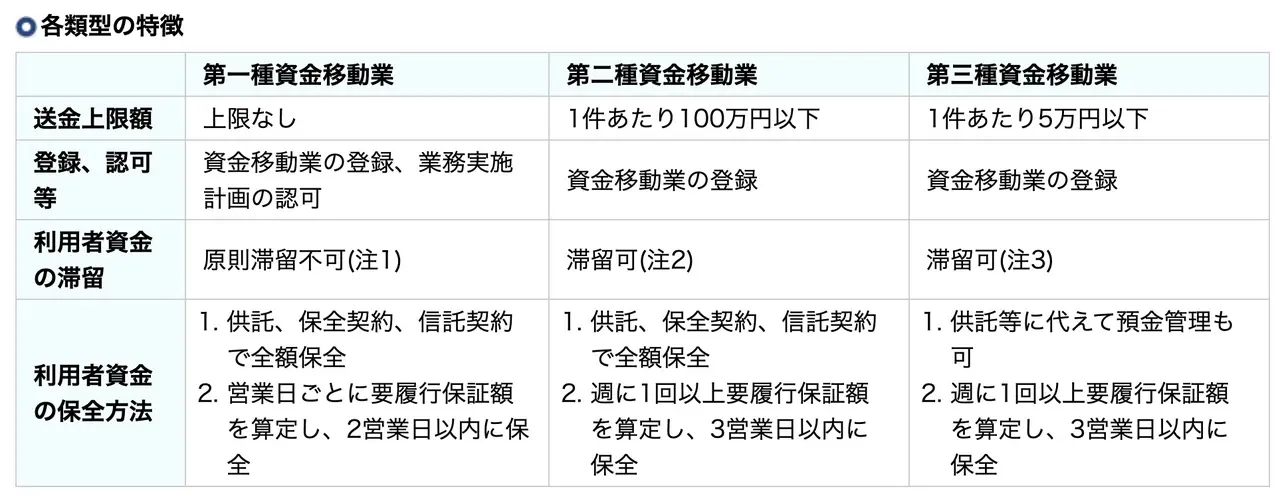
Once we started the business, I personally experienced the strictness of the 1 million yen limit. Asteria expressed a willingness to hold 1 billion JPYC, but they can only remit to us in multiple batches, gradually increasing the balance. If companies do not have such determination, it is difficult to hold more than 100 million JPYC.
Compared to the internal targets set by the company, the current scale is only about a quarter. However, including U.S. dollar stablecoins, the entire stablecoin market has remained at around 300 billion dollars (close to 50 trillion yen) over the past year.
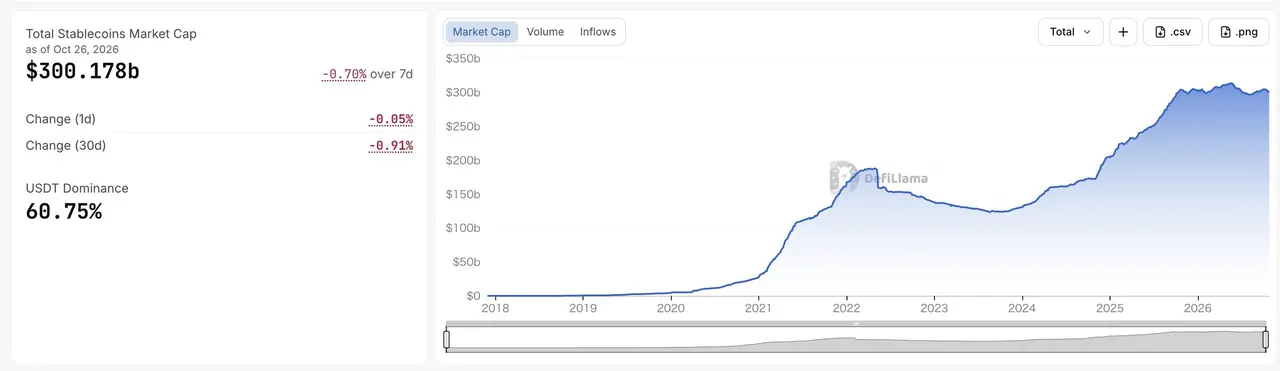
I believe that with higher interest rates in the U.S., people feel that rather than holding stablecoins, it is better to hold government bonds directly. In such an environment, our performance is still considered good.
(Editor's Note: JPYC is a registered operator of "Type 2 Fund Transfer Business," which only allows remittances of no more than 1 million yen per transaction. Therefore, the limit for single issuance and redemption of JPYC is also 1 million yen.)
Q: On September 17, JPYC began trading on South Korea's Upbit, with prices significantly deviating from 1 yen. What happened that day?
At that time, I was on a flight returning from the U.S. Before boarding, I saw Upbit's announcement and left a message saying, "JPYC will not skyrocket," then boarded the plane. But after landing, the situation had completely changed. The company received applications equivalent to several months' worth in a single day, and many colleagues worked until 4 a.m. processing them.
We had prepared for the situation of a downward decoupling in price, as this would trigger concentrated redemptions, so we had previously developed a corresponding business continuity plan (BCP). However, we typically do not consider the situation of an upward decoupling, as we have no other means besides continuing to issue and redeem at 1 yen.
If JPYC is taken to a DEX (decentralized exchange), it can be sold for 2 yen or 3 yen, so everyone was urging us to "hurry up and issue." Even so, to prevent JPYC from being used for money laundering, we could not relax standards such as identity verification. The incident happened suddenly, and we could not increase manpower in time, so we had to rely on our usual staffing, with everyone working long hours to cope. I estimate that the combined daily trading volume on Upbit and Uniswap reached about 35 billion yen, but we ultimately did not experience any major incidents and managed to respond smoothly.
Q: The circulation once exceeded 4 billion yen, but then fell back to 3 billion yen.
This can be easily understood in the context of banks. If a local bank with deposits of 20 trillion yen sees its deposits surge to 40 trillion yen in one day and then drop to 33 trillion yen after a while, the average bank would probably have gone bankrupt long ago.
We were able to cope because we had previously raised nearly 7 billion yen in Series B financing, giving us a relatively ample capital reserve. At that time, some may have thought we raised too much, but this has made me feel the importance of having sufficient funds on hand again. Successfully coping with this reversal of capital flow also helps reassure everyone to use JPYC more confidently.
Q: To expand usage, JPYC announced in October that it has provided relevant information to the Japan Fair Trade Commission. What is the purpose of this move?
We often hear people say, "Using JPYC does not benefit users." Although some merchants offer discounts or free shipping for customers paying with JPYC, the number is still limited. Upon investigation, we found that many merchants are concerned about the merchant agreements for credit cards or QR code payments, which makes them hesitant to offer discounts.
What products to discount and how to discount should originally be decided freely by both parties in the transaction. A few years ago, the Japan Fair Trade Commission released a report stating that prohibiting merchants from offering discounts for cash payments may involve issues under the Antimonopoly Act. We believe that the same reasoning applies to stablecoin payments, so we provided them with relevant information. The specific details of the communication cannot be disclosed, but I feel that both sides have reached a consensus on the basic idea.
Q: As one of the reasons for limited growth, is there hope for the 1 million yen limit to be eased?
The materials from the Financial Services Agency's study group state that they will "review and study" the stablecoin system.
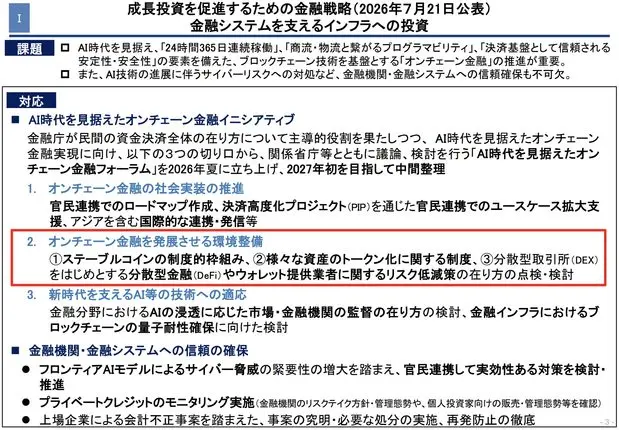
I believe that in administrative language, this implicitly suggests the intention to adjust the current system. It is certain that this matter has been included in the agenda. However, how it will ultimately be adjusted is still unclear, so it is necessary for operators and industry associations to proactively propose suggestions.
The key lies in the next month or two. Policies are usually discussed in the fall and submitted to the Diet for review at the beginning of the year. If there is no progress in discussions from October to December, we may have to wait another year. The "Fund Settlement Act" is generally revised every two years, and if we express our opinions sufficiently now, there is a possibility of catching up with next year's legislative amendments.
Q: Does this require a change in the law?
Not necessarily. The 1 million yen limit is stipulated by government orders and ministerial ordinances, so theoretically, it can be adjusted by the Financial Services Agency within its authority. I believe that new rules could potentially be implemented as early as next spring. For example, how is "single transaction not exceeding 1 million yen" defined? Does the restriction apply to issuance, secondary market circulation, or redemption? We could also seek to ease restrictions in these areas.
On October 21, Japan's Minister of Land, Infrastructure, Transport and Tourism stated that they would study the use of stablecoins in tax-exempt transactions for visiting tourists. The application of stablecoins has risen to the level of national policy. When the relevant laws were introduced in 2022, influenced by events like Libra (the digital currency concept announced by U.S. Facebook, now Meta, in 2019), regulatory authorities may have wanted to impose restrictions first to allow businesses to start on a small scale.
Now, with global efforts to promote on-chain finance, the atmosphere in Japan has also changed, and there is a growing belief that it is necessary to maintain monetary sovereignty through digitization. We hope to continue advocating against unnecessary strict restrictions. We have already felt some positive feedback.
Q: Are overseas stablecoins also subject to the same restrictions?
Yes. In actual business, many people believe that even if domestic exchanges in Japan want to launch trading pairs of JPYC and Bitcoin (BTC), they will be limited by 1 million yen. This makes it difficult for operators to make a profit. We hope to relax the restrictions or clarify the rules. The discussions leading up to the end of the year will be supported by public opinion, which will play a promoting role. We hope you will report more on this.
Question: What is the goal for the second year?
We hope to promote more global exchanges to list JPYC, and we also hope that domestic electronic payment tools and other trading service providers in Japan can support JPYC. Currently, there are only two registered service providers in Japan, namely SBI VC Trade and Coincheck, but we are maintaining close communication with various companies through industry associations. Whether or not they can go live ultimately depends on their respective business plans. We will also increase the blockchain networks that support JPYC. Currently, the issuance balance (circulation) is in the billions of yen, and we hope to raise it to at least several hundred billion yen. I believe we need to achieve about tenfold growth each year.
 Risk warning
 Risk warning





Popular articles