Interview with the Amodai siblings on their first day of listing: How to avoid a $900 billion computing power commitment from exploding, and why controlling speed is a smarter business strategy
 Core Viewpoint


 On the day of Anthropic's IPO, Dalio and Daniela Amodei accepted an exclusive interview with CNBC: explaining why the $900 billion long-term computing power agreement is within healthy boundaries, why they actively "compress 200 miles into 90 miles," why cutting-edge models are winner-takes-all, and discussing chip diversification, electricity price guarantees, and the PBC architecture.
Editor's Note
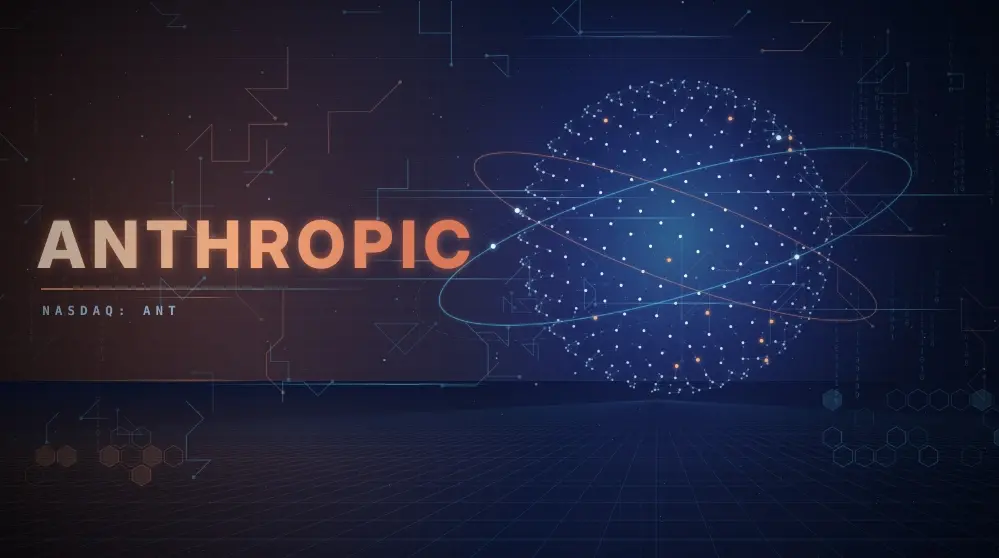
On November 19, Anthropic officially landed on NASDAQ (stock code: ANT). The IPO issue price was $83, raising approximately $81.3 billion, setting a new historical record in the global capital market; the final closing price was $97.17, an increase of about 17% from the issue price, with a fully diluted valuation of $1.77 trillion.
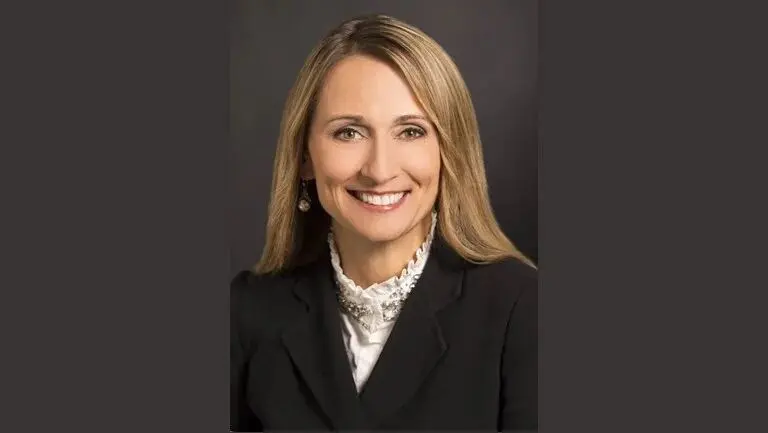
This is an exclusive interview with founders Daniela and Dario Amodei on the day of the listing. CNBC's well-known host Andrew Ross Sorkin posed a series of sharp market questions on site: How will the $900 billion computing power commitment be fulfilled? Will the proactive "pacing" stifle business growth? Will the open-source siege and low-priced tokens flatten profits? And how do they navigate between NVIDIA, Musk, and the Pentagon?
Below are selected dialogue excerpts, with a total length of about 4,700 words, reading time approximately 8 minutes.
Highlights of This Issue
Scaling Laws are merely a smooth mathematical curve on paper, but when they manifest as overwhelming economic productivity in physical reality, the shock is something we initially could not even believe ourselves.
Even with self-evolving technology that can push vehicle speeds to 200 miles per hour, we prefer to keep the speed at 90 miles. We use the extra computing power to build a solid safety barrier—only models that are absolutely reliable and gain the trust of global enterprises can dominate the market in the long run.
The competition among large models is primarily not about price, but about quality. The exponential leap in cognition means that once a critical point is breached, models can leap from writing code to tackling molecular biology and precision embodied intelligence. Commercial value will only concentrate on frontier models.
We signed a long-term computing power agreement worth $900 billion, backed by cash on hand and existing annual revenue; history has repeatedly proven that betting on models with stronger cognitive abilities yields very high returns and is ultimately worthwhile.
The surge in data centers cannot be borne by the general public. We established a strict rule: any additional price difference caused by data centers connecting to the local grid will be fully covered by Anthropic.
I wrote a core principle in my letter to investors, which is also the core of how we operate internally: always underpromise and overdeliver.
We must never be constrained by others in our computing power foundation. Designing the best chips in the world with partners like NVIDIA, Amazon, Google, and Broadcom is a tangible strategic advantage for us.
Scaling Laws Realized: The Curve on Paper, the Cognitive Explosion in Reality
Q: When you first founded Anthropic, almost no one in the industry understood Scaling Laws better than you. But today, facing a market value starting at "trillions of dollars," was all of this within your expectations?
Dario Amodei (Co-founder and CEO of Anthropic): Frankly speaking, seeing theoretical deductions is one thing, while witnessing reality is another. In the lab, Scaling Laws are merely a coordinate line on draft paper, predicting with mathematical language that as long as parameters and computing power are stacked, models can unlock corresponding cognitive levels and economic processing capabilities at specific nodes. However, drawing lines on paper is easy; watching that line evolve into a sweeping productivity force in the real world is an entirely different matter. The theory had long predicted the scale this technology should have, but when it truly materialized, we were still deeply shocked.
Q: Anthropic has become the largest "Public Benefit Corporation" (PBC) in the capital market. What does this structure of "writing social welfare into the charter" mean for secondary market investors entering today?
Daniela Amodei (Co-founder and President of Anthropic): Our mission is to create things that benefit everyone. As a PBC, we are legally required to maintain an absolute balance between shareholder returns and public benefit. When we, the co-founders, established the company and learned about the concept of public benefit corporations, we immediately felt this was exactly what we wanted to do. We must embed safety mechanisms and public benefit into the corporate DNA. For mature investors, this is not a business burden but a strategic hedge that allows the company to avoid self-destruction amid disruptive technological waves.
Pacing Philosophy: Why Actively Slow Down to 90 Miles Per Hour When You Could Go 200?
Q: Investors are most concerned about growth, yet you repeatedly emphasize "pacing." If you slow down technological evolution for safety, how should the market accept this seemingly anti-commercial setting?
Dario Amodei: This contradiction objectively exists, but as underlying technology becomes stronger, the entire industry will inevitably hit this wall, with no escape. Our distinction is simply choosing to face it more honestly and earlier.
For example: you're driving a car at 60 miles per hour, and suddenly you invent a power engine that can instantly boost the speed to 200 miles per hour—in the AI field, this is when models begin to possess recursive self-improvement capabilities. Pacing means we know we can speed up to 200 miles per hour, but we actively choose to drive at 90 miles. We extract the surplus speed and computing power redundancy to focus on solving safety alignment.
In the long run, this is actually a far-sighted business strategy. The ultimate outcome in the large model race is not about who runs the fastest, but who is most worthy of global enterprises entrusting their core business. Whoever can maintain absolute safety at extreme speeds will capture the largest share of the enterprise market.
Q: Today, on your listing day, what kind of stock price increase do you consider "successful"? Is it a 10% or 20% increase? If the increase is too large, does it deviate from your expectations?
Dario Amodei: Regarding fluctuations in secondary market stock prices, compliance requires us to remain silent.
Daniela Amodei: The stock price is for today, but Anthropic is a typical ultra-long-cycle company. Today is an exciting milestone, but it is just a pit stop in a long race. Tomorrow morning, the sun will rise as usual, and our R&D efforts and bottom-line principles will not change at all. For true long-term technology investors, the noise from the listing is far less important than the evolution of underlying technology.
Frontier Returns: Competing on Quality, Not Price, Most Value Accumulates at the Frontier
Q: The current competition is unprecedented: open-source models are attacking, OpenAI is desperately lowering token prices, and Microsoft is selling your models while pushing its own low-cost models. Will the gross profit margin of large models be completely flattened by this price war?
Dario Amodei: We must recognize two underlying business logics here.
First, traditional goods compete on price, but the core battlefield for large models is always at the "frontier." This is a market that prioritizes quality because the economic value released by cognitive leaps is nonlinear. As one climbs the cognitive ladder, the issues models can solve will leap from basic chat Q&A to writing underlying architecture, and then to automating molecular biology research and high-precision robotic control. The commercial scale that frontier models at the top of the technology chain can create far outpaces mediocre models by dozens of positions. Almost all excess profits will ultimately siphon to frontier models.
Second, only by mastering the hardest frontier technologies can you have the capability to create low-cost models through dimensionality reduction. For example, our Haiku 5.5 has directly reduced its price by four times compared to the previous generation Haiku 4.5, and is significantly cheaper than the top-tier Opus and Fable 5 families. The "computing power multiplier" we developed while sprinting towards frontier large models can be directly reused for lightweight models. In the low-cost market far from the technological frontier, we can still establish a moat with significantly lower costs.
Computing Power Bet: With $900 Billion in Long-Term Procurement, How Can You Ensure No Blowups?
Q: The energy throughput of data centers is approaching physical limits, even causing severe backlash from local power grids. How do you ensure that infrastructure can continue to expand in the face of increasingly stringent energy consumption reviews?
Daniela Amodei: Our underlying logic is that we must never let the cost of AI expansion fall on the general public. Many local residents worry that data centers connecting to the grid will raise local residential electricity prices; in response, Anthropic has made a clear commitment: any price difference arising from the grid will be covered by us. High-tech companies entering any community must ensure that the interests of local residents are not harmed; this is the only legitimacy for long-term computing infrastructure.
Q: But you are burdened with a long-term computing power agreement worth up to $900 billion. Before achieving full profitability, will such astronomical capital expenditure drag down cash flow? Is it a phased investment or an irreversible permanent state?
Dario Amodei: First, we need to clarify the cycle: this $900 billion is spread over a very long-term agreement in the future. Compared to our large cash reserves and currently explosive annual revenue, this long-term commitment is completely within a healthy boundary.
In computing power forecasting, we prefer to adopt a conservative lower-limit strategy, supplementing procurement from the spot market when explosive demand arises. More importantly, historically, we have repeatedly seen that investing heavily in training models with stronger cognitive abilities is always worthwhile. Therefore, we are willing to make such a large computing power expenditure.
Q: Including the funds raised from the IPO, you may have about $250 billion in cash. How helpful is this reserve for you in obtaining an investment-grade credit rating and developing low-cost bond issuance in the future?
Dario Amodei: We will have to see the outcome. We hope to achieve an investment-grade rating at some point in the future; debt is also a tool available to us, and we would like to use it at some point.
Giant Competition and Geopolitical Reflection: NVIDIA Is Not the Only Ace
Q: Regarding the deep safety responsibilities of models, even Microsoft CEO Satya Nadella recently admitted, "Simply stacking computing power does not necessarily lead to safety alignment," and that dedicated mechanisms need to be established to discipline AI. As a company that has always emphasized safety as a selling point, can your enterprise defense withstand scrutiny?
Daniela Amodei: The experience gained from deep engagement with enterprise-level clients is invaluable. Anthropic has always borne ultimate responsibility: ensuring that the underlying pre-training process is flawless while equipping models with the strictest safety barriers. By co-creating with enterprise clients, we understand better than any ivory tower laboratory detached from business what real-world risks invoking Claude will trigger.
From day one, we have been a "safety-first" company, which is also the reason we established ourselves independently. The destructive potential of this technology is as real as its commercial miracles; whoever can completely seal off systemic vulnerabilities can control the lifeline of the enterprise market.
Q: In the past few weeks, the secondary market environment has been extremely severe, and Jensen Huang and NVIDIA have also been at the center of public opinion storms. How did you respond to investor doubts during your roadshow amid this turbulence?
Dario Amodei: We are very confident internally. Technological breakthroughs are measured in years, while market noise is measured in weeks or even days. Those short-term violent fluctuations cannot shake the competitive barriers we are building.
I emphasized a phrase in my letter to investors, which is our core principle of operation within the company and something we tell our recruits: always underpromise and overdeliver.
Q: But NVIDIA is your investor and also participated in this listing, while there are significant differences between your public stance and Jensen Huang's on the policy of semiconductor export controls to China. How do you handle this complex competitive and cooperative tension? Should Jensen Huang return to the front line?
Dario Amodei: We have been working with NVIDIA for many years, building world-class data centers together, and we are extremely close business partners. However, in the mature business world, healthy cooperation does not mean maintaining a consistent stance on all public policy issues. Our policy positions are entirely based on our independent analysis of the global security landscape and the trajectory of general artificial intelligence technology; we stand by our position while fully respecting our partners' demands. As for Jensen Huang's personal job direction, we will not comment on that; it is up to NVIDIA to decide.
Daniela Amodei: To add, in the underlying chip ecosystem, Anthropic's core moat is "thorough multi-source hedging." We are not only deeply tied to NVIDIA but also have custom self-developed chips with Amazon, a deep alliance with Google, and are working closely with Broadcom. Not tying our lives and fortunes to a single giant gives us strong strategic maneuverability in computing architecture.
Q: Speaking of computing diversification, Elon Musk is also one of your computing suppliers. There are rumors that after the contract expires, you may reduce some of the SpaceX computing usage and shift elsewhere; is this true? Additionally, what is the current progress with the Pentagon?
Dario Amodei: No one can say for sure what will happen in the future. The quality of computing power delivered by SpaceX is very solid, and the current engineering collaboration is extremely smooth.
Daniela Amodei: Regarding defense cooperation, there are currently no details that can be publicly disclosed. However, it is clear that since our founding, Anthropic has maintained an extremely close and efficient cooperation mechanism with national security agencies. Ensuring that Claude defends technological sovereignty and national security at the highest standards is our core red line, and we expect this cooperation to continue.
Q: The brother-sister duo has created a trillion-dollar tech giant, which is extremely rare in the history of business. After crossing this moment and stripping away all the halos, what does it mean for both of you?
Daniela Amodei: Before entering the market, we both remarked: this is a miracle belonging to the entire team, and we feel extremely proud of the team's contributions. But after the bell rings, we are still the same company and look forward to continuing to advance our mission. If I had to say there is a small personal wish after going public—it's that after this storm of fame and fortune subsides, the two of us can have a little more time that belongs only to us.
Source: CNBC, host Andrew Ross Sorkin in conversation with Anthropic co-founders Dario Amodei and Daniela Amodei, on the day of the listing, November 19, 2026,
 Risk warning Risk warning


Popular articles