How to read the token unlock schedule: What else to look at besides the timetable

The token unlock calendar is most commonly used to speculate on short-term prices, but what it truly provides is a reminder of known supply events. To understand the impact, one cannot only look at the dates and absolute quantities but also at the unlock targets, their proportion of circulation, vesting arrangements, historical execution, and the liquidity conditions at the time.
What the Unlock Calendar Truly Indicates
Unlocks of the same scale have different meanings for tokens with low early circulation compared to those that are already highly circulated. The recipients of team, investor, ecosystem incentives, or community rewards will also influence the behaviors that need to be observed afterward.
A Complete Reading from Recipients to Liquidity Environment
Calendar information should be viewed alongside project announcements, token economic documents, and supply data. If there are changes to the plan, it is important to distinguish between the executed parts, clearly defined new arrangements, and content that is still pending confirmation.
Actual Behavior After Unlocking is Equally Important
After the unlocking event occurs, whether the supply changes enter trading venues, whether they are held long-term, and whether they are accompanied by liquidity improvements are all more informative than prior speculation. Researchers can record the supply, depth, and official communications before and after the event side by side to form their own historical samples.
The unlocking content should avoid framing supply changes as one-way pressure. Recipients may lock up long-term, use it for ecosystem incentives, transfer to custody, or process it in different venues; only by combining subsequent flows and depth can the actual impact of the event be described.
Therefore, the conclusion of the calendar article should return to "how to track," rather than "will it rise or fall." Verifiable event notes can accumulate long-term value more than directional judgments. Thus, the most valuable use of the calendar is not to create a single directional expectation but to help researchers arrange verification and tracking nodes in advance.
Treat Dates as Verifiable Events, Not Price Predictions
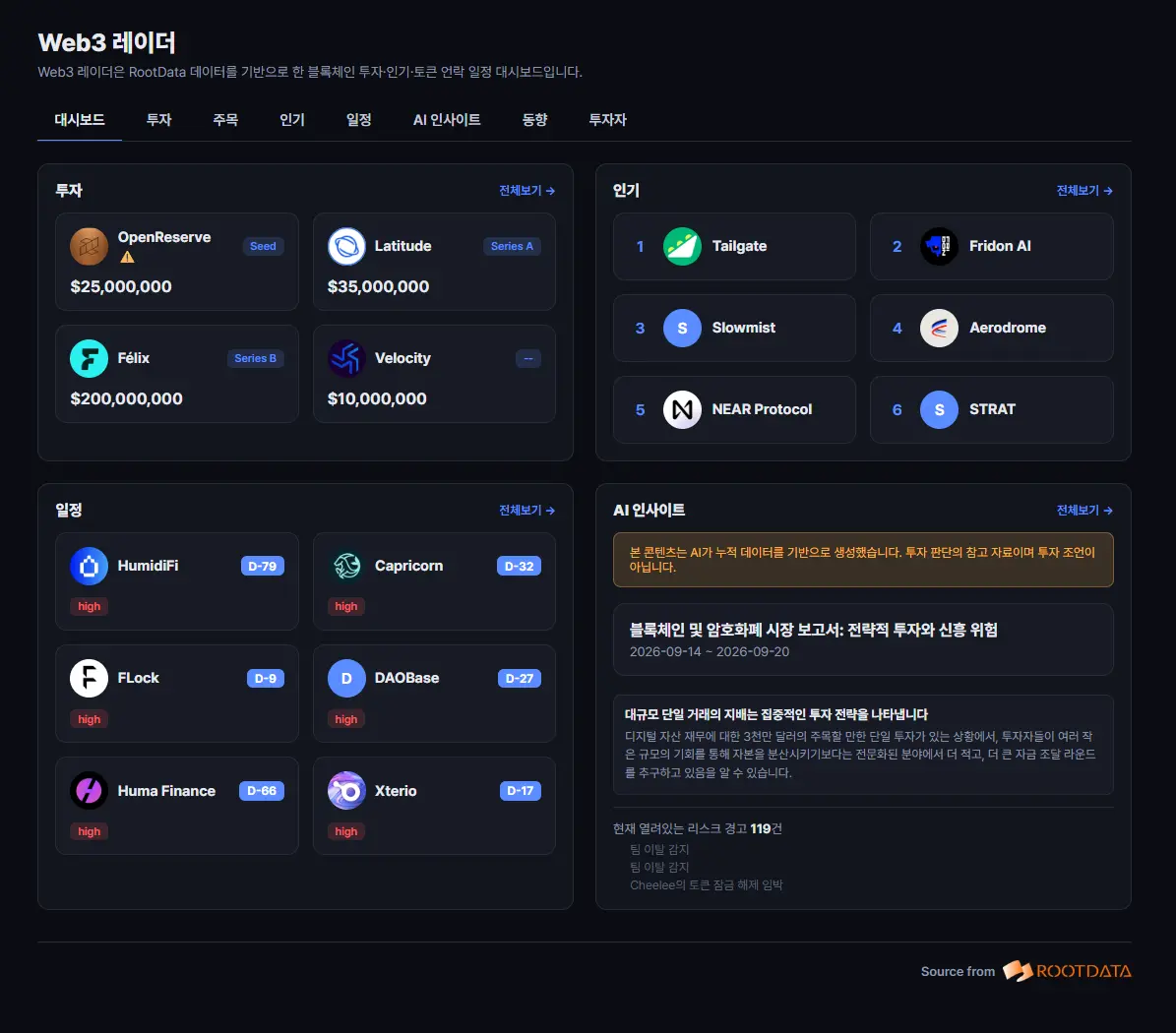
RootData Calendar and project materials can help researchers establish a list of events and subsequent review paths. It does not provide price conclusions; its value lies in ensuring that known events are not overlooked.
View Event Calendar
https://www.rootdata.com/
ChainCatcher reminds readers to view blockchain rationally, enhance risk awareness, and be cautious of various virtual token issuances and speculations. All content on this site is solely market information or related party opinions, and does not constitute any form of investment advice. If you find sensitive information in the content, please click , and we will handle it promptly.



Popular articles