trade.xyz is getting bigger and bigger, is HYPE the final winner?
 Core Viewpoint

 Both parties are highly bound in terms of reputation, economy, and structure, and neither has a reason to leave the other.
Author: Zhou, ChainCatcher
Recently, the market's bearish sentiment towards HYPE has significantly intensified. The main points of contention revolve around three issues: the supply expectations brought about by the continuous unlocking of team tokens, the direct selling pressure from institutional de-staking and ETF fund outflows, and the platform's excessive reliance on a single deployment party.
These three concerns appear to be independent, but they actually point to the same root cause.
The team is unlocking tokens and needs the assistance fund to continue repurchasing to support the price; the repurchase funds come from protocol fees; a large portion of the fees comes from the trading activity of HIP-3; and currently, the activity of HIP-3 is almost entirely concentrated on trade.xyz.
In other words, a significant part of HYPE's value support relies on the continued operation of this deployment party.
More notably, recent market rumors have emerged that trade.xyz is seeking financing at an estimated valuation of about $1.5 billion. Although this has not yet been officially confirmed, the signal has already prompted many to reassess the mid- to long-term valuation logic of HYPE.
This article aims to answer: Has HIP-3 reached a deadlock? What does this highly concentrated pattern mean for the subsequent development of HIP-4 and for the mid- to long-term value of HYPE?
1. What Happened to HYPE?
First, let's look at the price. HYPE peaked around mid-June, reaching nearly $77, and has since fluctuated downward, currently falling to about $56, a drop of about 25%.
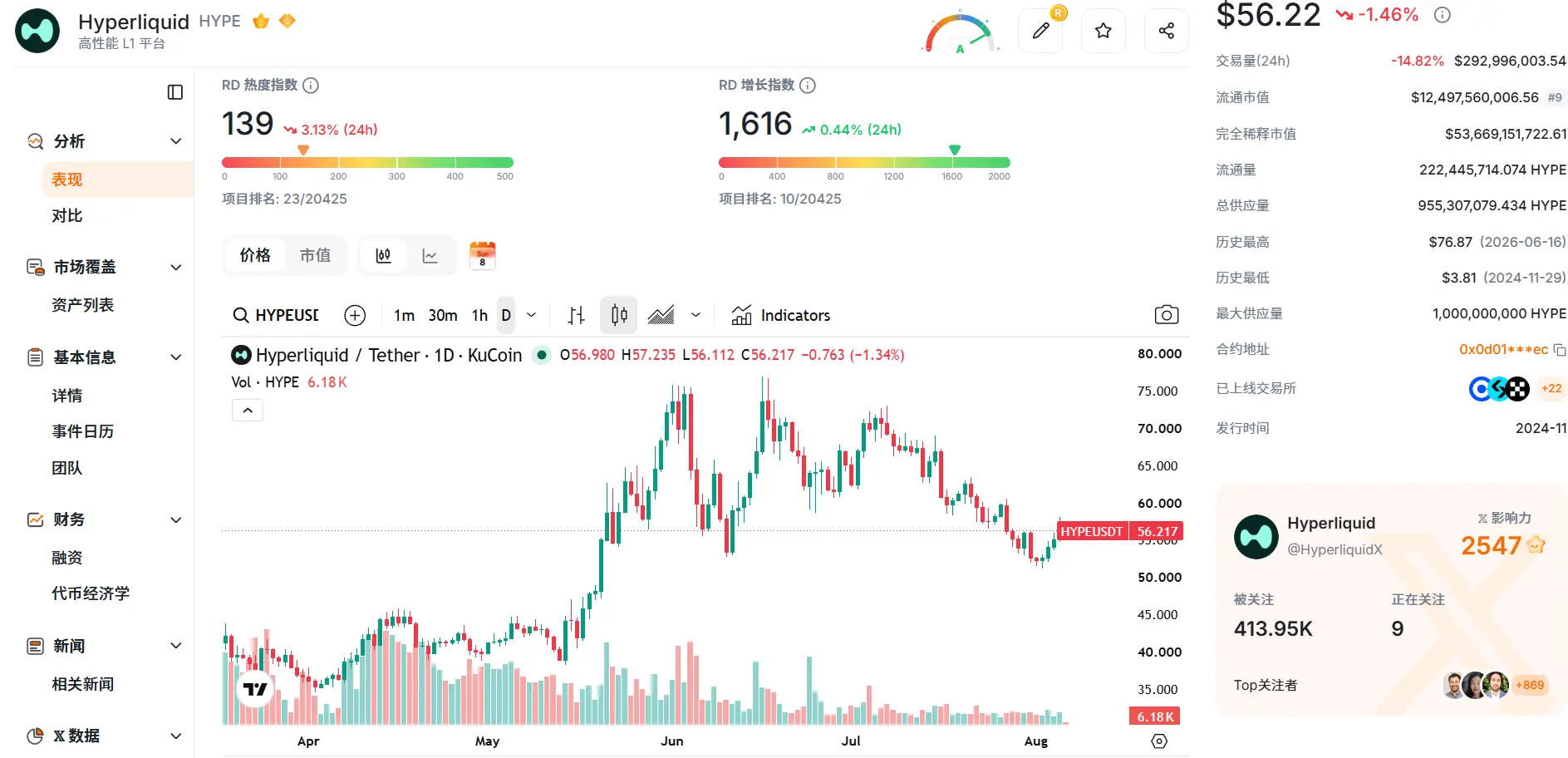
The signs of selling pressure actually appeared as early as the beginning of June. On June 4, on-chain monitoring showed that Arthur Hayes sold about 247,000 HYPE, cashing out approximately $18.02 million, almost clearing his position. Just a few days prior, he publicly stated that he was betting on HYPE outperforming the top ten cryptocurrencies by market cap by the end of the year.
Entering July, institutional actions also increased. Multicoin Capital unstaked about 1.97 million HYPE at the end of July, equivalent to about $10.8 million, and during the same period, they transferred tokens to multiple exchanges. Institutions like Selini and Bitwise were also monitored transferring tokens to exchanges.
However, Selini's founder Jordi Alexander responded that the transfers were not sales, as multiple business segments within their ecosystem require HYPE, including trading fee staking, wallets, market making and arbitrage on HyperEVM, and HYPE auctions. Additionally, he does not believe that Paradigm and Multicoin's positions are being sold off.

However, the direction of funds is indeed changing. According to SoSoValue, HYPE's spot ETF has shifted from continuous net inflows since its launch to three consecutive weeks of net outflows in July, becoming the only cryptocurrency ETF product to experience net outflows in July.
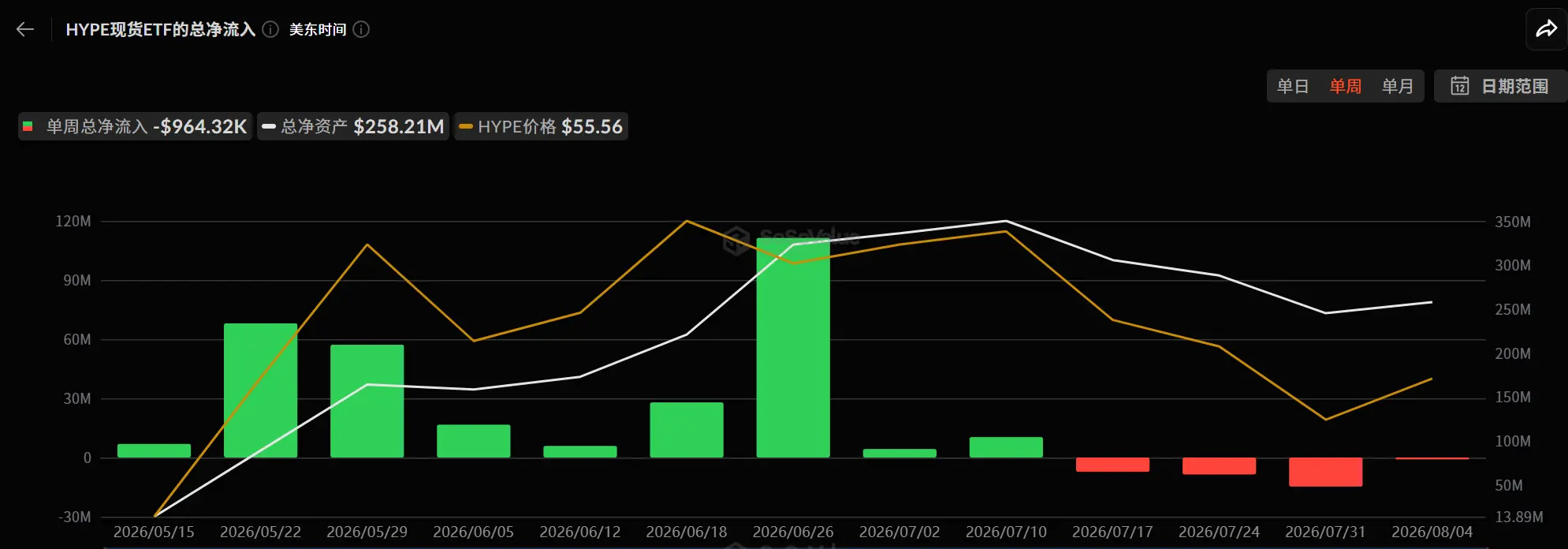
At the same time, short selling in the secondary market has also intensified, with well-known trader Loracle having increased his short positions in HYPE and ETH to over $46 million by early August, with the opening price of HYPE shorts around $52.7.
In this round of adjustment, HYPE's sentiment has shown a clear divergence from the overall market trend. Is this merely a normal cyclical correction, or is there a structural issue with HYPE itself?
2. High Concentration is an Established Fact
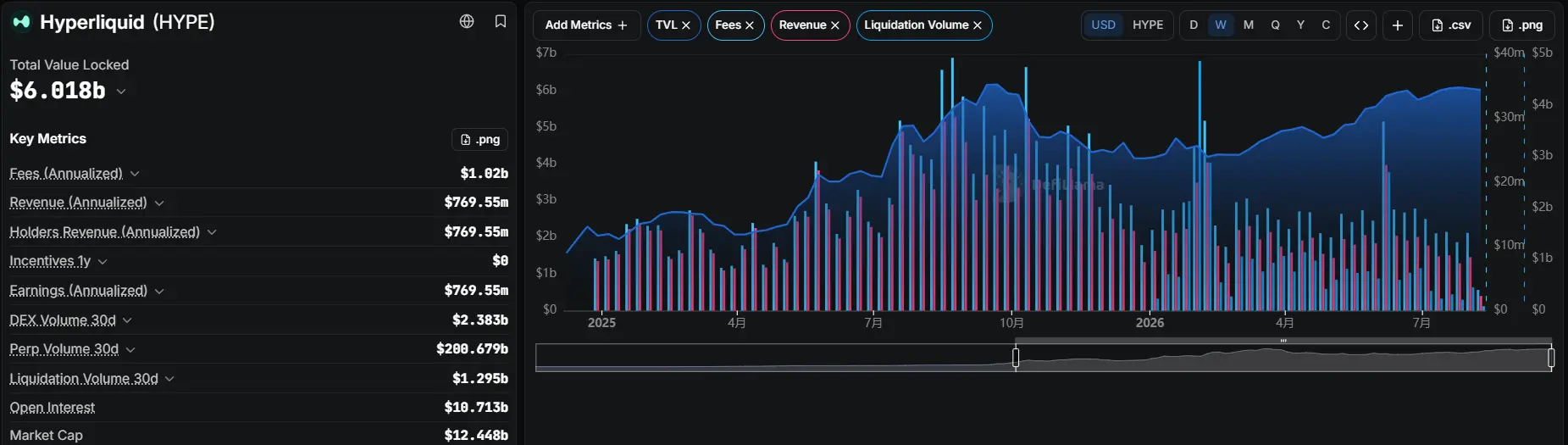
Data from DefiLlama shows that Hyperliquid has had a perpetual trading volume of about $200.7 billion in the past 30 days, with an open interest of about $10.7 billion and an annualized protocol fee of about $1.82 billion. This is one of the largest platforms in the current on-chain perpetual sector.
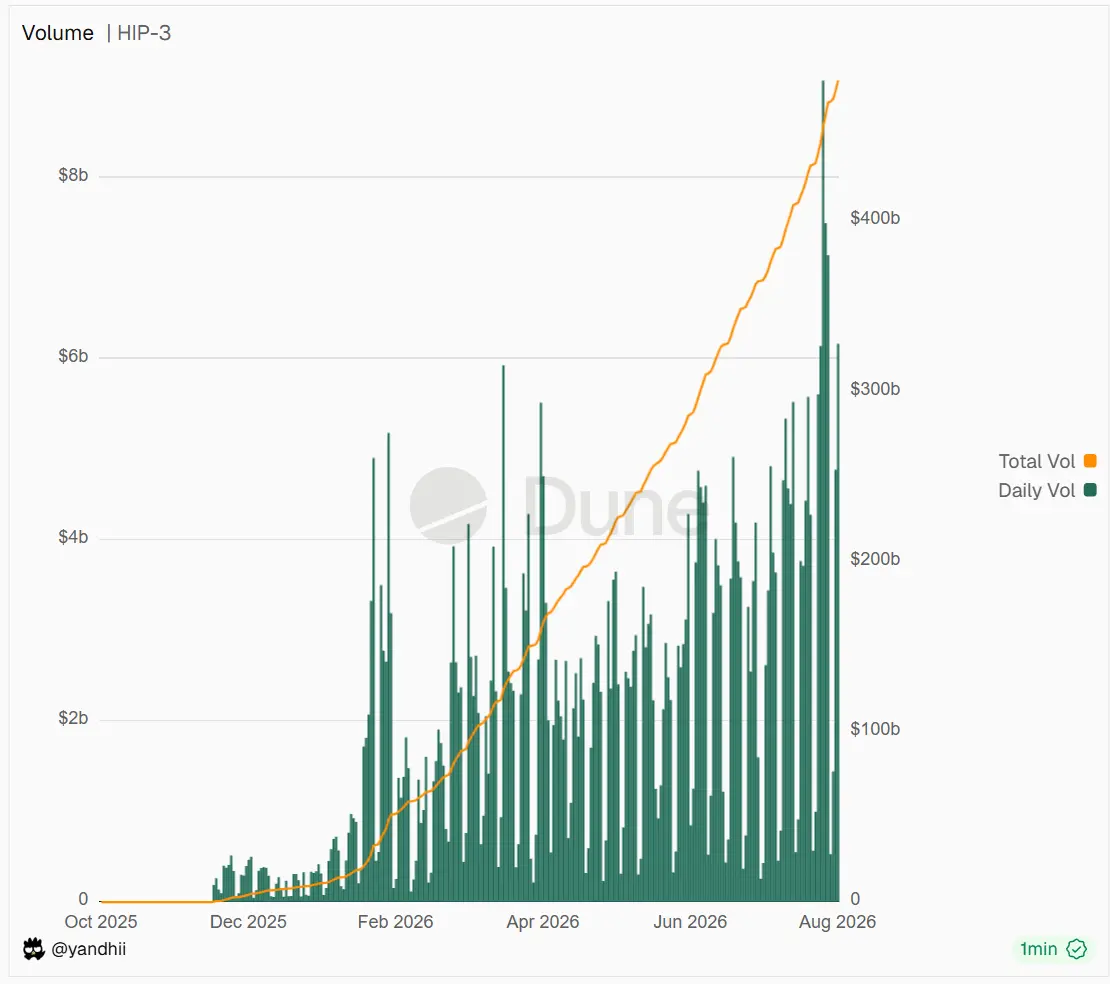
A significant portion of this has come from HIP-3, with Dune's data panel showing that HIP-3 has accumulated a trading volume of over $480 billion since its launch in October 2025.
According to the Q2 report released by the Hyperliquid Research Collective (HRC), the proportion of HIP-3's trading volume on the platform has increased from 1.8% last year to 20.7% in the first quarter of this year and 32.2% in the second quarter.
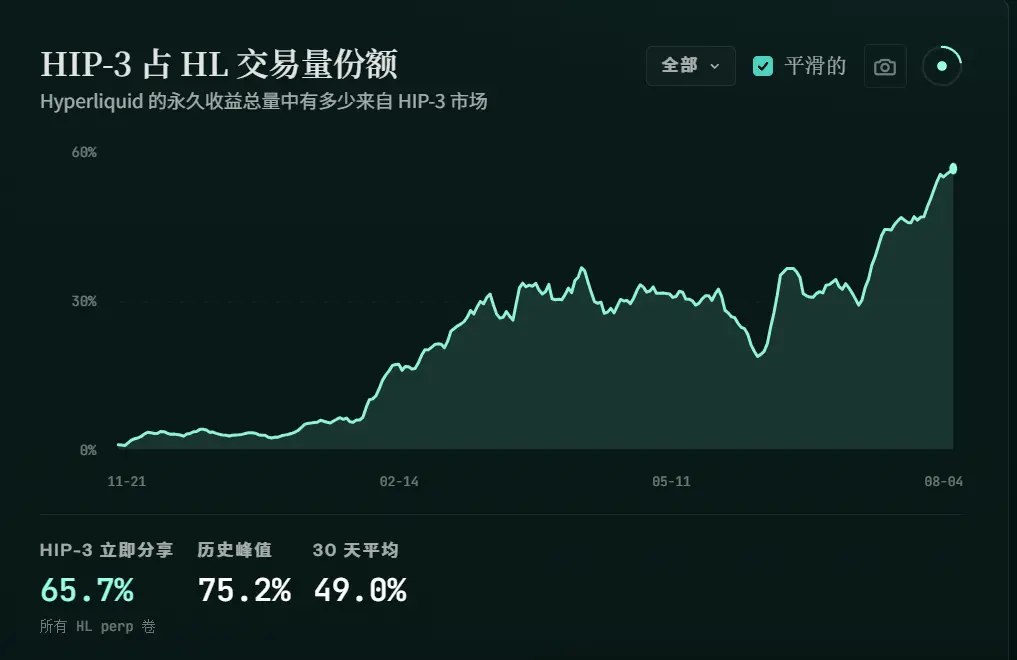
Data from hl.eco shows that this proportion has recently further risen to about 64.6%, calculated on a 7-day smoothing basis. This means that nearly half or more of Hyperliquid's trading activity is no longer coming from the official native market but from this open deployment mechanism.
Looking further into HIP-3, the concentration is even more extreme. As of August 2026, TradeXYZ has deployed 103 markets, of which 88 are actively traded, covering commodities, foreign exchange, U.S. and Asian stocks and indices, as well as pre-IPO products, including Cerebras (CBRS), SpaceX (SPCX), and Changxin Storage (CXMT).
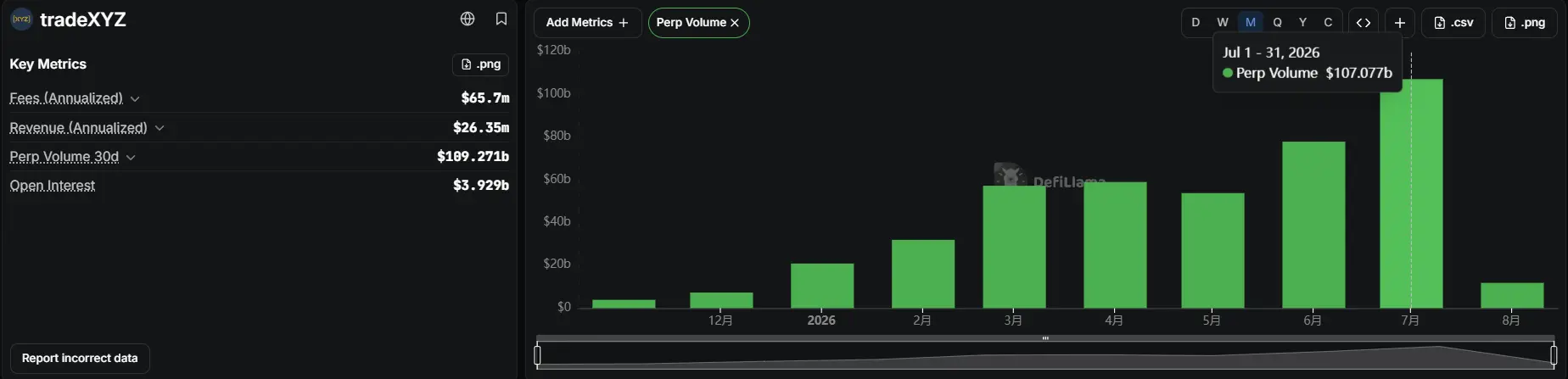
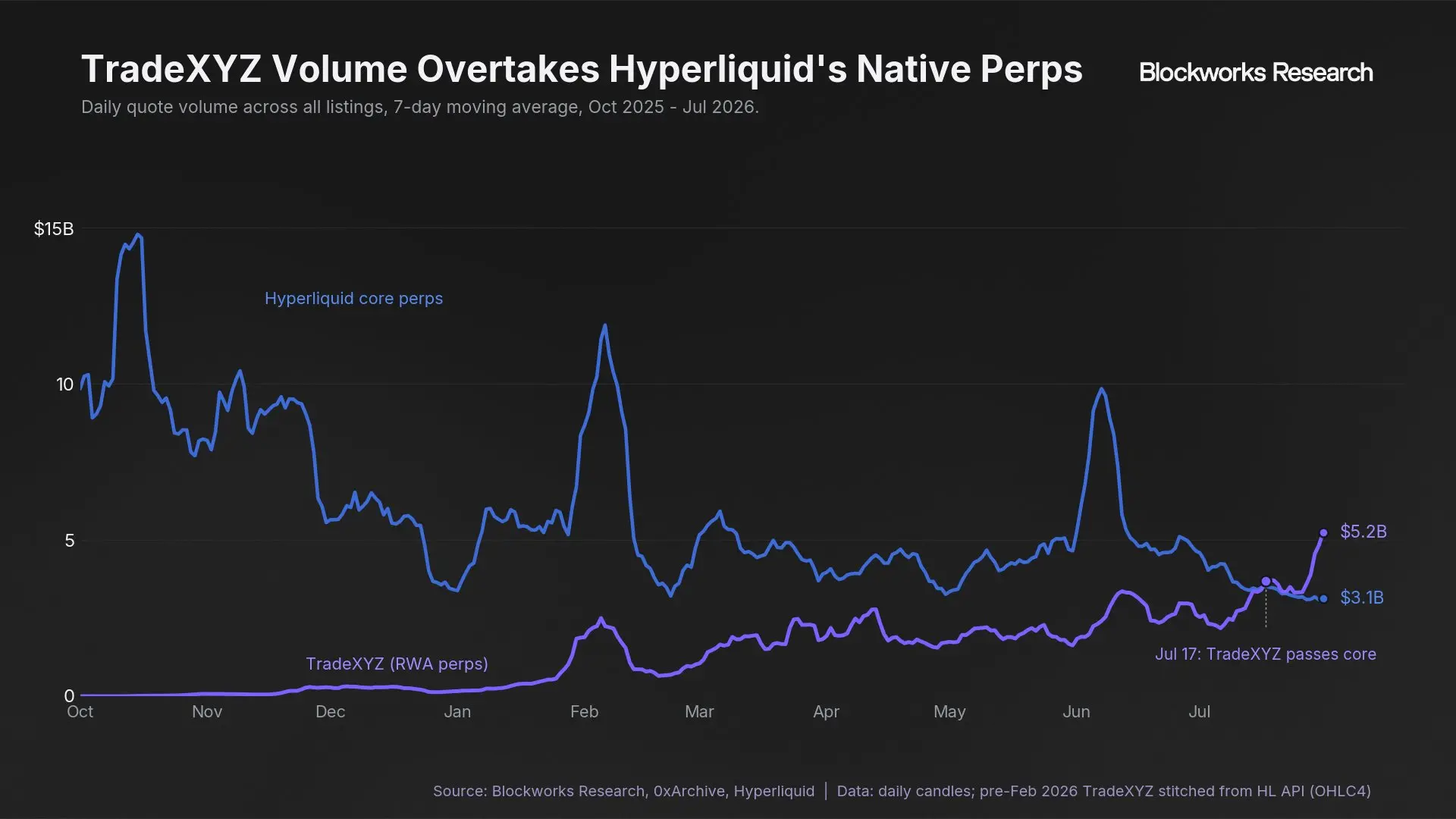
TradeXYZ's 30-day average trading volume is $3.7 billion, with a cumulative trading volume exceeding $440 billion and an open interest of $3.5 billion; since July 17, TradeXYZ's seven-day trading volume has surpassed that of Hyperliquid's native crypto perpetual contracts.
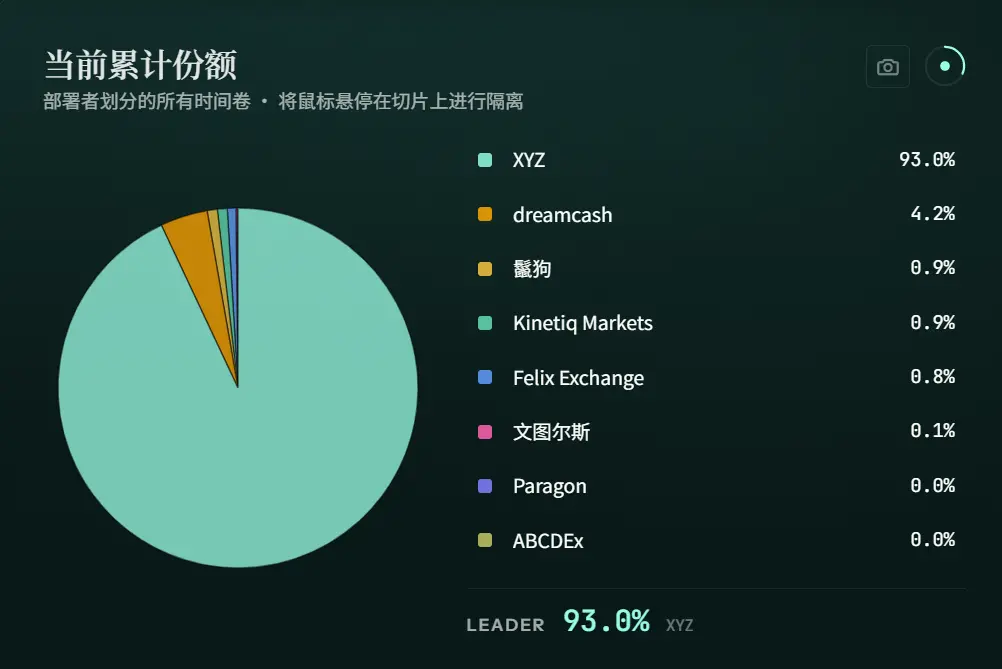
The Q2 report shows that trade.xyz's share of HIP-3's trading volume has increased from 85% in March to 97% in June, and is approaching 100% in July. If calculated on a historical cumulative basis, trade.xyz has captured about 93% of HIP-3, with the second-place dreamcash only at 4.2%, and all other deployment parties, including Kinetiq, Felix, and Paragon, combined account for less than 3%.
It is worth mentioning that according to an on-chain study by Arrakis in the first quarter of this year, about 63% of trade.xyz's trading volume comes from approximately 360 market-making wallets, including professional market makers like Jump Crypto, Selini Capital, and Wintermute. Among the wallet numbers, about 43% of addresses come from a single Polymarket operator's witch farm, and the real trading volume contributed by these addresses is less than 1%.
This pattern has formed against the backdrop of others exiting the market and newcomers being unable to enter.
In June of this year, early deployment party Felix officially shut down its HIP-3 perpetual market. Co-founder Charlie admitted in a review that even though they had achieved about $3 billion in trading volume relying on early products like crude oil, gold, and silver, they were ultimately surpassed by trade.xyz when it launched the same markets priced in USDC, forcing them to exit.
Reports indicate that among the same batch of deployment parties, Ventuals and Felix exited together on the USDH settlement date in mid-June, Dreamcash halted in early July, and Kinetiq chose to migrate, launching its first batch of USDC trading pairs on July 1.
Recently, new entrants have also been trying to capture market share. It is reported that Paragon has been continuously bidding for multiple tickers since mid-July, spending about 6,328 HYPE, focusing on strong narrative targets in the AI industry chain, humanoid robots, Reddit, etc., deliberately avoiding the mainstream large-cap stocks that trade.xyz focuses on. Its weekly trading volume has increased more than tenfold in a short period, but its cumulative share is still negligible.
3. The Default Result of the Mechanism, HIP-4 is No Exception
HIP-3 was originally a permissionless open mechanism. Anyone who stakes enough HYPE can deploy their own perpetual market. However, in practice, it has become a winner-takes-all scenario.
The root of this lies in the mechanism itself.
First is the threshold; deploying a HIP-3 market requires staking 500,000 HYPE, which at recent prices amounts to about $20-30 million. This effectively keeps the vast majority of teams out, leaving only a few capital-rich players able to enter.
Secondly, there is the combination of auction and first-mover advantage. Each deployment party gets the first three markets for free, but any additional markets must be bid for in a Dutch auction shared across the network, starting at 500 HYPE, and this portion of tokens is directly burned. Latecomers not only have to pay a higher listing cost but also face an already established liquidity siphon. Once first movers establish depth and user mindset, latecomers have almost no space for a cold start.
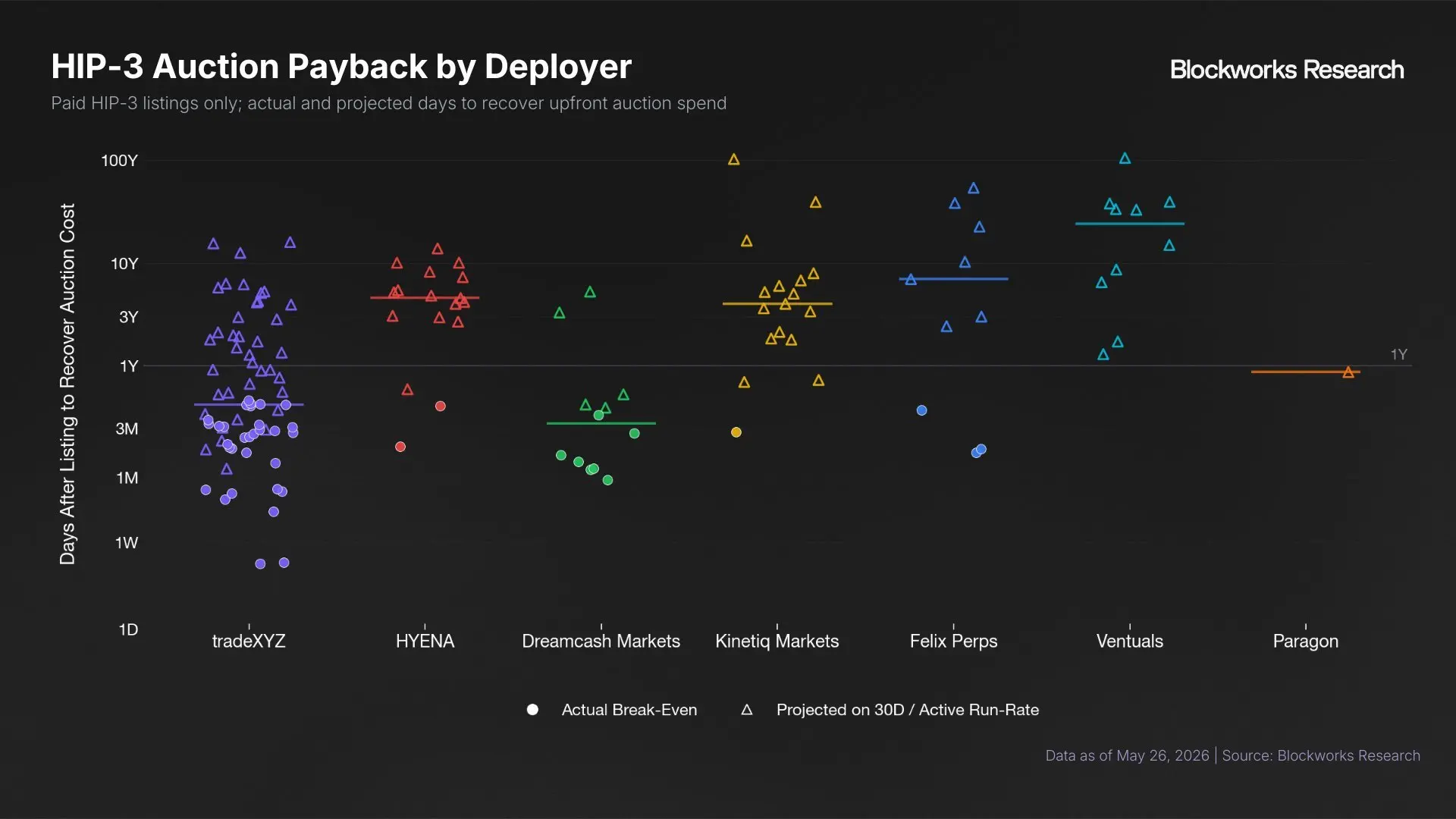
Finally, there is the return-on-investment economics. According to Blockworks Research analyst Shaunda Devens, excluding trade.xyz, most HIP-3 deployment parties have annualized returns on staked HYPE close to or even below 1%. Among the 136 paid listing markets they analyzed, only 44 have recouped their auction costs, with the median payback period for non-trade.xyz markets reaching 4 years.
The same logic is being extended to HIP-4.
On July 20, Hyperliquid announced that HIP-4 will open for permissionless deployment. HIP-4 is its attempt in the direction of prediction markets (binary outcome markets), and the path is much more restrained than HIP-3: it will follow a template approved by validator voting and limit the number of markets directly deployed by validators to no more than 10 per year. However, the high staking threshold remains unchanged at 500,000 HYPE.
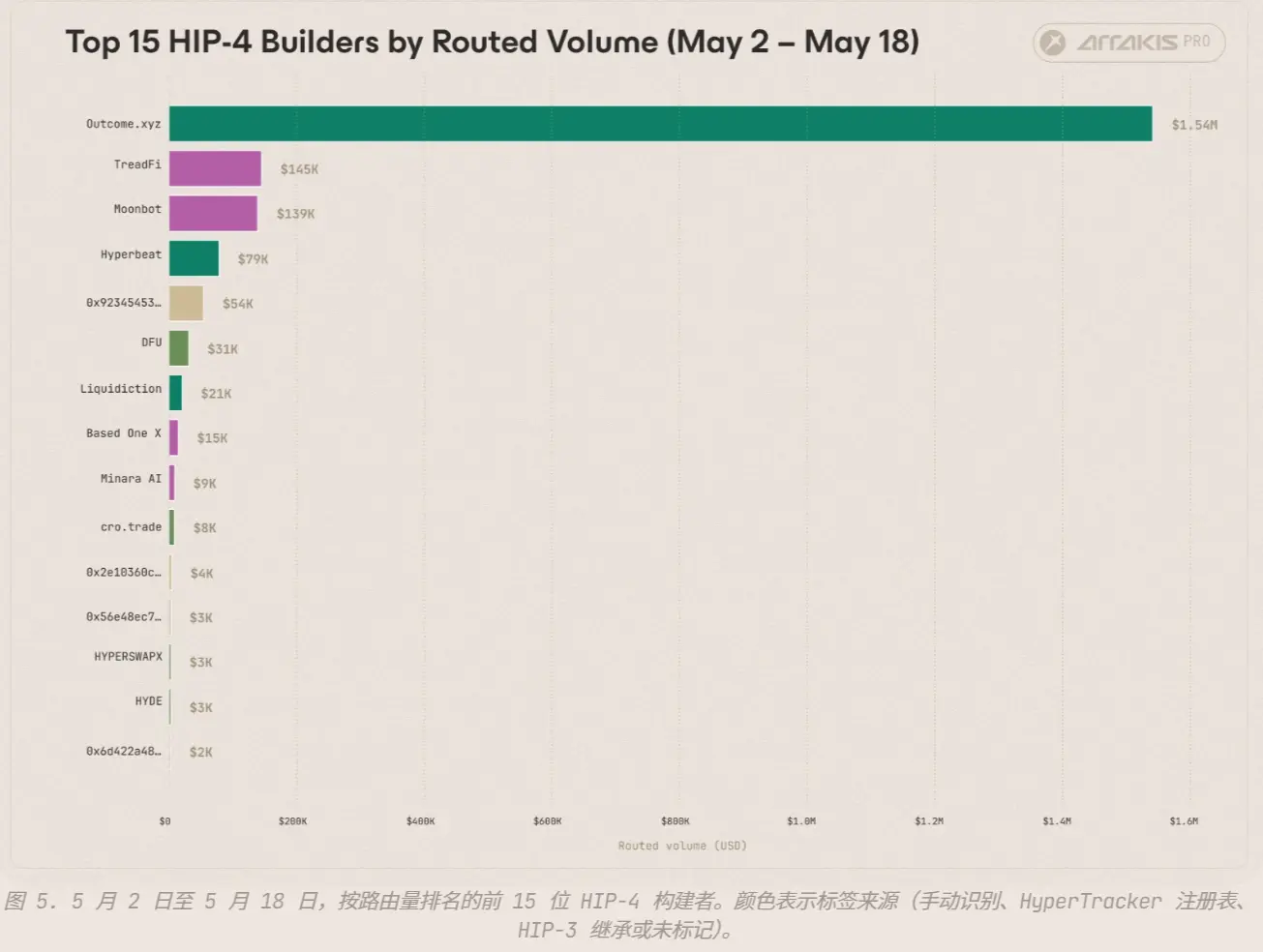
According to Arrakis, in the first two weeks after its launch, a front-end Outcome.xyz's routing volume was more than 10 times that of the second place.
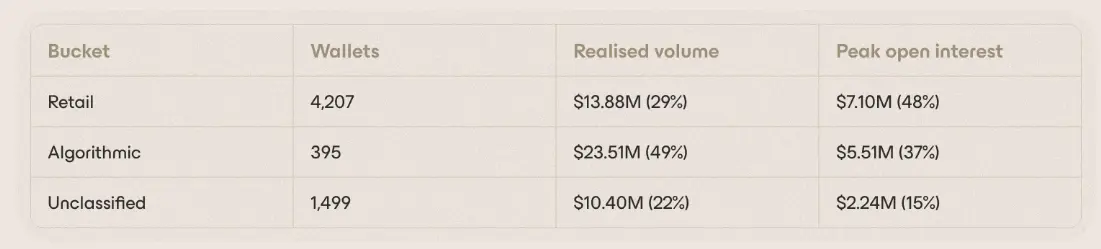
Algorithmic wallets account for only 6% of the total number of wallets, but they contribute nearly half of HIP-4's trading volume; retail wallets, while accounting for the majority of wallets and having the highest peak open interest, contribute less than one-third of HIP-4's trading volume.
During the same period, HIP-4's trading volume in BTC binary options has already matched that of Polymarket, but its pricing deviates from Deribit's implied probability by 4-5 times more than Polymarket or Kalshi.
The thin liquidity is also reflected in execution. Arrakis measured the maximum trade size that the market can withstand under ±2% slippage and found that after a surge of liquidity on the first day of launch, the subsequent execution experience continued to deteriorate due to insufficient funding depth during most periods. In the worst-case scenario, a $1,000 trade would result in a 2% slippage for the trader.
Arrakis stated that this poses a bottleneck for users and an opportunity for market makers. In such a thinly traded market, the first market maker willing to invest a large amount of capital will almost face no competition and can profit from the market gaps created by the current inefficiencies in the order book.
From this perspective, HIP-4 also shows signs of thin liquidity and high concentration early on. This is the default result of the mechanism: a natural bias in business logic towards a few capital-rich, resourceful, and first-mover advantage players.
4. Where Will HYPE Go?
The mechanism issue is an established fact, so how long can HYPE's value support last in this pattern?
In the short term, HYPE's price floor mainly relies on trade.xyz. HIP-3 contributes a significant proportion of the platform's trading activity, and the protocol's fee income will enter the assistance fund for repurchase.
According to on-chain analyst MLM, since the team tokens began unlocking in December 2025, about 4.93 million HYPE have entered the team wallet, of which about 4.33 million have been sold or transferred off-market, cashing out approximately $165 million. During the same period, the assistance fund repurchased about 9.8 million HYPE, investing about $364 million, at a pace more than twice that of the team's sales.
Therefore, the unlocking itself has not yet formed real selling pressure; the main factor suppressing the price is the change in demand. Latest data shows that Hyperliquid has historically burned 47.53 million HYPE, valued at about $2.68 billion, accounting for 4.75% of the maximum supply of 1 billion.
In the medium term, the variables are becoming more complex.
Recent market rumors suggest that trade.xyz is seeking financing at an estimated valuation of about $1.5 billion. Although this has not yet been officially confirmed, the signal itself is worth noting: the interests between the protocol and the deployment party may become less tightly bound. Once independent valuation is solidified, its bargaining power over the protocol will only strengthen, and revenue sharing, terms, and retention may all be renegotiated.
However, this does not necessarily mean they will part ways. Blockworks analysts point out that trade.xyz leaving due to high revenue sharing is the weakest concern among several worries. Both parties are highly bound in terms of reputation, economics, and architecture, and neither has a reason to leave the other.
If they were to leave, trade.xyz would have to rebuild the entire exchange layer, which is the most difficult part of the tech stack, and would have to give up almost all of its trader base; while Hyperliquid, if it brings RWA in-house, would signal to all future deployment parties that as long as they grow large enough, they will be replaced, which is also a form of reputational suicide.
Analysts also remind us that the 50% revenue share is far from Hyperliquid's only monetization avenue. It can also profit from writing priority fees and reading fees paid by market makers; a larger portion comes from second-order effects—traders bringing USDC to long RWA, driving on-chain balance growth, with Hyperliquid retaining 90% of this income, expected to be about $30 million per month, already exceeding the entire HIP-3 perpetual fee pool that it shares with trade.xyz.
Another variable is HIP-4, where the outcome market continues to use a high staking threshold, likely leading to a repeat of dominance by a few players. The open narrative will be further diluted, and HYPE's long-term premium as a platform token will also be discounted.
Overall, the growth brought by trade.xyz is real. For Hyperliquid, the real test lies in whether it can continue to let value settle at the protocol layer. As long as trade.xyz's growth can still translate into HYPE's value capture, concentration may not necessarily be a bad thing.
In terms of valuation, a recent Grayscale report pointed out that HYPE is currently cheaper compared to traditional fintech companies when valued by cash flow. The report assumes a protocol revenue of about $1 billion by 2027 (a growth of about 20% from 2025), estimating a corresponding earnings per share of about $3.25 to $3.75, which, at current prices, translates to a forward P/E ratio of only 15 to 18 times.

Topic or theme DEX Market Trends and Research
 Risk warning



Popular articles