BTC $64,441.75 -0.86%
ETH $1,804.50 -1.50%
BNB $592.05 -0.36%
XRP $0.9783 +1.48%
SOL $74.92 +3.27%
TRX $0.3074 +0.70%
DOGE $0.0593 +0.13%
ADA $0.1535 -0.59%
BCH $209.20 -0.14%
LINK $9.23 +0.43%
HYPE $68.70 -1.40%
AAVE $111.71 -1.37%
SUI $0.7299 +0.18%
XLM $0.1404 +0.85%
ZEC $954.48 +3.69%
AAPL $350.76 -0.59%
AMZN $258.79 +0.17%
GOOGL $282.25 -1.02%
MSFT $507.82 -2.14%
META $619.91 -0.96%
NVDA $157.37 -0.47%
TSLA $383.02 +0.51%
SNDK $812.20 -1.81%
INTC $55.65 +0.63%
SPCX $141.94 +2.60%
MU $724.20 -1.12%
AMD $512.03 -1.42%
BTC $64,441.75 -0.86%
ETH $1,804.50 -1.50%
BNB $592.05 -0.36%
XRP $0.9783 +1.48%
SOL $74.92 +3.27%
TRX $0.3074 +0.70%
DOGE $0.0593 +0.13%
ADA $0.1535 -0.59%
BCH $209.20 -0.14%
LINK $9.23 +0.43%
HYPE $68.70 -1.40%
AAVE $111.71 -1.37%
SUI $0.7299 +0.18%
XLM $0.1404 +0.85%
ZEC $954.48 +3.69%
AAPL $350.76 -0.59%
AMZN $258.79 +0.17%
GOOGL $282.25 -1.02%
MSFT $507.82 -2.14%
META $619.91 -0.96%
NVDA $157.37 -0.47%
TSLA $383.02 +0.51%
SNDK $812.20 -1.81%
INTC $55.65 +0.63%
SPCX $141.94 +2.60%
MU $724.20 -1.12%
AMD $512.03 -1.42%

implant

All
Article
Flash

first_img Claude Code VS Code extension implanted with SSH backdoor

On October 30, security researcher Paul McCarty (6mile) posted on the OpenSource Malware blog that Anthropic's Claude Code VS Code extension was tampered with that day, and a malicious version 2.1.313 was published to the Open VSX registry. The extension is identified as anthropic.claude-code@2.1.313, and a 66-line loader was inserted before the normal extension code in the main JavaScript package. The researchers stated that currently, only the analyzed Open VSX version has been confirmed as a malicious sample, and a threat report has been submitted for the same version in the Microsoft VS Code marketplace out of caution.The article states that the unpacked extension and bundled binaries are consistent with the normal version, with differences only in extension.js. The extension loads this file after VS Code starts and when the Webview opens, triggering without the user needing to initiate a Claude conversation. The loader writes an attacker key labeled svc-telemetry to the user's SSH configuration, attempts to enable local SSH services, establishes a reverse tunnel to 134.209.82.225, and sets persistence on macOS, Linux, and Windows, then sends host reconnaissance information to port 8099 at that address via unencrypted HTTP. No additional executable files or scripts are downloaded during the injection phase.The researchers stated that the owner of the affected Open VSX extension is Anthropic employee Igor Kofman, and it is currently unclear whether his account or another release link was exploited; Dean Hardcastle informed him at the time of the incident. The article clarifies that the source of the analyzed directory has not been established, and the related findings cannot independently prove that Anthropic's official marketplace or distribution infrastructure has been compromised; the identity of the attacker and the ownership of the infrastructure have also not been verified. The text suggests searching for related file paths, key annotations, and startup items, blocking ports 22 and 8099 of 134.209.82.225, and rotating credentials accessible by affected accounts on a clean system.

Slow Fog: Udesk customer service script was implanted with malicious code that can steal user session data and replace recharge addresses

According to Slow Fog's disclosure, its security personnel discovered that the script udeskApi.2026-10-16.cached.js related to the Udesk customer service system was implanted with a malicious loader during routine threat intelligence checks. This loader hides the address through hexadecimal encoding and asynchronously loads the remote script deeps.js (sourced from udeskqlobal[.]com, note that the domain name starts with the letter q). This script reads accessible Cookies, localStorage, and sessionStorage on the page, intercepts form and login/authentication requests, and sends data to udeskqlobal[.]com/c.php. Attackers may use this to impersonate sessions or take over accounts. This data collection behavior is not restricted by the target site's rules, and unmatched pages may also be affected.According to Slow Fog's analysis, this script also targets three types of sites: mgbx[.]com, bikingex[.], and bitxex[.]io, scanning the recharge page every 200 milliseconds and replacing identified recharge addresses with preset BTC, EVM, TRON, Solana, LTC, and DOGE addresses. At the same time, the script manipulates the clipboard API, replaces copy buttons, and intercepts copy events, making users see and copy tampered addresses. If users transfer funds to this address, the money will flow into the attacker's address.

Ledger: Criminal gangs spent millions of dollars to carry out hardware implant attacks, which are part of local distribution channel attacks

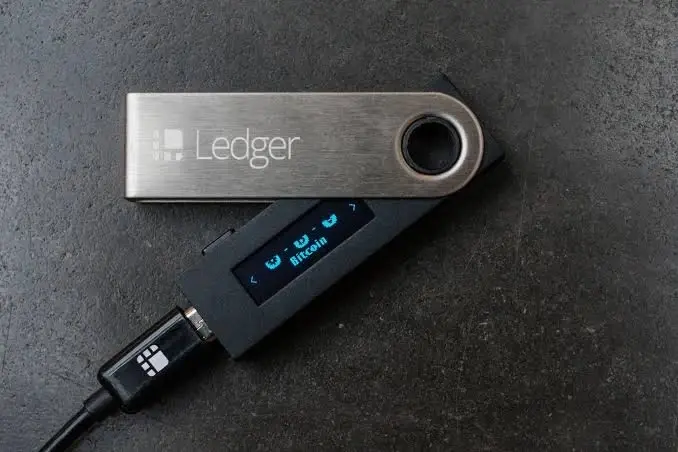
Ledger released a report on the investigation of hardware implant attacks, stating that a highly organized criminal gang purchased genuine Ledger devices over several months, disassembled them, and implanted custom hidden components to steal users' recovery phrases when initializing the devices. They then resold the devices through Southeast Asian distributor channels.The attackers invested millions of dollars to build infrastructure for collecting recovery phrases, asset transfers, and money laundering, coordinating actions to transfer victims' assets. Ledger emphasized that this incident was not caused by vulnerabilities in the chip, operating system, or servers, but rather a localized distribution channel attack that occurred after the devices left the company's control. Currently, Ledger has requested authorized distributors and resellers in Southeast Asia and Hong Kong to suspend sales and conduct random checks on inventory and retail channel devices, finding no other tampered devices.Additionally, Ledger has requested authorized distributors not to resell any returned devices, even if the packaging is intact; they have also immediately prohibited displaying products on shelves or in display areas, requiring devices to be stored at the back of the store and delivered upon purchase. The company is working with law enforcement and the security community to track the stolen funds and will disclose more technical details in the future.

Ledger wallet's European supply chain suspected of contamination: two devices have been found to be implanted with spyware

Cryptocurrency community user Johannes posted that he found suspected spyware and hardware modifications, including additional cables and LTE modules, in two Ledger hardware wallets purchased at different stores of the European retailer MediaMarkt, and called for Ledger to immediately recall the related products.Johannes stated that MediaMarkt employees confirmed that the second device was not a returned item, as returned Ledger products would be sent directly back to the manufacturer rather than resold as new. Store records show that the relevant inventory came from the supplier Aqipa GmbH. Since the company operates distribution in Europe, Johannes suspects that the issue may involve a broader retail inventory, but there is currently no evidence to confirm that Ledger's supply chain has been widely compromised in Europe.Johannes mentioned that he has handed over the first device for analysis and plans to send the second device to Ledger for investigation, while also releasing an unboxing video as evidence. He reminded users that if they purchase devices from merchants outside of Ledger's official channels, they should check for any abnormalities in the devices. Currently, the above claims mainly come from this user's personal disclosure, and the reasons for the device damage, the scope of impact, and whether it involves a supply chain attack still need to be verified by Ledger and other relevant parties.

Ledger confirmed that affected user devices have unauthorized hardware implants, and the dealer CryptoBilis has suspended inventory sales

Ledger Support released an update stating that it has confirmed the presence of unauthorized hardware implants in the device of one affected user. They are currently contacting the affected user and continuing to investigate the matter. Ledger is calling on anyone with information to provide leads and has stated that it is cooperating with relevant law enforcement agencies to hold those involved accountable. As a precaution, CryptoBilis has confirmed the suspension of sales of all hardware wallet inventory until the investigation is complete, and Ledger is actively communicating with them regarding follow-up measures.Ledger stated that there are currently no signs that its security infrastructure, systems, or services have been compromised. For users who purchased Ledger devices from this dealer, if the initialization setup has not yet been completed, it is advised not to start the setup; if the setup has been completed, they should consider transferring assets to a new Ledger signing device using new recovery phrases.Ledger emphasizes that security threats are constantly evolving, and the company is continuously improving security measures and advancing more sophisticated tamper-proof solutions. It also reminds users to be vigilant against scams that take advantage of this situation and to obtain the latest information only through official Ledger channels. Ledger will not ask users for their 24-word recovery phrase.

Slow Fog Analysis suggests hardware implantation to steal mnemonic phrases from Ledger

The Chief Information Security Officer of Slow Mist Security, 23pds, stated that if the modification of the Ledger device's PCB is indeed as described by former Mt. Gox CEO Mark Karpelès, the attacker would possess a considerable level of technical skill.23pds mentioned that the possible attack process involves the wallet generating a mnemonic phrase within a secure element and displaying it on the screen for the user to write down. A malicious module could obtain the displayed content through screen data lines such as SPI, record the complete mnemonic phrase, and then send the data to the attacker via LTE/eSIM. The secure element can prevent the private key from being directly read or exported, but it cannot stop external modules from accessing the information currently displayed on the screen. He noted that the above analysis is based on the premise that the PCB has indeed been modified in the described manner, and the relevant attack paths and hardware implantation still require independent verification.Mark Karpelès previously stated that a Ledger hardware wallet he received was suspected of being implanted with a spy module. The device came from Malaysia, the outer packaging was intact with shrink wrap, and the implant was hidden in the position where the screen originally had a cushion, containing LTE communication components, an antenna, eSIM, and a microcontroller connected to the Ledger SPI bus, capable of analyzing the characters displayed to the user and sending relevant data after the mnemonic phrase setup is completed.
app_icon
ChainCatcher Building the Web3 world with innovations.