Scan to download
BTC $68,053.64 +4.61%
ETH $2,050.33 +8.42%
BNB $626.90 +4.96%
XRP $1.42 -4.56%
SOL $81.67 -4.53%
TRX $0.2795 -0.47%
DOGE $0.0974 -3.83%
ADA $0.2735 -4.22%
BCH $501.61 +2.07%
LINK $8.64 -2.97%
HYPE $28.98 -1.81%
AAVE $122.61 -3.42%
SUI $0.9138 -6.63%
XLM $0.1605 -4.62%
ZEC $260.31 -8.86%
BTC $68,053.64 +4.61%
ETH $2,050.33 +8.42%
BNB $626.90 +4.96%
XRP $1.42 -4.56%
SOL $81.67 -4.53%
TRX $0.2795 -0.47%
DOGE $0.0974 -3.83%
ADA $0.2735 -4.22%
BCH $501.61 +2.07%
LINK $8.64 -2.97%
HYPE $28.98 -1.81%
AAVE $122.61 -3.42%
SUI $0.9138 -6.63%
XLM $0.1605 -4.62%
ZEC $260.31 -8.86%

quant

Ju.com invested 80 million USD to lead the AI quantitative platform One Agent, aiming for a comprehensive launch of the trading ecosystem

Ju.com announced a strategic investment of $80 million in the AI quantification platform One Agent. It is reported that One Agent has raised a total of $170 million in this round of joint investment.One Agent's core focus is on "intent trading," aiming to lower the trading threshold for users. Users only need to set investment goals and risk preferences, and the built-in AI Agent can automatically complete strategy planning, execution, and dynamic rebalancing, replacing traditional monitoring and manual order placement. One Agent is initially open to the top ten mainstream cryptocurrency assets by market capitalization globally. Users can access its AI quantification system by purchasing nodes and further participate in various AI derivative scenarios and rights, such as mainstream cryptocurrency quantification strategies, wealth management, and market predictions.In addition, this $170 million joint investment will serve as long-term financial support for the One Agent ecosystem, aiming to protect all users participating in AI quantification, covering node purchasers and various user groups that participate sequentially. The funds will provide comprehensive ecological support and risk mitigation arrangements within established rules, and the relevant mechanisms will gradually come into effect in phases with the product to enhance downside protection and maximize the certainty of user participation.

CryptoQuant: Coinbase premium turning positive releases signals of recovering demand in the U.S

CryptoQuant analyst Darkfost disclosed that the "Coinbase Premium Gap," which measures the price difference between Coinbase Advanced and Binance, has recently turned positive again, indicating initial signs of a recovery in professional capital demand in the U.S. market. Data shows that this is the third time this year that the indicator has returned to positive territory, with the current premium at approximately $10.18, which remains relatively mild overall.Analysts believe that a positive premium is typically seen as a signal of increased buying from U.S. institutions and professional investors. The report points out that the user base of Coinbase Advanced is more inclined towards professional and institutional participants, while Binance has a broader retail user base globally and holds a significant share of overall market liquidity. Therefore, changes in the price difference between the two are often used as an important indicator to observe the flow of U.S. capital.Since Bitcoin entered a more pronounced correction phase on February 4, this premium gap has been continuously repairing and recently turned positive again. However, analysts emphasize that this signal is still preliminary, reflecting a cautious market sentiment, and the possibility of turning negative again in the short term cannot be ruled out. Overall, the current price level is gradually becoming attractive to professional capital, but to confirm a trend reversal, further observation of the continued expansion of the premium and changes in capital behavior is still needed.

StarkWare CEO proposes a five-step action plan, calling for the crypto industry to address the potential threats of quantum computing

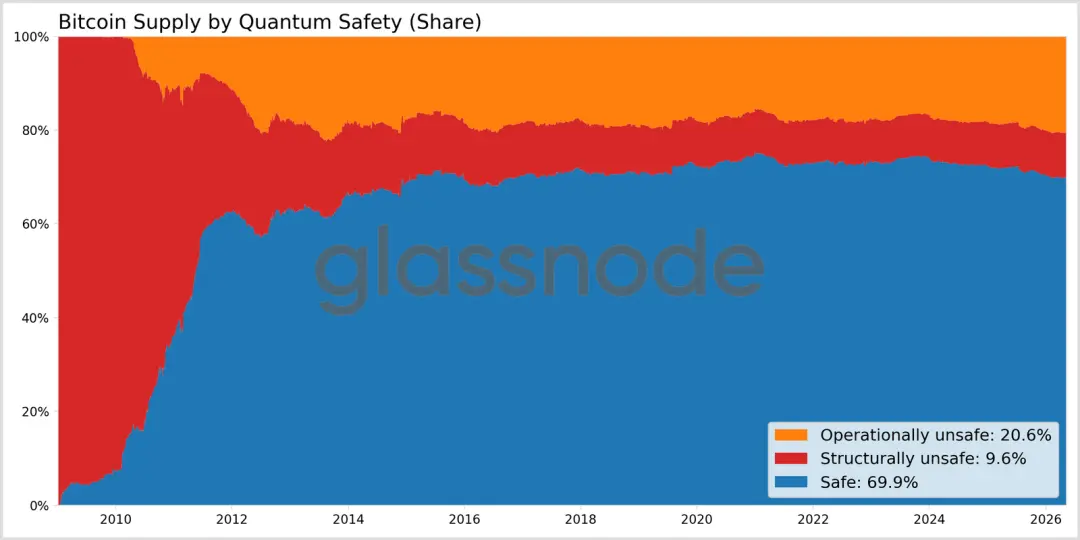
StarkWare CEO Eli Ben-Sasson spoke on X about the potential impact of quantum computing on the crypto industry, calling for a proactive deployment of post-quantum security upgrades across multi-chain ecosystems, including Bitcoin, and proposed a five-step action plan:Acknowledge the threat and clearly recognize that once quantum computers mature, they will pose a severe challenge to the existing public key cryptography system, and take decisive action to implement countermeasures.Enhance education and information dissemination, systematically learn about the current state of quantum computing development and feasible solutions in post-quantum cryptography (PQC), and spread relevant knowledge within the community to raise overall awareness.Organize and invest resources to support and collaborate with post-quantum cryptography experts, promote multiple research and engineering practices, and provide funding and community initiative support for related projects.Listen to expert advice and establish standards, with experts proposing specific technical routes, including the selection of new signature algorithm standards and the reasonable post-quantum security levels required for hash functions.Promote protocol and infrastructure upgrades, introduce new quantum-resistant signature mechanisms at the core protocol layer, and ensure compatibility and integration with key infrastructures such as wallets to ensure a smooth transition.

CryptoQuant: The market has not yet fallen into a deep bear phase, with the ultimate bottom around $55,000

On-chain analysis company CryptoQuant indicates that the "ultimate" bottom of the Bitcoin bear market is currently around $55,000, and the formation of a bear market bottom typically takes several months rather than being completed by a single capitulation event. CryptoQuant states that the realized price of Bitcoin has historically been a major support area during bear markets and is likely to represent the final bear market bottom. Currently, the trading price of Bitcoin is still over 25% higher than this level.The company notes that in past bear markets, prices fell below the realized price by 24% after the FTX collapse, and in the 2018 cycle, it dropped by 30%. After reaching these levels, Bitcoin usually requires four to six months to build a bottom. CryptoQuant believes another sign that Bitcoin has not yet reached a structural bottom is the significant single-day realized losses. Data shows that when the Bitcoin price dropped 14% to $62,000, holders recorded an average realized loss of $5.4 billion in a single day, the highest daily loss since March 2023, surpassing the $4.3 billion recorded a few days after the FTX collapse in November 2022.Despite the massive scale of losses, CryptoQuant states that the price bottom has not yet arrived. The monthly cumulative realized losses measured in Bitcoin are still far below the levels corresponding to bear market bottoms, currently at 300,000 BTC, compared to 1.1 million BTC at the end of the bear market in 2022, the report notes. Several key valuation metrics also remain above historical panic sell-off regions. CryptoQuant claims that the MVRV ratio (the ratio of Bitcoin's market value to its realized value) has not yet entered the extremely undervalued range that historically marks bear market bottoms. Similarly, the NUPL metric has not reached the unrealized loss level of about 20% seen in past cycle lows.The behavior of long-term holders has also not reflected complete panic selling. CryptoQuant points out that long-term holders are currently selling at prices close to breakeven, whereas during past bear market bottoms, they endured losses of 30%-40%. Additionally, about 55% of the Bitcoin supply is still in profit, while cycle lows typically fall within the range of 45%-50%. CryptoQuant further states that its bull-bear cycle indicator is currently still in the "bear market phase," rather than the "extreme bear market phase"—the latter historically marks the point at which prices begin to enter a bottoming phase. The company notes that this extreme phase typically lasts for several months, indicating that the formation of a bear market bottom requires time.

CryptoQuant: The "ultimate" bear market bottom for Bitcoin is around $55,000

According to The Block, on-chain data analysis company CryptoQuant stated that the "ultimate" bear market bottom for Bitcoin is currently around $55,000. However, bear market bottoms typically take months to form, rather than being completed by a single capitulation event.Analysis shows that the realized price of Bitcoin has historically been a major support area during bear markets, and the current price is still more than 25% above that level. Despite Bitcoin dropping to $62,000, resulting in a single-day realized loss of $5.4 billion, a new high since March 2023, a structural bottom has not yet approached. The monthly cumulative realized loss (in BTC) remains far below the bear market bottom level: currently at 300,000 BTC, compared to 1.1 million BTC at the end of the 2022 bear market.Several key valuation indicators have also not entered the historical capitulation zone: the MVRV ratio has not reached the extremely undervalued range; the NUPL indicator has not reached the historical cycle low of about 20% unrealized loss; long-term holders are currently selling at approximately breakeven, while during historical bear market bottoms, they typically endure losses of 30%-40%; about 55% of Bitcoin supply is still in profit, while cycle lows are usually around 45%-50%. CryptoQuant's bull-bear cycle indicator is currently still in the "bear market phase" rather than the "extreme bear market phase," which historically lasts for several months and marks the beginning of the price entering a bottoming phase.
app_icon
ChainCatcher Building the Web3 world with innovations.